10 Fun Classroom Activities for Middle School That Boost Engagement
Middle schoolers are a tricky bunch. One minute they’re bursting with energy, and the next they’re slumped over their desks pretending not to care. Any teacher who has worked with this age group knows the struggle is real.
That’s exactly why 10 fun classroom activities for middle school can transform an ordinary lesson into something students actually remember. Engagement doesn’t happen automatically at this age. It has to be earned through activities that respect their growing independence while still keeping structure intact.
This guide walks through ten practical, tested activities. Each one includes everything you need: materials, timing, instructions, and honest tips for what actually works. Along the way, you’ll find classroom management advice and ideas for adapting activities to different class sizes and learning environments.
By the end, you’ll have a toolbox of engaging classroom activities ready for Monday morning.
Activity 1: Mystery Word Chain
Best Age or Grade Level: Grades 6–8 Learning Objective: Strengthen vocabulary recall and quick thinking Materials Needed: None, or a list of unit vocabulary words Preparation Time: 5 minutes Activity Duration: 10–15 minutes
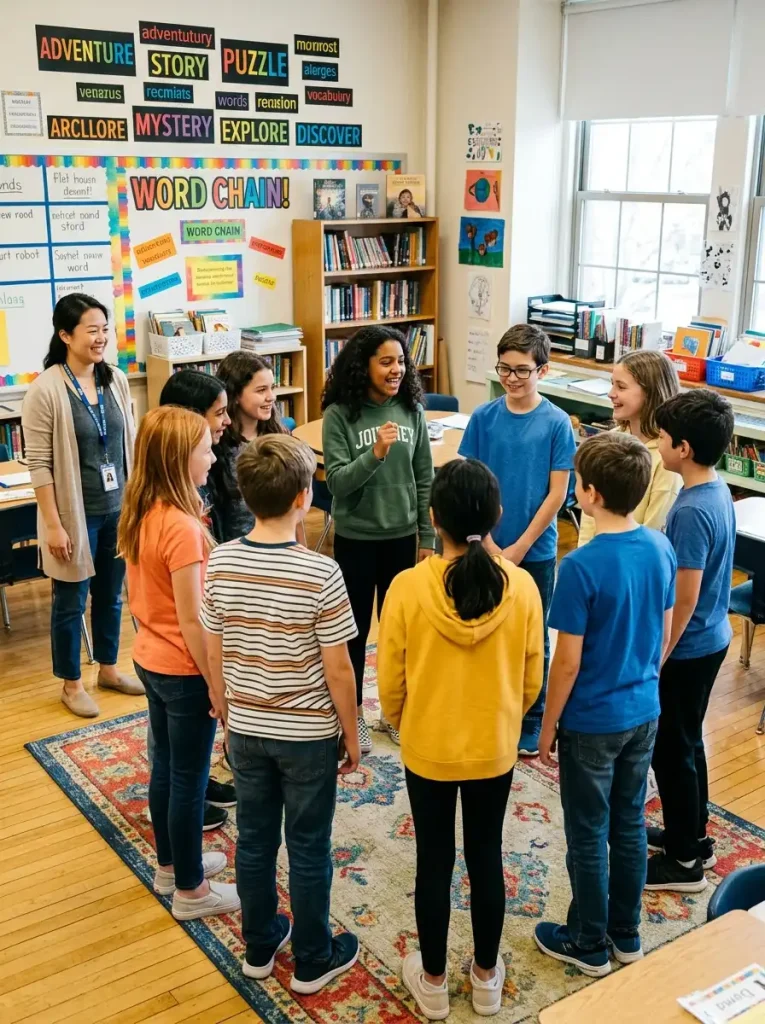
Mystery Word Chain is a fast-paced vocabulary game. Each student must say a word connected to the previous one, using a category tied to your subject.
Step-by-Step Instructions:
- Choose a category, such as science terms or historical events.
- Start the chain with an example word.
- Go around the room, with each student adding a connected word.
- Students who hesitate too long or repeat a word are gently out.
- Continue until one student remains, or time runs out.
Variations for Different Classroom Sizes: In larger classes, split into small groups so more students stay active at once.
Tips for Success: Keep the pace brisk so energy stays high throughout.
Skills Students Develop: Vocabulary recall, quick thinking, listening skills.
Common Mistakes to Avoid: Allowing too much thinking time slows the game and drains excitement.
Why Students Enjoy It: The quick pace feels like a game show, not a quiz.
Activity 2: Classroom Trivia Battle
Best Age or Grade Level: Grades 6–8 Learning Objective: Reinforce content knowledge through review Materials Needed: Whiteboards, markers, or a projector Preparation Time: 15–20 minutes Activity Duration: 30–40 minutes
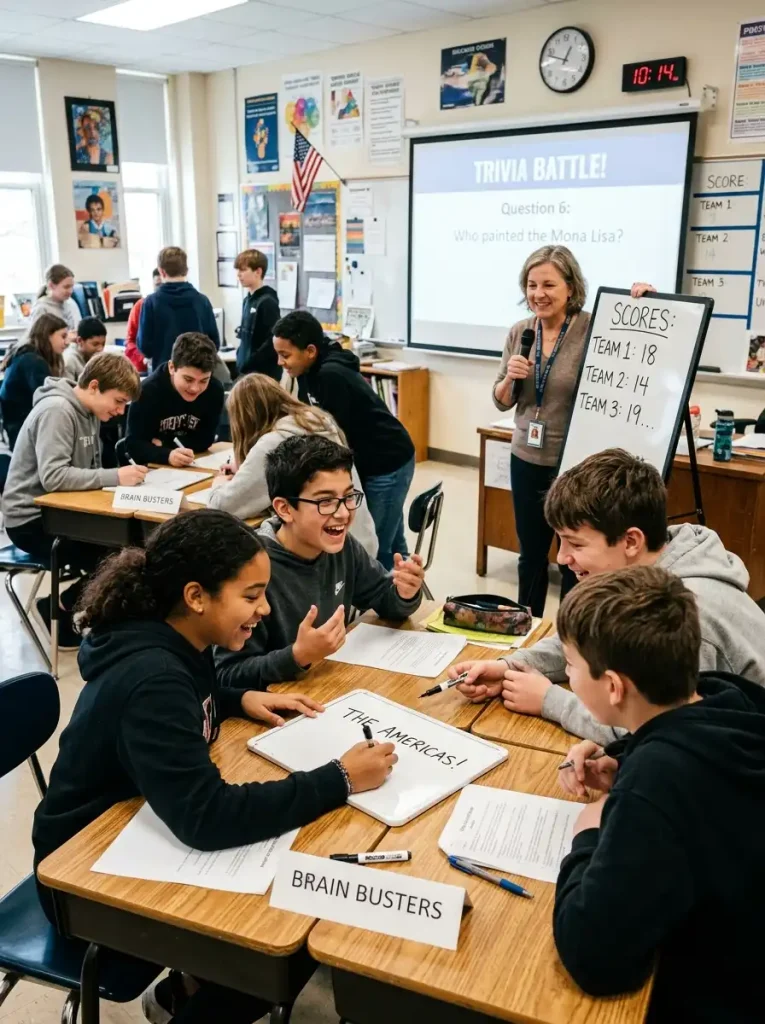
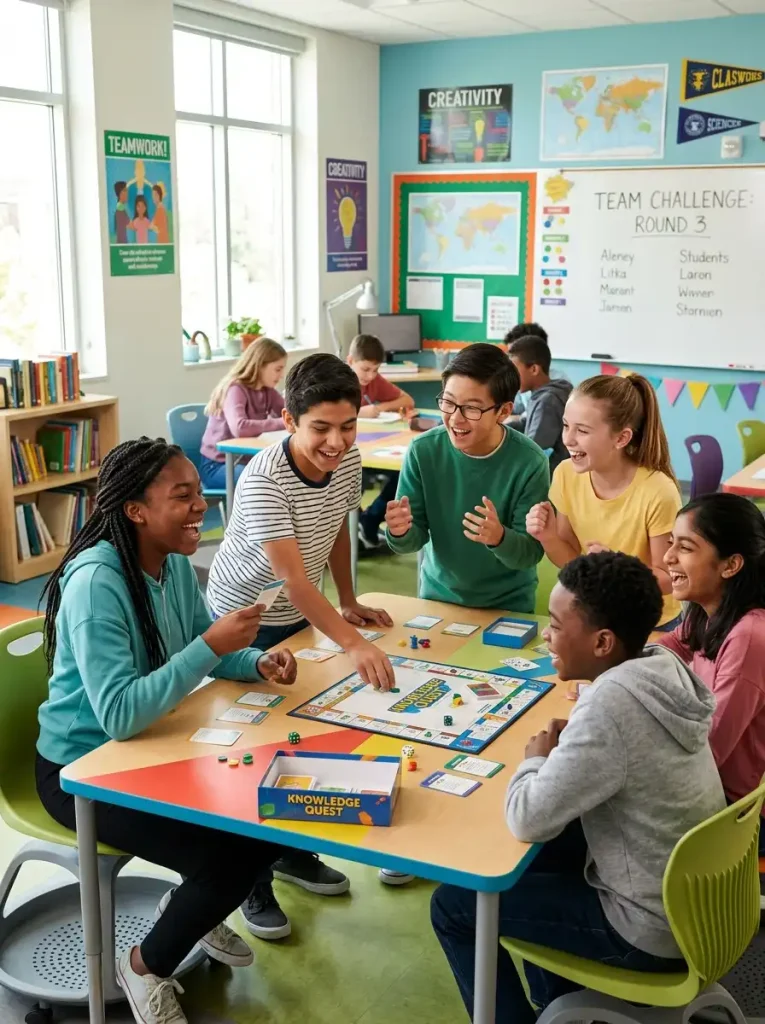
This classroom review game turns test prep into a competitive event. Teams answer questions across several rounds, earning points for correct answers.
Step-by-Step Instructions:
- Prepare questions covering recent lesson content.
- Divide students into teams of three or four.
- Display or read one question at a time.
- Teams write their answer on a mini whiteboard and reveal together.
- Award points and keep a running score on the board.
Variations for Different Classroom Sizes: For smaller classes, run it individually instead of in teams.
Tips for Success: Mix in easy and challenging questions so every team stays competitive.
Skills Students Develop: Recall, teamwork, quick decision-making.
Common Mistakes to Avoid: Letting one strong student answer for the whole team limits participation.
Why Students Enjoy It: Middle schoolers love the friendly rivalry between teams.
See also: Active Recall Techniques: The Complete Guide to Studying Smarter
Activity 3: Marshmallow Tower Engineering Challenge
Best Age or Grade Level: Grades 6–8 Learning Objective: Apply problem-solving and basic engineering concepts Materials Needed: Spaghetti, tape, string, one marshmallow per group Preparation Time: 5 minutes Activity Duration: 20–25 minutes
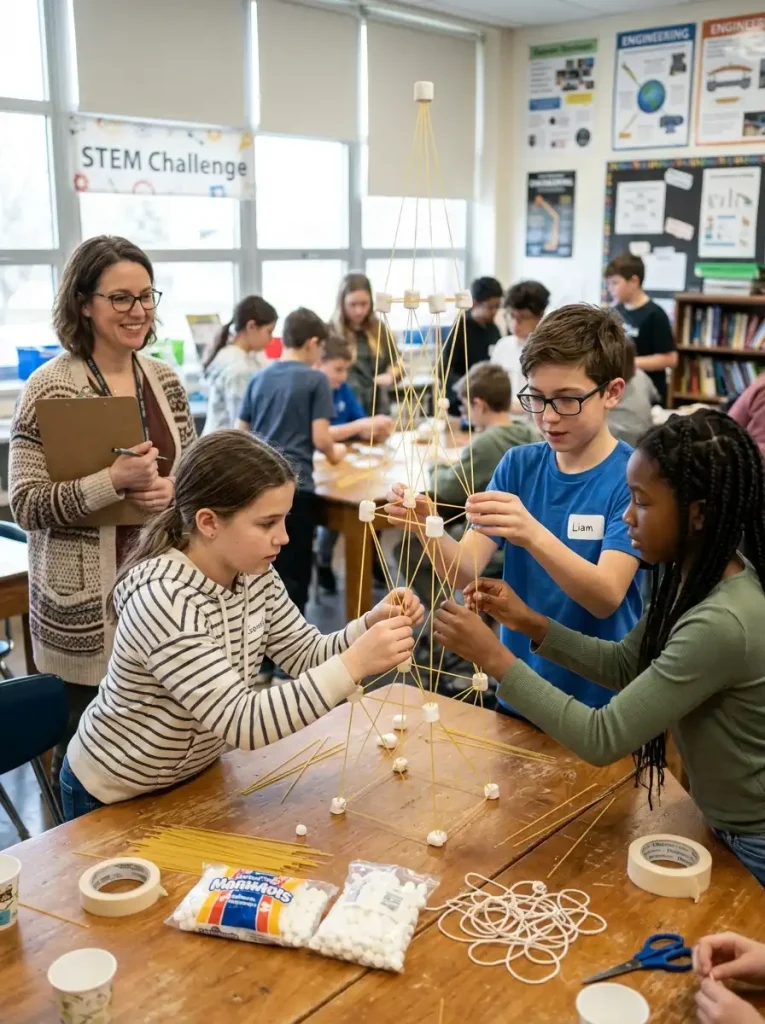
Small teams compete to build the tallest freestanding tower using limited materials. It’s one of the most popular hands-on classroom activities for a reason.
Step-by-Step Instructions:
- Split students into groups of three or four.
- Give each group identical materials.
- Set an 18-minute timer for building.
- Groups design and construct their tower.
- Measure each finished tower once time is up.
Variations for Different Classroom Sizes: In larger classrooms, run multiple rounds so every group gets table space.
Tips for Success: Encourage groups to sketch a plan before building.
Skills Students Develop: Problem-solving, teamwork, spatial reasoning.
Common Mistakes to Avoid: Skipping the planning step often leads to wasted materials and frustration.
Why Students Enjoy It: Building something physical feels far more rewarding than a worksheet.
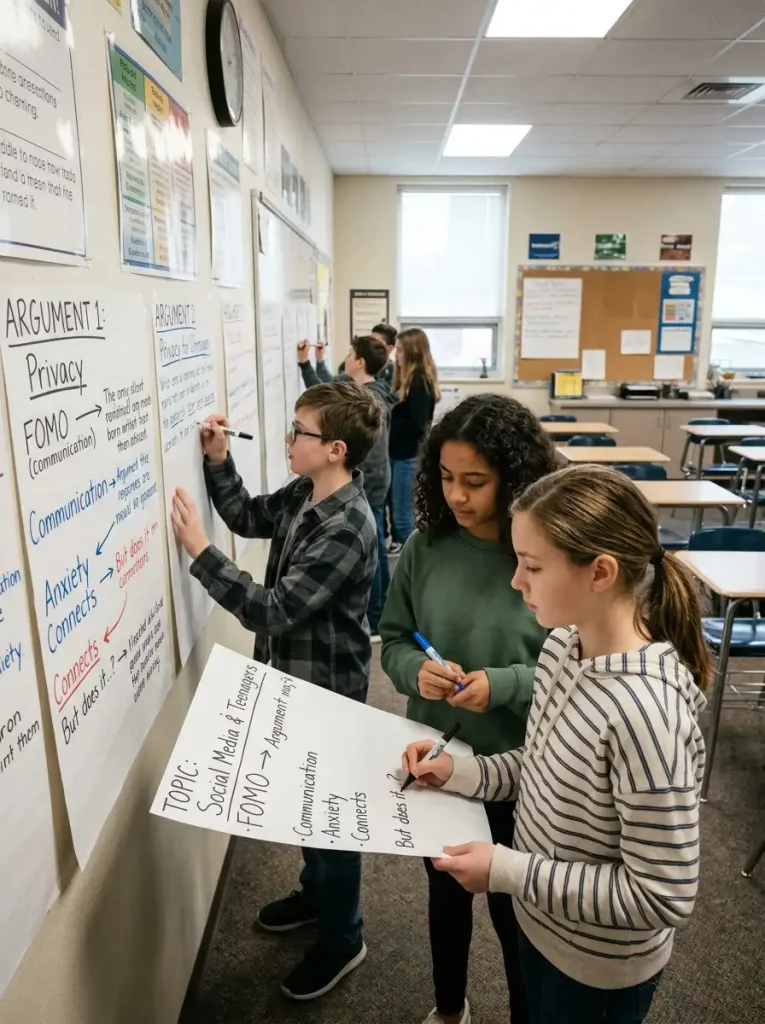
Activity 4: Silent Debate
Best Age or Grade Level: Grades 7–8 Learning Objective: Develop written argumentation and critical thinking Materials Needed: Large paper sheets, markers Preparation Time: 10 minutes Activity Duration: 20–30 minutes
Students debate a topic entirely through writing, with no talking allowed. This unusual twist on classroom challenges keeps even shy students fully involved.
Step-by-Step Instructions:
- Write a debatable statement at the top of a large paper.
- Place papers around the room in small groups.
- Students silently write responses and reactions to each other.
- Rotate groups every five minutes to a new paper.
- Discuss the written arguments together at the end.
Variations for Different Classroom Sizes: Use fewer papers for smaller classes to keep discussions focused.
Tips for Success: Set a clear rule that no verbal comments are allowed during writing time.
Skills Students Develop: Written argumentation, critical thinking, respectful disagreement.
Common Mistakes to Avoid: Choosing overly controversial topics can derail the activity’s tone.
Why Students Enjoy It: It gives quieter students a voice they might not use out loud.
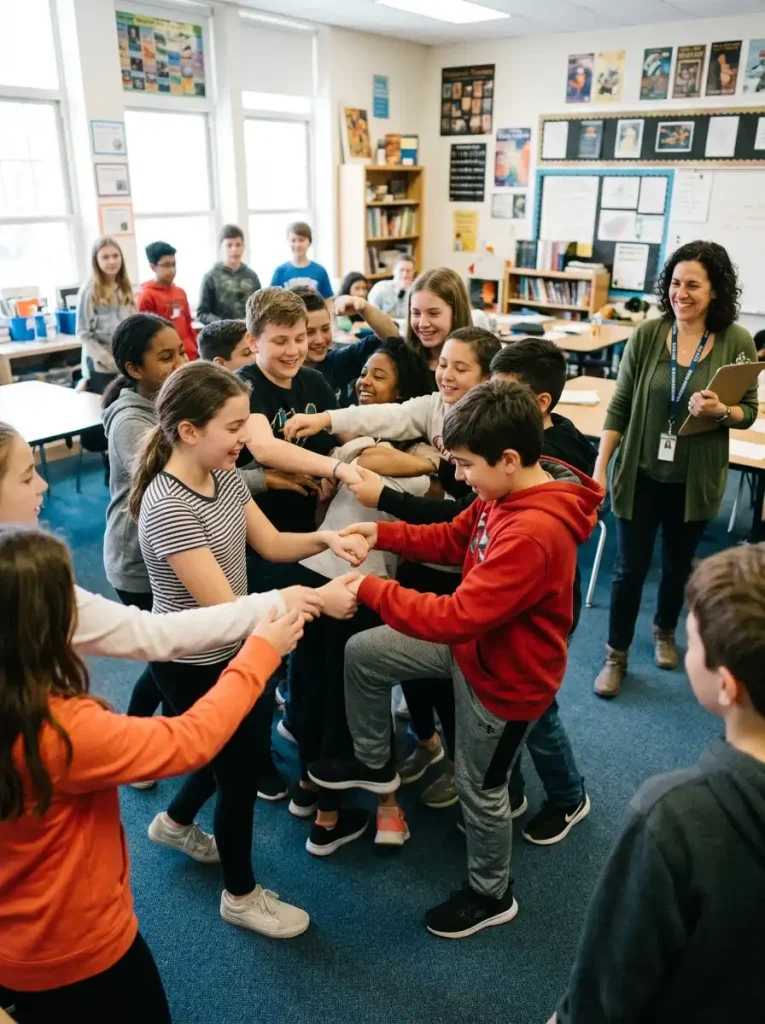
Activity 5: Human Knot Team Builder
Best Age or Grade Level: Grades 6–8 Learning Objective: Build teamwork and communication under pressure Materials Needed: None Preparation Time: None Activity Duration: 10–15 minutes
Students stand in a circle, grab two random hands, and work together to untangle themselves without letting go. It’s a classic team building game for good reason.
Step-by-Step Instructions:
- Form a circle of six to ten students.
- Each student grabs hands with two different people across the circle.
- Without letting go, the group works to untangle the knot.
- Success means forming a clean circle or several smaller ones.
- Discuss what communication strategies worked afterward.
Variations for Different Classroom Sizes: Larger classes can run multiple circles simultaneously.
Tips for Success: Remind students that communication matters more than speed.
Skills Students Develop: Communication skills, teamwork, patience.
Common Mistakes to Avoid: Allowing students to let go early defeats the purpose entirely.
Why Students Enjoy It: The physical challenge and laughter make it memorable.
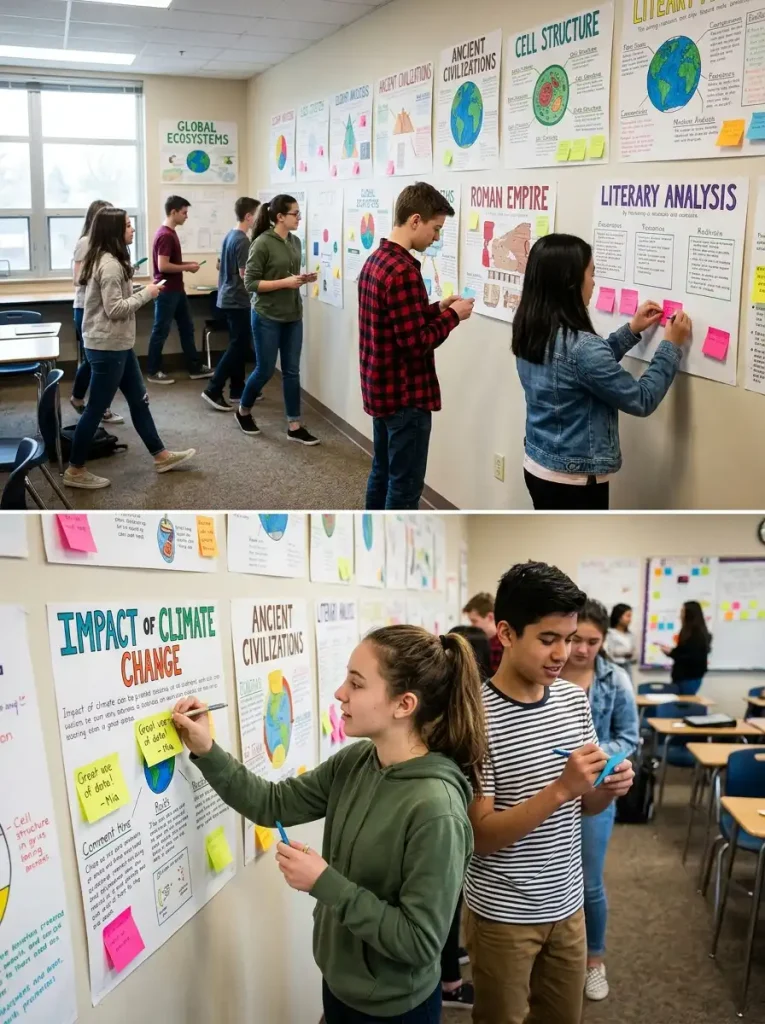
Activity 6: Gallery Walk Review
Best Age or Grade Level: Grades 6–8 Learning Objective: Reinforce content through peer discussion Materials Needed: Poster paper, markers, sticky notes Preparation Time: 15 minutes Activity Duration: 25–30 minutes
Students create small posters summarizing key concepts, then walk around leaving feedback on sticky notes for classmates.
Step-by-Step Instructions:
- Assign each group a subtopic from the current unit.
- Groups create a poster summarizing their assigned concept.
- Hang posters around the room.
- Students rotate, reading each poster and leaving a sticky note comment.
- Wrap up with a class discussion on common themes.
Variations for Different Classroom Sizes: Smaller classes can combine subtopics into fewer posters.
Tips for Success: Give students a sentence starter for their sticky note feedback.
Skills Students Develop: Summarizing, peer feedback, collaborative learning.
Common Mistakes to Avoid: Rushing the rotation prevents students from reading thoughtfully.
Why Students Enjoy It: Moving around the room breaks up the monotony of sitting still.
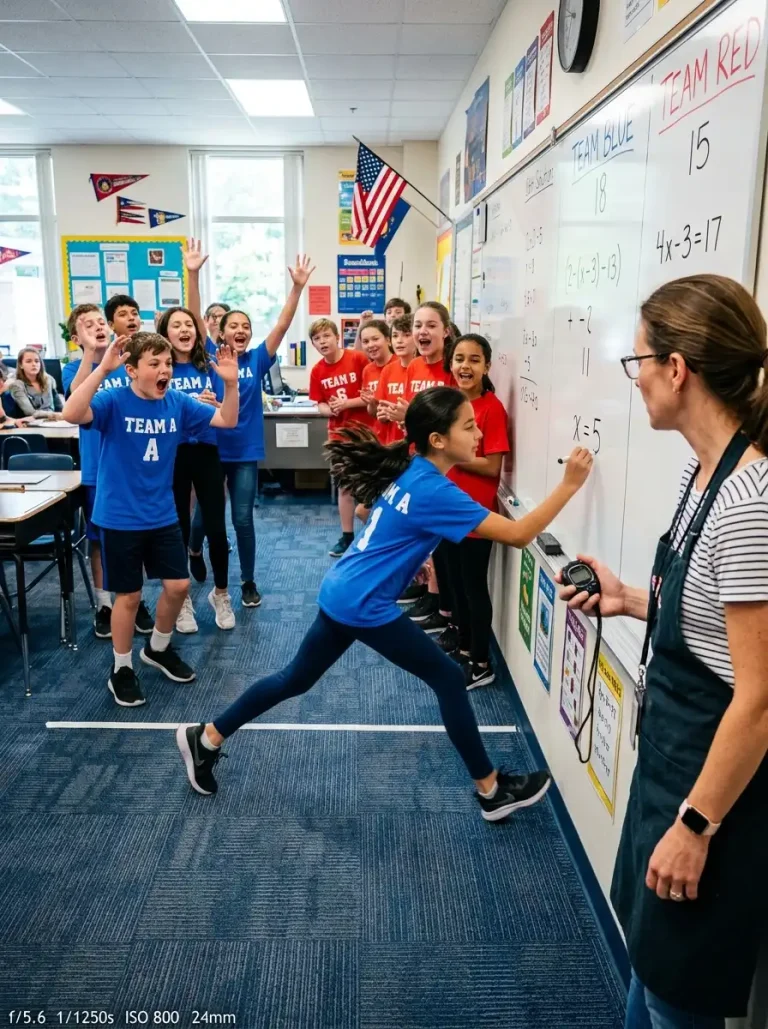
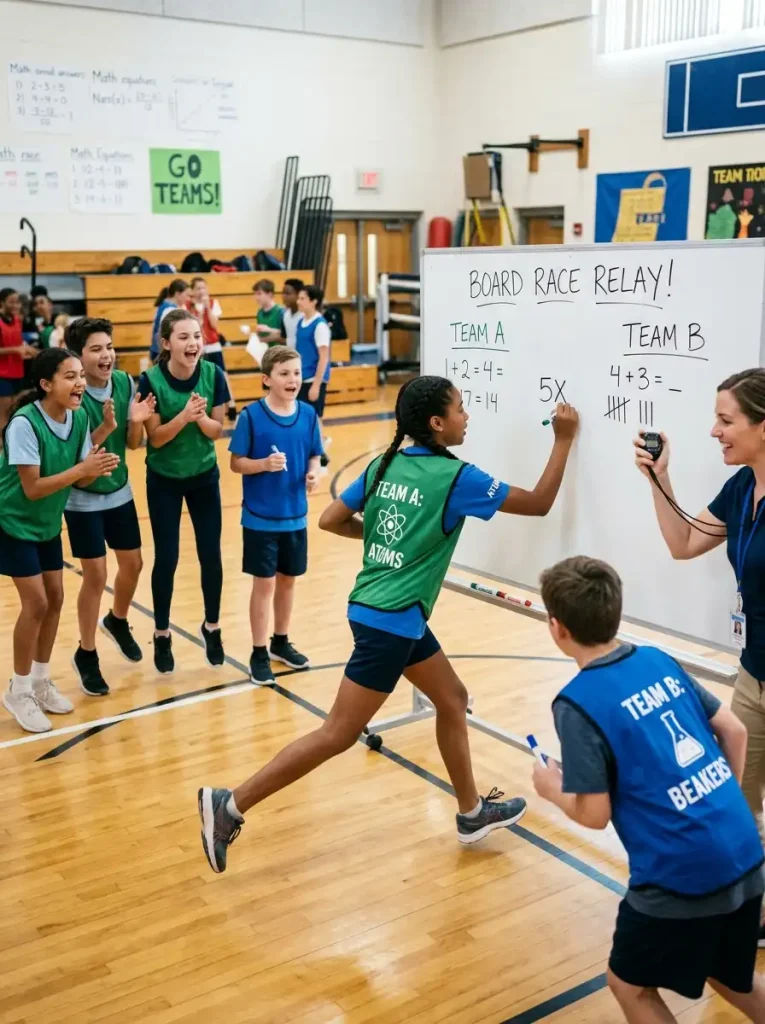
Activity 7: Board Race Relay
Best Age or Grade Level: Grades 6–8 Learning Objective: Reinforce quick recall of facts or vocabulary Materials Needed: Whiteboard, markers Preparation Time: 5 minutes Activity Duration: 15–20 minutes
Teams race to the whiteboard to answer questions one at a time. This classroom energizer works well right before a test.
Step-by-Step Instructions:
- Split the class into two or three teams.
- Line teams up facing the board.
- Read a question aloud.
- The first student in line races to write the answer.
- Award points for speed and accuracy, then rotate to the next student.
Variations for Different Classroom Sizes: Smaller classes can compete individually instead of in teams.
Tips for Success: Keep questions short so the pace stays energetic.
Skills Students Develop: Quick recall, teamwork, healthy competition.
Common Mistakes to Avoid: Letting students shout answers from the line disrupts fair play.
Why Students Enjoy It: The fast pace and team spirit make review feel like a game.
Activity 8: Character Interview Role-Play
Best Age or Grade Level: Grades 7–8 Learning Objective: Deepen understanding of historical or literary figures Materials Needed: Character background sheets Preparation Time: 15 minutes Activity Duration: 30 minutes
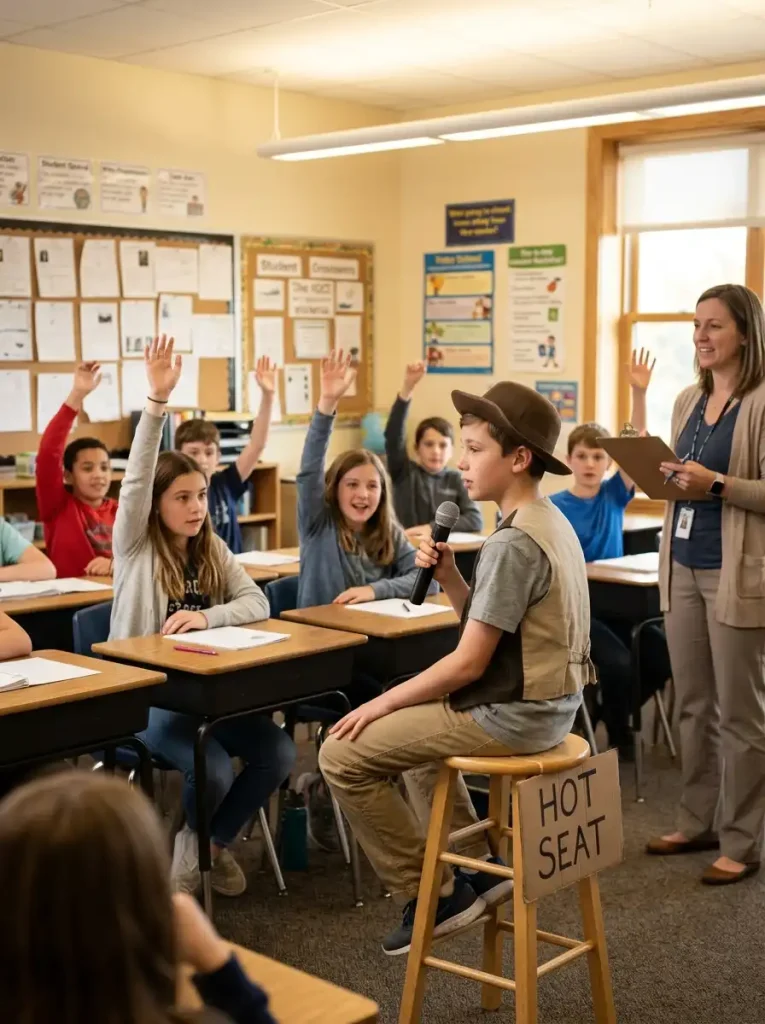
Students take on the role of a historical figure or book character and answer questions from classmates in an interview format.
Step-by-Step Instructions:
- Assign each student a character from the current unit.
- Give students time to research their character’s background.
- One student sits in the “hot seat” while classmates ask questions.
- The student answers in character, using researched details.
- Rotate through several students during the period.
Variations for Different Classroom Sizes: Larger classes can run several interviews simultaneously in small groups.
Tips for Success: Provide a few sample questions to get the interview started.
Skills Students Develop: Research skills, public speaking, perspective-taking.
Common Mistakes to Avoid: Skipping the research step leads to shallow, generic answers.
Why Students Enjoy It: Stepping into another perspective feels like acting, not studying.
Activity 9: Classroom Scavenger Hunt Review
Best Age or Grade Level: Grades 6–8 Learning Objective: Reinforce content through active movement Materials Needed: Clue cards or QR codes Preparation Time: 20 minutes Activity Duration: 30–40 minutes
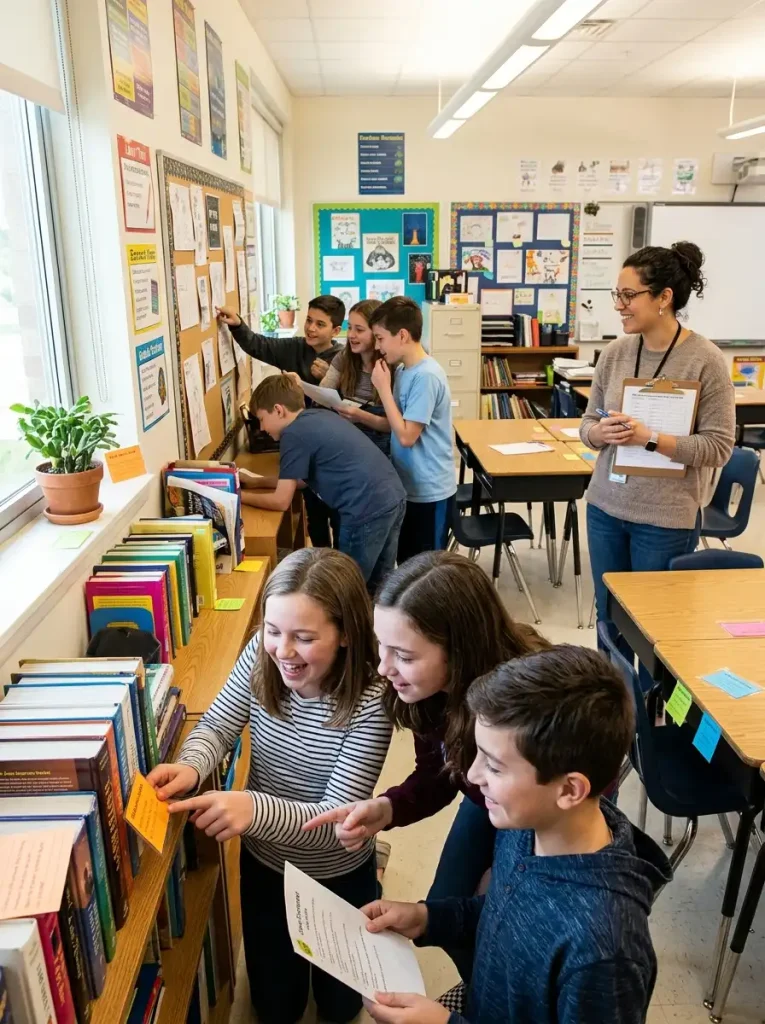
Students solve review questions hidden around the room in a scavenger hunt format, moving from station to station.
Step-by-Step Instructions:
- Hide review questions or clue cards around the classroom.
- Split students into small groups.
- Give each group a starting clue.
- Groups answer questions to find their next location.
- The first group to finish earns a small reward.
Variations for Different Classroom Sizes: Smaller classes can complete the hunt individually rather than in groups.
Tips for Success: Test the entire trail yourself before class to catch confusing steps.
Skills Students Develop: Problem-solving, teamwork, reading comprehension.
Common Mistakes to Avoid: Making early clues too difficult can stall momentum right away.
Why Students Enjoy It: The movement and mystery make review feel like an adventure.
Activity 10: Would You Rather Discussion Circle
Best Age or Grade Level: Grades 6–8 Learning Objective: Build communication skills through low-stakes discussion Materials Needed: List of “Would You Rather” questions Preparation Time: 5 minutes Activity Duration: 10–15 minutes
This simple classroom brain break sparks quick discussions. Students choose between two options and explain their reasoning to a partner or the class.
Step-by-Step Instructions:
- Read a “Would You Rather” question aloud.
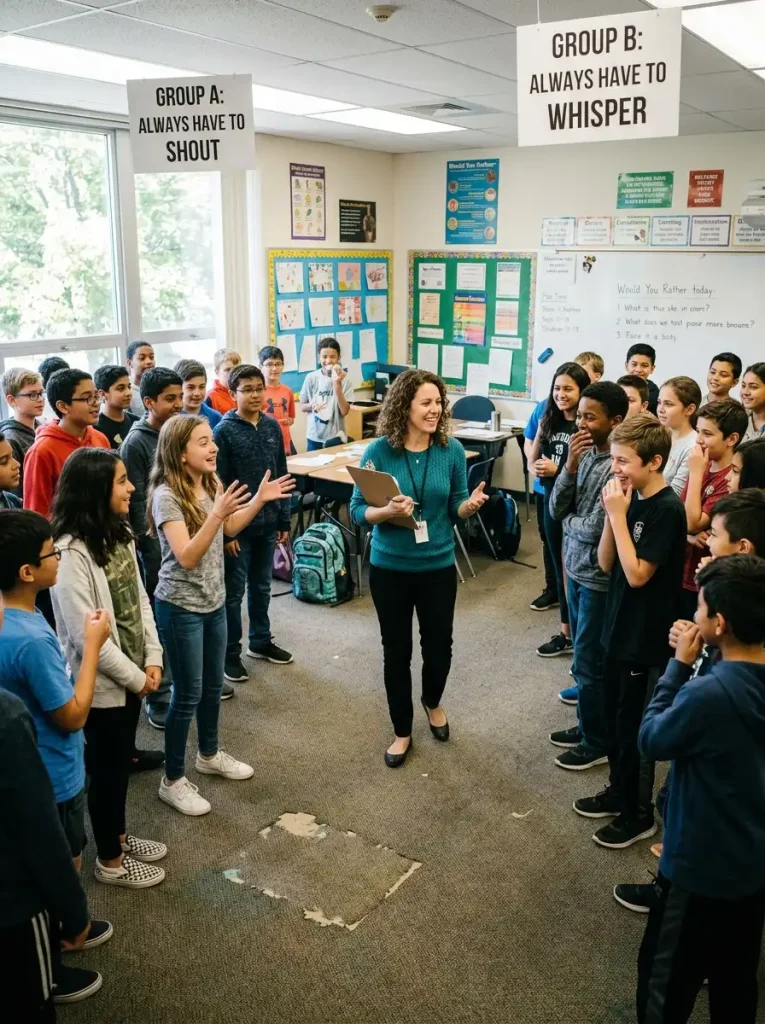
- Students move to one side of the room based on their choice.
- Ask a few students from each side to share their reasoning.
- Repeat with new questions as time allows.
Variations for Different Classroom Sizes: Larger classes can discuss in small groups instead of moving around the room.
Tips for Success: Tie questions to your subject for a quick, relevant discussion starter.
Skills Students Develop: Communication skills, reasoning, confidence.
Common Mistakes to Avoid: Choosing overly personal questions can make some students uncomfortable.
Why Students Enjoy It: Everyone has an opinion, so participation stays high and pressure stays low.
Adapting Activities to Different Classroom Settings
Not every classroom looks the same, so flexibility matters. Here’s how to adjust these activities for different environments.
Small Classrooms: Skip team formats and run activities individually or in pairs instead.
Large Classrooms: Break into multiple smaller groups running the same activity simultaneously.
Hybrid Learning: Use shared digital documents so in-person and remote students can contribute together.
Remote Learning: Adapt discussion-based activities using breakout rooms and chat features.
Different Learning Abilities: Offer alternative roles, like note-taker or timekeeper, so every student can participate meaningfully.
Why Engagement Matters More in Middle School
Middle school sits in an awkward gap. Students are too old for simple games but too young for purely lecture-based learning. Consequently, teachers need a middle ground that respects their maturity while still keeping things fun.
Interactive learning also taps into how young teens naturally think. They crave social connection, autonomy, and a bit of friendly competition. Cooperative learning activities meet all three needs at once.
Additionally, classroom management improves dramatically when students are engaged. Restless hands and side conversations often signal boredom, not defiance. Active learning strategies solve that problem before it starts.
How to Choose the Right Classroom Activity
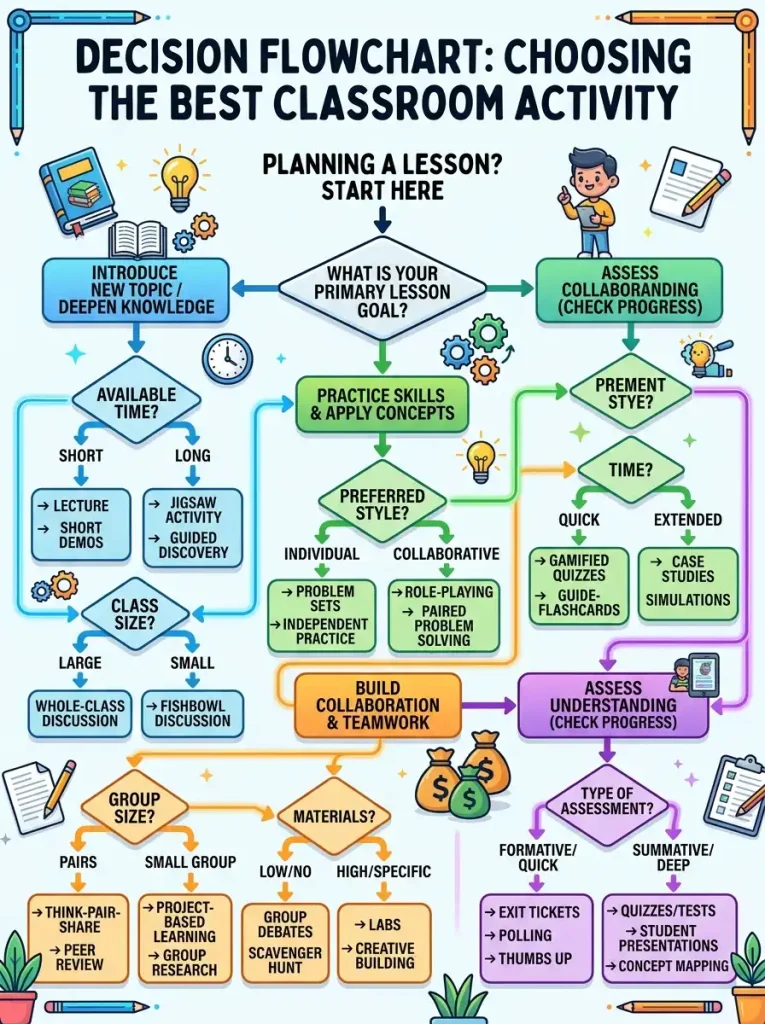
Picking the right activity isn’t random. A few quick questions can guide your decision every time.
Start with your lesson objectives. Decide what skill or content you want students to practice before choosing a format.
Next, think about student personalities. A quieter class may respond better to written activities like Silent Debate rather than loud, competitive games.
Consider your time available and classroom size as well. Some activities, like scavenger hunts, need more prep and space. Others, like Would You Rather, need almost nothing.
Finally, check what materials you actually have on hand. Choosing an activity that fits your existing supplies saves valuable planning time.
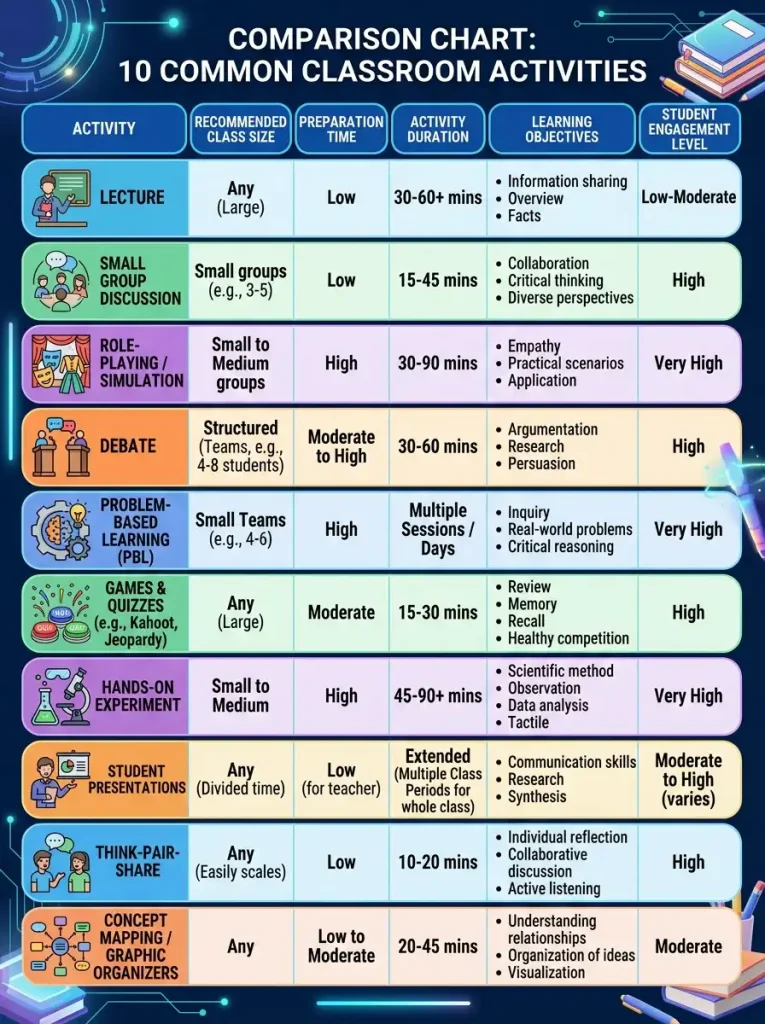
Activity Comparison Table
| Activity | Recommended Class Size | Prep Time | Duration | Engagement Level |
|---|---|---|---|---|
| Mystery Word Chain | Any size | 5 min | 10–15 min | High |
| Classroom Trivia Battle | 15–35 | 15–20 min | 30–40 min | Very High |
| Marshmallow Tower Challenge | 15–30 | 5 min | 20–25 min | Very High |
| Silent Debate | 15–30 | 10 min | 20–30 min | Medium |
| Human Knot Team Builder | 6–30 | None | 10–15 min | High |
| Gallery Walk Review | 15–30 | 15 min | 25–30 min | Medium |
| Board Race Relay | 15–35 | 5 min | 15–20 min | High |
| Character Interview Role-Play | 15–30 | 15 min | 30 min | Medium |
| Scavenger Hunt Review | 10–30 | 20 min | 30–40 min | Very High |
| Would You Rather Discussion | 10–35 | 5 min | 10–15 min | Medium |
Materials Checklist
| Materials | Activities That Use Them |
|---|---|
| Whiteboards and markers | Trivia Battle, Board Race Relay |
| Spaghetti, tape, string, marshmallows | Marshmallow Tower Challenge |
| Large paper sheets | Silent Debate |
| Poster paper and sticky notes | Gallery Walk Review |
| Character background sheets | Character Interview Role-Play |
| Clue cards or QR codes | Scavenger Hunt Review |
| Question lists | Would You Rather Discussion |
Skill Development Matrix
| Skill | Activities That Build It |
|---|---|
| Critical thinking | Silent Debate, Marshmallow Tower Challenge |
| Teamwork | Human Knot, Board Race Relay, Marshmallow Tower |
| Communication | Would You Rather, Silent Debate, Interview Role-Play |
| Problem-solving | Scavenger Hunt Review, Marshmallow Tower Challenge |
| Public speaking | Character Interview, Trivia Battle |
Time Planning Guide
| Time Available | Recommended Activities |
|---|---|
| Under 15 minutes | Would You Rather, Mystery Word Chain, Human Knot |
| 15–25 minutes | Board Race Relay, Silent Debate |
| 25–40 minutes | Trivia Battle, Gallery Walk, Scavenger Hunt, Character Interview |
Common Mistakes Teachers Should Avoid
Even experienced teachers stumble when introducing new classroom activities. A few common mistakes show up again and again.
Skipping clear instructions often causes confusion right from the start. Always model the activity briefly before beginning.
Ignoring time limits can let activities run too long and eat into other lesson plans. Set a visible timer and stick to it.
Forcing shy students into high-pressure roles too soon can backfire quickly. Ease them in with lower-pressure tasks first.
Choosing activities that don’t match your lesson objective wastes valuable class time. Always tie the activity back to what students need to learn.
Frequently Asked Questions
1. How do I keep middle schoolers focused during group activities? Set clear roles for each group member so everyone has a specific job to focus on.
2. What if my class is too large for these activities? Most activities scale easily by running multiple smaller groups at once.
3. Can these activities work for hybrid or remote classrooms? Yes, many adapt well using breakout rooms, shared documents, or video calls for remote students.
4. How often should I use classroom brain breaks? Once or twice per class period usually keeps energy balanced without losing instructional time.
5. What’s the best activity for a shy or quiet class? Silent Debate and Would You Rather work well since they lower social pressure significantly.
6. How do I handle students who don’t want to participate? Offer alternative roles, like timekeeper or note-taker, so reluctant students still contribute.
7. Do these activities work for every subject? Yes, most can be adapted with subject-specific content, from math problems to historical events.
8. How long should a typical classroom activity last? Most activities work best between 10 and 40 minutes, depending on complexity and class size.
9. What materials should every middle school teacher keep on hand? Whiteboards, markers, sticky notes, and basic craft supplies cover most activities in this list.
10. How do I know if an activity actually worked? Look for increased participation, on-task behavior, and how confidently students discuss what they learned afterward.
Final Thoughts
Middle school students respond best to activities that respect their growing independence while still offering structure and fun. Every activity on this list builds real skills, from teamwork to critical thinking, while keeping students genuinely engaged.
Start small by trying just one or two activities this week. Watch how your students respond, then adjust based on what works best for your classroom.
No two middle school classrooms are identical, so feel free to tweak these ideas to fit your students’ personalities and needs. The goal stays simple: keep learning active, keep students curious, and keep your classroom a place they actually want to be.