16 Math Bulletin Board Ideas for Elementary School
Math bulletin boards can make abstract concepts concrete, celebrate student achievement, and foster a love for numbers. Below are 16 math-themed bulletin board ideas designed specifically for elementary classrooms.
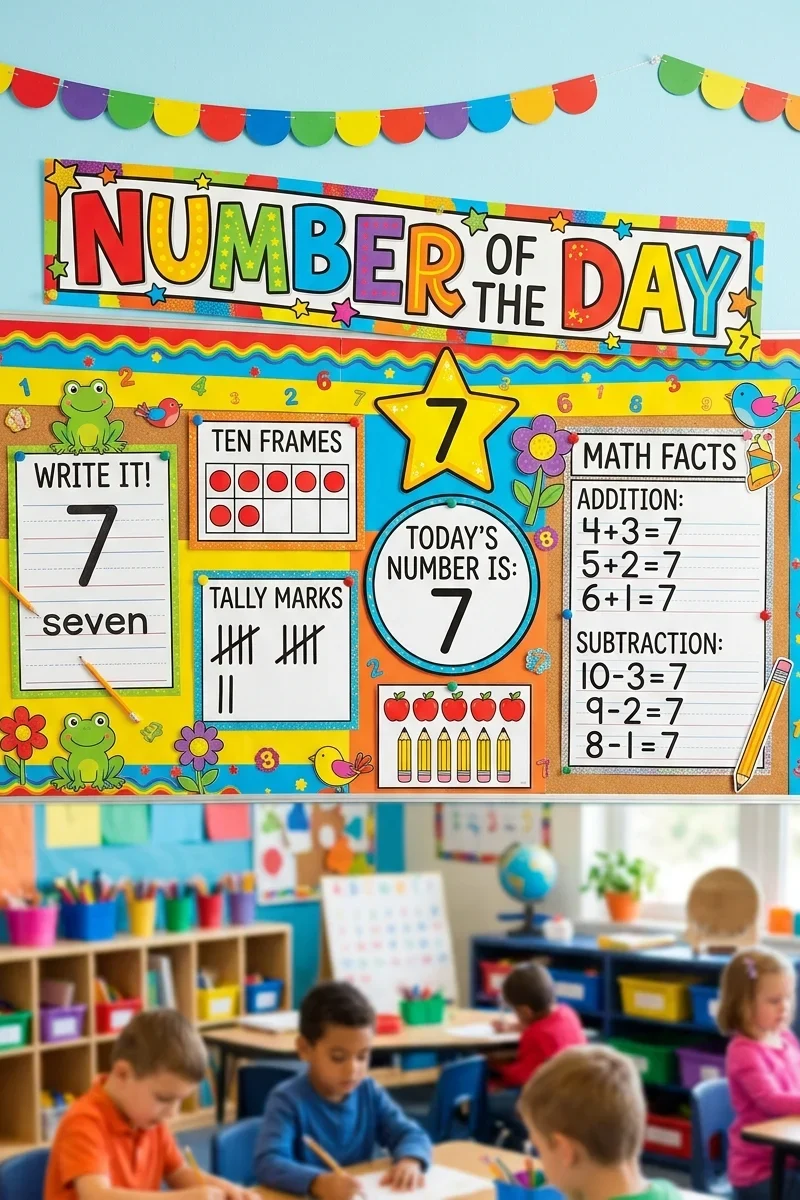
1. Number of the Day
Create a display featuring a “Number of the Day.” This board supports number sense and daily math practice.
Use bright, engaging colors. Each day, feature a new number and activities like: write the number, show it on a ten frame, draw it, add/subtract, and show it with tally marks. Add a banner that reads “Number of the Day.” Include a section for student responses.
QUICK TIPS
- Use numbers appropriate for your grade level.
- Let students take turns choosing the number.
- Add a “number challenge” section.
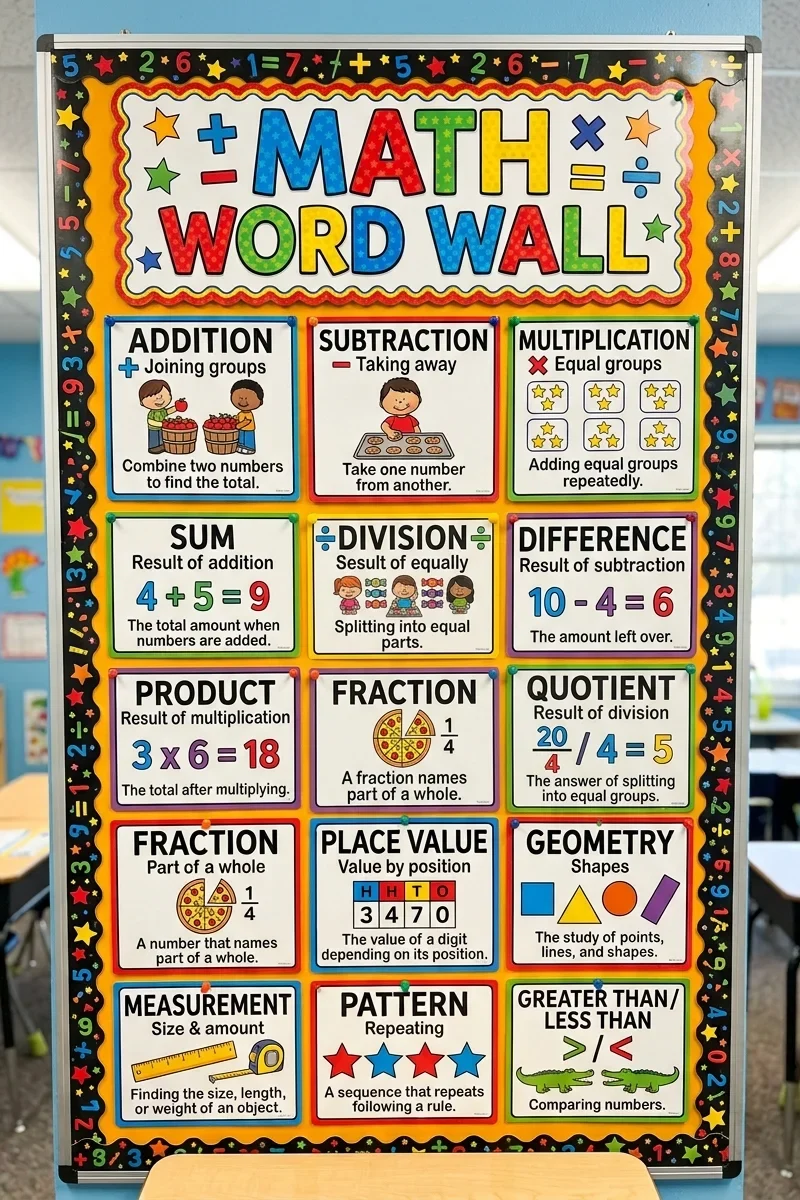
2. Math Word Wall
Create a display featuring math vocabulary words with definitions and pictures. This board supports language development and math comprehension.
Use bright, engaging colors. Feature words like: addition, subtraction, multiplication, division, fraction, decimal, and geometry terms. Include definitions and visual examples. Add a “word of the week” section. Let students add new words they learn.
QUICK TIPS
- Use pictures or diagrams with definitions.
- Let students use words in sentences.
- Add a “vocabulary challenge” section.
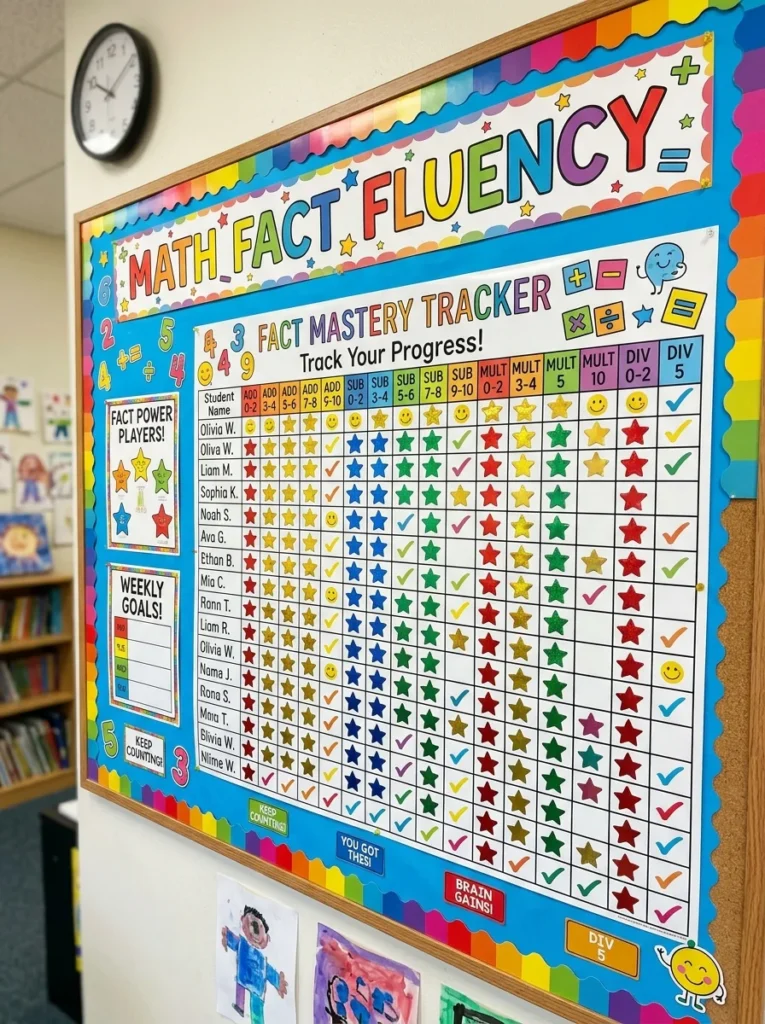
3. Math Fact Fluency
Create a display tracking student progress in math fact fluency. This board motivates students to master their facts.
Use a color palette of bright, engaging colors. Create a chart with student names and fact sets (addition, subtraction, multiplication, division). Add stickers or checkmarks as students master each set. Include a “fact master” section for students who have mastered all sets.
QUICK TIPS
- Make the challenge achievable with clear milestones.
- Offer prizes or recognition for completion.
- Update the board weekly with student progress.
4. Shapes Around Us
Create a display featuring shapes found in the real world. This board supports geometry and shape recognition.
Use bright, engaging colors. Feature shapes like circle, square, triangle, rectangle, and hexagon. Include real-world examples for each shape—a clock for a circle, a window for a square, and a yield sign for a triangle. Add a “shape hunt” section for students to find shapes in the classroom or at home.
QUICK TIPS
- Use photos or drawings of real-world examples.
- Let students add their own shape examples.
- Add a “shape of the week” section.

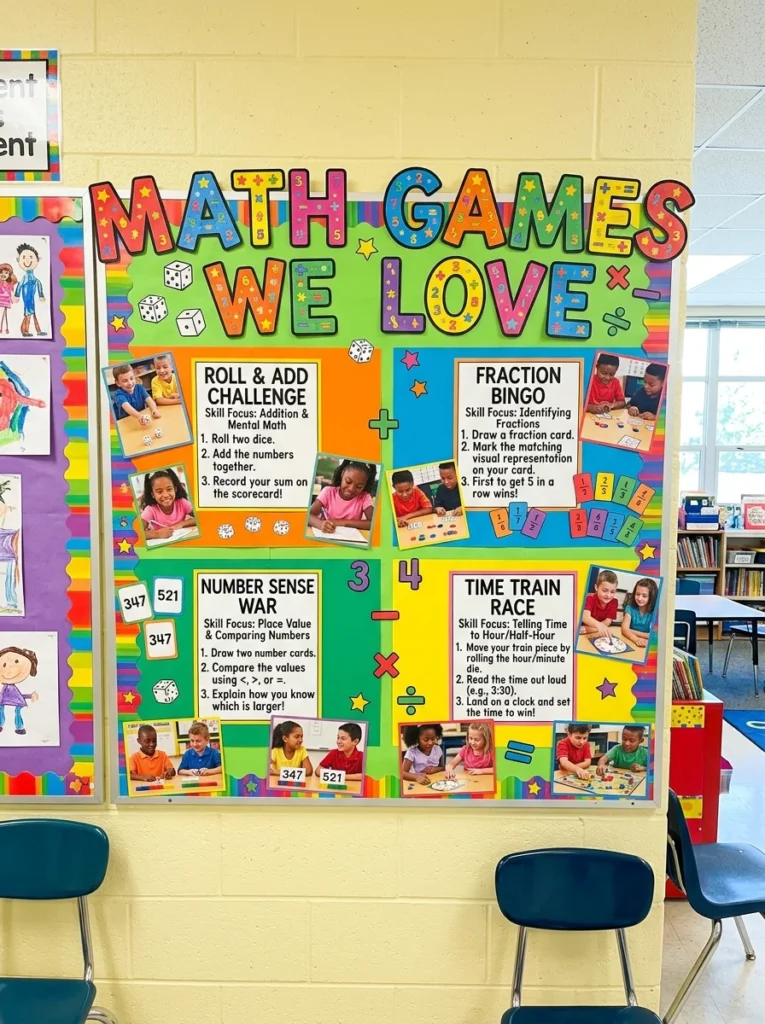
5. Math Games We Love
Create a display featuring math games and activities available in the classroom. This board promotes independent learning.
Use bright, engaging colors. Feature games like: math bingo, card games, dice games, and board games. Include brief instructions and skill focus for each game. Add a “game of the week” section. Include a “student review” section.
QUICK TIPS
- Include a mix of individual and partner games.
- Let students recommend their favorite games.
- Add a “game rules” section.
6. Fractions Are Fun!
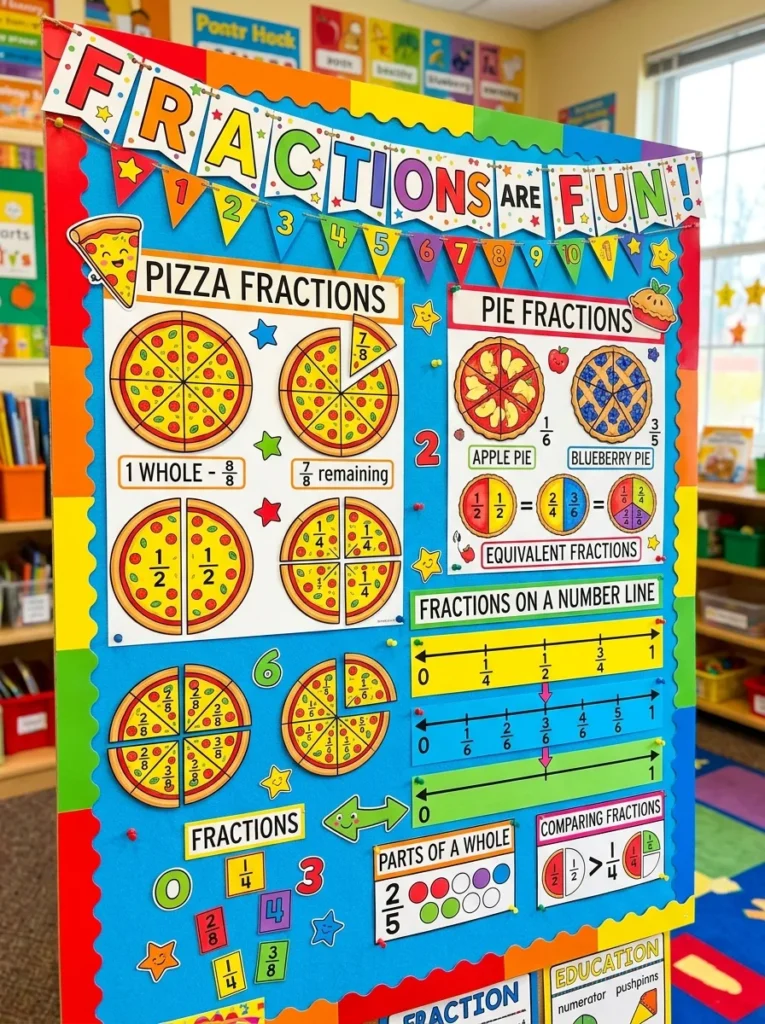
Create a display featuring fractions with visual examples. This board supports fraction concepts.
Use bright, engaging colors. Feature examples of fractions with pizzas, pies, and number lines. Include activities like “find the fraction” and “compare fractions.” Add a “fraction of the week” section. Include a “fraction challenge” section.
QUICK TIPS
- Use pizza and pie visuals for fractions.
- Let students create their own fraction examples.
- Add a “fraction art” section.
7. Multiplication Mastery
Create a display featuring multiplication strategies and fact practice. This board supports multiplication fluency.
Use bright, engaging colors. Feature strategies like: arrays, repeated addition, skip counting, and fact families. Include a “multiplication challenge” section. Add a “fact master” section for students who have mastered their facts.
QUICK TIPS
- Include a mix of strategies for different learners.
- Let students share their favorite strategies.
- Add a “multiplication game” section.

8. Money Matters
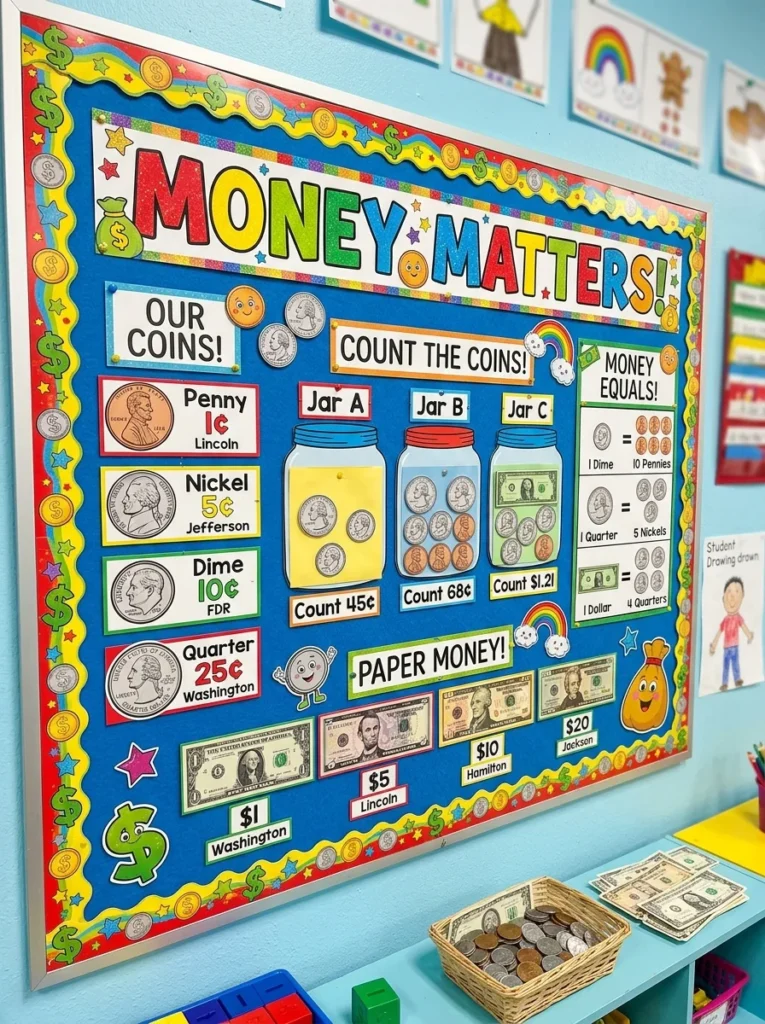
Create a display featuring money concepts—coins, bills, and making change. This board supports financial literacy.
Use bright, engaging colors. Feature examples of coins and bills with values. Include activities like “count the coins” and “how much change?” Add a “money word problem” section. Include a “coin of the week” section.
QUICK TIPS
- Use real or paper examples of coins and bills.
- Let students practice making change.
- Add a “money challenge” section.
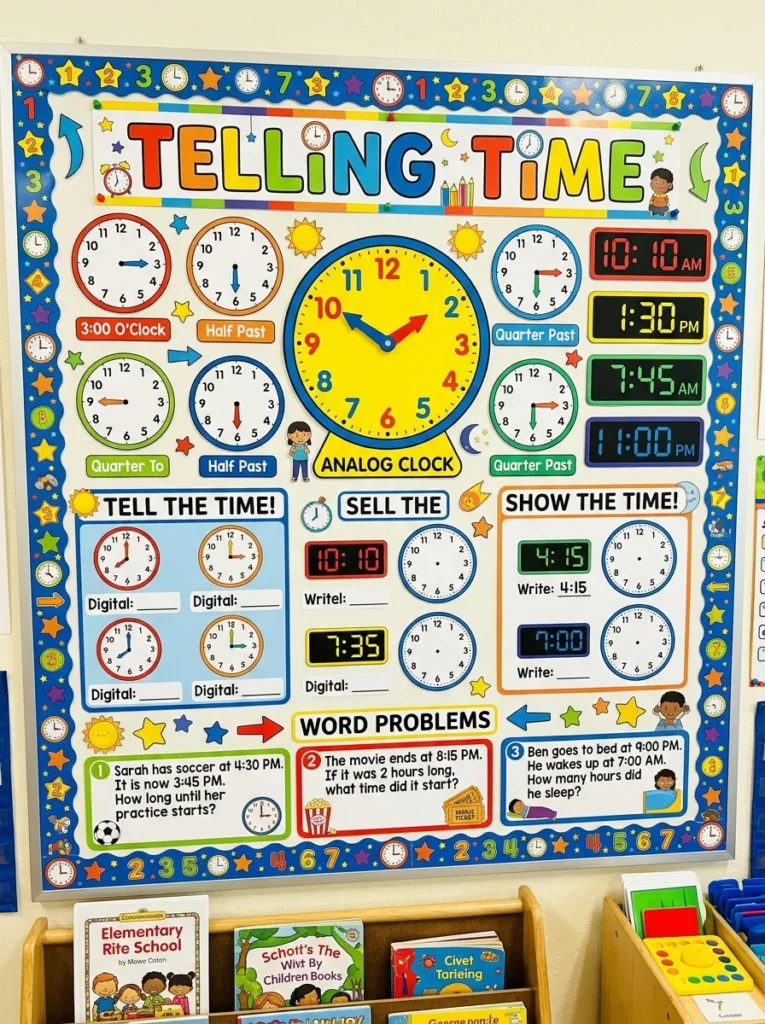
9. Telling Time
Create a display featuring telling time concepts—analog and digital clocks. This board supports time-telling skills.
Use bright, engaging colors. Feature examples of analog and digital clocks. Include activities like “what time is it?” and “time word problems.” Add a “time of the day” section. Include a “clock challenge” section.
QUICK TIPS
- Use large, clear clock visuals.
- Let students practice setting clocks.
- Add a “schedule” section with daily times.
10. Math in the Real World
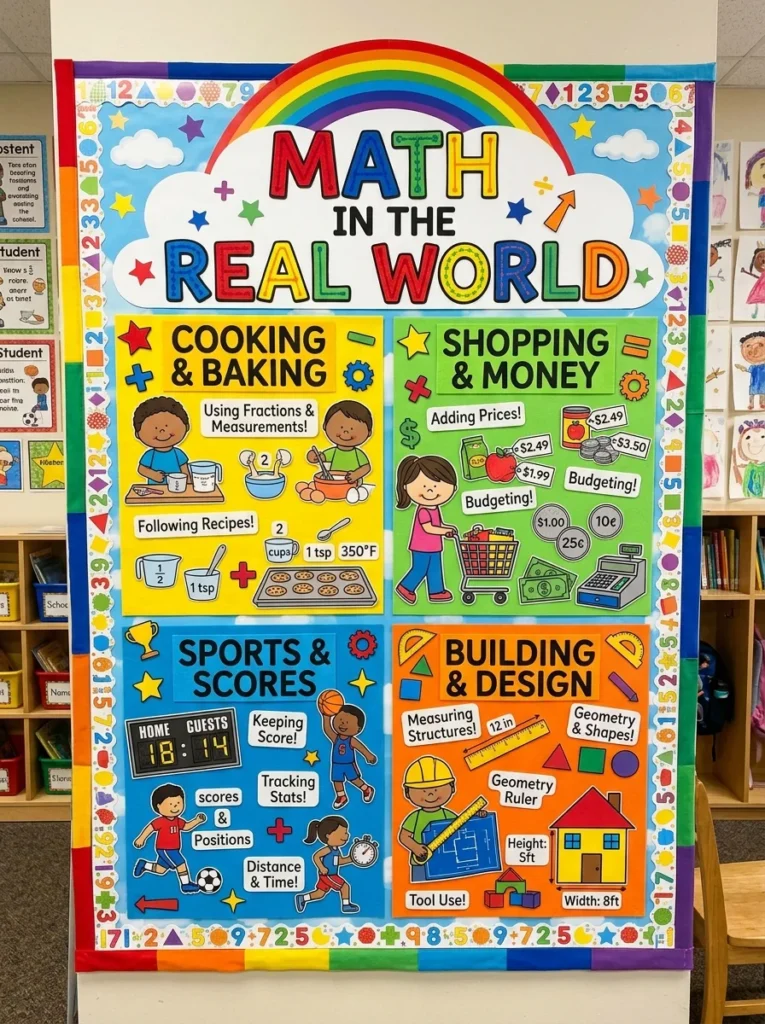
Create a display featuring how math is used in everyday life. This board makes math relevant and meaningful.
Use bright, engaging colors. Feature examples like: cooking (measurement), shopping (money), sports (statistics), and building (geometry). Add a “math in action” section with photos. Include a “real-world math challenge” section.
QUICK TIPS
- Use real-life photos when possible.
- Let students share their own examples.
- Add a “math in my life” section.
11. Measurement Mania
Create a display featuring measurement concepts—length, weight, capacity, and temperature. This board supports measurement skills.
Use bright, engaging colors. Feature examples of measurement tools like rulers, scales, and thermometers. Include activities like “measure your desk” and “how much does it weigh?” Add a “measurement challenge” section.
QUICK TIPS
- Use real or paper examples of measurement tools.
- Let students practice measuring classroom items.
- Add a “measurement scavenger hunt” section.

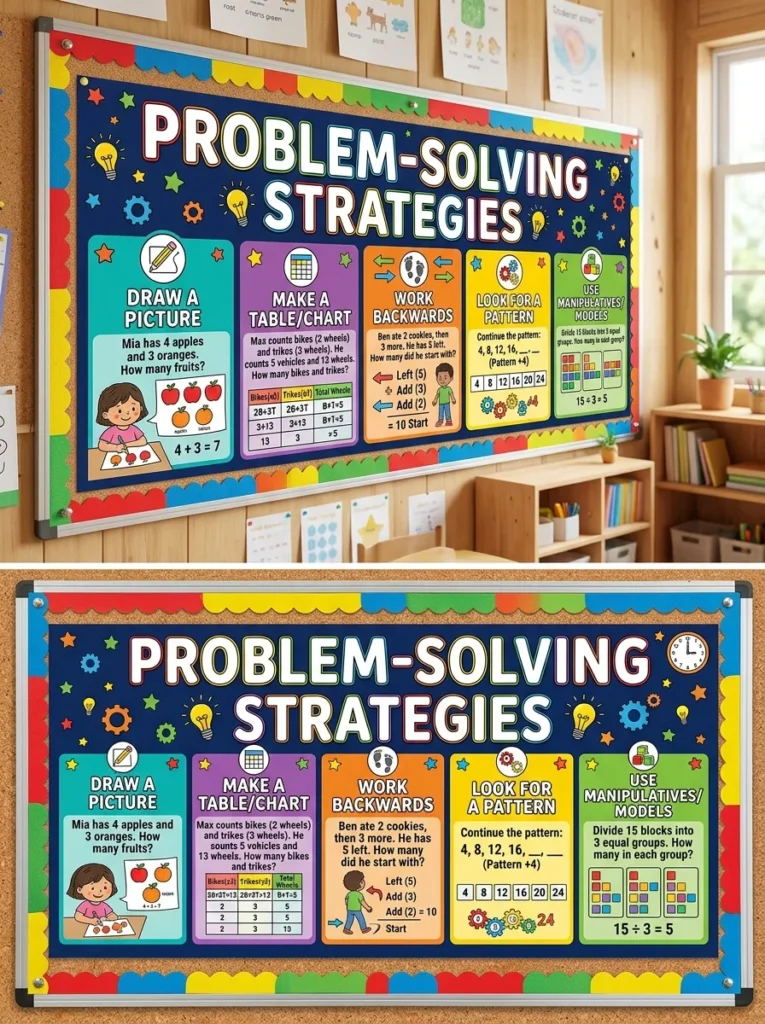
12. Problem-Solving Strategies
Create a display featuring problem-solving strategies for math word problems. This board supports critical thinking.
Use bright, engaging colors. Feature strategies like: draw a picture, make a table, work backwards, guess and check, and use a number line. Include a “strategy of the week” section. Add a “word problem” section for practice.
QUICK TIPS
- Include a mix of strategies for different problem types.
- Let students share their favorite strategies.
- Add a “strategy challenge” section.
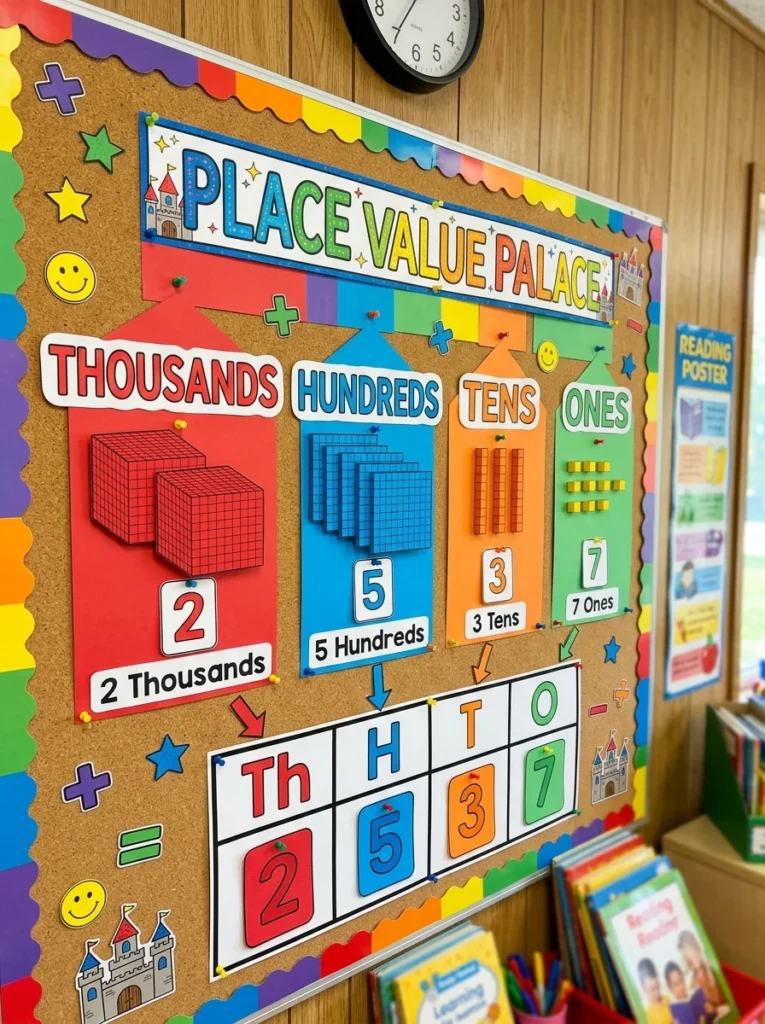
13. Place Value Palace
Create a display featuring place value concepts—ones, tens, hundreds, and thousands. This board supports number sense.
Use bright, engaging colors. Feature examples of place value blocks, charts, and expanded form. Include activities like “build the number” and “what’s the value?” Add a “place value challenge” section.
QUICK TIPS
- Use place value blocks or drawings.
- Let students practice building numbers.
- Add a “number of the week” section.
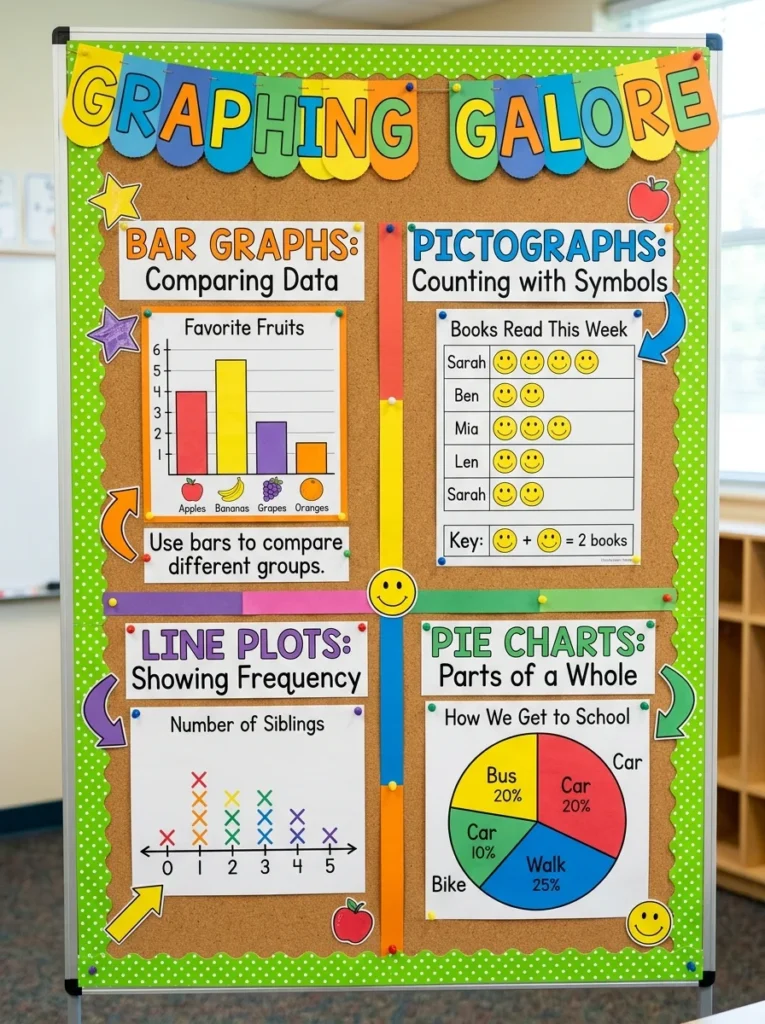
14. Graphing Galore
Create a display featuring different types of graphs—bar graphs, pictographs, line plots, and pie charts. This board supports data and graphing skills.
Use bright, engaging colors. Feature examples of each graph type with data. Include a “graph of the week” section. Add a “create your own graph” section.
QUICK TIPS
- Use real or student-generated data.
- Let students create their own graphs.
- Add a “data detective” section.
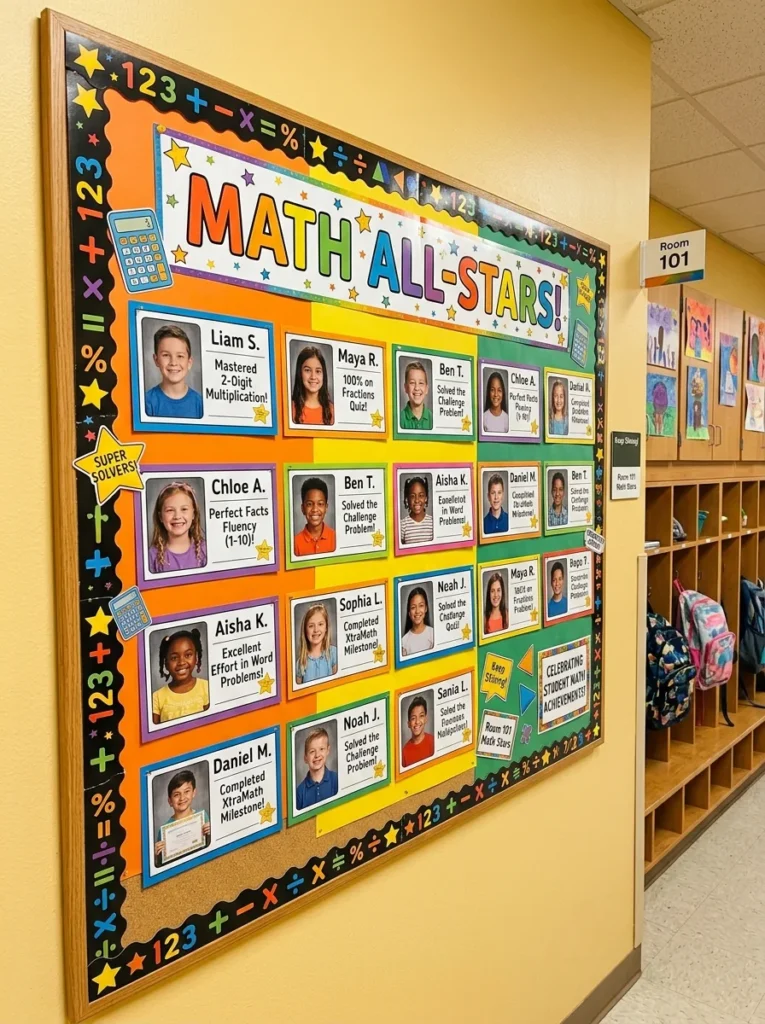
15. Math All-Stars
Create a display celebrating student math achievements. This board builds motivation and pride.
Use warm, inviting colors. Feature student photos or names with their math accomplishments. Add a “math star of the month” section. Include a “math goals” section.
QUICK TIPS
- Include a mix of academic and effort achievements.
- Let students nominate peers for recognition.
- Add a “teacher praise” section.
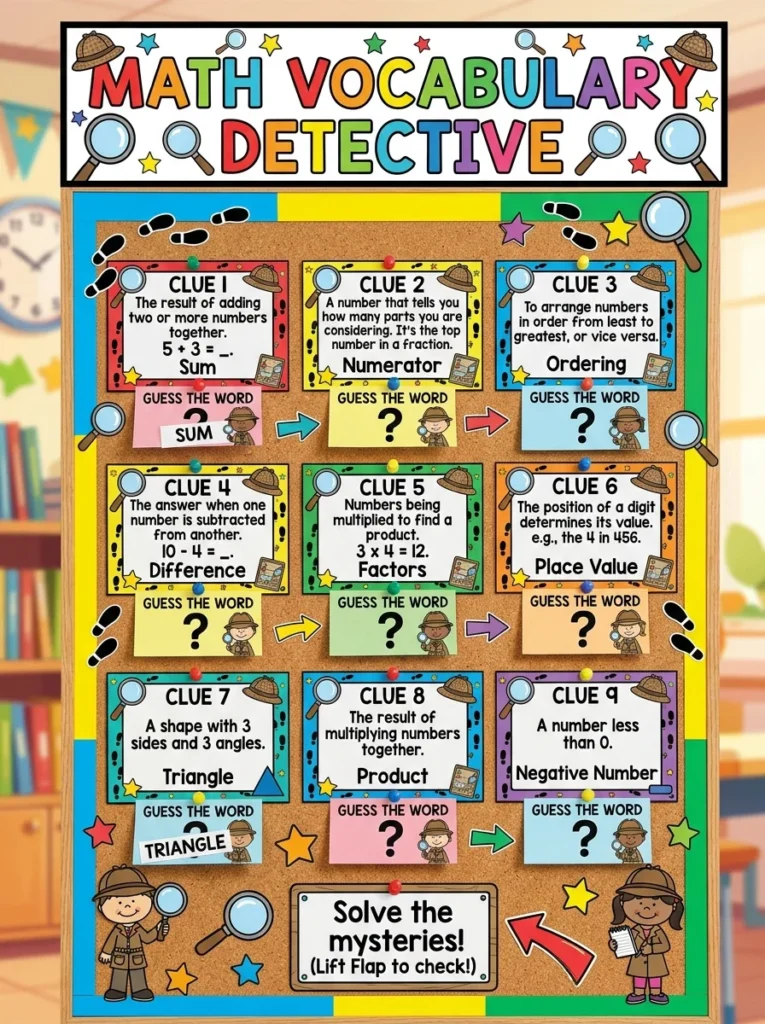
16. Math Vocabulary Detective
Create an interactive display where students solve “mystery” math vocabulary words. This board makes vocabulary practice fun.
Use a color palette of bright, engaging colors. Create “clue cards” with definitions or examples. Students guess the vocabulary word. Add a “word of the week” section. Include a “detective challenge” section.
QUICK TIPS
- Use grade-appropriate vocabulary.
- Let students create their own clues.
- Add a “vocabulary badge” section for mastery.
Final Thoughts
Elementary math bulletin boards can make abstract concepts concrete, celebrate student achievement, and foster a love for numbers. Whether you choose a number of the day display, a math word wall, or a problem-solving strategies board, these ideas support elementary students’ mathematical development. Plan your board ahead, use bright and engaging visuals, and keep the display fresh by swapping out elements as the school year progresses. Your math bulletin board can become a hub of learning, discovery, and mathematical joy for all students.