7 Active Recall Study Methods Worksheets PDF (Free Printables)
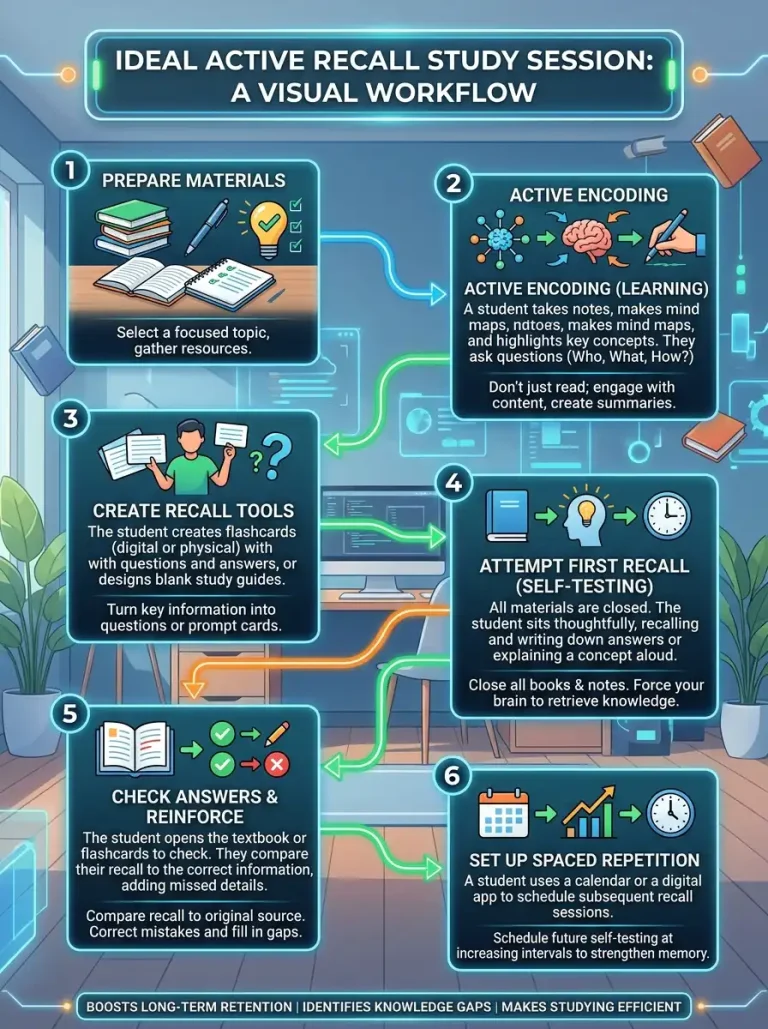
Most students spend hours rereading notes and still forget half of it by exam day. The 7 active recall study method printable worksheets PDF in this article fixes that problem by turning passive review into genuine memory practice. Instead of scanning a textbook one more time, you write, test, and check yourself using structured pages built specifically for retrieval.
This article explains what active recall actually is, why printable formats work so well for learning, and how to use each worksheet correctly. You’ll also find a complete downloadable PDF near the end containing all seven worksheets, ready to print at home or at school. Whether you’re a university student, a homeschool parent, a classroom teacher, or someone brushing up on a new skill, these printable study worksheets give you a repeatable system for locking information into long-term memory.
What Is the Active Recall Study Method?
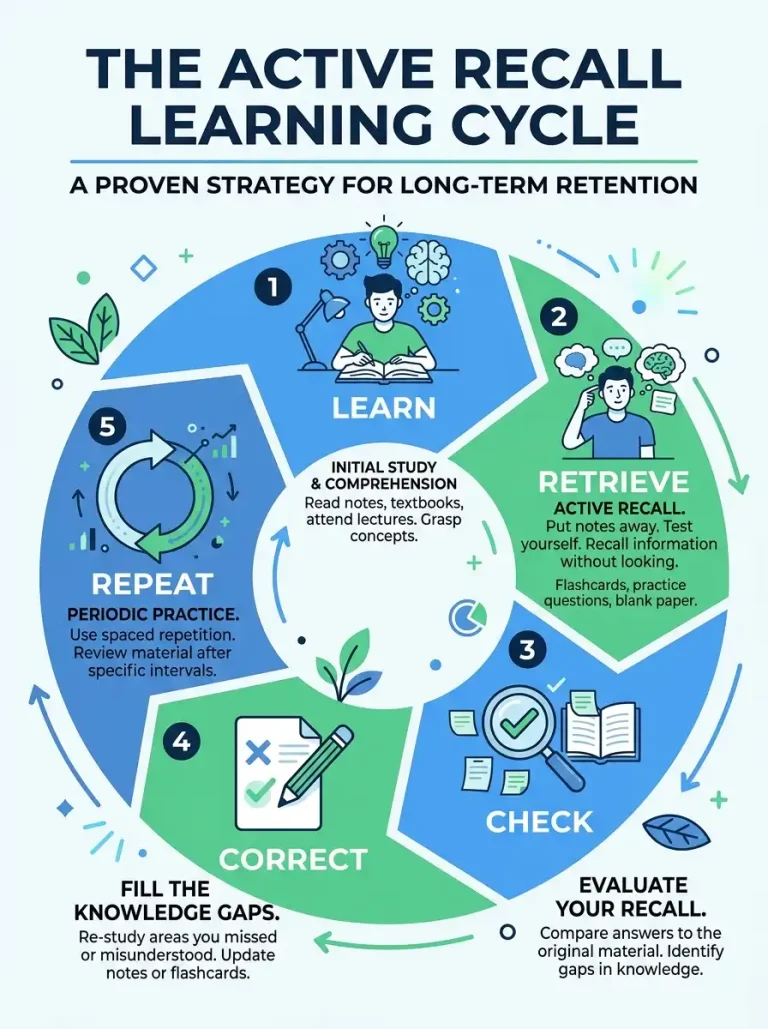
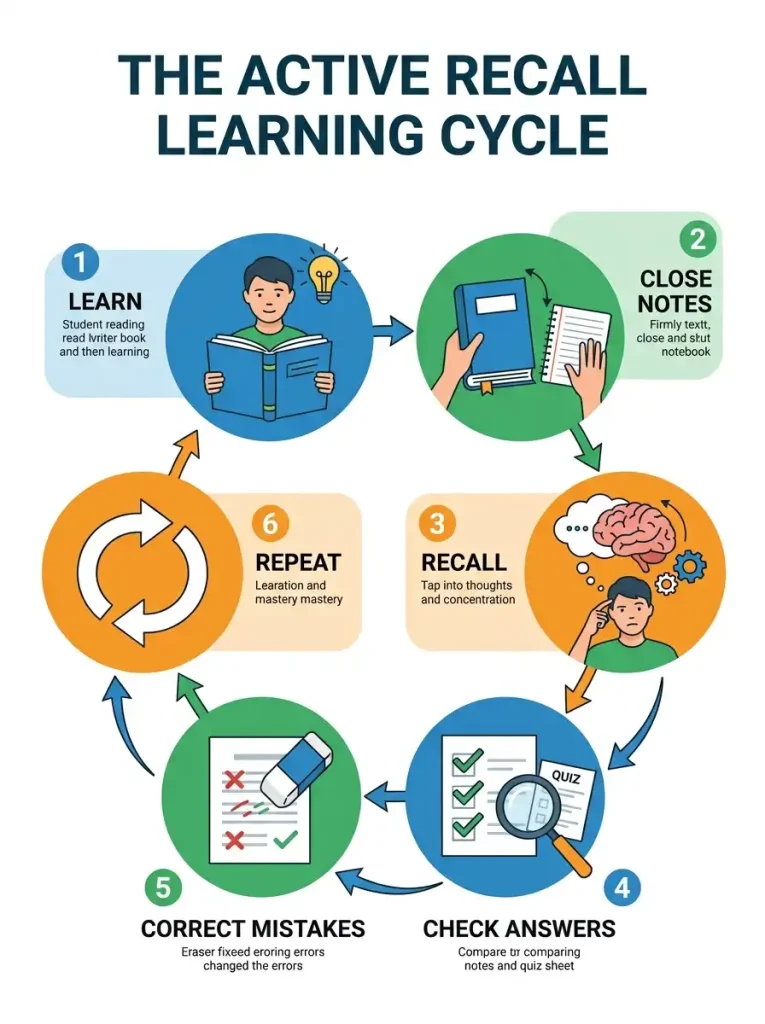
Active recall is a study method where you pull information out of memory instead of simply looking at it again. Rather than rereading a chapter, you close your notes and try to write down what you remember. This process is often called retrieval practice, since the act of retrieving a memory is exactly what strengthens it.
The cognitive science behind this is well established in learning research. Every time you successfully retrieve a fact, your brain reinforces the pathway connected to that memory. As a result, the information becomes faster and easier to access the next time you need it.
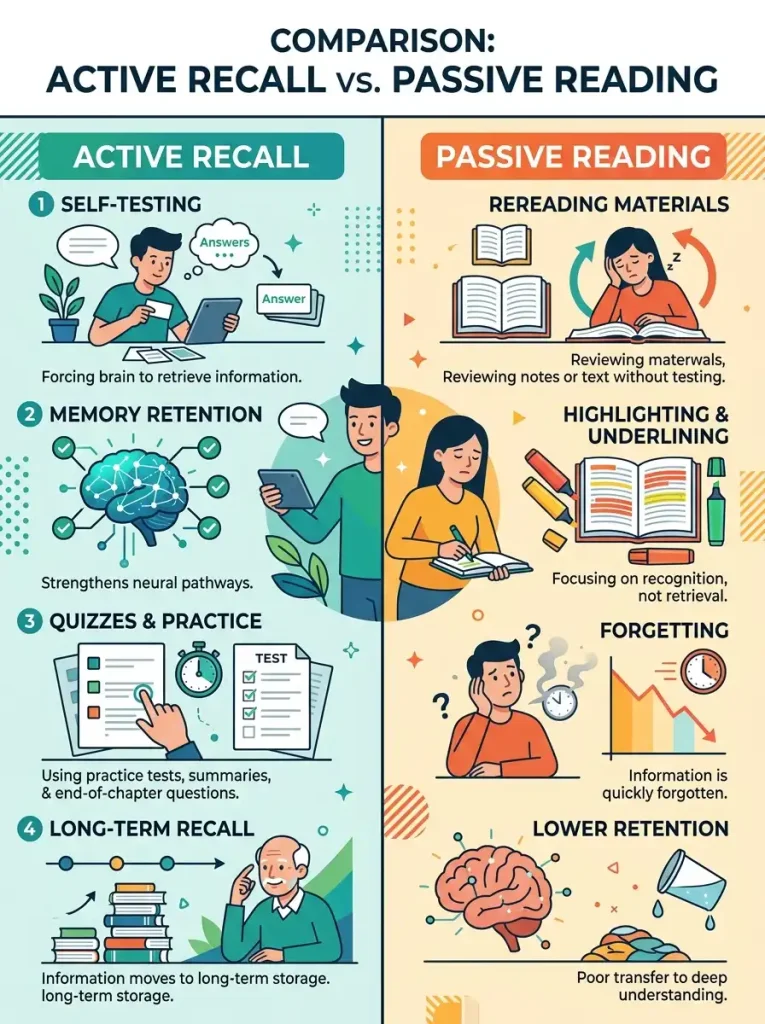
Active recall consistently outperforms passive reading because passive review only builds familiarity with words on a page. You recognize the material, but recognition doesn’t always translate into recall under exam conditions. Recall exercises train the specific skill you’ll actually need when facing a blank exam paper.
Long-term memory depends on how much mental effort a piece of information takes to retrieve. When retrieval requires a bit of struggle and you succeed anyway, that difficulty actually helps the memory stick. Researchers sometimes call this desirable difficulty, and it’s central to why self-testing beats highlighting or rereading.
Students preparing for exams benefit enormously from this approach because exams themselves are recall exercises. A test rarely hands you the answer and asks if it looks familiar. It asks you to produce the answer from nothing, which is precisely what active recall trains you to do.
Why Printable Worksheets Improve Learning
Writing by hand activates a different kind of memory processing than typing does. When you write an answer instead of clicking through flashcard apps, your brain engages motor memory alongside verbal memory. That extra layer of processing often makes the information easier to recall later.
Focus improves naturally with paper in front of you. There’s no notification popping up, no extra browser tab open in the background, and no temptation to check messages mid-sentence. A worksheet asks for one thing only, and that simplicity helps concentration.
Organization becomes far easier with printable study worksheets compared to scattered digital notes across different apps. A stack of completed sheets shows exactly what topics you’ve covered and which ones still need attention. That visual record turns vague progress into something concrete you can flip through.
Reduced distractions matter more than most students expect. Studies on attention consistently show that switching between tasks, even briefly, costs mental focus. Paper worksheets remove that switching cost almost entirely during a study session.
Better memory formation happens because handwriting slows you down just enough to process each idea rather than rushing past it. This slower pace, paired with the effort of retrieval, creates stronger, longer-lasting memory traces than fast digital scrolling ever manages.
Portability adds a practical advantage too. A folder of printable learning resources travels easily to a library, a coffee shop, or a study group, without needing a charged device or stable internet connection. Worksheets can also be reused multiple times, since photocopying a template lets you attempt the same recall exercise on different days to measure genuine improvement.
See also: 14 Welcome Bulletin Board Ideas for School
7 Active Recall Study Method Printable Worksheets PDF
Each worksheet below targets a different part of the learning process, from first exposure to a topic all the way through final exam preparation. Use the descriptions to understand the purpose of each one, then turn to the downloadable PDF section further down for the ready-to-print versions.
Worksheet 1: Brain Dump Worksheet
The Brain Dump Worksheet gives you a blank page and asks you to write everything you remember about a topic without any prompts guiding you. This open format works best for exposing gaps that structured questions might accidentally hide.
It helps students who tend to overestimate their understanding of a subject. Writing freely, without hints, reveals what you genuinely know versus what only feels familiar.
To use it, write the topic name at the top, then set a timer for five to ten minutes. Write continuously, covering definitions, examples, and connections between ideas, without pausing to check accuracy yet. Once the timer ends, compare your writing against your notes and mark anything missing or incorrect.
Use this worksheet right after finishing a chapter or lecture, while the material is still fresh enough to test but far enough from the source that you’re not simply copying it. Expected outcomes include a clearer picture of your overall grasp on a topic and a shorter list of specific gaps to review.
For best results, resist the urge to stop early just because writing feels difficult. That discomfort is a sign the exercise is working, not a signal to quit.
Worksheet 2: Question and Answer Recall Sheet
The Question and Answer Recall Sheet gives you specific prompts instead of a blank page, which suits learners who need structure to stay focused during self-testing. You prepare the questions in advance, then answer them from memory during your recall session.
This worksheet helps students who find open-ended brain dumps overwhelming. Specific questions narrow the task and make each recall attempt feel more manageable.
To use it, write five to ten questions covering one topic before you sit down to study. Leave space beneath each question, then close your notes and answer everything from memory before checking your accuracy.
This format fits daily study routines especially well, since it’s quick to complete and easy to score. Expected outcomes include sharper recall on exam-style questions and a written record of exactly which topics need another pass.
A common tip here: phrase your questions the way an exam might, rather than as simple definitions. This keeps your practice aligned with how you’ll actually be tested.
Worksheet 3: Flash Recall Grid
The Flash Recall Grid combines flashcard creation with active recall by having you write front-and-back card pairs directly onto a printable grid. Writing the cards yourself, rather than typing them into an app, adds a retrieval step during the creation process itself.
This worksheet particularly helps students studying vocabulary-heavy material, such as language courses, medical terminology, or legal definitions, where quick recall of individual facts matters most.
To use it, fill in a term or question on the front side of each card space and the matching answer on the back side. Once the grid is complete, cut along the printed lines to create a small stack of physical flashcards for repeated practice.
Use this worksheet early in your study cycle, while you’re still building a foundation of key terms. Expected outcomes include a ready-made flashcard deck plus the retrieval benefit gained from writing each card by hand.
Avoid cramming multiple facts onto a single card, since combined information makes each retrieval attempt fuzzy rather than sharp and testable.
Worksheet 4: Cornell Active Recall Notes
Cornell Active Recall Notes adapt the well-known Cornell note-taking method into a self-testing format. The layout splits each page into a cue column and a notes column, letting you use your own cues as recall prompts later.
This worksheet helps students who take detailed notes during lectures or reading but rarely revisit them in an active way. It turns static notes into a built-in quiz.
To use it, write full notes in the wider column during your first pass through the material. Afterward, add short cue questions in the narrower column based on what you just wrote. During review, cover the notes column and answer each cue from memory before checking.
This format works well for lecture-based subjects like history, psychology, or business courses. Expected outcomes include organized notes that double as a recall tool without any extra worksheet needed.
A helpful tip: write your summary section at the bottom immediately after class, while the lecture is still fresh, rather than waiting until much later.
Worksheet 5: Spaced Repetition Planner
The Spaced Repetition Planner schedules follow-up recall sessions for each topic at increasing intervals, based on the spacing effect from memory research. Instead of testing a topic once and moving on, this worksheet builds in return visits over time.
This worksheet helps students preparing for exams that are still weeks or months away, where information needs to stay accessible over a long stretch rather than just the next day.
To use it, list your topics down the left column, then fill in review dates spaced further apart each time, such as one day later, then three days, then a week, then two weeks. After each recall attempt, note how confident you felt.
Use this planner from the very start of an exam preparation cycle, since it works best when review dates are set early rather than added after the fact. Expected outcomes include stronger long-term retention and far less last-minute cramming.
A common mistake is spacing every topic identically regardless of how well you know it. Adjust intervals based on performance, giving weaker topics shorter gaps between reviews.
Worksheet 6: Exam Simulation Worksheet
The Exam Simulation Worksheet recreates real test conditions on paper, complete with a time limit and no access to notes. This format trains both content recall and performance under pressure at the same time.
This worksheet helps students who understand the material well but struggle with timing or unfamiliar exam phrasing. Practicing under simulated pressure makes the real exam feel far less intimidating.
To use it, write exam-style questions matching your actual test format, set a timer matching your real exam length, and complete the worksheet with no reference materials nearby. Afterward, mark your own answers using your notes or textbook as the key.
Use this worksheet in the final one to two weeks before an exam, once basic recall of the material is already solid. Expected outcomes include improved timing, reduced exam anxiety, and a realistic gauge of your current readiness.
Avoid peeking at notes partway through if you get stuck, since pushing through that uncertainty is exactly what builds real exam stamina.
Worksheet 7: Weekly Recall Tracker
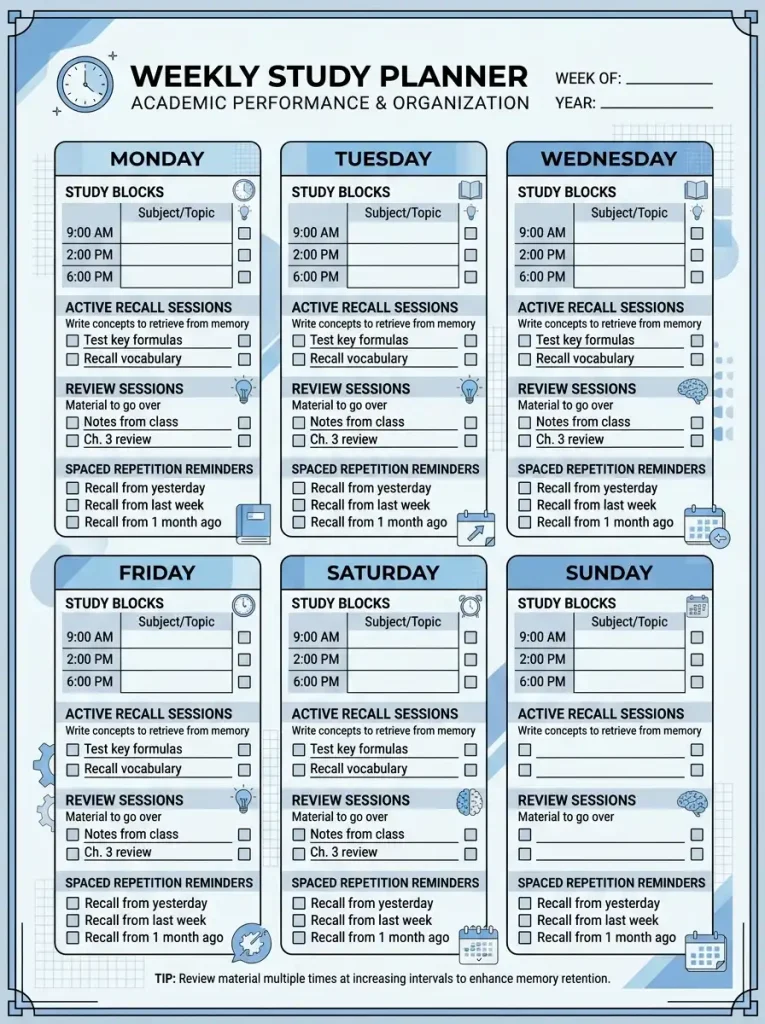
The Weekly Recall Tracker organizes an entire week of study across multiple subjects, ensuring every topic gets consistent attention instead of uneven, last-minute focus. It works as a planning tool that ties the other six worksheets together into a routine.
This worksheet helps students juggling several subjects at once, where without a plan, some topics get reviewed constantly while others get forgotten entirely.
To use it, list the days of the week down one side and assign a specific topic or worksheet to each day. Check off each session as you complete it, and note any topic that needs extra time the following week.
Fill this tracker in at the start of each week, ideally during a short planning session on Sunday. Expected outcomes include a balanced study schedule and clear visibility into which subjects need more consistent recall practice.
A frequent mistake is scheduling every subject on every single day, which leaves no room for proper spacing between reviews. Spread subjects across different days instead, so the spacing effect has room to work.
How to Print These Worksheets
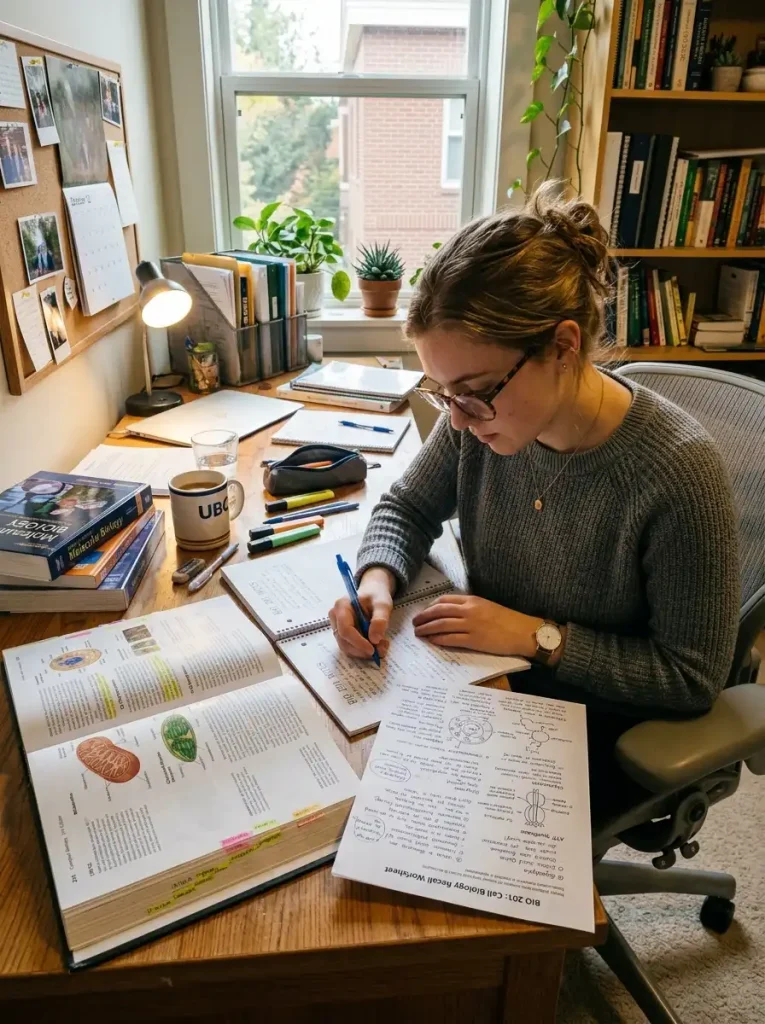
Printing these worksheets correctly makes them easier to use and more durable through repeated study sessions. A few small print settings make a noticeable difference in usability.
Standard A4 or US Letter paper both work fine for these designs, so choose whichever your printer defaults to in your region. Set your printer to standard portrait orientation, since every worksheet layout is designed with that in mind.
Grayscale printing works perfectly well for these worksheets, since none of the layouts rely on color to function. Choosing grayscale over color also saves ink and keeps printing costs low if you plan to print multiple copies each week.
Laminating a few core worksheets, like the Weekly Recall Tracker or Spaced Repetition Planner, turns them into reusable templates rather than single-use pages. Combined with a dry-erase marker, a laminated worksheet can be wiped clean and reused every week without needing a fresh printout.
Reusable dry-erase sleeves offer a similar benefit without needing a laminator at all. Simply slide a printed worksheet into a plastic sleeve and write directly on the surface with a dry-erase marker.
Binding printed worksheets into a dedicated study notebook keeps everything organized in one place rather than scattered loose in a folder. A simple three-ring binder or spiral-bound notebook works well, letting you flip back through weeks of completed recall practice whenever you need a quick review.
Tips for Using Active Recall More Effectively
A few habits separate students who get real results from active recall and those who give up on it too early. These tips apply across every worksheet in this collection.
Combine worksheets with spaced repetition rather than testing a topic just once and moving on. Reviewing the same material after a day, then a week, then a month builds retention that lasts well beyond a single exam.
Avoid rereading notes as a substitute for recall practice, even when it feels faster or easier. Rereading creates a false sense of familiarity that often collapses under real exam pressure.
Teach someone else the material after completing a worksheet, since explaining a topic out loud exposes gaps that writing alone sometimes misses. This overlaps closely with a well-known approach called the Feynman Technique.
Use timed sessions whenever possible, especially with the Exam Simulation Worksheet. Time pressure trains your brain to retrieve information quickly, which matters just as much as retrieving it accurately.
Mix subjects within a single study session rather than focusing on only one topic for hours at a time. This approach, known as interleaving, strengthens your ability to tell related concepts apart instead of blending them together.
Review mistakes carefully instead of glossing over them. A wrong answer on a worksheet points directly to a specific gap, which is far more useful feedback than a vague feeling of uncertainty.
Maintain consistency above all else. A short daily recall habit, even just fifteen minutes, produces far better results over a month than one long cramming session the night before an exam.
Common Mistakes Students Make
Even a strong method loses value when used incorrectly. Watch for these mistakes, along with simple fixes for each one.
Confusing rereading with recall is probably the most common mistake of all. The fix is straightforward: close every note and textbook completely before starting any worksheet.
Checking answers too soon undercuts the entire benefit of retrieval practice. Try sitting with uncertainty a little longer than feels comfortable before looking anything up.
Skipping scheduled review sessions breaks the spaced repetition cycle that makes long-term retention possible. Building review dates directly into the Spaced Repetition Planner prevents this from happening by accident.
Memorizing without understanding creates knowledge that falls apart under pressure. Pair worksheets with explaining concepts out loud in your own words, rather than repeating memorized phrases.
Cramming every worksheet into the final day before an exam defeats the purpose of spacing entirely. Spread sessions across several weeks using the Weekly Recall Tracker instead of leaving everything until the last moment.

Frequently Asked Questions
What makes active recall more effective than highlighting or rereading?
Active recall forces your brain to retrieve information rather than simply recognize it on a page. This retrieval effort strengthens memory pathways in a way that passive review, including highlighting and rereading, generally does not achieve.
How often should I use these printable worksheets?
Daily use works well for new material, since testing yourself soon after learning something locks it in before it fades. Weekly sessions using the Weekly Recall Tracker help reinforce older material at wider intervals.
Can these worksheets replace regular note-taking?
Not entirely. Worksheets work best after you’ve already taken notes or read through material, since they test what you’ve learned rather than teaching it from scratch.
What subjects work best with active recall printable worksheets?
Nearly every subject benefits, though the format matters. Fact-heavy subjects like biology or history often suit the Question and Answer Recall Sheet, while concept-heavy subjects like mathematics benefit more from the open-ended Brain Dump Worksheet.
How long should one study session with these worksheets last?
Sessions between twenty and forty-five minutes tend to work best, since retrieval practice demands focused mental effort that fades with fatigue. Shorter, more frequent sessions usually beat one long marathon session.
Is it normal to feel like I know less after using these worksheets?
Yes, and that’s actually useful information. Many students overestimate their understanding until a worksheet reveals genuine gaps, which gives you a much more accurate picture before an exam than confidence alone.
Should I print these worksheets in color or black and white?
Black and white printing works perfectly well, since none of the layouts depend on color. Grayscale printing also saves ink if you plan to print several copies throughout the term.
Can I reuse the same worksheet multiple times?
Yes, especially with a laminated copy or a dry-erase sleeve. Reusing the same template on different days lets you track genuine improvement on the same topic over time.
How do these worksheets work for group study sessions?
The Question and Answer Recall Sheet and Exam Simulation Worksheet both work well in groups, since students can quiz each other using completed sheets. This adds accountability and instant feedback that solo studying sometimes lacks.
What’s the best way to combine these worksheets with a study schedule?
Use the Weekly Recall Tracker to assign specific worksheets to specific days, then layer the Spaced Repetition Planner on top for topics that need review weeks later. Together, they create a full study schedule rather than isolated sessions.
Do younger students benefit from active recall worksheets too?
Yes, though simpler formats like the Flash Recall Grid or shorter Question and Answer Recall Sheets tend to suit younger learners better than open-ended formats like the Brain Dump Worksheet.
Can homeschool parents use these worksheets across multiple children?
Absolutely. Since the worksheets are reusable templates, a homeschool parent can print or laminate a set for each child and adjust the subject matter to fit each student’s current lessons.
Final Thoughts
Active recall works because it asks your brain to do the difficult part: producing an answer instead of simply recognizing one. These seven printable worksheets turn that idea into a repeatable, structured habit rather than a vague intention to “study smarter.”
Pick one worksheet that matches your current subject, print it out, and give it a genuine try during your next study session. Over a few weeks, the gap between what you think you know and what you can actually recall will shrink, and that shift is exactly what carries you into an exam feeling prepared rather than anxious.
Download the free 7 active recall study method printable worksheets PDF below, print the pages you need most, and start building a consistent recall habit today.
Download Your Free Active Recall Study Method Printable Worksheets PDF
The downloadable file below contains all seven worksheets in a clean, print-ready layout formatted for A4 portrait paper. Each worksheet includes labeled fields, lined writing space, and tables designed to leave plenty of room for handwritten answers. Print as many copies as you need and reuse the templates throughout the term.