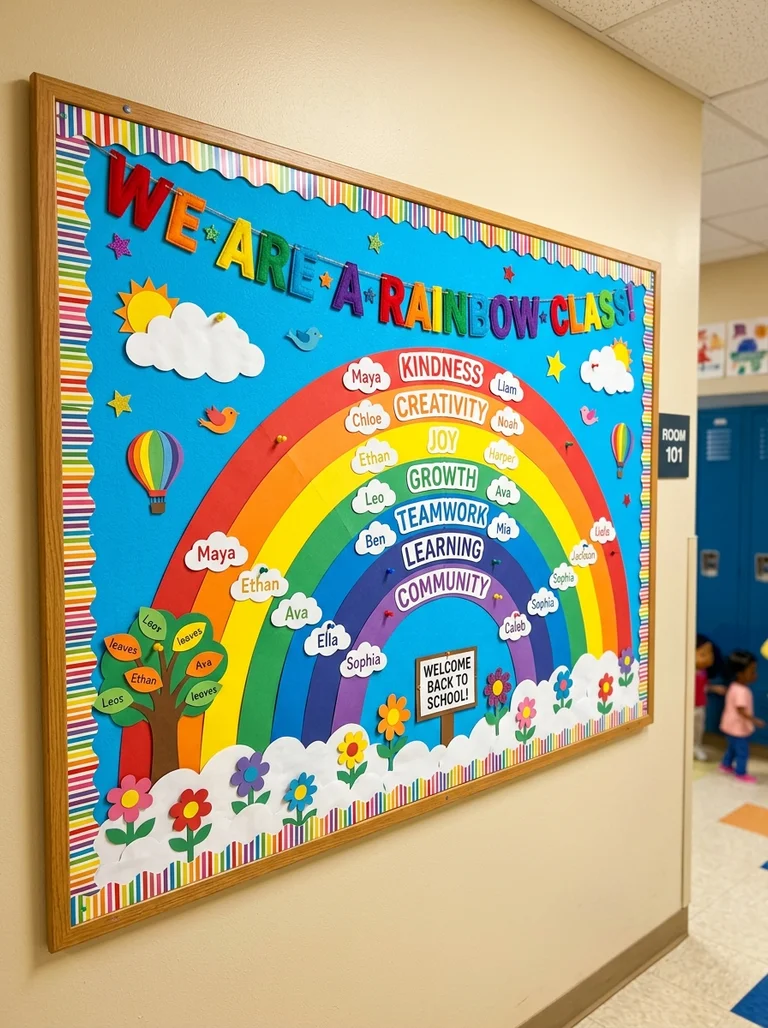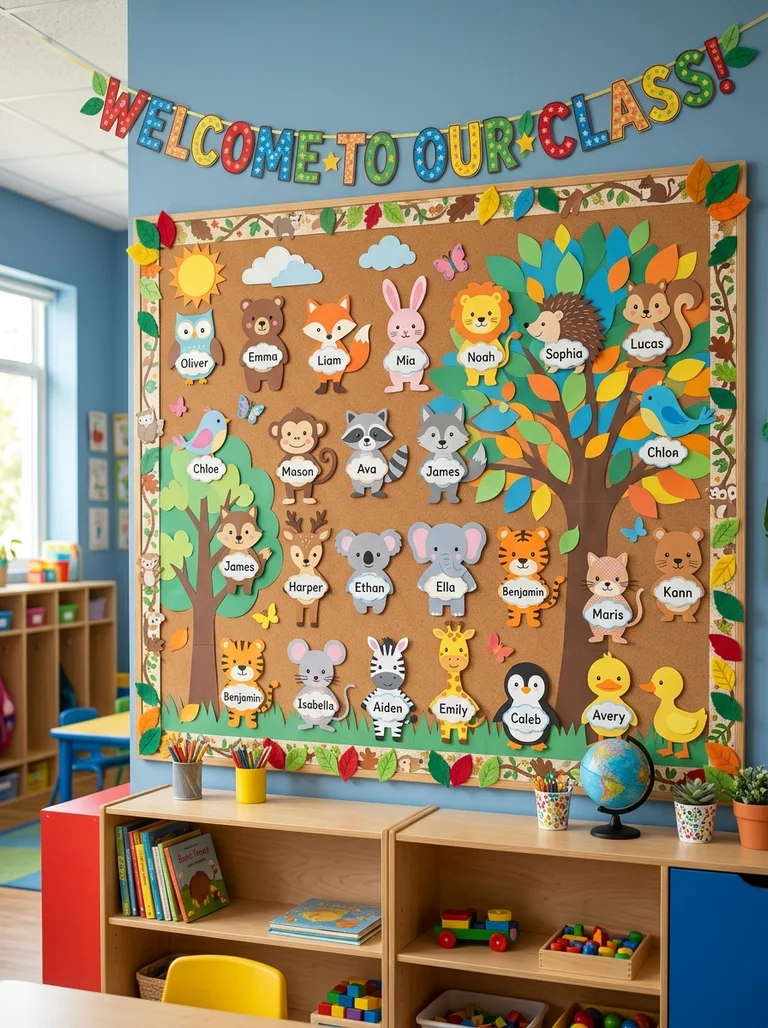
14 Welcome Bulletin Board Ideas for School
The first thing a student notices when they walk into a new classroom isn’t the seating chart or the syllabus. It’s the wall. A thoughtfully designed welcome bulletin board tells students, in the very first seconds of the year, whether this room feels like a place they’ll want to be.
That first impression matters more than most teachers realize. Students form quiet judgments about a classroom’s warmth, energy, and inclusivity before a single lesson begins. A strong classroom welcome board sets the tone for everything that follows, from classroom culture to daily motivation.
This guide walks through 14 welcome bulletin board ideas for school, built for elementary, middle school, and high school classrooms alike. Each idea includes materials, setup steps, and honest advice from real classroom experience, so you can start building a display that genuinely reflects your teaching style.
Whether you’re decorating for the first day of school or refreshing a tired hallway display, these ideas offer something practical for every grade level and budget.
14 Welcome Bulletin Board Ideas for School
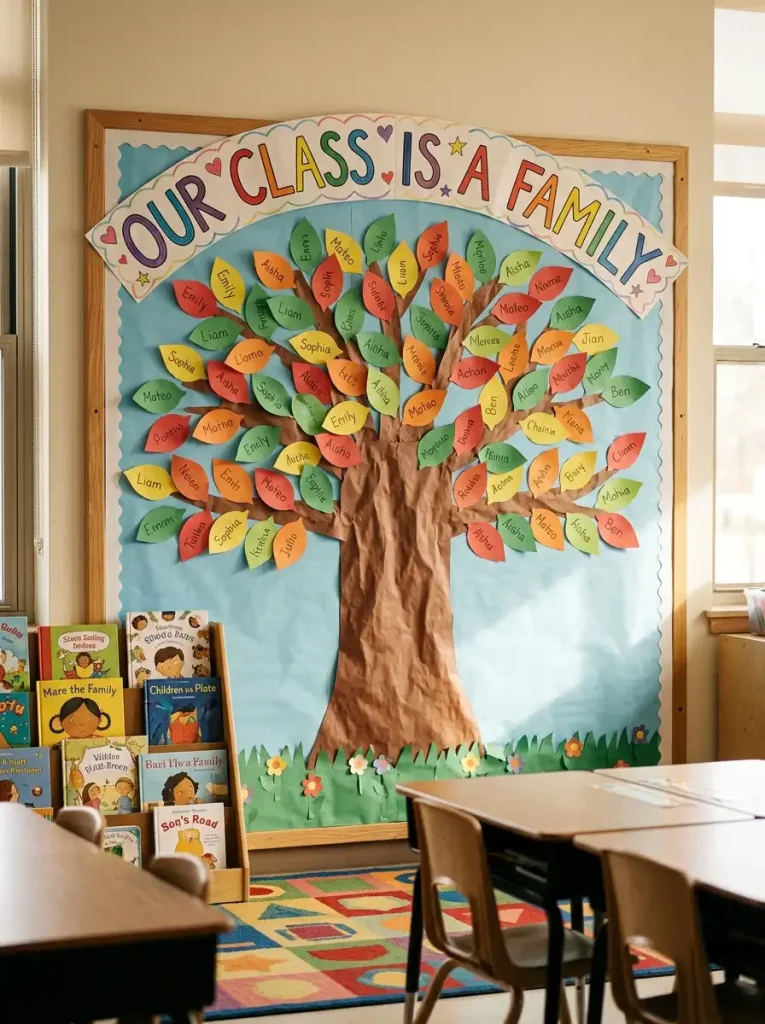
1. Our Class Is a Family
Theme overview: This warm display uses a family tree or house-shaped design to represent the entire class as one connected unit.
Best grade levels: Elementary through middle school.
Educational purpose: Builds classroom community and reinforces belonging from the first day.
Materials required: Brown paper for a tree trunk or house outline, colorful leaf or window cutouts, and student name labels.
Step-by-step setup guide:
- Attach a large tree trunk or house shape to the board.
- Add branches or windows representing each student.
- Write each student’s name on a leaf or window cutout.
- Arrange names across the structure in a full, connected pattern.
Decoration ideas: Add a welcoming title banner like “Our Class Family” above the display.
Interactive student participation ideas: Let students decorate their own leaf or window before it’s added to the board.
Budget-friendly alternatives: Use recycled brown paper bags for the tree trunk instead of purchasing new paper.
Customization options: Adjust the shape seasonally, using a blooming tree in spring or a bare branch in winter.
Common mistakes to avoid: Leaving gaps when students transfer in or out, which can make the display feel incomplete.
Why the idea works: Seeing their name permanently placed within a larger, connected structure gives students an immediate sense of belonging.
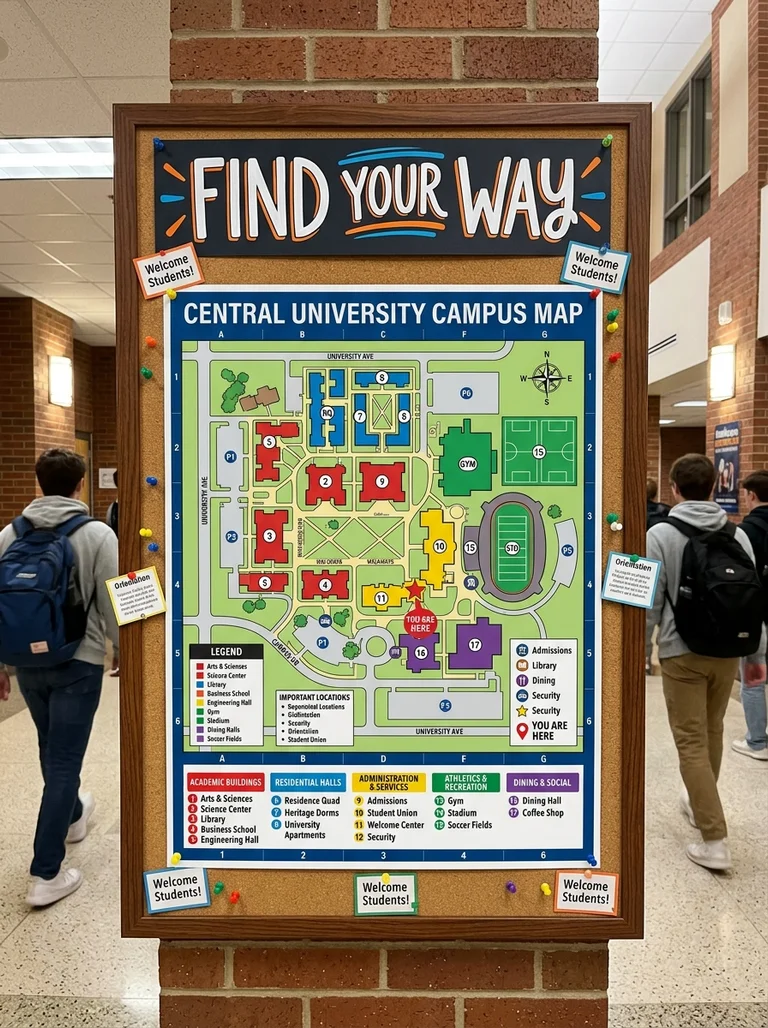
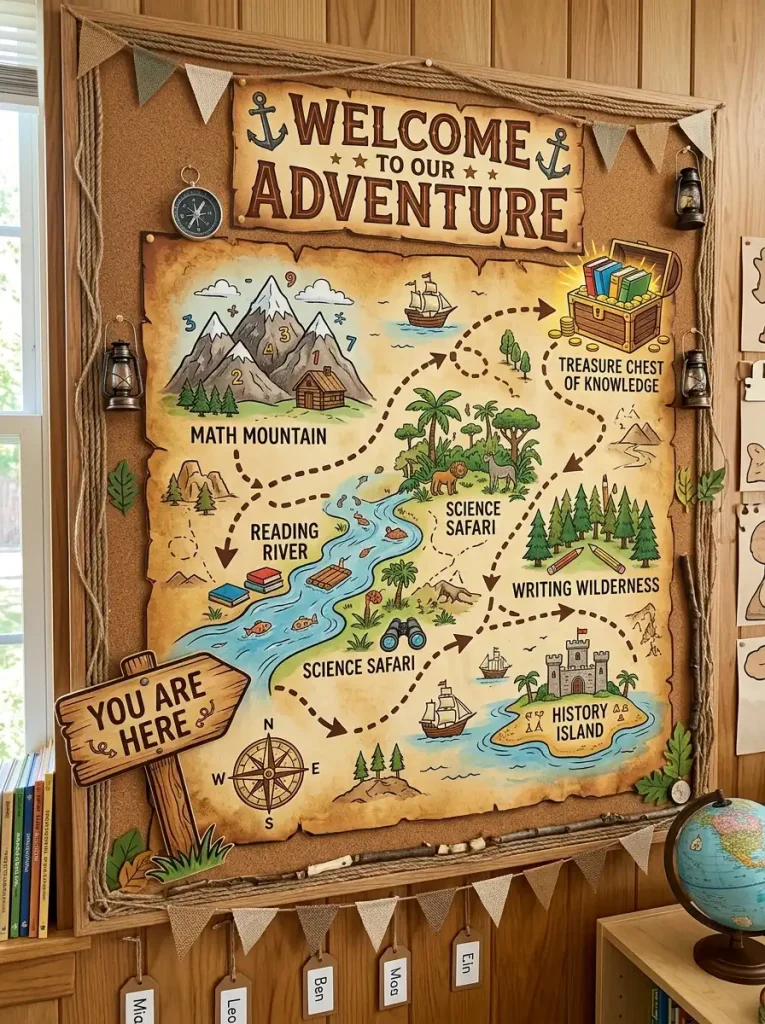
2. Welcome to Our Adventure
Theme overview: A map-style display frames the school year as a journey, with landmarks representing upcoming units or milestones.
Best grade levels: Elementary through middle school.
Educational purpose: Builds anticipation and helps students visualize the year’s structure and pacing.
Materials required: A large map background, path or trail graphics, and small landmark icons.
Step-by-step setup guide:
- Attach a background resembling a treasure map or trail.
- Draw or attach a winding path across the board.
- Add landmark icons representing major units or events.
- Include a “You Are Here” marker that moves throughout the year.
Decoration ideas: Add a compass graphic and a bold “Adventure Awaits” title banner.
Interactive student participation ideas: Let students help move the marker forward as milestones are reached.
Budget-friendly alternatives: Draw the path freehand instead of purchasing a printed map template.
Customization options: Update landmark icons to reflect your specific curriculum’s actual units and pacing guide.
Common mistakes to avoid: Overcomplicating the map with too many landmarks, which can overwhelm younger students.
Why the idea works: Framing the year as an adventure builds curiosity and gives students a visual sense of progress.
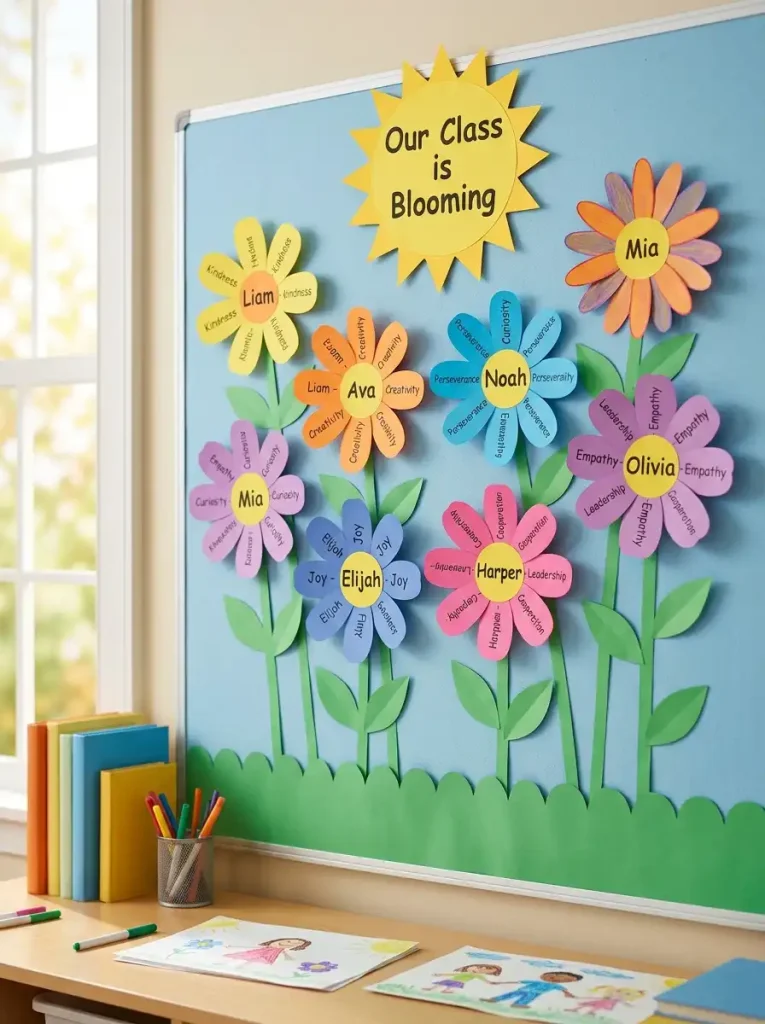
3. Bloom Where You Are Planted
Theme overview: A garden-themed display where each student receives a personalized flower representing their unique strengths.
Best grade levels: Elementary through middle school.
Educational purpose: Builds self-esteem and reinforces individual identity within the group.
Materials required: Colored paper for flowers, green paper for stems, and markers.
Step-by-step setup guide:
- Cut large flower shapes in varied colors.
- Write each student’s name and one strength on a petal.
- Attach a green stem and leaves below each flower.
- Arrange flowers in a loose, garden-style cluster.
Decoration ideas: Add a sun cutout at the top reading “Our Class is Blooming.”
Interactive student participation ideas: Let students choose their own flower color and help decorate their petals.
Budget-friendly alternatives: Use leftover construction paper scraps from previous projects.
Customization options: Swap flowers for pumpkins in fall or snowflakes in winter while keeping the same structure.
Common mistakes to avoid: Crowding flowers too tightly, making individual names difficult to read.
Why the idea works: The garden metaphor reinforces growth and individuality without singling any student out negatively.
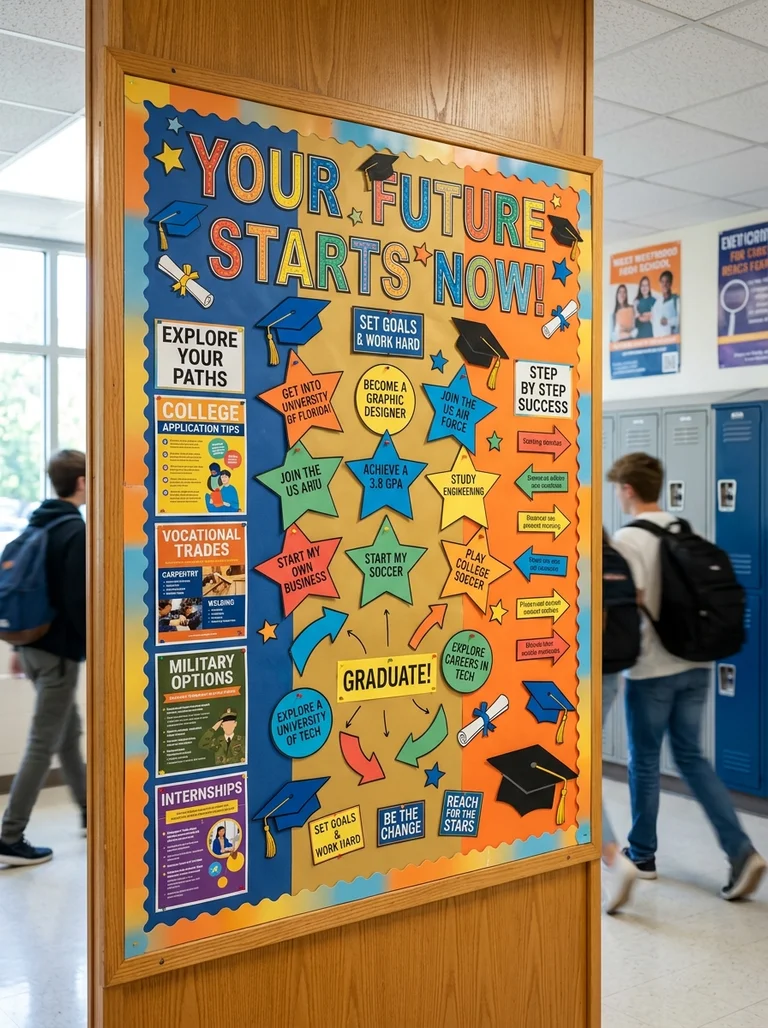
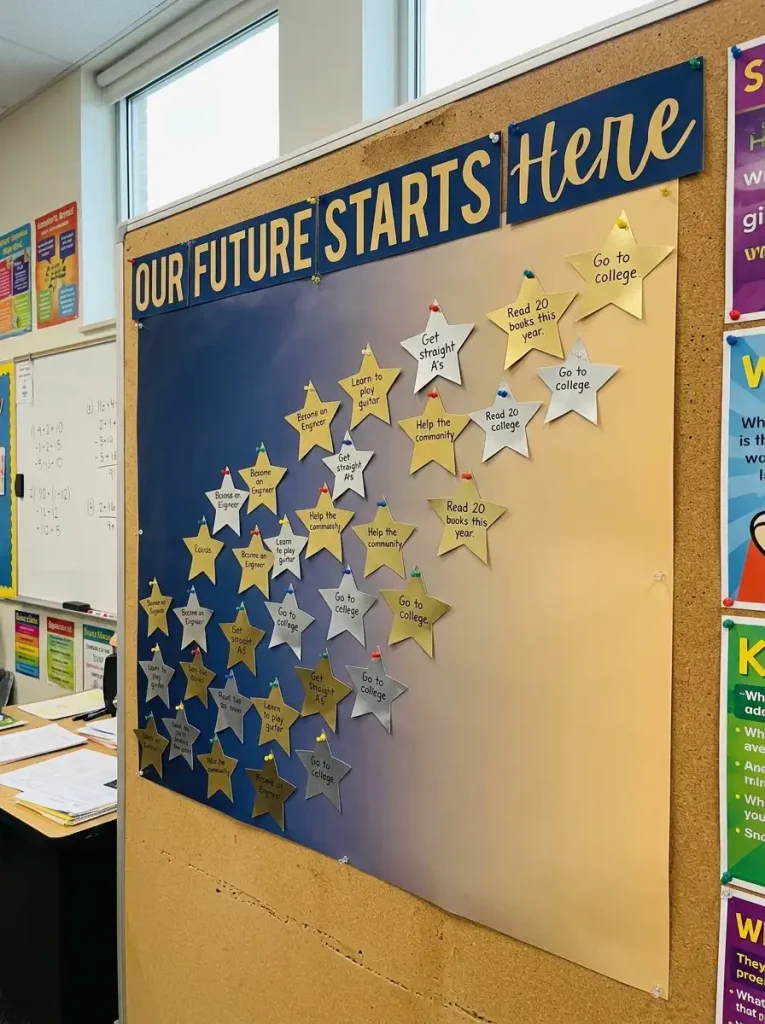
4. Our Future Starts Here
Theme overview: A forward-looking display featuring student goals or career aspirations for the year ahead.
Best grade levels: Middle school through high school.
Educational purpose: Encourages goal-setting and long-term thinking from the very first week.
Materials required: Star or arrow cutouts, markers, and a bold title banner.
Step-by-step setup guide:
- Attach a title banner reading “Our Future Starts Here.”
- Cut star or arrow shapes representing individual goals.
- Ask students to write one personal or academic goal on their shape.
- Arrange shapes across the board in an upward, aspirational pattern.
Decoration ideas: Use a gradient background transitioning from dark to light, symbolizing growth and progress.
Interactive student participation ideas: Revisit goals at the semester’s midpoint, letting students update or reflect on progress.
Budget-friendly alternatives: Print shape templates instead of hand-cutting each one individually.
Customization options: Group goals by category, such as academic, personal, or extracurricular.
Common mistakes to avoid: Allowing goals to stay too vague, which makes later reflection difficult.
Why the idea works: Publicly stating a goal builds accountability and gives students ownership over their own growth.
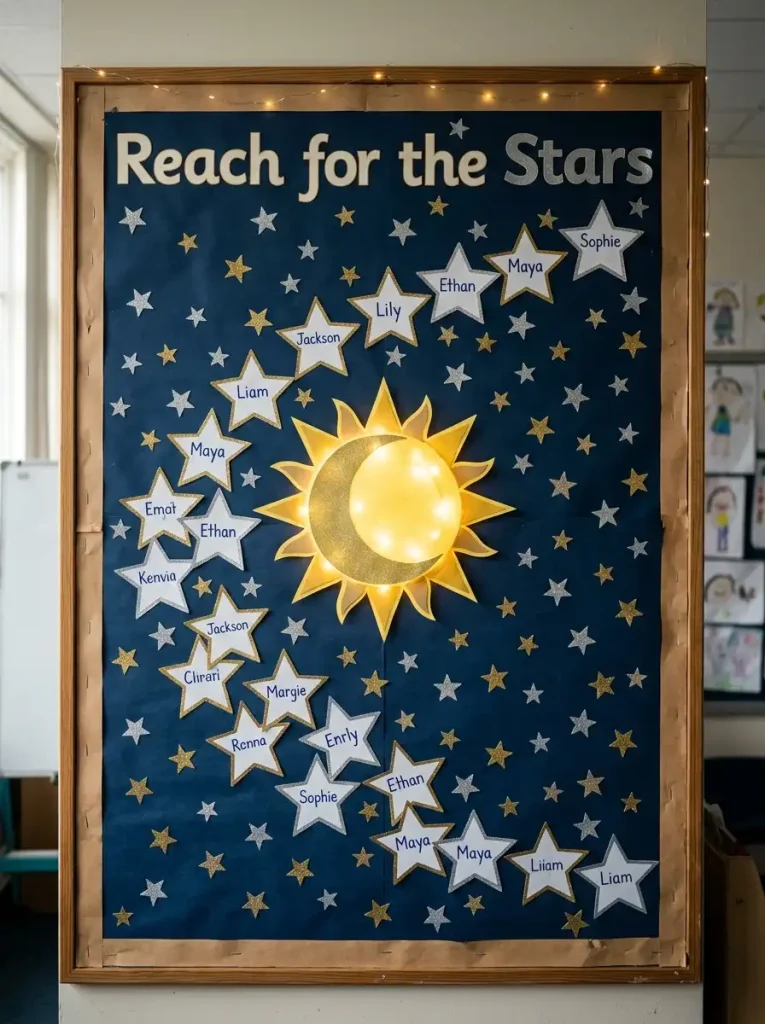
5. Reach for the Stars
Theme overview: A night-sky themed display celebrating ambition, with each student represented by a star reaching toward a central goal.
Best grade levels: Elementary through high school.
Educational purpose: Builds motivation and reinforces the idea that effort leads to achievement.
Materials required: Dark blue or black background paper, star cutouts, and metallic or white markers.
Step-by-step setup guide:
- Cover the board with a deep blue or black background.
- Cut star shapes in varied sizes.
- Write each student’s name on their own star.
- Arrange stars reaching toward a larger sun or moon centerpiece.
Decoration ideas: Scatter smaller decorative stars throughout the background for added depth.
Interactive student participation ideas: Let students add a new small star each time they reach a personal milestone.
Budget-friendly alternatives: Use white paper instead of purchasing metallic sheets.
Customization options: Group stars into constellations representing table teams or reading groups.
Common mistakes to avoid: Making stars too small to read names clearly from a distance.
Why the idea works: The visual metaphor of reaching upward resonates naturally with themes of ambition and progress.
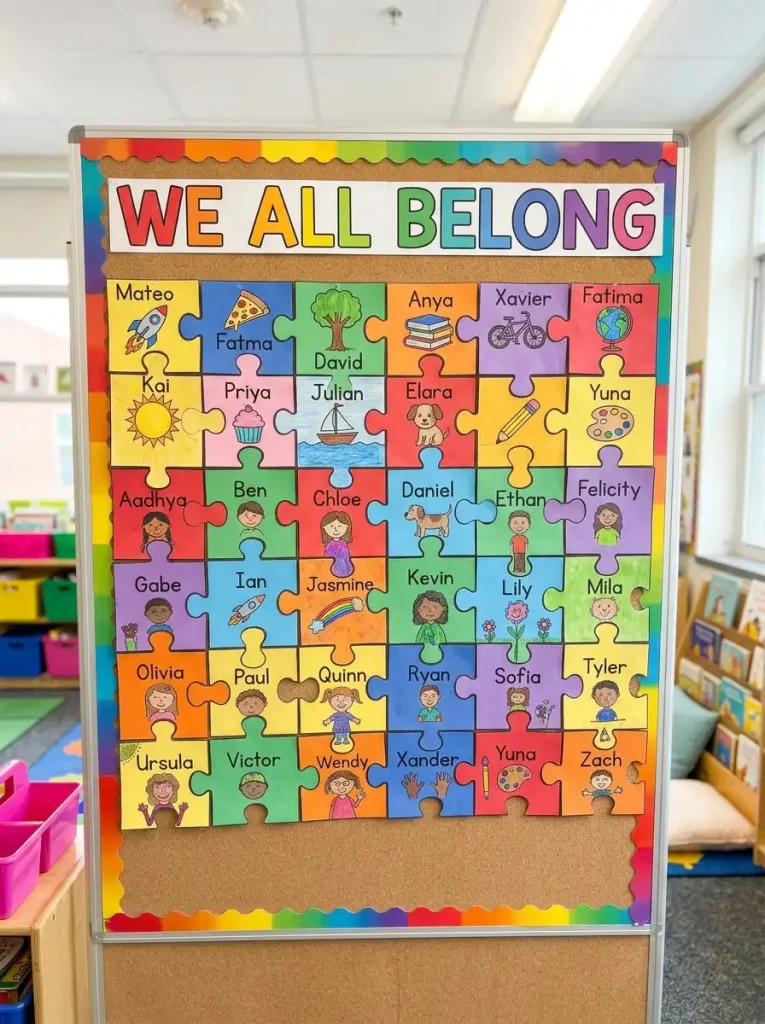
6. We All Belong
Theme overview: An inclusive puzzle-piece display where each student contributes one piece to a larger, connected classroom image.
Best grade levels: Elementary through middle school.
Educational purpose: Reinforces inclusivity and shows how every individual contributes to a whole.
Materials required: Puzzle piece templates, markers, and a bold title banner.
Step-by-step setup guide:
- Print or cut puzzle piece shapes, one per student.
- Let each student decorate their own piece with their name and a small drawing.
- Assemble the pieces into one complete puzzle image.
- Attach the finished puzzle to the board with a “We All Belong” title.
Decoration ideas: Use a rainbow gradient across the puzzle for a cheerful, inclusive visual effect.
Interactive student participation ideas: Let students physically place their own piece into the puzzle during a first-week activity.
Budget-friendly alternatives: Print puzzle templates for free instead of purchasing precut puzzle piece packs.
Customization options: Add new pieces throughout the year as new students join the classroom.
Common mistakes to avoid: Skipping the personalization step, which turns a meaningful concept into a generic pattern.
Why the idea works: Physically fitting individual pieces together makes an abstract concept like inclusivity feel concrete and visible.
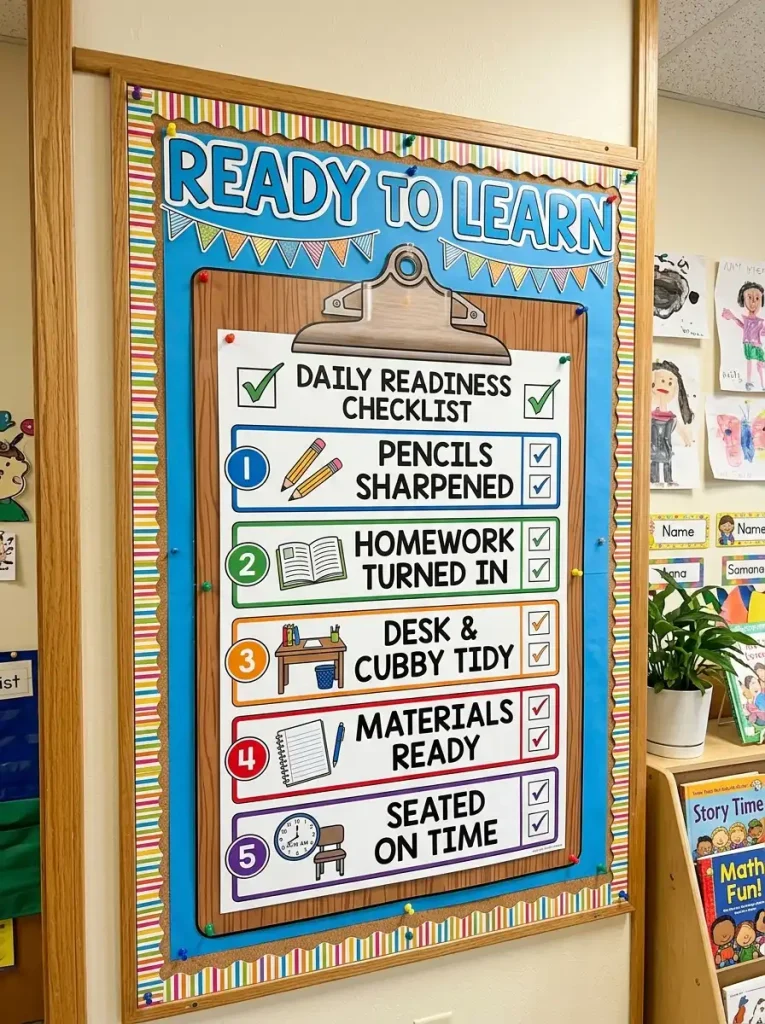
7. Ready to Learn
Theme overview: A practical, checklist-style display reinforcing classroom expectations and daily readiness routines.
Best grade levels: Elementary through middle school.
Educational purpose: Reinforces classroom procedures and daily expectations in a clear, visual format.
Materials required: Checklist icons, colored paper, and bold lettering.
Step-by-step setup guide:
- List three to five key daily readiness expectations, like “pencils sharpened” or “homework turned in.”
- Create a simple icon representing each expectation.
- Arrange icons in a clear, numbered sequence.
- Add a bold “Ready to Learn” title banner at the top.
Decoration ideas: Use a clipboard or checklist graphic as a visual anchor for the entire display.
Interactive student participation ideas: Assign a rotating student job to check off completed expectations each morning.
Budget-friendly alternatives: Draw icons by hand instead of purchasing printed clip art sets.
Customization options: Adjust expectations throughout the year as classroom routines evolve.
Common mistakes to avoid: Listing too many expectations at once, which dilutes focus and clarity.
Why the idea works: A clear visual checklist reduces confusion and builds consistent daily habits from the very first week.
8. Adventure Awaits
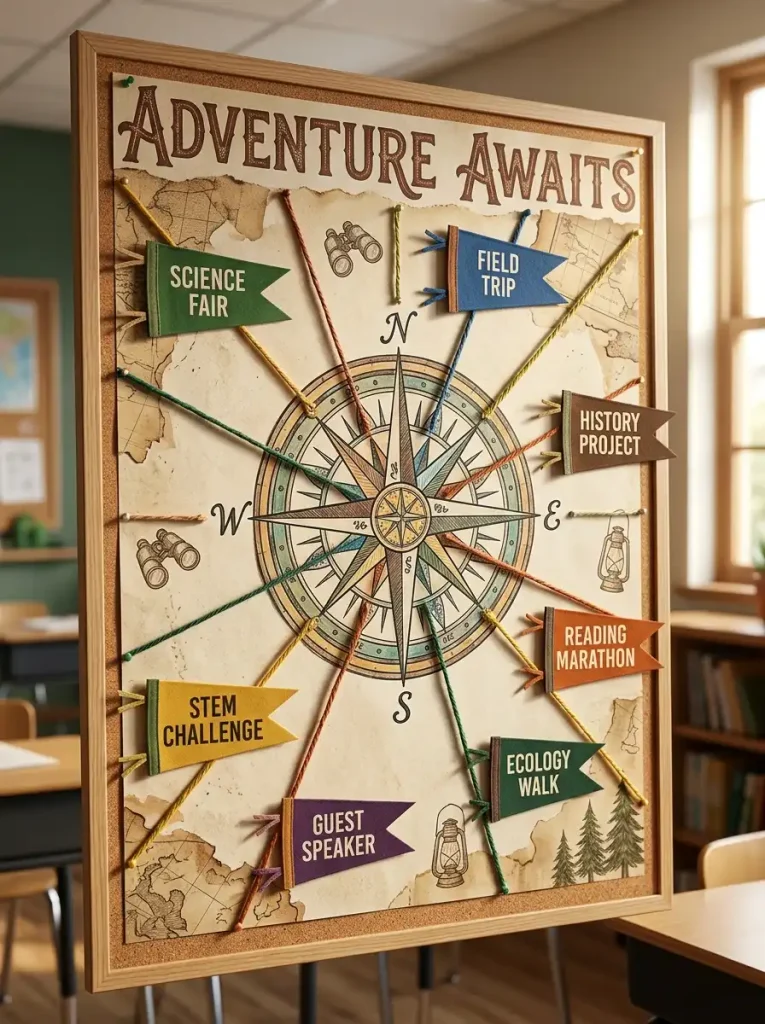
Theme overview: An exploration-themed display using compass, map, and journey imagery to build excitement for the year ahead.
Best grade levels: Elementary through middle school.
Educational purpose: Builds anticipation and curiosity about upcoming learning experiences.
Materials required: Compass and map graphics, string, and small flag markers.
Step-by-step setup guide:
- Attach a large compass graphic as the board’s centerpiece.
- Add string lines radiating outward to different flag markers.
- Label each flag with an upcoming unit or classroom event.
- Add a bold “Adventure Awaits” title banner.
Decoration ideas: Use earthy tones like brown, green, and gold to reinforce the exploration theme.
Interactive student participation ideas: Let students help design or choose flag icons for upcoming events.
Budget-friendly alternatives: Use recycled cardboard for the compass shape instead of purchasing a premade template.
Customization options: Rotate flags throughout the year to reflect the current unit or season.
Common mistakes to avoid: Adding too many flags at once, which clutters the compass’s visual clarity.
Why the idea works: Explorer imagery naturally builds excitement and curiosity about what’s coming next in the classroom.
9. Bright Minds Grow Here
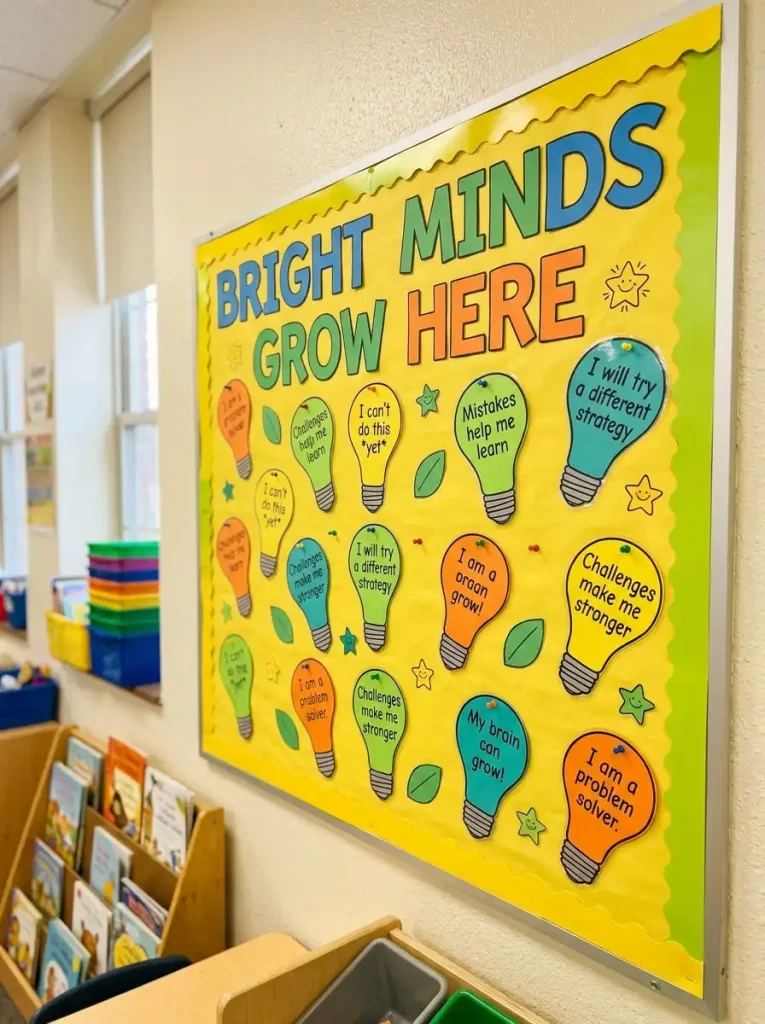
Theme overview: A growth mindset display using lightbulb or plant imagery to reinforce learning as an ongoing process.
Best grade levels: Elementary through high school.
Educational purpose: Reinforces growth mindset language and normalizes effort over immediate perfection.
Materials required: Lightbulb or plant cutouts, colored paper, and markers.
Step-by-step setup guide:
- Cut lightbulb or plant shapes representing individual growth.
- Label each shape with a growth mindset phrase, like “I can’t do this yet.”
- Arrange shapes across the board in a bright, energetic pattern.
- Add a bold “Bright Minds Grow Here” title banner.
Decoration ideas: Use a yellow and green color palette to reinforce brightness and growth.
Interactive student participation ideas: Let students add a new lightbulb each time they push through a challenging task.
Budget-friendly alternatives: Print lightbulb templates instead of hand-cutting each shape individually.
Customization options: Rotate featured growth mindset phrases monthly to keep the message fresh.
Common mistakes to avoid: Using overly abstract phrases students don’t genuinely understand or connect with.
Why the idea works: Repeated exposure to growth mindset language helps normalize struggle as a natural part of learning.
See also: 10 Summer Bulletin Board Ideas Preschool Teachers Adore
10. You Matter Here
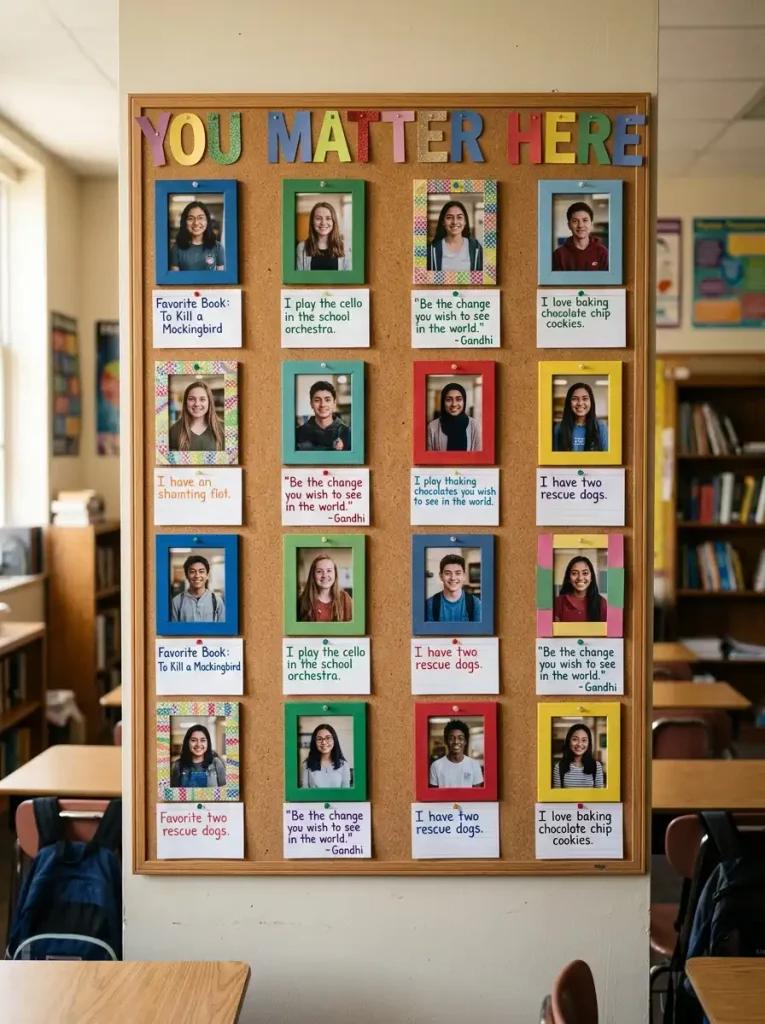
Theme overview: A deeply personal display celebrating individual student identity through photos, quotes, or personal facts.
Best grade levels: Middle school through high school.
Educational purpose: Builds self-worth and reinforces that every student’s presence genuinely matters.
Materials required: Student photos, colorful frames, and short personal fact labels.
Step-by-step setup guide:
- Collect a photo or self-portrait from each student.
- Add a colorful frame or border around each photo.
- Attach a short personal fact or favorite quote beneath each image.
- Arrange photos evenly across the board with a “You Matter Here” title.
Decoration ideas: Use varied frame colors to represent each student’s individuality.
Interactive student participation ideas: Let students choose and write their own personal fact rather than assigning one.
Budget-friendly alternatives: Use black-and-white printed photos colored in by hand instead of full-color prints.
Customization options: Update facts periodically throughout the year as students grow and change.
Common mistakes to avoid: Skipping students who transfer in later, which can make late arrivals feel excluded.
Why the idea works: Direct, personal recognition builds genuine emotional connection between students and their classroom space.
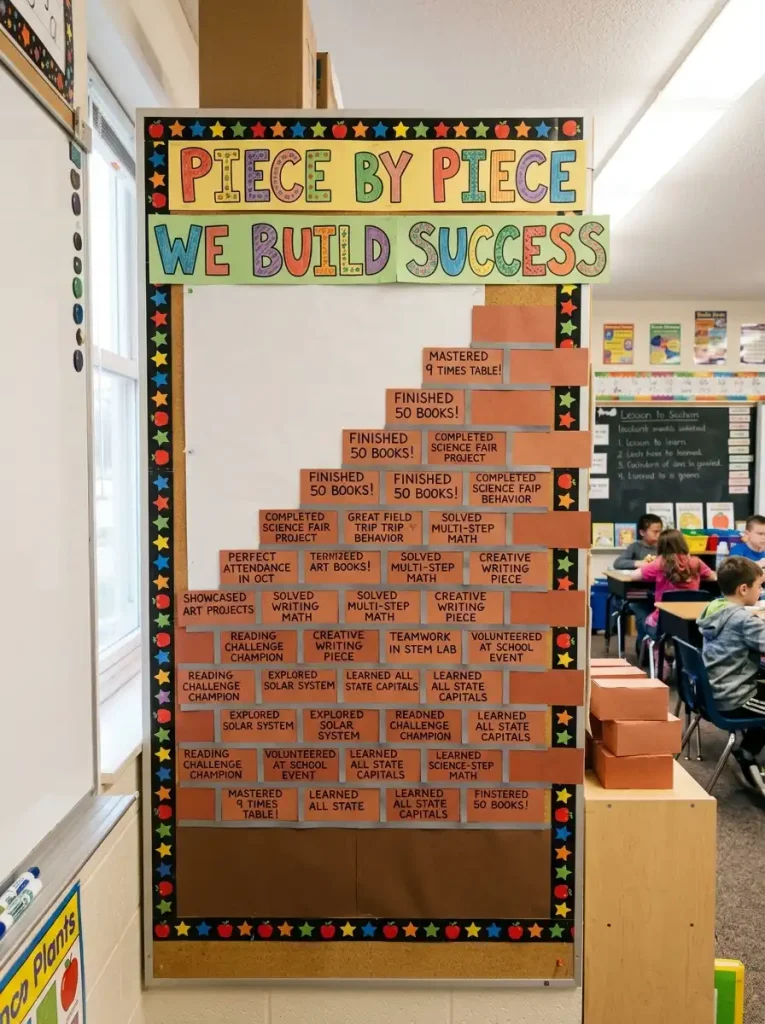
11. Piece by Piece We Build Success
Theme overview: A building-block or brick-themed display representing collective classroom achievement over time.
Best grade levels: Elementary through middle school.
Educational purpose: Reinforces the idea that consistent small efforts build toward larger success.
Materials required: Brick or block cutouts, markers, and a foundation graphic.
Step-by-step setup guide:
- Attach a simple foundation line along the board’s bottom edge.
- Cut brick or block shapes in a uniform size.
- Label each brick with a classroom achievement or milestone as it happens.
- Stack bricks upward throughout the year to show visible progress.
Decoration ideas: Use warm brick-red tones paired with gray mortar lines for an authentic building effect.
Interactive student participation ideas: Let students help decide which achievements deserve a new brick addition.
Budget-friendly alternatives: Use recycled cardboard cut into brick shapes instead of purchasing specialty paper.
Customization options: Track different categories, like academic or behavioral wins, using different brick colors.
Common mistakes to avoid: Adding bricks too infrequently, which weakens the sense of ongoing progress.
Why the idea works: Watching a physical structure grow taller mirrors the gradual, cumulative nature of real classroom success.
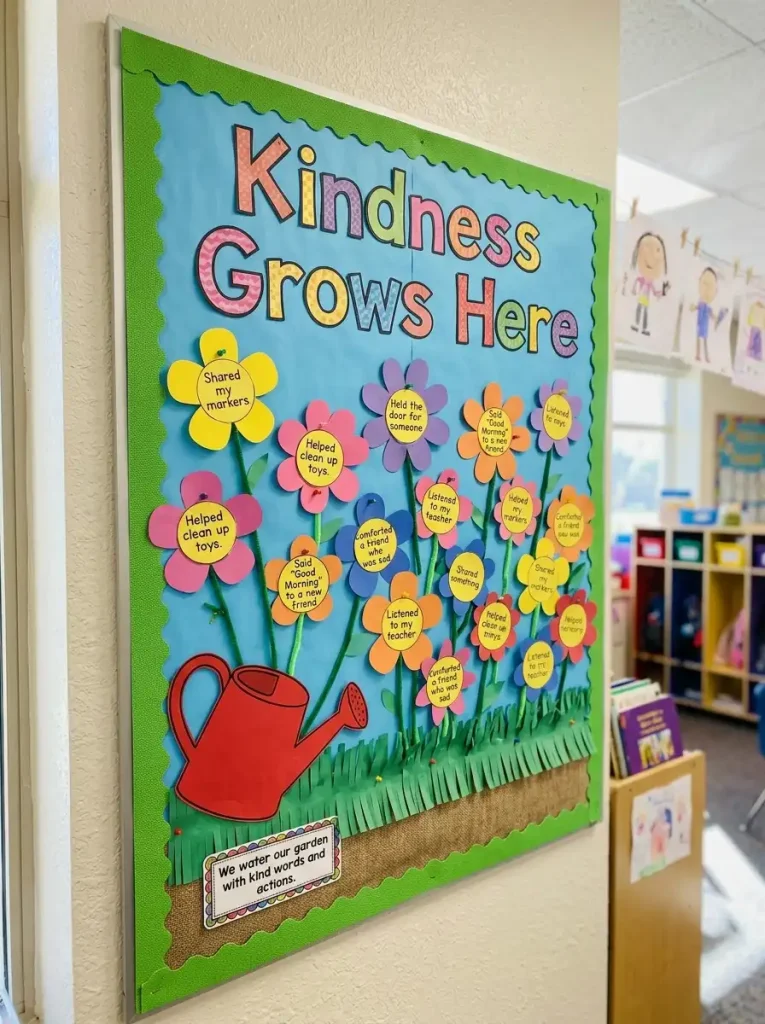
12. Kindness Grows Here
Theme overview: A garden-style display tracking acts of kindness throughout the classroom community.
Best grade levels: Elementary through middle school.
Educational purpose: Reinforces social-emotional learning and positive classroom culture.
Materials required: Flower or leaf cutouts, green background paper, and markers.
Step-by-step setup guide:
- Attach a green garden-bed background along the board’s bottom edge.
- Keep a stack of blank flower or leaf cutouts nearby.
- Write one kind act per flower as it happens throughout the week.
- Add flowers to the garden continuously, letting it grow fuller over time.
Decoration ideas: Add a small watering can graphic to reinforce the growth metaphor.
Interactive student participation ideas: Let students nominate classmates for kindness recognition themselves.
Budget-friendly alternatives: Cut flowers from recycled magazine pages instead of purchasing new colored paper.
Customization options: Extend the kindness theme into a dedicated gratitude board during November.
Common mistakes to avoid: Allowing the same few students to dominate the recognition space repeatedly.
Why the idea works: Public, ongoing recognition reinforces kindness as a valued, everyday classroom behavior.
See also: 8 Space Bulletin Board Ideas for Preschool
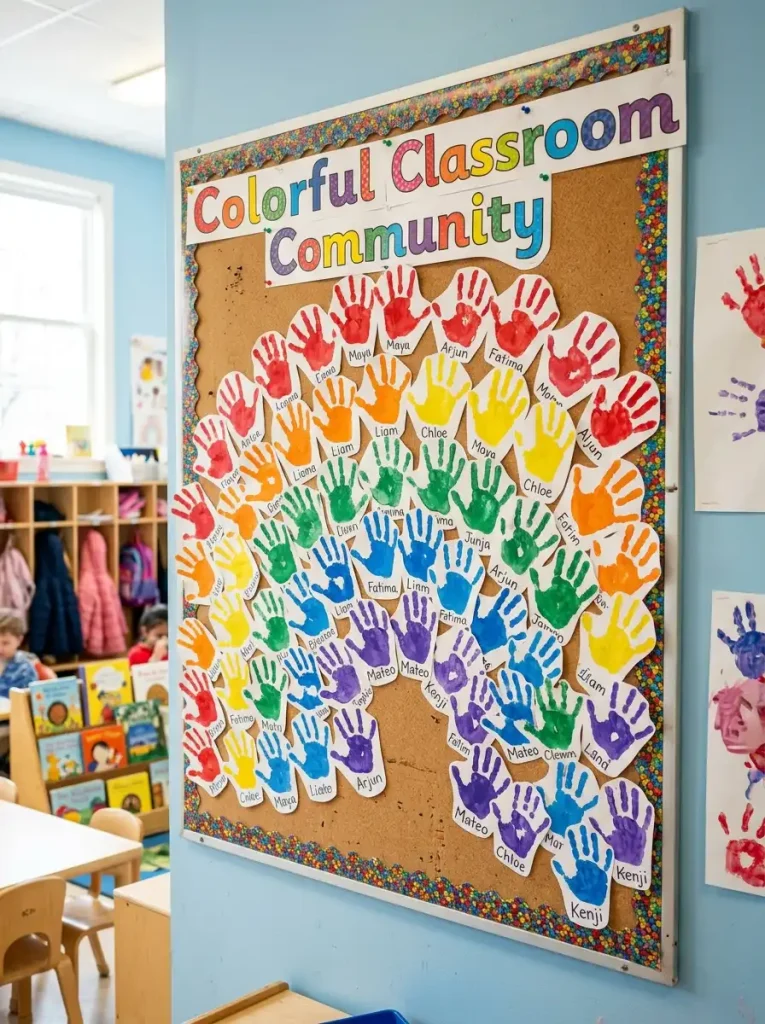
13. Colorful Classroom Community
Theme overview: A vibrant, handprint-based display representing every student’s unique contribution to the classroom’s collective identity.
Best grade levels: Preschool through elementary.
Educational purpose: Builds community identity while reinforcing that diversity strengthens a group.
Materials required: Paint or colored paper for handprints, a large background sheet, and markers.
Step-by-step setup guide:
- Create a handprint for each student using paint or traced paper cutouts.
- Arrange handprints across the board in a colorful, overlapping pattern.
- Write each student’s name beneath their own handprint.
- Add a bold “Colorful Classroom Community” title banner.
Decoration ideas: Vary handprint colors randomly for a joyful, rainbow-like effect.
Interactive student participation ideas: Let students choose their own paint color to represent their individual personality.
Budget-friendly alternatives: Trace hands on paper instead of using paint to avoid mess and material costs.
Customization options: Add new handprints throughout the year as new students join the class.
Common mistakes to avoid: Overcrowding handprints so tightly that individual names become difficult to read.
Why the idea works: The visual mix of colors and shapes mirrors how individual differences combine into a strong, unified community.
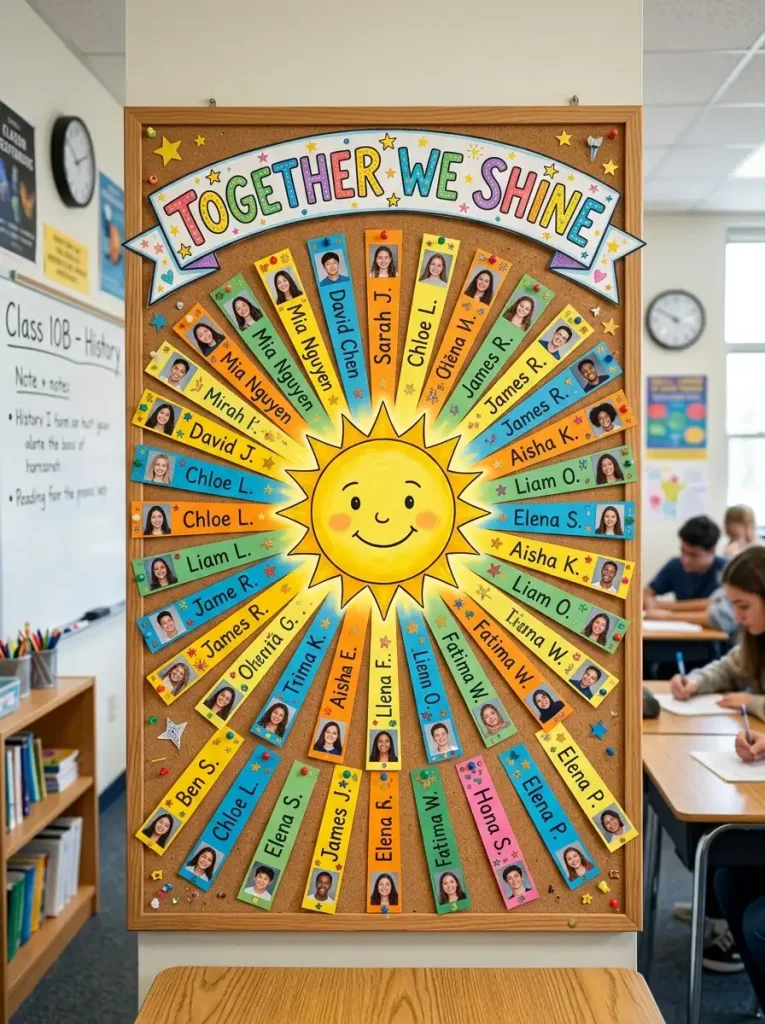
14. Together We Shine
Theme overview: A celebratory display using sun and light imagery to represent the collective energy and potential of the classroom.
Best grade levels: Elementary through high school.
Educational purpose: Reinforces collective identity and celebrates the class as a unified, positive force.
Materials required: Yellow paper for a large sun, individual ray cutouts, and student photos or names.
Step-by-step setup guide:
- Attach a large sun shape to the center of the board.
- Create individual ray cutouts, one per student.
- Add a name or small photo to each ray.
- Arrange rays radiating outward symmetrically from the sun.
Decoration ideas: Add a bold “Together We Shine” title banner arching above the sun.
Interactive student participation ideas: Let students help decide the order or arrangement of rays around the sun.
Budget-friendly alternatives: Use yellow construction paper scraps instead of purchasing a full new pack.
Customization options: Swap the sun for a different central image, like a globe or trophy, depending on classroom values.
Common mistakes to avoid: Making rays uneven in size, which can unintentionally suggest unequal importance among students.
Why the idea works: The radiating sun imagery visually reinforces that every student contributes to the classroom’s overall brightness and energy.
See also: 10 Science Bulletin Board Ideas That Turn Classroom Walls Into Learning Tools
Why Welcome Bulletin Boards Matter
A classroom wall speaks before a teacher says a single word. Getting that first impression right shapes the entire year ahead.
Creating a positive first impression happens the moment a nervous new student glances at your door. A bright, thoughtful display signals warmth immediately, easing anxiety before class even starts.
Building classroom community starts with a shared visual space students can point to as “ours.” A welcome board featuring student names or contributions turns an empty wall into something collectively owned.
Encouraging student confidence grows when children see themselves represented on the wall from day one. Seeing their name, photo, or artwork displayed prominently builds a small but meaningful sense of pride.
Promoting inclusivity matters especially in diverse classrooms. A well-planned display can reflect different backgrounds, abilities, and personalities without singling anyone out.
Supporting school culture extends beyond a single classroom when hallway displays echo similar themes. Consistent, welcoming decor throughout a building reinforces a shared sense of belonging school-wide.
Improving classroom aesthetics simply makes a space more pleasant to spend time in. Nobody, students or teachers, thrives in a dull, unchanged room.
Boosting student motivation rounds out the benefits. A classroom that feels cared for encourages students to care about their own work and behavior in return.
How to Design an Effective Welcome Bulletin Board
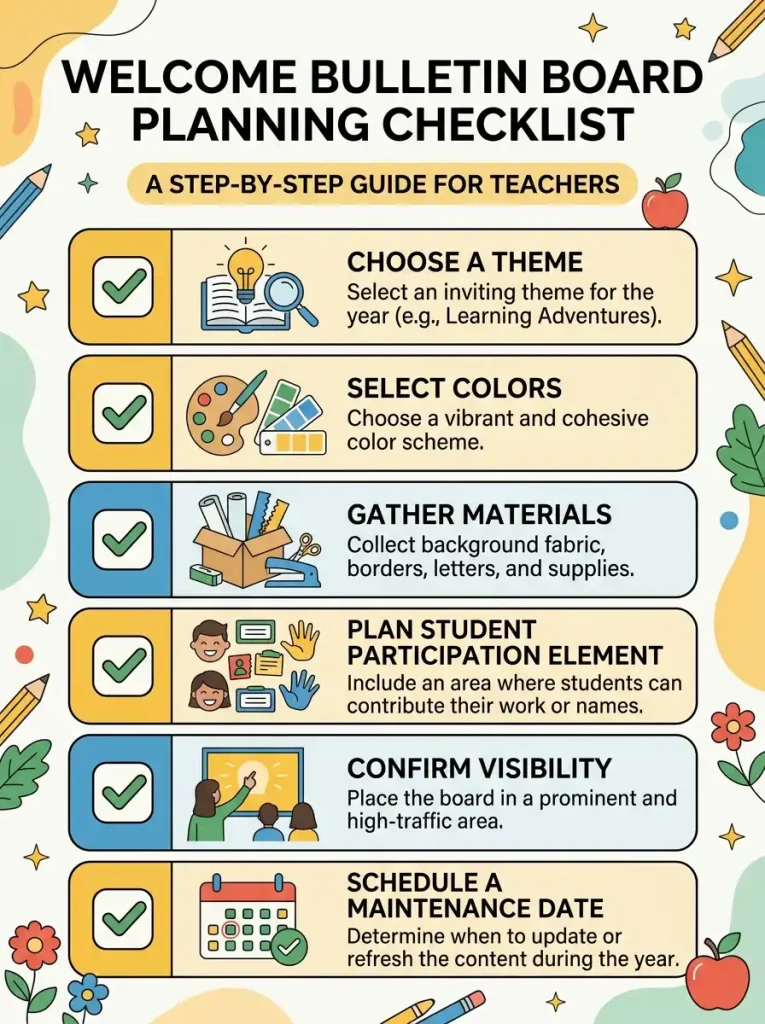
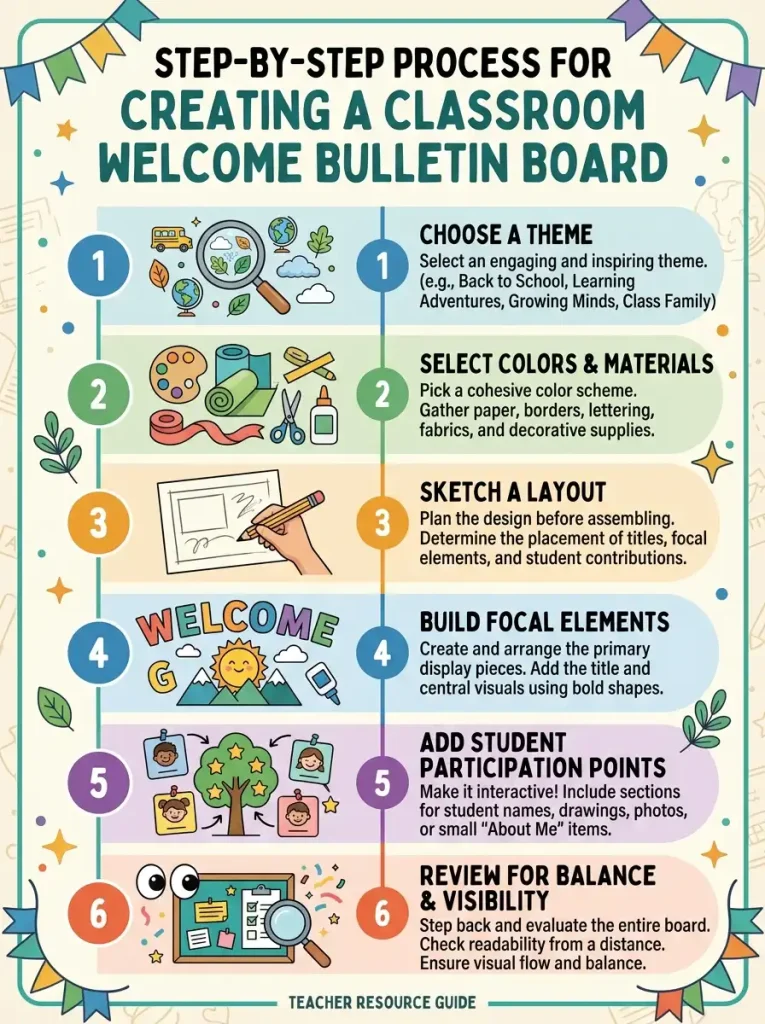
Before diving into specific ideas, it helps to understand a few design fundamentals that apply across every board on this list.
Choosing a theme should reflect your classroom’s personality and grade level. A theme that feels forced or mismatched to your teaching style rarely lands well with students.
Selecting colors sets an immediate emotional tone. Bright primary colors feel energetic and youthful, while softer palettes feel calm and mature.
Readable lettering matters more than decorative fonts. Bold, simple lettering reads clearly from across a classroom or school hallway bulletin board.
Layout balance keeps a display from feeling lopsided or cluttered. Distribute visual weight evenly so no single corner overwhelms the rest.
Interactive elements turn passive decoration into genuine engagement. Boards inviting students to add names, notes, or artwork feel far more alive than static displays.
Seasonal decorations help a welcome board evolve naturally as the year progresses. A base design built to accept small seasonal updates saves significant rework later.
Durability matters for any board staying up for weeks or months. Laminate frequently touched pieces to survive daily classroom wear.
Budget-friendly materials keep this project sustainable year after year. Reusable borders, letters, and background paper stretch a classroom budget considerably.
Tips for Keeping Bulletin Boards Fresh Throughout the Year
A welcome board shouldn’t stay frozen in its first-week form. A few simple habits keep displays feeling current all year long.
Monthly updates prevent a display from feeling stale by mid-October. Even small tweaks, like new student contributions, keep a board feeling alive.
Seasonal decorations allow a base design to evolve naturally. Swapping color palettes or small accent pieces refreshes a board without requiring a full redesign.
Student contributions should continue well beyond the first week. Ongoing additions, like new leaves or bricks, keep a board feeling collaborative rather than finished.
Rotating displays work well for boards tracking achievements or goals. Regularly updating featured content keeps students checking the board for what’s new.
Classroom achievements deserve visible recognition throughout the year, not just during the opening weeks. Highlighting milestones keeps motivation steady over time.
Interactive activities tied directly to the board, like a monthly kindness challenge, give students ongoing reasons to engage with the display.
Budget-Friendly Bulletin Board Supplies
Building a beautiful welcome display doesn’t require an expensive shopping trip. Keep this practical checklist handy when gathering materials.
- Colored construction paper and cardstock
- Scissors and paper cutters
- Glue sticks and tape
- Bold letter stencils or precut lettering
- Laminating sheets or a laminator
- Recycled paper, cardboard, and magazine scraps
- Push pins or staples
- Storage bins labeled by theme or season
- String or yarn for connecting elements
- A camera or phone for documenting student contributions
Common Bulletin Board Mistakes to Avoid
Even experienced teachers fall into a few predictable traps when designing welcome displays.
- Overcrowding the board. Fix: Choose one clear theme and leave breathing room around key elements.
- Using too much text. Fix: Keep wording short, bold, and easy to scan quickly.
- Choosing clashing colors. Fix: Limit your palette to three or four complementary shades.
- Skipping student involvement. Fix: Build in at least one contribution point for every student.
- Ignoring visibility. Fix: Place boards at eye level in high-traffic classroom or hallway areas.
- Leaving displays unchanged all year. Fix: Schedule small seasonal refreshes throughout the school year.
- Forgetting durability. Fix: Laminate frequently touched pieces so they survive daily handling.
- Excluding late-arriving students. Fix: Leave space to add new names or contributions whenever a new student joins.
Best Bulletin Board Themes by Grade Level
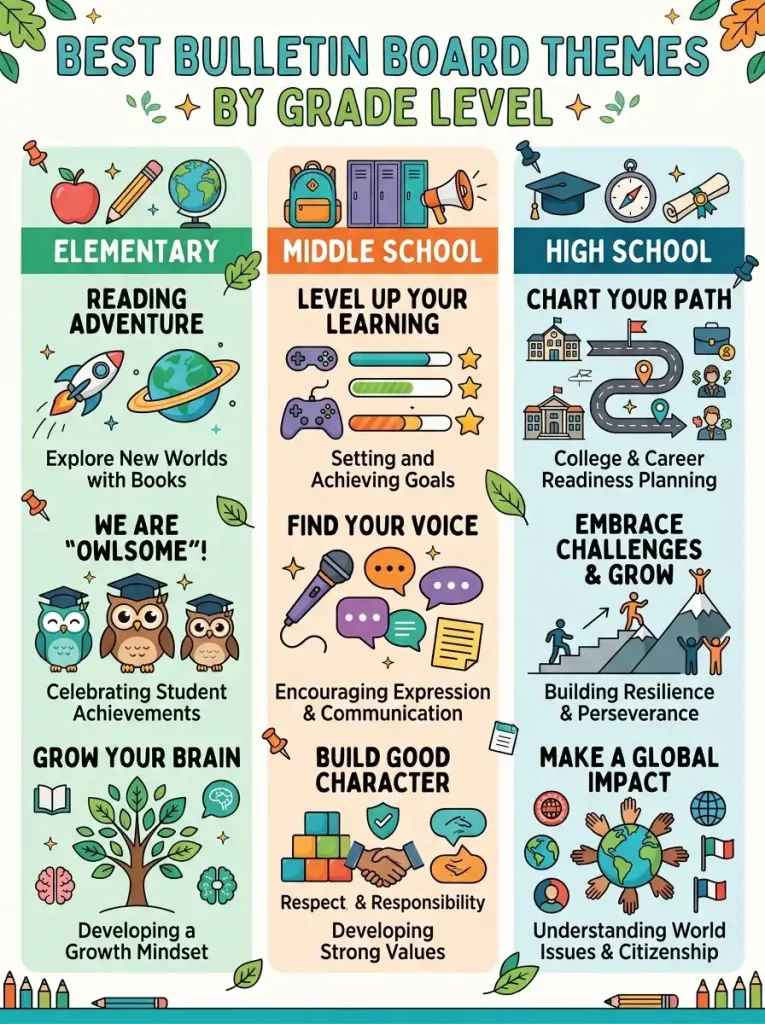
Different grade levels respond to different levels of complexity and tone.
Elementary students enjoy bright, simple, tactile displays like Bloom Where You Are Planted or Colorful Classroom Community. These ideas use large shapes and minimal text appropriate for younger readers.
Middle school students respond well to identity-driven and goal-oriented themes like Our Future Starts Here or We All Belong. This age group appreciates ownership and meaningful personal reflection.
High school students benefit from more sophisticated, mature designs like You Matter Here or Together We Shine. These themes respect a more mature audience while still reinforcing genuine belonging.
Frequently Asked Questions
What is the easiest welcome bulletin board idea for a new teacher? Bloom Where You Are Planted works especially well for beginners since it requires only basic paper-cutting skills and minimal setup time. Most teachers can complete this display within two hours. It also builds immediate personal connection since every student’s name appears prominently from day one.
How often should I update a classroom welcome board? Most displays benefit from small updates every four to six weeks, keeping content feeling current throughout the year. Interactive boards, like Kindness Grows Here or Piece by Piece We Build Success, naturally evolve as students contribute new pieces regularly.
What colors work best for a welcome bulletin board? Bright primary colors like red, yellow, and blue feel energetic and suit younger elementary classrooms well. Softer, more sophisticated palettes work better for middle and high school students who may find overly bright designs childish.
How can I make a welcome board interactive without extra teacher effort? Build in a self-service contribution point, such as a stack of blank leaves, bricks, or notes students can add independently. This approach keeps a board evolving naturally without requiring constant direct involvement from you.
What is the best bulletin board idea for a diverse classroom? We All Belong and Colorful Classroom Community both work wonderfully for diverse classrooms, since they celebrate individual contributions within a unified whole. Both designs avoid singling out any one background or identity while still honoring everyone’s presence.
How do I include students who transfer in after the first week? Choose designs with built-in flexibility, like Our Class Is a Family or Reach for the Stars, that easily accommodate new additions. Leave extra blank space or templates ready so new students can join the display without feeling like an afterthought.
Can these ideas work for a shared school hallway display instead of just one classroom? Absolutely. Ideas like Together We Shine and Adventure Awaits translate beautifully to a shared school hallway bulletin board where multiple classes contribute. Hallway displays often benefit from bolder colors and larger lettering, since passersby view them quickly.
What is the best way to involve middle school and high school students in bulletin board design? Older students respond well to ownership and choice, so consider letting them vote on themes or contribute original written reflections. Ideas like Our Future Starts Here and You Matter Here work particularly well since they invite genuine personal expression.
How do I keep a welcome bulletin board budget-friendly? Rely on recycled materials, like leftover construction paper scraps and reused borders from previous years, instead of purchasing everything new. Many effective displays on this list cost only a few dollars in total materials when approached thoughtfully.
What is the biggest mistake teachers make with welcome bulletin boards? Overcrowding remains the most common issue, with too much text or too many elements competing for attention at once. Choosing one clear theme and leaving breathing room around key elements almost always improves a display’s overall impact and readability.
Bringing It All Together
A welcome bulletin board does far more than fill empty wall space during the first week of school. It tells every student, from the moment they walk through the door, that this classroom is a place where they belong.
Whether you choose a heartfelt Our Class Is a Family display or an ambitious Reach for the Stars concept, the real value comes from the thought you put into making every student feel seen. Pick the idea that fits your classroom personality best, involve your students in the process, and keep the display growing throughout the year.
A little creativity at the start of the school year can shape how your students feel about your classroom for months to come. Give one of these ideas a try, and watch your walls become one of the most welcoming parts of your students’ day.