12 Short Story Prompts Creative Writing Ideas
Every writer knows that particular kind of silence. You sit down, notebook open or cursor blinking, and your mind goes completely blank. The stories are in there somewhere, but they refuse to show up on command.
That’s exactly what a good prompt fixes. It doesn’t hand you a finished story; instead, it hands you a spark, a small crack of light that your imagination can push through. This collection of 12 short story prompts creative writing ideas gives you exactly that kind of spark, whether you’re a beginner filling your first notebook or an experienced novelist looking to shake off a creative slump.
Each prompt below comes with more than just a premise. You’ll find the reasoning behind why it works, an optional challenge to push your skills further, and a twist to keep your story from following the obvious path. Along the way, you’ll also pick up practical writing tips, common mistakes to sidestep, and exercises that stretch any single idea into multiple stories.
So grab your notebook, or open a blank document, because the blank page problem ends right here.

What Makes a Great Short Story Prompt?
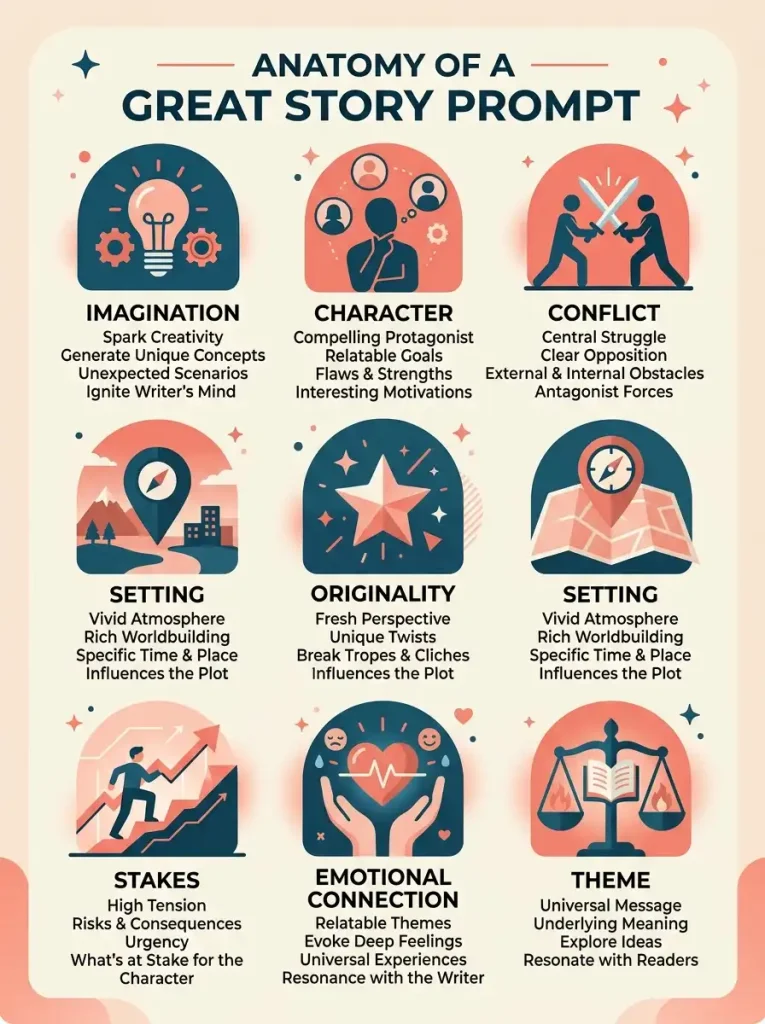
Not every prompt sparks a story. The best ones share a few specific ingredients that separate genuine writing inspiration from a forgettable one-liner.
Imagination matters most. A strong prompt leaves enough open space for your mind to wander, rather than dictating every detail. Similarly, conflict gives a prompt its pulse; without tension, there’s no reason for a reader to keep turning pages.
Character brings any premise to life. A fascinating situation means little without someone specific experiencing it. Meanwhile, setting shapes mood and atmosphere, often influencing the story’s tone before a single word of dialogue appears.
Stakes answer the question every reader silently asks: why does this matter? A prompt with real consequences, whether emotional, physical, or moral, naturally builds momentum. Originality keeps a prompt from feeling recycled, even when it touches familiar themes.
Finally, the strongest prompts create genuine emotional connection. They tap into something universal, like fear, longing, or regret, even inside an unfamiliar scenario. Keep these six elements in mind as you read through the prompts ahead, and notice how each one weaves them together.
12 Creative Short Story Prompts
Here are twelve original prompts, each built to spark a different kind of story. Use them exactly as written, or bend them into something entirely your own.
1. The Last Letter
The Prompt: A woman finds a sealed letter tucked inside a used book she bought at a secondhand shop. The letter, dated decades ago, is addressed to someone with her exact name. Curious, she opens it and discovers a confession meant for a version of herself that never existed, at least not yet. As she reads further, details from the letter start matching events happening in her own life right now, days before they actually occur. She has one week before the letter’s final prediction comes true.
Why It Works: This prompt blends mystery with a personal, emotional core, forcing your protagonist into an active investigation with real stakes attached.
Writing Challenge: Write the letter’s full contents as a standalone piece before starting the story itself.
Story Twist: The letter wasn’t written by a stranger; it was written by the protagonist’s future self.
2. The Neighbor Who Doesn’t Age
The Prompt: Your protagonist has lived on the same street for fifteen years. Every neighbor has aged, moved, or passed on, except one. The elderly man three doors down looks exactly the same as he did when your protagonist was a child. One afternoon, curiosity gets the better of them, and they finally knock on his door, only to be invited inside for tea and a conversation that changes everything they believed about time.
Why It Works: Familiar suburban settings paired with an eerie, unexplainable detail create instant intrigue without needing elaborate world-building.
Writing Challenge: Write the entire story from the neighbor’s point of view instead.
Story Twist: The neighbor isn’t immortal; he’s stuck reliving the same year on a loop, and your protagonist is the only person who can break it.
3. The Last Voicemail
The Prompt: After a sudden loss, your protagonist discovers a voicemail they never listened to, sitting untouched on their phone for months. They finally press play, only to hear their loved one describing a secret plan, one that was never finished, and one only your protagonist can complete now.
Why It Works: Grief combined with unfinished business creates natural narrative momentum, pulling your protagonist forward through action instead of stagnant sorrow.
Writing Challenge: Write the voicemail’s transcript first, using only spoken dialogue, before drafting the surrounding story.
Story Twist: Completing the plan reveals the loved one wasn’t who your protagonist believed them to be.
4. Trapped Between Floors
The Prompt: Six strangers get stuck in an elevator during a blackout. At first, it feels like an inconvenience. However, as hours pass, small comments reveal that everyone in the elevator already knows each other, secretly, through overlapping connections none of them expected to surface.
Why It Works: Confined settings force characters into direct interaction, which accelerates conflict and dialogue naturally.
Writing Challenge: Set a strict word count of 1,500 words to mimic true flash fiction prompts pacing.
Story Twist: The blackout wasn’t random; someone in the elevator planned it.
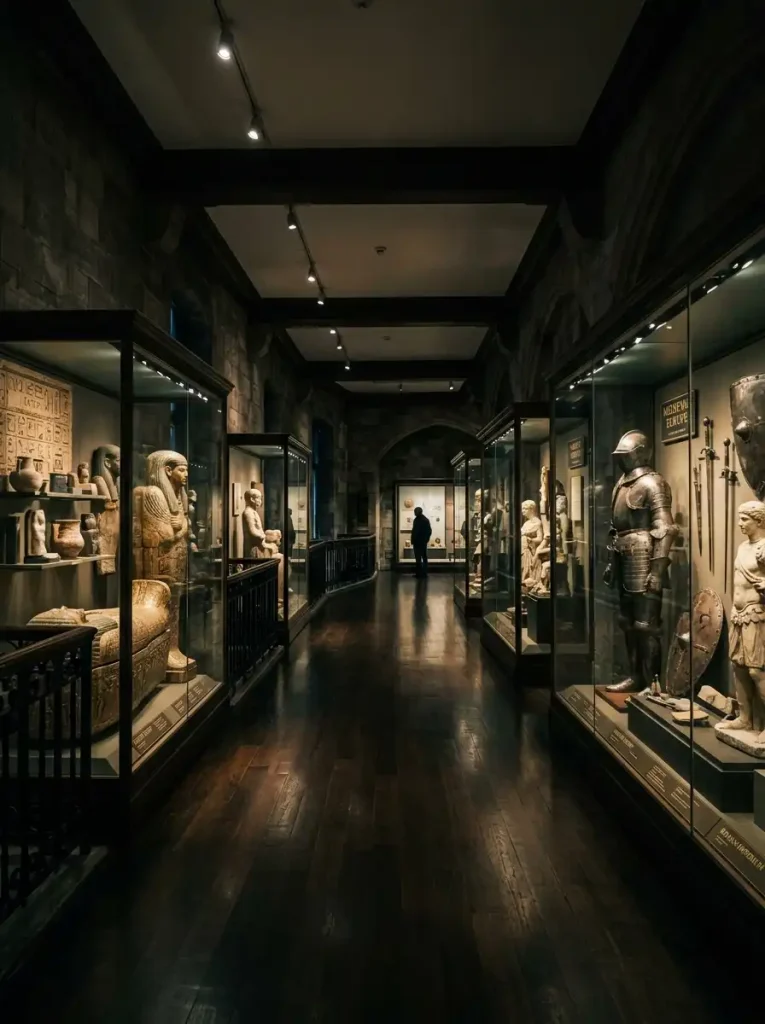
5. The Museum After Hours
The Prompt: A night security guard notices that one particular exhibit rearranges itself slightly every single night, always when no cameras happen to be recording. Determined to catch whoever, or whatever, is responsible, they decide to stay hidden past their shift for the very first time.
Why It Works: Slow-building suspense paired with a specific, visual setting gives writers plenty of atmospheric detail to explore.
Writing Challenge: Write three different endings, then choose the one that surprises you most.
Story Twist: The exhibit belongs to the guard’s own future, one they haven’t lived yet.
6. The Apology Letter
The Prompt: Your protagonist receives an anonymous handwritten apology in the mail, admitting fault for something terrible that happened years ago. The letter never names the sender, and it never explains exactly what happened, only that “it’s time you knew the truth.”
Why It Works: Ambiguity invites reader curiosity while giving writers freedom to build backstory gradually, layer by layer.
Writing Challenge: Reveal the truth only through dialogue, never through direct narration.
Story Twist: The apology wasn’t meant for your protagonist at all; it was delivered to the wrong address.
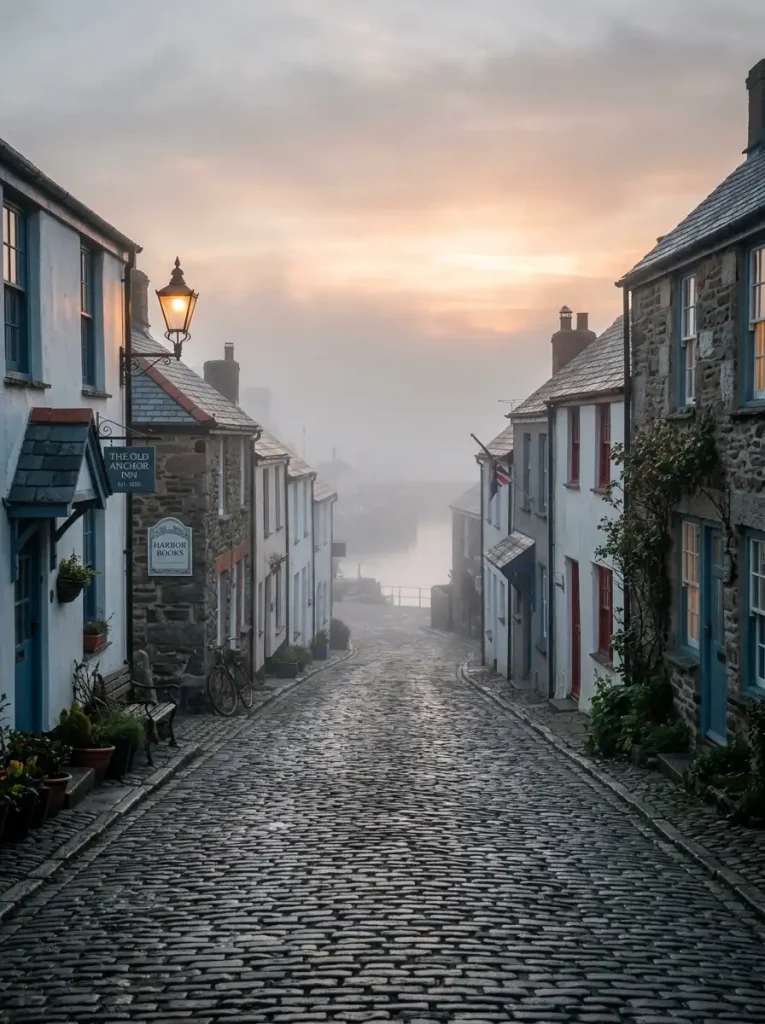
7. The Town With No Reflection
The Prompt: A traveling photographer stops in a small coastal town for one night. The next morning, she notices something strange while reviewing her photos: not a single mirror, window, or reflective surface in town shows any of the local residents’ reflections.
Why It Works: This premise blends folklore-style unease with strong visual imagery, perfect for atmospheric storytelling ideas.
Writing Challenge: Write the story using only second-person point of view.
Story Twist: The residents already know about the missing reflections, and they’ve simply chosen never to discuss it.
8. The Inheritance No One Wanted
The Prompt: Three estranged siblings reunite after their grandmother’s death, only to learn she left them something stranger than money: a locked room in her house that none of them remember existing, along with a note instructing them to open it together, or not at all.
Why It Works: Family conflict paired with a literal mystery gives writers dual layers of tension, emotional and situational.
Writing Challenge: Give each sibling a completely different theory about what’s inside the room before revealing the truth.
Story Twist: The room doesn’t contain an object; it contains a person.
9. The Understudy
The Prompt: A struggling actor finally lands their first lead role, only to discover the previous lead actor vanished without explanation just days before opening night. Strange coincidences from the missing actor’s life start happening to them instead, as though the role itself carries a curse.
Why It Works: Theater settings naturally blend performance and identity, ideal territory for exploring character ideas and psychological tension.
Writing Challenge: Write the story in present tense to heighten immediacy.
Story Twist: The “curse” is really a warning system, protecting whoever plays the role from a very real danger.
10. The Message in the Sand
The Prompt: During an early morning walk, a beachcomber finds a message carved deep into the sand, one that couldn’t have survived the tide, yet somehow remains untouched. The message contains a name, a date, and a single warning.
Why It Works: Nature-based settings offer sensory richness, while the impossible detail immediately raises stakes and mystery.
Writing Challenge: Set the entire story within a single 24-hour period.
Story Twist: The date in the message is tomorrow, and the name belongs to someone the beachcomber hasn’t met yet.

11. The Last Customer
The Prompt: A late-night diner employee notices the same customer arrives every night at exactly 2 a.m., orders the same meal, and leaves without ever speaking a single word. One night, the employee finally decides to ask why.
Why It Works: Everyday settings like diners create instant familiarity, which makes any strange detail land with more impact.
Writing Challenge: Write the entire story using only dialogue and minimal description.
Story Twist: The customer has been trying to warn the employee about something dangerous happening at closing time.
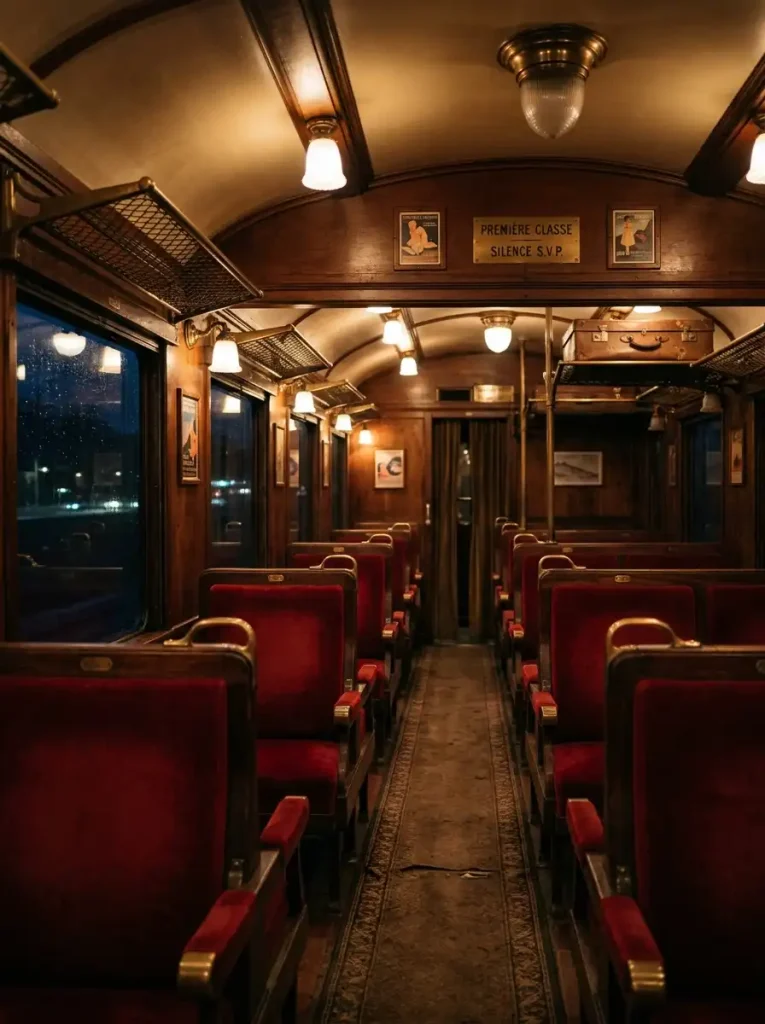
12. The Forgotten Passenger
The Prompt: A long-haul train conductor discovers a passenger asleep in an empty car well after the final scheduled stop. When woken, the passenger insists they bought a ticket for a station that, according to every record, was demolished over forty years ago.
Why It Works: Trains offer built-in momentum and isolation, perfect for stories blending mystery ideas with a touch of the impossible.
Writing Challenge: Add a strict time limit, forcing the conductor to solve the mystery before the train reaches its next stop.
Story Twist: The passenger isn’t lost in time; the conductor is.
How to Get the Most From Story Prompts
A great prompt only gets you halfway there. These habits help you turn any single idea into a genuinely finished piece of writing.
Avoid Perfectionism Early On
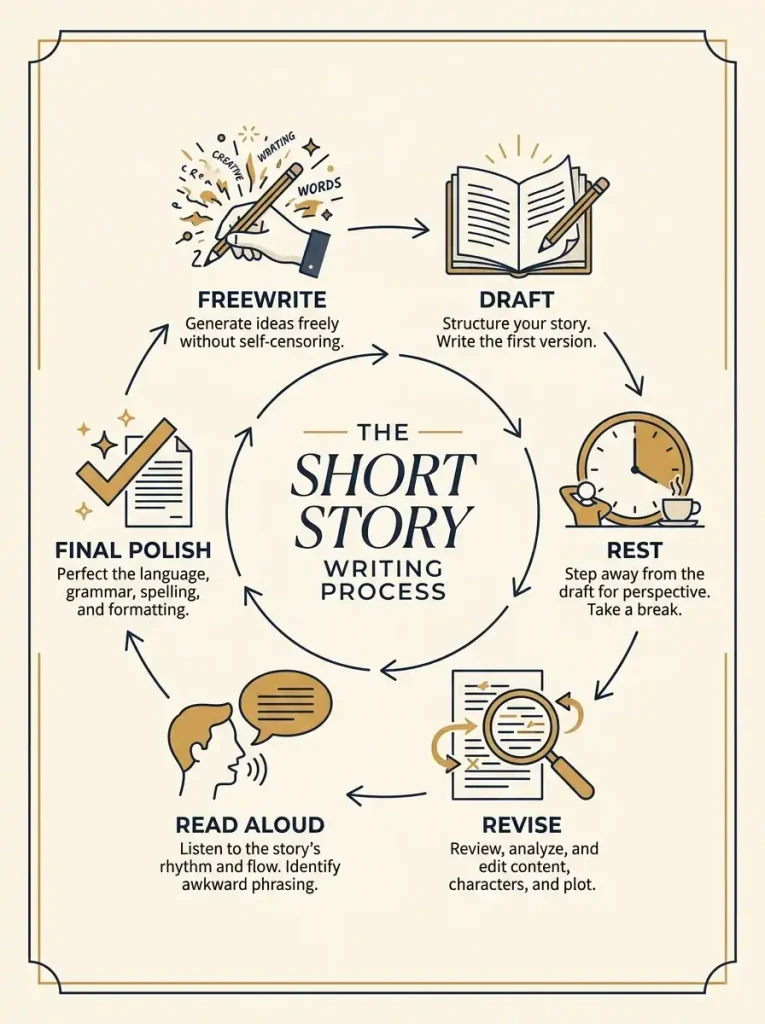
Don’t edit while you draft. Perfectionism kills momentum faster than almost anything else, especially during the first messy pages of a new idea.
Instead, give yourself permission to write badly at first. You can always fix weak sentences later, but you can’t fix a blank page.
Freewrite Before Structuring
Try freewriting for ten minutes immediately after reading a prompt. Don’t stop to think; just let whatever comes out, come out.
This kind of raw writing practice often uncovers directions you wouldn’t have planned deliberately. Some of your best material hides inside those unfiltered first attempts.
Experiment With Genre
The same prompt can become a romance, a thriller, or even horror, depending on the tone you choose. Try rewriting one prompt in three completely different genres.
This exercise sharpens your instincts for pacing, voice, and atmosphere far faster than sticking to one comfortable genre repeatedly.

Rewrite Before You Judge
Your first draft rarely represents your best work. Revisit your story after a day or two, then rewrite key scenes with fresh eyes.
Consequently, you’ll often notice weak dialogue or rushed pacing you missed the first time around. Distance genuinely improves your judgment.
Focus on Character Development
Even a short story benefits from character depth. Give your protagonist a clear want, a specific fear, and one contradictory trait that makes them feel human.
This small investment in character development pays off, since readers remember people, not just plots.
Build Tension Deliberately
Tension doesn’t require constant action. Sometimes, withholding information or slowing down a key moment builds far more suspense than a dramatic event ever could.
Ask yourself what your character doesn’t know yet, and delay that reveal as long as the story allows.
Sharpen Your Dialogue
Read your dialogue out loud. If it sounds stiff, trim it down until it feels closer to how people actually speak.
Strong dialogue reveals character and advances plot simultaneously, which makes it one of your most powerful storytelling tools.
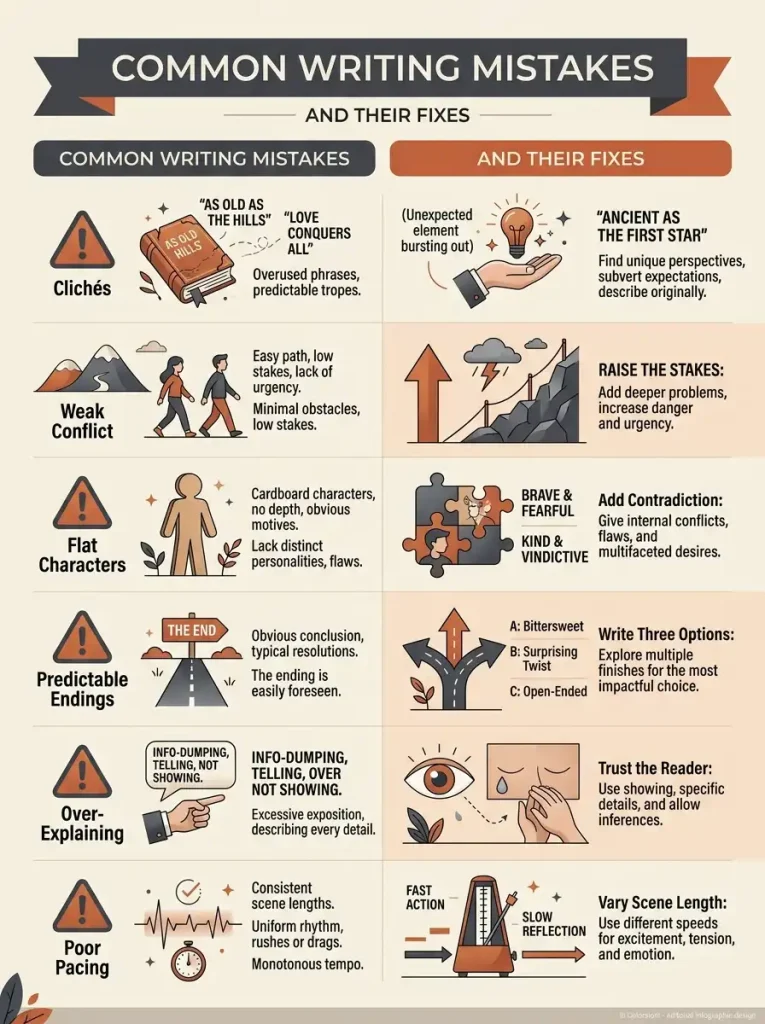
Common Mistakes Writers Make
Even strong prompts can produce weak stories if a few common habits creep in. Here’s what to watch for, along with practical fixes.
Copying clichés weakens originality fast. Instead of the expected twist, ask yourself what the least obvious outcome might be, then explore that direction instead.
Weak conflict leaves stories feeling flat. Make sure your character wants something specific and faces real resistance in getting it.
Flat characters happen when writers focus only on plot. Give every major character a contradiction, some tension between what they want and what they fear.
Predictable endings disappoint readers who invested emotional energy into your story. Try writing three possible endings before settling on your final choice.
Over-explaining kills subtlety. Trust your reader to infer meaning instead of spelling everything out directly.
Poor pacing often comes from uneven scene length. Vary your pacing deliberately, slowing down for emotional beats and speeding up during action.

Exercises to Expand Each Prompt
One prompt can become five completely different stories with a few simple adjustments. Try these exercises whenever you want to push a prompt further.
- Change the point of view. Rewrite the same scenario from a secondary character’s perspective instead of the protagonist’s.
- Change the genre. Turn a mystery prompt into a comedy, or a romance prompt into horror, and notice how the tone transforms completely.
- Add a time limit. Force your character to resolve the conflict within one hour, one day, or one conversation.
- Change the ending. Write two versions, one hopeful and one tragic, then compare which feels more honest to the story.
- Add an unreliable narrator. Let your narrator withhold or distort key details, then reveal the truth gradually.
- Introduce a new conflict. Halfway through your draft, add an unexpected complication and see how your character adapts.
These creative writing exercises work well for writing challenges of any length, from flash fiction to a longer short story.
Frequently Asked Questions
What makes a short story prompt effective for beginners? The best beginner writing prompts include a clear character, a specific situation, and just enough mystery to spark curiosity without overwhelming a new writer with too many details.
How long should a short story based on these prompts be? Most short stories fall between 1,000 and 7,500 words, though flash fiction prompts can work well under 1,000 words if you want a faster writing challenge.
Can these prompts work for writing prompts for teens and writing prompts for adults equally? Yes. Each prompt’s flexible premise allows younger writers to focus on straightforward plot, while adult writers can explore deeper psychological or emotional layers.
How do I turn a short story prompt into a longer piece, like a novel? Expand the world around your initial conflict, add subplots, and deepen your secondary characters. Many novels actually began as a single short story idea that grew naturally.
What if I don’t like where my story is going halfway through? Stop and freewrite for ten minutes about what’s not working. Often, the real problem is weak stakes or an underdeveloped character, not the prompt itself.
How many drafts should I expect to write? Most experienced writers go through at least two or three drafts. Your first draft exists purely to discover the story; later drafts refine it.
Is it okay to change a prompt significantly from its original idea? Absolutely. Prompts exist as starting points, not strict rules. Feel free to bend, combine, or reshape any prompt until it fits your own voice.
How can I make my dialogue sound more natural? Read it aloud, cut unnecessary words, and let characters interrupt or trail off occasionally. Real conversation rarely sounds perfectly polished.
What’s the best way to overcome writer’s block with these prompts? Set a timer for ten minutes and write without stopping, even if it feels messy. Momentum matters more than perfection during those early minutes.
Can I use these prompts for a writing group or classroom setting? Definitely. These prompts work well for group writing challenges, since each one leaves plenty of room for different interpretations and creative storytelling directions.

Start Writing Today
Twelve prompts, twelve possible stories, and honestly, dozens more hiding inside each one once you start pulling at the threads. That’s the real gift of a good prompt: it never gives you just one story. It gives you a door, and what’s behind it depends entirely on you.
Don’t wait for the “right” idea to strike. Pick whichever prompt pulled at you the most while reading, set a timer, and start writing immediately. Momentum beats perfect planning every single time.
Your next great story is sitting right there in the prompt you keep rereading. Stop rereading it, and start writing it instead.