12 Storytelling Ideas for Kids and Adults
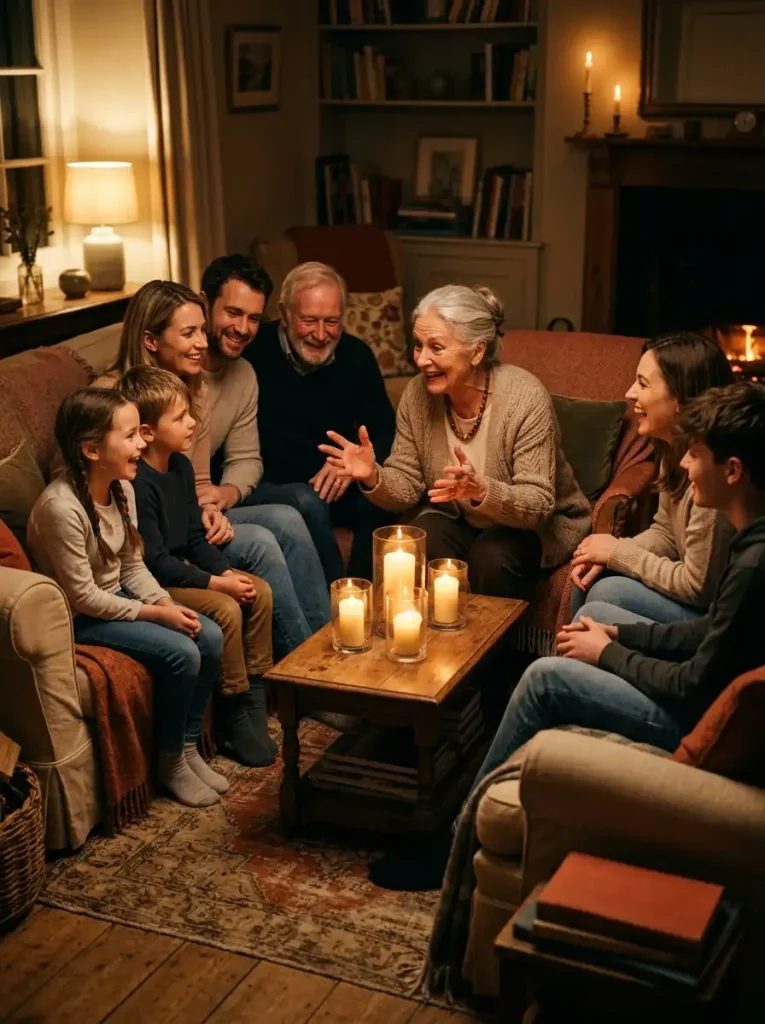
Somewhere between a flickering campfire and a bedtime lamp, storytelling still works its old magic. It hasn’t lost its grip on us, not even in a world full of screens and scrolling. Give a group of kids a half-finished tale and watch how quickly they lean in, eyes wide, waiting for what happens next.
Adults aren’t so different, honestly. We just hide it better. A well-told story at a dinner party can silence a room faster than any fact or statistic. That’s the strange, quiet power storytelling holds over both children and grown-ups alike.
This guide walks through twelve storytelling ideas built for real use, whether you’re a parent hunting for bedtime stories, a teacher planning classroom storytelling, or an adult who simply wants to reconnect with your own imagination. Along the way, you’ll find practical tips, common mistakes, and a few storytelling games worth trying tonight.
Ready to bring stories back into your everyday life? Let’s get into it.
Why Storytelling Still Matters
Storytelling isn’t just entertainment. It builds communication skills, strengthens confidence building, and creates genuine family bonding in a way few other activities manage. Furthermore, it sharpens imagination in children while giving adults a rare excuse to slow down and actually listen.
Consider this: every culture on earth developed some form of oral storytelling long before written language existed. Folktales, mythology, and fairy tales carried moral lessons, history, and identity across generations. That instinct hasn’t disappeared; it’s just waiting for the right invitation.
The twelve ideas below give you exactly that invitation, whether you’re working with toddlers, teenagers, or a room full of adults who haven’t told a proper story since childhood.
1. Collaborative Round-Robin Storytelling
Short Introduction
Round-robin storytelling turns any group into instant co-authors. One person starts a story with a single sentence, and everyone else adds a line, building the plot together without any planning beforehand.
Why It Works
This format removes the pressure of creating an entire story alone. Instead, each person only needs to think of one small piece, which makes it approachable even for shy participants or reluctant kids.
How to Use It
- Gather your group in a circle, whether at home, in a classroom, or around a campfire.
- Choose someone to start with an opening line, like “Once there was a lighthouse that only worked during thunderstorms.”
- Go around the circle, with each person adding one to three sentences.
- Continue until the story naturally reaches a satisfying ending, or set a time limit in advance.
Examples
A family might build a silly bedtime story about a dragon who’s afraid of Tuesdays. A classroom might create an adventure story where each student adds a new obstacle for the hero to face.
Variations
Try adding a rule where each new sentence must include a specific word, or introduce a plot twist requirement every third turn to keep the story unpredictable.
Tips for Making It Memorable
Record the story on your phone or write it down as you go. Later, reading the finished story back together often becomes just as fun as creating it.
Suitable Age Groups
This idea works beautifully for ages five and up, and honestly, adults enjoy it just as much once they let go of overthinking their contribution.
Common Mistakes to Avoid
Don’t let one person dominate the story. Keep turns short and consistent, so the collaborative spirit stays intact instead of becoming a solo performance.
Benefits
Round-robin storytelling builds listening skills, spontaneous thinking, and genuine teamwork, all while producing something wonderfully unexpected.
Quick Tip: Keep a “story jar” nearby filled with random words. Whenever the story stalls, pull one out to keep things moving.

2. The Mystery Box Story Prompt
Short Introduction
Fill a small box with a random object, then build an entire story around it. This idea works wonders for sparking creative storytelling when inspiration feels stuck.
Why It Works
Random objects force the brain to make unexpected connections. Instead of staring at a blank page, storytellers have a concrete starting point that practically writes itself.
How to Use It
- Choose a small, ordinary object, like a key, a seashell, or an old photograph.
- Place it in a box or bag without revealing it to the storyteller ahead of time.
- Have the storyteller open the box and immediately begin describing where the object came from and why it matters.
- Let the story unfold from there, with no planning required.
Examples
A rusty key might become the entrance to a hidden underground kingdom. A single button might belong to a coat worn by a runaway prince.
Variations
Try using three objects instead of one, requiring the storyteller to connect all three within a single narrative. This variation works especially well for older kids and adults looking for a bigger writing challenge.
Tips for Making It Memorable
Choose objects with texture or unusual shapes. Tactile details naturally inspire richer sensory description throughout the story.
Suitable Age Groups
This idea suits ages six through adult, adjusting complexity based on the group’s storytelling experience.
Common Mistakes to Avoid
Avoid choosing overly obvious objects, like a toy dragon, which limits imaginative interpretation. Ordinary objects actually produce more creative results.
Benefits
This exercise strengthens improvisational thinking and helps writers overcome the fear of a blank page, both in casual settings and formal creative writing ideas exercises.
3. Bedtime Story Building With Your Child
Short Introduction
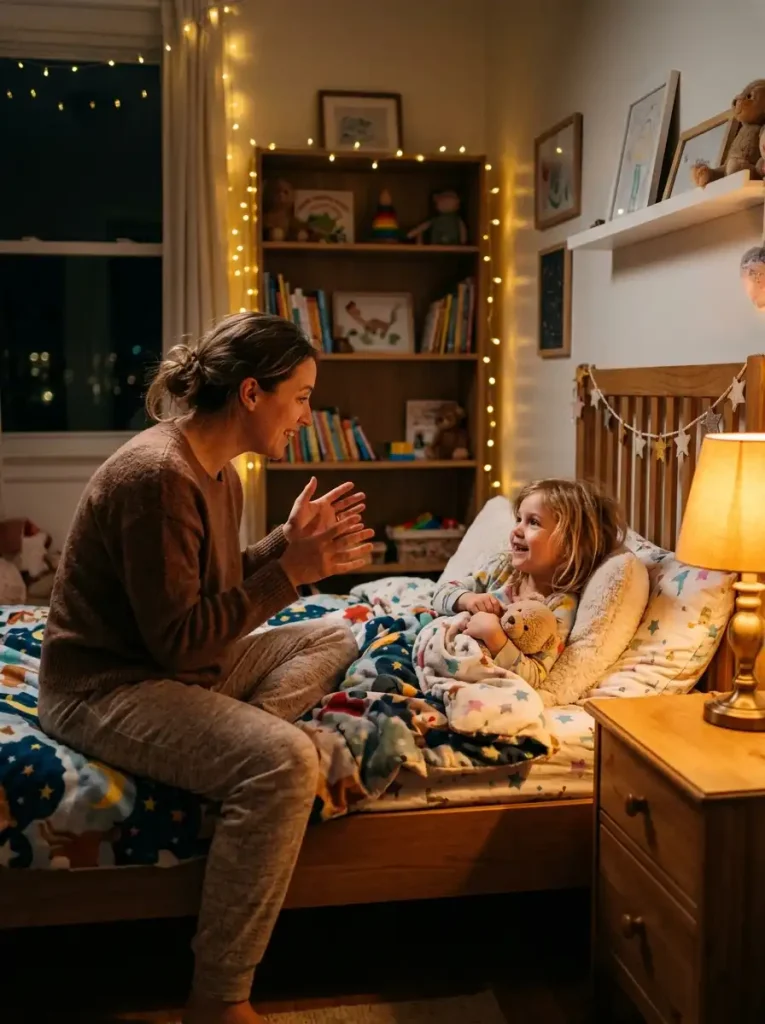
Instead of reading a finished book every night, build an original bedtime story together with your child, one small piece at a time.
Why It Works
Children feel more invested in stories they help create. This approach also gives you insight into what your child is thinking about, fearing, or dreaming about lately.
How to Use It
- Start with a simple setting, like a forest, a castle, or a spaceship.
- Ask your child what happens next after each short section you tell.
- Weave their answers into the ongoing story, adjusting the plot naturally.
- Continue for five to ten minutes, then bring the story to a gentle, comforting close.
Examples
A parent might start with “A little fox couldn’t sleep because the moon kept whispering secrets,” then ask the child what secret the moon might be sharing.
Variations
Create a recurring character who appears in a new adventure every night, almost like a personalized book series just for your family.
Tips for Making It Memorable
Give the recurring character a name your child chooses. That small detail turns an ordinary bedtime routine into something genuinely theirs.
Suitable Age Groups
This idea works wonderfully for toddlers through around age ten, though many older kids still enjoy contributing occasionally.
Common Mistakes to Avoid
Don’t introduce anything too scary right before sleep. Keep tension light and endings comforting, even during adventurous plots.
Benefits
Collaborative bedtime stories improve vocabulary, strengthen emotional connection, and often reveal what’s really on a child’s mind.
Did You Know? Studies on early literacy consistently link storytelling exposure to stronger vocabulary development and reading comprehension later in school.
Storytelling Tips for Beginners
Not every storyteller starts confident, and that’s perfectly normal. A few small habits make a noticeable difference right away.
First, slow down. Beginners often rush through details, missing the pauses that build genuine suspense. Next, use your voice deliberately; a whisper during a tense moment often works better than volume.
Additionally, don’t worry about sounding polished. Audiences, especially kids, respond far more to enthusiasm than perfect delivery. Finally, watch your listeners’ faces. Their reactions tell you exactly when to slow down, speed up, or add a little more drama.
4. Fairy Tale Remix Challenge
Short Introduction
Take a classic fairy tale and completely flip one major element, the setting, the villain, or the ending, to create something entirely fresh.
Why It Works
Familiar stories give participants a safety net, since the basic structure already exists. Changing just one element forces genuinely creative thinking without starting from nothing.
How to Use It
- Choose a well-known fairy tale, like Cinderella or Jack and the Beanstalk.
- Pick one element to change completely, such as moving the setting to outer space.
- Retell the story with that single change, letting the new detail influence everything else naturally.
- Share the remixed version aloud or write it down for others to enjoy.
Examples
Try Little Red Riding Hood set in a modern city, where the wolf becomes a con artist instead of a literal wolf. Or reimagine The Three Little Pigs with the wolf as the story’s misunderstood hero.
Variations
Combine two different fairy tales into a single mashup story, blending characters and settings from both.
Tips for Making It Memorable
Choose a twist that changes the story’s moral lesson entirely. That shift often produces the most surprising and thought-provoking results.
Suitable Age Groups
This idea works well for ages eight and up, since it requires some familiarity with the original story being remixed.
Common Mistakes to Avoid
Avoid changing too many elements at once. One strong twist usually produces a more focused, memorable story than five smaller changes combined.
Benefits
Fairy tale remixes build critical thinking, strengthen understanding of story structure, and introduce playful plot twists in a low-stakes format.
5. The Campfire Ghost Story Circle
Short Introduction
Nothing beats a classic campfire storytelling tradition, especially when the group builds suspense together under real or imagined firelight.
Why It Works
Darkness, flickering light, and close physical proximity naturally heighten tension. This setting practically does half the storytelling work for you.
How to Use It
- Dim the lights or gather around an actual fire if possible.
- Choose one storyteller to begin with a slow, atmospheric opening.
- Build tension gradually, using pauses and quiet moments rather than jumping straight to scares.
- End with a satisfying twist or resolution, avoiding anything too intense for younger listeners.
Examples
A story about a lantern that always relights itself no matter how many times it’s blown out works well for younger audiences. For older groups, a story about strange radio signals from an abandoned lighthouse builds real suspense.
Variations
Let each person contribute one scary detail in turn, similar to round-robin storytelling, but focused specifically on building dread.
Tips for Making It Memorable
Use sound effects sparingly, like snapping a twig or tapping a rhythm, right at key suspenseful moments.
Suitable Age Groups
Adjust based on your group; younger children do best with mild mystery rather than true horror, while teens and adults can handle more intensity.
Common Mistakes to Avoid
Don’t rush the buildup. Ghost stories lose their power when the scary reveal happens too quickly, without proper tension beforehand.
Benefits
This format strengthens public speaking confidence, teaches pacing, and creates lasting shared memories, especially during camping trips or sleepovers.

How to Keep Listeners Engaged
Even a great story falls flat without solid delivery. A few techniques keep any audience locked in from start to finish.
Vary your pacing. Speed up during action, slow down during emotional or suspenseful beats. Use pauses deliberately, since silence often builds more tension than words ever could.
Make eye contact with different listeners throughout the story, rather than fixing your gaze on just one person. Change your voice for different characters, even subtly, to help listeners distinguish who’s speaking.
Finally, watch for engagement cues. If attention starts drifting, introduce a question, a plot twist, or a moment of humor to pull listeners back in immediately.
6. Character Swap Storytelling
Short Introduction
Take a familiar story and retell it entirely from a different character’s point of view, especially a side character or the story’s villain.
Why It Works
This idea builds empathy and deepens understanding of character development, since it forces storytellers to consider motivations beyond the obvious hero’s perspective.
How to Use It
- Choose a well-known story, whether a fairy tale, movie, or book.
- Select a secondary character or antagonist to focus on instead of the protagonist.
- Retell key events from that character’s perspective, including their private thoughts and feelings.
- Consider how their version of events might differ from what audiences originally assumed.
Examples
Retell Goldilocks and the Three Bears from the bears’ perspective, transforming it into a home-invasion story told with sympathy for the family. Or narrate a superhero story through the eyes of the villain’s loyal assistant.
Variations
Try switching between two perspectives within the same story, alternating chapters or sections to show contrasting viewpoints.
Tips for Making It Memorable
Give the new narrator a distinct voice and personality, separate from how they were originally portrayed.
Suitable Age Groups
This idea works particularly well for ages ten and up, since it requires understanding multiple perspectives simultaneously.
Common Mistakes to Avoid
Avoid simply repeating the same events without adding new insight. The value here comes from genuinely new perspective, not just retelling the same plot.
Benefits
Character swap storytelling strengthens empathy, critical thinking, and a deeper understanding of narrative perspective and motivation.
7. The One-Object Adventure
Short Introduction
Build an entire adventure story around a single magical object, whether a compass, a key, or an ordinary umbrella with an extraordinary secret.
Why It Works
Focusing on one object simplifies planning while still allowing for rich, imaginative adventure stories. The object becomes both a plot device and a source of mystery.
How to Use It
- Choose one object and give it a single magical or mysterious property.
- Decide who discovers the object and why they decide to use it.
- Build a journey around the consequences of using the object, including obstacles along the way.
- Resolve the story by revealing the object’s true origin or purpose.
Examples
A compass that doesn’t point north, but toward whatever the holder needs most, could lead a character on an unexpected journey. An umbrella that transports its owner to a different season whenever it opens creates endless story possibilities.
Variations
Let multiple characters discover different objects with related powers, then have their separate storylines eventually intersect.
Tips for Making It Memorable
Keep the object’s rules consistent throughout the story. Clear, logical magic systems make fantastical elements feel more believable.
Suitable Age Groups
This idea adapts easily for ages seven through adult, depending on the complexity of the chosen object’s powers and the surrounding plot.
Common Mistakes to Avoid
Avoid overcomplicating the object’s abilities. Simple, clearly defined magic usually creates a more satisfying story than an object that can do virtually anything.
Benefits
This format teaches structured world-building and cause-and-effect plotting, both valuable skills for longer fantasy stories down the road.
Storytelling Mistakes to Avoid
Even experienced storytellers fall into predictable traps. Watch for these common pitfalls.
- Rushing the beginning. A story needs a moment to establish setting and character before diving into action.
- Too much description, not enough action. Balance sensory detail with forward momentum to avoid losing listener interest.
- Predictable endings. Surprise your audience whenever possible, even with a small unexpected detail.
- Flat character voices. Give each character distinct speech patterns or mannerisms, even in a simple story.
- Ignoring audience reactions. Adjust pacing and tone based on how your listeners are responding in real time.
- Overexplaining the moral lesson. Let the story’s meaning emerge naturally instead of stating it outright at the end.
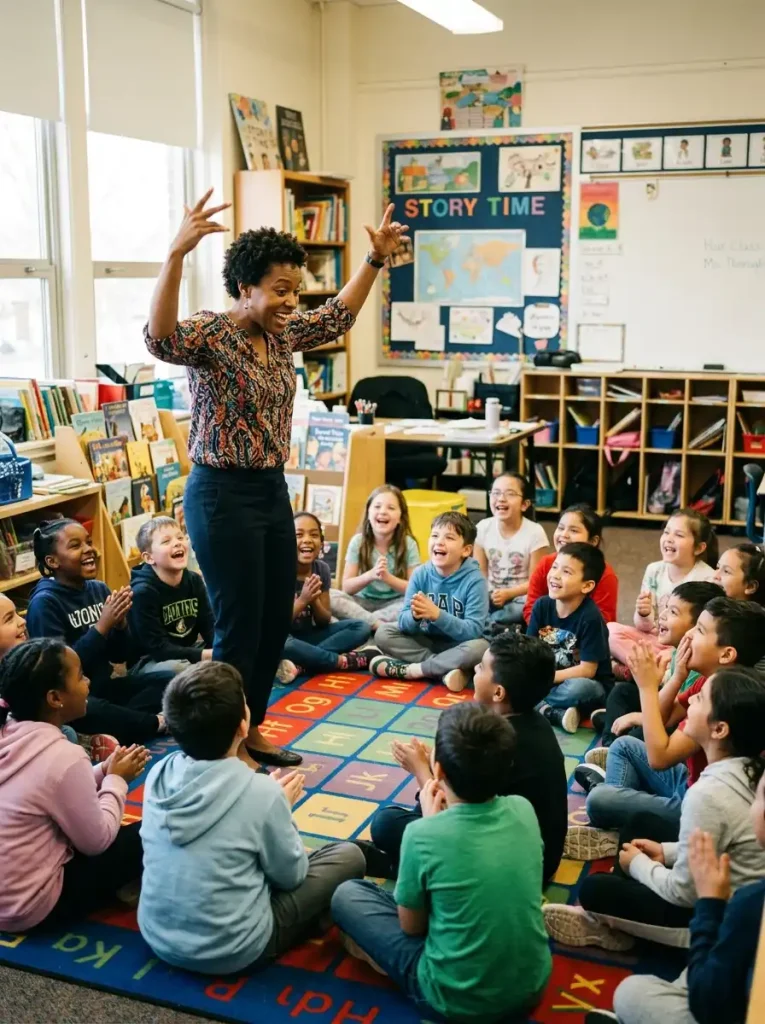
8. Improv Storytelling With “Yes, And”
Short Introduction
Borrow a classic improv storytelling technique by requiring every participant to accept and build on whatever comes before them, using the phrase “yes, and” to keep the story moving forward.
Why It Works
This rule eliminates blocking, where participants shut down each other’s ideas instead of building on them. As a result, stories flow more naturally and stay genuinely collaborative.
How to Use It
- Explain the “yes, and” rule clearly before starting.
- Begin with a simple prompt, like “You just found a door in your backyard that wasn’t there yesterday.”
- Each participant must accept the previous statement, then add something new using “yes, and.”
- Continue until the story reaches a natural conclusion or your allotted time runs out.
Examples
If one person says “The door leads to a candy factory,” the next person might respond, “Yes, and the candy factory is run entirely by talking raccoons.”
Variations
Add a rule requiring each contribution to introduce a new conflict ideas element, keeping the story from becoming purely whimsical without direction.
Tips for Making It Memorable
Encourage bold, unexpected additions rather than safe, predictable choices. The best improv stories embrace a little chaos.
Suitable Age Groups
This idea suits ages nine and up, since younger children sometimes struggle with the structured “yes, and” format.
Common Mistakes to Avoid
Avoid overthinking your contribution. Improv storytelling works best with quick, instinctive responses rather than carefully planned additions.
Benefits
This exercise builds quick thinking, collaborative confidence, and comfort with public speaking in a genuinely low-pressure environment.
9. Myth and Legend Inspired Tales
Short Introduction
Borrow structure and themes from mythology and folklore, then create an entirely original story using similar patterns, gods, quests, or moral tests.
Why It Works
Myths carry universal themes, courage, sacrifice, trickery, that resonate across cultures and generations. Using these patterns gives new stories built-in emotional weight.
How to Use It
- Choose a mythological theme, like a hero’s journey, a trickster figure, or an origin story for a natural phenomenon.
- Create original characters that fit within that theme.
- Build a story around a central test, quest, or moral lesson, similar to traditional folktales.
- Include a clear consequence or lesson tied to the character’s choices throughout the story.
Examples
Create an original myth explaining why the ocean has tides, centered around two feuding sibling deities. Or write a trickster story about a clever fox who outsmarts a greedy king.
Variations
Research myths from different cultures and blend elements from two traditions into a single original tale.
Tips for Making It Memorable
Include a clear moral lesson, but let it emerge through the character’s actions and consequences rather than direct narration.
Suitable Age Groups
This idea works well for ages ten and up, particularly in classroom settings focused on world cultures or literature.
Common Mistakes to Avoid
Avoid copying an existing myth too closely. Use the structure as inspiration, not a template to replicate exactly.
Benefits
Myth-inspired storytelling deepens cultural understanding, strengthens thematic thinking, and introduces moral lessons in a naturally engaging format.

Benefits of Storytelling for Children
Storytelling shapes far more than entertainment during childhood. It plays a genuine role in cognitive and emotional development.
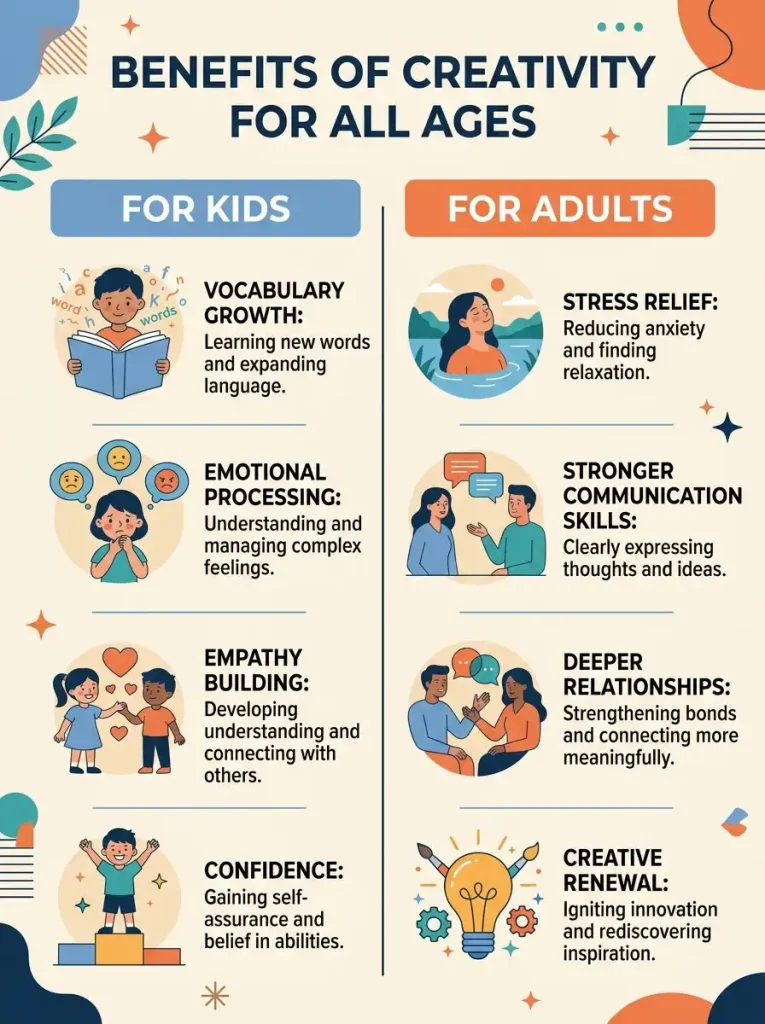
Children who engage in regular storytelling develop stronger vocabulary and improved reading comprehension over time. Additionally, storytelling helps kids process complex emotions safely, through characters rather than direct confrontation.
Imagination activities like these also strengthen problem-solving skills, since children constantly predict what might happen next. Consequently, kids who grow up around storytelling often show stronger empathy, since stories require imagining life from someone else’s perspective.
Finally, storytelling builds confidence. Every time a child tells their own story aloud, they practice organizing thoughts and speaking in front of others, both valuable lifelong skills.
Infographic: Benefits of Storytelling for Kids and Adults
10. The “What If” Story Starter
Short Introduction
Begin a story with a single “what if” question, then build an entire narrative around exploring that possibility fully.
Why It Works
“What if” questions instantly generate curiosity and direction. They work as some of the most reliable story starters because they naturally suggest conflict and consequence.
How to Use It
- Pose a “what if” question, like “What if shadows could talk, but only at midnight?”
- Brainstorm the immediate implications of that scenario.
- Choose a character who discovers or experiences this reality firsthand.
- Build the story around exploring the consequences, both positive and challenging.
Examples
“What if everyone’s dreams were connected to one giant, shared dream world?” could inspire an entire fantasy series. “What if a town’s mailbox could deliver letters to the past?” offers rich emotional storytelling potential.
Variations
Combine two unrelated “what if” questions into a single story for an unexpected genre mashup.
Tips for Making It Memorable
Choose a “what if” question with genuine emotional stakes attached, not just a clever premise alone.
Suitable Age Groups
This idea works across nearly all ages, adjusting complexity and themes based on the audience.
Common Mistakes to Avoid
Avoid choosing a premise so complicated that it overwhelms the actual story. Simple “what if” questions often produce the richest results.
Benefits
This exercise strengthens hypothetical thinking, creative problem-solving, and comfort with open-ended writing prompts.
11. Mystery Detective Storytelling
Short Introduction
Build a mystery stories scenario where listeners help solve a puzzle alongside the story’s detective character, piecing together clues as the tale unfolds.
Why It Works
Mysteries naturally hold attention because listeners actively participate in solving the puzzle, rather than passively absorbing the plot.
How to Use It
- Establish a clear mystery, like a missing object, an unexplained event, or a hidden identity.
- Introduce three or four suspects or possible explanations.
- Reveal clues gradually throughout the story, allowing listeners to guess along the way.
- Resolve the mystery with a satisfying, logical explanation tied to the clues already given.
Examples
A missing pie at a family gathering could lead to a lighthearted mystery involving a sneaky dog, a forgetful uncle, and a suspicious neighbor. For older audiences, a mystery about a disappearing painting in an old mansion offers more complexity.
Variations
Let listeners vote on which suspect to investigate next, adding an interactive element to the storytelling experience.
Tips for Making It Memorable
Plant one small, easy-to-miss clue early in the story that becomes crucial to the resolution later.
Suitable Age Groups
Simple versions work well for ages six and up, while more complex mysteries suit teenagers and adults.
Common Mistakes to Avoid
Avoid introducing the solution randomly without any prior clues. Fair, logical mysteries feel far more satisfying than random reveals.
Benefits
Mystery storytelling strengthens logical reasoning, attention to detail, and active listening skills throughout the entire experience.

Why Adults Should Tell Stories More Often
Storytelling often gets treated like a childhood activity that adults eventually outgrow. That assumption misses something valuable, though.
Adults who tell stories regularly, whether at work, around a dinner table, or during public speaking, communicate more persuasively overall. Stories make abstract ideas memorable in ways plain facts simply can’t match.
Beyond communication, storytelling offers genuine stress relief. It requires focus and creativity, pulling attention away from daily worries for a while. Additionally, sharing personal stories strengthens relationships, since vulnerability and honesty naturally deepen connection between people.
Finally, storytelling keeps imagination active well into adulthood. Just because responsibilities pile up doesn’t mean creativity has to disappear entirely.
12. Personal Memory Storytelling
Short Introduction
Turn a real memory into a structured story, complete with setting, characters, conflict, and resolution, rather than simply recounting facts.
Why It Works
Personal stories carry authenticity that fictional tales sometimes lack. They also help storytellers process their own experiences more meaningfully.
How to Use It
- Choose a specific memory, ideally one with a clear beginning, middle, and end.
- Identify the central conflict or challenge within that memory.
- Add sensory details, sounds, smells, emotions, to bring the memory vividly to life.
- End with a reflection on what the experience taught you, without stating it too directly.
Examples
A childhood memory of getting lost at a fair could become a story about overcoming fear and finding unexpected kindness from strangers. A memory of a failed first job interview could become a humorous, relatable story about resilience.
Variations
Interview a family member about one of their own memories, then retell their story from your own perspective as the narrator.
Tips for Making It Memorable
Focus on one specific moment rather than summarizing an entire event. Specificity almost always creates stronger emotional impact.
Suitable Age Groups
This idea works wonderfully for teenagers and adults, particularly in family settings or storytelling groups focused on personal narrative.
Common Mistakes to Avoid
Avoid rushing through emotional moments. Let genuine feeling breathe within the story rather than summarizing it quickly.
Benefits
Personal memory storytelling strengthens self-reflection, emotional processing, and authentic public speaking skills.
Storytelling Games to Try
Ready to put these ideas into practice? These simple storytelling games work well for family nights, classrooms, or casual gatherings.
- Story Cubes: Roll dice featuring random images, then build a story incorporating every symbol shown.
- Two Truths and a Tale: Share two true personal stories and one fictional one, letting listeners guess which is fake.
- Emoji Story Chain: Build a story using only emojis as prompts, then translate it into spoken narrative.
- Character Speed Dating: Quickly introduce random characters, then pair two together for an impromptu story.
- The Continuing Sentence: Similar to round-robin, but each person can only add exactly one sentence before passing it along.
Expert Advice: Keep a small notebook of favorite prompts and objects from these games. Revisiting them later often sparks entirely new stories.
Storytelling Idea Comparison Table
| Storytelling Idea | Best For | Group Size | Skill Focus |
|---|---|---|---|
| Round-Robin Storytelling | Families, classrooms | 3–10 people | Collaboration, listening |
| Mystery Box Prompt | Solo or small groups | 1–4 people | Improvisation |
| Bedtime Story Building | Parents and young children | 2 people | Emotional connection |
| Fairy Tale Remix | Classrooms, teens | 1–6 people | Critical thinking |
| Campfire Ghost Stories | Camping groups, sleepovers | 4–12 people | Suspense, delivery |
| Character Swap | Book clubs, classrooms | 1–6 people | Empathy, perspective |
| One-Object Adventure | Writers, solo storytellers | 1–4 people | World-building |
| Improv “Yes, And” | Improv groups, teens | 3–8 people | Quick thinking |
| Myth-Inspired Tales | Classrooms, culture studies | 1–6 people | Thematic depth |
| “What If” Starter | Any age, solo or group | 1–8 people | Hypothetical thinking |
| Mystery Detective Story | Family game nights | 3–8 people | Logic, deduction |
| Personal Memory Story | Adults, family gatherings | 1–6 people | Reflection, authenticity |
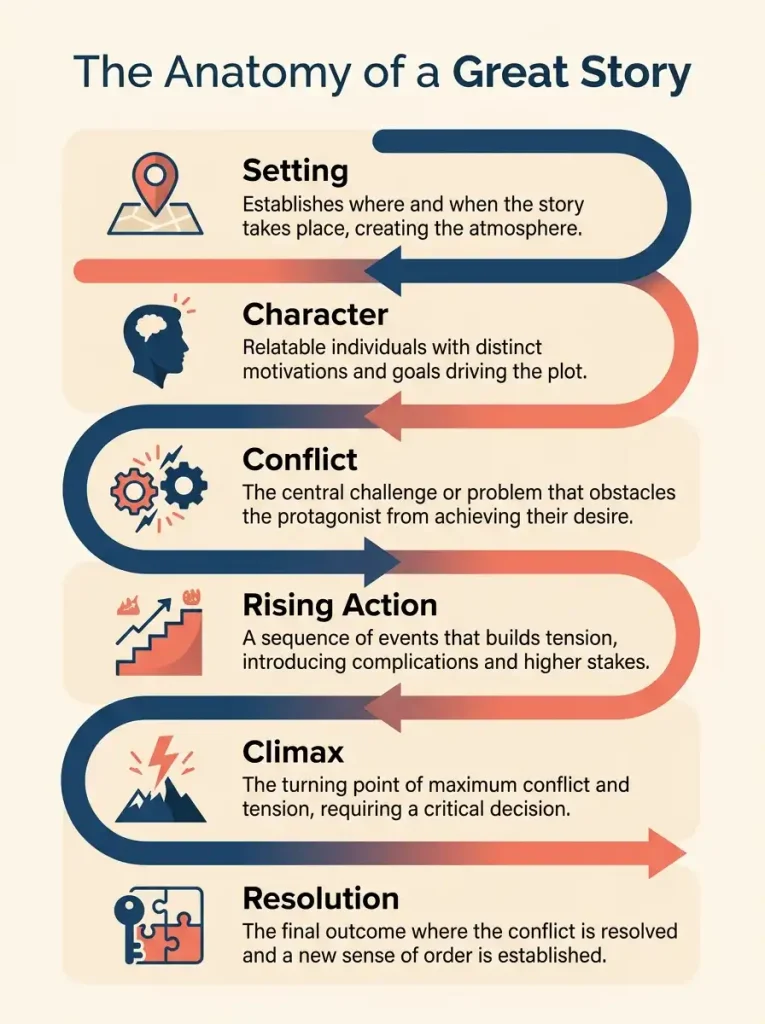
Story Structure Elements Table
| Element | Purpose | Example |
|---|---|---|
| Setting | Grounds the story in time and place | A foggy coastal town in autumn |
| Character | Gives the story a relatable focal point | A curious young lighthouse keeper |
| Conflict | Creates tension and stakes | A mysterious ship appears offshore |
| Rising Action | Builds toward the climax | Clues reveal the ship isn’t what it seems |
| Climax | The story’s turning point | The keeper confronts the ship’s captain |
| Resolution | Provides closure and meaning | The truth reshapes the town’s future |
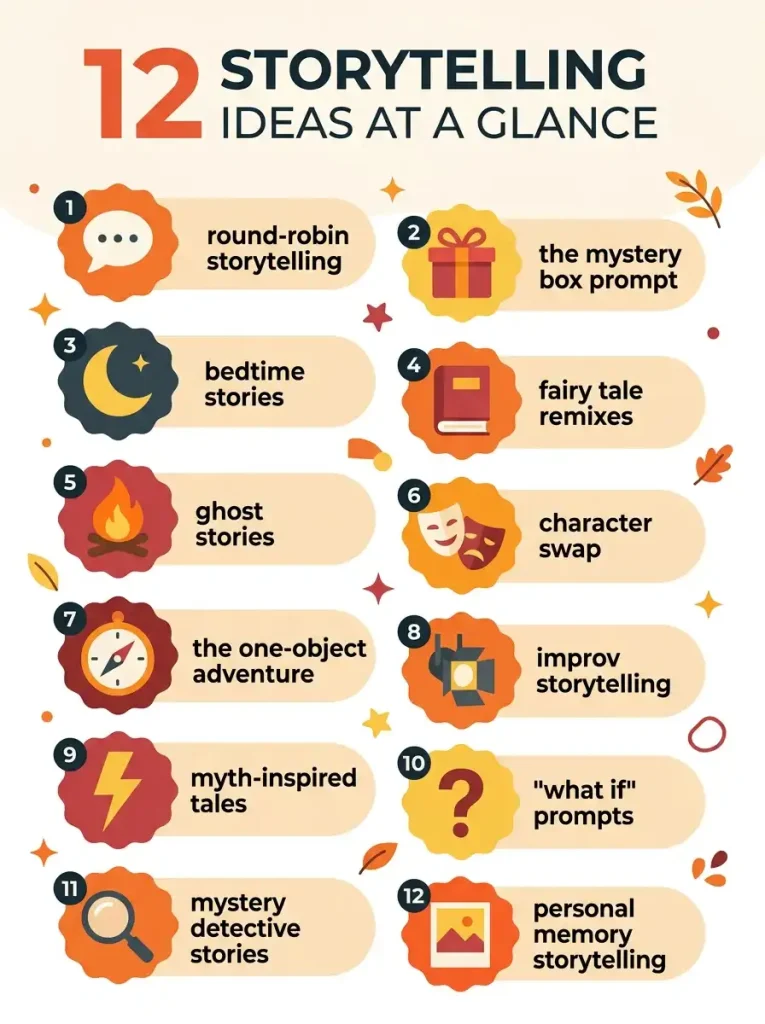
Infographic: 12 Storytelling Ideas at a Glance
Infographic: The Anatomy of a Great Story
Genre Comparison Table
| Genre | Typical Mood | Ideal Audience | Common Themes |
|---|---|---|---|
| Fantasy Stories | Wondrous, imaginative | Kids and teens | Magic, courage, transformation |
| Mystery Stories | Suspenseful, curious | Teens and adults | Logic, deception, discovery |
| Adventure Stories | Exciting, fast-paced | Kids through adults | Exploration, risk, growth |
| Fairy Tales | Whimsical, moral-driven | Young children | Good versus evil, lessons |
| Folktales | Cultural, symbolic | All ages | Tradition, wisdom, community |
| Mythology-Inspired | Epic, thematic | Teens and adults | Sacrifice, destiny, power |
Bringing Storytelling Into Everyday Life
You don’t need a special occasion to tell a good story. Dinner tables, car rides, and quiet bedtime moments all offer perfect opportunities.
Start small. Choose just one idea from this list and try it this week, whether that’s a quick round-robin story or a single “what if” question over breakfast. Confidence builds naturally with practice, even if your first attempt feels a little clumsy.
Remember that storytelling doesn’t require perfection. It requires presence, curiosity, and a willingness to imagine something together with the people around you.
Frequently Asked Questions
What’s the easiest storytelling idea for beginners to try first? Round-robin storytelling works especially well for beginners, since it removes the pressure of creating an entire story alone. Everyone contributes just a small piece, making it approachable for shy participants and confident storytellers alike.
How can I make storytelling more engaging for young children? Use vivid sensory details, simple recurring characters, and plenty of vocal variation. Children respond strongly to enthusiasm and interactive elements, like asking what should happen next throughout the story.
Are these storytelling ideas useful for classroom settings? Yes, several ideas, including fairy tale remixes, myth-inspired tales, and mystery detective storytelling, adapt naturally into classroom storytelling activities, supporting both creative writing and critical thinking skills.
Can storytelling actually improve public speaking confidence? Absolutely. Regular storytelling practice builds comfort with structuring thoughts, projecting your voice, and holding an audience’s attention, all core skills within public speaking.
What age is best to start storytelling activities with kids? Most children can engage with simple storytelling activities as early as age three or four, particularly through collaborative bedtime stories or picture-based prompts.
Final Thoughts: Your Next Story Is Waiting
Twelve ideas, endless possibilities. That’s really what storytelling offers, whether you’re building a bedtime tale with your child or reconnecting with your own imagination as an adult.
Every story you tell strengthens something valuable: connection, confidence, creativity, and the simple joy of shared imagination. None of that requires special training or expensive tools, just willingness and a little practice.
So tonight, around the dinner table, during a car ride, or right before bed, try one idea from this list. Your next favorite story might be closer than you think, waiting for exactly the right moment to be told.