15 Random Story Ideas for Instagram
You open the app, tap the plus sign, and then… nothing. Sound familiar? Every Instagram user hits this wall eventually, even the ones with thousands of followers and a content calendar that looks perfectly organized from the outside.
Here’s the thing about random story ideas for Instagram: they don’t need a theme, a strategy, or a perfectly planned aesthetic. Sometimes the most engaging content is the stuff you post in two minutes, without overthinking a single detail. That’s exactly what this list offers.
Below, you’ll find fifteen genuinely useful Instagram Story ideas, each one built for real posting, not just inspiration you’ll forget by tomorrow. Whether you’re running a small business, growing a personal brand, or just trying to keep your Stories from going stale, something here will fit.
Let’s fill that blank screen.
Why Random Instagram Stories Still Work
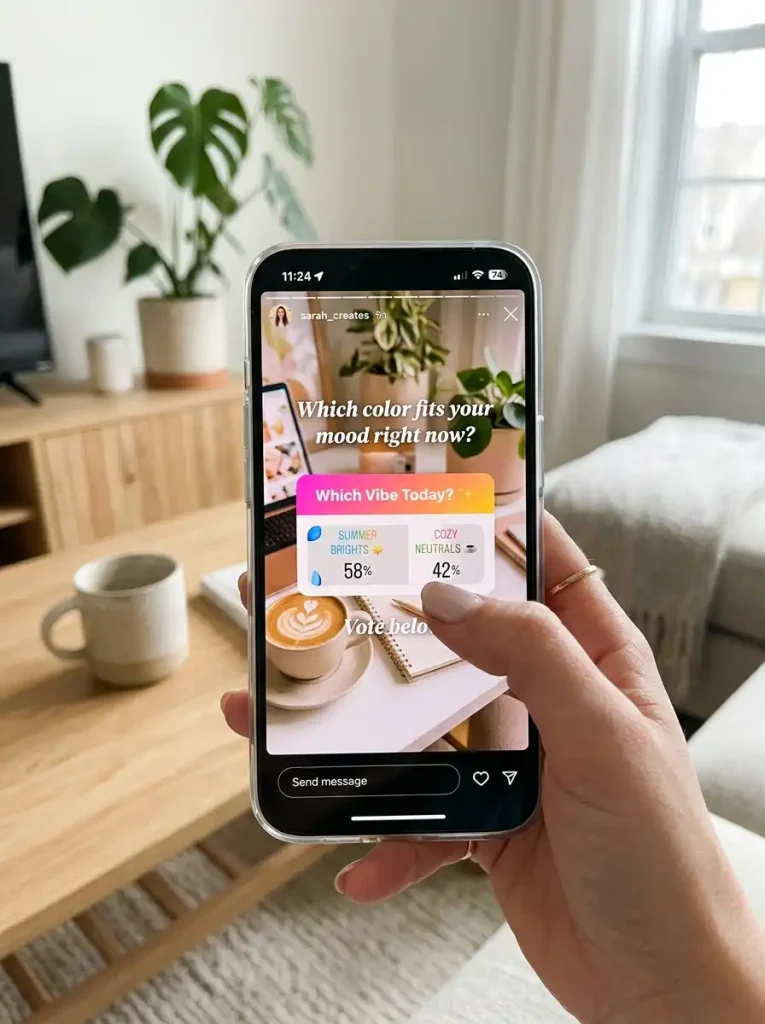
Predictability gets boring fast, even for your most loyal followers. Random content breaks that pattern, and honestly, that unpredictability is exactly why it works so well.
Curiosity plays a huge role here. When followers don’t know what’s coming next, they’re more likely to actually watch instead of skipping ahead. That single behavior, watching instead of skipping, sends a strong signal to Instagram’s algorithm about how engaging your content really is.
Random Stories also feel more human. Perfectly curated feeds can feel distant, but a spontaneous poll or a silly confession makes your account feel approachable.
Consistency still matters, though. Random doesn’t mean random timing; it means the content itself feels fresh and unplanned, even while your posting schedule stays reliable. That balance keeps followers checking back regularly, since they never quite know what they’ll find, but they know it’ll be worth seeing.
15 Random Story Ideas for Instagram
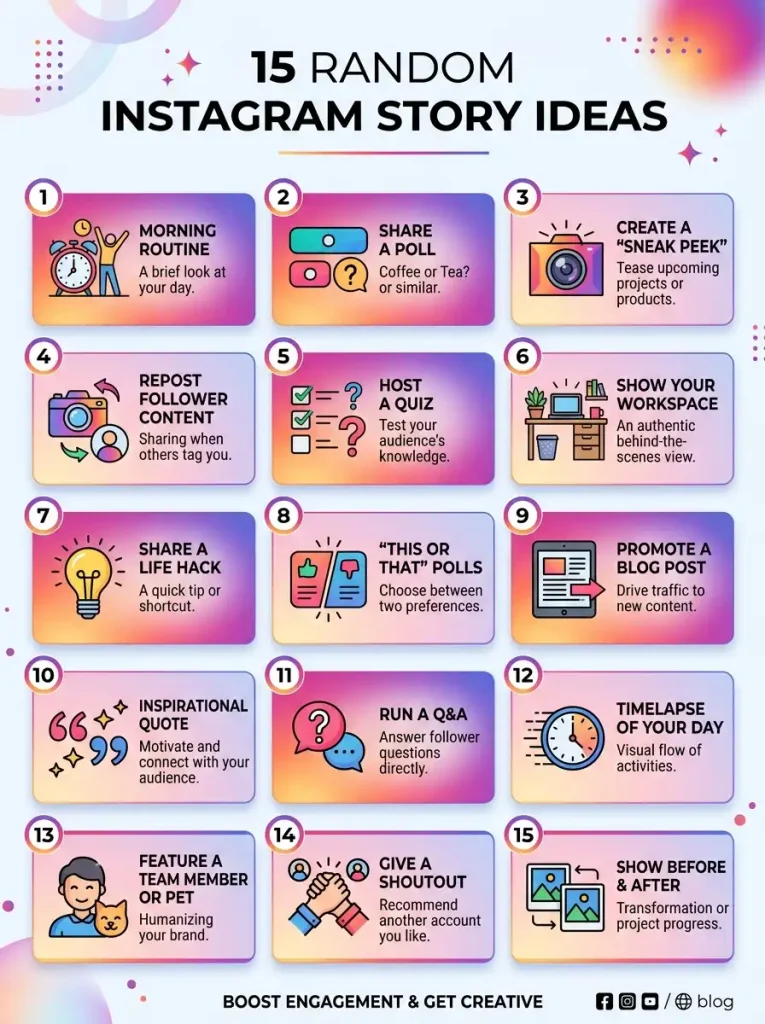
Here are fifteen ideas ready to use today, each with a clear reason it works and exactly how to execute it.
1. Two Truths and a Lie
Why it works: This classic game taps into genuine curiosity. Followers love guessing, and the interactive format practically guarantees replies.
How to do it: Write three statements about yourself or your brand, two true, one false. Post them as a single Story slide with a poll or quiz sticker attached.
Example Story sequence: Slide one poses the three statements. Slide two, posted a few hours later, reveals the answer along with a short explanation.
Best stickers to use: Quiz sticker for direct guessing, or a poll sticker if you’re only offering two options.
Best audience: Personal brands, influencers, and small business owners wanting to feel more relatable.
Pro tip: Choose a genuinely surprising “truth.” The more unexpected it is, the more people second-guess themselves, which boosts engagement.
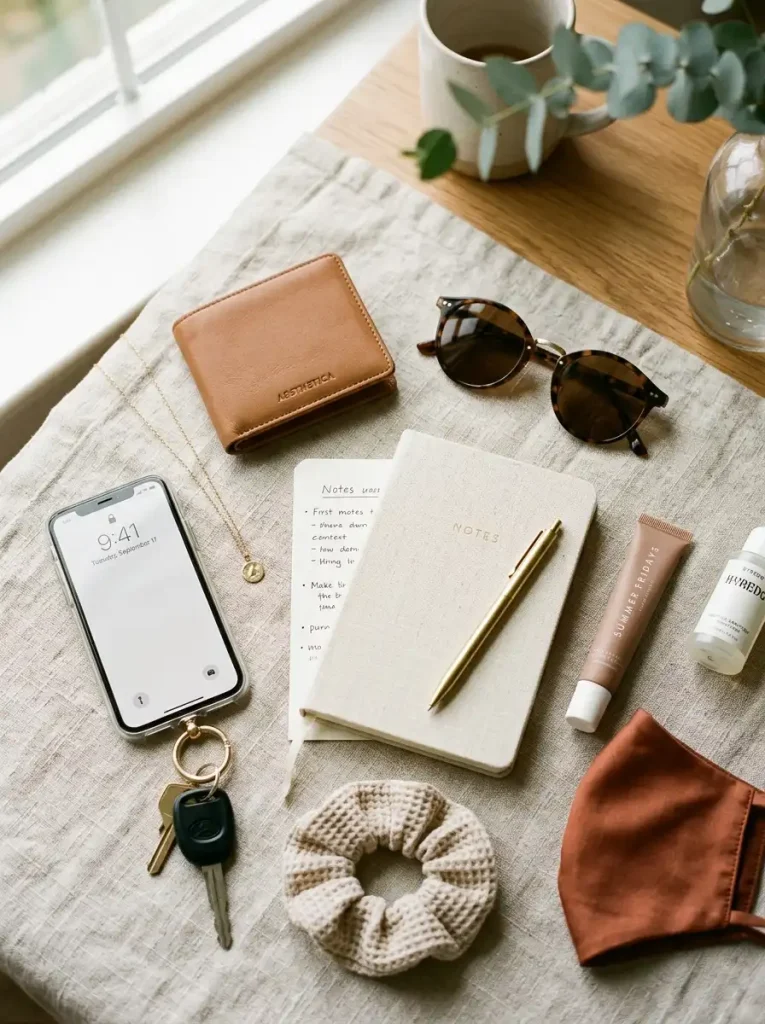
2. What’s in My Bag
Why it works: This idea satisfies natural curiosity about someone’s daily life while subtly showcasing products, habits, or personality.
How to do it: Lay out the contents of your bag, purse, or backpack, then photograph or film a quick flat-lay.
Example Story sequence: Start with a full flat-lay shot, then zoom into two or three specific items worth explaining.
Best stickers to use: Question sticker asking “What’s always in your bag?” to invite replies.
Best audience: Lifestyle creators, beauty influencers, and moms sharing daily routines.
Pro tip: Include one slightly unusual item. A single unexpected object makes the whole Story more memorable.
3. This or That
Why it works: Binary choices are effortless to answer, which means more followers actually stop and participate instead of scrolling past.
How to do it: Pick a simple, relatable comparison, coffee or tea, morning person or night owl, and present both options side by side.
Example Story sequence: One slide with a clean poll sticker showing both choices, followed by your own answer revealed afterward.
Best stickers to use: Poll sticker, obviously, since it’s designed exactly for this format.
Best audience: Any account looking for quick, low-effort engagement, especially students and everyday users.
Pro tip: Keep your comparisons specific to your niche occasionally. A bookstagram account might ask “physical book or ebook” instead of generic lifestyle questions.
4. Emoji Challenge
Why it works: Emoji-based content is visually fun and works well even for followers scrolling quickly through Stories.
How to do it: Describe something, a movie, a mood, your weekend plans, using only emojis, then challenge followers to guess what you mean.
Example Story sequence: Post the emoji sequence first, then reveal the answer in a follow-up slide a few hours later.
Best stickers to use: Question sticker for guesses, or a quiz sticker with multiple choice options.
Best audience: Younger audiences, students, and brands with a playful tone.
Pro tip: Keep it to five emojis or fewer. Too many makes the challenge frustrating instead of fun.
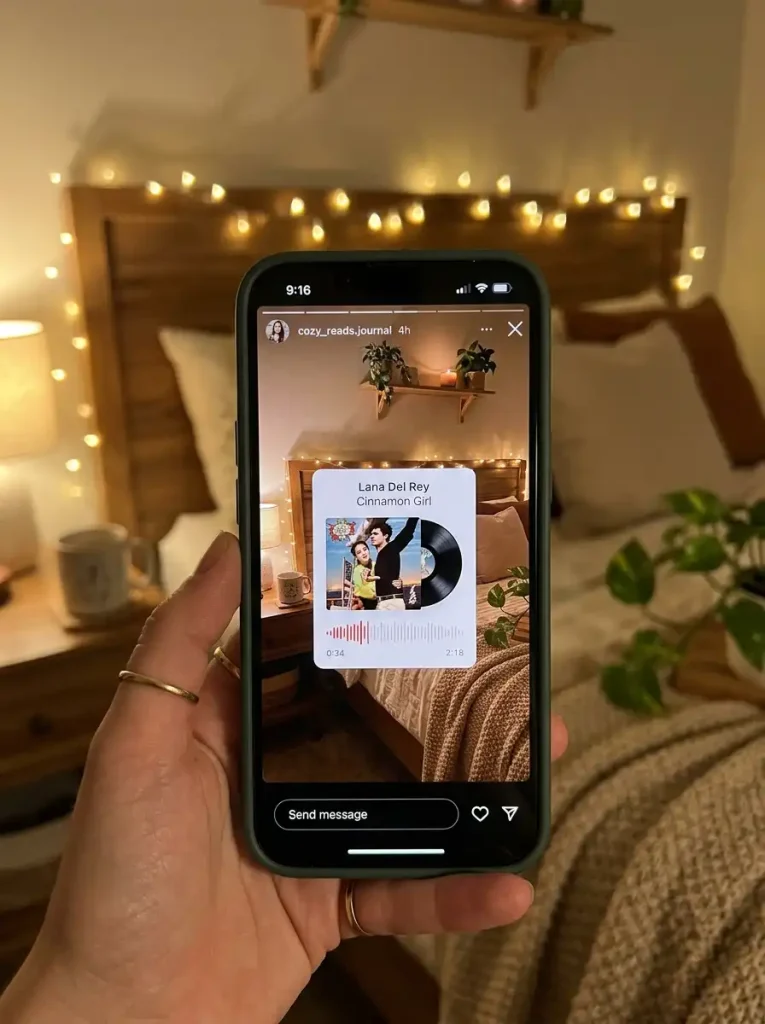
5. Song of the Day
Why it works: Music creates instant emotional connection, and sharing your current favorite feels personal without requiring much effort.
How to do it: Use Instagram’s built-in music sticker to feature whatever song you’re currently obsessed with.
Example Story sequence: A single slide featuring the music sticker over a relevant photo or video clip.
Best stickers to use: Music sticker paired with an emoji slider asking “How much do you love this song?”
Best audience: Lifestyle creators, students, and anyone building a more personality-driven account.
Pro tip: Rotate genres occasionally. Sticking to one type of music limits the range of followers who might connect with your picks.
6. Random Unpopular Opinion
Why it works: Opinions spark conversation, and a lighthearted unpopular take almost always generates replies, shares, and debate in the comments.
How to do it: Share a genuinely held but slightly controversial opinion, keeping the topic low-stakes rather than divisive.
Example Story sequence: Text-based Story slide stating your opinion, followed by a poll asking “Agree or disagree?”
Best stickers to use: Poll sticker for quick reactions, or a question sticker inviting longer responses.
Best audience: Personal brands and influencers wanting to boost personality-driven engagement.
Pro tip: Keep it playful. “Pineapple belongs on pizza” works; anything genuinely divisive or political usually backfires.
7. One Photo From Your Camera Roll
Why it works: This idea feels spontaneous and authentic, since followers assume you’re sharing something unplanned and real.
How to do it: Scroll back a random number of days or weeks, then post whatever photo you land on, with a short caption explaining the context.
Example Story sequence: A single Story slide featuring the photo, with text explaining when and why it was taken.
Best stickers to use: Question sticker asking followers to guess where or when the photo was taken.
Best audience: Everyday users and lifestyle accounts wanting more candid, personality-driven content.
Pro tip: Choose photos with a story behind them, not just a pretty picture. Context is what makes this idea interesting.
8. Finish the Sentence
Why it works: Open-ended prompts invite genuine self-expression, which tends to generate longer, more thoughtful replies than simple polls.
How to do it: Write a partial sentence, like “The best advice I ever received was…” and let followers fill in the rest.
Example Story sequence: One slide with the prompt and a question sticker attached for responses.
Best stickers to use: Question sticker, since it’s built specifically for open text replies.
Best audience: Coaches, educators, and personal brands focused on connection over promotion.
Pro tip: Share your own answer first. It sets the tone and makes followers more comfortable responding honestly.
9. Childhood Memory
Why it works: Nostalgia connects people instantly, and sharing a personal memory humanizes even the most polished business accounts.
How to do it: Share a short story or photo from your childhood, tying it loosely to your current content niche if possible.
Example Story sequence: A photo or simple text slide followed by a brief written memory, two or three sentences long.
Best stickers to use: Question sticker asking followers to share their own related memory.
Best audience: Personal brands, wellness accounts, and small business owners building deeper trust.
Pro tip: Pick a specific, small detail rather than a vague summary. “I used to steal my dad’s flashlight to read under the covers” beats “I loved reading as a kid.”

10. Behind-the-Scenes Moment
Why it works: Followers crave authenticity, and behind-the-scenes content builds trust by showing the process, not just the polished result.
How to do it: Film a quick, unfiltered clip of whatever you’re actually doing, packing orders, prepping a meal, editing a video.
Example Story sequence: A short video clip, ideally fifteen seconds or less, with minimal editing.
Best stickers to use: Question sticker inviting followers to ask about your process.
Best audience: Small business owners, creators, and freelancers wanting to build transparency.
Pro tip: Don’t overthink the lighting or setup here. Slightly imperfect footage actually reinforces the authenticity this format relies on.
11. Ask Me Anything
Why it works: This format hands control directly to your audience, which almost always boosts engagement since followers get to shape the content.
How to do it: Post a question sticker inviting any question, then dedicate a few Story slides to answering the best ones.
Example Story sequence: Opening slide with the question sticker, followed by three to five response slides answering selected questions.
Best stickers to use: Question sticker, the entire format is built around it.
Best audience: Coaches, experts, influencers, and business owners wanting to demonstrate expertise directly.
Pro tip: Save your favorite Q&A rounds to a highlight. New followers love browsing past answers to get to know you faster.
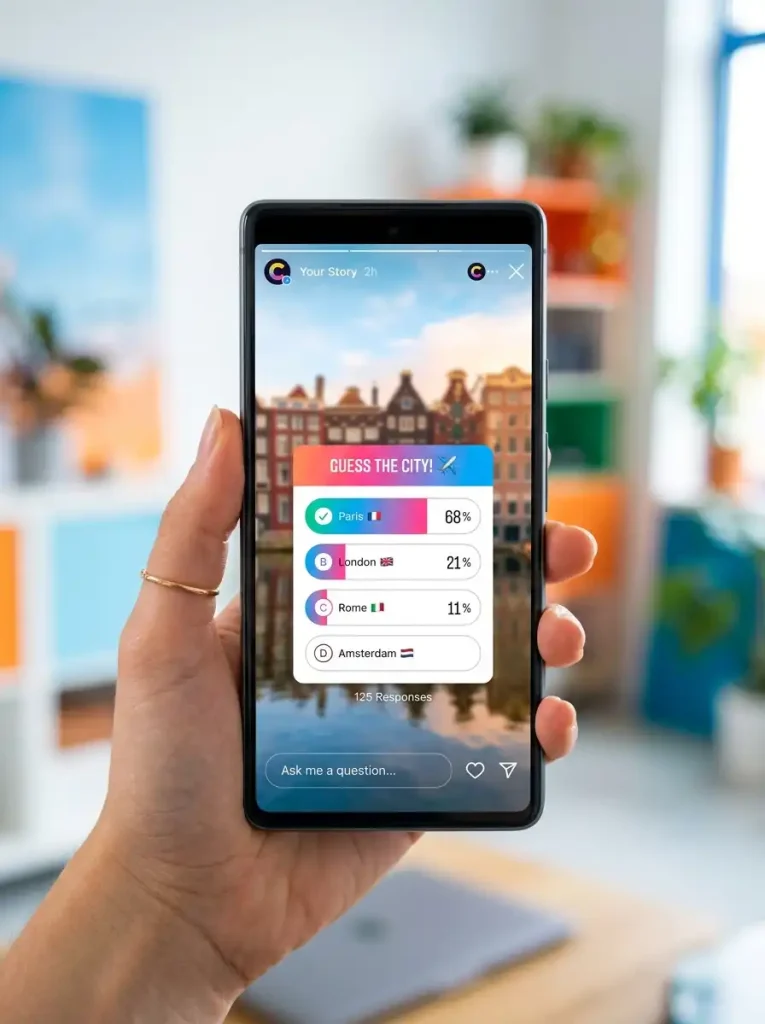
12. Mini Quiz
Why it works: Quizzes combine entertainment with light competition, which keeps followers engaged through multiple Story slides in a row.
How to do it: Create three to five quick questions related to your niche, using the quiz sticker for each one.
Example Story sequence: One question per slide, each revealing the correct answer before moving to the next.
Best stickers to use: Quiz sticker exclusively, since it’s designed precisely for this format.
Best audience: Educators, niche experts, and brands wanting to showcase knowledge in a fun, low-pressure way.
Pro tip: Keep questions genuinely challenging, not obvious. A quiz that’s too easy feels pointless to followers.
13. Favorite Product Today
Why it works: Recommendations feel personal and useful, especially when they’re framed as a genuine, current favorite rather than a scripted advertisement.
How to do it: Photograph or film whatever product you’re currently loving, whether it’s a skincare item, a kitchen gadget, or a book.
Example Story sequence: A single slide featuring the product, paired with a short, honest reason you like it.
Best stickers to use: Link sticker if you’re able to drive traffic to a purchase page or affiliate link.
Best audience: Beauty influencers, lifestyle creators, and small businesses promoting products naturally.
Pro tip: Be specific about why you like it. “This changed my morning routine” works better than a generic “obsessed with this.”
14. Caption This
Why it works: Humor drives engagement, and inviting followers to write captions turns a simple photo into an interactive game.
How to do it: Post a funny, relatable, or slightly absurd photo, then ask followers to caption it in your replies.
Example Story sequence: A single Story slide with the photo and a question sticker asking “Caption this.”
Best stickers to use: Question sticker, since it’s ideal for open-ended text responses.
Best audience: Personal brands, meme-adjacent accounts, and anyone wanting a lighthearted engagement boost.
Pro tip: Repost your favorite caption to your next Story. It rewards participation and encourages more replies next time.
15. Mystery Reveal
Why it works: Curiosity is one of the strongest psychological triggers on social media, and a slow reveal keeps followers watching until the very end.
How to do it: Tease something, a new product, an announcement, a personal update, across several Story slides before revealing the full picture.
Example Story sequence: Slide one shows a blurred or cropped image. Slide two adds a hint. Slide three delivers the full reveal.
Best stickers to use: Countdown sticker if the reveal is tied to a specific date or launch time.
Best audience: Business owners, creators launching new products, and influencers building anticipation for announcements.
Pro tip: Don’t stretch the reveal across too many slides. Three to four builds anticipation; more than that risks losing patience.
How Often Should You Post Random Instagram Stories?
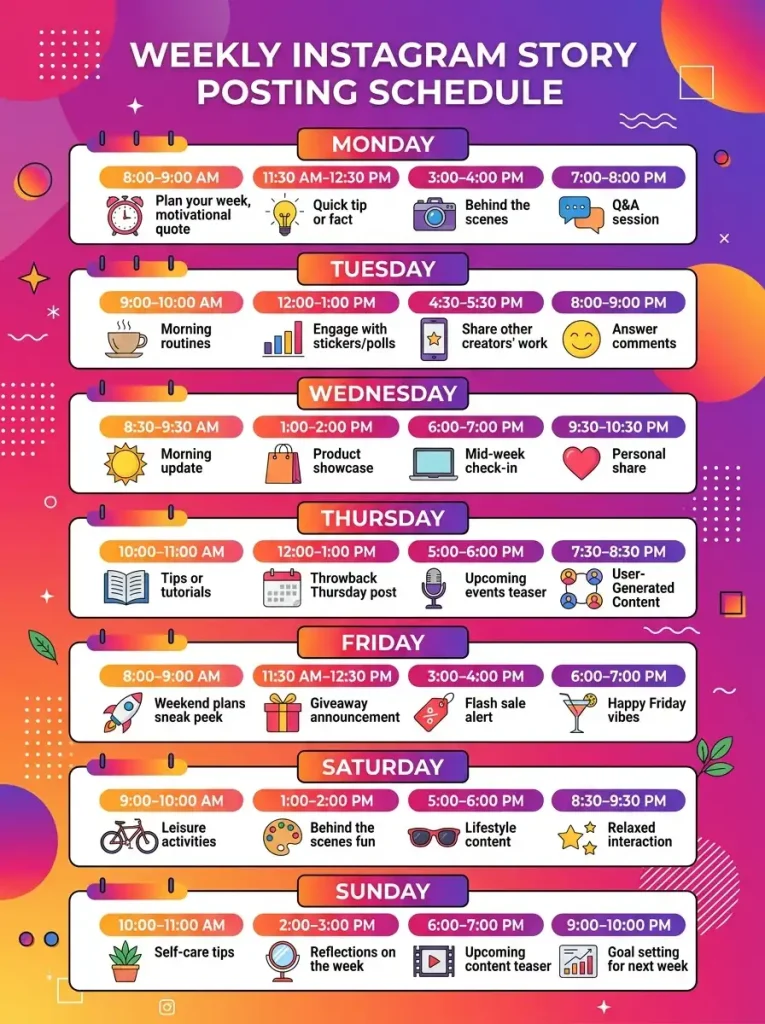
There’s no universal magic number, but consistency matters more than volume. Posting three to five Stories most days tends to keep followers engaged without overwhelming them.
Timing matters too. Evenings and lunch breaks often see higher engagement, since that’s when most people actually have time to scroll. Testing your own audience’s habits through Instagram Insights will always beat generic advice, though, since every account’s audience behaves a little differently.
Quality still edges out quantity here. Five thoughtful, engaging Stories outperform fifteen rushed, forgettable ones nearly every time. According to Meta Business guidance, accounts that maintain steady posting habits generally see stronger long-term reach than those posting in unpredictable bursts.
Mistakes to Avoid
Even great story ideas can underperform if a few common habits sneak in. Watch for these.
- Overposting without variety. Fifteen Stories in a row with the same format exhausts followers instead of engaging them.
- Ignoring interactive stickers. Polls, questions, and quizzes exist specifically to boost interaction; skipping them wastes easy opportunities.
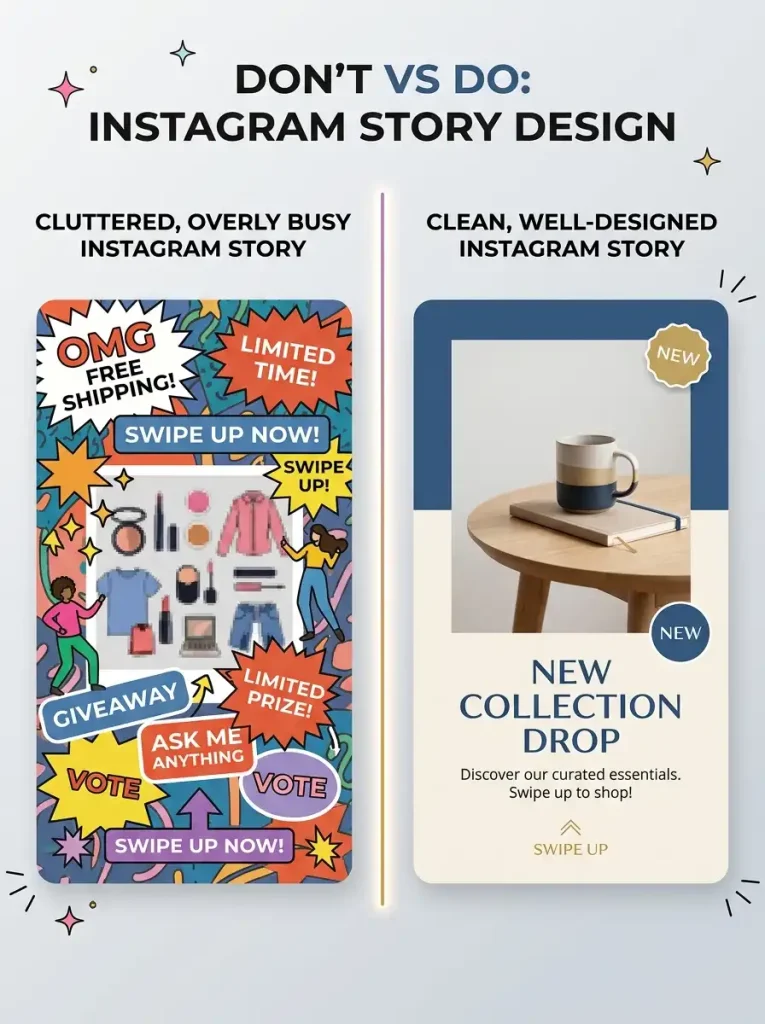
- Posting blurry or dark photos. Poor image quality undercuts even the most interesting content idea.
- Overusing text. Long paragraphs on a Story slide lose attention fast; keep text short and scannable.
- Forgetting to save highlights. Without highlights, great content disappears after 24 hours instead of continuing to attract new followers.
- Being inconsistent with posting times. Random timing every day makes it harder for followers to build a habit around checking your Stories.
- Copying trends without personalizing them. Generic templates work better once you add your own voice and perspective.
- Ignoring analytics. Skipping your Insights means missing valuable data about what’s actually resonating with your audience.
- Overusing filters. Heavy editing can make content feel less authentic, which works against the entire point of random, spontaneous Stories.
- Not following up on engagement. If followers reply to your polls or questions, respond when you can. Ignoring replies discourages future participation.
Frequently Asked Questions
What are the best random story ideas for Instagram if I have a small following? Simple, low-effort ideas like “This or That” or “Two Truths and a Lie” work particularly well for smaller accounts, since they require minimal production while still encouraging genuine interaction.
How many Stories should I post per day? Three to five Stories per day tends to work well for most accounts, though consistency matters more than hitting an exact number every single day.
Which stickers boost engagement the most? Poll and question stickers typically perform best, since they require minimal effort from followers while still counting as meaningful interaction toward the algorithm.
Can businesses use random story ideas effectively? Absolutely. Ideas like “Behind-the-Scenes Moment” and “Favorite Product Today” work especially well for businesses, blending authenticity with subtle promotion.
How do I keep my Instagram Stories from feeling repetitive? Rotate through different formats regularly, mixing personal content, polls, quizzes, and product features rather than sticking to one style every day.
Do random Stories actually help with the algorithm? Yes, according to guidance from Instagram Creators and Meta Business, Stories that generate replies, taps, and shares tend to see improved reach compared to passive, non-interactive content.
What’s the ideal length for text on an Instagram Story? Keep text to one or two short lines. Stories move quickly, and lengthy captions often go unread before someone swipes to the next slide.
Should I plan random Stories in advance, or post spontaneously? A mix works best. Keep a running list of ideas ready, like the fifteen in this article, so you’re never starting from scratch, even if the actual content feels spontaneous.
How do I measure whether a Story idea is working? Check your Insights for metrics like reply rate, sticker taps, and completion rate. According to Hootsuite’s social media research, these engagement signals matter more than raw view counts alone.
Can I reuse these story ideas repeatedly? Yes, most of these ideas work well on rotation every few weeks. Followers rarely mind repeated formats as long as the actual content feels fresh each time.
Final Thoughts
Random story ideas for Instagram work because they feel human, spontaneous, and genuinely fun to interact with. You don’t need elaborate planning or perfect production value to keep your Stories engaging.
Start with two or three ideas from this list, and build a rhythm from there. Over time, you’ll notice which formats resonate most with your specific audience, and you can lean into those a little more.
Your next Story doesn’t have to be perfect. It just needs to feel like you. Go ahead, open that blank Story screen, and give it something worth watching.