12 May Bulletin Board Ideas For Schools
May arrives like a breath of fresh air in every classroom. The windows open, the flowers bloom, and students start counting down the final weeks of school. A well-designed May bulletin board captures that energy and turns it into something meaningful for learning. This guide walks through twelve creative, classroom-tested ideas that celebrate spring, honor Mother’s Day, recognize teachers, and carry students happily toward summer.
May sits at a unique crossroads. Spring classroom ideas blend naturally with end-of-year excitement, creating the perfect window for a display that feels both fresh and celebratory. Students are motivated by warmer weather and looming milestones, and a thoughtfully designed May classroom display channels that energy into engagement rather than distraction.
This article covers everything you need: theme selection, color palettes, budget-friendly materials, age-appropriate adaptations, and answers to your most pressing questions. Whether you teach preschool, kindergarten, elementary, or middle school, you’ll find ideas that fit your space and your students perfectly.
12 Creative May Bulletin Board Ideas
Each idea below includes everything you need to bring it to life, from color palette to preparation time. Mix, match, and adapt freely to fit your classroom’s personality.
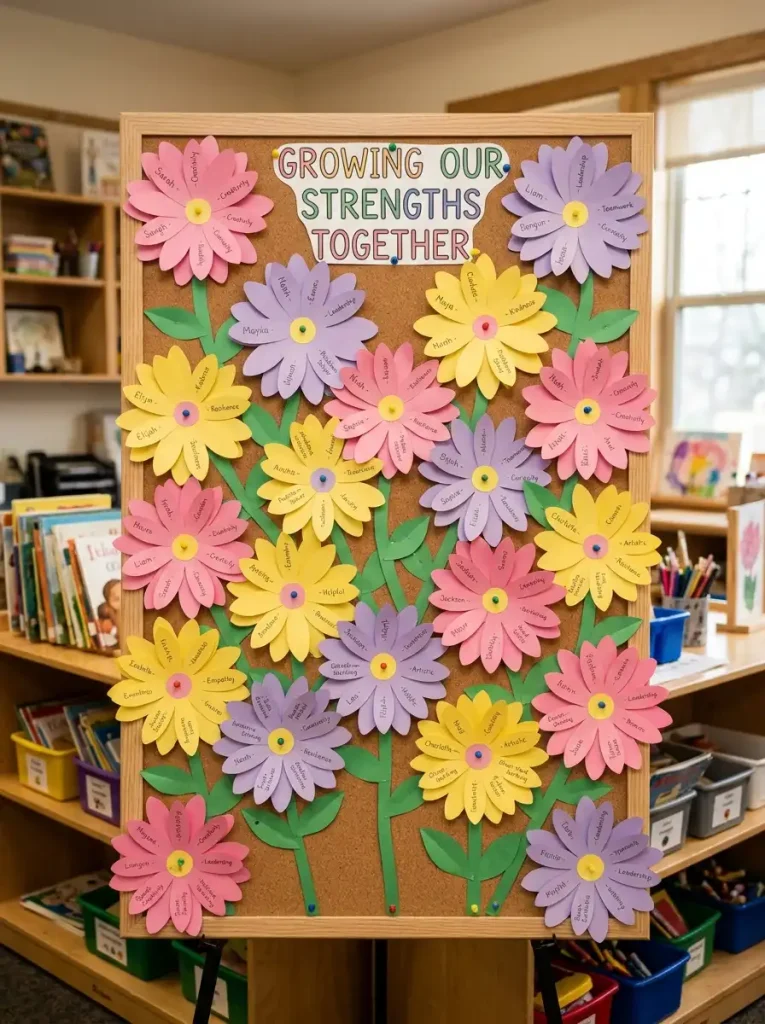
1. Bloom Where You Are Planted
Who it works best for: Elementary and middle school classrooms focused on growth mindset.
Theme: Personal growth represented through blooming flowers.
Decoration suggestions: Large paper flowers, each labeled with a student’s name and a personal strength or accomplishment. Add a green stem and leaves cut from construction paper.
Color palette: Soft pink, lavender, sunshine yellow, and sage green.
Educational value: Reinforces growth mindset bulletin board concepts by connecting effort and progress to visual, tangible symbols.
Interactive element: Students add a new petal each time they achieve a personal or academic goal.
Printable suggestions: Flower petal templates and a bold “Bloom Where You Are Planted” title banner.
Classroom setup tips: Arrange flowers in a loose garden pattern rather than a rigid grid for a more organic, natural look.
Ways students can contribute: Each student decorates their own flower and writes their strength in their own handwriting.
Seasonal adaptations: Swap petal colors for fall tones in October or winter blues in January to keep the concept year-round.
Estimated difficulty: Easy.
Estimated preparation time: 2 to 3 hours.
2. Busy Bees Learning Together
Who it works best for: Preschool and kindergarten classrooms.
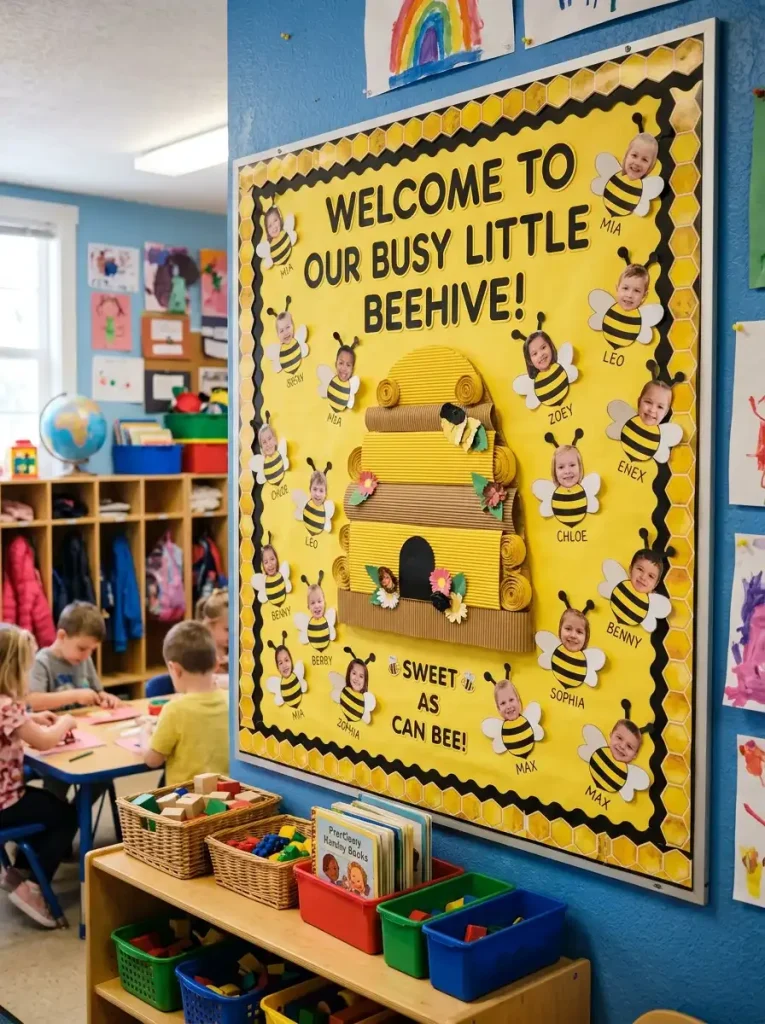
Theme: Teamwork and collaborative learning represented through a bee bulletin board.
Decoration suggestions: Paper beehives, buzzing bee cutouts with student photos as the bee’s body, and honeycomb patterns along the border.
Color palette: Golden yellow, black, and white with green accent leaves.
Educational value: Introduces basic science concepts about pollination while reinforcing classroom teamwork values.
Interactive element: A “buzzing board” where students move their bee closer to the hive as they complete collaborative tasks.
Printable suggestions: Bee body templates, honeycomb border strips, and pollination fact cards.
Classroom setup tips: Cluster bees around a central hive to create visual movement across the board.
Ways students can contribute: Students color and cut out their own bee, then add it to the hive display.
Seasonal adaptations: Works beautifully alongside a garden bulletin board or flower bulletin board for a coordinated spring hallway theme.
Estimated difficulty: Easy.
Estimated preparation time: 2 hours.
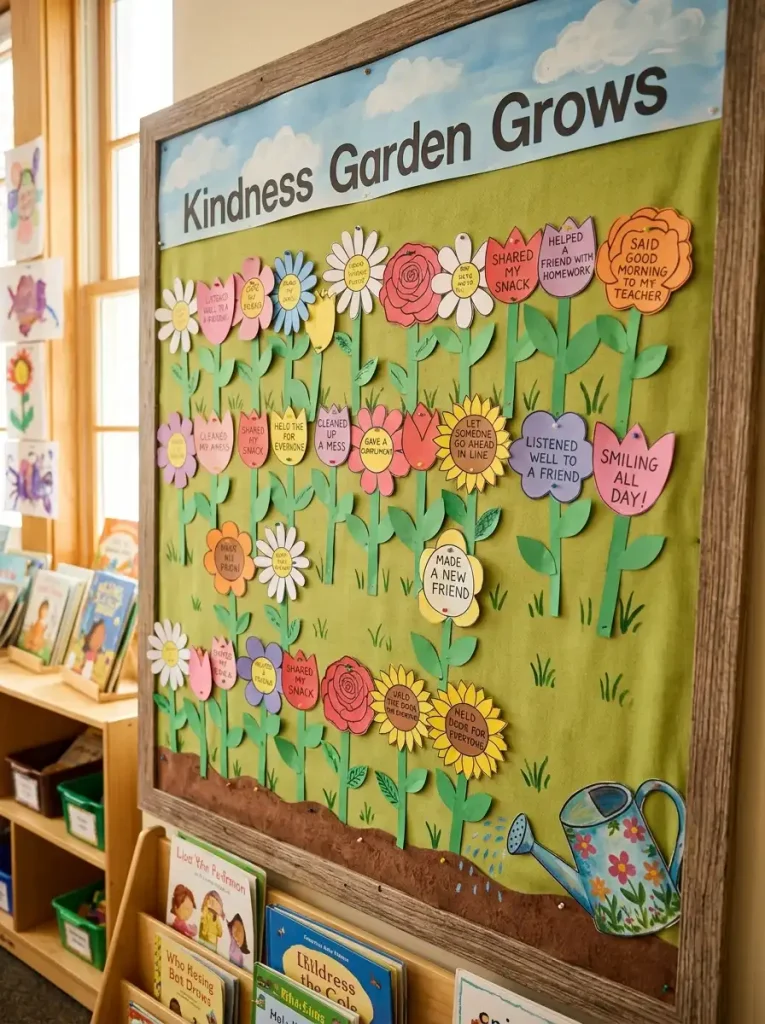
3. Garden of Kindness
Who it works best for: All elementary grade levels.
Theme: Kindness and character education displayed as a growing garden.
Decoration suggestions: Flower cutouts representing acts of kindness, written and added by students throughout the month.
Color palette: Multicolor flowers against a soft green background.
Educational value: Builds social-emotional learning skills while reinforcing positive classroom culture.
Interactive element: Students write a kind act on a flower and add it to the garden whenever they witness or perform one.
Printable suggestions: Flower templates in varied shapes, a watering can graphic, and a “Kindness Grows Here” title.
Classroom setup tips: Leave ample empty space at the start of May so the garden visibly fills up as the month progresses.
Ways students can contribute: Every student adds flowers throughout the month, making this one of the most participatory ideas on this list.
Seasonal adaptations: Continue the kindness theme into June with a “kindness in summer” take-home challenge.
Estimated difficulty: Easy.
Estimated preparation time: 1.5 hours initial setup, ongoing additions throughout the month.
4. Reading in Full Bloom
Who it works best for: Elementary classrooms and school libraries.
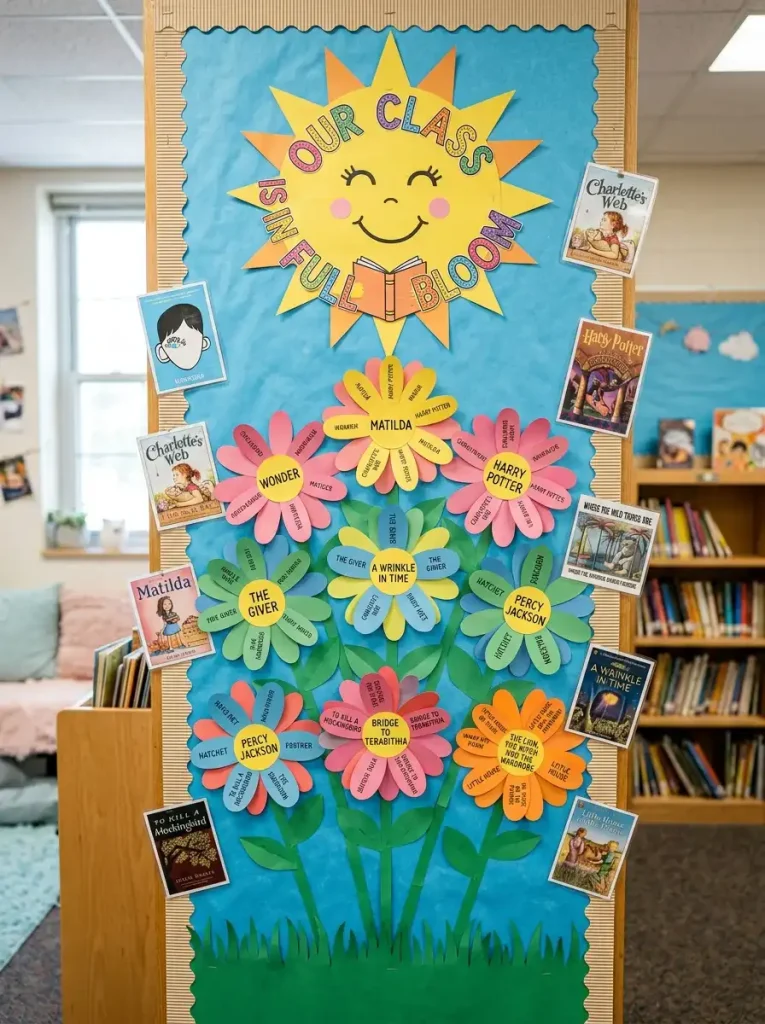
Theme: A reading bulletin board celebrating books through floral imagery.
Decoration suggestions: Paper flowers with book titles written on each petal, plus a large sun reading “Our Class is in Full Bloom!”
Color palette: Bright florals against a sky-blue background.
Educational value: Encourages reading motivation while visually tracking books completed as a class.
Interactive element: Students add a petal to their personal flower for every book finished during May.
Printable suggestions: Petal templates, book-cover cutout frames, and a bold garden-themed title banner.
Classroom setup tips: Group flo
wers by reading level or genre to add subtle organizational structure.
Ways students can contribute: Students write their book title and a one-sentence review on each petal they add.
Seasonal adaptations: Convert into a summer reading bulletin board by keeping the flower theme through June and July.
Estimated difficulty: Moderate.
Estimated preparation time: 3 hours.
5. Growing Minds
Who it works best for: Elementary and middle school classrooms with an academic focus.
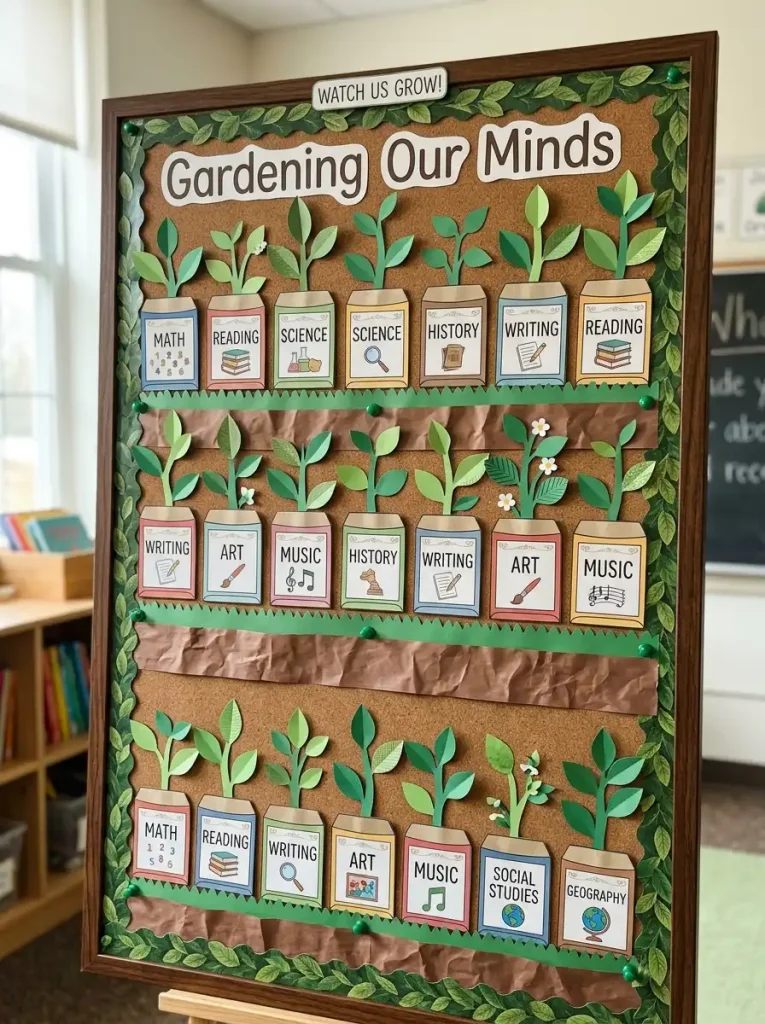
Theme: Intellectual growth represented through plant and seed imagery.
Decoration suggestions: Seed packet cutouts labeled with subjects like math, science, and writing, each sprouting a growing plant.
Color palette: Earthy browns and greens with bright flower accents.
Educational value: Visually reinforces the connection between effort, practice, and academic growth over the school year.
Interactive element: Add a leaf to each subject’s plant whenever the class masters a new skill or concept.
Printable suggestions: Seed packet labels, plant stem templates, and growth-tracking leaf cutouts.
Classroom setup tips: Arrange plants in a row like a small garden bed for a clean, organized appearance.
Ways students can contribute: Students help decide which milestones deserve a new leaf, building ownership over their own learning.
Seasonal adaptations: Perfect as an end-of-year adventure recap board showing everything the class has grown into.
Estimated difficulty: Moderate.
Estimated preparation time: 3 hours.
6. Mother’s Day Appreciation Garden
Who it works best for: Preschool through elementary classrooms.
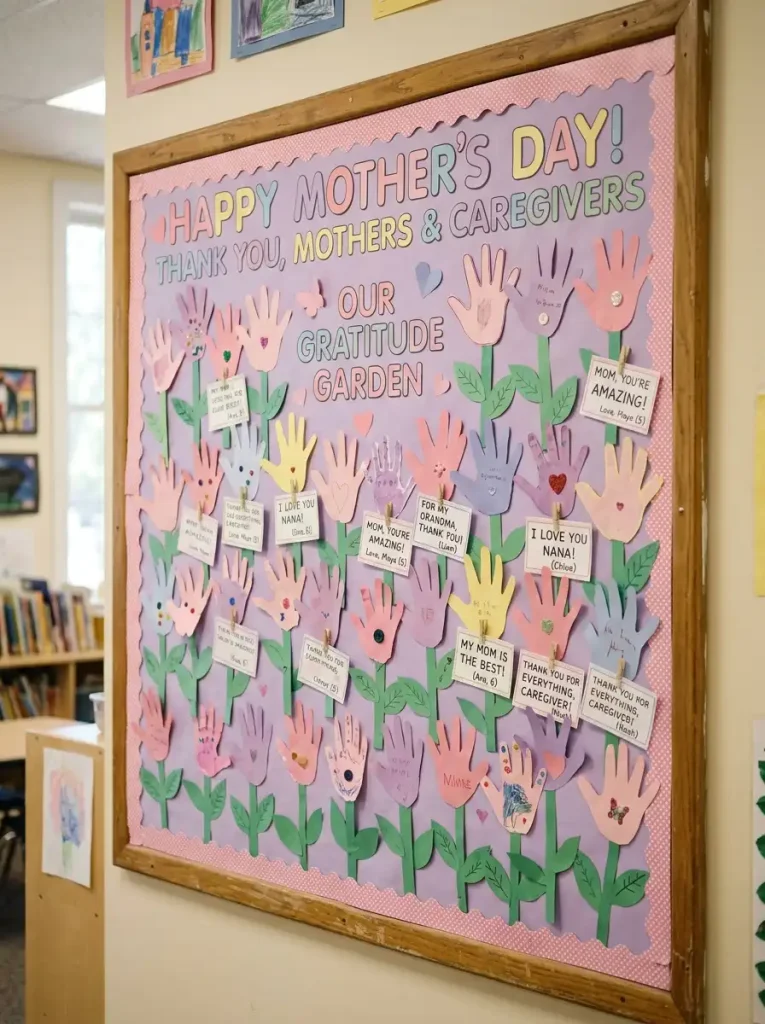
Theme: A Mother’s Day bulletin board celebrating maternal figures through a flower garden.
Decoration suggestions: Handprint flowers, each dedicated to a mom, grandmother, or special caregiver, arranged in a garden bed border.
Color palette: Soft pastels: pink, lavender, mint green, and cream.
Educational value: Builds fine motor skills through craft creation while encouraging gratitude and reflection.
Interactive element: A “why I appreciate my mom” card attached to each flower stem.
Printable suggestions: Handprint flower templates, stem and leaf cutouts, and a “Our Garden of Gratitude” banner.
Classroom setup tips: Arrange flowers at varying heights to mimic a natural garden bed effect.
Ways students can contribute: Each student creates their own handprint flower and dictates or writes their appreciation message.
Seasonal adaptations: Adjust wording to celebrate any special caregiver for students without a traditional mother figure at home.
Estimated difficulty: Easy.
Estimated preparation time: 2 hours.
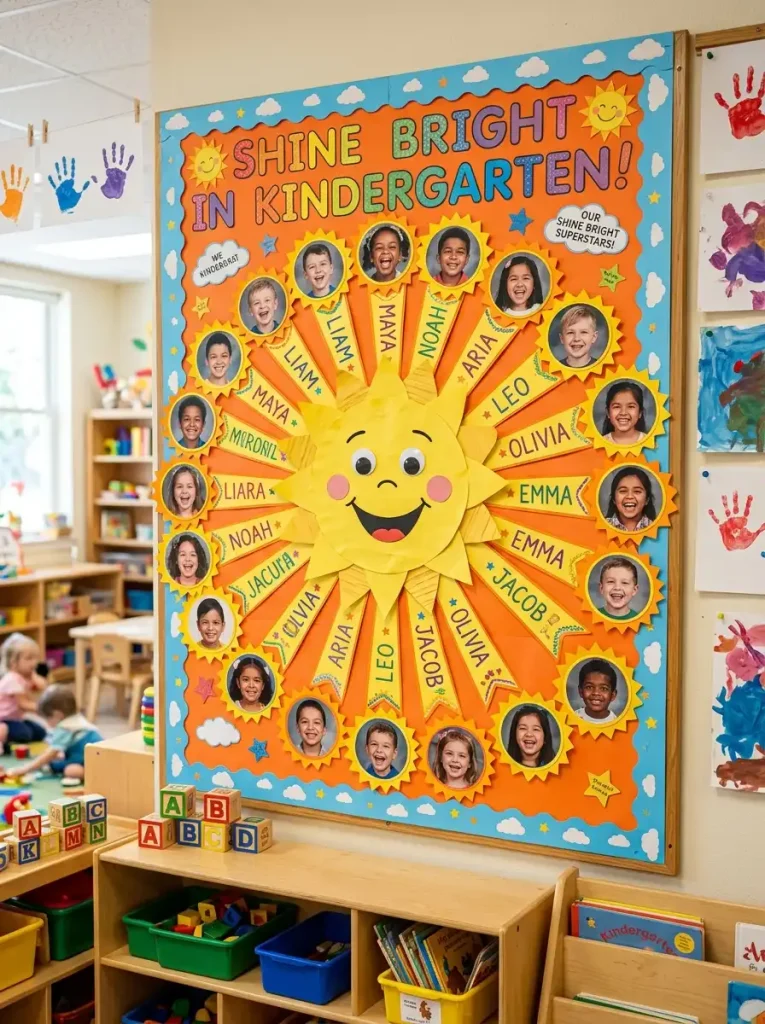
7. Sunshine and Smiles
Who it works best for: Preschool and kindergarten classrooms.
Theme: Positivity and classroom joy represented through sun and smile imagery.
Decoration suggestions: Large paper sun with individual rays, each featuring a student photo and a genuine smile.
Color palette: Bright yellow, orange, and sky blue.
Educational value: Reinforces classroom community and emotional wellbeing during a busy time of year.
Interactive element: Add a new ray each week featuring a “sunshine student” recognized for kindness or effort.
Printable suggestions: Sun ray templates, photo frame cutouts, and a cheerful title banner.
Classroom setup tips: Center the sun as the board’s focal point with rays radiating outward symmetrically.
Ways students can contribute: Students nominate classmates for the weekly sunshine spotlight.
Seasonal adaptations: Works well year-round as a general positivity board, not limited strictly to May classroom themes.
Estimated difficulty: Easy.
Estimated preparation time: 1.5 hours.
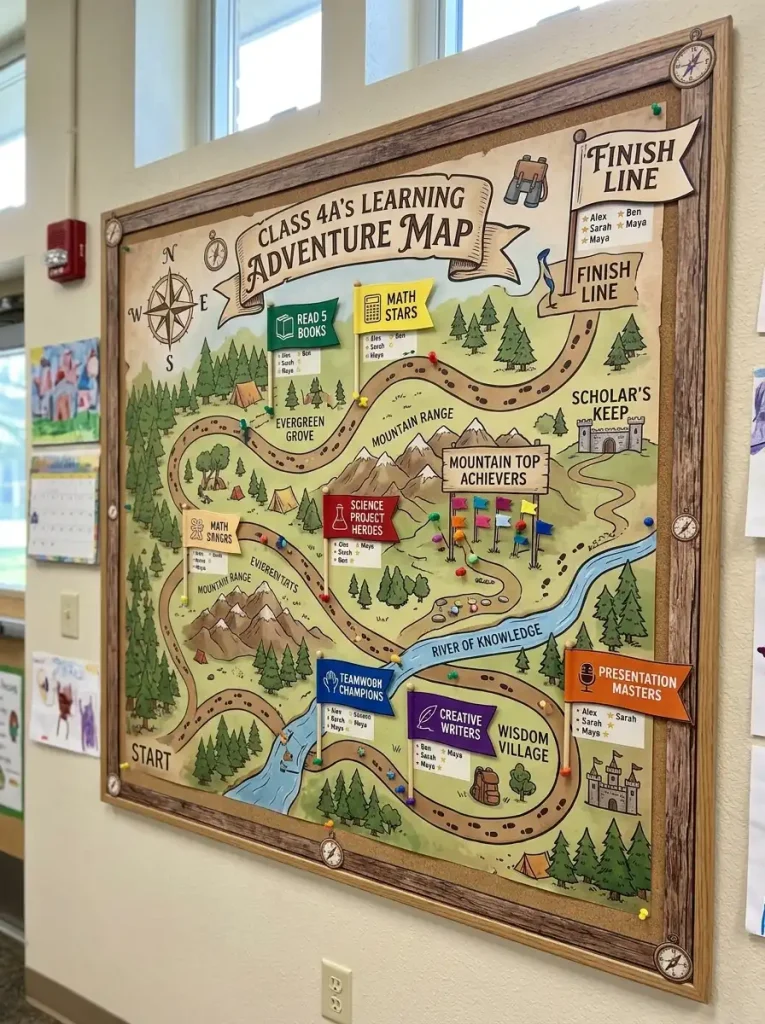
8. End-of-Year Adventure
Who it works best for: Elementary and middle school classrooms.
Theme: A journey or map motif tracking the class’s progress toward summer.
Decoration suggestions: A winding path or map with milestones marking key events, assignments, or achievements throughout May.
Color palette: Earthy greens and browns with colorful milestone markers.
Educational value: Helps students visualize timelines and sequence, while building anticipation for closing activities.
Interactive element: Move a class marker along the path each week as milestones are reached.
Printable suggestions: Path or trail graphics, milestone flag cutouts, and a compass-themed title.
Classroom setup tips: Extend the path across the entire board width to maximize visual impact.
Ways students can contribute: Let students design milestone flags representing favorite memories from the year.
Seasonal adaptations: Naturally transitions into a summer countdown bulletin board as the school year closes.
Estimated difficulty: Moderate.
Estimated preparation time: 3.5 hours.
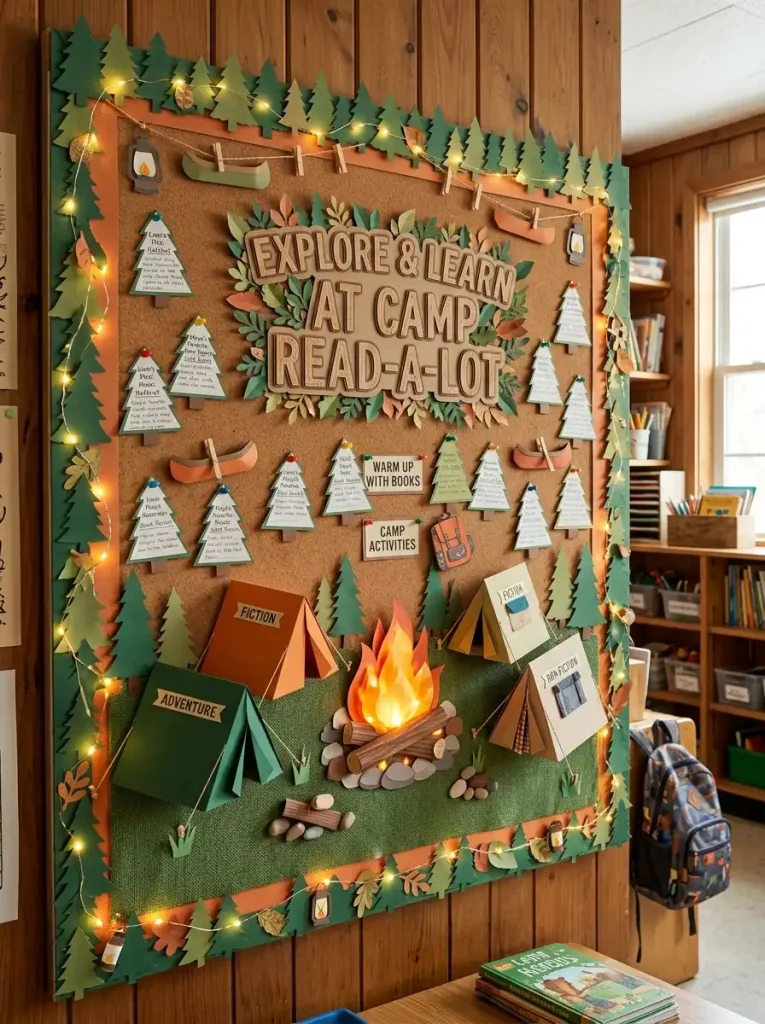
9. Camping into Summer
Who it works best for: Elementary classrooms looking for a fun countdown to summer break.
Theme: A camping motif symbolizing the adventure of summer ahead.
Decoration suggestions: Paper tents, a campfire cutout, string lights, and pine tree silhouettes along the border.
Color palette: Forest green, warm orange, and deep brown.
Educational value: Encourages goal-setting through a visual countdown while reinforcing narrative and storytelling skills.
Interactive element: Each day counts down toward summer with a removable paper log added to the campfire.
Printable suggestions: Tent templates, campfire log cutouts, and a “Camping into Summer” title banner.
Classroom setup tips: Position the campfire as the visual centerpiece with tents arranged around it.
Ways students can contribute: Students write a favorite school memory on each log before it’s added to the fire.
Seasonal adaptations: Easily doubles as a general summer classroom ideas board through the final weeks of school.
Estimated difficulty: Moderate.
Estimated preparation time: 3 hours.
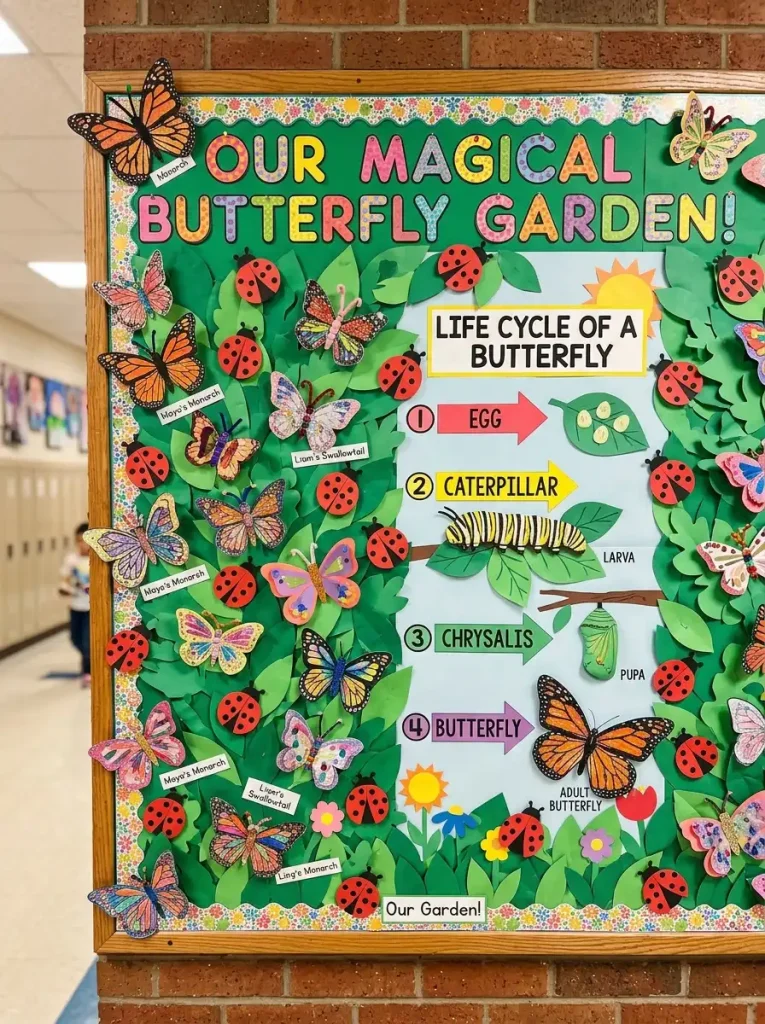
10. Bugs and Butterflies
Who it works best for: Preschool through elementary classrooms.
Theme: Insect life cycles represented through butterflies, ladybugs, and garden imagery.
Decoration suggestions: Paper butterflies in varied patterns, ladybug cutouts, and a caterpillar-to-butterfly transformation sequence.
Color palette: Bright multicolor with green foliage background.
Educational value: Reinforces life cycle science concepts in a visually engaging, hands-on format.
Interactive element: Students move their caterpillar along a transformation timeline as they complete reading milestones.
Printable suggestions: Butterfly and ladybug templates, life cycle diagram cutouts, and a garden-themed title banner.
Classroom setup tips: Scatter butterflies at varying heights and angles for a lively, in-motion feel.
Ways students can contribute: Each student designs their own unique butterfly pattern using symmetry practice.
Seasonal adaptations: Pairs naturally with a bee bulletin board or flower bulletin board for a full garden hallway theme.
Estimated difficulty: Easy.
Estimated preparation time: 2.5 hours.
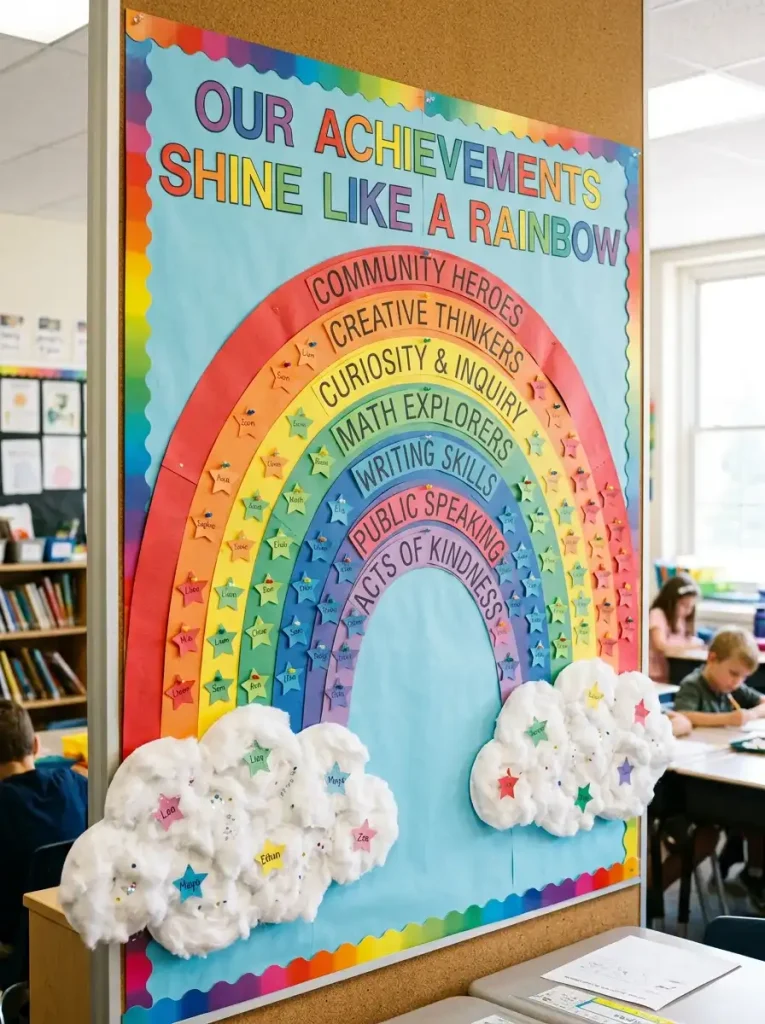
11. Rainbows of Achievement
Who it works best for: Elementary classrooms celebrating end-of-year accomplishments.
Theme: A rainbow motif representing diverse student achievements and talents.
Decoration suggestions: A large paper rainbow with each colored band listing a category of achievement, from academics to kindness to creativity.
Color palette: Full rainbow spectrum against a white or light blue background.
Educational value: Celebrates multiple intelligences by recognizing achievement beyond traditional academics alone.
Interactive element: Students add a cloud with their name under the achievement category that fits them best.
Printable suggestions: Rainbow arc templates, cloud cutouts, and a “Rainbows of Achievement” banner.
Classroom setup tips: Position the rainbow arching over a cluster of clouds along the bottom of the board.
Ways students can contribute: Each student chooses which achievement category represents their proudest moment this year.
Seasonal adaptations: Works well as a rainy-day spring bulletin board earlier in the season too.
Estimated difficulty: Moderate.
Estimated preparation time: 3 hours.
12. Seeds of Success
Who it works best for: Middle school classrooms focused on future goal-setting.
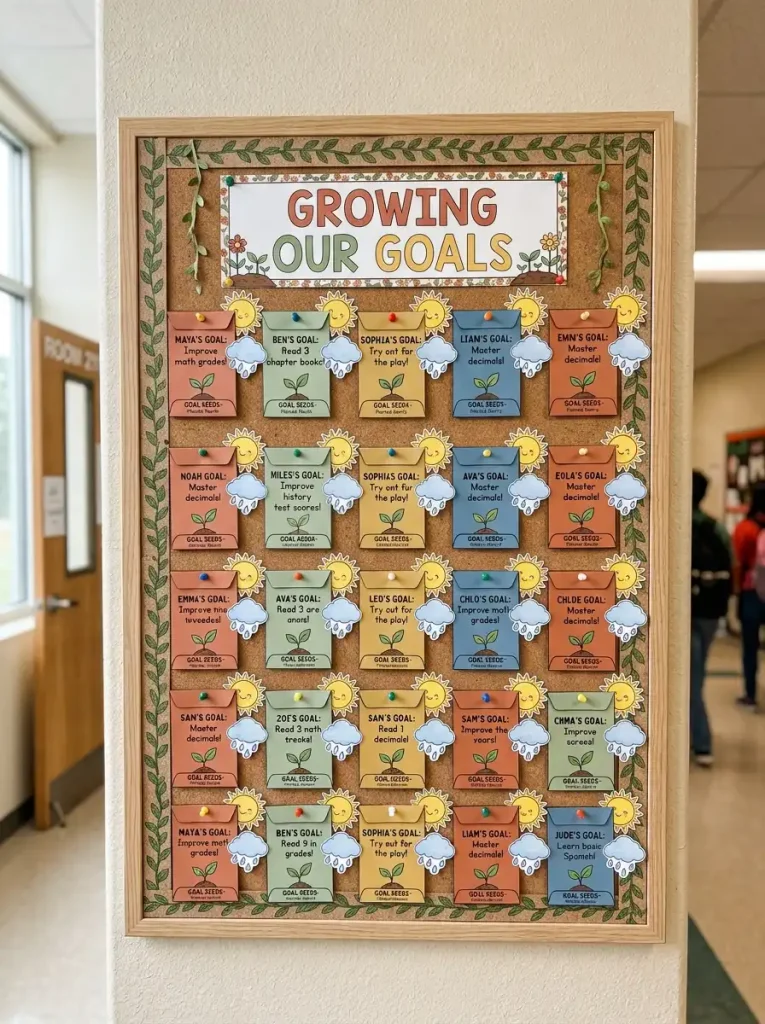
Theme: Seeds and future growth symbolizing goals for the upcoming school year or summer.
Decoration suggestions: Seed packet cutouts labeled with student goals, paired with a sun and rain cloud representing the support needed to achieve them.
Color palette: Warm terracotta, soft green, and cream tones.
Educational value: Encourages reflection and forward planning as students transition toward the next grade level.
Interactive element: Students write one goal for summer or next year on their seed packet.
Printable suggestions: Seed packet templates, sun and cloud cutouts, and a “Seeds of Success” title.
Classroom setup tips: Arrange seed packets in neat rows like a planting bed for a clean, structured look.
Ways students can contribute: Each student personalizes their own packet with hand-drawn illustrations of their goal.
Seasonal adaptations: Revisit in September as a “look how far you’ve grown” callback display.
Estimated difficulty: Moderate.
Estimated preparation time: 2.5 hours.
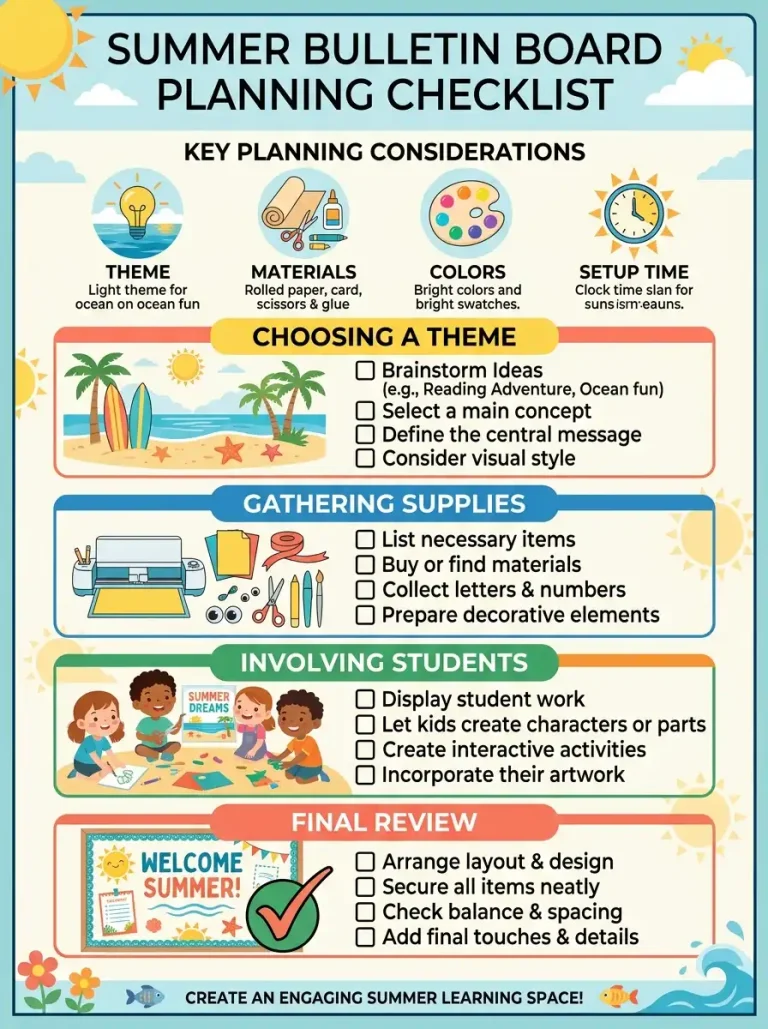
INFOGRAPHIC: May Bulletin Board Planning Checklist
Why May Bulletin Boards Matter
A classroom bulletin board does more than fill empty wall space. It shapes how students feel the moment they walk through the door. In May, that feeling matters more than ever, since energy runs high and attention spans run short.
Engagement improves when students see their own work, names, or ideas featured prominently. A bulletin board becomes a mirror reflecting the classroom community back at itself. Students naturally gravitate toward displays that include them directly.
Celebrating achievements gives a bulletin board real emotional weight. As the school year winds down, recognizing growth, effort, and milestones helps students feel proud of how far they’ve come. This matters especially for an end-of-school-year bulletin board.
Participation increases when a display invites interaction rather than passive viewing. A bulletin board with movable pieces, student-created elements, or hands-on components turns a hallway wall into a genuine learning tool.
Reinforcing lessons happens almost effortlessly with the right theme. A garden bulletin board can reinforce plant life cycles. A bee bulletin board can tie into pollination units. Educational bulletin boards do double duty as decoration and curriculum support.
Brightening the learning space matters just as much as academic value. Spring colors, cheerful themes, and seasonal decorations lift the mood of an entire classroom or school hallway display, especially during the final stretch before summer break.
How to Design an Eye-Catching May Bulletin Board
Before diving into specific ideas, it helps to understand the design principles behind every successful classroom display. These fundamentals apply no matter which theme you choose.
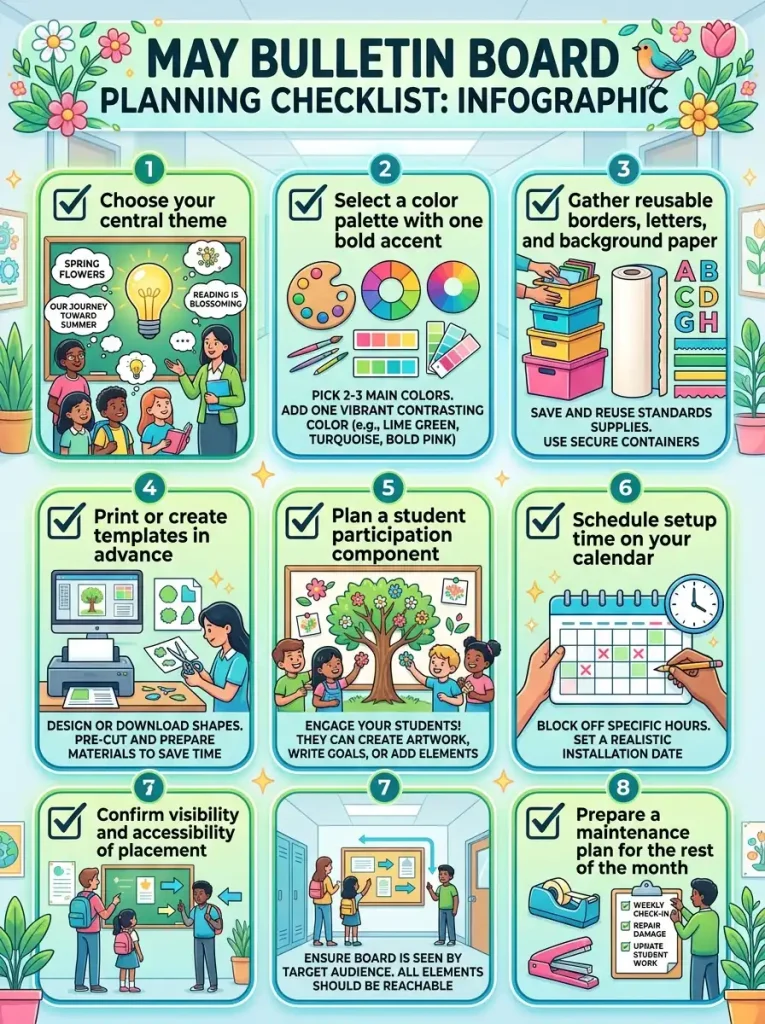
Choosing a Theme
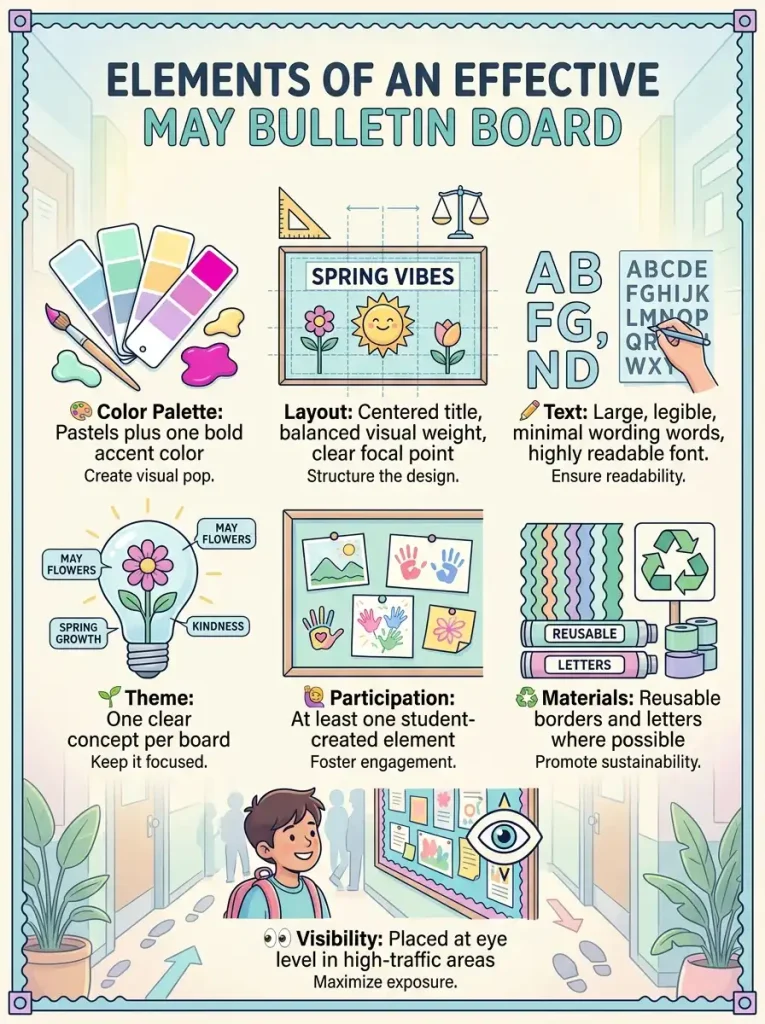
Pick one central idea and build everything around it. A clear theme, whether it’s a garden, a rainbow, or a countdown to summer, keeps your bulletin board focused and easy to understand at a glance.
Selecting Colors
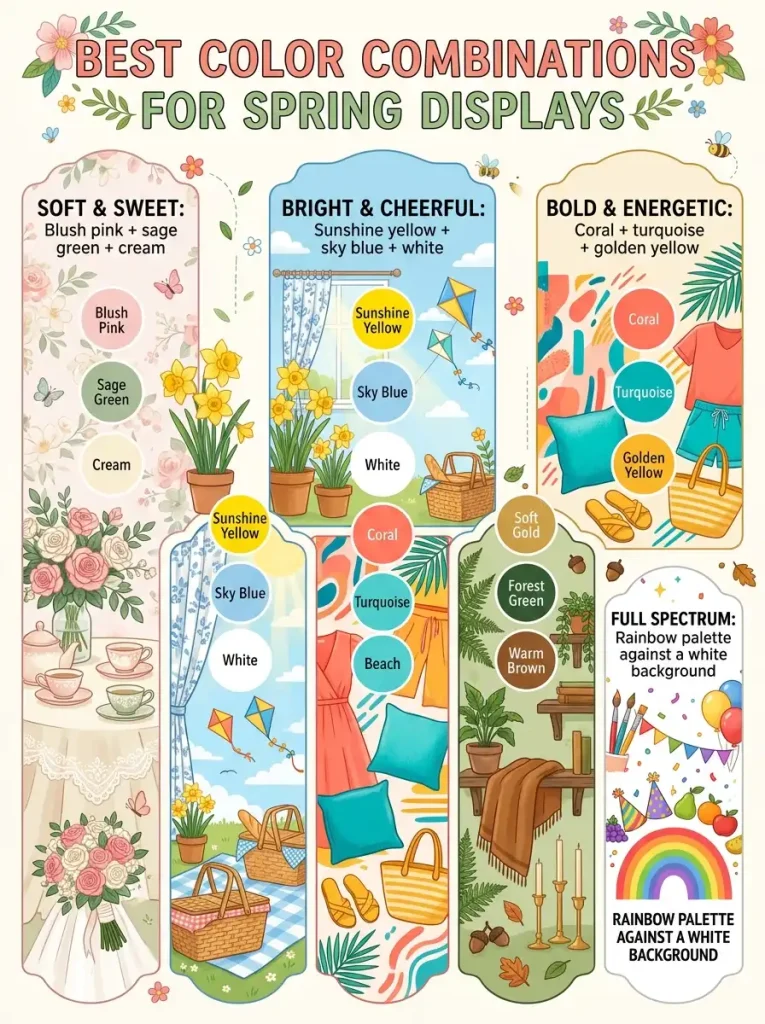
Spring naturally suggests pastel pinks, sunny yellows, soft greens, and sky blues. However, don’t shy away from bold accent colors like coral or turquoise to make key elements pop against a busy background.
Balancing Decorations
Avoid overcrowding your board with too many elements competing for attention. Leave breathing room around your title and key visuals so the design reads clearly from across a school hallway display.
Readability
Keep text large enough to read from a distance. Titles should use bold, simple fonts, while supporting text stays brief and to the point.
Student Participation
Whenever possible, involve students directly. Hand-drawn flowers, written reflections, or personal photos make a bulletin board feel authentic rather than store-bought.
Reusable Materials
Invest in border trim, letters, and background paper that survive multiple uses. Reusable materials save both money and preparation time across future units.
Accessibility
Choose high-contrast color combinations and legible fonts so every student, including those with visual impairments, can engage with your display comfortably.
Classroom Organization
Store decorations in labeled bins by season or theme. This simple habit saves significant setup time when May rolls around again next year.
Quick Tip: A successful bulletin board answers one question instantly: what is this about? If a passerby can’t answer that within three seconds, simplify your design.
INFOGRAPHIC: Elements of an Effective May Bulletin Board
Comparing Bulletin Board Approaches by Age Group
Every age group brings different needs to a classroom display. Understanding these differences helps you tailor your May bulletin board effectively.
Preschool classrooms benefit from large, simple shapes with minimal text. Bright primary colors and tactile elements, like textured petals or fuzzy caterpillars, hold attention best at this age.
Kindergarten displays can introduce slightly more detail, including short words and simple sentences. Interactive elements like moving pieces or matching games work particularly well for this age group.
Elementary school bulletin boards support more complex themes, including growth mindset concepts, reading trackers, and multi-step interactive components. Students at this level enjoy contributing original artwork and written reflections.
Middle school displays should lean toward mature themes like goal-setting, achievement recognition, and identity exploration. Overly childish imagery can feel disengaging, so consider more sophisticated color palettes and typography for this age group.
INFOGRAPHIC: Best Color Combinations for Spring Displays
Common Mistakes to Avoid
Even experienced teachers fall into a few predictable traps when designing classroom displays. Recognizing these mistakes helps you sidestep them entirely.
Overcrowding the board confuses viewers and dilutes your main message. Solution: stick to one theme and leave visual breathing room.
Using too much text turns an eye-catching display into a chore to read. Solution: keep wording short, bold, and to the point.
Choosing clashing colors can make a board feel chaotic rather than cheerful. Solution: pick a limited palette of three to four complementary colors.
Leaving outdated content up too long signals neglect to students and visitors alike. Solution: set a calendar reminder to refresh displays regularly.
Skipping student involvement misses a huge engagement opportunity. Solution: build in at least one contribution point for every student.
Placing boards in low-visibility areas wastes your effort entirely. Solution: prioritize eye-level placement in high-traffic hallway or classroom areas.
Budget-Friendly Bulletin Board Ideas
Creative displays don’t require a big budget. Many of the most memorable classroom bulletin boards use materials you likely already have on hand.
Recycled paper from old worksheets or magazines works wonderfully for background textures or collage elements. Cardboard scraps from shipping boxes make sturdy stems, borders, or 3D accents.
Construction paper remains the most affordable staple for nearly every idea on this list. Buying in bulk during back-to-school sales stretches your budget across the entire year.
Student artwork costs nothing beyond basic supplies and adds authentic, personal charm no store-bought decoration can match. Free printable templates found through educational resource platforms save significant prep time without any cost.
Reused borders and letters from previous bulletin boards, stored carefully in labeled bins, reduce the need for repeated purchases. A little organization goes a long way toward stretching your classroom budget further.
Seasonal Adaptations Throughout May and Beyond
Many of these ideas flex easily to match specific May events and end-of-year milestones.
Mother’s Day adaptations work beautifully with the Garden Appreciation idea, simply adjusting wording to fit each family’s unique structure. Teacher Appreciation Week pairs naturally with the Sunshine and Smiles concept, celebrating staff alongside students.
Spring itself ties effortlessly into nearly every flower, bee, or garden-themed board on this list. End-of-school celebrations shine with the Rainbows of Achievement or End-of-Year Adventure concepts.
Graduation season, especially for fifth or eighth grade transitions, benefits from the Seeds of Success board, symbolizing growth into the next stage. Summer countdown excitement peaks with the Camping into Summer theme, giving students something to look forward to daily.
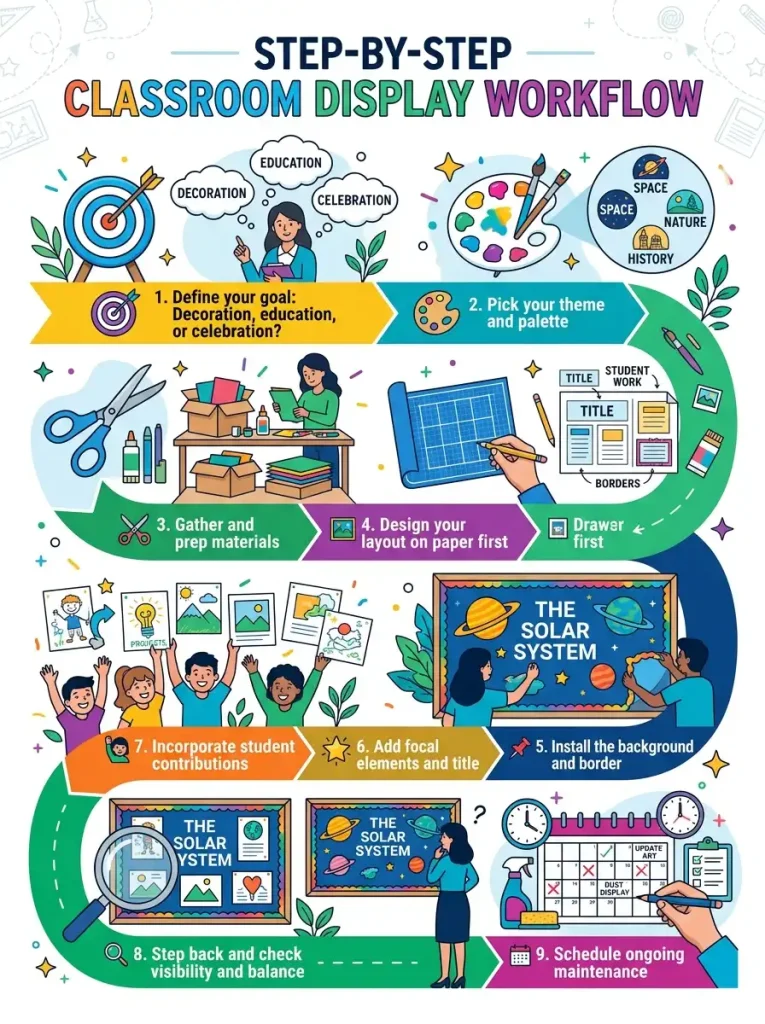
INFOGRAPHIC: Step-by-Step Classroom Display Workflow
Frequently Asked Questions
What is the best May bulletin board idea for a preschool classroom? Busy Bees Learning Together or Bugs and Butterflies work wonderfully for preschool classrooms since both use large, simple shapes and bright colors. These themes also introduce basic science concepts about insects and pollination in an approachable, visual way. Preschoolers respond strongly to tactile elements, so consider adding textured petals or fuzzy pom-pom caterpillars for extra sensory engagement. Both ideas require minimal text, making them accessible even for students who aren’t reading independently yet.
How often should I update my May bulletin board? Most teachers find that refreshing a display every two to three weeks keeps content feeling current without requiring constant rework. However, boards with built-in interactive elements, like a reading tracker or kindness garden, can stay up the entire month since students naturally add new content over time. The key is watching for signs of neglect, such as sagging paper or outdated information, and addressing them promptly.
What materials do I need for a Mother’s Day bulletin board? A basic Mother’s Day Appreciation Garden requires construction paper for handprint flowers, green paper for stems and leaves, scissors, glue, and markers for personal messages. You’ll also want a border trim and a bold title banner to frame the display. Most of these supplies are inexpensive and likely already available in a typical classroom supply closet, making this one of the more budget-friendly options on this list.
How can I make a bulletin board interactive without much extra effort? Build in a simple, ongoing contribution point, such as a sticky note station, a movable marker, or a spot where students add a new element each week. The Garden of Kindness and Camping into Summer ideas both use this approach effectively, requiring only occasional restocking of blank cutouts or notes. This keeps the board evolving throughout May without demanding constant redesign from you.
Can these ideas work in a school hallway instead of inside a classroom? Absolutely. Many of these ideas, including Rainbows of Achievement and End-of-Year Adventure, translate beautifully to a shared school hallway display where multiple classes can contribute. Hallway displays often benefit from slightly bolder colors and larger text, since viewers pass by more quickly than they would in a classroom setting.
What is the best way to involve middle school students in bulletin board design? Middle schoolers respond well to ownership and choice, so consider letting them vote on themes, contribute original artwork, or write reflective statements for boards like Seeds of Success. Avoid overly childish imagery at this age, and lean toward sophisticated color palettes paired with meaningful, identity-driven content. Giving students a genuine voice in the process significantly increases their investment in the final result.
How do I keep a bulletin board accessible for students with visual impairments? Choose high-contrast color combinations, such as dark text on a light background, and avoid overly decorative fonts for any essential information. Keep text large enough to read from a reasonable distance and avoid placing crucial details in low-contrast corners of the board. Simple, clean layouts benefit every student, not just those with visual impairments, so this practice improves overall readability too.
What’s a good budget-friendly alternative to purchased bulletin board borders? Handmade scalloped borders cut from folded construction paper look polished and cost only a few sheets of paper. Alternatively, braided strips of colored paper or a repeating stamped pattern can create a custom border unique to your classroom’s theme. These DIY options often look more personal than store-bought trim and cost a fraction of the price.
How do I transition my May bulletin board into a summer or graduation display? Several ideas on this list, including Seeds of Success and Camping into Summer, were designed with this transition in mind. Simply adjust wording and add graduation-specific elements, such as caps or diplomas, while keeping the existing color palette and structure intact. This approach saves significant preparation time during an already busy end-of-year period.
Why do growth mindset bulletin boards work particularly well in May? May sits at a natural reflection point in the school year, making growth mindset themes especially resonant for students looking back on their progress. Boards like Bloom Where You Are Planted or Growing Minds give students a visual, tangible way to recognize how much they’ve developed since September. This recognition builds confidence and motivation right as the school year approaches its final stretch.
Conclusion
May offers a genuine opportunity to celebrate everything your classroom has accomplished throughout the year. These twelve ideas, from a cheerful bee bulletin board to a heartfelt Mother’s Day garden, give you flexible, budget-friendly options for every age group and teaching style.
Choose the concept that resonates most with your students, personalize it with their contributions, and watch your classroom or school hallway display come alive with color and meaning. A little creativity goes a long way toward making this final stretch of the school year feel just as special as the first.