7 Library Bulletin Board Ideas That Turn Reading Into an Event
Walk into any library, and the bulletin board tells you everything before you read a single spine. A tired, faded display whispers that nothing here has changed in years. A bright, thoughtful one shouts that this space is alive. If you’re a school librarian, public librarian, teacher, or literacy coordinator searching for fresh library bulletin board ideas, you already know the stakes. Your walls are prime real estate, and they’re currently underperforming.
This guide hands you seven fully developed bulletin board concepts you can build this week, not someday. Each idea includes the materials, the age-group fit, the seasonal twists, and the practical steps that turn a blank corkboard into a magnet for readers. You’ll also find design tips, budget-friendly hacks, common mistakes to dodge, and a season-by-season theme calendar.
Whether you’re managing an elementary library, running a middle school library, or overseeing a high school library, these ideas scale. They work for a homeschool reading nook just as well as a district-wide literacy display. By the end, you’ll have a toolkit for student engagement that goes far beyond decoration. Let’s turn that empty wall into your library’s best recruiting tool for reading motivation.
7 Library Bulletin Board Ideas
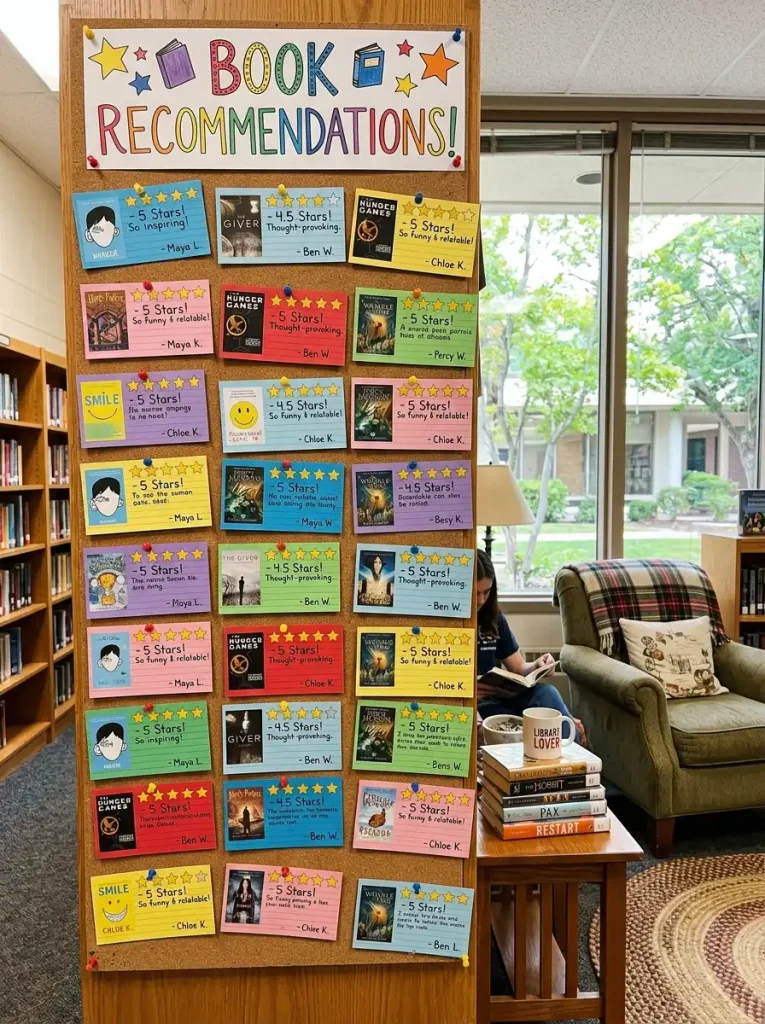
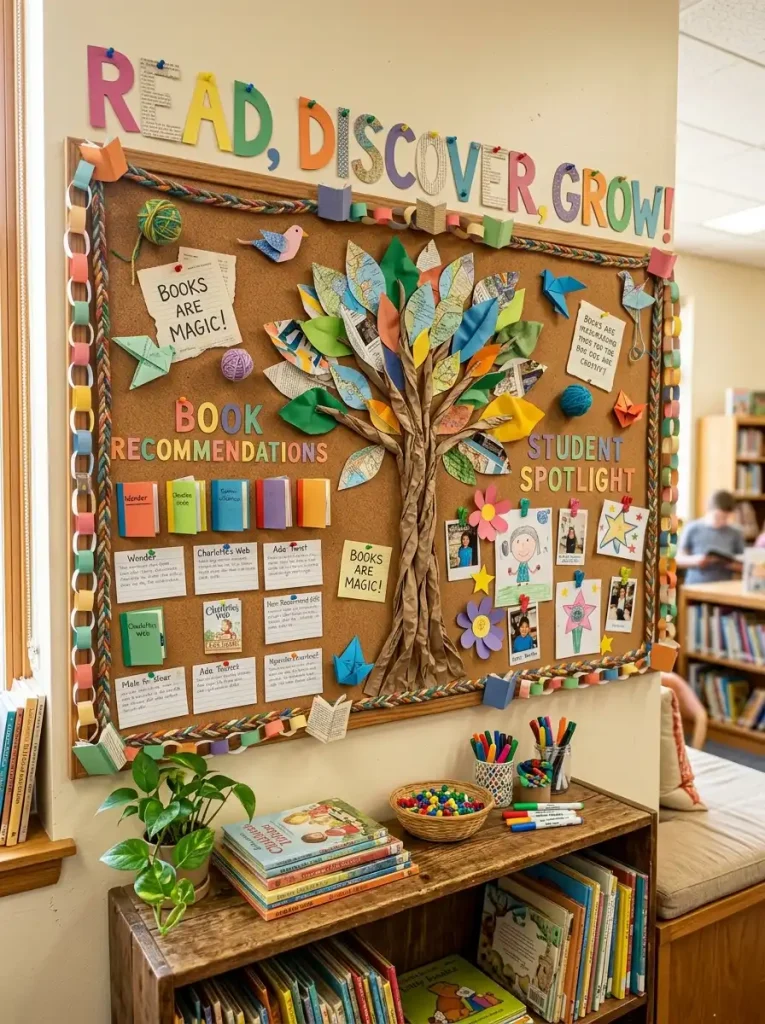
1. Book Recommendation Wall
A Book Recommendation Wall turns your students and staff into the library’s most trusted critics. Instead of relying only on your own picks, you feature reviews, star ratings, and short blurbs written by the people actually reading the books.
Why it works: Peer recommendations carry more weight with students than adult suggestions ever will. Teenagers trust other teenagers. Younger kids trust their favorite teacher or librarian. This board leans into that social proof, driving genuine reading motivation.
Materials needed: Corkboard or bulletin board fabric, index cards or printable review templates, colorful border trim, push pins, book cover printouts, and a small supply of markers for handwritten reviews.
Customization ideas: Add a “Librarian’s Pick of the Month” spotlight, a QR code linking to your catalog, or a rotating “Staff vs. Students” recommendation showdown to spark friendly competition.
Age groups: Works beautifully across elementary library, middle school library, and high school library settings, though the review format should scale in complexity with age.
Seasonal variations: Swap in horror recommendations for October, romance picks for February, and beach-read suggestions for summer reading season.
Practical implementation tips: Keep a stack of blank review cards at the circulation desk so students can contribute anytime. Refresh the board monthly to keep content current and avoid the stale-display trap.
2. Reading Challenge Bulletin Board
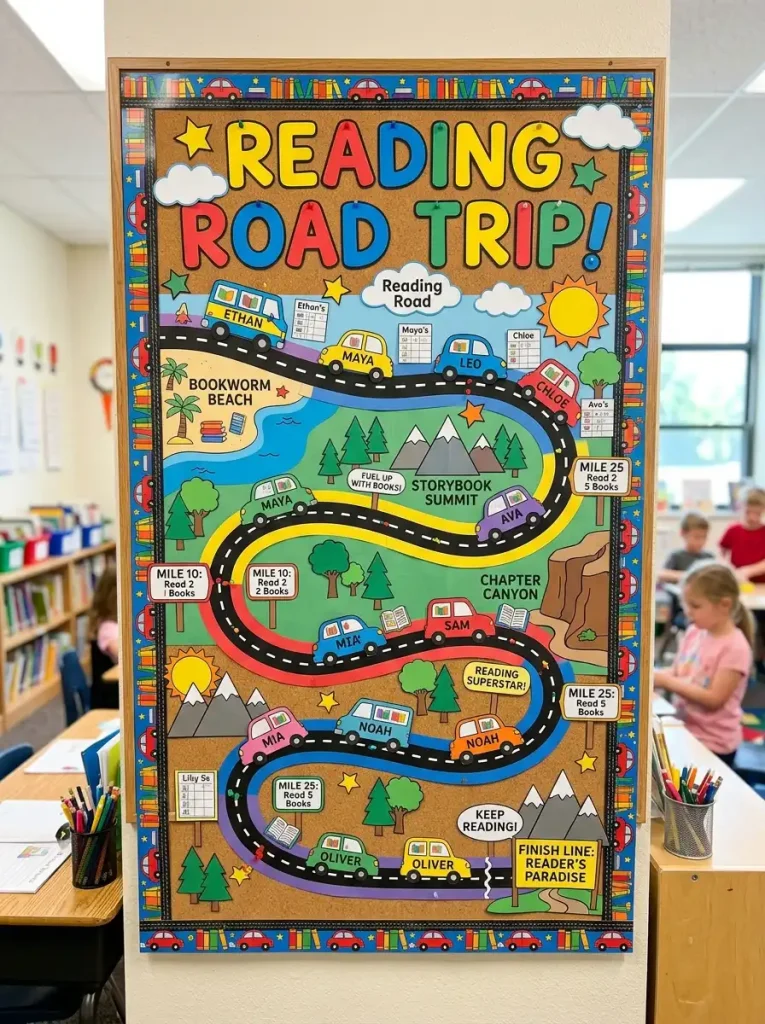
This idea transforms your wall into a living scoreboard. Students track pages read, books finished, or genres explored, watching their progress climb in real time.
Why it works: Visual progress trackers tap into a basic human love of completion. Once a student sees their own marker moving up a chart, they want to keep pushing forward. A reading challenge board turns an individual habit into a shared, motivating spectacle.
Materials needed: A large grid or ladder chart, colorful stickers or stars, student name tags, laminated tracking sheets, and a bold title banner.
Customization ideas: Try a “Reading Road Trip” map where each book moves a paper car closer to a destination, or a thermometer-style chart tracking total pages read as a whole-school goal.
Age groups: Simplify visuals for elementary library students with stickers and stars. For middle and high school library audiences, shift toward genre bingo cards or point-based leaderboards.
Seasonal variations: Launch a fresh challenge each quarter, tying themes to Back to School goals in fall or a Summer Reading sprint before break.
Practical implementation tips: Set a realistic, achievable goal so students don’t lose momentum halfway through. Celebrate milestones publicly, even small ones, to keep energy high throughout the challenge.
3. Genre Spotlight Display
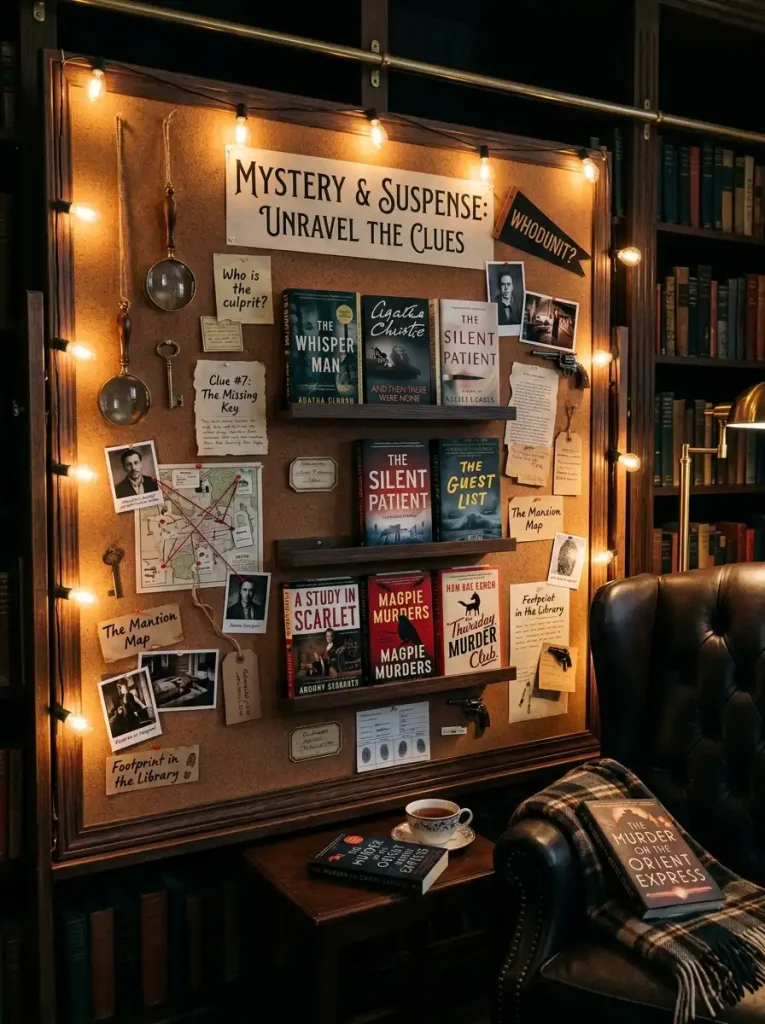
A Genre Spotlight Display dedicates rotating wall space to one genre at a time, whether that’s mystery, fantasy, historical fiction, or graphic novels.
Why it works: Many students default to the same one or two genres out of habit rather than preference. A focused spotlight introduces unfamiliar territory in a low-pressure way, expanding what a reader believes they might enjoy.
Materials needed: Themed backdrop paper matching the genre’s mood, genre-specific props like magnifying glasses for mystery or fairy lights for fantasy, book covers, and short “if you like this, try this” cards.
Customization ideas: Pair the spotlight with a matching book display ideas table nearby so curious students can immediately grab a title. Add trivia questions related to the genre for extra engagement.
Age groups: Adjust genre complexity by level. Elementary library boards might spotlight fairy tales, while a high school library leans into dystopian fiction or true crime.
Seasonal variations: Match genres to the calendar naturally. Ghost stories fit October perfectly, while adventure and travel genres suit summer.
Practical implementation tips: Rotate genres every four to six weeks. Ask students which genre they want spotlighted next to boost buy-in and keep the literacy display feeling collaborative rather than imposed.
4. Literary Character Adventure Board
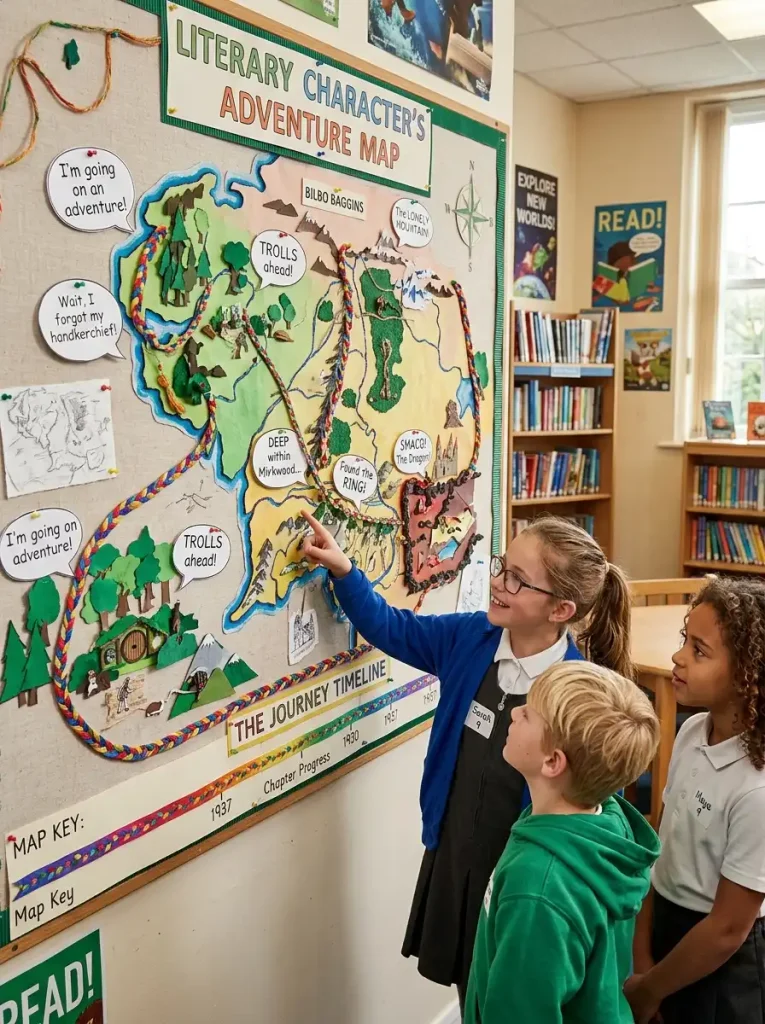
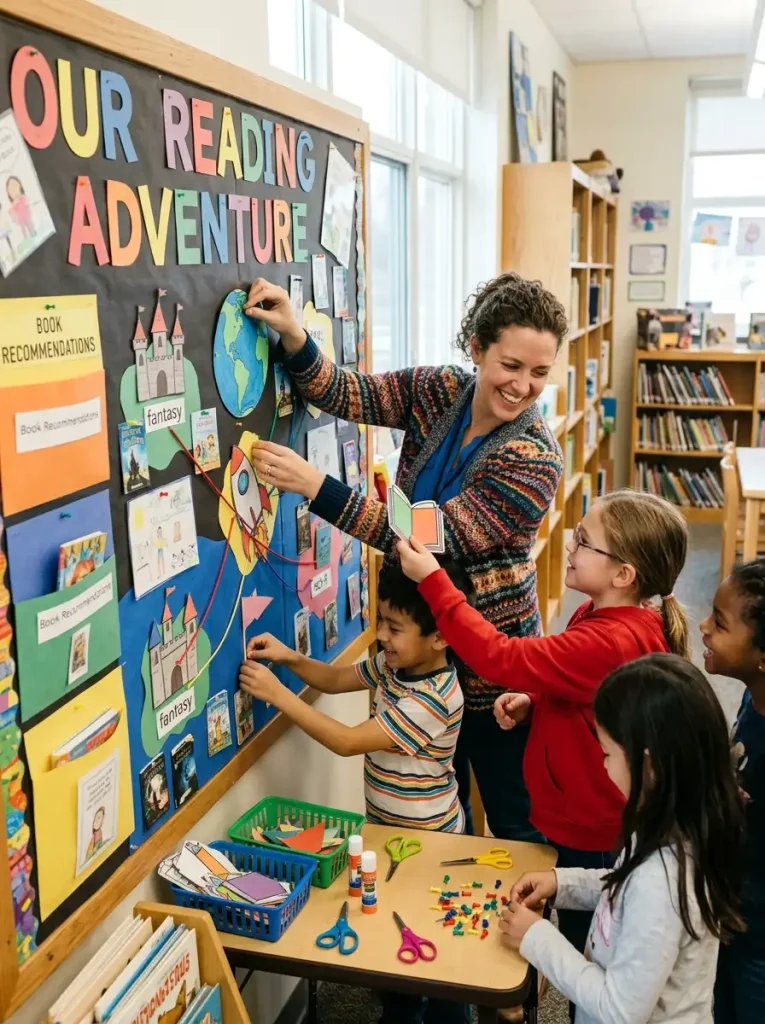
This board brings beloved characters off the page and onto your wall, following their journey through a visual storyline students can track over time.
Why it works: Storytelling is naturally captivating, and turning your bulletin board into an ongoing narrative gives students a reason to check back repeatedly. It also reinforces plot comprehension and character analysis in a visual, low-stakes format.
Materials needed: Character cutouts or printed illustrations, a mapped background representing the story’s setting, speech bubble cutouts, and a timeline ribbon connecting each stage of the journey.
Customization ideas: Rotate the featured character monthly, or let students vote on which book’s protagonist gets the spotlight next. Add “what happens next” prediction cards for extra interaction.
Age groups: Younger elementary library students respond well to picture-book characters, while middle and high school library students enjoy tracking protagonists from assigned reading or popular series.
Seasonal variations: Feature a spooky character for Halloween, a wintry character for the holiday season, or an adventurous one for summer reading kickoff.
Practical implementation tips: Keep the storyline simple enough to follow at a glance. Overly detailed plots lose their punch. Use bold, oversized lettering so the story reads clearly from across the room.
5. Seasonal Reading Tree
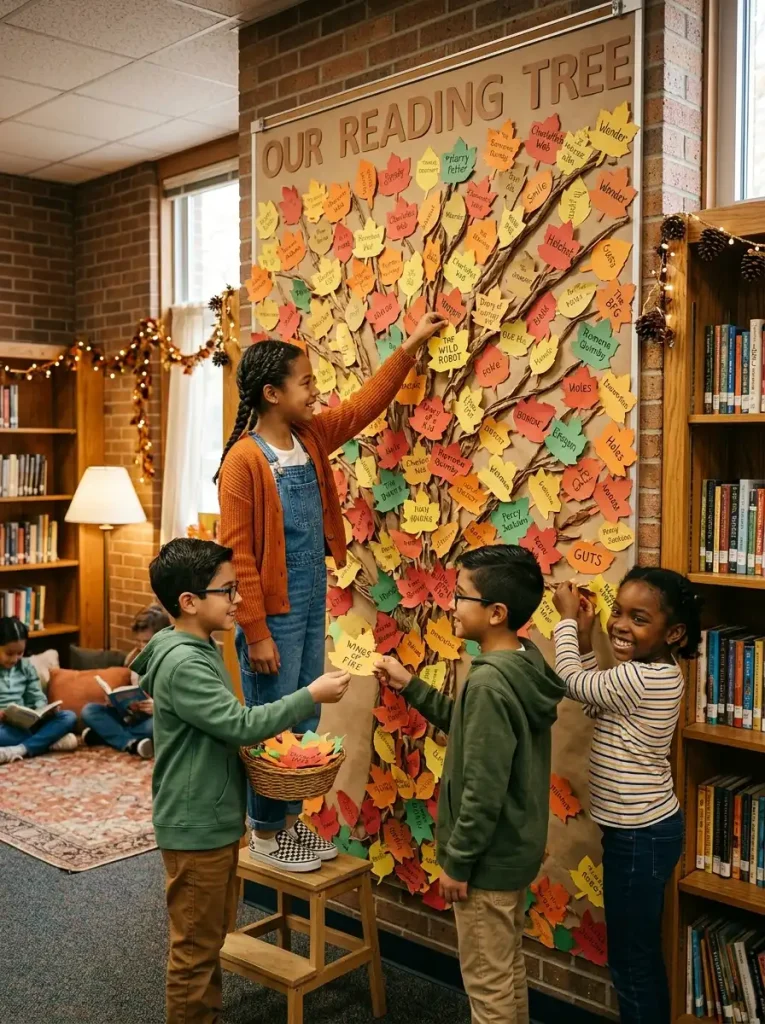
A Seasonal Reading Tree uses a large tree silhouette as its base, with leaves, ornaments, or blossoms added each time a student finishes a book.
Why it works: The tree grows visibly over the school year, giving the entire library a shared sense of accomplishment. It’s one of the most flexible seasonal bulletin board formats because the tree’s decoration changes completely with the calendar.
Materials needed: A large tree trunk cutout, colored paper for leaves or seasonal accents, markers for titles and names, and a durable backing since this board stays up long-term.
Customization ideas: Use green leaves in spring, orange and red in fall, paper snowflakes in winter, and blossoms in early summer. Each leaf can list a book title and the student’s name.
Age groups: This idea suits every level from elementary library through high school library, since the tree format scales effortlessly with volume of participation.
Seasonal variations: Consider a full four-season rotation across the year: budding blossoms for spring, full green canopy for summer reading, changing leaves for fall, and bare branches with snow accents for winter.
Practical implementation tips: Precut a large batch of leaves ahead of time so students can grab one immediately after finishing a book. Momentum matters more than perfection here.
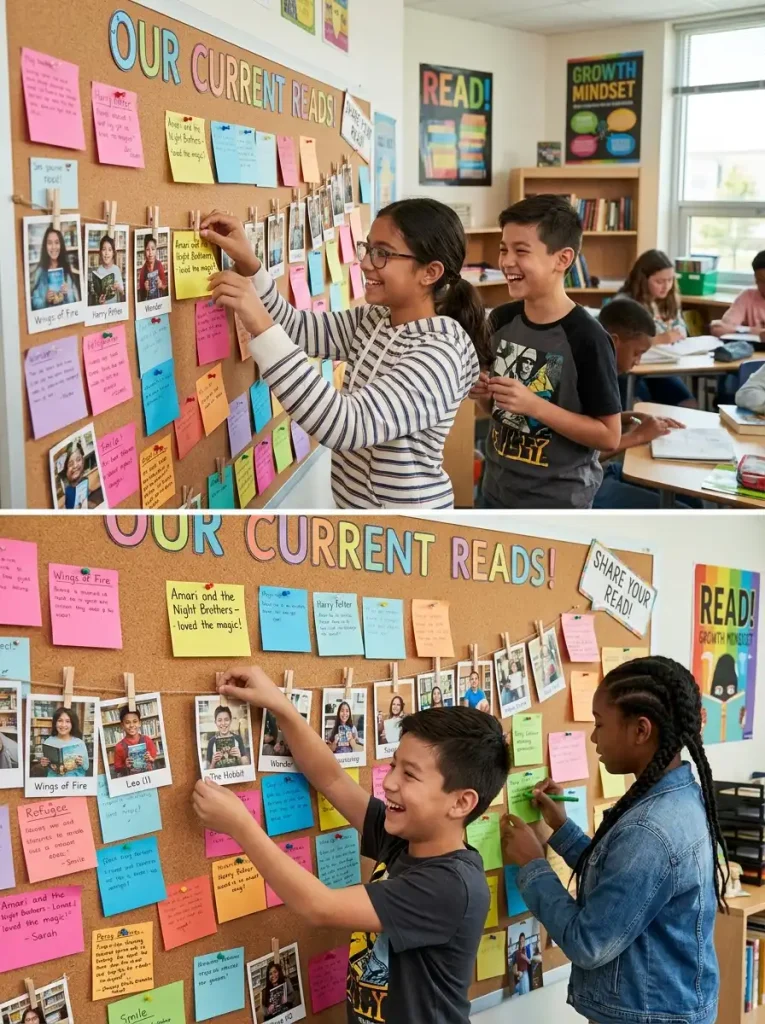
6. Interactive “What Are You Reading?” Board
This idea puts students directly in the spotlight, inviting them to pin a card, sticky note, or photo showing exactly what book they’re currently reading.
Why it works: Real-time visibility of classmates’ reading choices creates social momentum. Students notice what their friends are reading and often pick up the same title next. It’s a simple, low-effort format with an outsized effect on student engagement.
Materials needed: A large corkboard, colorful sticky notes or index cards, push pins, a bold header banner, and optional small photo frames for a “reader of the week” feature.
Customization ideas: Add a Polaroid-style photo section featuring students holding their current book. Include a rotating “guess the book from the clue” mini-game alongside the main display.
Age groups: Especially effective for middle school library and high school library settings, where peer influence runs strong, though younger students enjoy the format too with simpler prompts.
Seasonal variations: Refresh the header design each season while keeping the interactive core consistent, since the format’s strength lies in its ongoing, always-current nature.
Practical implementation tips: Restock sticky notes weekly and remove outdated entries promptly. A board that looks abandoned undercuts the entire “right now” energy this idea depends on.
7. Library Goals and Achievement Board
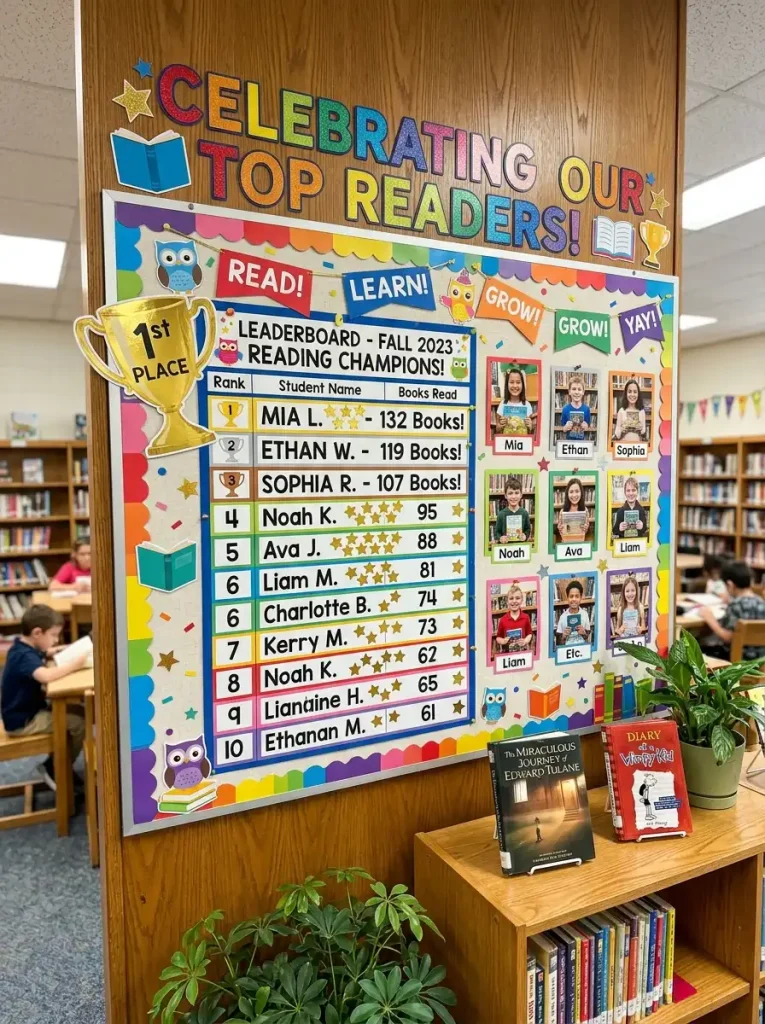
This board celebrates milestones, whether that’s total books read library-wide, individual reading streaks, or classroom competitions between grade levels.
Why it works: Recognition drives repeat behavior. When students see their achievements displayed publicly, however small, they associate the library with pride and success rather than obligation.
Materials needed: A goal-tracking chart or scoreboard format, achievement badges or stars, a printed leaderboard template, and space for photos of top readers.
Customization ideas: Run grade-level competitions with a trophy cutout for the winning class, or set a whole-school goal like “10,000 pages by winter break” with a visual progress bar.
Age groups: Elementary library students respond well to simple sticker charts, while middle and high school library students enjoy more competitive, data-driven formats like leaderboards.
Seasonal variations: Reset major goals at the start of each semester, and add a special achievement push during National Library Week or Book Week.
Practical implementation tips: Publicly announce winners and update the board frequently. Nothing kills motivation faster than a goal chart that never changes.
Why Library Bulletin Boards Matter
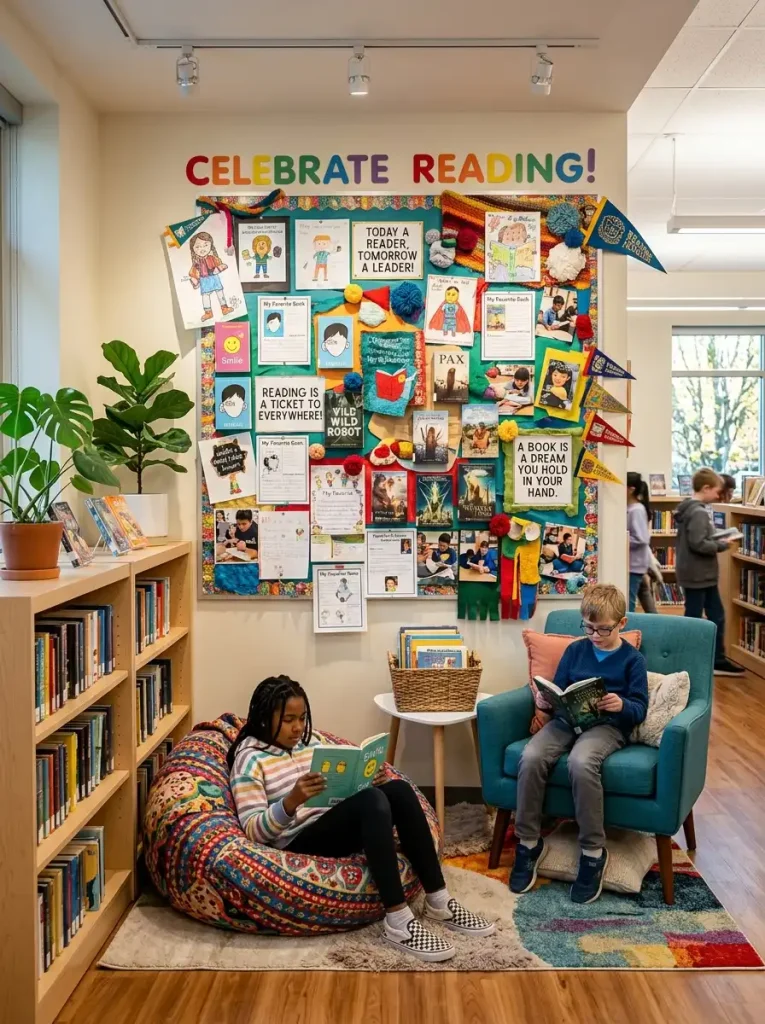
A bulletin board isn’t just decoration. It’s a silent ambassador for your library, working around the clock even when you’re not in the room.
Promoting reading habits starts with visibility. When students see books celebrated on the wall, they start to see reading as something worth celebrating too. A well-placed reading bulletin board can nudge a reluctant reader toward their first chapter book of the year.
Encouraging student participation matters just as much as promotion. Boards that invite students to pin a note, vote for a favorite title, or add their name to a reading challenge board turn passive walls into interactive community spaces.
Improving library atmosphere happens almost automatically once color and creativity enter the room. A library with vibrant, current displays feels welcoming rather than clinical. Students linger longer. Teachers bring their classes back more often.
Supporting seasonal activities keeps your space feeling fresh. A seasonal bulletin board tied to Halloween, Black History Month, or summer reading gives you a natural excuse to rotate content and re-engage visitors who might otherwise tune out a static display.
Showcasing books through creative book display ideas helps titles that would otherwise sit ignored on a shelf. Cover art draws the eye far more effectively than a spine ever could.
Building community rounds out the picture. Boards featuring student artwork, staff picks, or peer recommendations remind everyone that the library belongs to them, not just to the librarian.
Creative Tips for Designing Better Library Bulletin Boards
Great boards follow a handful of design principles that hold true no matter the theme.
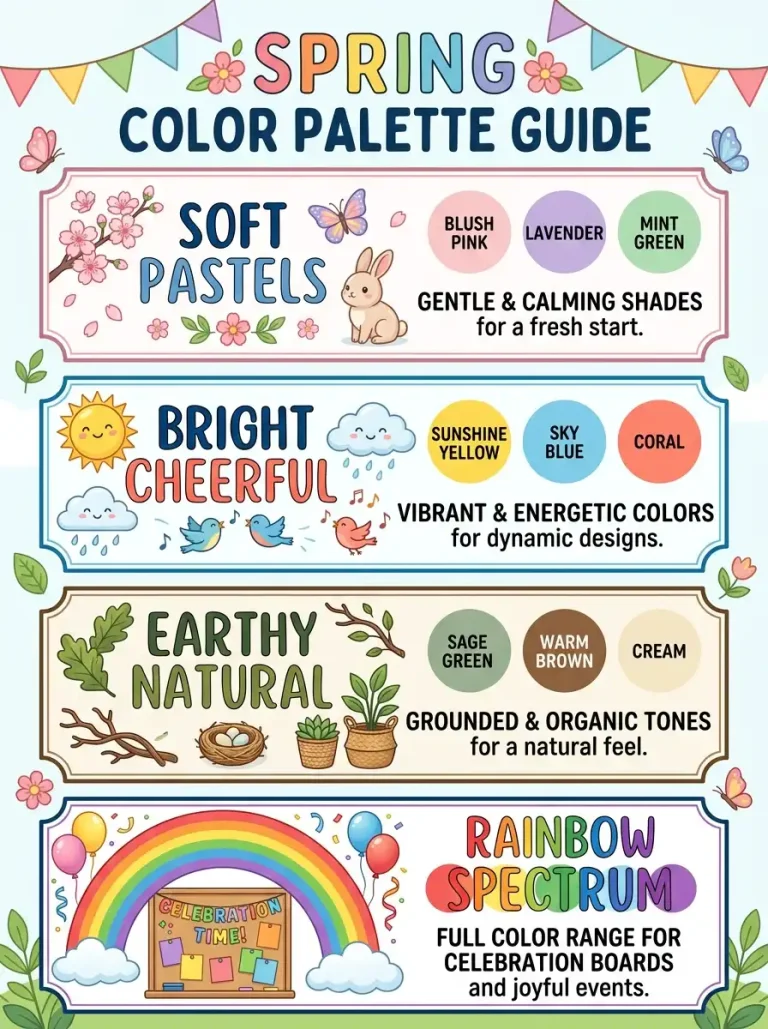
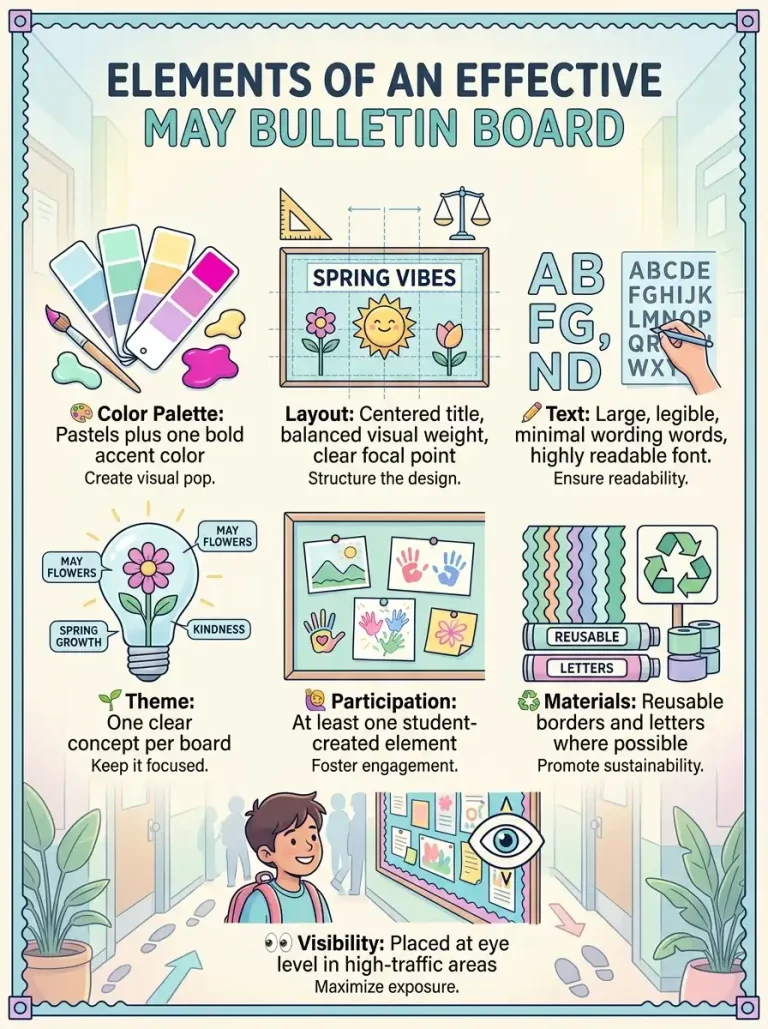
Choosing colors sets the emotional tone instantly. Warm colors like orange and yellow feel energetic and inviting, while cooler blues and greens feel calm and focused. Pick two or three main colors and stick with them for visual cohesion.
Typography deserves more thought than most librarians give it. Bold, simple fonts read clearly from a distance. Reserve decorative script fonts for short titles only, never for body text.
Balance keeps a board from feeling lopsided. Distribute visual weight evenly across the space rather than clustering everything in one corner.
Reusable decorations save time and budget. Laminated borders, letter sets, and background paper can survive multiple rotations if you store them carefully between uses.
Student participation should factor into nearly every design decision. Boards that invite contribution age better and require less solo upkeep from you.
Accessibility matters just as much as aesthetics. Use high-contrast color combinations and legible font sizes so every student, including those with visual impairments, can engage with the display.
Readability ties directly to accessibility. Keep text blocks short. A board is not the place for paragraphs; save the depth for the books themselves.
Maintenance is the quiet backbone of any successful board. Schedule a recurring time, even fifteen minutes weekly, to refresh sagging paper, restock supplies, and swap outdated content.
Common Mistakes to Avoid
Even well-intentioned displays can undercut themselves. Watch for these frequent missteps.
Clutter overwhelms viewers before they absorb any single message. Give your eye somewhere to rest.
Too much text turns an eye-catching display into a chore to read. Trim copy ruthlessly.
Poor color choices can clash or wash out important elements. Test combinations before committing to a full board.
Outdated content signals neglect. A display from last September still hanging in February tells students the library isn’t paying attention.
Weak themes confuse rather than clarify. Choose one clear concept per board rather than combining three unrelated ideas.
Lack of interaction wastes an opportunity. Static boards get one glance; interactive ones get repeat visits.
Poor visibility defeats the entire purpose. A brilliant board tucked behind a shelf or in dim lighting won’t reach anyone.
Budget-Friendly Decoration Ideas
Creative doesn’t have to mean expensive. Some of the most memorable library decorations cost almost nothing.
Colored paper remains the cheapest, most flexible material available. A few reams in varied colors cover most backgrounds and borders for an entire year.
Cardstock adds durability for pieces that need to survive repeated handling, like interactive tags or student-pinned cards.
Recycled materials including cereal boxes, newspaper, and cardboard scraps work beautifully for textured backgrounds or 3D elements like tree trunks and character props.
Printable decorations found through free education resource sites cut prep time dramatically. Print once, laminate, and reuse for years.
Craft supplies like pom-poms, yarn, and washi tape add texture without much cost, especially when purchased during back-to-school sales.
Student artwork costs nothing beyond paper and provides some of the most authentic, engaging content a board can feature.
DIY borders made from scalloped construction paper or hand-cut ribbon patterns look polished without requiring a purchased trim roll.
Seasonal Bulletin Board Themes
Rotating themes keep your library feeling current throughout the year. Consider this quick-reference calendar.
- Back to School: Welcome banners, “meet your librarian” spotlights, and goal-setting charts.
- Fall: Harvest-themed reading trees and cozy-mystery genre spotlights.
- Halloween: Spooky character adventure boards and ghost-story recommendation walls.
- Thanksgiving: Gratitude-themed reading logs and “books we’re thankful for” walls.
- Winter: Snowflake reading trackers and cozy reading corner ideas tied to hot cocoa and blankets.
- Christmas: Gift-wrapped book displays and holiday-themed recommendation boards.
- New Year: Reading resolution boards and fresh-start goal trackers.
- Valentine’s Day: “Book crush” recommendation walls and character love-letter displays.
- Spring: Blossoming reading trees and nature-themed genre spotlights.
- Easter: Egg-hunt-style clue boards leading students to hidden book recommendations.
- Summer Reading: Travel-themed challenge boards and beach-read genre spotlights.
- National Library Week: Staff appreciation walls and community recommendation boards.
- Book Week: Character costume photo walls and favorite-book voting displays.
Frequently Asked Questions
How often should I change my library bulletin board? Most librarians find a four to six week rotation works well for standard displays, while interactive boards like a “What Are You Reading?” wall can stay up longer since content refreshes on its own.
What is the best bulletin board idea for a small library space? An Interactive “What Are You Reading?” board works well in tight spaces since it needs minimal props and updates itself through student participation rather than elaborate decoration.
How can I make a bulletin board interactive without spending extra time? Build in a self-service element, such as a sticky note station or a pre-cut leaf supply, so students can contribute without requiring your direct involvement each time.
What materials last the longest for reusable library decorations? Laminated cardstock and felt-based borders tend to survive multiple school years, especially when stored flat in labeled folders between uses.
How do I choose a bulletin board theme that fits my student age group? Match complexity to reading level. Simpler visuals and shorter text suit elementary library students, while middle and high school library students respond better to data-driven or peer-review formats.
Can bulletin boards actually improve reading scores? While a single board won’t transform test scores alone, consistent, engaging displays build sustained reading motivation, which research consistently links to stronger literacy outcomes over time.
What’s a good bulletin board idea for a homeschool reading corner? A Seasonal Reading Tree works particularly well at home, since it grows gradually and gives a small group of readers a visible, shared sense of progress.
How do I keep a reading challenge board fair for different reading levels? Track books or pages completed rather than difficulty level, or create separate categories so slower readers and faster readers both see meaningful progress.
What should I avoid putting on a library bulletin board? Avoid dense paragraphs, cluttered layouts, outdated seasonal content, and anything requiring students to squint from across the room.
How do I get students involved in designing bulletin boards? Invite volunteers to submit artwork, reviews, or design suggestions, and consider rotating a “student board designer of the month” role for older grades.
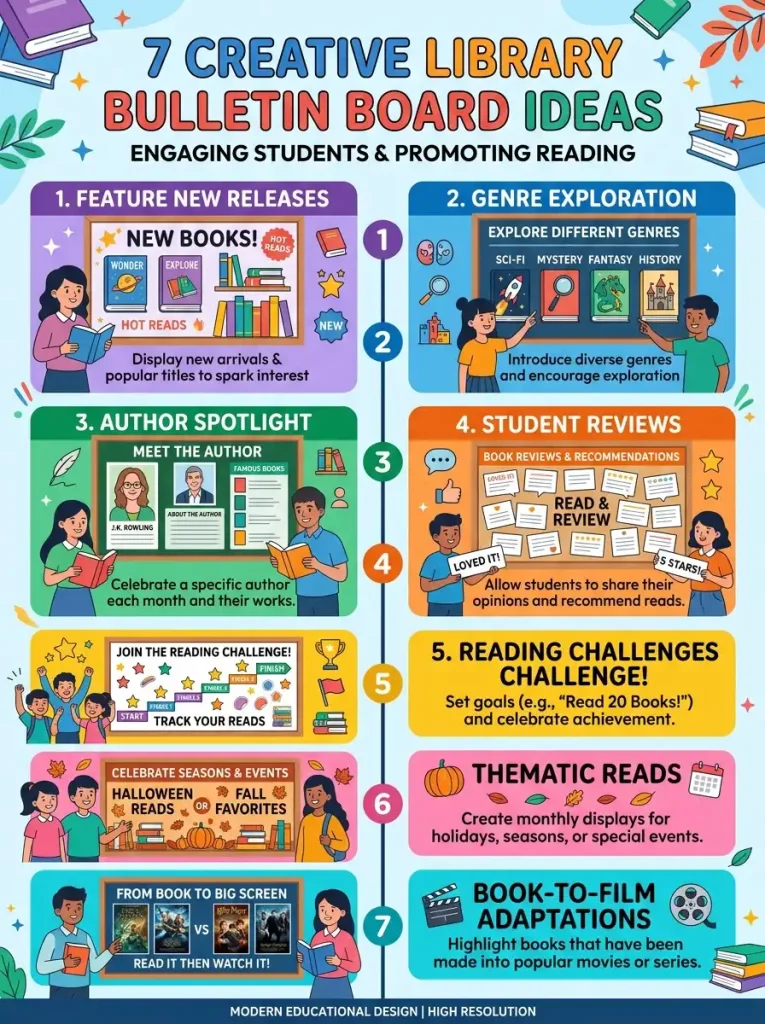
Infographic
Final Thoughts
Your library walls are waiting for a reason to shine. Every idea in this guide, from a simple Book Recommendation Wall to an ambitious Seasonal Reading Tree, gives students a reason to slow down and notice what your library offers. Start small if you need to. Pick one bulletin board, gather a few inexpensive supplies, and invite your students into the process.
The most memorable library displays rarely come from unlimited budgets. They come from librarians and teachers willing to experiment, adjust, and keep reading exciting one bulletin board at a time.