16 October Bulletin Board Ideas for a Warm, Welcoming Autumn
October brings a shift in the air, and classrooms feel it immediately. Leaves change color outside the window, pumpkins start appearing in grocery stores, and students arrive buzzing with Halloween excitement. This is the perfect month to refresh your walls with fresh October classroom decorations that match the season’s energy.
Whether you teach preschool, run a daycare, homeschool your own children, or manage a school library, your walls deserve more than last month’s leftover decor. A well-planned fall bulletin board does more than look pretty. It reinforces lessons, celebrates student work, and turns hallways into places students actually want to walk through.
This guide walks through sixteen fully developed October bulletin board ideas, each built for real classrooms with real budgets and real time constraints. You’ll find everything from a classic pumpkin bulletin board to a school-friendly Halloween classroom display, plus gratitude boards, STEM boards, and cozy reading corners. Every idea includes setup steps, materials, age recommendations, and budget-friendly alternatives so you can start decorating today.
By the end, you’ll also know how to make your displays genuinely interactive, how to keep them safe, and how to stretch your classroom budget using recycled materials. Let’s turn your walls into one of the best parts of October.
16 October Bulletin Board Ideas
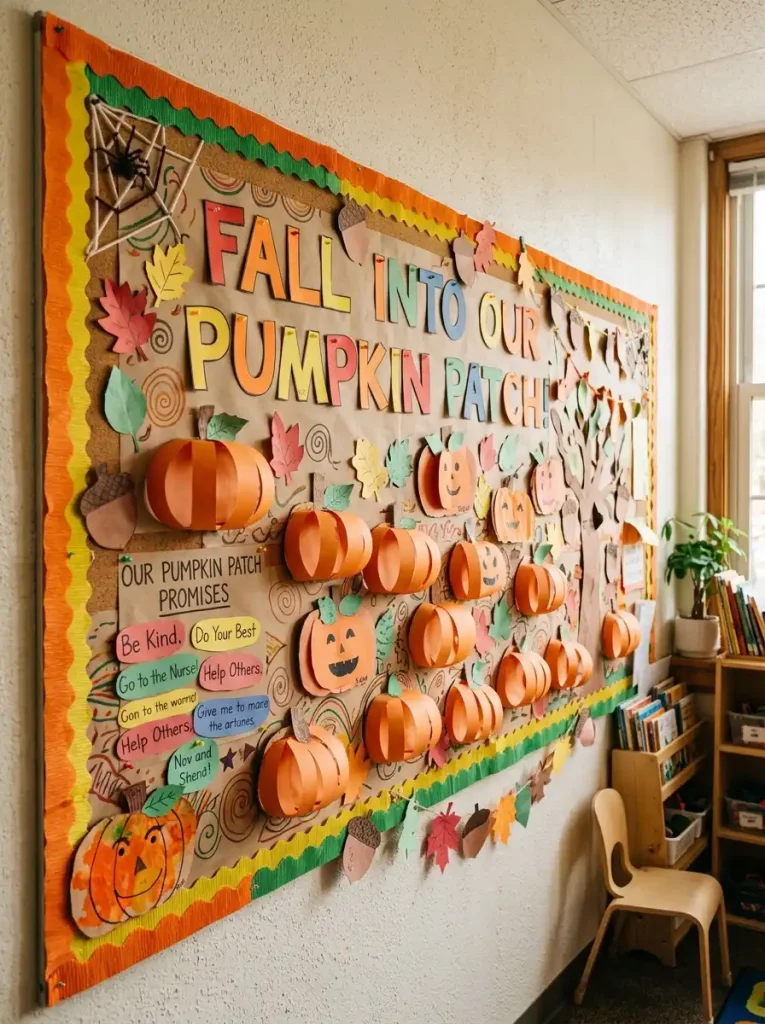
1. Pumpkin Patch of Pride
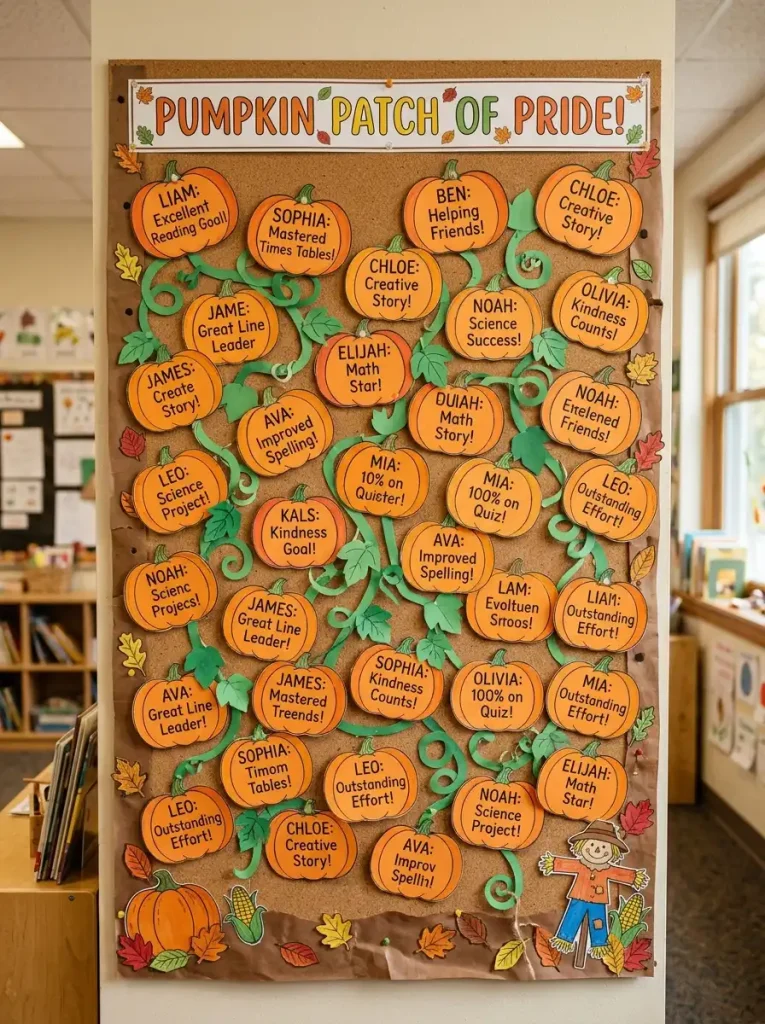
Theme: A classic pumpkin bulletin board where every student gets their own paper pumpkin celebrating a personal accomplishment.
Age groups: Preschool through elementary.
Display location: Classroom entrance or school hallway.
Suggested colors: Orange, green, and cream against a soft blue or brown background.
Materials needed: Orange and green construction paper, black or brown markers, glue, scissors, twine for vines.
Step-by-step setup:
- Cut large pumpkin shapes from orange paper.
- Add a green stem and curling vine to each pumpkin.
- Write one student accomplishment per pumpkin.
- Arrange pumpkins in a loose patch pattern across the board.
Decoration tips: Add a brown paper “dirt” strip along the bottom to anchor the patch visually.
Interactive element: Students add a new pumpkin whenever they reach a personal goal.
Educational benefits: Builds confidence and reinforces growth mindset language.
Seasonal variations: Swap pumpkins for snowflakes in December while keeping the same format.
Personalization ideas: Let each student choose their pumpkin’s size and decoration style.
Teacher tips: Precut pumpkin shapes in bulk ahead of time to save setup minutes.
Budget-friendly alternative: Use recycled orange paper scraps instead of buying fresh sheets.
Common mistakes to avoid: Overcrowding pumpkins so tightly that individual names become hard to read.
Printable title idea: “Our Pumpkin Patch of Pride”
2. Harvest of Great Work
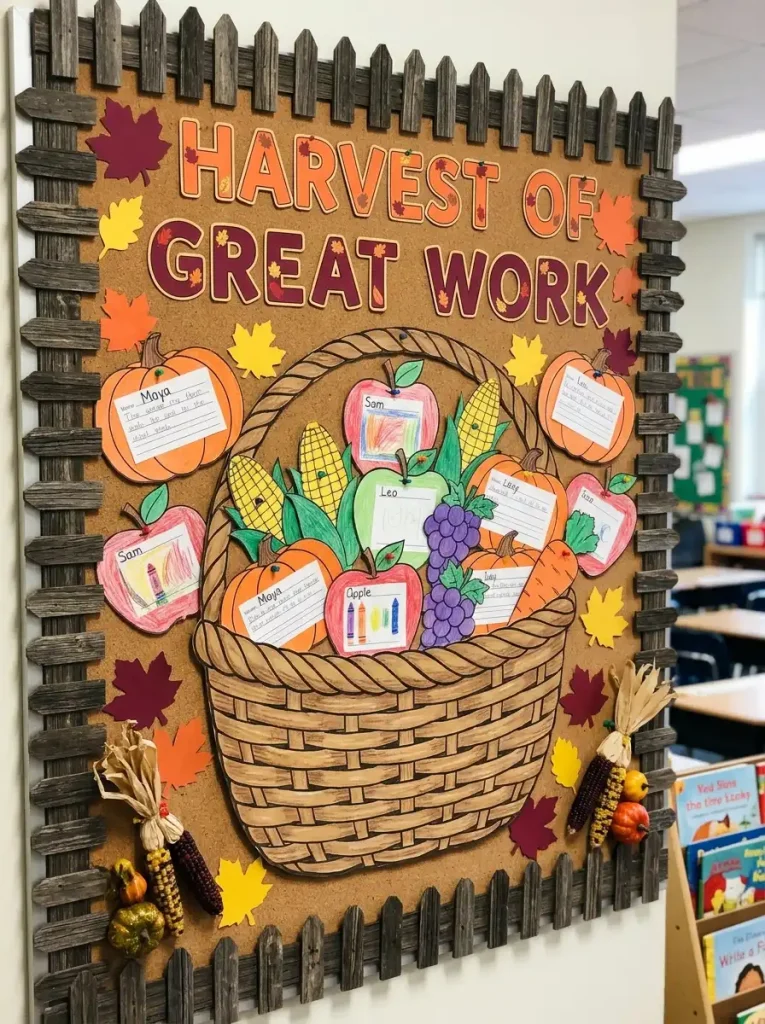
Theme: A harvest bulletin board displaying student work as fruits and vegetables ready for picking.
Age groups: Elementary school.
Display location: Classroom interior wall near student desks.
Suggested colors: Deep orange, burgundy, golden yellow, and forest green.
Materials needed: Construction paper, clothespins or string, a large basket cutout, raffia or twine.
Step-by-step setup:
- Attach a large basket cutout at the board’s base.
- Create vegetable and fruit cutouts from colored paper.
- Clip or pin student work samples onto each cutout.
- Arrange cutouts spilling upward from the basket.
Decoration tips: Add a simple wooden-fence border using brown paper strips.
Interactive element: Students select which piece of work they want featured each week.
Educational benefits: Celebrates a range of subjects and skill levels equally.
Seasonal variations: Adjust produce types seasonally, using berries in summer or gourds in fall.
Personalization ideas: Add a family photo section celebrating harvest traditions from home.
Teacher tips: Rotate featured work biweekly to keep the display current.
Budget-friendly alternative: Use paper grocery bags cut and painted as a low-cost basket cutout.
Common mistakes to avoid: Leaving the same student work up for months without rotation.
Printable title idea: “Look What We’re Growing!”
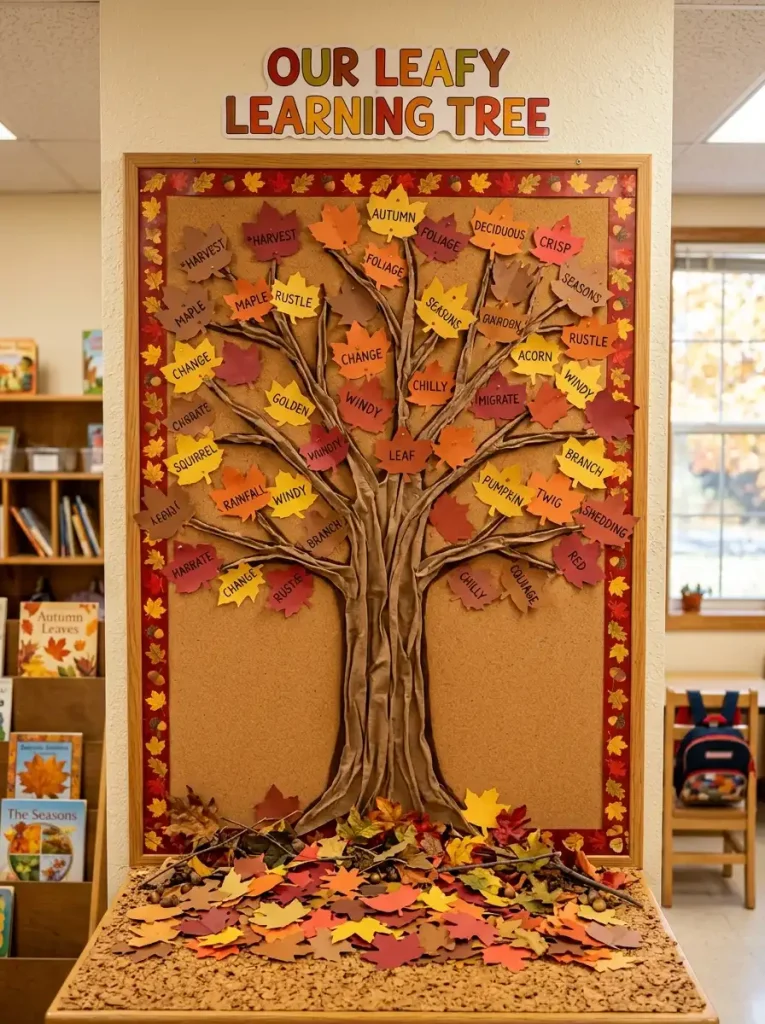
3. Leafy Learning Tree
Theme: A leaf classroom display where a large tree grows new leaves representing new vocabulary words or skills.
Age groups: Preschool through elementary.
Display location: Classroom wall near a reading or word-study area.
Suggested colors: Red, orange, yellow, and brown against a white background.
Materials needed: Brown paper for the trunk, colored paper for leaves, markers, glue.
Step-by-step setup:
- Cut and attach a large tree trunk and branches to the board.
- Precut leaf shapes in fall colors.
- Write one new word or skill per leaf.
- Add leaves to branches weekly as new content is introduced.
Decoration tips: Scatter a few loose leaves at the base of the tree for realism.
Interactive element: Students add their own leaf whenever they use a new vocabulary word correctly.
Educational benefits: Reinforces vocabulary retention through repeated visual exposure.
Seasonal variations: Turn the tree bare in winter, then add blossoms in spring.
Personalization ideas: Let students trace their own hand as a leaf shape for added individuality.
Teacher tips: Keep a leaf template stack ready near the board for quick additions.
Budget-friendly alternative: Repurpose old file folders as sturdy, reusable leaf shapes.
Common mistakes to avoid: Adding leaves faster than students can actually absorb the content behind them.
Printable title idea: “Watch Our Learning Grow!”
4. Apple Orchard Adventures
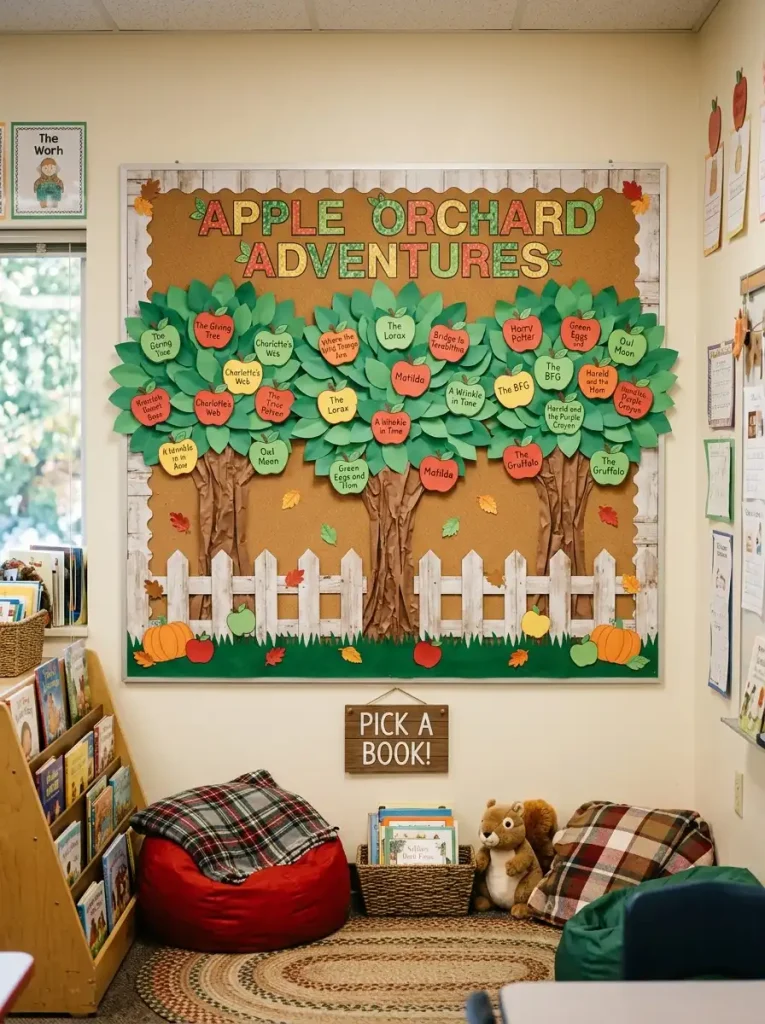
Theme: An apple orchard classroom display connecting reading milestones to a growing orchard.
Age groups: Preschool through elementary.
Display location: Reading corner or classroom library wall.
Suggested colors: Red, green, brown, and soft yellow.
Materials needed: Brown paper for tree trunks, red and green paper for apples, book title labels.
Step-by-step setup:
- Create three or four simple tree trunk shapes.
- Add green paper “leaves” as a canopy for each tree.
- Cut apple shapes and write a completed book title on each.
- Attach apples to the trees as students finish books.
Decoration tips: Add a small wooden fence or picket border using brown paper strips.
Interactive element: Students pick their own tree to represent their personal reading progress.
Educational benefits: Encourages reading motivation through visible, tangible progress.
Seasonal variations: Swap apples for pumpkins in late October or ornaments in December.
Personalization ideas: Add a small photo of each student near their chosen tree.
Teacher tips: Keep a stack of blank apple cutouts at the classroom library for instant additions.
Budget-friendly alternative: Use construction paper scraps left over from other projects for apples.
Common mistakes to avoid: Forgetting to remove students who transfer classes, leaving orphaned trees behind.
Printable title idea: “Growing Readers, One Apple at a Time”
5. Friendly Ghosts and Good Manners
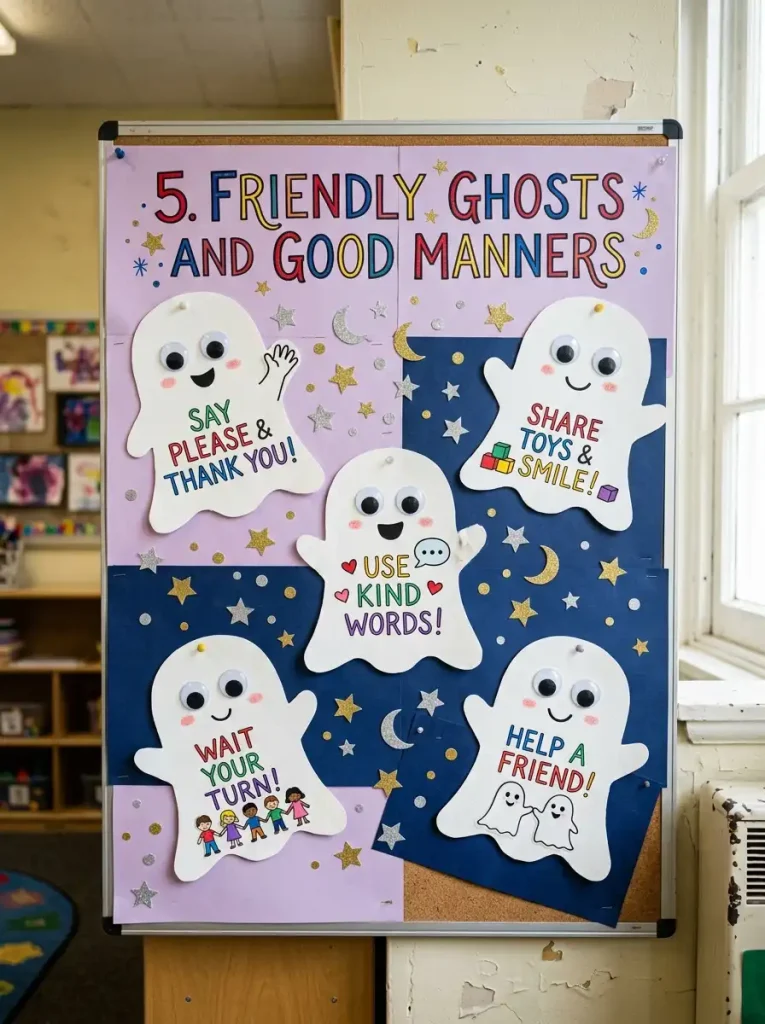
Theme: A school-friendly Halloween classroom board pairing cute ghost characters with kindness reminders.
Age groups: Preschool through early elementary.
Display location: Classroom entrance or hallway.
Suggested colors: White, soft gray, and lavender against a black or navy background.
Materials needed: White paper or fabric, black markers, glue, googly eyes.
Step-by-step setup:
- Cut simple, round ghost shapes from white paper.
- Add friendly facial expressions with markers or googly eyes.
- Write a kindness reminder or classroom rule on each ghost.
- Arrange ghosts floating across the board in a playful pattern.
Decoration tips: Add small paper stars or moons scattered between the ghosts.
Interactive element: Students vote on their favorite kindness reminder to feature each week.
Educational benefits: Reinforces classroom expectations in a low-pressure, seasonal format.
Seasonal variations: Replace ghosts with snowmen in winter while keeping the kindness theme.
Personalization ideas: Let students name their ghost for extra personality.
Teacher tips: Keep the imagery gentle and non-scary to suit younger audiences comfortably.
Budget-friendly alternative: Use old white bedsheet scraps instead of purchasing new fabric.
Common mistakes to avoid: Choosing overly frightening imagery that unsettles younger students.
Printable title idea: “Boo-tiful Manners All Around”
6. Gratitude Garden of Autumn
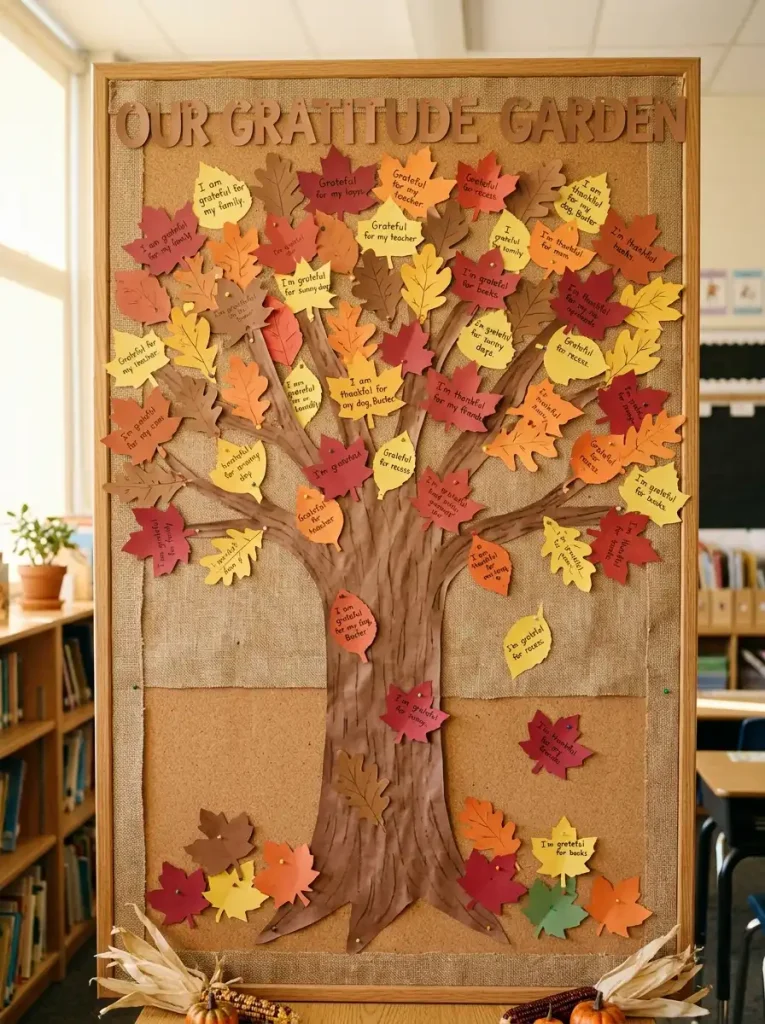
Theme: A gratitude classroom display where students express thankfulness through falling leaves.
Age groups: Elementary and middle school.
Display location: Classroom interior wall or shared hallway space.
Suggested colors: Warm reds, oranges, and golden yellows.
Materials needed: Colored paper for leaves, markers, a tree trunk cutout, string for hanging.
Step-by-step setup:
- Attach a bare tree trunk to the board’s center.
- Cut leaf shapes in autumn colors.
- Ask students to write something they’re grateful for on each leaf.
- Add leaves to the tree throughout the month.
Decoration tips: Let a few leaves “fall” toward the base of the tree for a natural look.
Interactive element: Students add a new gratitude leaf each Friday as a weekly ritual.
Educational benefits: Builds social-emotional awareness and reflective writing skills.
Seasonal variations: Continue into November as a dedicated Thanksgiving gratitude board.
Personalization ideas: Include a family gratitude leaf sent from home.
Teacher tips: Model the activity yourself first with a teacher gratitude leaf.
Budget-friendly alternative: Use newspaper dyed with diluted paint as an inexpensive leaf material.
Common mistakes to avoid: Forcing generic responses instead of encouraging genuine reflection.
Printable title idea: “Grateful Hearts, Falling Leaves”
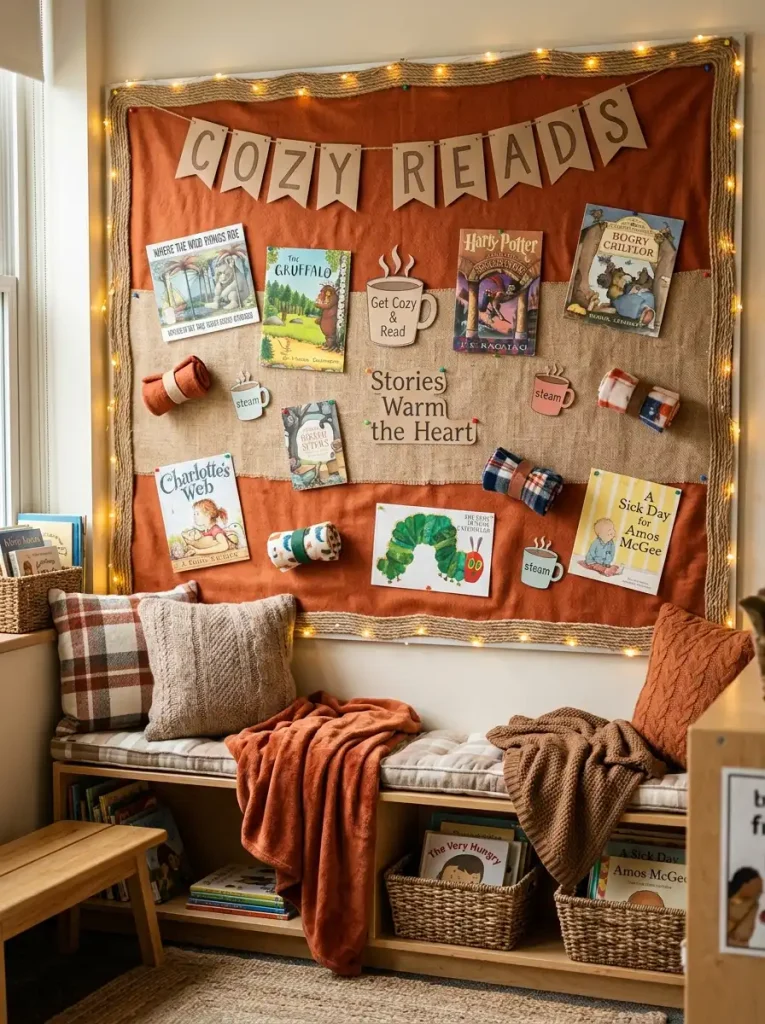
7. Cozy Reading Nook Board
Theme: A reading corner bulletin board celebrating books with an autumn, blanket-and-candlelight feel.
Age groups: All elementary grade levels.
Display location: Adjacent to a classroom reading nook or library corner.
Suggested colors: Warm brown, burnt orange, and cream.
Materials needed: Fabric scraps, book cover printouts, string lights (battery-operated), fall-themed border trim.
Step-by-step setup:
- Attach a cozy backdrop using warm fabric or paper.
- Add book cover cutouts recommended by students.
- String battery-operated lights along the border for warmth.
- Include a small “currently reading” section updated weekly.
Decoration tips: Add small paper mugs or blankets to reinforce the cozy autumn feeling.
Interactive element: Students pin a note recommending their current book to classmates.
Educational benefits: Encourages peer-driven reading motivation and book discovery.
Seasonal variations: Swap the color palette to pastel for a spring reading refresh.
Personalization ideas: Feature a “reader of the week” photo alongside their book choice.
Teacher tips: Battery-operated lights are safer and more practical than plug-in versions near paper displays.
Budget-friendly alternative: Use brown paper bags cut into fringe for a rustic, low-cost border.
Common mistakes to avoid: Overloading the board with too many books, making individual titles hard to spot.
Printable title idea: “Curl Up With a Good Book”
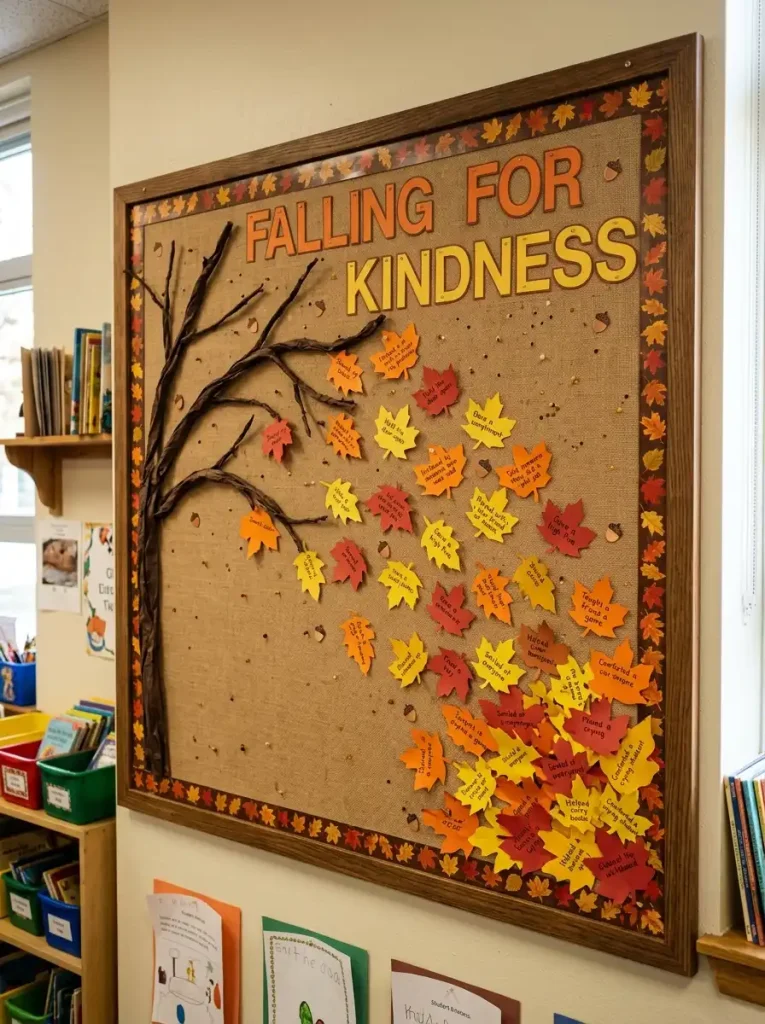
8. Falling for Kindness
Theme: A kindness bulletin board using falling leaves to track acts of kindness throughout October.
Age groups: Preschool through elementary.
Display location: Classroom entrance or hallway near the main office.
Suggested colors: Orange, yellow, and soft red.
Materials needed: Colored paper leaves, markers, a simple tree or branch backdrop.
Step-by-step setup:
- Attach a bare branch or simple tree outline to the board.
- Keep a stack of blank leaf cutouts nearby.
- Write one kind act per leaf as it happens.
- Add leaves continuously throughout the month.
Decoration tips: Let leaves drift toward the bottom corner for a wind-blown effect.
Interactive element: Students nominate classmates for kindness recognition themselves.
Educational benefits: Reinforces positive behavior through public, visible recognition.
Seasonal variations: Transition into a snowflake kindness board for winter months.
Personalization ideas: Include staff members alongside students for a whole-school kindness culture.
Teacher tips: Keep the nomination process simple so it doesn’t require heavy teacher involvement.
Budget-friendly alternative: Cut leaves from recycled magazine pages for a colorful, no-cost option.
Common mistakes to avoid: Letting the same few students dominate the recognition space.
Printable title idea: “Kindness Is Falling All Around Us”
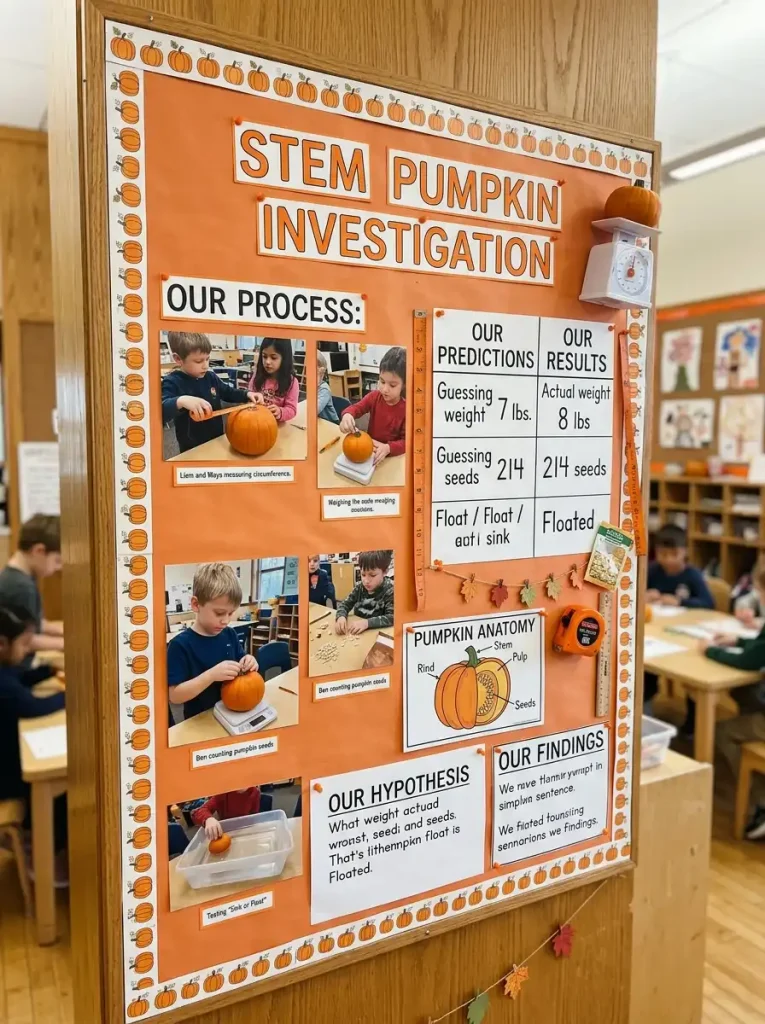
9. STEM Pumpkin Investigation
Theme: A STEM October bulletin board documenting a class pumpkin science experiment.
Age groups: Elementary and middle school.
Display location: Science corner or classroom interior wall.
Suggested colors: Orange, green, and white with chart-style accents.
Materials needed: Photos of the experiment, chart paper, labels, a real or artificial pumpkin for reference.
Step-by-step setup:
- Document a simple pumpkin experiment, such as measuring circumference or counting seeds.
- Print photos showing each experimental step.
- Create a simple data chart showing class predictions versus results.
- Arrange the display in a clear step-by-step sequence.
Decoration tips: Use arrows or numbered labels to guide viewers through the experiment’s sequence.
Interactive element: Invite students to add their own prediction sticky note before results are revealed.
Educational benefits: Builds scientific method skills through a hands-on, memorable experience.
Seasonal variations: Swap pumpkins for snow-melting experiments in winter using the same data-chart format.
Personalization ideas: Include quotes from students describing what surprised them most.
Teacher tips: Take photos throughout the experiment so the board tells a complete story afterward.
Budget-friendly alternative: Use a single classroom pumpkin shared across multiple experiment stations.
Common mistakes to avoid: Skipping the data chart and relying only on photos, which limits the academic value.
Printable title idea: “Our Pumpkin Investigation: What Did We Discover?”
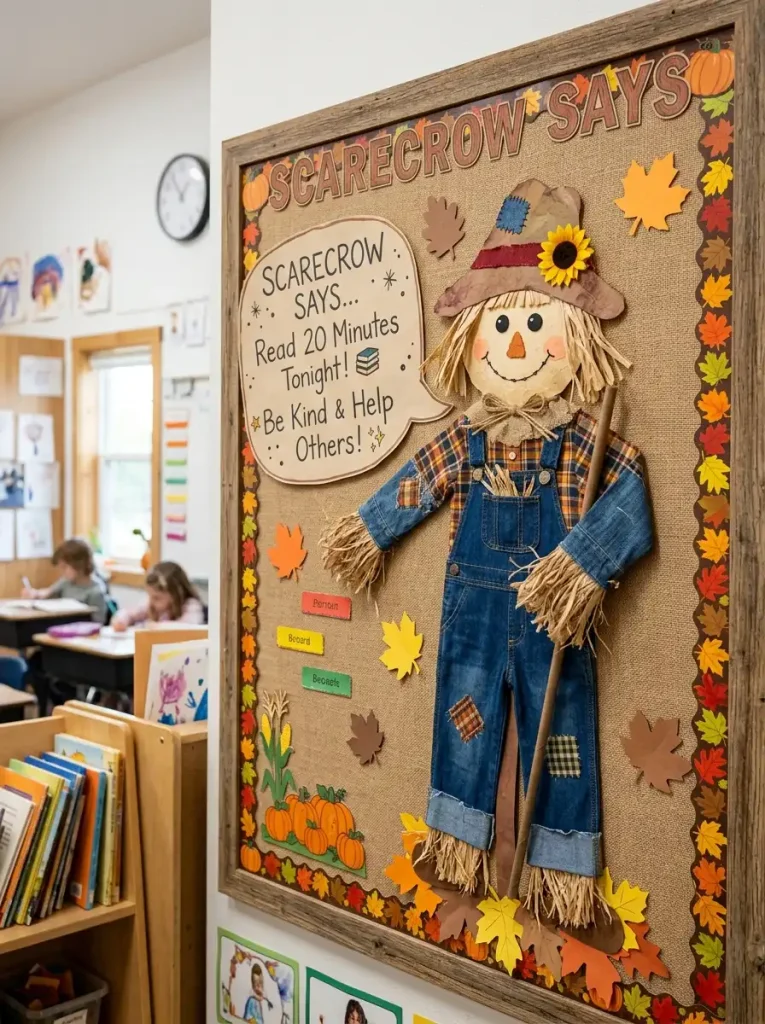
10. Scarecrow Says
Theme: A scarecrow-themed board featuring classroom rules or daily reminders delivered in a friendly voice.
Age groups: Preschool through elementary.
Display location: Classroom entrance or near the daily schedule area.
Suggested colors: Straw yellow, denim blue, and burnt orange.
Materials needed: Brown and yellow paper for straw texture, blue paper for overalls, a simple face cutout.
Step-by-step setup:
- Build a large scarecrow figure from paper components.
- Add a speech bubble beside the scarecrow’s head.
- Write a rotating daily reminder or classroom rule inside the bubble.
- Update the message regularly to keep it relevant.
Decoration tips: Add straw-like paper fringe around the scarecrow’s wrists and base for texture.
Interactive element: Let students take turns writing the day’s scarecrow message.
Educational benefits: Reinforces classroom expectations in a playful, memorable format.
Seasonal variations: Swap the scarecrow for a snowman delivering winter reminders.
Personalization ideas: Name the scarecrow through a class vote for added ownership.
Teacher tips: Laminate the speech bubble area so messages can be wiped and rewritten easily.
Budget-friendly alternative: Stuff the scarecrow’s clothing with crumpled newspaper instead of purchased filling.
Common mistakes to avoid: Leaving the same message up so long that students stop reading it.
Printable title idea: “Scarecrow Says: Be Kind Today”
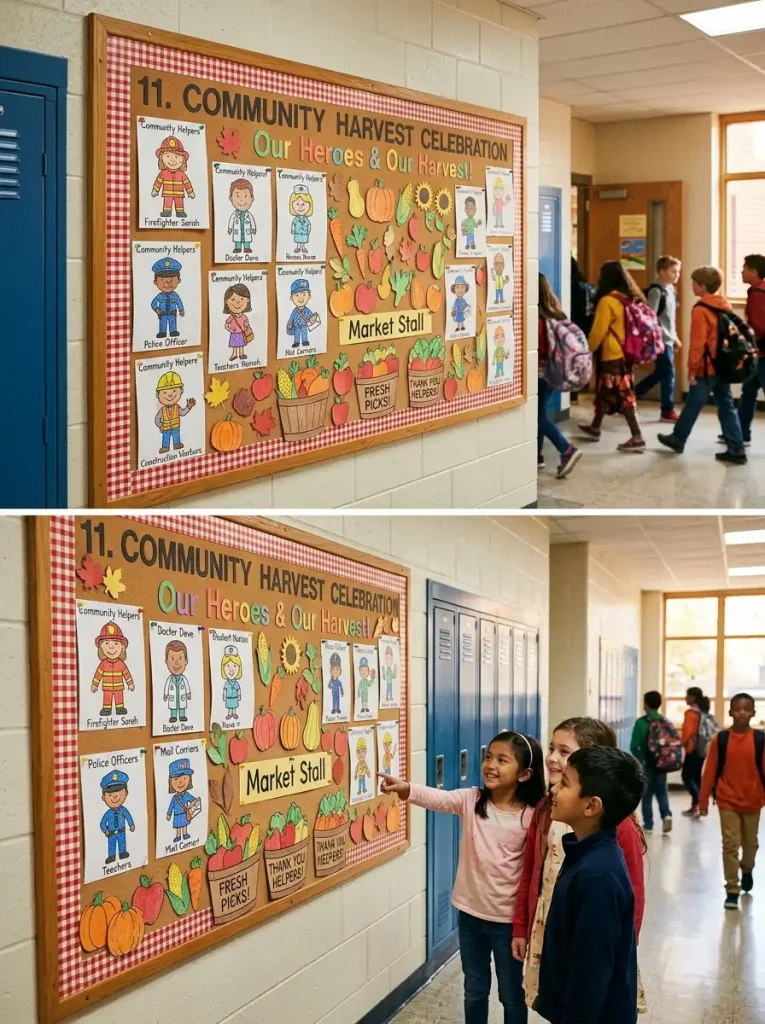
11. Community Harvest Celebration
Theme: A harvest bulletin board celebrating community helpers and local food traditions.
Age groups: Elementary school.
Display location: Shared school hallway or cafeteria entrance.
Suggested colors: Deep red, golden orange, and earthy brown.
Materials needed: Photos or drawings of community helpers, produce cutouts, a welcoming title banner.
Step-by-step setup:
- Invite students to draw or research a local community helper related to food or farming.
- Attach each drawing alongside a produce cutout representing their role.
- Arrange the display in a farmers-market-style layout.
- Add a title banner welcoming viewers into the display.
Decoration tips: Use a checkered paper border to reinforce a farmers-market feel.
Interactive element: Students share a family food tradition connected to autumn harvest season.
Educational benefits: Builds community awareness and appreciation for local food systems.
Seasonal variations: Shift toward a winter holiday food traditions board in December.
Personalization ideas: Include a recipe card section contributed by families.
Teacher tips: Partner with a local farm or grocery store for real photos if possible.
Budget-friendly alternative: Use printed clip art instead of commissioned illustrations for produce cutouts.
Common mistakes to avoid: Focusing only on one cultural food tradition instead of representing your full classroom community.
Printable title idea: “Our Community’s Harvest Table”
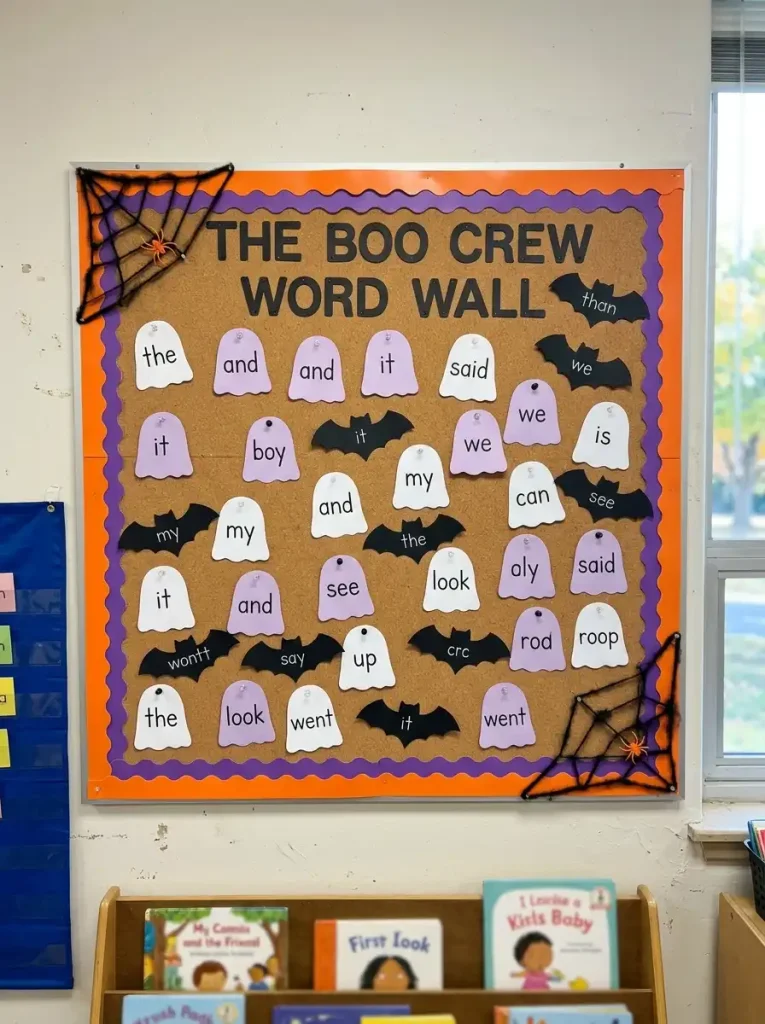
12. Boo Crew Word Wall
Theme: A playful, school-friendly Halloween classroom board built around a vocabulary or sight-word theme.
Age groups: Preschool through elementary.
Display location: Classroom wall near word-study or literacy centers.
Suggested colors: Purple, orange, and black with white accents.
Materials needed: Purple and orange paper, black marker, simple ghost or bat cutouts.
Step-by-step setup:
- Cut ghost or bat shapes from colored paper.
- Write one sight word or vocabulary term on each shape.
- Arrange shapes in rows or a scattered pattern across the board.
- Add a bold title banner at the top.
Decoration tips: Add small paper cobwebs in the corners for extra seasonal flair.
Interactive element: Students point to and read words aloud during a quick daily practice routine.
Educational benefits: Reinforces sight word recognition and vocabulary retention.
Seasonal variations: Swap Halloween shapes for snowflakes or hearts in later months.
Personalization ideas: Let students help choose which words appear on the wall each week.
Teacher tips: Keep imagery friendly and cartoonish rather than realistic or frightening.
Budget-friendly alternative: Reuse shapes from previous years by simply changing the words written on them.
Common mistakes to avoid: Adding too many words at once, overwhelming younger readers.
Printable title idea: “Our Boo Crew Word Wall”
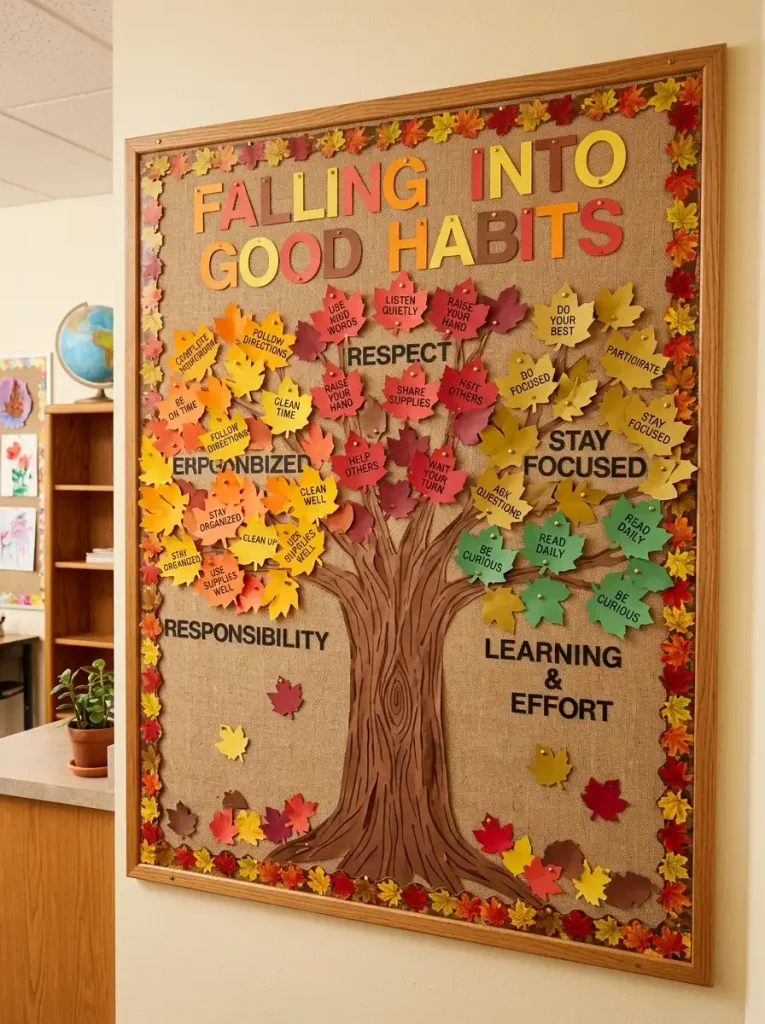
13. Falling Into Good Habits
Theme: A leaf classroom display tracking positive classroom habits and routines.
Age groups: Preschool through elementary.
Display location: Near the classroom door or daily check-in area.
Suggested colors: Orange, red, and brown.
Materials needed: Colored paper leaves, a simple tree outline, markers.
Step-by-step setup:
- Attach a tree outline to the board.
- Label leaf cutouts with specific habits, like “raise your hand” or “listen carefully.”
- Add leaves to the tree as students demonstrate each habit.
- Refresh habits monthly to match current classroom goals.
Decoration tips: Group leaves by color to represent different habit categories.
Interactive element: Students self-report when they notice themselves practicing a habit.
Educational benefits: Builds self-regulation and awareness of classroom expectations.
Seasonal variations: Shift to a winter mitten theme tracking the same habits in December.
Personalization ideas: Let students illustrate their own version of each habit leaf.
Teacher tips: Keep habits specific and observable rather than vague or abstract.
Budget-friendly alternative: Trace leaves using real fallen leaves as templates for a free, natural touch.
Common mistakes to avoid: Choosing too many habits at once, diluting focus and impact.
Printable title idea: “Falling Into Great Habits”
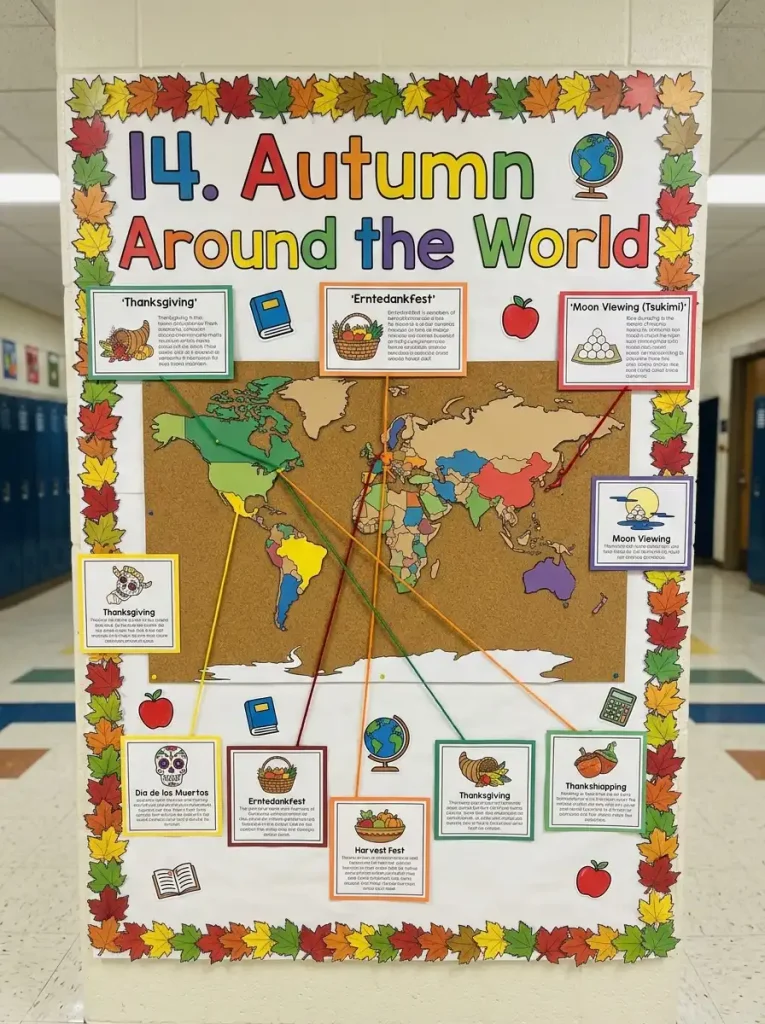
14. Autumn Around the World
Theme: An autumn school display exploring how different cultures celebrate the harvest season.
Age groups: Elementary and middle school.
Display location: Shared school hallway or social studies classroom.
Suggested colors: A varied palette reflecting different cultural traditions.
Materials needed: World map cutout, flags or cultural symbols, brief informational labels.
Step-by-step setup:
- Attach a simple world map outline to the board.
- Research two or three autumn traditions from different cultures.
- Add labeled markers connecting each tradition to its location on the map.
- Include a short fact or quote for each tradition.
Decoration tips: Use yarn or string to visually connect labels back to the map.
Interactive element: Invite families to share their own autumn traditions for inclusion.
Educational benefits: Builds global awareness and cultural appreciation alongside seasonal learning.
Seasonal variations: Expand into a winter holidays around the world board in December.
Personalization ideas: Feature traditions directly from your own students’ families whenever possible.
Teacher tips: Double-check cultural information for accuracy before displaying it publicly.
Budget-friendly alternative: Print a free world map outline instead of purchasing a laminated version.
Common mistakes to avoid: Reducing entire cultures to a single stereotype or overly simplified symbol.
Printable title idea: “Autumn Traditions Around the World”
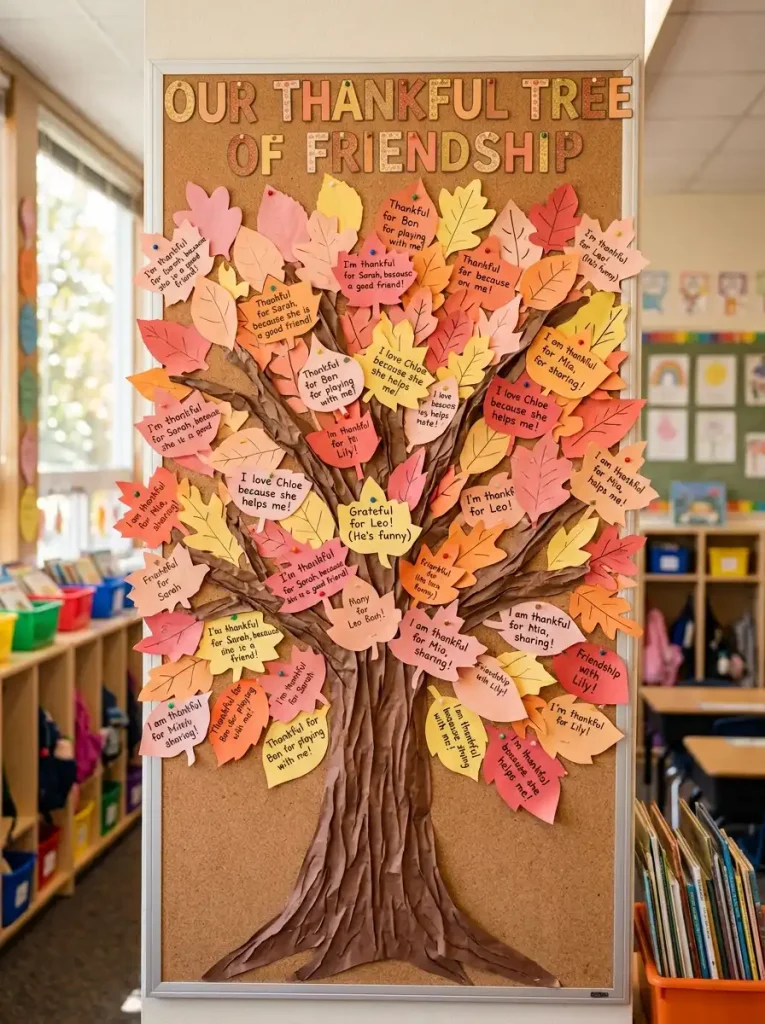
15. Thankful Tree of Friendship
Theme: A gratitude classroom display focused specifically on peer friendship and classroom community.
Age groups: Preschool through elementary.
Display location: Classroom interior wall near a community circle area.
Suggested colors: Warm reds, oranges, and soft pinks.
Materials needed: A tree trunk cutout, colored paper leaves, markers.
Step-by-step setup:
- Attach a bare tree trunk to the board.
- Ask each student to write something they appreciate about a classmate on a leaf.
- Add leaves to the tree gradually throughout the week.
- Rotate which students are featured to ensure everyone is included.
Decoration tips: Arrange leaves so the tree looks fuller near the top for visual balance.
Interactive element: Hold a brief weekly share-out where students read their leaf aloud.
Educational benefits: Strengthens classroom community and peer relationship skills.
Seasonal variations: Continue the format into November as a Thanksgiving-specific friendship board.
Personalization ideas: Include a teacher-written leaf for every student at least once during the season.
Teacher tips: Monitor to ensure every student receives at least one appreciation leaf.
Budget-friendly alternative: Use recycled cardstock scraps cut into simple leaf shapes.
Common mistakes to avoid: Allowing the same popular students to receive repeated recognition while others are overlooked.
Printable title idea: “Our Tree of Thankful Friends”
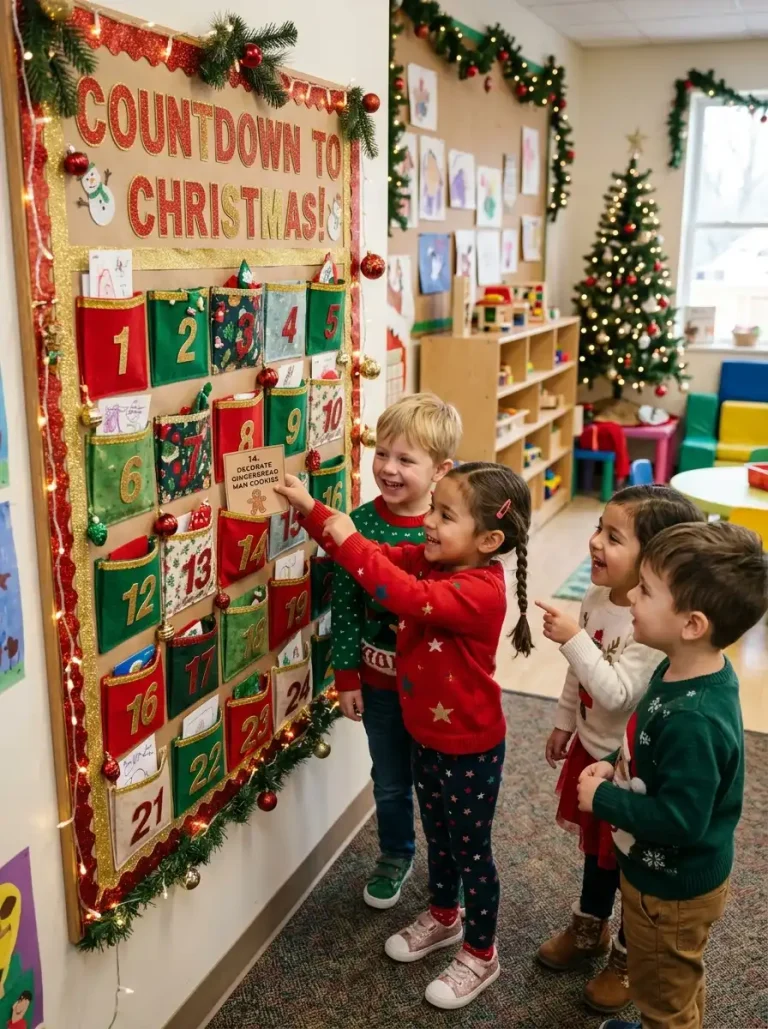
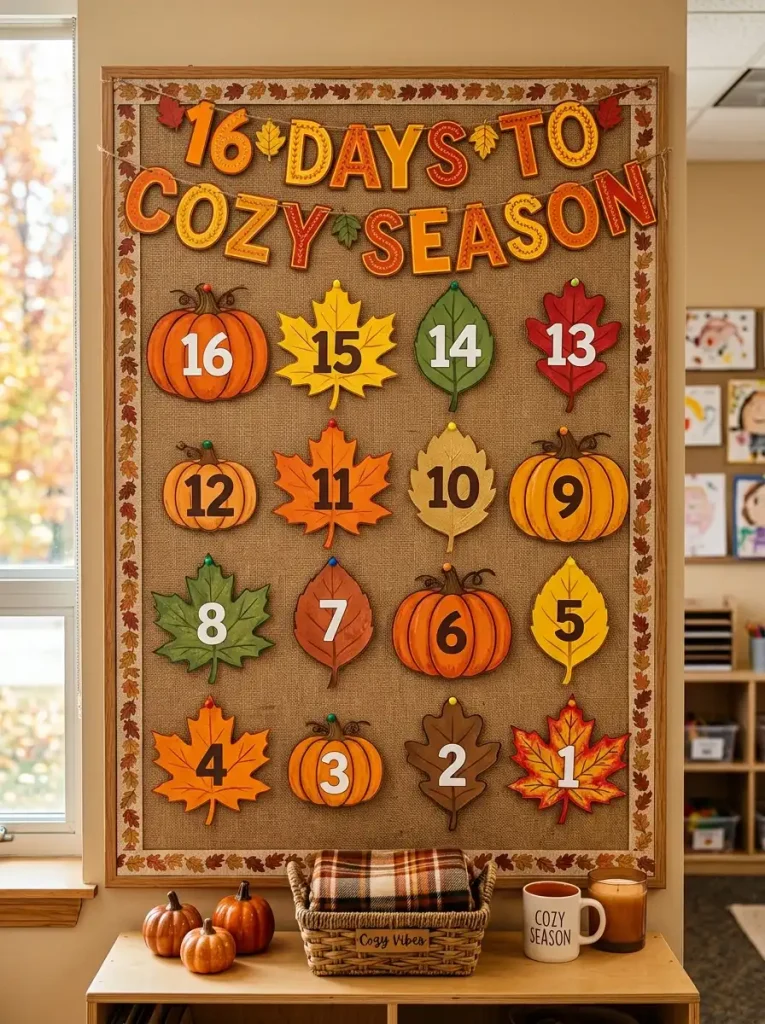
16. Countdown to Cozy Season
Theme: A fun countdown board tracking the days until a class celebration, field trip, or seasonal break.
Age groups: Elementary and middle school.
Display location: Classroom entrance or near the daily calendar.
Suggested colors: Warm oranges, deep reds, and soft browns.
Materials needed: Numbered paper leaves or pumpkins, a simple countdown chart, string.
Step-by-step setup:
- Create numbered cutouts counting down to your target date.
- Arrange them in descending order across the board.
- Remove one cutout each day as the countdown progresses.
- Add a celebratory title banner announcing the upcoming event.
Decoration tips: Add a small calendar icon or clock graphic to reinforce the countdown concept.
Interactive element: Assign a different student to remove each day’s cutout as a rotating classroom job.
Educational benefits: Builds number sense, sequencing skills, and anticipation-based motivation.
Seasonal variations: Reuse the same format for a winter break or spring break countdown later in the year.
Personalization ideas: Let students decorate their assigned countdown number with their own design.
Teacher tips: Choose a countdown length that stays motivating without dragging on too long.
Budget-friendly alternative: Reuse the same numbered cutouts year after year with minor seasonal touch-ups.
Common mistakes to avoid: Forgetting to update the countdown daily, which undermines the entire concept.
Printable title idea: “Counting Down to Cozy Season”
Why October Is the Perfect Month for Classroom Décor
October classroom themes practically design themselves. Falling leaves, harvest imagery, and gentle Halloween fun give teachers endless creative material to work with.
Students also respond strongly to seasonal change. A classroom that reflects the outside world feels more connected and alive. Autumn classroom decor taps into that natural excitement without much extra effort.
Beyond aesthetics, October bulletin boards offer real academic value. A leaf classroom display can reinforce science lessons on changing seasons. A harvest bulletin board can tie into lessons about agriculture, nutrition, or community. Every board on this list balances beauty with genuine learning value.
Making Bulletin Boards Interactive, Not Just Decorative
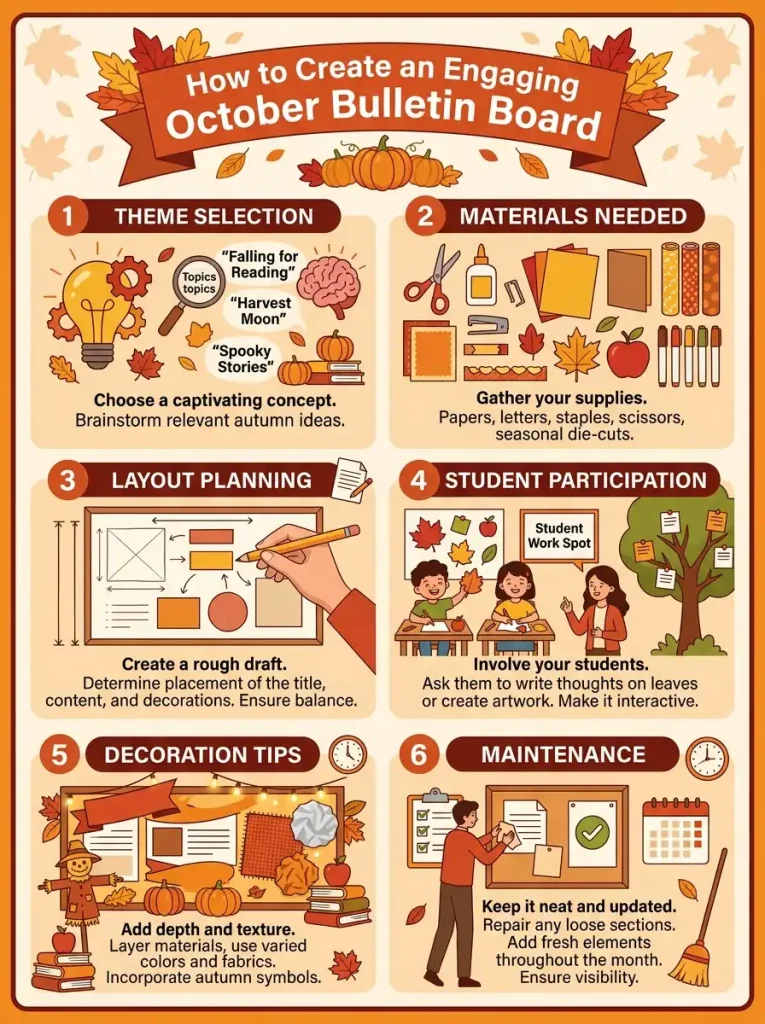
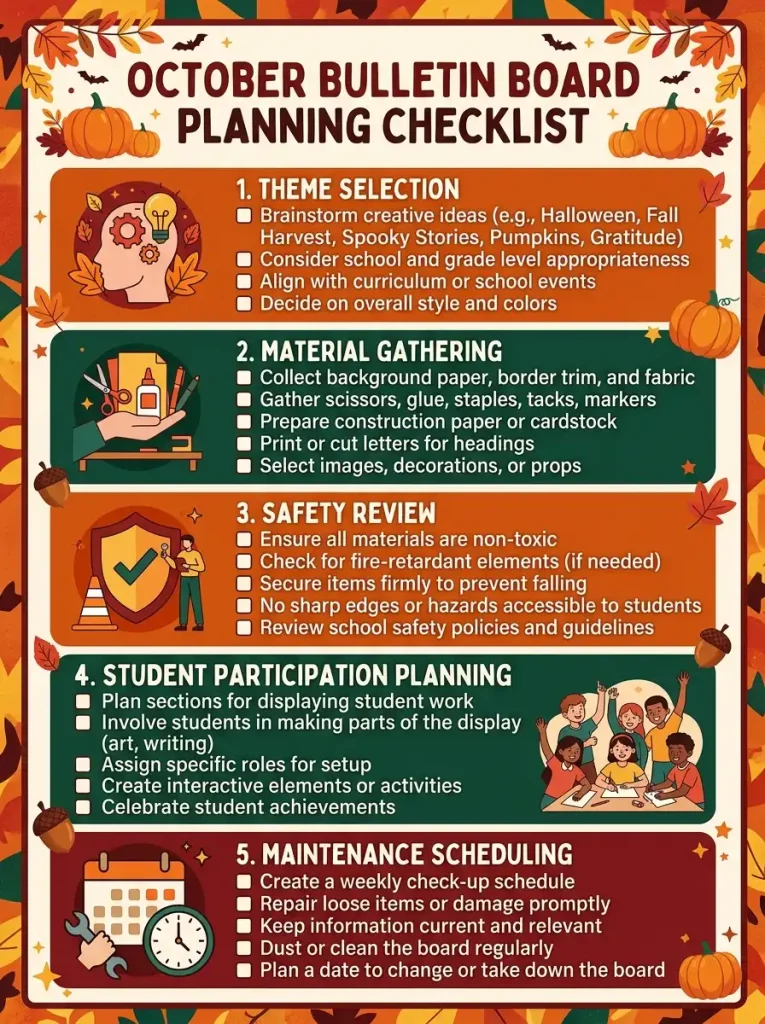
A bulletin board earns its wall space when it does more than look nice. The best educational bulletin boards invite ongoing participation rather than sitting as a finished, untouched display.
Start by building in a contribution point. Whether that’s a sticky note station, a leaf students add weekly, or a rotating spotlight feature, ongoing interaction keeps a board relevant throughout the month.
Next, connect the display directly to your curriculum. A STEM board documenting a real experiment teaches far more than decoration alone ever could. Likewise, a vocabulary-based Halloween board reinforces literacy skills within a seasonal theme.
Finally, involve students in the maintenance process itself. Assigning simple jobs, like adding a new pumpkin or updating a countdown number, builds ownership and reduces your own workload simultaneously.
Budget-Friendly DIY Decoration Ideas
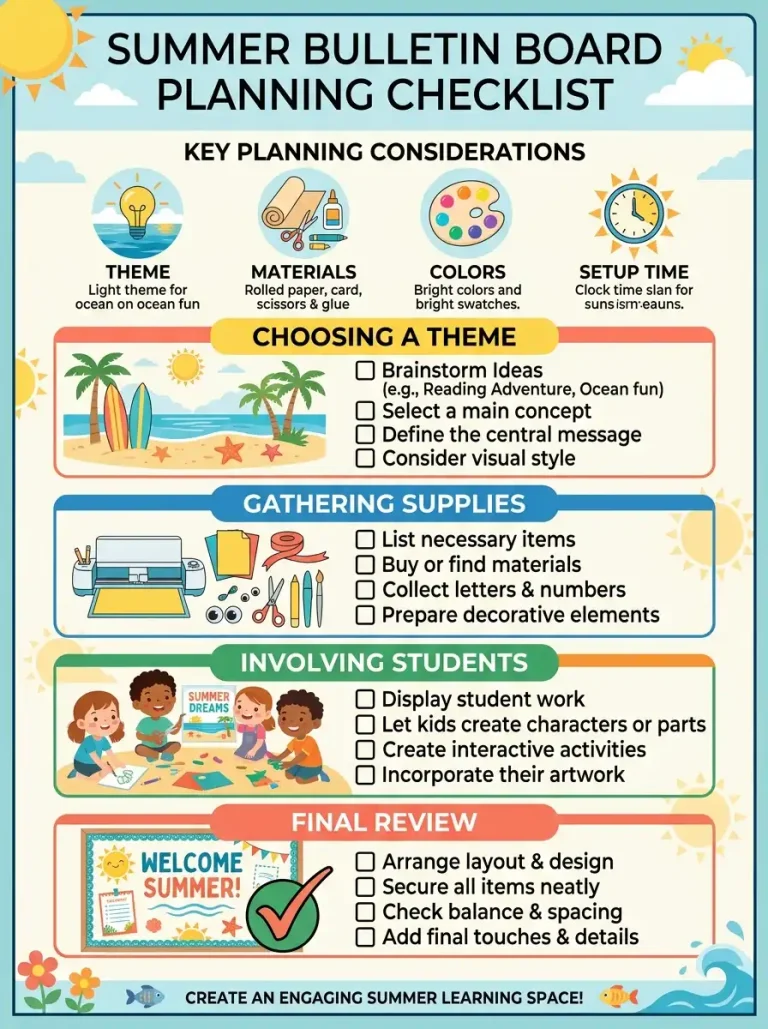
Creative classroom wall decorations rarely require a big budget. Many of the most memorable October displays use materials already sitting in a supply closet.
Recycled paper from old worksheets or newspaper works beautifully for leaf shapes or textured backgrounds. Brown paper grocery bags make excellent tree trunks, baskets, or rustic borders at no extra cost.
Fabric scraps add cozy texture to reading corner displays without requiring new purchases. Bottle caps, cardboard tubes, and egg cartons can transform into small 3D accents like pumpkin stems or acorn shapes.
Student artwork remains one of the most powerful, completely free decoration sources available. Free printable templates found through educational resource platforms also save significant preparation time.
Classroom Safety Considerations When Decorating
Safety deserves real attention during any decorating project, especially with younger students in the room.
Avoid open flames or hot glue guns around young children whenever possible, opting for safer adhesives like glue sticks or tape. Battery-operated string lights are a much safer choice than plug-in versions near paper displays.
Check fire code requirements before covering too much wall or ceiling space with paper decorations, since many schools limit flammable material coverage. Keep pathways and exits clear, ensuring decorations never block doorways, fire extinguishers, or emergency signage.
Use non-toxic materials for any display young students might touch or handle directly. Secure decorations firmly so nothing falls unexpectedly onto a student walking past.
Choosing the Right Colors and Materials
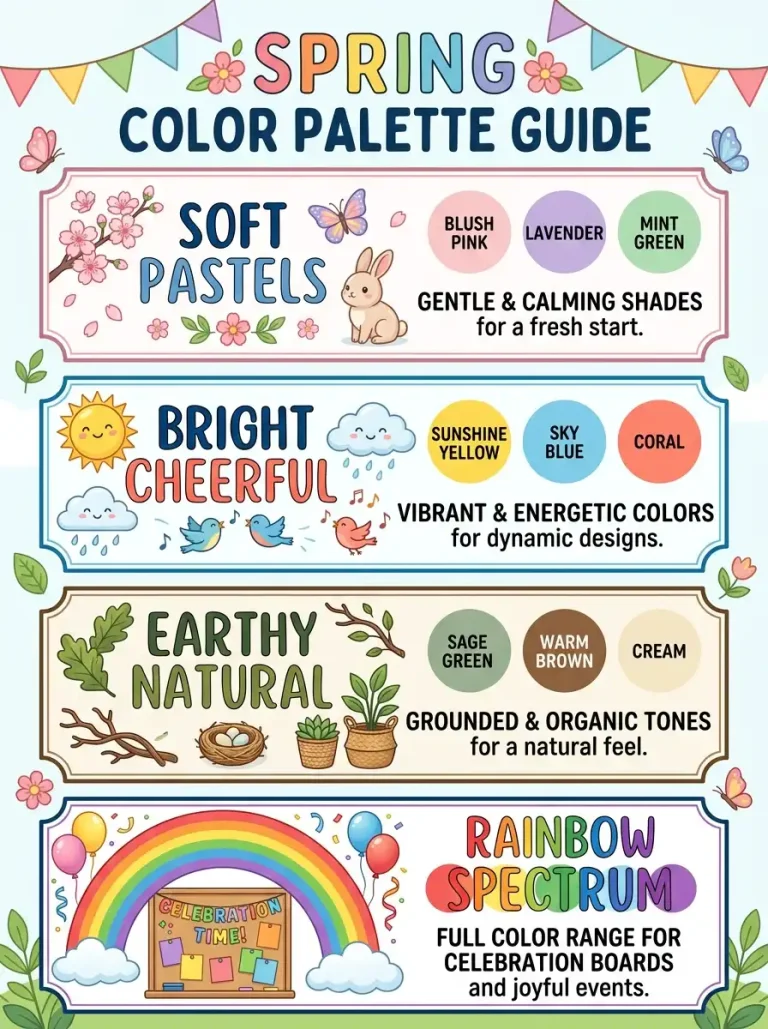
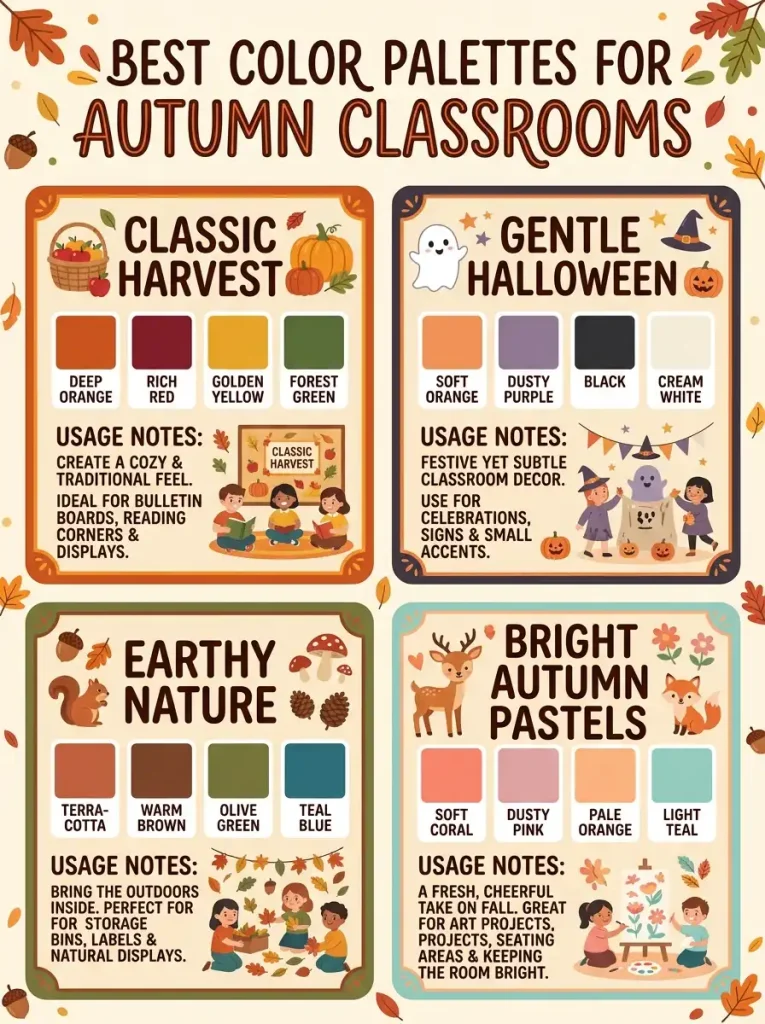
Color choice shapes how a display feels the moment students walk past it. Autumn naturally lends itself to warm, inviting palettes.
Deep orange, burgundy, and golden yellow create a classic harvest feeling perfect for most fall themes. Soft purple, black, and orange work well for school-friendly Halloween displays without feeling overly intense.
Brown and forest green ground earthy, nature-based themes like leaf or tree displays. Balancing warm tones with at least one neutral, like cream or white, keeps a board from feeling visually overwhelming.
Materials matter just as much as color. Sturdy cardstock survives handling better than standard printer paper, especially for interactive elements students touch frequently. Laminating key pieces, like titles or borders, extends their usable life across multiple years.
Frequently Asked Questions
What is the easiest October bulletin board idea for a beginner teacher? The Pumpkin Patch of Pride works wonderfully for beginners since it requires only basic paper-cutting skills and minimal setup time. The concept is simple to explain to students, and the materials list stays short and affordable. Most teachers can complete this display in under an hour, making it a low-stress starting point for anyone new to classroom decorating.
How do I make a Halloween bulletin board appropriate for a school setting? Focus on friendly, cartoonish imagery rather than realistic or frightening visuals, choosing smiling ghosts, cute bats, or gentle pumpkin faces instead. Pairing Halloween imagery with an academic purpose, like a vocabulary word wall, also helps the display feel purposeful rather than purely spooky. Many schools have specific guidelines about Halloween content, so checking with administration beforehand is always a smart step.
What age group works best for interactive bulletin boards? Interactive elements work well across nearly every age group, though the complexity should adjust accordingly. Preschoolers enjoy simple additions like clipping their own leaf onto a tree, while middle schoolers can handle more involved contributions like data charts or written reflections. The key is matching the interaction’s complexity to your students’ developmental stage.
How often should I update my October classroom decorations? Most displays benefit from a refresh every two to three weeks, though boards with built-in ongoing interaction, like a gratitude tree or kindness leaf display, can stay up the entire month since content naturally evolves. Watch for signs that a display feels stale, such as sagging paper or outdated information, and address those promptly.
What are the safest materials to use for young children’s bulletin boards? Non-toxic glue sticks, child-safe scissors, and battery-operated lights are among the safest choices for young learners. Avoid hot glue guns, small detachable pieces that pose choking hazards, and any plug-in electrical decorations near paper materials. Always supervise decorating activities closely when young children are directly involved in the process.
Can these bulletin board ideas work for homeschool classrooms? Absolutely. Many of these ideas scale down easily for a single homeschool student or small sibling group, particularly the Gratitude Garden, Leafy Learning Tree, and Countdown to Cozy Season concepts. Homeschool educators often find that a simplified version of a classroom bulletin board works just as well on a hallway wall or bedroom door.
How can I keep a bulletin board budget under a small amount of money? Prioritize recycled materials like brown paper bags, newspaper, and leftover construction paper scraps from previous projects. Reusable borders, letters, and background paper also stretch a budget significantly across multiple years. Many effective displays on this list cost less than a few dollars in total materials.
What’s the best way to involve an entire class in one bulletin board? Choose a display with an ongoing contribution point, such as the Thankful Tree of Friendship or Falling for Kindness board, where every student adds something personally over time. Assigning rotating classroom jobs related to the board’s maintenance also ensures broad participation rather than relying on just one or two eager students.
How do I make a bulletin board reinforce actual curriculum content? Choose themes that connect directly to a current unit, such as pairing the STEM Pumpkin Investigation with a science lesson on measurement or life cycles. Adding data charts, vocabulary terms, or research-based labels transforms a purely decorative board into a genuine educational tool.
What should I do if my classroom has limited wall space for bulletin boards? Prioritize one or two high-impact displays rather than attempting all sixteen ideas at once, focusing on boards that serve double duty as both decoration and curriculum support. A single well-executed Leafy Learning Tree or Gratitude Garden often provides more value than several crowded, competing displays squeezed into a small space.
Conclusion
October offers a genuine opportunity to bring warmth, learning, and community into your classroom walls. From a cheerful pumpkin patch to a thoughtful gratitude tree, these sixteen ideas give every teacher, daycare provider, and homeschool educator a flexible starting point.
Choose the concepts that fit your space, your budget, and your students best. Personalize each display with student voices, keep safety in mind, and watch your classroom come alive with the best parts of autumn.