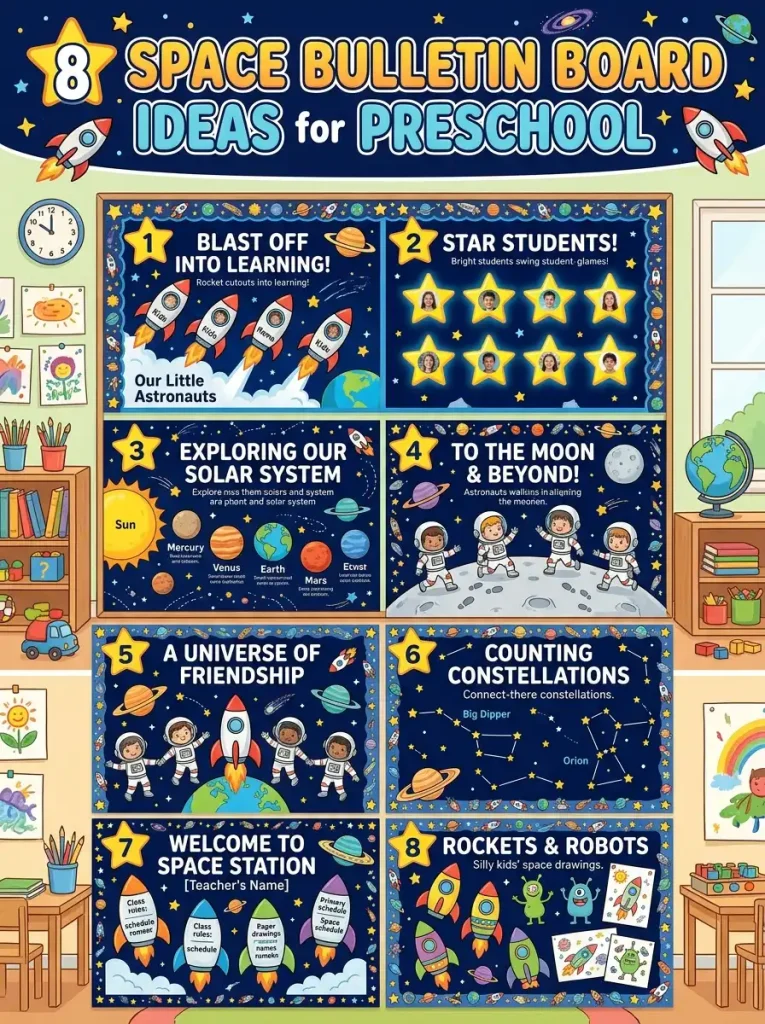
8 Space Bulletin Board Ideas for Preschool
Few themes spark a preschooler’s imagination quite like outer space. Rockets, planets, and twinkling stars turn an ordinary classroom wall into a launchpad for curiosity. A well-designed space bulletin board does more than decorate a room. It invites little learners to count planets, spot shapes, and dream about what lies beyond our sky.
Space-themed classroom decorations also give preschool teachers a natural way to introduce science vocabulary early. Words like “orbit,” “astronaut,” and “galaxy” become familiar simply through daily exposure. Best of all, these displays stay flexible enough to fit science units, literacy centers, or simple seasonal refreshes.
Below, you’ll find eight creative space bulletin board ideas for preschool classrooms, daycare centers, and early learning programs. Each idea includes materials, setup steps, and ways children can interact directly with the display.
1. Blast Off to Learning
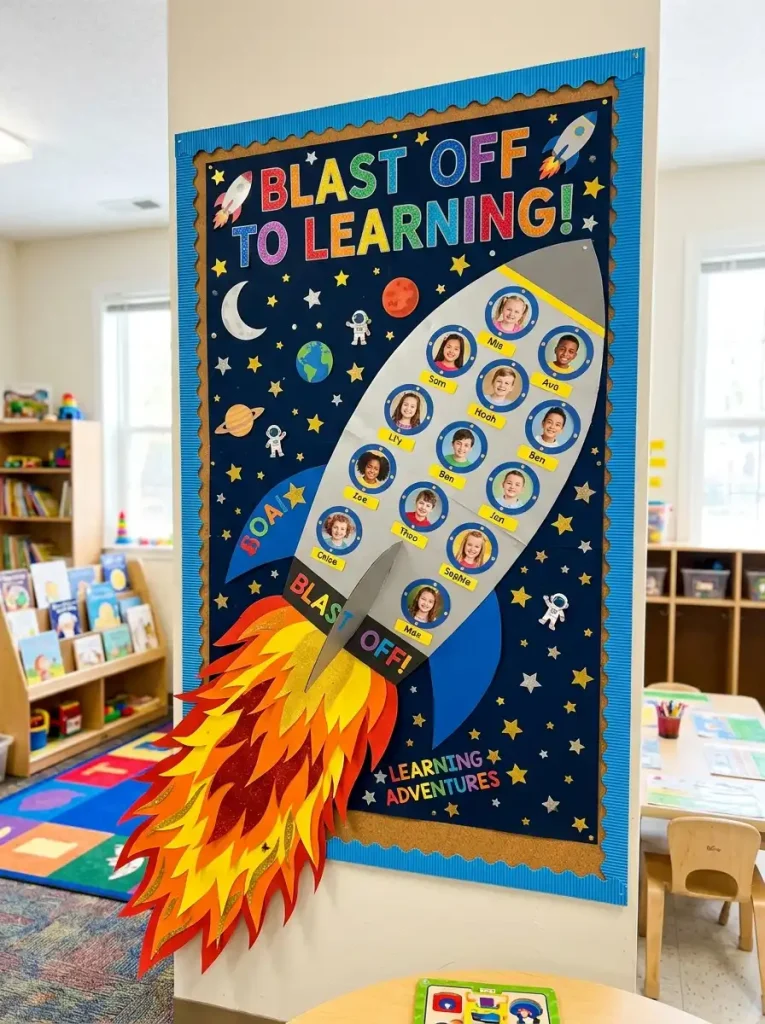
This board sets the tone for an entire space unit with a large rocket ship soaring across a starry background. Each child gets a small window on the rocket featuring their name or photo.
Materials needed: Silver or gray paper for the rocket, colorful paper for flames, star stickers, and printed student photos.
How to create it: Cut a large rocket shape from gray paper and attach it diagonally across the board. Add small window circles for each child, then glue on flame shapes trailing behind the rocket. Scatter star stickers across the background for extra sparkle.
How children can interact: Invite children to point out their own window and describe what they’d pack for a pretend space trip.
Learning benefits: This idea builds early literacy through name recognition and encourages imaginative storytelling and oral language skills.
2. Our Solar System Adventure
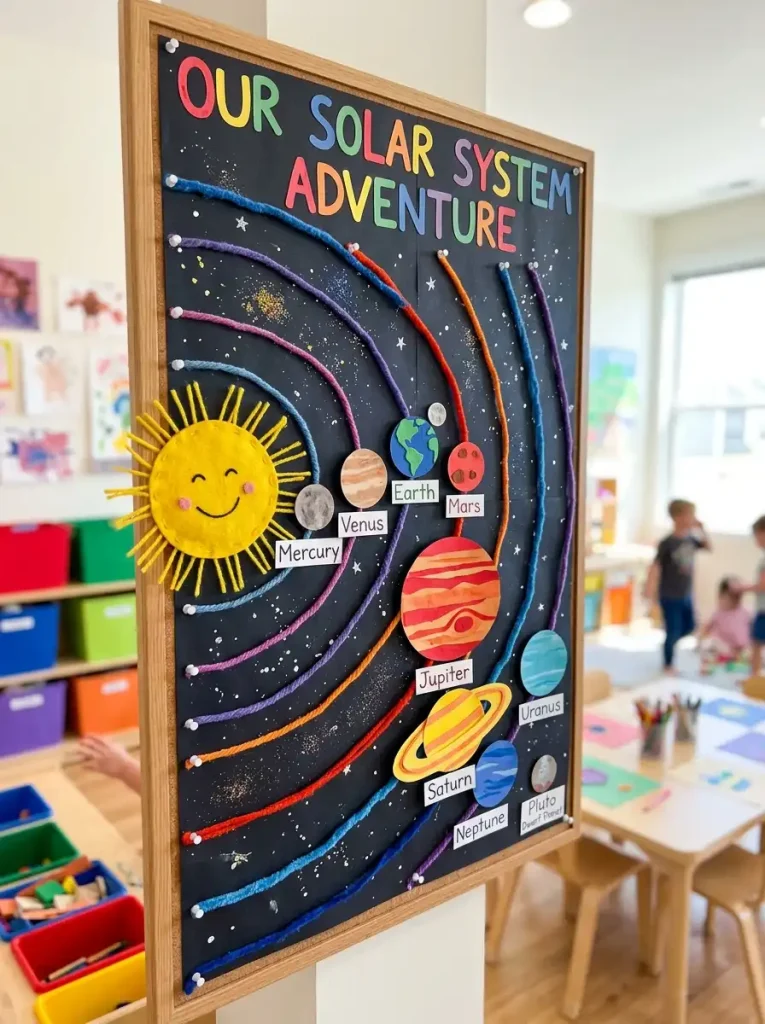
This classic solar system bulletin board introduces preschoolers to the planets through bright, simple shapes arranged in order from the sun.
Materials needed: Yellow paper for the sun, colorful paper circles for each planet, black background paper, and thin string or yarn.
How to create it: Attach a black background first, then place a large yellow sun cutout on one side. Arrange planet circles in size order, connecting each with a curved yarn line to represent orbit paths.
How children can interact: Let children touch and count the planets during circle time, practicing numbers one through eight or nine.
Learning benefits: This board reinforces counting skills, size comparison, and basic science vocabulary about our solar system.
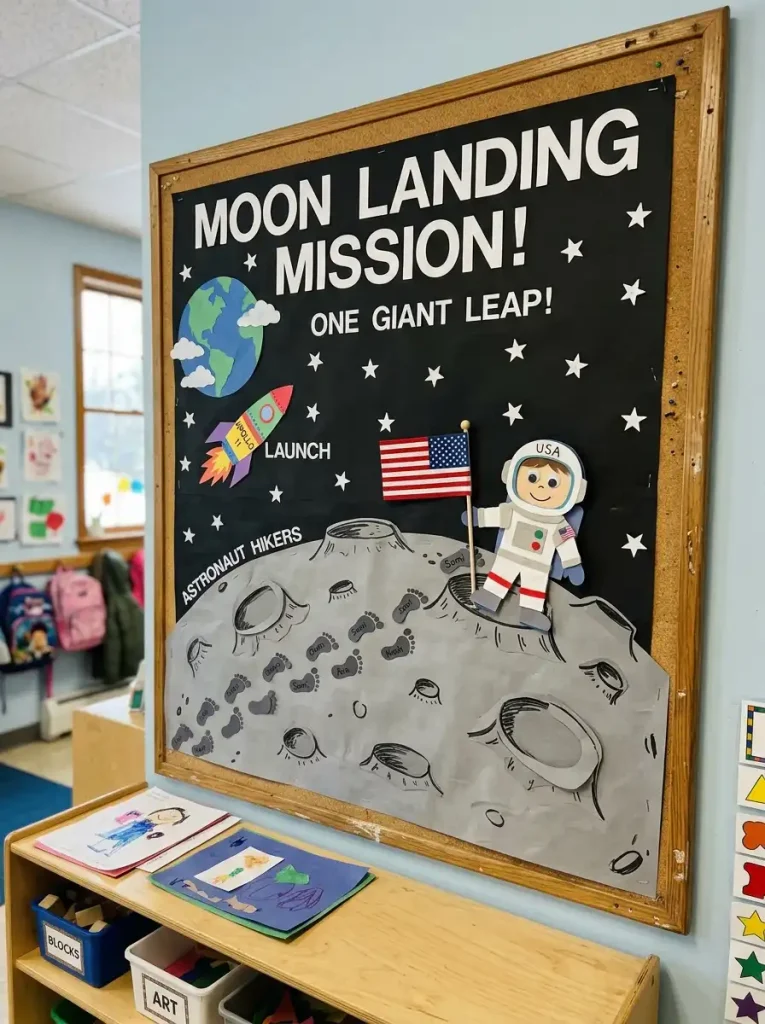
3. Moon Landing Mission
This exciting display recreates the moon landing with a gray, cratered moon surface and a small astronaut figure planting a flag.
Materials needed: Gray paper for the moon, black background paper, a small astronaut cutout, and a tiny flag shape.
How to create it: Cover most of the board with black paper, then add a large gray moon circle with bumpy craters drawn or cut into the surface. Place the astronaut figure standing proudly with the flag beside them.
How children can interact: Encourage children to add their own paper footprints leading up to the astronaut, symbolizing their own “giant leap” in learning.
Learning benefits: This idea supports fine motor skills through cutting and gluing while introducing simple historical and scientific concepts about space exploration.
A Simple Twist for Younger Toddlers
For younger toddler groups, skip the historical framing and focus purely on texture. Bumpy gray paper and a soft cotton-ball moon surface give little hands something fun to touch.
4. Twinkling Star Counting Board
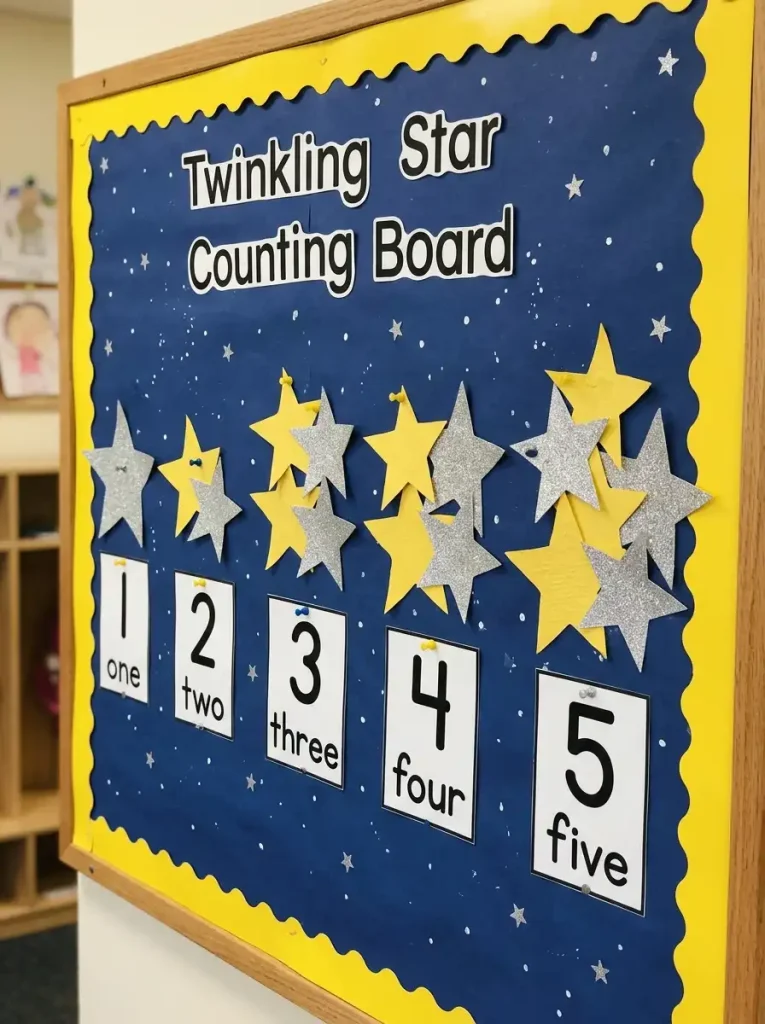
This math-focused idea uses star shapes to reinforce counting and number recognition in a playful, glittery way.
Materials needed: Yellow and silver paper stars in various sizes, numbered labels, and glitter glue.
How to create it: Arrange stars across a dark blue or black background in small clusters. Attach a number label beneath each cluster matching the star count.
How children can interact: Children can count each cluster aloud and match it to the correct numbered label, building confidence with numbers one through ten.
Learning benefits: This board strengthens early math skills, including counting, number matching, and one-to-one correspondence.
5. Alien Alphabet Friends
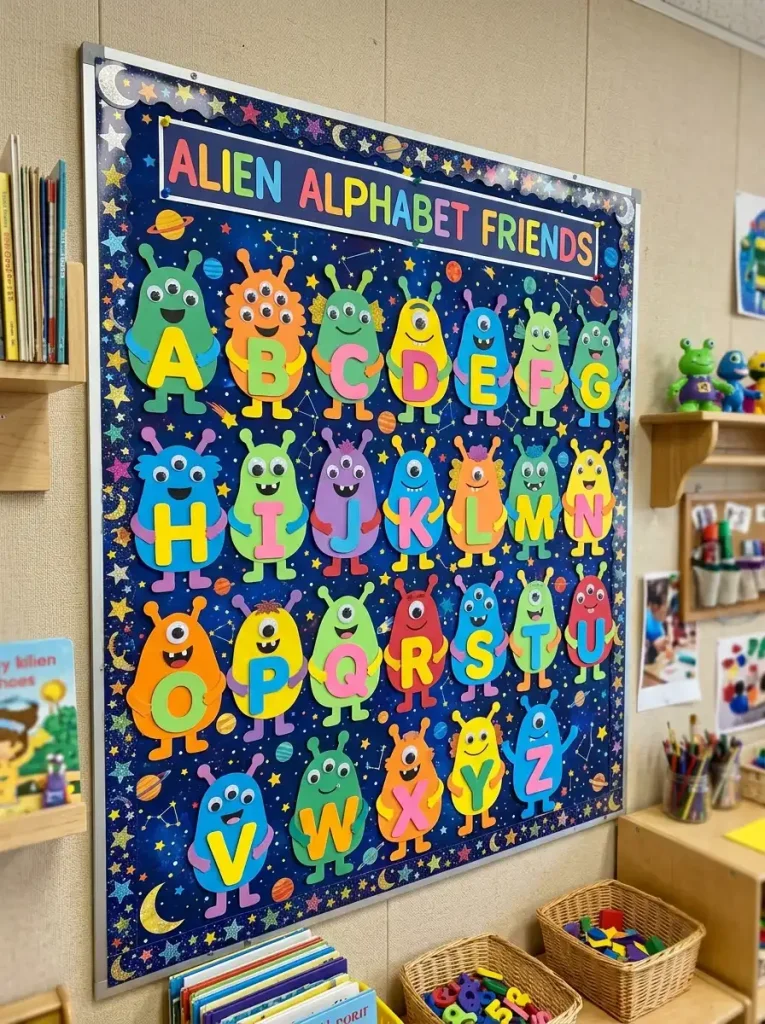
This literacy-focused board pairs a friendly, colorful alien with each letter of the alphabet, making letter recognition feel like a fun outer space adventure.
Materials needed: Colorful paper for alien shapes, letter templates, googly eyes, and a starry background.
How to create it: Create twenty-six small alien characters, each holding or wearing one letter of the alphabet. Arrange them in alphabetical rows across the board.
How children can interact: Invite children to find a specific letter alien during a quick daily scavenger hunt around the board.
Learning benefits: This idea reinforces letter recognition, phonics awareness, and visual scanning skills in an engaging, low-pressure format.
6. Astronaut Job Chart
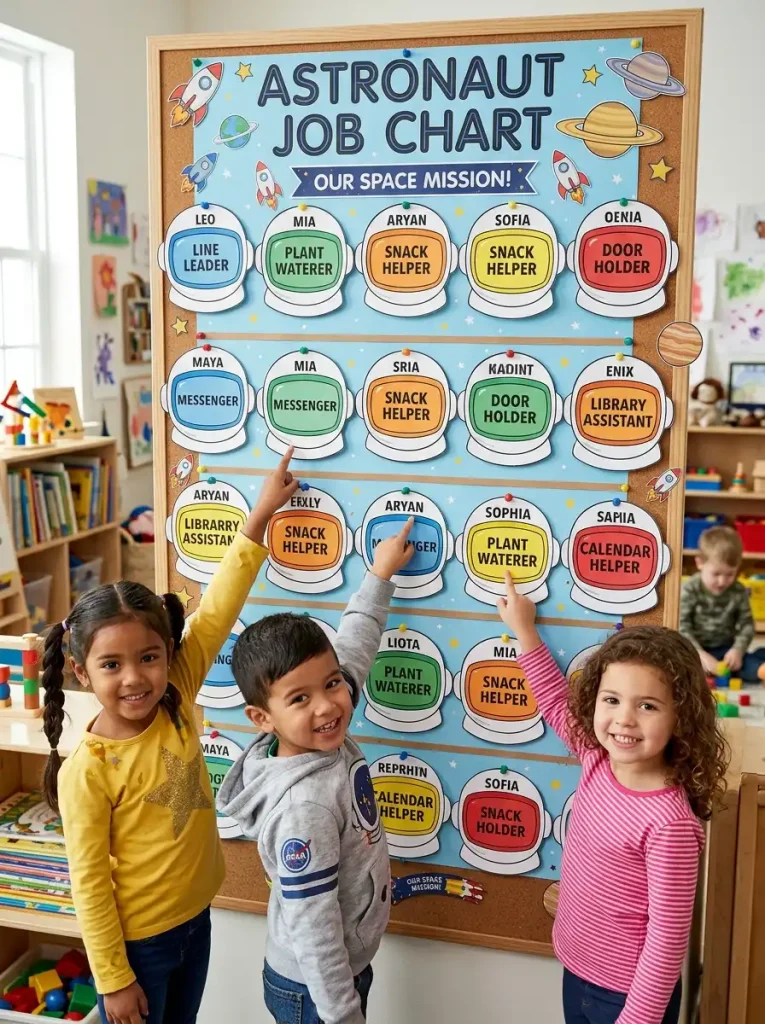
This practical board doubles as a classroom management tool, using astronaut helmets to represent daily classroom jobs and responsibilities.
Materials needed: White paper for helmets, colorful paper for visors, laminate sheets, and job title labels.
How to create it: Cut simple astronaut helmet shapes and label each one with a classroom job, such as line leader or snack helper. Laminate the pieces for durability since they’ll be handled daily.
How children can interact: Rotate a small photo or name tag onto each helmet weekly so every child gets a turn at a classroom responsibility.
Learning benefits: This board builds responsibility, self-confidence, and early vocabulary around jobs and teamwork.
See also: 14 Christmas Bulletin Board Ideas Preschool Teachers Love
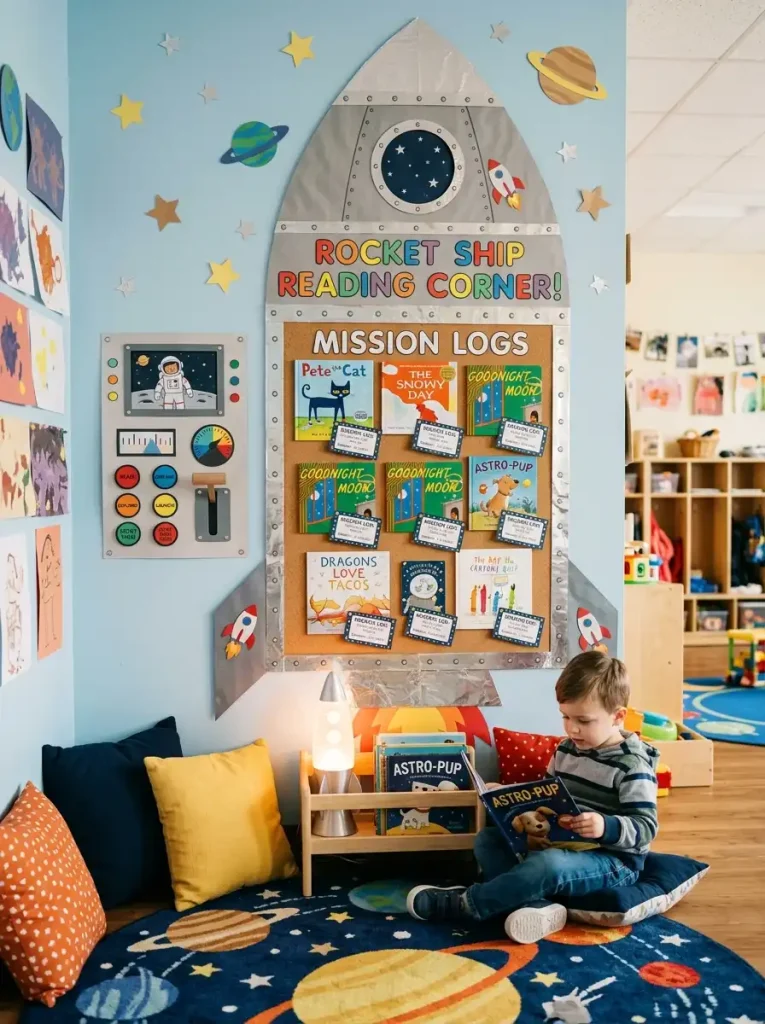
7. Rocket Ship Reading Corner
This cozy display transforms a reading nook into a rocket ship, complete with a control panel and book recommendations styled as mission logs.
Materials needed: Gray and silver paper for the rocket frame, colorful buttons or circles for the control panel, and book cover printouts.
How to create it: Outline a large rocket shape around your reading corner using paper borders. Add a simple control panel with paper buttons nearby, then attach book covers labeled as “mission logs.”
How children can interact: Let children “pilot” the reading rocket by choosing a book and adding a small paper star to track completed stories.
Learning benefits: This idea builds reading motivation, early literacy engagement, and imaginative play connected to books.
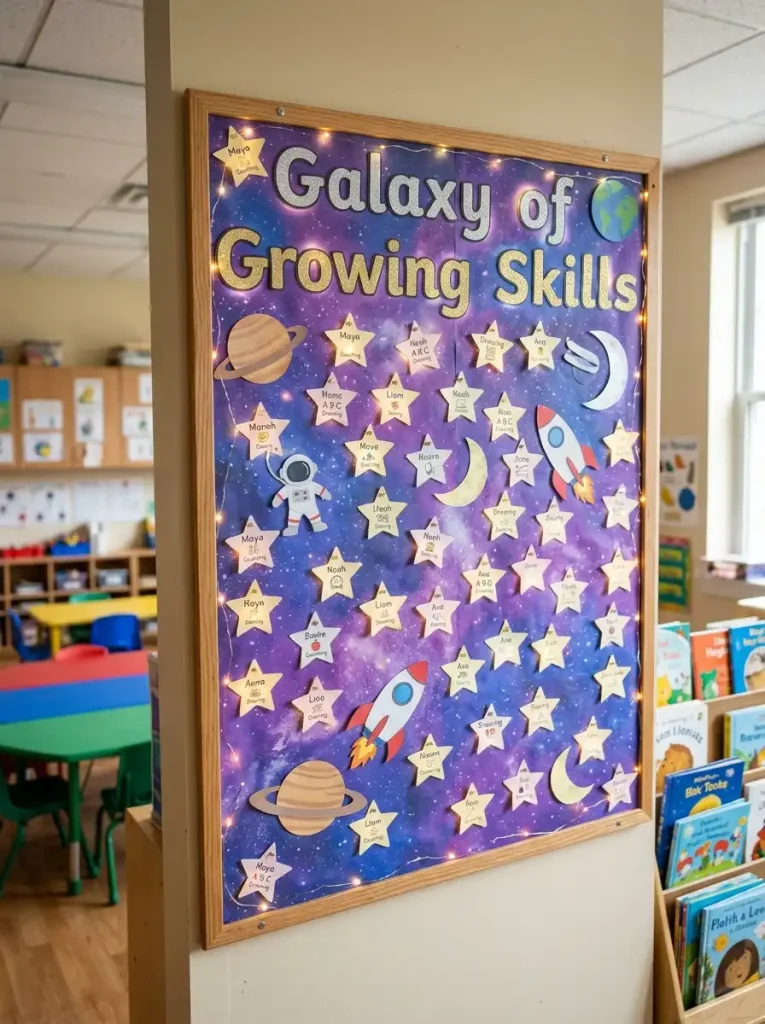
8. Galaxy of Growing Skills
This encouraging board tracks individual student progress using a swirling galaxy background, with each child’s growth represented by a small glowing star moving across the sky.
Materials needed: Purple and blue paper for the galaxy background, star cutouts, and name labels.
How to create it: Layer purple, blue, and black paper to create a swirling galaxy effect. Add a small star for each child near the starting edge of the board.
How children can interact: Move each child’s star gradually across the galaxy as they master new skills, like counting to ten or writing their name.
Learning benefits: This board supports growth mindset development, self-confidence, and a visual understanding of personal progress over time.
Space Bulletin Board Tips for Preschool Teachers
A few simple strategies help any space-themed classroom display work harder for your students.
Keep shapes large and simple. Preschoolers respond best to bold, recognizable images rather than intricate details.
Choose a consistent color palette. Deep blues, purples, and blacks paired with bright yellow and silver accents create an instantly recognizable space feel.
Build in interaction whenever possible. Boards that invite touching, counting, or moving pieces hold attention far longer than static decorations.
Rotate elements regularly. Swapping a few pieces every few weeks keeps outer space activities for preschool feeling fresh throughout the unit.
Involve students in the process. Letting children help create pieces builds pride and reinforces fine motor skills through cutting, gluing, and decorating.
Prioritize safety. Secure small pieces like googly eyes or glitter firmly, and avoid anything that could become a choking hazard for younger children.
See also: 10 Summer Bulletin Board Ideas Preschool Teachers Adore
Ready to Launch Your Classroom Into Space
A space-themed classroom brings genuine wonder into everyday learning. Whether you choose a glittering star counting board or a full solar system adventure, each idea on this list blends creativity with real educational value.
Pick the concept that excites you most, gather a few simple materials, and let your preschool space theme spark curiosity all season long. Your classroom walls might just inspire the next generation of little astronauts.