10 Science Bulletin Board Ideas That Turn Classroom Walls Into Learning Tools
Walk into any strong science classroom, and you’ll notice something before you even hear a lesson begin. The walls do real work. A thoughtfully designed science bulletin board doesn’t just fill empty space. It reinforces vocabulary, sparks curiosity, and gives students a reason to look up from their desks.
This guide walks through 10 science bulletin board ideas built for real classrooms, from elementary science corners to high school STEM labs. Each idea includes materials, setup steps, and honest advice about what actually works once students start interacting with the display daily.
Whether you’re teaching your first year or refreshing a display you’ve used for a decade, these ideas offer something practical. Let’s explore how the right classroom display can turn a plain wall into one of your most effective teaching tools.
10 Science Bulletin Board Ideas
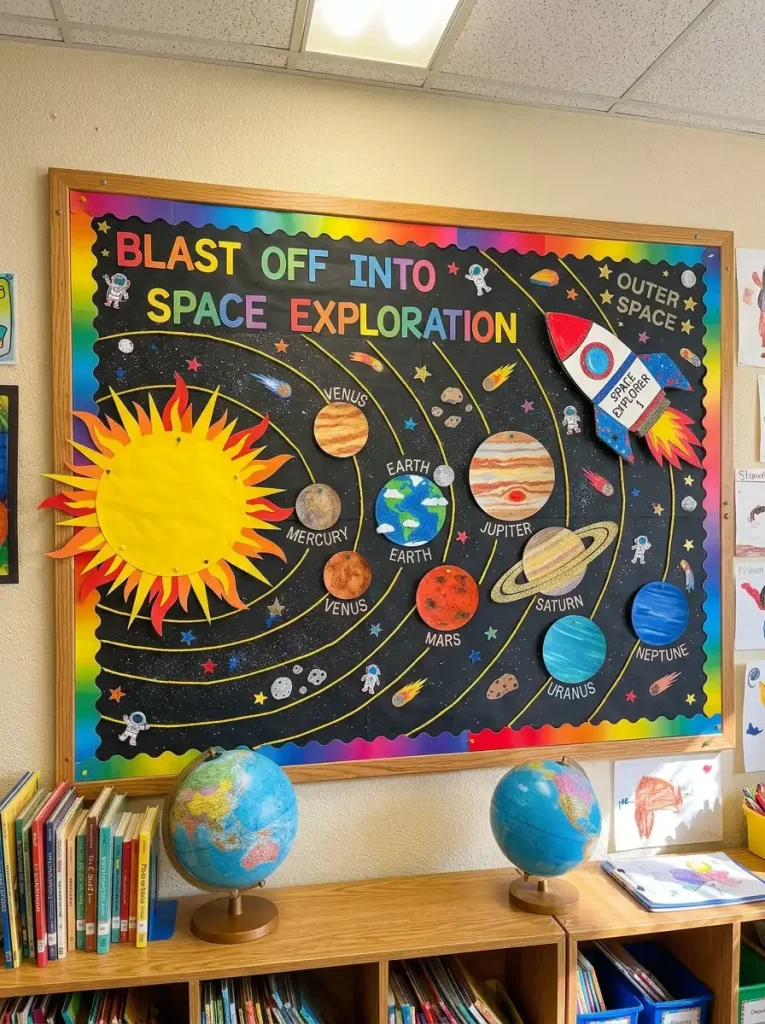
1. Blast Off Into Space Exploration
Theme: A colorful space exploration display featuring planets, rockets, and mission-style vocabulary.
Best grade levels: Elementary through middle school.
Learning objective: Students identify planets, understand basic orbital relationships, and build vocabulary around space exploration.
Materials needed: Black background paper, colored paper for planets, string for orbit paths, and printed astronaut or rocket cutouts.
Step-by-step setup:
- Cover the board with black background paper to mimic outer space.
- Attach a yellow sun cutout to one side.
- Arrange planet circles in size order, connecting each with curved string orbit lines.
- Add a rocket ship cutout traveling across the scene.
Decoration tips: Scatter small star stickers throughout the background for extra depth and sparkle.
Interactive features: Add a movable rocket that travels farther across the board as the class reaches reading or behavior milestones.
Ways students can participate: Invite students to research and write a fun fact card for their assigned planet.
Seasonal variations: Tie the display to a specific NASA mission anniversary or a relevant space event happening during the school year.
Budget-friendly alternatives: Use recycled black paper from packaging materials instead of purchasing a fresh background sheet.
Common mistakes to avoid: Cramming too many facts onto one board, which overwhelms younger students trying to process the information.
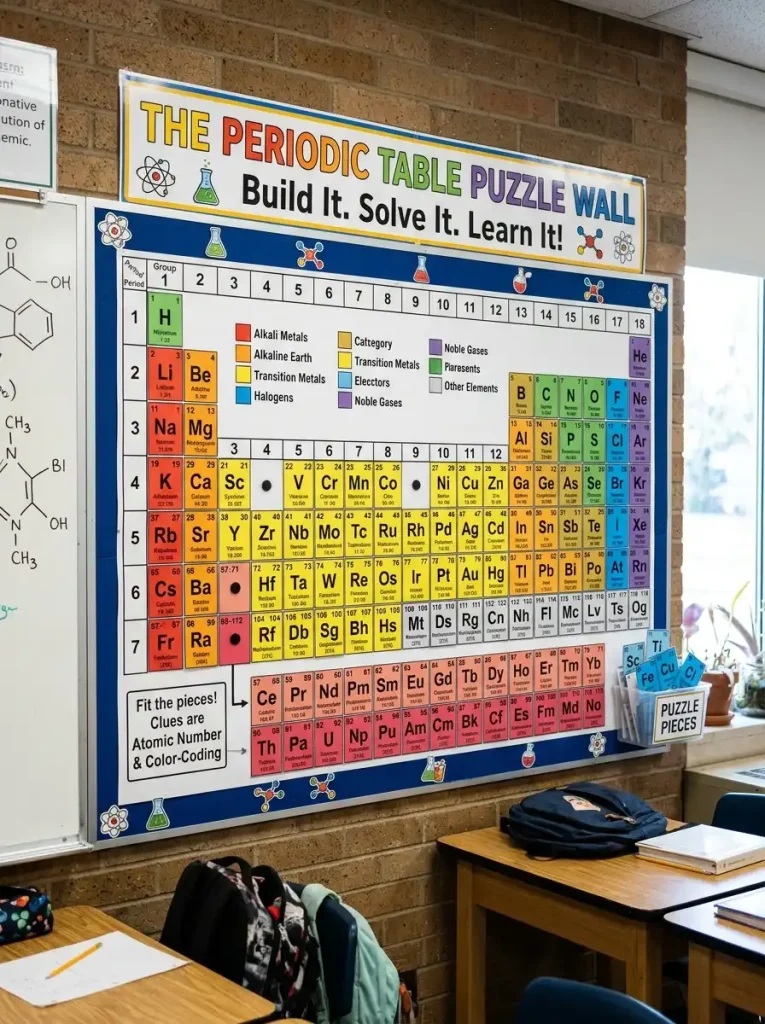
2. Periodic Table Puzzle Wall
Theme: An interactive periodic table display where students match element cards to their correct position.
Best grade levels: Middle school through high school.
Learning objective: Students recognize element symbols, atomic numbers, and basic periodic table organization.
Materials needed: A large printed periodic table outline, laminated element cards, velcro dots, and a bold title banner.
Step-by-step setup:
- Print or draw a large periodic table grid directly onto the board.
- Laminate individual element cards showing symbol, name, and atomic number.
- Attach velcro dots to both the grid and each card.
- Leave the grid partially empty so students can place cards themselves.
Decoration tips: Color-code element categories, like metals, nonmatals, and noble gases, using a consistent border color.
Interactive features: Rotate a “element of the week” spotlight, encouraging students to research and present a short fact.
Ways students can participate: Assign small groups to specific element families, letting them personalize their section with drawings or real-world examples.
Seasonal variations: Highlight elements connected to current events, like lithium during battery technology discussions.
Budget-friendly alternatives: Use paper clips instead of velcro dots for a lower-cost, though less durable, attachment method.
Common mistakes to avoid: Leaving the entire table permanently filled in, which removes the interactive puzzle element that makes this idea effective.
3. Women in Science Spotlight
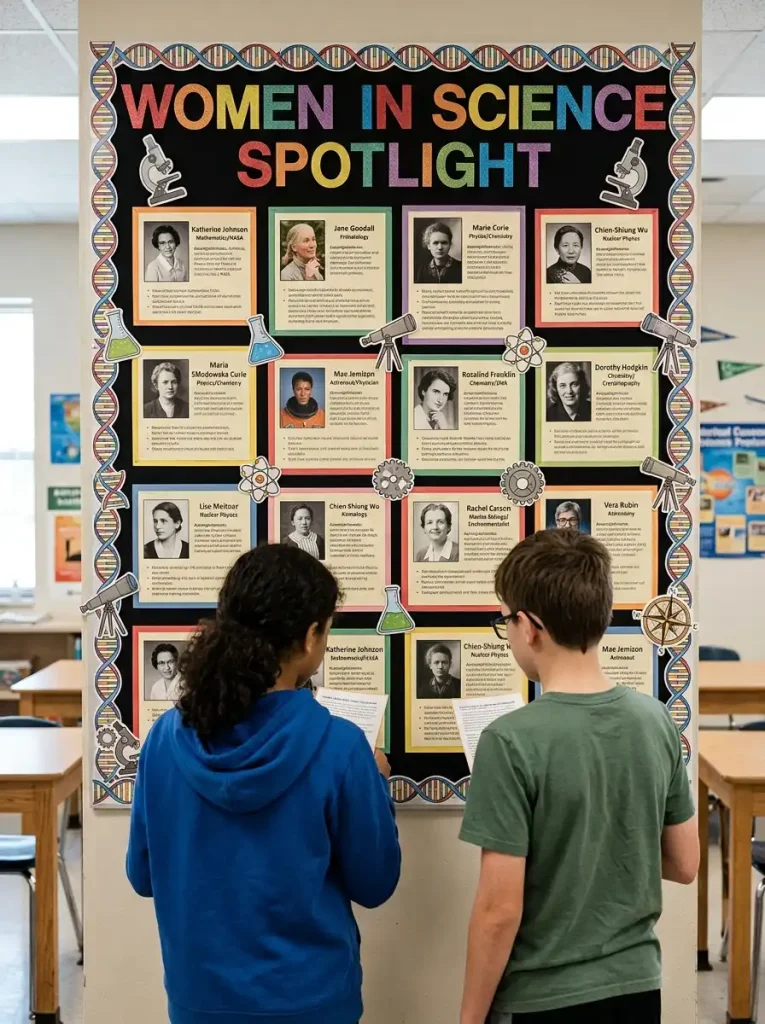
Theme: A rotating display honoring historical and contemporary female scientists across different fields.
Best grade levels: Upper elementary through high school.
Learning objective: Students learn about diverse contributions to science while building research and presentation skills.
Materials needed: Printed portraits or student-drawn illustrations, biography summary cards, and a bold header banner.
Step-by-step setup:
- Choose four to six scientists to feature initially.
- Print or draw a portrait for each scientist.
- Attach a short biography card beneath each portrait.
- Arrange scientists by field or chronologically across the board.
Decoration tips: Add a small icon representing each scientist’s field, like a beaker for chemistry or a telescope for astronomy.
Interactive features: Include a QR code linking to a short video interview or documentary clip for students with device access.
Ways students can participate: Assign students to research and nominate a new scientist for the rotating spotlight each month.
Seasonal variations: Align features with Women’s History Month or specific scientific anniversaries throughout the year.
Budget-friendly alternatives: Ask students to hand-illustrate portraits instead of printing professional photographs.
Common mistakes to avoid: Featuring only the same handful of famous names repeatedly instead of introducing lesser-known but equally impactful scientists.
4. STEM Challenge Corner
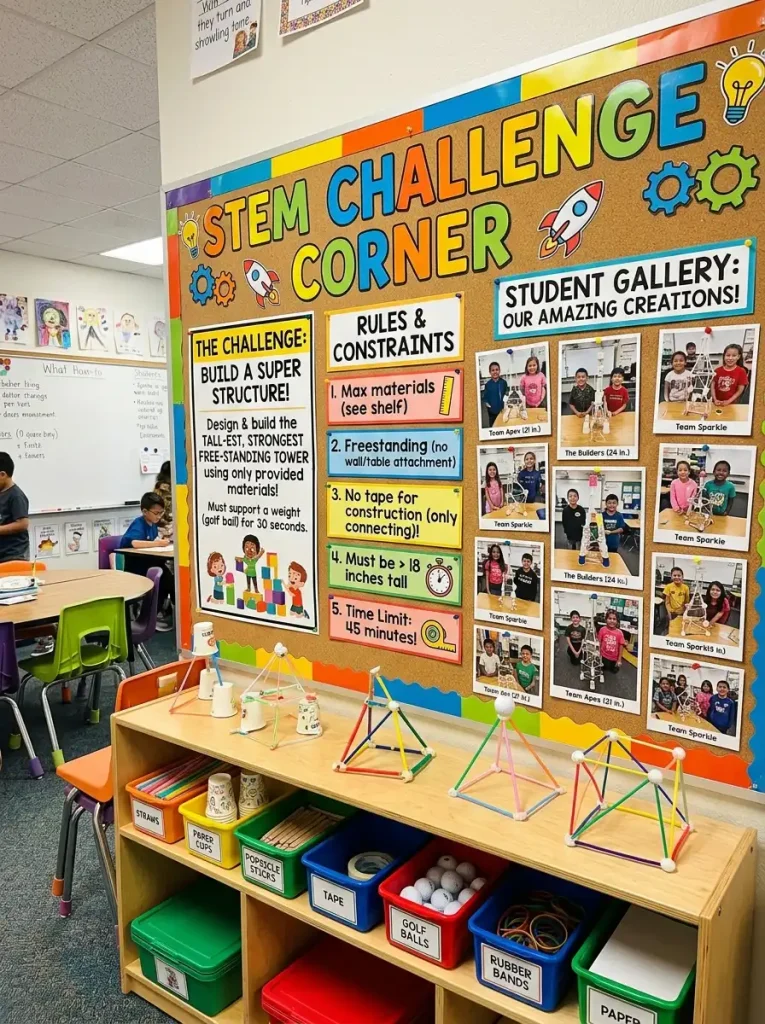
Theme: A rotating hands-on challenge station paired with a bulletin board displaying rules, materials, and student solutions.
Best grade levels: Elementary through middle school.
Learning objective: Students apply the engineering design process to solve open-ended problems using limited materials.
Materials needed: A challenge instruction card, photos of past student builds, and a small materials shelf beneath the board.
Step-by-step setup:
- Post a clear challenge prompt, such as building the tallest tower using ten straws.
- Attach a simple rules and constraints list beside the prompt.
- Display photos of completed student attempts as they finish.
- Rotate the challenge every two to three weeks.
Decoration tips: Use bright, bold lettering for the challenge title so it reads clearly from across the room.
Interactive features: Add a voting system where classmates choose their favorite solution using sticky dots.
Ways students can participate: Let students photograph and caption their own builds for the display.
Seasonal variations: Tie challenges to real-world events, like building flood barriers after a weather unit or bridges during an engineering unit.
Budget-friendly alternatives: Use recycled materials like cardboard and tape instead of purchasing specialty STEM kits.
Common mistakes to avoid: Choosing challenges too difficult for the materials provided, which leads to frustration rather than productive problem-solving.
5. Scientist of the Month Wall
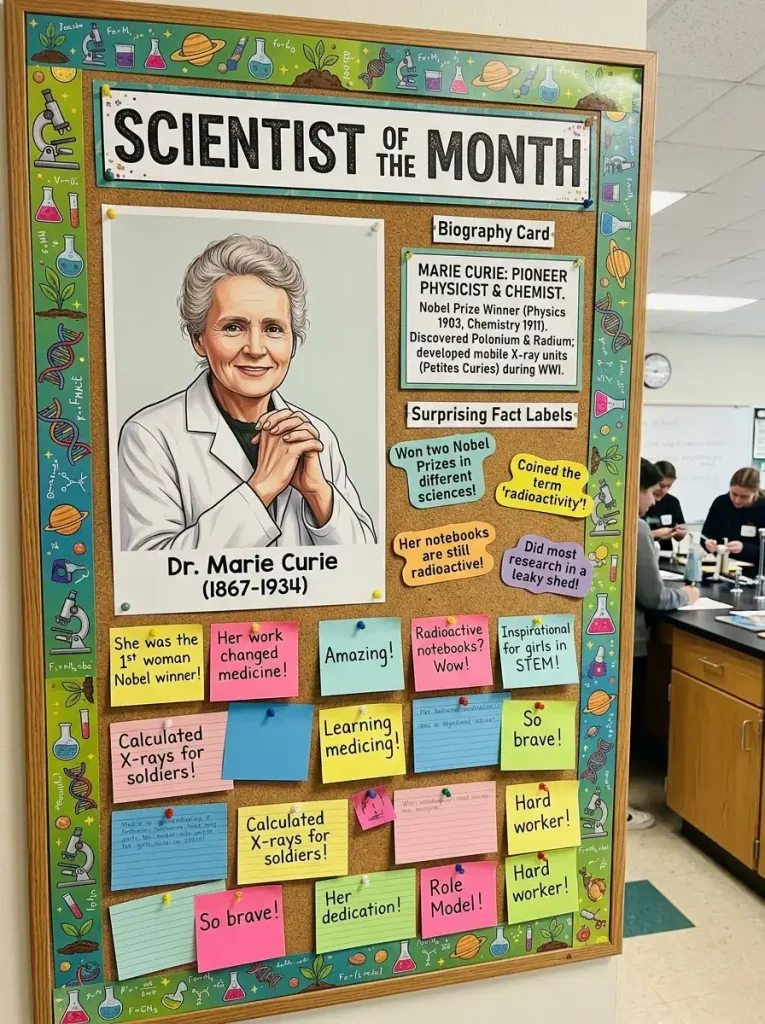
Theme: A recurring feature celebrating one scientist, past or present, connected to current classroom content.
Best grade levels: All grade levels, with adjusted complexity.
Learning objective: Students connect scientific concepts to real people and understand science as an ongoing human endeavor.
Materials needed: A printed or drawn portrait, biography summary, and a “did you know” fact card.
Step-by-step setup:
- Choose a scientist connected to your current unit of study.
- Create a simple portrait and brief biography summary.
- Add three or four surprising facts about their work or life.
- Update the feature monthly to match new content.
Decoration tips: Frame the portrait with a border matching the scientist’s specific field of study.
Interactive features: Include a small discussion question inviting students to write a response on a sticky note nearby.
Ways students can participate: Let students nominate and research the next month’s featured scientist themselves.
Seasonal variations: Highlight scientists whose birthdays or major discoveries align with the current month.
Budget-friendly alternatives: Use free public domain images instead of purchasing licensed photographs.
Common mistakes to avoid: Forgetting to update the feature regularly, which quickly makes the “monthly” concept feel stale.
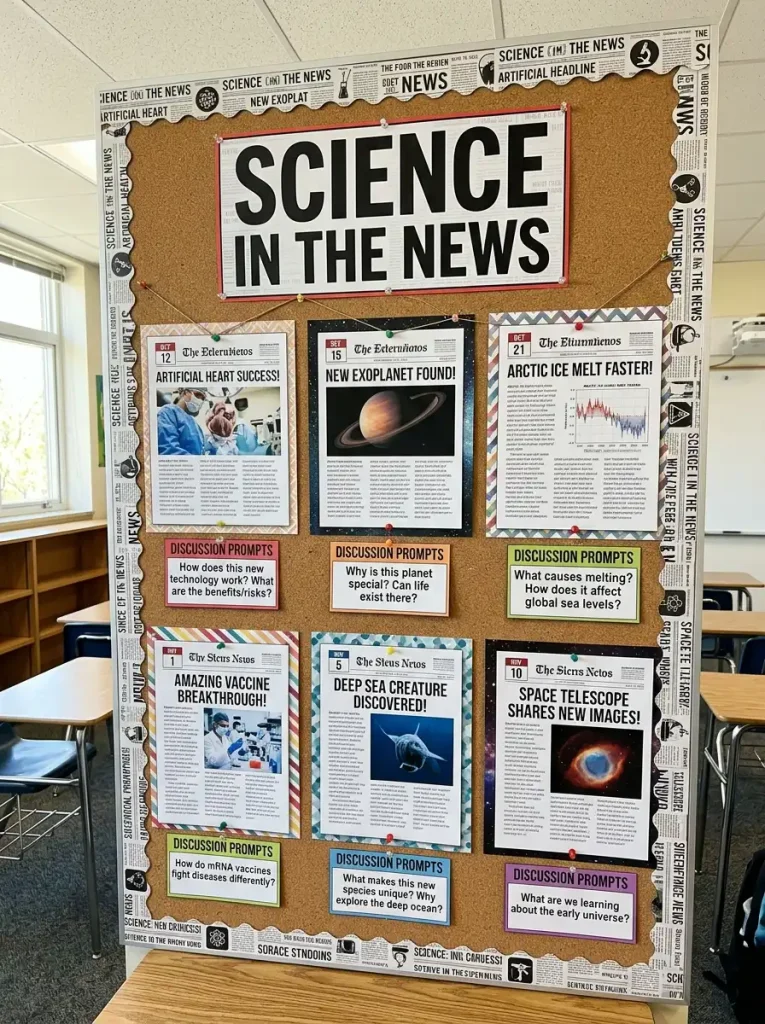
6. Science in the News Board
Theme: A rotating current-events display connecting classroom science to real-world headlines.
Best grade levels: Middle school through high school.
Learning objective: Students practice reading comprehension while connecting classroom content to real, current scientific developments.
Materials needed: Printed news article summaries, a bold “Science in the News” header, and colorful border trim.
Step-by-step setup:
- Select two or three current science news stories weekly.
- Print a brief, teacher-written summary of each story.
- Attach summaries with a labeled date for easy tracking.
- Rotate stories out weekly to keep content current.
Decoration tips: Use a newspaper-style border or font for the header to reinforce the “breaking news” feel.
Interactive features: Add a discussion prompt beneath each story, inviting written or verbal responses during class.
Ways students can participate: Assign a rotating “news reporter” role, letting students find and summarize their own story weekly.
Seasonal variations: Focus on climate-related stories in spring or space-related headlines during relevant mission launches.
Budget-friendly alternatives: Print summaries from free public news sources instead of subscribing to specialized content services.
Common mistakes to avoid: Choosing stories too complex for your grade level’s reading ability, which limits genuine engagement.
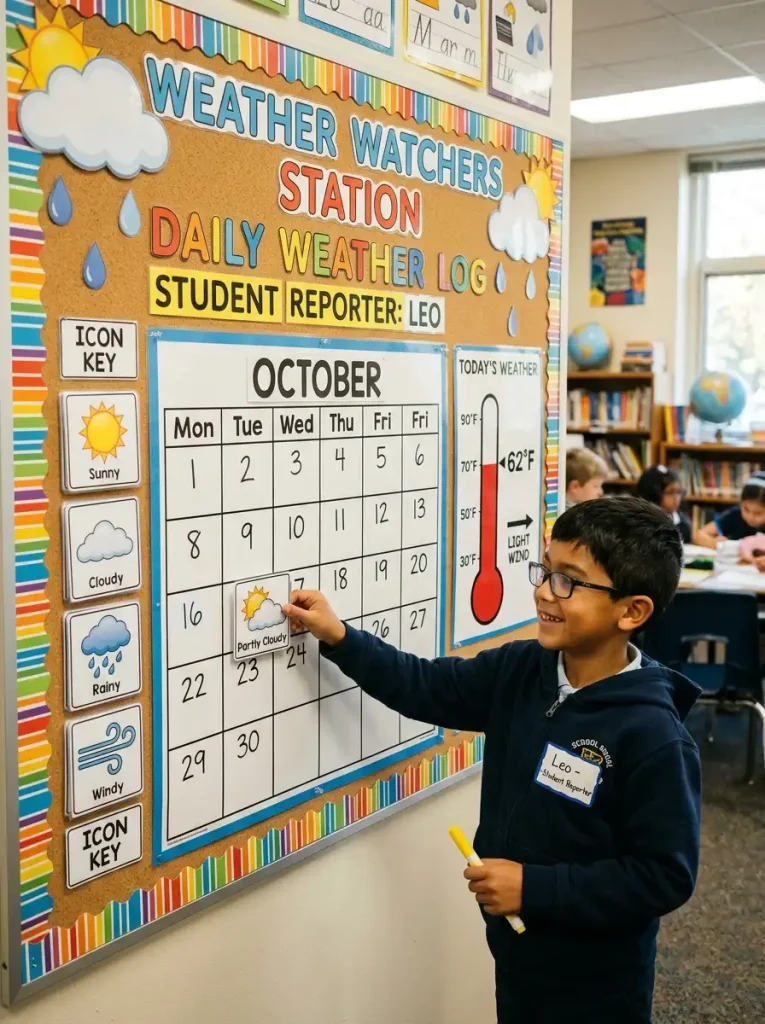
7. Weather Watchers Station
Theme: A daily interactive weather-tracking board connecting real-time observation to science vocabulary.
Best grade levels: Elementary through middle school.
Learning objective: Students practice observation skills, data recording, and pattern recognition using real daily weather.
Materials needed: A laminated calendar grid, weather icon cutouts, and a small thermometer graphic.
Step-by-step setup:
- Attach a calendar grid spanning the current month.
- Create laminated icons representing sun, rain, clouds, snow, and wind.
- Assign a daily “weather reporter” job to a rotating student.
- Have that student record the day’s conditions each morning.
Decoration tips: Add a simple temperature range chart alongside the icons for extra data tracking.
Interactive features: Include a monthly review activity comparing patterns and identifying the most common conditions.
Ways students can participate: Rotate the reporter job daily so every student gets a consistent turn throughout the month.
Seasonal variations: Add seasonal predictions tied to upcoming events, like predicting snow days in winter.
Budget-friendly alternatives: Draw and laminate icons by hand instead of purchasing a pre-made weather kit.
Common mistakes to avoid: Skipping consistent daily updates, which undermines the pattern-recognition value of the entire activity.
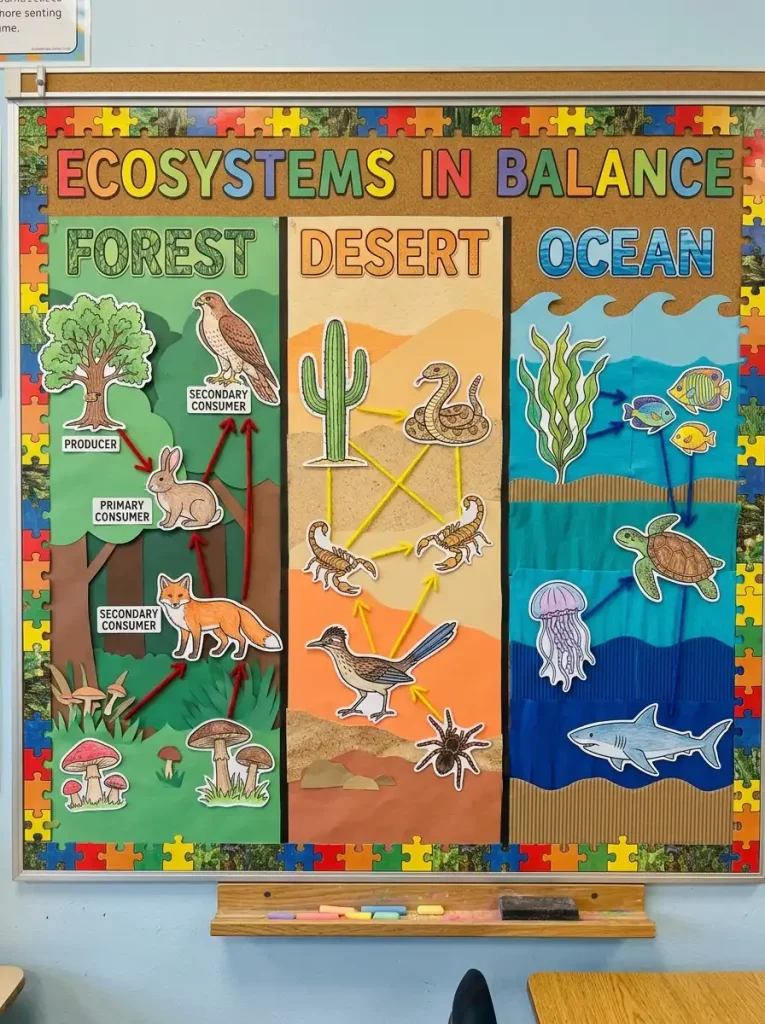
8. Ecosystems in Balance
Theme: A layered display showing different ecosystems and the organisms that depend on them.
Best grade levels: Elementary through middle school.
Learning objective: Students understand how organisms interact within specific habitats and depend on one another for survival.
Materials needed: Colored paper for different biome backgrounds, animal and plant cutouts, and labeled connection lines.
Step-by-step setup:
- Divide the board into three or four distinct ecosystem sections, like forest, desert, and ocean.
- Add background colors and textures matching each biome.
- Attach labeled organisms to their correct ecosystem section.
- Connect related organisms with string or yarn to show food chain relationships.
Decoration tips: Use textured paper, like blue crinkled paper for water, to add visual depth to each section.
Interactive features: Add movable organism cards students can test-fit into different ecosystems, discussing why certain placements work or don’t.
Ways students can participate: Assign small groups to research and build out one ecosystem section entirely on their own.
Seasonal variations: Rotate featured ecosystems to match current science units, like a wetlands focus during a local field trip unit.
Budget-friendly alternatives: Use recycled magazine images for organisms instead of purchasing printed clip art.
Common mistakes to avoid: Mixing organisms from unrelated ecosystems without explanation, which creates confusion about actual habitat relationships.
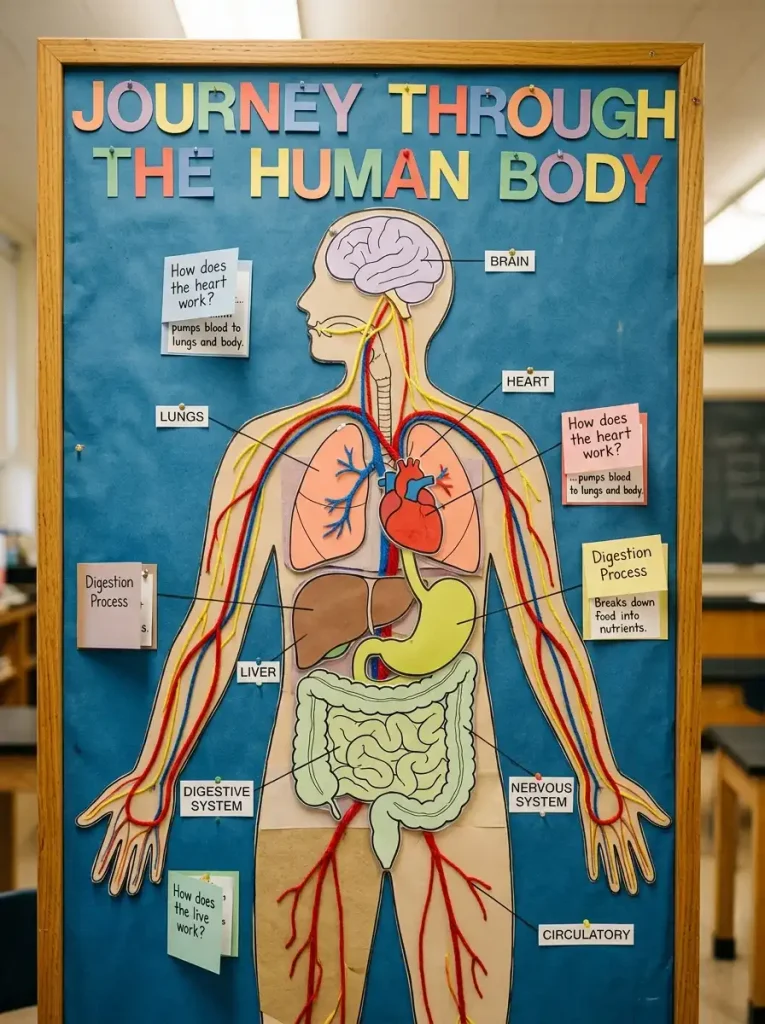
9. Journey Through the Human Body
Theme: A detailed anatomy display walking students through major body systems.
Best grade levels: Upper elementary through high school.
Learning objective: Students identify major organs and understand basic functions of key body systems.
Materials needed: A large body outline, labeled organ cutouts, and colored yarn for system connections.
Step-by-step setup:
- Attach a large human body outline to the board.
- Add labeled organ cutouts in their anatomically correct positions.
- Use different yarn colors to trace separate systems, like circulatory or digestive pathways.
- Include a small key explaining each color-coded system.
Decoration tips: Layer clear or translucent paper over certain sections to create a simple “see-through” effect.
Interactive features: Add flip-up flaps over each organ revealing its name and function underneath.
Ways students can participate: Assign each student one organ to research and personally illustrate for the display.
Seasonal variations: Focus on relevant systems during health-related months, like the respiratory system during flu season discussions.
Budget-friendly alternatives: Trace a body outline freehand instead of purchasing a pre-made anatomical template.
Common mistakes to avoid: Overloading the board with every system at once instead of introducing them gradually throughout the unit.
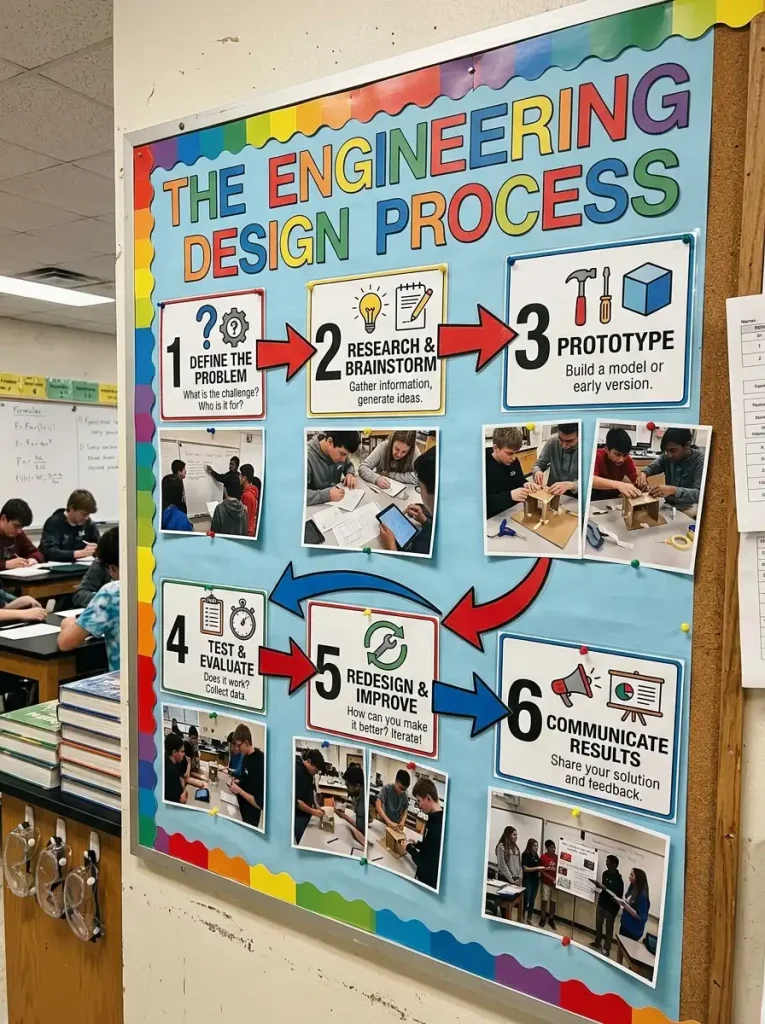
10. Engineering Design Process Wall
Theme: A step-by-step visual guide walking students through the engineering design process during STEM projects.
Best grade levels: Elementary through high school.
Learning objective: Students understand and apply a structured problem-solving process for engineering challenges.
Materials needed: Numbered step cards, arrows connecting each stage, and space for displaying student project photos.
Step-by-step setup:
- Create labeled cards for each design process stage: ask, imagine, plan, create, test, and improve.
- Arrange cards in a circular or linear flow connected by bold arrows.
- Leave open space beneath each stage for student project photos.
- Update photos as students move through current projects.
Decoration tips: Use consistent icon shapes, like gears or lightbulbs, to visually reinforce each process stage.
Interactive features: Add movable markers showing which stage each project group currently occupies.
Ways students can participate: Let students document and post photos of their own progress through each stage.
Seasonal variations: Tie the process to different challenge themes throughout the year, from bridges in fall to gardens in spring.
Budget-friendly alternatives: Print process labels on regular paper instead of ordering laminated commercial posters.
Common mistakes to avoid: Presenting the process as strictly linear when real engineering often requires looping back to earlier stages.
Why Science Bulletin Boards Matter
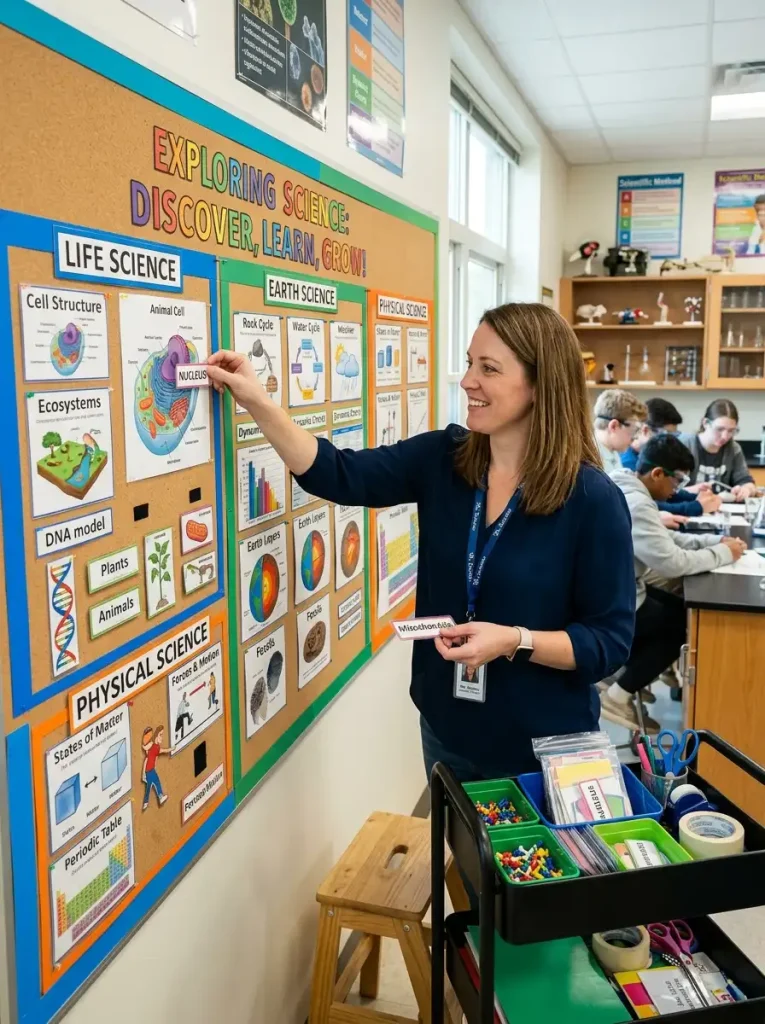
A bulletin board earns its wall space when it does more than decorate. Strong science classroom bulletin boards work as quiet teaching assistants, reinforcing lessons even when you’re not actively presenting.
Visual learning plays a huge role in how students retain scientific concepts. A labeled diagram or interactive display gives students a reference point they can return to throughout a unit, long after a lecture ends.
Classroom culture shifts noticeably when displays feel current and thoughtfully built. Students sense whether a teacher invests care into their space, and that impression shapes how seriously they approach the material.
Motivation rises when students see their own work, questions, or contributions featured prominently. A bulletin board that includes student voice feels less like decoration and more like a shared project.
Inquiry naturally grows from a well-designed display. A rotating science news board or an open-ended STEM challenge corner invites students to ask questions rather than simply absorb information passively.
Collaboration builds through group-based displays, like an ecosystems board students update together. Working toward a shared visual goal teaches teamwork alongside content.
Finally, reinforcement of science concepts happens almost automatically with repeated exposure. A periodic table display or human body diagram becomes part of a student’s mental furniture simply by staying visible day after day.
See also: 10 Summer Bulletin Board Ideas Preschool Teachers Adore
Classroom Design Tips
A few design principles apply across every science bulletin board, regardless of theme.
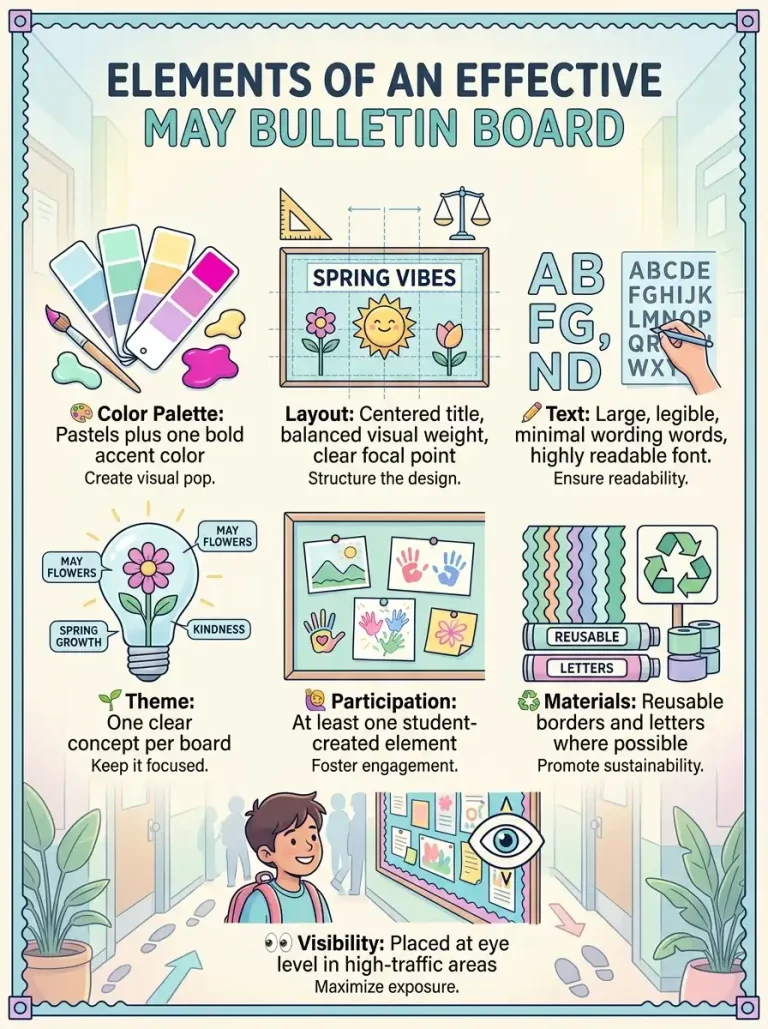
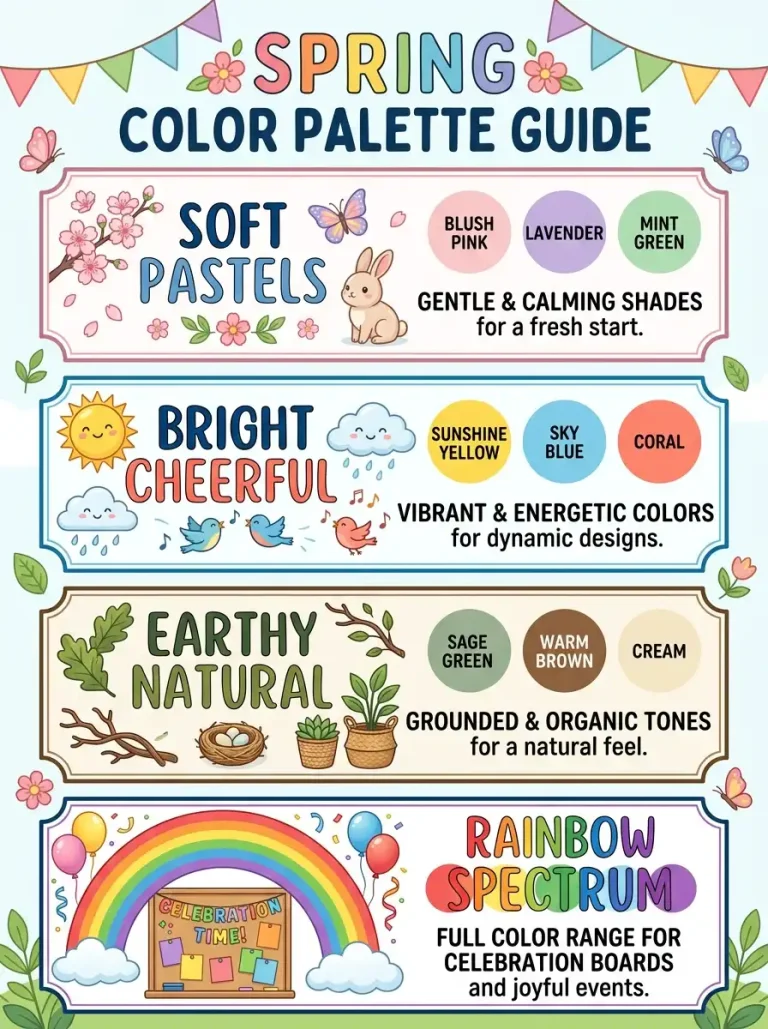
Color balance matters more than most teachers realize. Choose two or three main colors per display, adding a single bold accent rather than mixing every color available.
Readability should guide every text decision. Keep labels large, bold, and legible from across the room rather than relying on small, decorative fonts.
Organization keeps a complex display, like the Human Body board, from feeling chaotic. Group related information visually so students can scan the board logically.
Accessibility deserves real attention, especially for displays with lots of text or small details. Use high-contrast colors and consider placement height for students using wheelchairs or mobility devices.
Student ownership transforms a board from decoration into genuine classroom culture. Boards featuring real student work or research feel far more meaningful than store-bought posters alone.
Durability matters for any interactive element students touch regularly. Laminate movable pieces and reinforce attachment points to survive daily handling.
Maintenance keeps a board relevant throughout the year. Schedule a recurring time, even ten minutes weekly, to refresh content and fix small wear and tear.
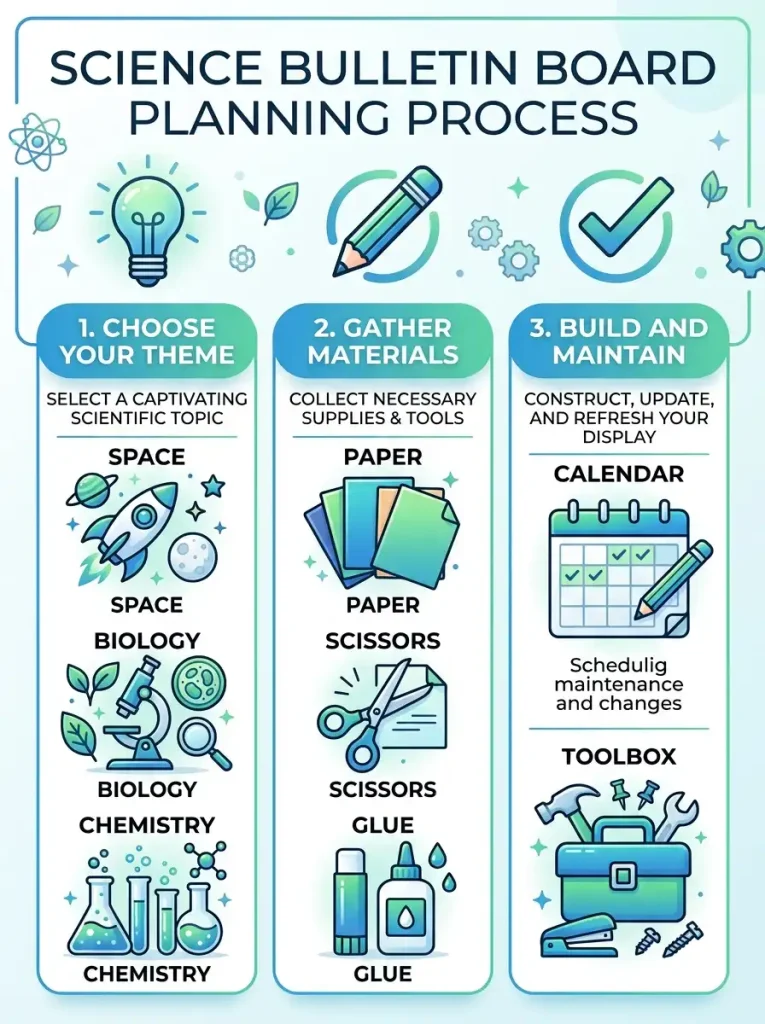
Bulletin Board Materials Checklist
- Colored construction paper and cardstock
- Scissors and paper cutters
- Glue sticks, tape, and velcro dots
- Bold letter stencils or precut lettering
- Laminating sheets or a laminator
- String or yarn for connecting elements
- Push pins or staples
- Printed images, diagrams, or student photos
- Storage bins labeled by theme or unit
- A digital camera or phone for documenting student work
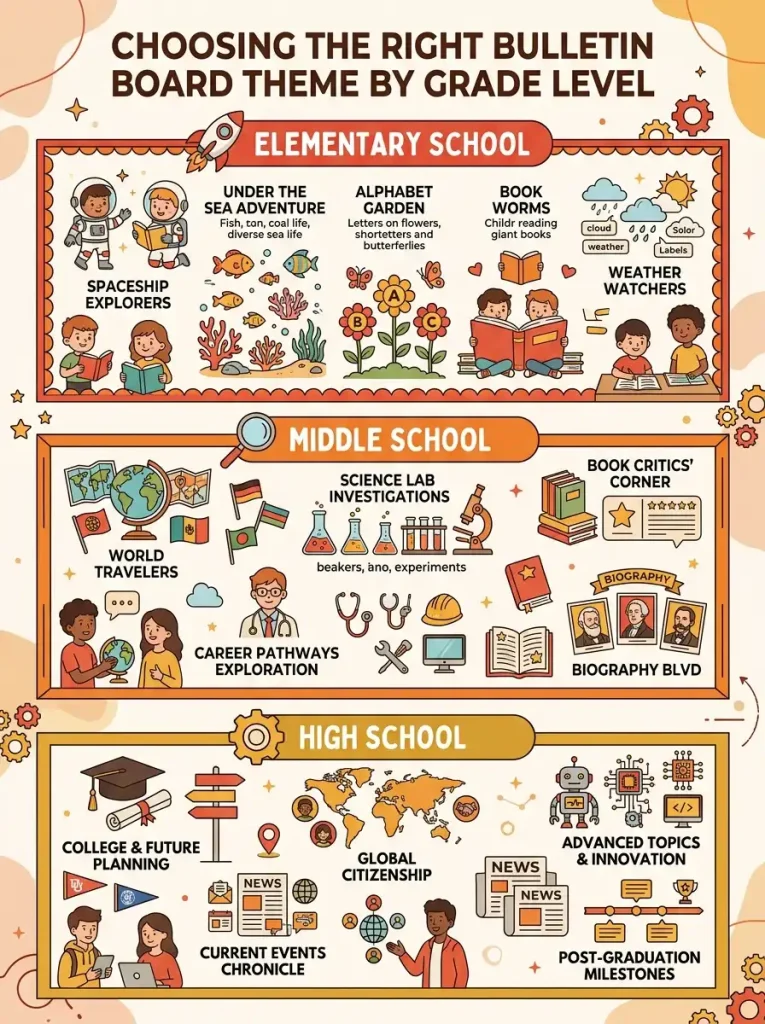
Choosing the Right Theme by Grade Level
Different grade levels respond to different levels of complexity and interactivity.
Elementary students benefit from bright colors, simple shapes, and hands-on elements like movable pieces or flip-up flaps. Ideas like Blast Off Into Space Exploration and Weather Watchers Station work particularly well here.
Middle school students can handle more nuanced content, including research-based displays like Women in Science Spotlight or the Periodic Table Puzzle Wall. This age group also enjoys ownership over rotating features like Scientist of the Month.
High school students respond well to sophisticated, data-driven displays like Science in the News Board or the Engineering Design Process Wall. These students also appreciate boards that connect directly to real-world applications and current events.
Frequently Asked Questions
What is the easiest science bulletin board idea for a new teacher? Weather Watchers Station works especially well for beginners since it requires minimal materials and a simple daily routine. Most teachers can set up the initial display in under an hour. The daily habit of reporting weather also builds classroom routine without requiring extensive redesign.
How often should I update a science classroom bulletin board? Most displays benefit from a refresh every three to six weeks, depending on the theme’s flexibility. Interactive boards, like the STEM Challenge Corner or Science in the News Board, naturally rotate more frequently since their entire purpose depends on fresh content.
What materials work best for interactive bulletin boards? Laminated cardstock paired with velcro dots or clear tape creates durable, reusable pieces that survive repeated handling. This combination works particularly well for boards like the Periodic Table Puzzle Wall, where students physically move pieces regularly.
How can I make a bulletin board support inquiry-based learning? Choose displays that pose open-ended questions rather than presenting only finished answers. The STEM Challenge Corner and Science in the News Board both work well, since they invite students to investigate rather than simply observe.
What is the best way to involve students in building a science bulletin board? Assign specific research or creative tasks, like illustrating an organ for the Human Body board or nominating a scientist for the monthly spotlight. Breaking the project into manageable pieces ensures genuine participation rather than relying solely on teacher effort.
How do I keep a bulletin board budget-friendly? Rely on recycled materials, free public domain images, and student-created illustrations instead of purchasing commercial posters or kits. Reusable, laminated pieces also stretch your classroom budget across multiple years of use.
Can these ideas work for a homeschool science space? Absolutely. Many ideas, including Scientist of the Month and Weather Watchers Station, scale down easily for a single homeschool student or small group. Simplifying the number of elements keeps the concept manageable in a smaller space.
What is the best bulletin board idea for reinforcing the engineering design process? The Engineering Design Process Wall works directly for this purpose, offering a clear visual reference students can return to during any STEM project. Pairing it with real student project photos strengthens the connection between the process and actual classroom work.
How do I make sure a bulletin board stays accessible for all students? Choose high-contrast colors, legible fonts, and consider placement height for students using mobility devices. Avoiding overly cluttered layouts also helps students with visual processing differences engage with the display more easily.
What common mistake do teachers make most often with science bulletin boards? Overcrowding remains the most frequent issue, with too much text or too many elements competing for attention. Choosing one clear theme and leaving breathing room around key elements almost always improves a display’s overall effectiveness.
See also: 8 Space Bulletin Board Ideas for Preschool
Bringing Your Science Wall to Life
A great science bulletin board does more than fill space between windows and whiteboards. It reinforces vocabulary, celebrates curiosity, and gives students a reason to engage with your classroom even during a passing glance.
Whether you start with a simple Weather Watchers Station or dive into a full Human Body display, choose the idea that fits your students, your space, and your available time. Try one this month, gather feedback from your students, and build from there. The best classroom walls grow and change right alongside the learners who spend their days beneath them.