
12 Beach Story Ideas for Creative Writing
Beaches do something strange to storytellers. Give a writer a stretch of shoreline, a rolling tide, and a horizon that never quite ends, and suddenly a hundred stories start whispering at once. This guide hands you twelve fully developed beach story ideas, plus the tools to shape any one of them into a real novel, short story, or screenplay.
Introduction
Beaches sit at the edge of everything. Land meets water, safety meets danger, and the familiar meets the unknown. That tension is exactly why so many unforgettable stories unfold on the shore.
A beach setting gives you built-in atmosphere. Waves create rhythm. A storm can arrive without warning and change the entire mood of a scene. A lighthouse in the distance suggests both guidance and isolation. Even a simple sunset carries emotional weight that a writer barely has to explain.
This setting also stretches across nearly every genre you might want to write. Romance thrives on long walks and quiet confessions near the surf. Mystery and thriller writers use fog, tides, and hidden coves to hide secrets in plain sight. Horror finds a natural home in abandoned beach cabins and stormy coastlines. Fantasy and adventure genres lean on islands, coral reefs, and legends of hidden treasure.
In this article, you’ll find twelve original beach story ideas built for fiction writers, beginner authors, creative writing students, novelists, screenwriters, and short story writers alike. Each idea includes a premise, characters, central conflict, plot twists, writing tips, and genre suggestions. Afterward, you’ll learn how to turn any of these beach writing prompts into a complete novel, plus the mistakes to avoid along the way.
Grab a notebook. The tide is coming in, and it’s bringing ideas with it.

Idea 1: The Lighthouse Keeper’s Last Signal
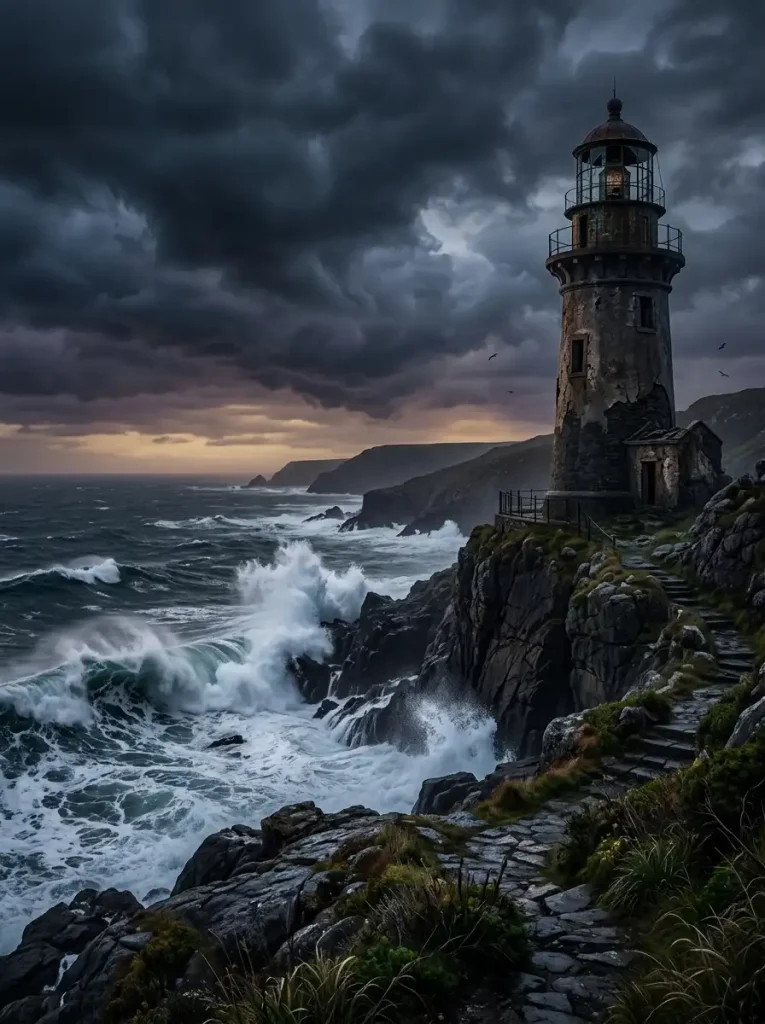
Story Premise: A retired lighthouse keeper notices strange lights blinking from an offshore reef, lights that match a distress code no ship has used in decades. As she investigates, she uncovers a decades-old shipwreck and a secret her late husband kept from her.
Main Characters: Mara, a sharp, weathered widow in her sixties who refuses to leave the coastal town. Deacon, a young marine archaeologist who arrives to study the wreck and slowly earns her trust.
Central Conflict: Mara must decide whether uncovering her husband’s past is worth shattering the memory she’s built her grief around.
Possible Plot Twists:
- The lights turn out to be signals from a hidden research station, not a ghost ship.
- Mara discovers her husband faked the original wreck report to protect someone.
- Deacon has a personal connection to the same shipwreck.
Writing Tips: Use the lighthouse itself as a character. Its rhythm, its isolation, and its light can mirror Mara’s internal state throughout the story.
Genre Suggestions: Mystery, Literary Fiction, Historical Fiction.
Idea 2: Sand Between Strangers
Story Premise: Two strangers keep crossing paths during the same beach vacation. Neither one is looking for romance, yet the coastal town seems determined to push them together.
Main Characters: Priya, a burned-out event planner escaping a canceled wedding. Theo, a quiet photographer avoiding his family’s expectations.
Central Conflict: Both characters carry guarded pasts that make vulnerability feel dangerous, even as their connection deepens.
Possible Plot Twists:
- Theo’s photography accidentally captures evidence tied to Priya’s canceled wedding scandal.
- Priya was originally sent to the same coastal town for work, not rest.
- Their families already know each other in ways neither expects.
Writing Tips: Let small, ordinary beach moments—sharing an umbrella during a sudden storm, arguing over the best sunset spot—carry the emotional development. Avoid rushing the connection.
Genre Suggestions: Romance, Young Adult, Literary Fiction.
Idea 3: The Chest Beneath the Dunes
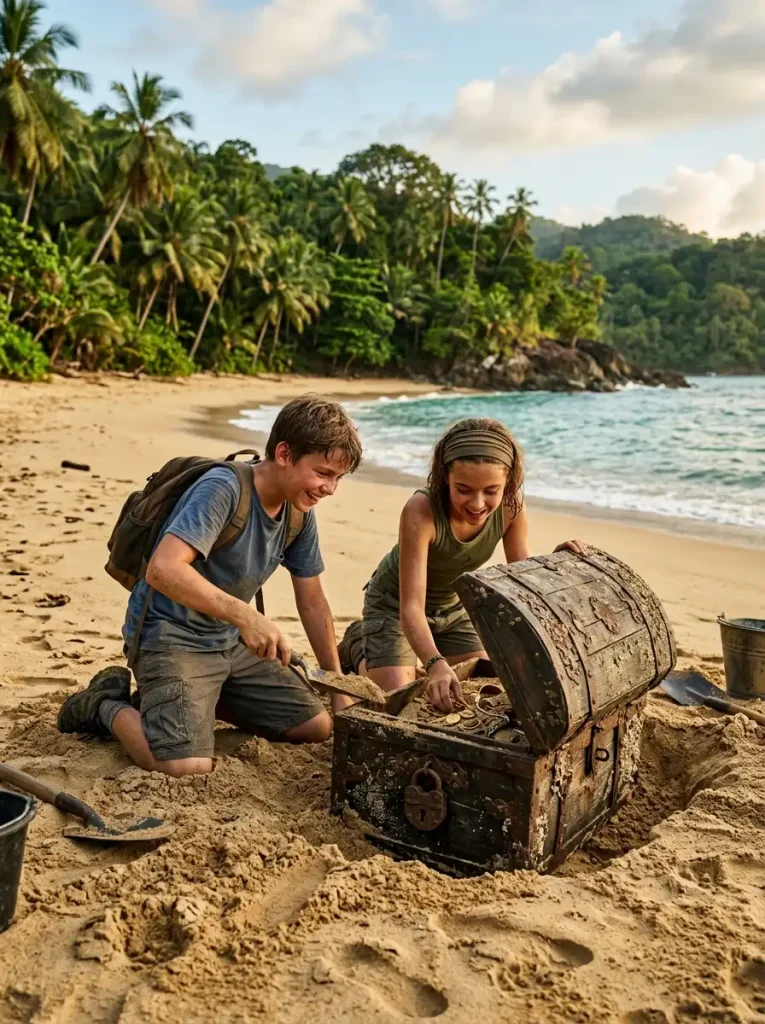
Story Premise: After a storm reshapes the sand dunes overnight, two kids discover an old chest buried near the shoreline. Inside sits a map leading to something far more dangerous than treasure.
Main Characters: Ruby, a bold twelve-year-old who dreams of adventure beyond her small coastal town. Sam, her cautious best friend who reluctantly joins the search.
Central Conflict: The map leads toward a local legend involving pirates, and the kids must outsmart an adult treasure hunter who wants it for himself.
Possible Plot Twists:
- The “treasure” turns out to be a historical artifact tied to Ruby’s own family.
- The dangerous adult chasing them isn’t a villain at all, but someone protecting a bigger secret.
- The map leads not to gold, but to a hidden cave system beneath the island.
Writing Tips: Keep the pacing quick. Adventure stories for younger audiences benefit from short chapters and constant forward motion.
Genre Suggestions: Adventure, Young Adult, Fantasy.
Idea 4: What the Storm Left Behind
Story Premise: A brutal coastal storm strands a group of vacationers inside a beach house with no power, no signal, and no way off the island. When morning comes, one guest is missing.
Main Characters: Nadia, the skeptical host trying to hold the group together. Six guests, each hiding a reason they shouldn’t be trusted.
Central Conflict: As the storm rages outside, suspicion turns inward, and Nadia must figure out who’s lying before the situation turns violent.
Possible Plot Twists:
- The missing guest staged their own disappearance.
- The storm itself was predicted by someone in the group who wanted everyone trapped.
- The real threat isn’t inside the house at all, but hiding along the shoreline.
Writing Tips: Use the storm as a ticking clock. Every unanswered question should feel more urgent as the weather worsens outside.
Genre Suggestions: Thriller, Mystery, Horror.
Idea 5: The Last Summer at Gull’s Cove
Story Premise: Four childhood friends reunite at the same beach cabin they visited every summer as kids, only to realize their friendship never fully recovered from something that happened there years ago.
Main Characters: Four adults in their thirties, each shaped differently by the same unresolved event from their teenage years.
Central Conflict: Old resentments resurface as the group confronts what really happened during their final summer together.
Possible Plot Twists:
- The event they all remember differently reveals a betrayal none of them noticed at the time.
- One friend has secretly kept a journal detailing what actually happened.
- The cabin itself is scheduled for demolition, forcing the group to face closure whether they want it or not.
Writing Tips: Alternate between present-day scenes and flashbacks. This structure lets readers piece together the truth gradually, similar to how memory actually works.
Genre Suggestions: Literary Fiction, Drama, Mystery.
Idea 6: The Reef Keeper
Story Premise: A marine biologist studying coral reef decline discovers something impossible: a section of reef that’s regenerating faster than science can explain, guarded by a presence the local fishermen refuse to discuss.
Main Characters: Dr. Elena Cruz, driven and skeptical of folklore. Old Tomas, a fisherman who insists the reef protects itself.
Central Conflict: Elena must decide whether to publish her findings, knowing it could bring tourism and destruction to the very reef she’s trying to save.
Possible Plot Twists:
- The reef’s regeneration connects to an underwater ecosystem no one has mapped before.
- Tomas has been quietly protecting the reef for decades, using methods Elena initially dismisses.
- A corporation already knows about the reef and is racing to exploit it first.
Writing Tips: Ground the fantastical elements in real marine biology. The more scientifically believable the details feel, the more powerful the mystery becomes.
Genre Suggestions: Fantasy, Science Fiction, Adventure.
Idea 7: Pirates of the Salt Marsh
Story Premise: In a coastal town built on smuggling history, a young sailor discovers her family’s fishing boat once belonged to a notorious pirate crew, and an old rival family still wants what was buried with them.
Main Characters: Isla, a determined young sailor protecting her family’s legacy. Captain Reyes, a charismatic rival treasure hunter with murky motives.
Central Conflict: Isla must outmaneuver Reyes before he finds the hidden treasure first, all while uncovering uncomfortable truths about her own ancestors.
Possible Plot Twists:
- Reyes is actually a distant relative with an equal claim to the treasure.
- The treasure was never gold, but documents proving a historical injustice.
- Isla’s grandmother has known the location all along.
Writing Tips: Lean into vivid coastal-town detail: salt marshes, fishing docks, and old harbor taverns. Historical texture makes pirate stories feel authentic rather than cartoonish.
Genre Suggestions: Adventure, Historical Fiction, Fantasy.
Idea 8: The Girl Who Talked to Tides
Story Premise: A teenager with an unexplained ability to predict the tides down to the minute becomes essential to her fishing village, until a series of unnatural tidal shifts suggests something far stranger is happening beneath the waves.
Main Characters: Wren, an introverted teen uneasy with her own gift. The village elders, who both rely on and fear her ability.
Central Conflict: Wren must uncover the source of her power before the unpredictable tides put the entire village at risk.
Possible Plot Twists:
- Wren’s ability connects to an ancient pact between her ancestors and the sea itself.
- The tidal shifts are man-made, caused by underwater construction nearby.
- Wren isn’t the only person with this gift, and the other person doesn’t want to share it.
Writing Tips: Treat the ocean as a living force with its own moods. Small, sensory details—the smell of brine before a shift, the way the surf goes suddenly quiet—build believable magic.
Genre Suggestions: Fantasy, Young Adult, Science Fiction.
Idea 9: The Cabin at the End of the Cove
Story Premise: A horror writer rents an isolated beach cabin to finish her novel, only to realize the strange events she’s writing into her fiction are starting to happen in real life.
Main Characters: Josephine, a novelist wrestling with writer’s block and mounting anxiety. A quiet neighbor who may know more about the cabin’s history than he admits.
Central Conflict: Josephine must determine whether she’s losing her grip on reality or whether the cabin genuinely holds something dangerous.
Possible Plot Twists:
- The cabin’s previous owner disappeared under eerily similar circumstances.
- Josephine’s manuscript pages start changing overnight, written in a hand that isn’t hers.
- The neighbor has been documenting the cabin’s history for years, waiting for someone to notice.
Writing Tips: Isolation is your best tool here. Limit outside contact, unreliable phone service, and long stretches of silence to build creeping dread.
Genre Suggestions: Horror, Thriller, Mystery.
Idea 10: The Vanishing Island
Story Premise: Locals whisper about a small island that appears only during certain tides, and vanishes completely for the rest of the year. When a group of researchers finally reaches it, they find signs of recent human life.
Main Characters: Dr. Omar Bakr, a geologist obsessed with proving the island’s existence. Lena, a skeptical journalist documenting the expedition.
Central Conflict: The team must uncover who has been living on an island that shouldn’t exist, before the tide swallows it again.
Possible Plot Twists:
- The island houses survivors of a shipwreck who’ve been stranded for years.
- The island’s disappearance is tied to a natural phenomenon no one has documented before.
- Lena discovers the expedition’s true funding source has a hidden agenda.
Writing Tips: Build tension around time pressure. A ticking clock tied to the tides raises stakes naturally without feeling forced.
Genre Suggestions: Adventure, Science Fiction, Mystery.
Idea 11: Sunset Over Harbor Street
Story Premise: A single mother running a struggling seaside diner falls for a traveling musician who plays on the boardwalk every evening, but his plans to leave town threaten to upend the fragile stability she’s built for her son.
Main Characters: Camille, practical and protective, rebuilding her life after a difficult divorce. Jonah, warm and restless, unsure whether he can stay anywhere for long.
Central Conflict: Camille must decide whether to risk her hard-won stability for a relationship that might not last past summer.
Possible Plot Twists:
- Jonah receives an opportunity that could let him settle down permanently, if he chooses to.
- Camille’s ex-husband returns, complicating her decision.
- Jonah’s music career connects to Camille’s late husband in an unexpected way.
Writing Tips: Use setting details like the boardwalk, the diner’s neon sign, and the changing sunset to mark the passage of the relationship’s timeline.
Genre Suggestions: Romance, Literary Fiction, Drama.
Idea 12: The Fisherman’s Debt
Story Premise: An aging fisherman owes money to a dangerous local businessman who’s slowly taking over the coastal town’s fishing industry. When a mysterious buyer offers to clear his debt in exchange for one final job, the fisherman must decide how far he’s willing to go.
Main Characters: Duncan, proud and stubborn, unwilling to lose the boat his father left him. The mysterious buyer, whose true motives stay hidden until the story’s final act.
Central Conflict: Duncan must complete a job that puts his morals, his family, and his community at risk.
Possible Plot Twists:
- The “job” involves smuggling something far more dangerous than fish.
- The businessman and the mysterious buyer are secretly working together.
- Duncan’s daughter has been quietly trying to solve his debt problem herself.
Writing Tips: Root this story in economic pressure and community dynamics. Readers connect deeply with stakes that feel financially and emotionally real.
Genre Suggestions: Thriller, Literary Fiction, Historical Fiction.

How to Turn a Beach Story Idea into a Great Novel
A great premise only takes you so far. Turning any of these beach writing prompts into a finished novel requires structure underneath the atmosphere.
Character Arcs
Your protagonist needs to change. Start by identifying what they believe at the beginning of the story and what truth they’ll eventually have to accept. In Idea 1, Mara begins clinging to a comfortable version of her past. By the end, she has to accept a messier truth. That shift is the engine of the whole story.
Setting as More Than Backdrop
Don’t just describe the beach. Use it. A rising tide can mirror rising tension. A calm ocean at the start of a chapter can foreshadow a coming storm. Coastal towns carry history, class dynamics, and local tension that add texture beyond scenery.
Raising the Stakes
Ask yourself what your character loses if they fail. Money, safety, love, identity, or belonging all work well. In Idea 12, Duncan risks his boat, his family, and his moral compass all at once. Stack multiple stakes whenever possible.
Conflict on Every Page
Not every conflict needs to be a storm or a villain. Quiet arguments, withheld secrets, and internal doubt all count. Even a peaceful walk along the shoreline should carry some form of tension beneath the surface.
Dialogue That Sounds Real
Read your dialogue out loud. If it sounds stiff, trim it. People interrupt each other, trail off, and avoid saying exactly what they mean. Natural dialogue reveals character just as much as description does.
Theme
Every beach story idea on this list touches a deeper theme: grief, identity, trust, legacy, or freedom. Identify your story’s theme early, even loosely. It will guide which details matter and which ones you can cut.
Ending With Purpose
Your ending doesn’t need to be happy, but it does need to feel earned. Circle back to an image, location, or line from earlier in the story. A beach setting offers natural symmetry here: return to the shoreline, the lighthouse, or the tide, and show how it’s changed alongside your character.
Common Mistakes to Avoid
Even strong beach story ideas can fall flat if writers lean on a few common habits. Watch for these.
- Overloading scenery. Beautiful description matters, but too much slows the pacing. Balance atmosphere with forward motion.
- Making the setting decorative instead of functional. If your story could be set anywhere without changing the plot, the beach isn’t doing its job yet.
- Rushing romantic or emotional development. Readers need time to believe a connection. Earn it through scenes, not summary.
- Ignoring local culture and economy. Coastal towns have fishing industries, tourism seasons, and class tension. Real detail adds authenticity.
- Relying on clichés. Avoid predictable pirate accents, mystical “wise old fisherman” tropes, or storms that arrive exactly when convenient.
- Skipping research. Even fantasy and horror benefit from accurate details about tides, marine life, and coastal geography.
<blockquote><strong>Writing Tip:</strong> Keep a small notebook of sensory beach details—smells, sounds, textures—collected from real experience or careful research. Specific, real details always beat generic ones.</blockquote>
Frequently Asked Questions
What makes beach settings good for fiction? Beaches naturally combine beauty, danger, and isolation. That mix creates built-in tension for almost any genre, from romance to horror.
Can beach story ideas work for short stories, not just novels? Yes. Many of the ideas above work well as short stories. Focus on one central conflict and a tighter cast of characters.
What genres work best for ocean story ideas? Romance, mystery, thriller, horror, fantasy, adventure, and literary fiction all thrive with ocean settings. The genre you choose depends on the mood you want the water to create.
How do I make my seaside story ideas feel original? Focus on specific, personal details instead of generic beach imagery. A character’s unique relationship to the water often matters more than the location itself.
Are island story ideas harder to research than mainland coastal stories? Not necessarily. Islands offer natural isolation, which simplifies plotting in some ways, though geography and culture still deserve careful research.
How long should a beach-based short story be? Most beach-based short stories work well between 1,500 and 7,500 words, depending on complexity and genre.
Can I combine more than one of these beach story prompts into a single novel? Absolutely. Combining a mystery beach story with a beach romance subplot, for example, often creates a richer, more layered narrative.
Do I need real coastal experience to write a believable beach story? It helps, but it isn’t required. Careful research, photographs, and firsthand accounts from others can fill the gap effectively.
What’s the easiest beach story idea for beginner writers to start with? Sand Between Strangers (Idea 2) works well for beginners since it focuses on two characters and a simple, relatable conflict.
How do I choose the right genre for my beach adventure story? Consider the emotion you want readers to feel by the final page. Tension points toward thriller or horror. Warmth points toward romance or literary fiction. Wonder points toward fantasy or adventure.
Conclusion
Beaches hold contradictions that make for unforgettable fiction. They’re peaceful, yet unpredictable. Beautiful, yet dangerous. Familiar, yet full of secrets buried just beneath the sand.
Whether you’re drawn to a quiet romance on Harbor Street, a pirate legend buried in the salt marsh, or a horror story unfolding inside an isolated cabin, these twelve beach story ideas give you a real starting point. Use them as written, or let them spark something entirely your own.
Now it’s your turn. Pick the idea that pulls at you the most, sit down with a notebook or a blank document, and start writing. The tide won’t wait, and neither should your story.