12 Spring Bulletin Board Ideas for School
Spring changes everything about a classroom. Sunlight stretches longer into the afternoon, windows crack open for the first time in months, and students arrive with a noticeably lighter energy. A well-planned spring bulletin board captures that shift and turns it into something teachers can actually use.
Classroom bulletin boards do more than fill empty wall space. They welcome visitors, celebrate student work, and reinforce lessons long after a unit ends. Teachers walking hallways during spring semester know exactly which classrooms feel alive and which ones still show February’s leftover decorations.
Whether you manage a preschool room, an elementary classroom, or a shared school library, spring gives you a natural excuse to refresh your walls. This guide covers twelve fully developed spring bulletin board ideas, each built with real classrooms and real budgets in mind. You’ll find flower displays, growth mindset boards, interactive reading corners, and clever classroom door decorations that make even a busy hallway feel welcoming.
Every idea below includes materials, setup steps, and practical teacher tips, so you can start building today rather than searching for inspiration next week.
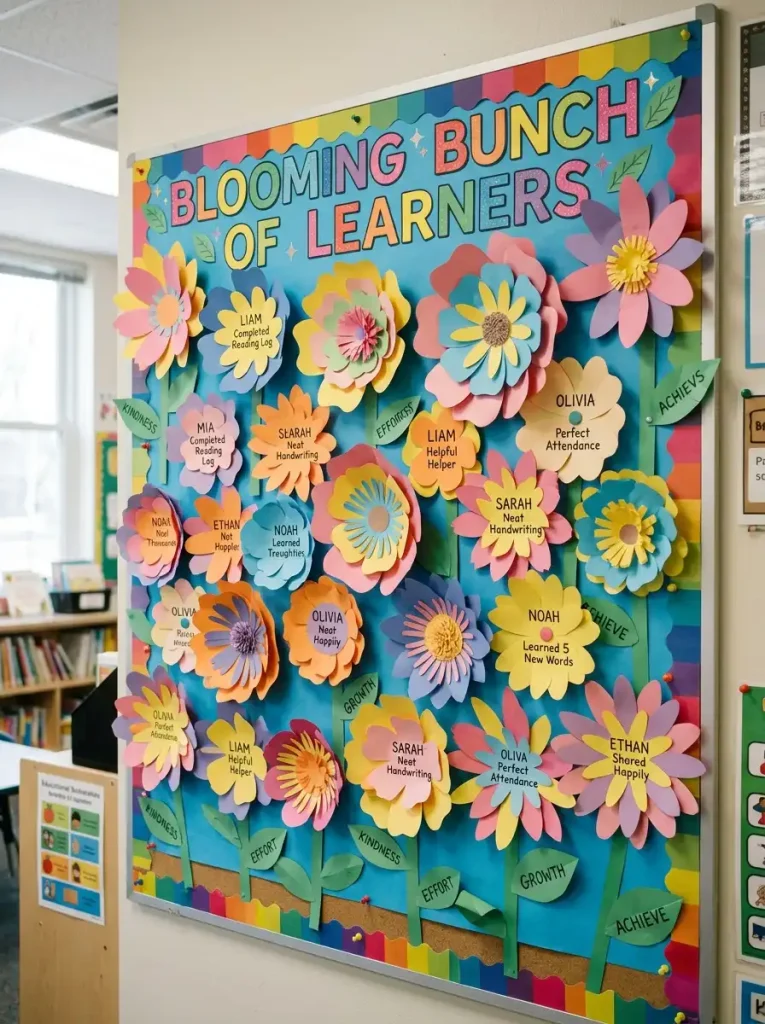
1. Blooming Bunch of Learners
Why this bulletin board works: Every student gets a personalized paper flower celebrating something they’ve accomplished this year. Seeing their own name and achievement displayed prominently builds genuine pride.
Best grades or age groups: Preschool through third grade.
Materials needed: Colored construction paper, green paper for stems and leaves, markers, glue, and scissors.
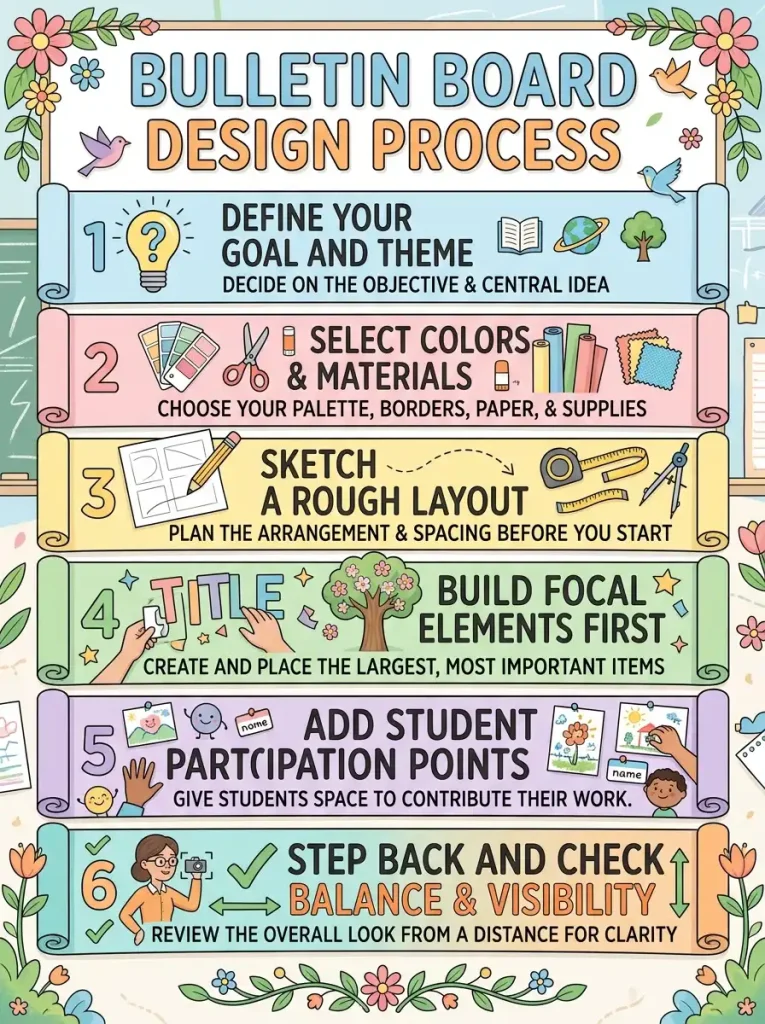
Step-by-step setup guide: First, cut large flower shapes in varied spring colors. Next, write each student’s name and a short accomplishment on a petal. Then attach green stems and leaves below each flower. Finally, arrange the flowers in a loose, garden-style cluster across the board.
Creative variations: Try grouping flowers by classroom table teams instead of arranging them randomly. Some teachers add a small sun cutout at the top reading “Our Class is Blooming.”
Educational benefits: This display reinforces self-esteem and growth awareness while practicing name recognition for younger students.
Seasonal learning opportunities: Pair the display with a simple plant life cycle lesson, discussing how flowers grow from seeds just like skills grow from practice.
Classroom management tips: Assign flower-making as a quiet independent activity during transition times to avoid overwhelming your own prep schedule.
Budget-friendly alternatives: Use recycled paper scraps left over from other projects instead of buying fresh construction paper.
Teacher tips: Precut flower shapes in bulk before spring break so setup takes minutes rather than hours.
Student participation ideas: Let each student choose their own flower color and decorate it themselves for extra ownership.
Common mistakes to avoid: Overcrowding flowers so tightly that individual names become hard to read from a distance.
2. Growing Readers Garden
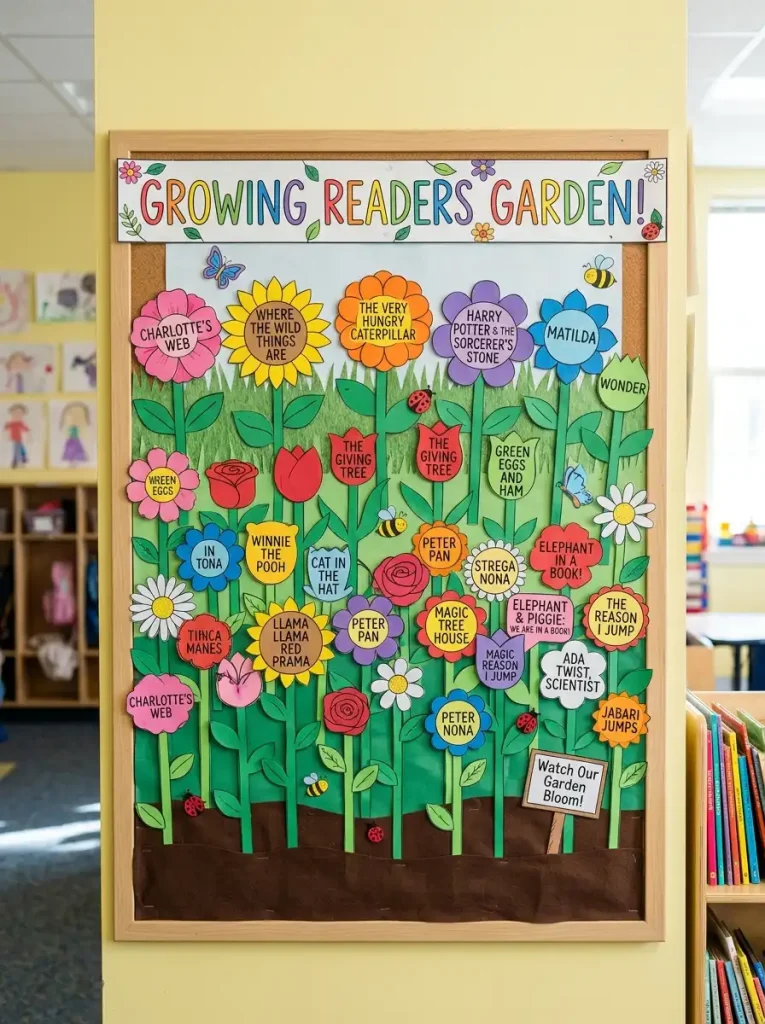
Why this bulletin board works: This idea ties reading progress directly to a growing garden, giving students a visible, motivating way to track their book count throughout spring.
Best grades or age groups: Kindergarten through fifth grade.
Materials needed: Brown paper for a garden bed, green stems, colorful flower tops, and small book title labels.
Step-by-step setup guide: Begin by attaching a simple garden bed shape along the bottom of the board. Add stems rising upward from the bed. Then, create flower tops labeled with completed book titles. Finally, add flowers to stems as students finish new books.
Creative variations: Some classrooms track by genre, using different flower shapes for fiction versus nonfiction titles.
Educational benefits: This board strengthens reading motivation and encourages students to explore new book genres.
Seasonal learning opportunities: Connect the display to a springtime author study or a poetry unit celebrating National Poetry Month.
Classroom management tips: Keep a small stack of blank flower templates near your classroom library so students can add their own without waiting for you.
Budget-friendly alternatives: Cut flower shapes from old magazine pages instead of purchasing new colored paper.
Teacher tips: Rotate which students get featured weekly if your class size makes individual flowers difficult to fit.
Student participation ideas: Invite students to write a one-sentence review on each flower before adding it to their stem.
Common mistakes to avoid: Forgetting to remove flowers for students who transfer classes, which leaves confusing gaps in the display.
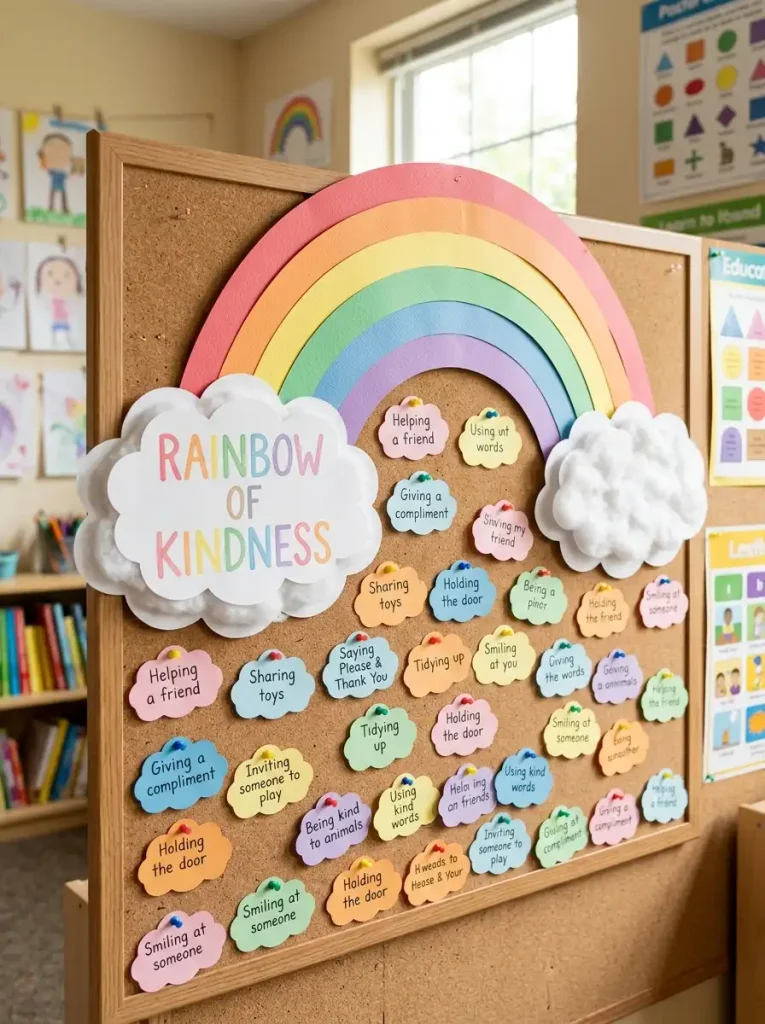
3. Rainbow of Kindness
Why this bulletin board works: A large paper rainbow arches across the board, with each colored band representing a different kindness category students can contribute to throughout spring.
Best grades or age groups: Preschool through fourth grade.
Materials needed: Colored paper for rainbow bands, white cloud cutouts, and markers for writing kindness notes.
Step-by-step setup guide: Start by attaching a large rainbow arc using layered strips of colored paper. Add fluffy cloud cutouts at each end. Next, label each colored band with a kindness category, such as helping a friend or sharing supplies. Finally, add small cloud notes describing specific acts of kindness as they happen.
Creative variations: Some teachers add a pot of gold at the rainbow’s end, filled with a class reward once a kindness goal is reached.
Educational benefits: This display reinforces social-emotional learning and builds a positive classroom culture.
Seasonal learning opportunities: Rainbows naturally connect to spring rain lessons, making this a great pairing for a simple weather unit.
Classroom management tips: Assign a rotating “kindness reporter” job so recognition doesn’t fall solely on the teacher’s shoulders.
Budget-friendly alternatives: Use leftover colored paper scraps from previous bulletin boards for the rainbow bands.
Teacher tips: Keep blank cloud templates within easy student reach to encourage independent contributions.
Student participation ideas: Let students nominate classmates for kindness recognition themselves rather than relying only on teacher observation.
Common mistakes to avoid: Allowing the same few students to dominate the recognition space while others go unnoticed.
4. Butterfly Transformation Station
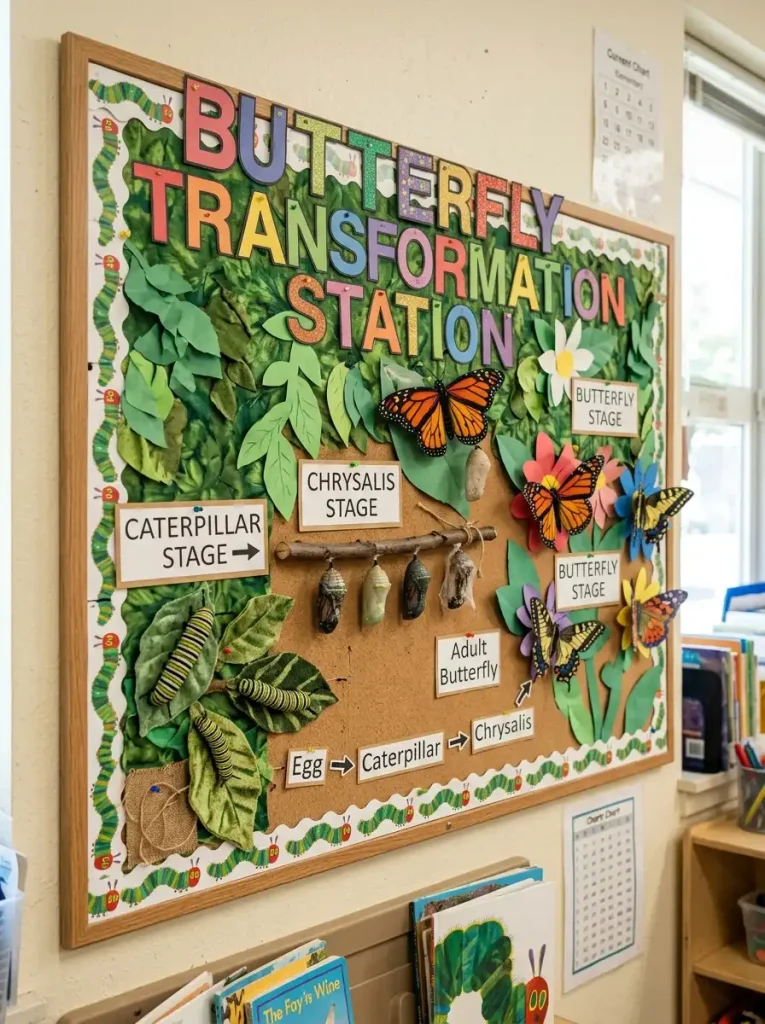
Why this bulletin board works: This board visually tracks a caterpillar-to-butterfly life cycle while connecting each stage to a student learning milestone.
Best grades or age groups: Kindergarten through second grade.
Materials needed: Green paper for caterpillars, colorful paper for butterfly wings, and a simple leaf background.
Step-by-step setup guide: First, attach a leafy green background across the board. Next, add a starting caterpillar cutout for each student. Then, create a chrysalis stage using brown or tan paper. Finally, replace each chrysalis with a colorful butterfly once a student demonstrates a specific skill.
Creative variations: Try using real photos of student faces on each butterfly for a more personal touch.
Educational benefits: This display reinforces science concepts around metamorphosis while celebrating individual academic growth.
Seasonal learning opportunities: Pair the display with a hands-on butterfly life cycle unit, using real caterpillars if your classroom allows it.
Classroom management tips: Update the board weekly during a consistent time slot to avoid last-minute scrambling.
Budget-friendly alternatives: Print butterfly wing templates instead of hand-cutting each unique shape.
Teacher tips: Take a “before and after” photo of the board to share progress with families during spring conferences.
Student participation ideas: Let students decorate their own butterfly wings once they reach the final transformation stage.
Common mistakes to avoid: Moving students through stages too quickly, which weakens the metaphor’s meaning.
5. Spring Cleaning Our Habits
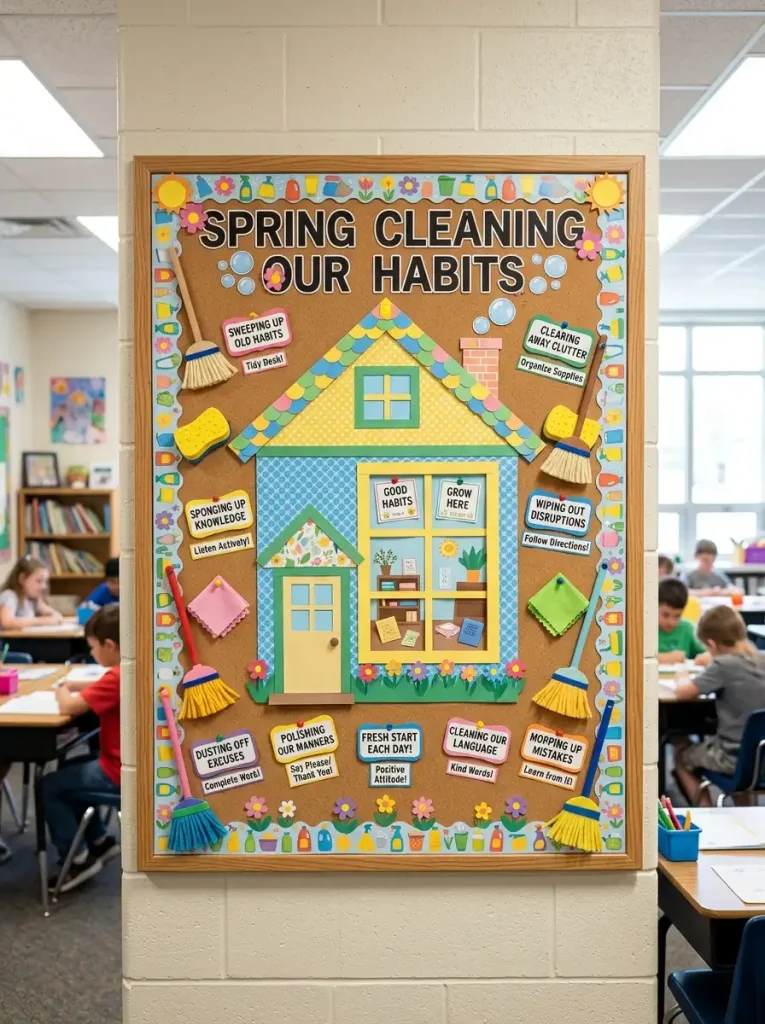
Why this bulletin board works: This clever board uses a spring cleaning theme to reinforce positive classroom habits, pairing each habit with a simple cleaning-related icon like a broom or sponge.
Best grades or age groups: First through fifth grade.
Materials needed: Colored paper for cleaning icons, markers, and a simple house or window background.
Step-by-step setup guide: Begin by attaching a house or window shape to anchor the theme visually. Next, create small icons like brooms, sponges, or dust cloths. Then, label each icon with a specific classroom habit, such as listening carefully or cleaning up promptly. Finally, arrange icons around the central house shape.
Creative variations: Some classrooms add a checklist format, letting students mark off habits as they practice them throughout the week.
Educational benefits: This board reinforces classroom expectations through a memorable, seasonally relevant metaphor.
Seasonal learning opportunities: Connect the display to a classroom organization day, where students physically declutter their own desks or cubbies.
Classroom management tips: Revisit the board briefly during morning meetings to keep habits fresh in students’ minds.
Budget-friendly alternatives: Draw simple icons by hand instead of purchasing printed clip art.
Teacher tips: Rotate which habits get featured monthly to keep the display relevant to current classroom needs.
Student participation ideas: Invite students to vote on which habit deserves the spotlight each week.
Common mistakes to avoid: Choosing too many habits at once, which dilutes focus and makes the board harder to follow.
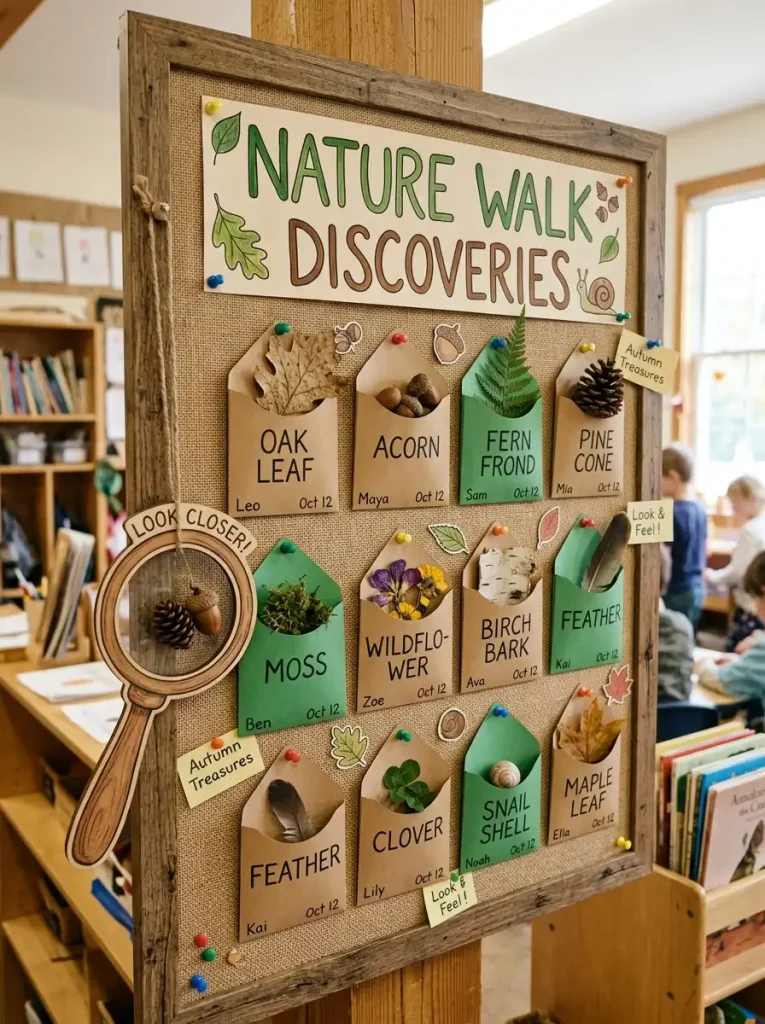
6. Nature Walk Discoveries
Why this bulletin board works: This board features items and observations students collect during outdoor nature walks, connecting classroom learning directly to the changing spring season outside.
Best grades or age groups: Kindergarten through fourth grade.
Materials needed: A large background paper, small labeled envelopes or pockets, and markers.
Step-by-step setup guide: Start by attaching a large background paper representing a simple outdoor scene. Next, add small envelope pockets across the board. Then, take students on a short nature walk to collect leaves, flowers, or interesting objects. Finally, label and place each item in its own pocket with the student’s name and observation.
Creative variations: Some teachers add a simple magnifying glass cutout, inviting students to sketch what they observe up close.
Educational benefits: This display builds observation skills and reinforces basic ecological awareness.
Seasonal learning opportunities: Time the nature walk to coincide with early spring blooms for maximum variety in collected items.
Classroom management tips: Set clear collection rules beforehand, such as only gathering items already on the ground.
Budget-friendly alternatives: Use recycled envelopes from school mail instead of purchasing new pocket materials.
Teacher tips: Laminate pockets ahead of time since natural items can sometimes carry moisture.
Student participation ideas: Let students write a short sentence describing what surprised them most during the walk.
Common mistakes to avoid: Skipping the labeling step, which makes the collected items feel random rather than meaningful.
Materials Checklist by Idea
| Bulletin Board Idea | Key Materials |
|---|---|
| Blooming Bunch of Learners | Construction paper, green paper, markers |
| Growing Readers Garden | Brown paper, colored paper, book labels |
| Rainbow of Kindness | Colored paper, cloud cutouts, markers |
| Butterfly Transformation Station | Green paper, colorful paper, leaf background |
| Spring Cleaning Our Habits | Colored paper, markers, house background |
| Nature Walk Discoveries | Background paper, envelopes, markers |
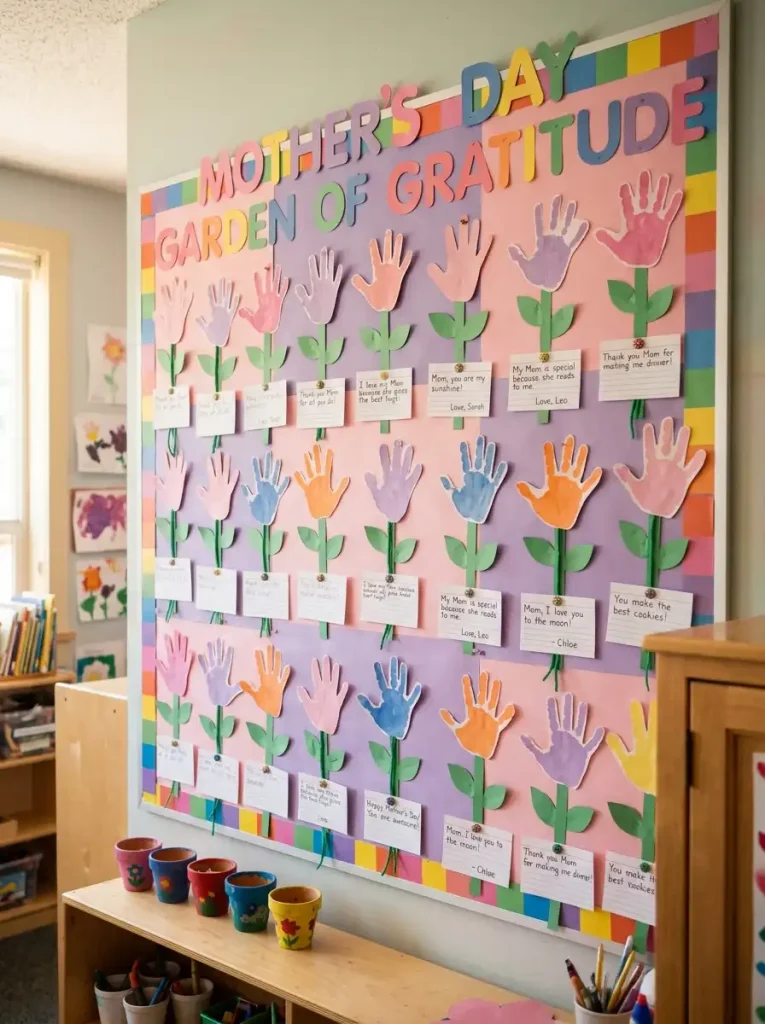
7. Mother’s Day Garden of Gratitude
Why this bulletin board works: This heartfelt board pairs handprint flowers with short gratitude messages dedicated to mothers, grandmothers, or special caregivers.
Best grades or age groups: Preschool through second grade.
Materials needed: Paint or colored paper for handprints, green stems, and small note cards.
Step-by-step setup guide: First, create a handprint flower for each student using paint or traced paper cutouts. Next, attach a green stem and leaves below each flower. Then, add a small note card with a gratitude message dictated or written by the student. Finally, arrange flowers in a garden-bed pattern across the board.
Creative variations: Some classrooms extend this into a broader “special person” theme, allowing flexibility for different family structures.
Educational benefits: This display builds fine motor skills through the handprint process while encouraging gratitude and reflection.
Seasonal learning opportunities: Pair the display with a simple writing lesson about descriptive, appreciative language.
Classroom management tips: Complete handprints in small groups to avoid a chaotic, all-at-once painting session.
Budget-friendly alternatives: Trace hands on paper instead of using paint to avoid mess and material costs entirely.
Teacher tips: Take a quick photo of each flower before sending artwork home, preserving a classroom record of the display.
Student participation ideas: Let students choose their own flower color to represent their personal connection to their special person.
Common mistakes to avoid: Assuming every student has a traditional mother figure, which can unintentionally exclude some students.
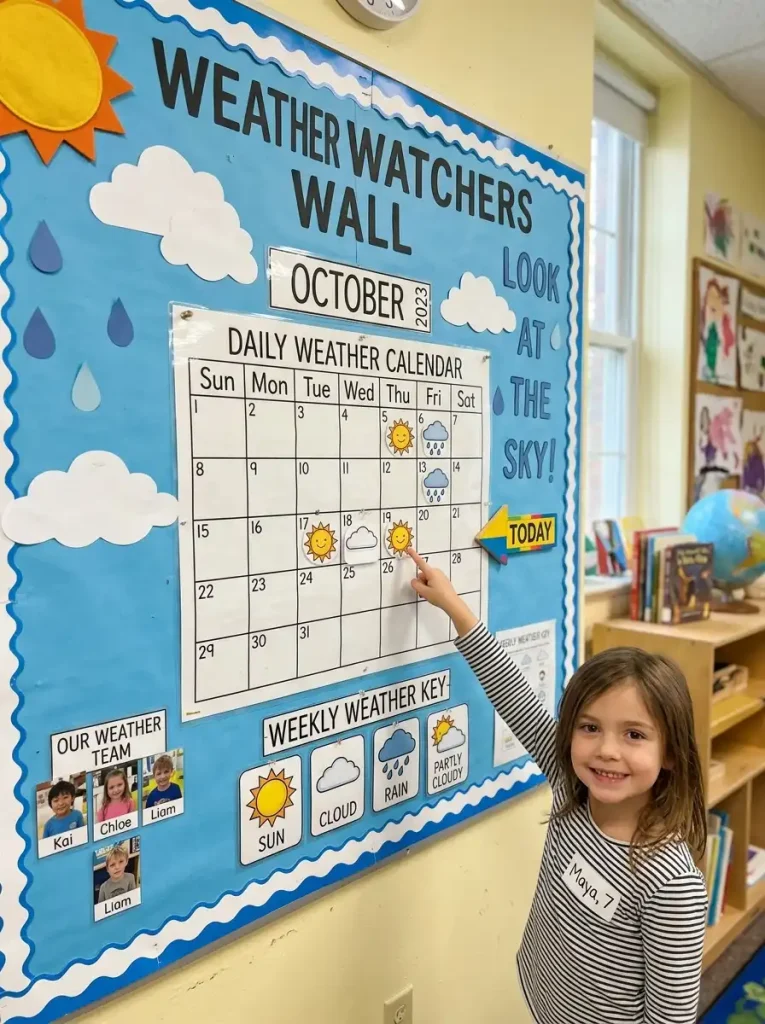
8. Weather Watchers Wall
Why this bulletin board works: This interactive board turns daily weather observation into an ongoing classroom routine, perfect for spring’s unpredictable conditions.
Best grades or age groups: Kindergarten through third grade.
Materials needed: Laminated weather icons, a simple calendar grid, and a small pointer or clip.
Step-by-step setup guide: Begin by attaching a calendar grid to the board. Next, create laminated icons representing sun, rain, clouds, and wind. Then, assign a daily “weather reporter” job to a rotating student. Finally, have that student update the board each morning based on current conditions.
Creative variations: Add a simple temperature range chart alongside the weather icons for extra data tracking.
Educational benefits: This board reinforces science vocabulary, pattern recognition, and daily routine responsibility.
Seasonal learning opportunities: Spring’s changing weather patterns make this an especially rich month for comparing daily observations.
Classroom management tips: Keep the weather-reporting routine brief, ideally under two minutes, to protect instructional time.
Budget-friendly alternatives: Draw and laminate icons by hand instead of purchasing a pre-made weather kit.
Teacher tips: Review a full week’s pattern on Fridays to reinforce comparison and prediction skills.
Student participation ideas: Rotate the reporter job daily so every student gets a turn throughout the month.
Common mistakes to avoid: Forgetting to update the board consistently, which undermines the routine’s educational value.
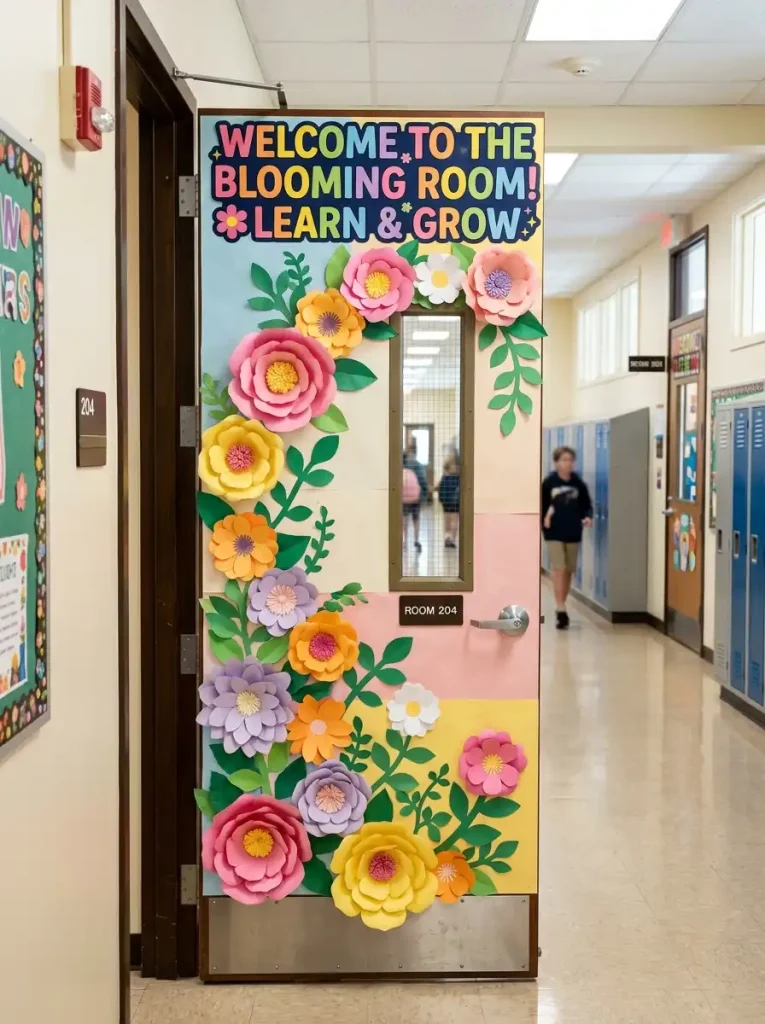
9. Classroom Door Bloom
Why this bulletin board works: Classroom door decorations create a strong first impression, and a blooming flower theme instantly signals warmth and creativity to anyone walking by.
Best grades or age groups: All elementary grade levels.
Materials needed: Colored paper for flowers, a door-sized background sheet, and a bold title banner.
Step-by-step setup guide: Start by covering the door with a soft-colored background sheet. Next, attach large flower cutouts climbing upward from the bottom of the door. Then, add a bold title banner near the top, such as “Our Class is Blooming This Spring.” Finally, personalize with student names on individual petals if space allows.
Creative variations: Some teachers add a small basket cutout at the door’s base, listing classroom values or goals inside.
Educational benefits: This display builds classroom identity and pride while welcoming families during spring events or conferences.
Seasonal learning opportunities: Refresh the door theme monthly to reflect ongoing seasonal changes throughout spring.
Classroom management tips: Use removable adhesive to protect the door’s surface and simplify future takedown.
Budget-friendly alternatives: Reuse a door design from a previous year with minor seasonal color updates.
Teacher tips: Photograph the finished door for your own portfolio or classroom social media updates.
Student participation ideas: Let students help design and cut flowers during indoor recess or free-choice time.
Common mistakes to avoid: Overloading the door with too many elements, which can look cluttered from hallway distance.
[
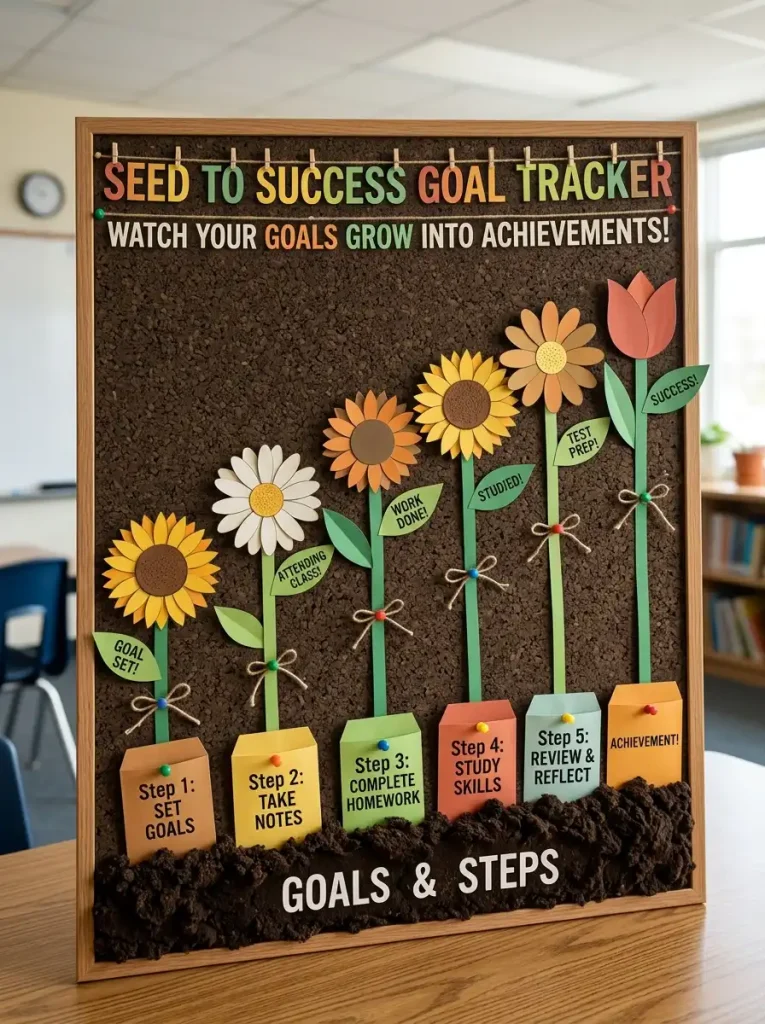
10. Seed to Success Goal Tracker
Why this bulletin board works: This board uses a seed-to-plant growth metaphor to help students visualize personal academic or behavioral goals throughout the spring semester.
Best grades or age groups: Second through fifth grade.
Materials needed: Brown paper for soil, green stems, and small seed packet labels.
Step-by-step setup guide: First, attach a soil-textured strip along the board’s bottom edge. Next, create a small seed packet for each student, labeled with their personal goal. Then, add a growing stem above each packet, extending taller as progress continues. Finally, top each stem with a flower once the goal is achieved.
Creative variations: Some classrooms use different flower colors to represent different goal categories, like academic or social goals.
Educational benefits: This display builds goal-setting skills and reinforces the connection between consistent effort and visible results.
Seasonal learning opportunities: Pair the display with a simple planting activity, growing real seeds alongside the visual metaphor.
Classroom management tips: Check in on progress weekly during a short goal-setting circle time.
Budget-friendly alternatives: Use recycled seed catalog images instead of purchasing decorative seed packet templates.
Teacher tips: Celebrate small progress milestones publicly to maintain motivation throughout the tracking period.
Student participation ideas: Let students choose and write their own goal rather than assigning one generically.
Common mistakes to avoid: Setting goals too vague to measure, which makes progress difficult to track visually.
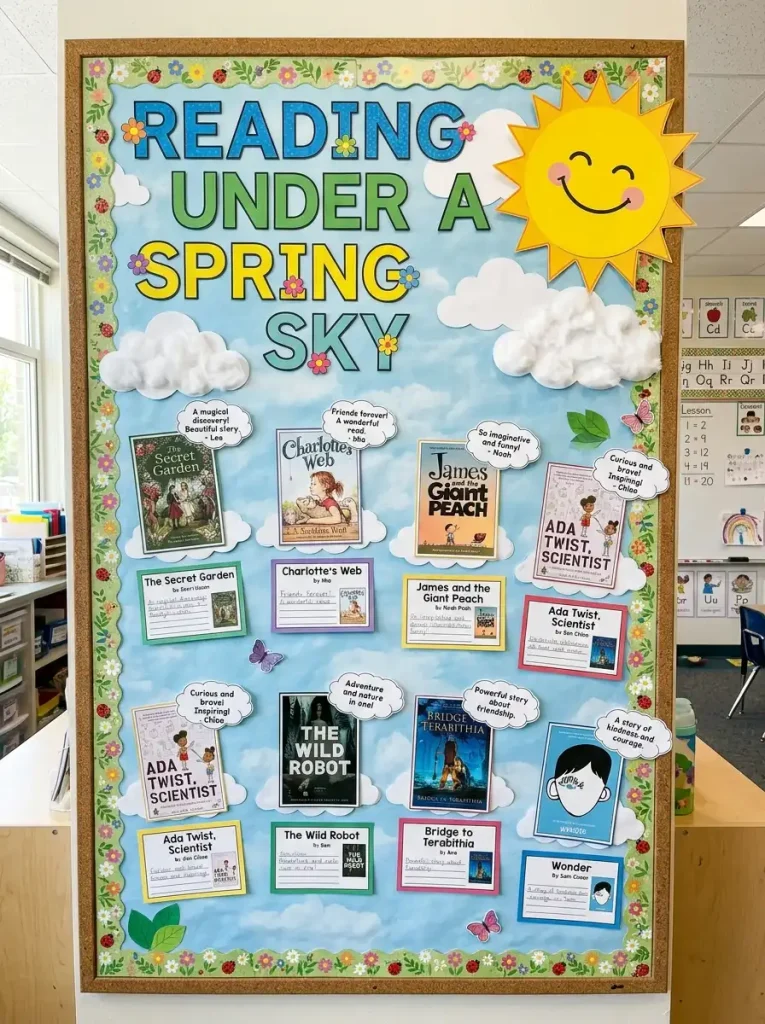
11. Reading Under a Spring Sky
Why this bulletin board works: This cozy reading corner display pairs a soft blue sky background with cloud-shaped book recommendations, creating an inviting literary space.
Best grades or age groups: All elementary grade levels.
Materials needed: Light blue background paper, white cloud cutouts, and book cover printouts.
Step-by-step setup guide: Begin by covering the board with soft blue background paper. Next, add fluffy white cloud shapes scattered across the sky. Then, attach book cover printouts or student-written recommendations onto each cloud. Finally, add a small sun cutout reading “Great Books Under Sunny Skies.”
Creative variations: Some teachers add a small kite cutout tied to a favorite class book title for extra visual interest.
Educational benefits: This board strengthens reading motivation through peer-recommended titles displayed prominently.
Seasonal learning opportunities: Rotate featured genres monthly, introducing poetry in April or nonfiction in May.
Classroom management tips: Keep a small stack of blank cloud templates near your classroom library for easy additions.
Budget-friendly alternatives: Print small book cover thumbnails instead of purchasing full-sized poster versions.
Teacher tips: Feature a “book of the week” prominently to guide browsing students toward a fresh recommendation.
Student participation ideas: Invite students to write a short review directly on their chosen cloud shape.
Common mistakes to avoid: Leaving outdated recommendations up for months without refreshing the selection.
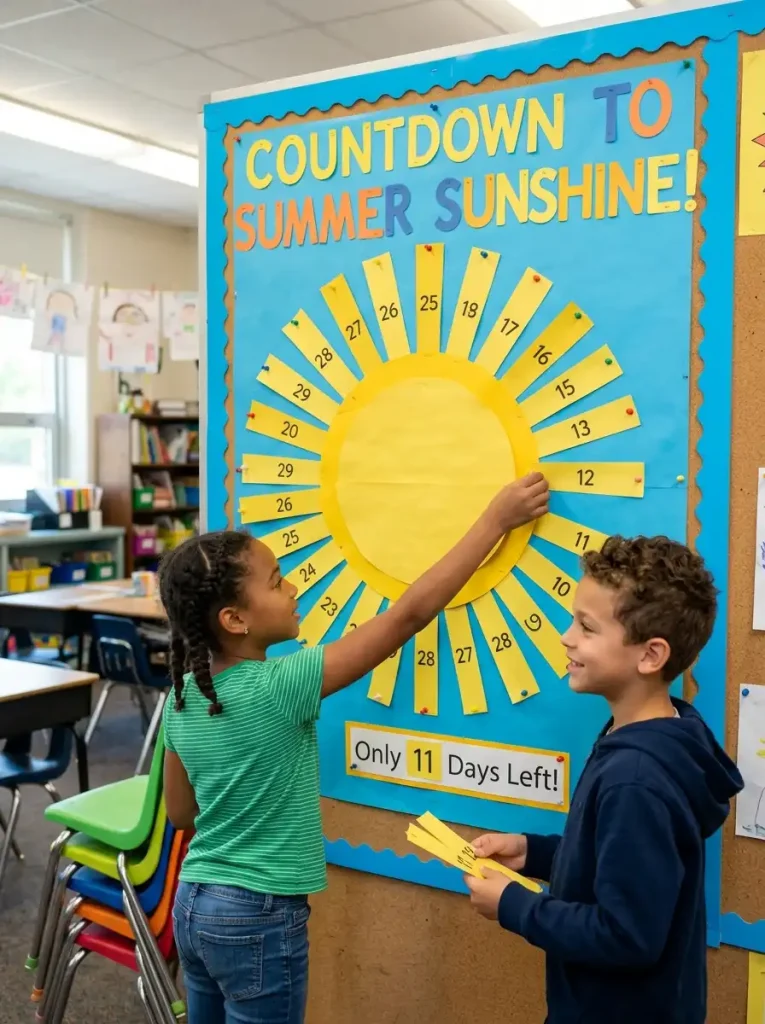
12. Countdown to Summer Sunshine
Why this bulletin board works: This energetic board channels end-of-year excitement into a structured, motivating countdown using a bright sunshine theme.
Best grades or age groups: First through fifth grade.
Materials needed: Yellow paper for a large sun, numbered ray cutouts, and a bold title banner.
Step-by-step setup guide: First, attach a large sun shape to the center of the board. Next, create numbered rays counting down the remaining school days. Then, arrange rays radiating outward from the sun in descending order. Finally, remove one ray each day as the countdown progresses.
Creative variations: Some classrooms assign a small task or reflection prompt to each ray, adding a light academic element to the countdown.
Educational benefits: This display builds number sense, sequencing skills, and daily routine anticipation.
Seasonal learning opportunities: Use the final countdown days to review key concepts from throughout the school year.
Classroom management tips: Choose a countdown length that stays motivating without dragging on too long or starting too early.
Budget-friendly alternatives: Reuse the same numbered rays year after year with simple color touch-ups.
Teacher tips: Assign ray removal as a rotating daily classroom job to build anticipation and responsibility.
Student participation ideas: Let students decorate their assigned ray number with a small personal design.
Common mistakes to avoid: Forgetting to update the countdown daily, which weakens the entire concept’s impact.
Grade Level Suitability at a Glance
| Bulletin Board Idea | Preschool | Elementary | Upper Elementary |
|---|---|---|---|
| Blooming Bunch of Learners | Yes | Yes | Somewhat |
| Growing Readers Garden | No | Yes | Yes |
| Rainbow of Kindness | Yes | Yes | Somewhat |
| Butterfly Transformation Station | Somewhat | Yes | No |
| Spring Cleaning Our Habits | No | Yes | Yes |
| Nature Walk Discoveries | Yes | Yes | Somewhat |
| Mother’s Day Garden of Gratitude | Yes | Yes | No |
| Weather Watchers Wall | Somewhat | Yes | No |
| Classroom Door Bloom | Yes | Yes | Yes |
| Seed to Success Goal Tracker | No | Somewhat | Yes |
| Reading Under a Spring Sky | Yes | Yes | Yes |
| Countdown to Summer Sunshine | Somewhat | Yes | Yes |
Estimated Time and Budget by Idea
| Bulletin Board Idea | Preparation Time | Estimated Budget |
|---|---|---|
| Blooming Bunch of Learners | 2 hours | Low |
| Growing Readers Garden | 2.5 hours | Low |
| Rainbow of Kindness | 2 hours | Low |
| Butterfly Transformation Station | 3 hours | Moderate |
| Spring Cleaning Our Habits | 2 hours | Low |
| Nature Walk Discoveries | 1.5 hours setup, ongoing | Low |
| Mother’s Day Garden of Gratitude | 2.5 hours | Low |
| Weather Watchers Wall | 3 hours | Moderate |
| Classroom Door Bloom | 2 hours | Low |
| Seed to Success Goal Tracker | 2.5 hours | Low |
| Reading Under a Spring Sky | 2.5 hours | Low |
| Countdown to Summer Sunshine | 2 hours | Low |
Frequently Asked Questions
How often should I change a spring bulletin board? Most teachers find that refreshing displays every three to four weeks keeps content feeling current without requiring constant rework. Boards with ongoing interactive elements, like the Growing Readers Garden or Rainbow of Kindness, can stay up longer since students continuously add new content over time. Watch for signs of wear, like torn paper or fading colors, as a signal that it’s time for an update.
What is the easiest spring bulletin board idea for a beginner teacher? Blooming Bunch of Learners works particularly well for beginners since it requires only basic paper-cutting skills and minimal setup time. The concept explains itself quickly to students, and materials stay simple and affordable. Most teachers can complete this display within two hours, making it a low-stress starting point.
How can I make a spring bulletin board more interactive? Build in an ongoing contribution point, such as a weekly leaf, flower, or note that students add themselves. Ideas like the Weather Watchers Wall or Seed to Success Goal Tracker naturally invite continued participation rather than sitting as a finished, untouched display. This keeps the board evolving throughout the season with minimal extra effort from you.
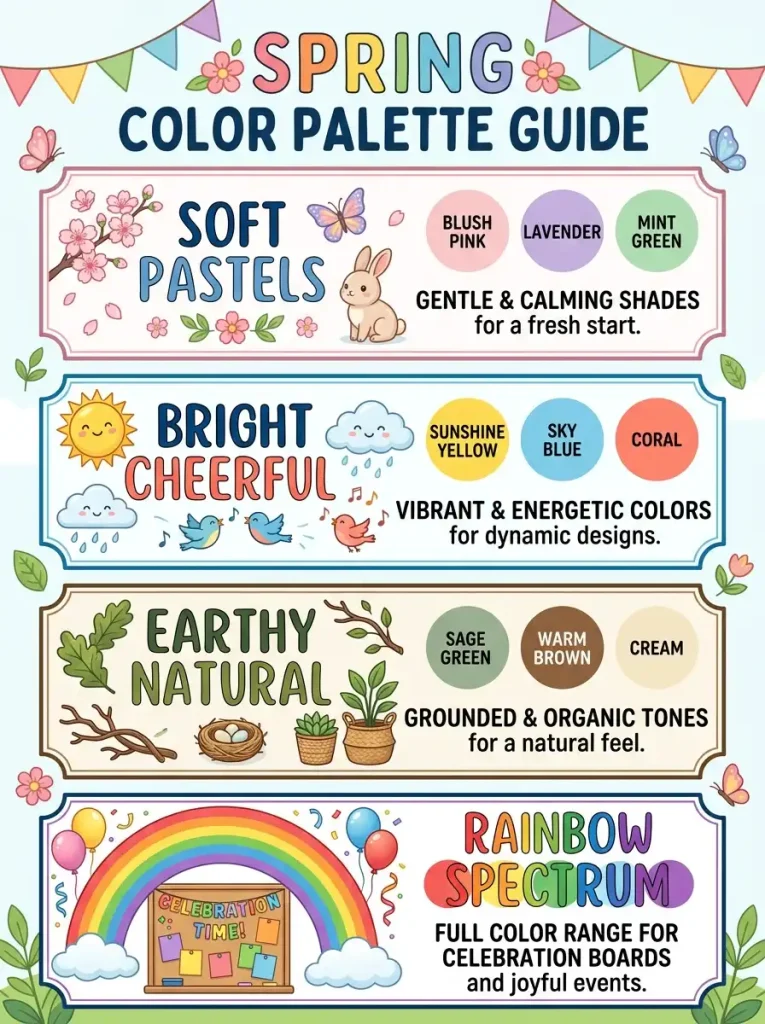
What colors work best for spring classroom decorations? Soft pastels like blush pink, lavender, and mint green capture spring’s gentle, renewing feeling nicely. Brighter combinations, including sunshine yellow and sky blue, work well for more energetic or celebratory displays. Balancing warm and cool tones within the same board keeps the design from feeling either too muted or too intense.
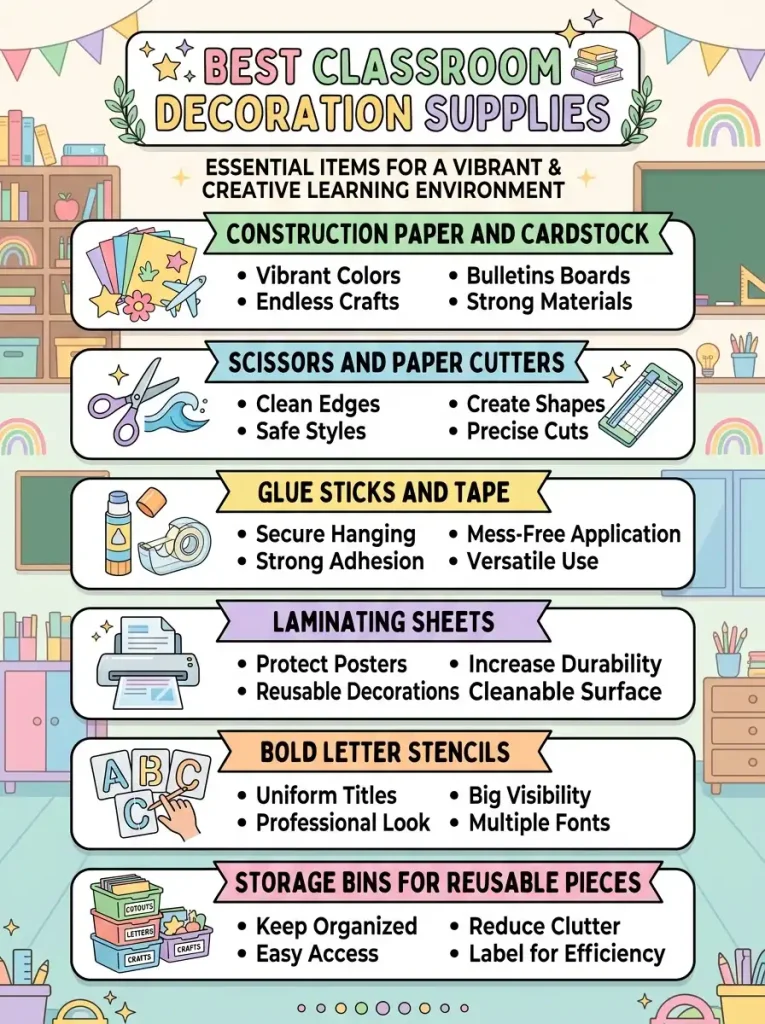
How do I keep bulletin board costs low? Prioritize recycled materials like leftover construction paper scraps, old magazine pages, and reused borders from previous seasons. Many of the ideas in this guide cost only a few dollars in total materials when approached with a budget-conscious mindset. Storing reusable pieces in labeled bins also stretches your classroom budget across multiple years.
Can these ideas work for a shared school hallway display instead of inside a single classroom? Absolutely. Ideas like Rainbow of Kindness and Classroom Door Bloom translate beautifully to a shared hallway space where multiple classes contribute together. Hallway displays often benefit from slightly bolder colors and larger lettering, since passersby view them more quickly than students would inside a classroom.
How do I involve students who are hesitant to participate? Offer a range of contribution options, from simple coloring tasks to more involved writing components, so every student finds an entry point that feels comfortable. Pairing hesitant students with a partner for their first contribution often builds enough confidence for future independent participation.
What is the best bulletin board idea for a preschool classroom? Rainbow of Kindness and Mother’s Day Garden of Gratitude both work wonderfully for preschool, since they use large, simple shapes and minimal required text. Young students respond strongly to color and hands-on crafting, making both ideas accessible even before independent reading skills develop.
How do I transition a spring bulletin board into an end-of-year display? Several ideas on this list, including Countdown to Summer Sunshine and Seed to Success Goal Tracker, were designed with this transition already in mind. Simply adjust wording and add a few celebratory touches as the school year winds down, keeping the existing structure intact to save preparation time.
Why do growth-themed bulletin boards work particularly well in spring? Spring naturally reinforces themes of renewal and growth, both literally in nature and academically as students reflect on progress made since fall. Boards like Growing Readers Garden or Seed to Success Goal Tracker give students a visible, tangible way to see how far they’ve come this year.
Bringing It All Together
Spring offers a genuine opportunity to refresh your classroom’s energy and celebrate everything your students have accomplished so far this year. These twelve ideas, from a cheerful flower garden to a motivating summer countdown, give you flexible options for every grade level and every budget.
Choose the concepts that resonate most with your teaching style, personalize them with your students’ voices, and don’t be afraid to blend elements from multiple ideas into something uniquely yours. A little creativity this spring can turn ordinary hallway walls into one of the most memorable parts of your students’ year.