12 Ocean Bulletin Board Ideas That Bring the Sea Into Your Classroom
Picture a classroom wall transformed into a coral reef, complete with darting fish and gentle waves rolling across the corkboard. That’s the magic an ocean bulletin board brings to any learning space. Students walk in and instantly feel like they’ve stepped into a different world.
Ocean themes work everywhere, from bustling elementary classrooms to quiet homeschool corners and cozy library reading nooks. Preschool teachers love how sea creatures capture young imaginations instantly. Kindergarten and elementary teachers appreciate how easily an ocean bulletin board ties into science units on habitats, food chains, and marine life.
Summer learning programs also lean heavily on ocean themes, since the season practically begs for beach and sea imagery. Whatever your setting, these ideas adapt easily to fit your space, budget, and grade level.
Below, you’ll find twelve fully developed ocean bulletin board ideas, each with its own theme, materials list, and classroom-tested tips. Let’s dive in.
The 12 Ocean Bulletin Board Ideas
1. Dive Into Learning
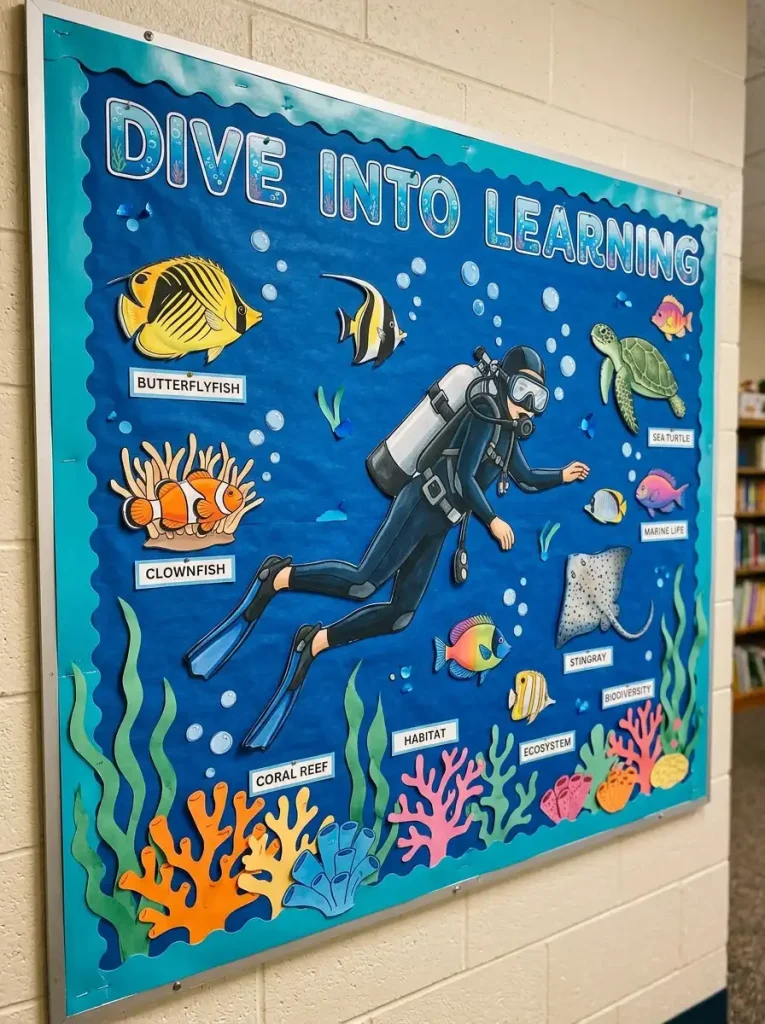
This board sets the tone for an entire ocean-themed unit or season. A large diver character swims across the board, surrounded by educational labels pointing out different sea creatures and their names.
The concept works as a welcoming, big-picture introduction to ocean studies. Students encounter new vocabulary simply by scanning the display each day.
This idea suits preschool through elementary grades comfortably. Decorations include a diver cutout, bubble shapes, and labeled fish, coral, and seaweed pieces scattered throughout.
Suggested colors include deep blue, turquoise, and white for bubbles. Materials needed include construction paper, white chalk or paint for bubbles, and laminated vocabulary labels.
The interactive element invites students to match a vocabulary card to the correct sea creature picture. This board teaches marine vocabulary while reinforcing labeling and categorization skills.
Place this board near your classroom entrance or a science center for maximum visibility. It also works beautifully as a summer learning kickoff display.
For a budget-friendly approach, print creature images instead of hand-cutting each shape individually. Customize the diver’s gear to match your class mascot or team colors for extra personality.
Quick Tip: Add a bubble-shaped word bank near the board so students can practice new ocean vocabulary independently.
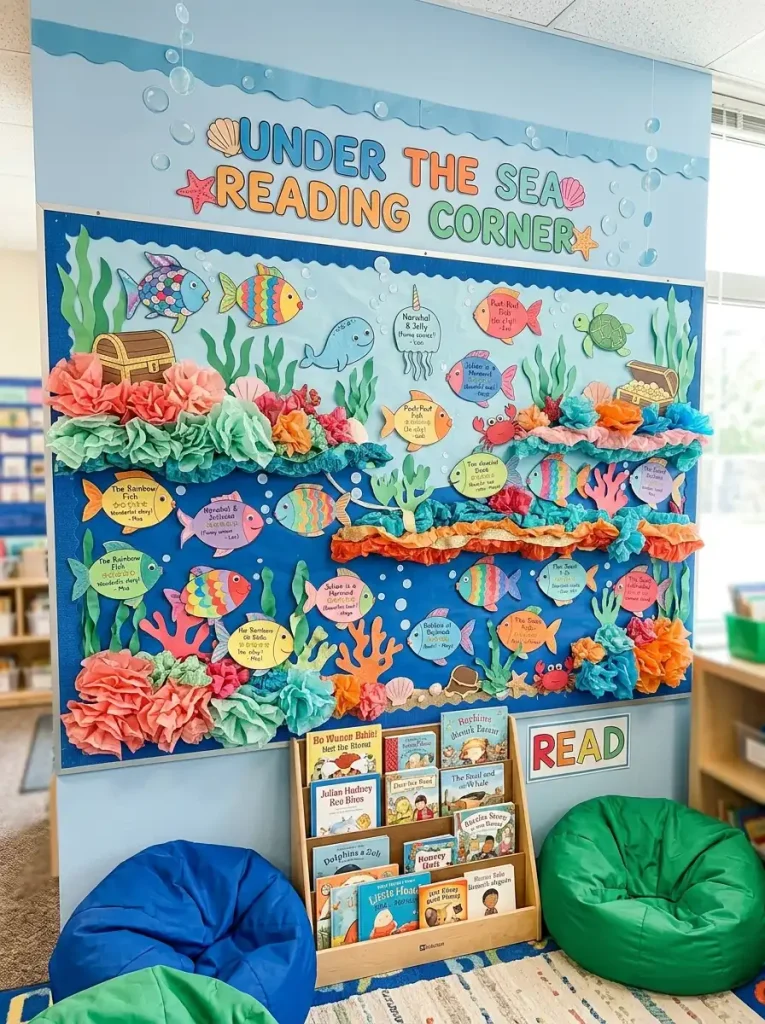
2. Under the Sea Reading Corner
This board transforms a reading nook into an underwater library, complete with coral shelves and fish-shaped book recommendation tags. It pairs beautifully with any classroom library space.
The concept celebrates reading motivation through immersive, playful sea imagery. Students associate books with adventure and exploration rather than obligation.
Best suited for elementary classrooms and school libraries. Decorations include paper coral, seaweed strands, and fish cutouts listing book titles and short reviews.
Suggested colors include coral pink, seafoam green, and sandy beige. Materials needed include tissue paper for coral texture, laminated fish templates, and a soft blue background.
The interactive element lets students add a new fish whenever they finish a book, listing the title and a one-line recommendation. This board builds reading motivation while encouraging peer-to-peer book discovery.
Place this display directly above or beside your classroom reading corner for a cohesive, immersive feel. It works wonderfully as a year-round reading motivator, not just a summer display.
For an affordable version, use tissue paper scraps for coral texture instead of purchasing specialty craft paper. Customize by grouping fish by genre, creating a simple visual sorting system for browsing readers.
Quick Tip: Laminate blank fish templates and keep them near your bookshelf so students can add reviews independently.
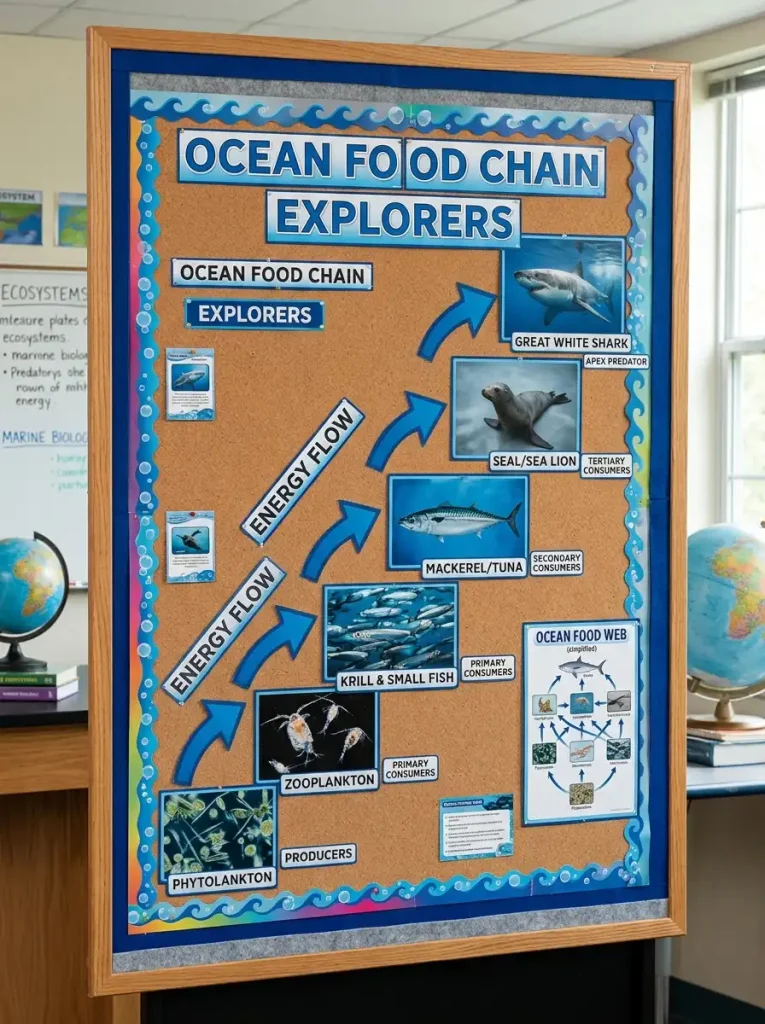
3. Ocean Food Chain Explorers
This board turns a complex science concept into a clear, visual food chain running from tiny plankton up to a large shark. Arrows connect each creature, showing exactly who eats whom.
The concept simplifies an abstract ecological idea into something students can trace with their eyes. Seeing the chain visually helps cement the sequence far better than text alone.
Best suited for upper elementary and middle school science classrooms. Decorations include labeled creature cutouts arranged in ascending size order, connected by directional arrows.
Suggested colors include ocean blue, gray, and green with bold black arrow accents. Materials needed include creature templates, cardstock for durability, and marker or yarn for connecting lines.
The interactive element invites students to rearrange movable creature cards to test their understanding of the chain’s order. This board directly reinforces science curriculum around ecosystems and energy transfer.
Place this display in your science corner or near related textbook materials for easy reference during lessons. It adapts well as a permanent science-wing fixture rather than a rotating seasonal display.
For a budget-friendly version, print creature images instead of drawing them by hand. Customize by adding real ocean food chain examples from your specific curriculum standards.
Quick Tip: Use velcro dots behind each creature so students can physically rebuild the food chain themselves.
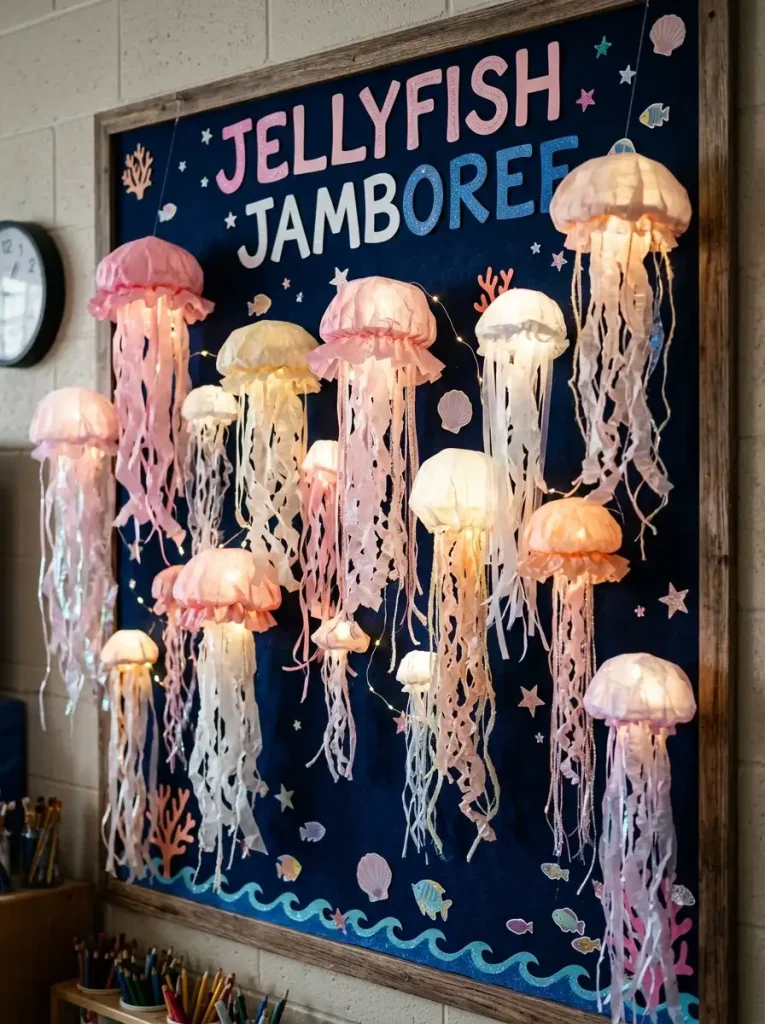
4. Jellyfish Jamboree
This whimsical board features flowing tissue-paper jellyfish drifting across a deep blue background. Strings of varying lengths create a floating, three-dimensional effect.
The concept emphasizes texture and movement more than most other ocean ideas on this list. Its dreamy, flowing look makes it especially eye-catching in a school hallway.
Best suited for preschool and kindergarten classrooms. Decorations include tissue paper streamers, paper jellyfish caps, and shimmering accent paper for a glowing effect.
Suggested colors include soft pink, purple, and glowing white against navy blue. Materials needed include tissue paper, string, glue, and a dark background sheet.
The interactive element invites students to help twist and hang tissue streamers themselves, building fine motor skills through the craft process. This board supports sensory exploration and creative expression in early childhood settings.
Place this display in a hallway or classroom corner with enough depth for the streamers to hang and move freely. It works wonderfully as a rotating seasonal piece for summer or ocean-unit kickoffs.
For an affordable approach, use recycled tissue paper or leftover craft scraps instead of buying new packages. Customize jellyfish colors to match your classroom’s overall color scheme for cohesion.
Quick Tip: Add battery-operated fairy lights behind the jellyfish for a soft, glowing underwater effect.
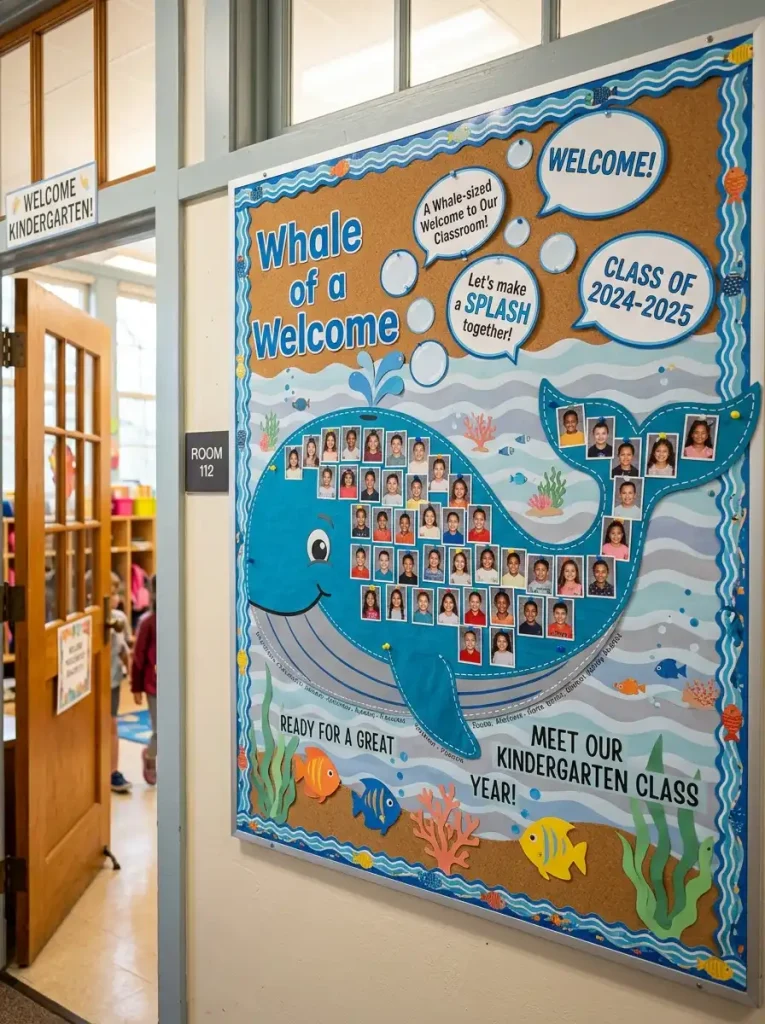
5. Whale of a Welcome
This board greets students and visitors with a friendly giant whale stretching across the board, its body filled with a class photo collage. Bubbles rising from its blowhole spell out a welcome message.
The concept builds classroom community from day one by literally placing every student inside a shared, joyful image. New students immediately see themselves included in the visual.
Best suited for preschool through elementary classrooms. Decorations include a large whale silhouette, individual student photos, and bubble-shaped text callouts.
Suggested colors include ocean blue, gray, and white with cheerful accent colors for the welcome text. Materials needed include large paper for the whale body, photo printouts, and glue.
The interactive element invites new students throughout the year to add their photo to the whale’s body upon joining. This board builds a sense of belonging and community from the very first day.
Place this display near your classroom entrance so it greets students and family visitors immediately. It works year-round as a permanent community-building fixture rather than a rotating theme.
For a budget-friendly version, print small photo thumbnails instead of full-sized pictures to save on printing costs. Customize the whale’s welcome message seasonally, such as “Welcome Back” in fall or “Happy Summer” in June.
Quick Tip: Leave extra blank whale space for mid-year additions when new students join your class.
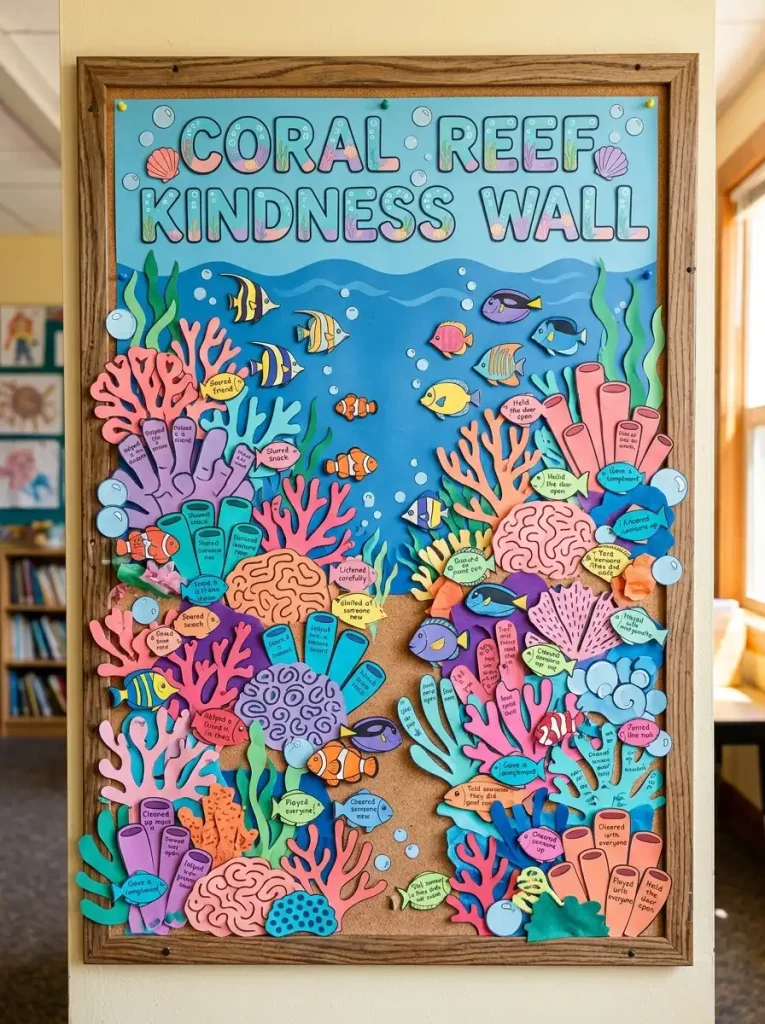
6. Coral Reef Kindness Wall
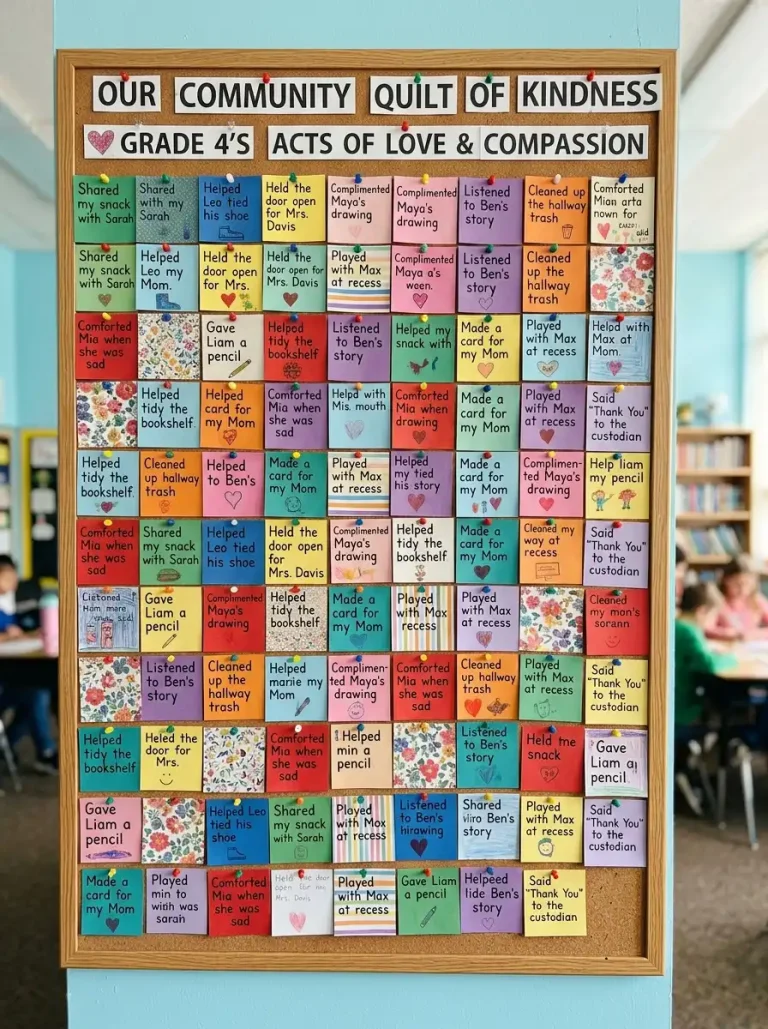
This board pairs a colorful coral reef backdrop with a kindness-tracking system, where each act of kindness adds a new coral piece to the reef. The reef grows more vibrant as positive behavior accumulates.
The concept reinforces social-emotional learning through a visual, ongoing metaphor. Watching the reef fill in gives students a tangible sense of collective progress.
Best suited for elementary classrooms focused on character education. Decorations include layered paper coral shapes, small fish, and a simple ocean-floor background.
Suggested colors include coral pink, purple, orange, and turquoise for a vibrant reef effect. Materials needed include colored cardstock, scissors, and markers for writing kindness notes.
The interactive element invites students to add a new coral piece whenever they witness or perform an act of kindness. This board reinforces empathy, community values, and positive classroom culture.
Place this display prominently near your classroom door or community circle area. It works especially well as an ongoing, year-round classroom culture piece.
For an affordable approach, cut coral shapes from recycled magazine pages or scrap cardstock. Customize by adding a “Reef of the Week” spotlight recognizing a standout kind act.
Quick Tip: Keep a stack of blank coral templates near the board so students can contribute independently.
7. Message in a Bottle Goals
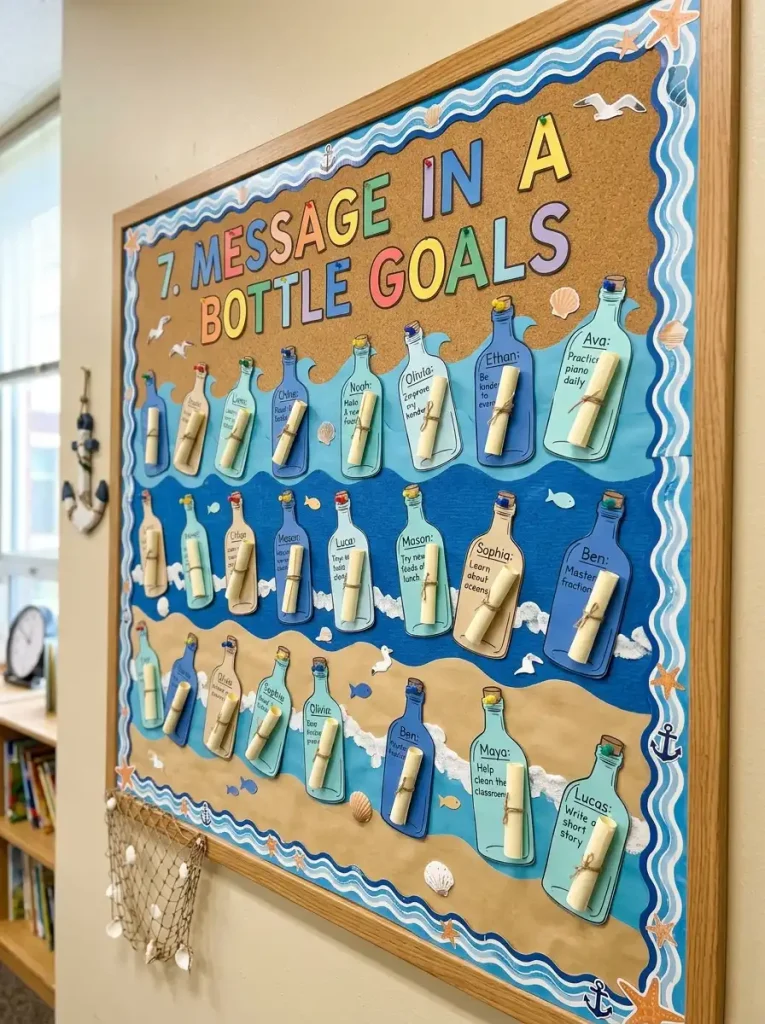
This board features paper “bottles” floating across a wave-patterned background, each containing a rolled note with a student’s personal goal for the month or semester.
The concept adds an element of mystery and personalization that pure text displays often lack. Students enjoy the small ritual of writing and “sealing” their own message.
Best suited for upper elementary and middle school classrooms. Decorations include bottle cutouts, wave patterns, and small rolled paper scrolls tucked inside each bottle.
Suggested colors include sandy tan, sea glass green, and ocean blue. Materials needed include bottle templates, small paper scraps for scrolls, and twine for a corked effect.
The interactive element invites students to revisit their bottle and reflect on progress at a set checkpoint later in the term. This board builds goal-setting skills and reflective thinking naturally.
Place this display near your classroom goal-tracking area or morning meeting space. It adapts well to quarterly refreshes, giving students a fresh goal each new grading period.
For a budget-friendly version, use recycled brown paper bags for a sandy, weathered bottle texture. Customize by grouping bottles by table team or reading group for organizational clarity.
Quick Tip: Attach a small piece of twine around each bottle’s neck to mimic a cork seal for extra charm.
8. Octopus of Eight Great Habits
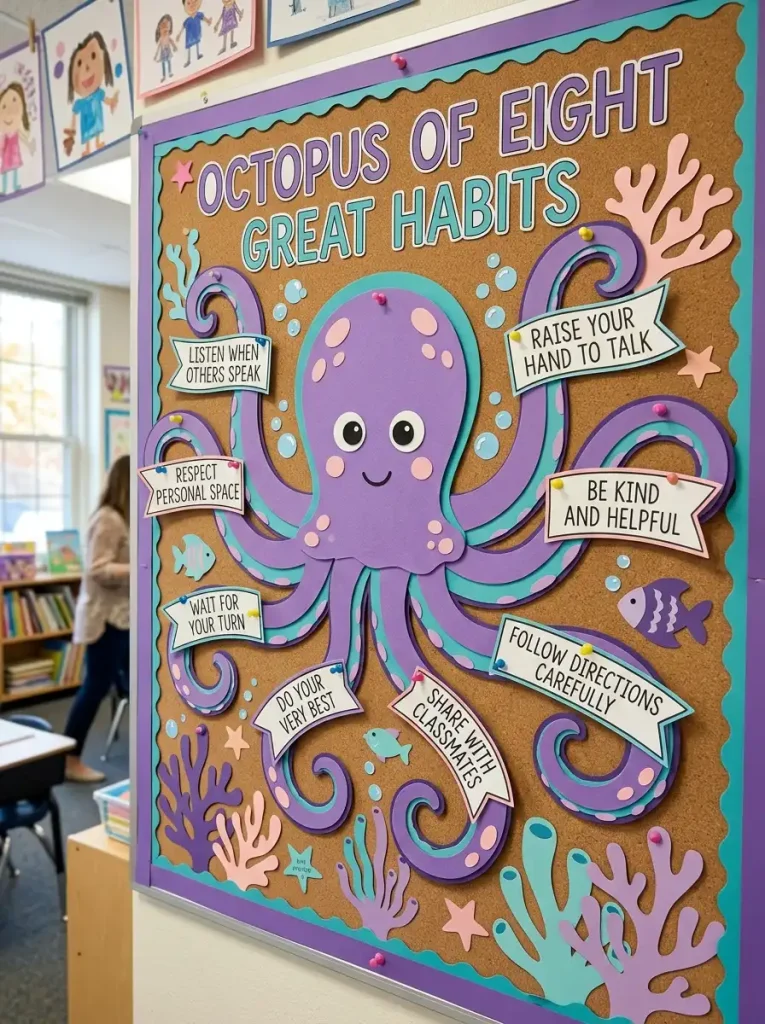
This clever board uses an octopus with eight labeled arms, each highlighting one key classroom habit or expectation. The playful format makes classroom rules feel approachable rather than strict.
The concept transforms a typically dry classroom-management topic into something visually engaging. Students remember expectations more easily when tied to a fun, memorable image.
Best suited for preschool through elementary classrooms. Decorations include a large octopus body, eight curling arm shapes, and labeled habit tags at each tip.
Suggested colors include purple, teal, and soft pink for the octopus body. Materials needed include construction paper, curling ribbon or paper strips for texture, and bold marker labels.
The interactive element invites students to point to and recite a specific arm’s habit during morning meetings. This board reinforces classroom expectations through repeated, low-pressure exposure.
Place this display near your classroom’s daily schedule or morning meeting area for consistent visibility. It works well as a semi-permanent fixture that only needs updates when habits change.
For an affordable approach, curl paper strips using scissors instead of purchasing pre-made curling ribbon. Customize habits to match your specific classroom’s needs and current behavioral goals.
Quick Tip: Laminate each arm’s label so you can easily swap habits throughout the year without remaking the whole board.
9. Sea Turtle Growth Tracker
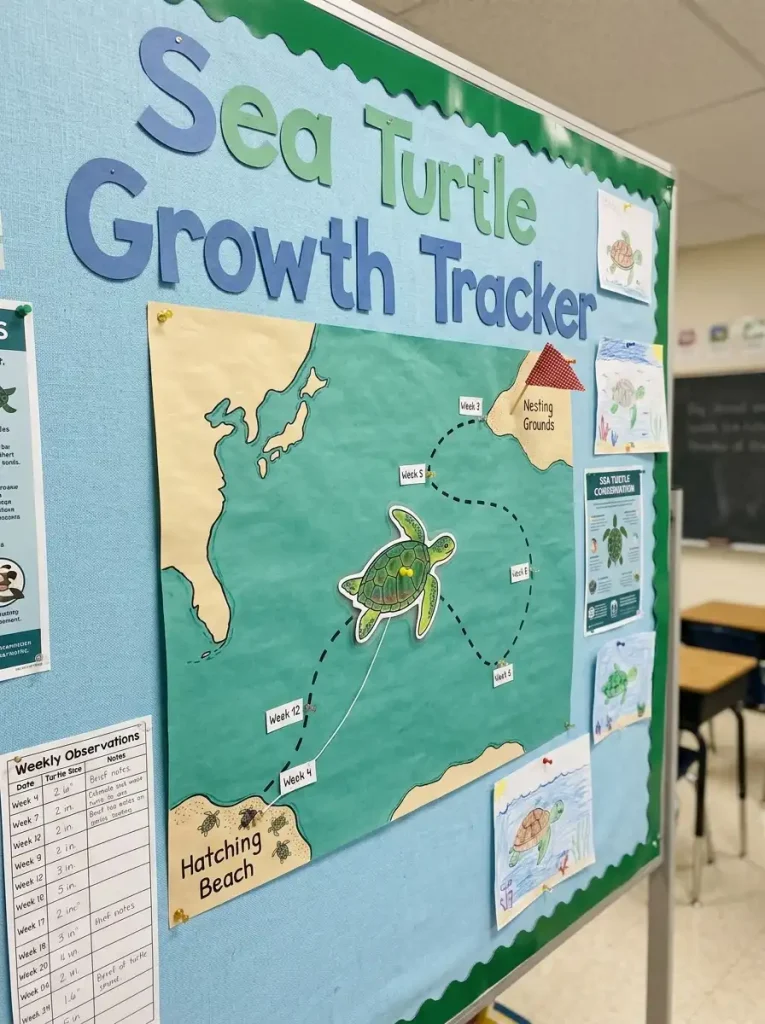
This board follows a sea turtle’s journey across the ocean, with the turtle moving closer to its destination as a class reaches collective reading or behavior goals.
The concept builds anticipation through gradual, visible progress toward a shared destination. Watching the turtle inch forward keeps motivation steady over several weeks.
Best suited for elementary classrooms working toward a whole-class incentive. Decorations include a movable turtle cutout, a mapped ocean path, and milestone markers along the way.
Suggested colors include sea green, sandy beige, and soft blue. Materials needed include a laminated turtle cutout, velcro or tape for repositioning, and a background ocean map.
The interactive element involves physically moving the turtle forward as a class each time a milestone is reached. This board builds collective motivation and teamwork toward a shared goal.
Place this display somewhere highly visible, like the front of the classroom, so progress stays top of mind daily. It works especially well as a countdown to a special class celebration or reward.
For a budget-friendly version, draw the ocean path freehand instead of purchasing a printed map template. Customize milestone markers to reflect your class’s specific goal, whether that’s books read or kindness points earned.
Quick Tip: Add a small flag at the final destination point so students have a clear visual finish line to work toward.
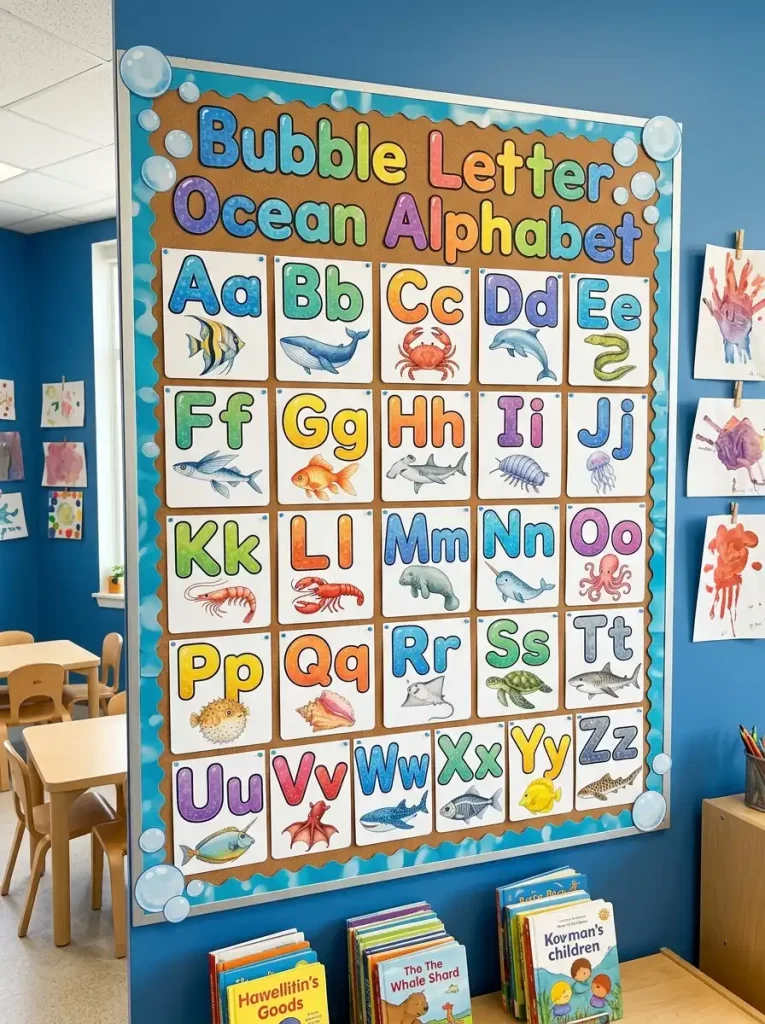
10. Bubble Letter Ocean Alphabet
This educational board pairs each letter of the alphabet with a matching ocean creature or object, creating a full alphabet reference wrapped in sea-themed illustrations.
The concept works especially well for early literacy development, reinforcing letter-sound connections through memorable imagery. Students naturally associate “O” with octopus or “S” with starfish.
Best suited for preschool and kindergarten classrooms. Decorations include twenty-six labeled creature or object cutouts, arranged in alphabetical rows across the board.
Suggested colors include a rainbow ocean palette, varying by creature type. Materials needed include letter templates, matching creature illustrations, and laminate for durability.
The interactive element invites students to point to and say each letter and its matching creature during daily practice. This board reinforces phonics instruction in a visually rich, memorable format.
Place this display at student eye level near your literacy center for daily reference during lessons. It works well as a permanent, year-round classroom fixture rather than a rotating theme.
For an affordable approach, print creature clip art instead of hand-illustrating all twenty-six images. Customize by highlighting a “letter of the week” with a small spotlight marker or ribbon.
Quick Tip: Add a pointer stick nearby so students can lead a quick alphabet recitation independently.
11. Shipwreck Treasure Hunt
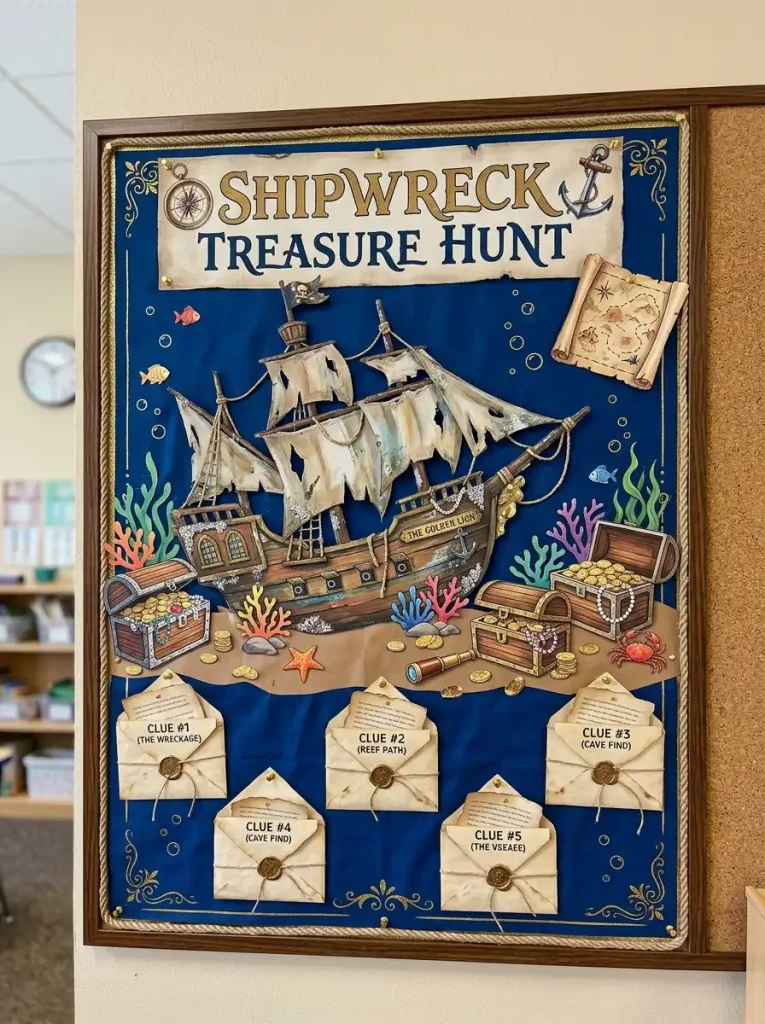
This adventurous board features a sunken ship surrounded by hidden treasure clues, tying directly into a reading comprehension or research-based scavenger hunt activity.
The concept gamifies learning by turning the bulletin board into an active puzzle rather than a passive display. Students engage far more deeply when a display invites genuine problem-solving.
Best suited for upper elementary and middle school classrooms. Decorations include a shipwreck cutout, scattered treasure chest icons, and hidden clue cards tucked around the board.
Suggested colors include weathered brown, deep blue, and gold accent details. Materials needed include ship and treasure templates, small envelope pockets for clues, and cardstock for durability.
The interactive element invites students to solve clues hidden throughout the board to “find” the treasure’s final location. This board strengthens reading comprehension, critical thinking, and collaborative problem-solving skills.
Place this display in a spot with enough room for small groups to gather and examine clues together. It works wonderfully as a rotating unit-specific display tied to a current reading or research project.
For a budget-friendly version, use recycled brown paper for a weathered, shipwreck-appropriate texture. Customize clues to match your current curriculum unit, whether that’s a novel study or historical research topic.
Quick Tip: Number each clue pocket so students can work through the hunt in a clear, organized sequence.
12. Summer Splash Countdown
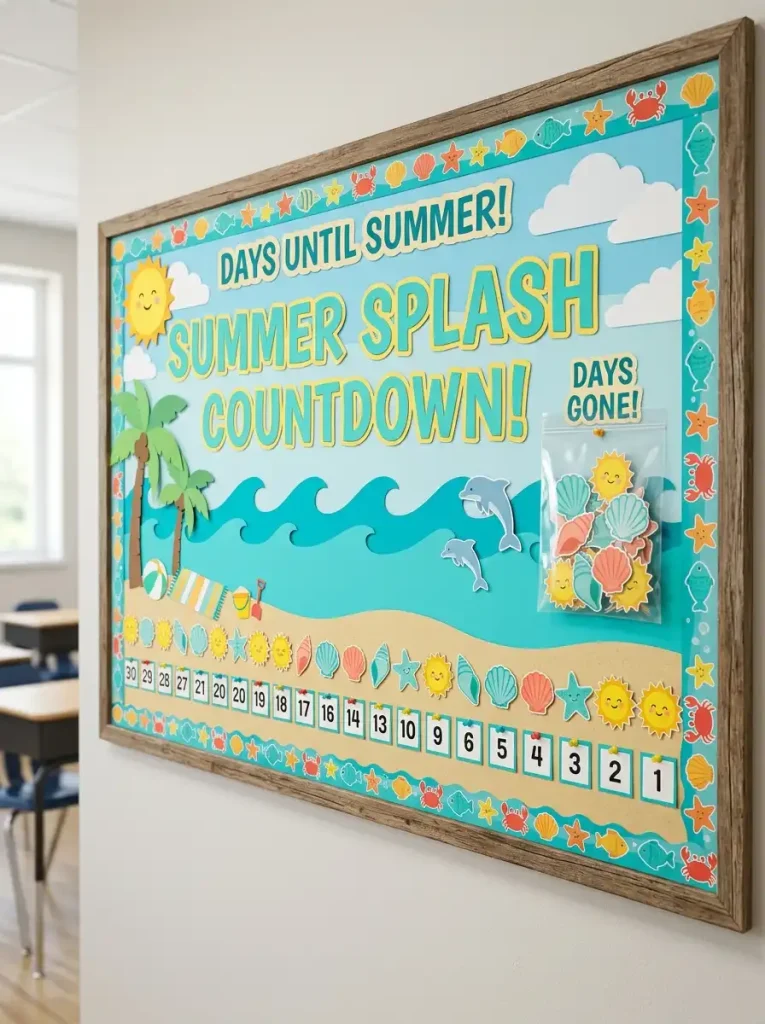
This cheerful board counts down the final days of school using a beach and ocean theme, with removable sun, wave, or shell icons marking each remaining day.
The concept channels end-of-year excitement into a structured, motivating countdown rather than pure distraction. Students stay engaged academically while anticipating the coming break.
Best suited for elementary and middle school classrooms nearing the end of the school year. Decorations include beach-themed icons, a sandy background strip, and a bold countdown title banner.
Suggested colors include bright sunshine yellow, aqua blue, and sandy tan. Materials needed include laminated countdown icons, a background beach scene, and removable adhesive or clips.
The interactive element assigns a rotating classroom job of removing one icon each day as the countdown progresses. This board builds number sense and daily routine skills while maintaining excitement responsibly.
Place this display near your classroom’s daily calendar or schedule area for consistent visibility. It works perfectly as a transition piece from an ocean-unit theme into full summer break mode.
For an affordable approach, reuse the same countdown icons year after year with minor seasonal touch-ups. Customize the countdown length to match your specific school calendar and any planned celebrations.
Quick Tip: Let a different student remove the day’s icon each morning as a rotating, anticipated class job.
Why Ocean Bulletin Boards Inspire Learning
Ocean themes tap into something universal. Nearly every student, regardless of age, feels curious about what lives beneath the waves.
That built-in curiosity makes ocean bulletin boards powerful teaching tools. A display featuring a coral reef naturally invites questions about ecosystems, camouflage, and food chains. Students absorb vocabulary and concepts simply by studying the wall each day.
Color also plays a huge role. Blues, teals, and greens create a calm, soothing atmosphere that many teachers find helps regulate classroom energy. Unlike bold primary-color displays, ocean palettes tend to feel peaceful rather than overstimulating.
Beyond aesthetics, ocean bulletin boards support genuine cross-curricular learning. Reading corners can feature ocean-themed book recommendations. Math boards can track class goals using fish swimming toward a destination. Even social-emotional learning fits naturally, with kindness or teamwork themes wrapped in sea-life imagery.
Finally, ocean displays simply feel fun. Both students and teachers enjoy the creative process of building paper coral, gluing googly eyes onto fish, or crafting a jellyfish from tissue paper. That shared enjoyment builds classroom community while decorating.
How to Create an Effective Ocean Bulletin Board
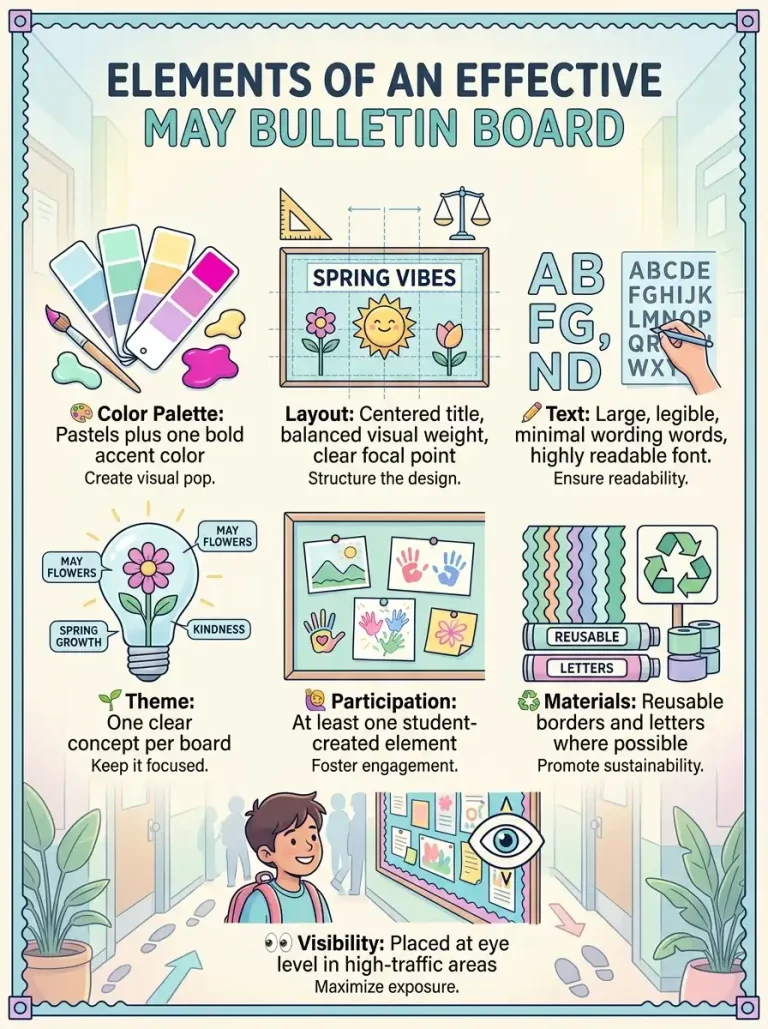
Before jumping into specific ideas, it helps to understand a few design fundamentals. These principles apply across every ocean-themed display.
Choose a focal point first, whether that’s a large octopus, a coral reef, or a friendly whale. Everything else should support and frame that central visual.
Layer your materials to create depth. Overlapping paper waves, seaweed, and coral pieces make a flat corkboard feel three-dimensional and alive.
Stick to an ocean palette of blues, teals, greens, and sandy tans. Add one bright accent color, like coral orange or sunny yellow, to keep the design from feeling monotone.
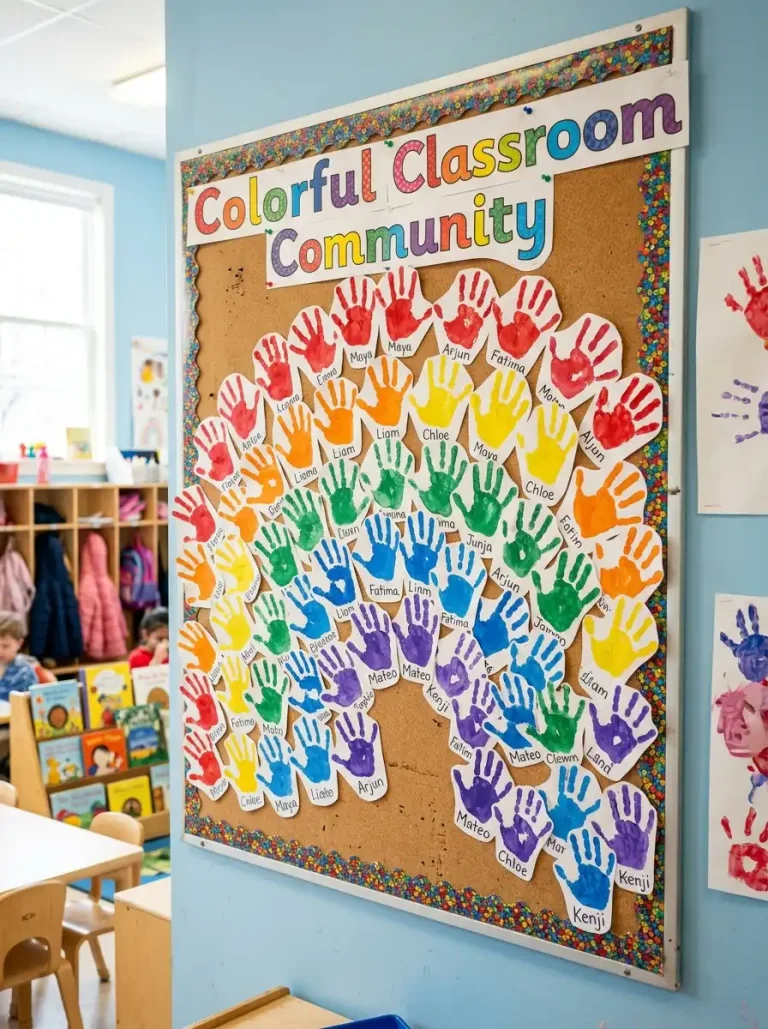
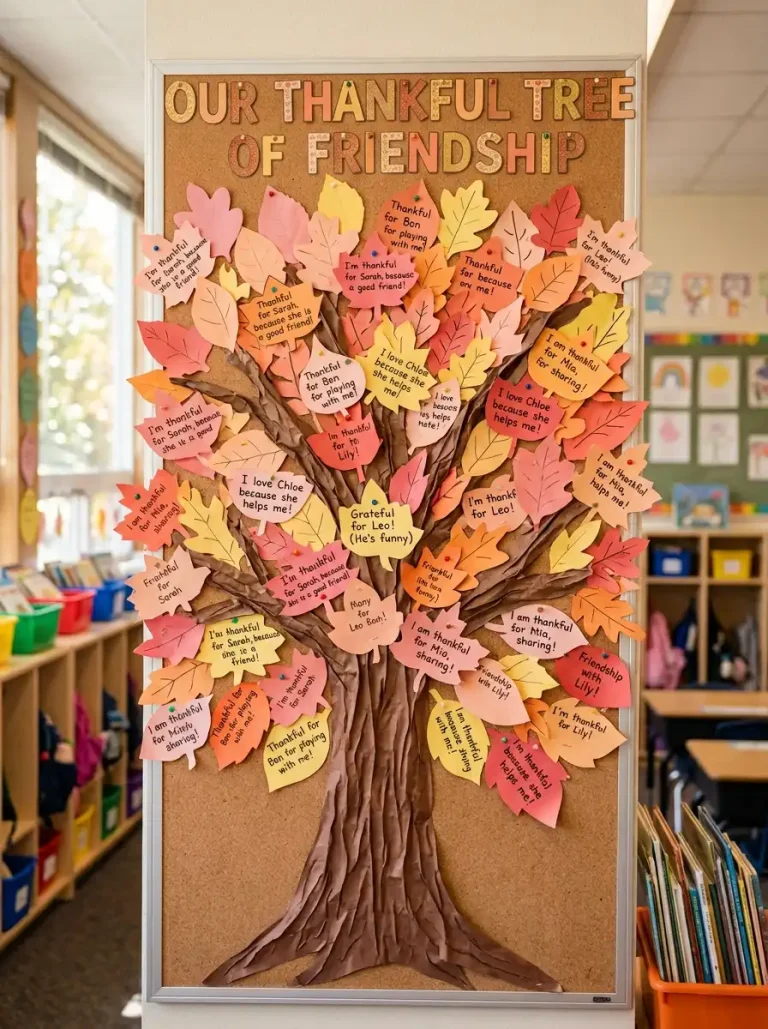
Involve your students whenever possible. Boards featuring student-made fish, artwork, or written contributions feel far more personal than store-bought decorations alone.
Plan for durability if the display will stay up for weeks. Laminating key pieces prevents tearing from repeated touching, especially on interactive boards.
Leave room to breathe by avoiding overcrowded layouts. A few well-placed sea creatures often look better than a corkboard packed edge to edge.
Tips for Decorating an Ocean-Themed Classroom
A great bulletin board works best when it’s part of a larger, cohesive classroom design rather than an isolated display.
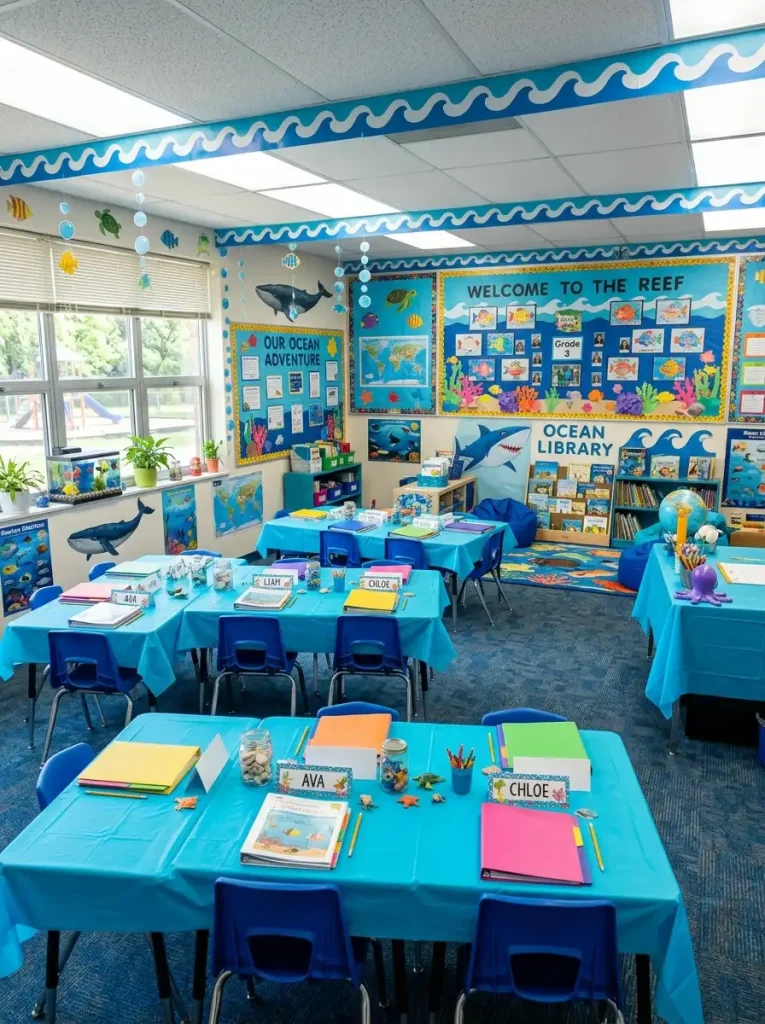
Extend the theme beyond the board by adding matching elements like blue tablecloths, fish-shaped name tags, or a wave border along your ceiling tiles. Small consistent touches make the whole room feel intentional.
Use natural light whenever possible to make blue and teal tones feel bright rather than dark or dull. Position ocean-themed displays near windows if your classroom layout allows it.
Rotate creatures seasonally to keep the ocean theme feeling fresh throughout the year. Swap in colder-water creatures like seals or penguins during winter months for variety.
Balance calm and energy by pairing soothing blue backgrounds with a few bright accent colors like coral or yellow. This keeps the space feeling peaceful without becoming visually flat.
Involve student voice in choosing which creatures or elements appear next. A quick class vote on the “next sea creature” builds ownership over the classroom’s overall design.
Frequently Asked Questions
How do you make an ocean bulletin board? Start by choosing one focal point, like a whale, octopus, or coral reef, and build supporting elements around it. Layer paper waves, coral, and creatures to add depth, then finish with a bold title banner. Keeping the color palette limited to blues, teals, and one accent color helps the entire design feel cohesive.
What materials work best for ocean-themed displays? Construction paper, tissue paper, and cardstock all work well depending on the texture you want to achieve. Tissue paper creates flowing, delicate effects perfect for jellyfish, while cardstock offers durability for interactive elements students touch often. Laminating key pieces extends their lifespan significantly for long-term displays.
Which grade levels enjoy ocean themes most? Ocean themes work across nearly every grade level, though the complexity should shift accordingly. Preschool and kindergarten students respond best to simple, colorful creatures and playful imagery. Upper elementary and middle school students enjoy more complex concepts, like food chains or goal-tracking systems, wrapped in ocean visuals.
How can students interact with an ocean bulletin board? Interactive elements like movable creatures, contribution stations, or hidden clues turn a static display into an active learning tool. Boards like the Coral Reef Kindness Wall or Sea Turtle Growth Tracker specifically invite ongoing student participation. Building in at least one interactive component significantly boosts engagement.
How often should ocean bulletin boards change? Most displays benefit from a refresh every three to six weeks, depending on the theme’s flexibility. Boards with ongoing interactive elements, like a kindness reef or reading corner, can stay up much longer since content evolves naturally. Watch for signs of wear, like torn paper, to know when it’s time for an update.
Can ocean themes support science lessons directly? Absolutely. Ideas like the Ocean Food Chain Explorers board and Bubble Letter Ocean Alphabet tie directly into science and literacy curriculum standards. Pairing decorative displays with genuine academic content transforms a bulletin board from mere decoration into a real teaching tool.
What colors work best for ocean bulletin boards? Blues, teals, and greens form the foundation of most successful ocean displays, creating a calm and cohesive underwater feel. Adding one bright accent color, like coral pink or sunny yellow, keeps the design from feeling flat or monotone. Balancing cool and warm tones creates visual interest without overwhelming the space.
How do you make ocean bulletin boards budget-friendly? Recycled materials like brown paper bags, tissue paper scraps, and leftover cardstock work wonderfully for most ocean elements. Free printable templates from educational resource sites also save significant time and money on creature illustrations. Reusing durable pieces, like laminated fish or turtles, across multiple years stretches your classroom budget further.
What is the best way to involve students in designing an ocean bulletin board? Invite students to contribute artwork, vote on themes, or add ongoing elements like kindness coral pieces or reading fish. Giving students genuine ownership over part of the design process increases engagement and pride in the finished display. Even young students can help with simple tasks like cutting or gluing coral shapes.
How do I make an ocean bulletin board look three-dimensional? Layer paper elements slightly, overlapping waves, coral, and creatures rather than placing everything flat against the background. Adding tissue paper texture, curling ribbon seaweed, or slightly raised elements with foam tape creates genuine depth. This layering technique makes even a simple design feel more dynamic and alive.
Final Thoughts
An ocean bulletin board does far more than fill empty wall space. It invites curiosity, supports real learning, and gives students a small daily escape into an underwater world.
Whether you choose a playful octopus, a reflective message-in-a-bottle goal tracker, or a full alphabet reef, these twelve ideas offer something for every classroom and every budget. Pick the concept that excites you most, gather your students into the process, and watch your walls come alive with color and curiosity.