14 Science Bulletin Board for Middle School
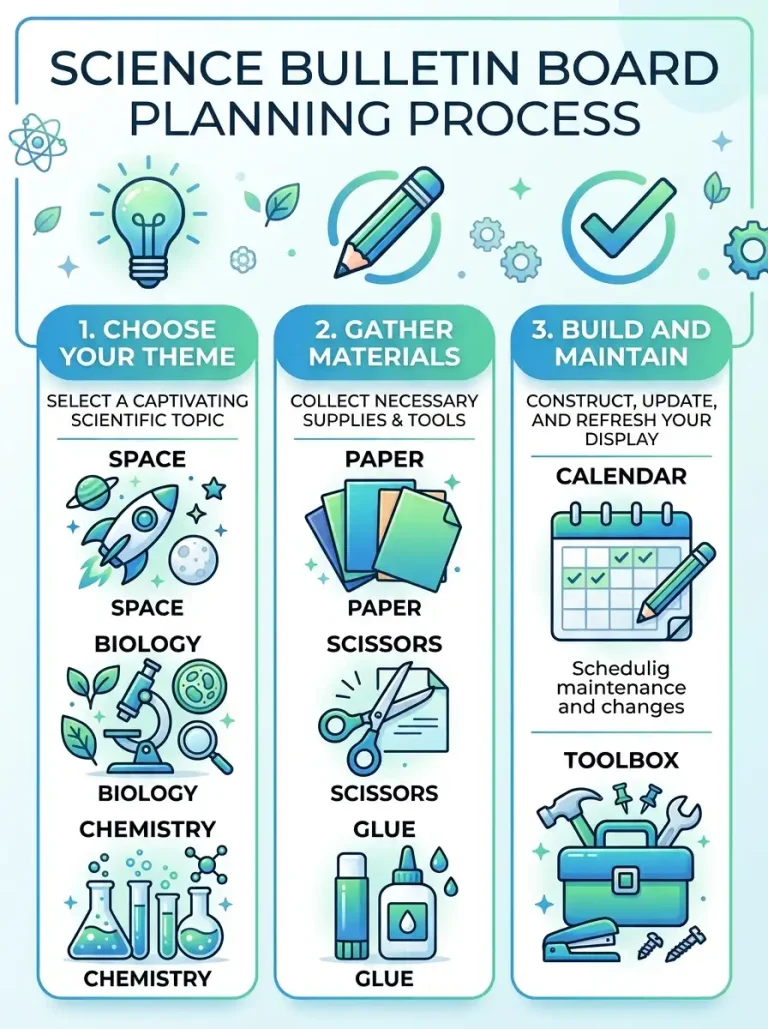
Science bulletin boards can spark curiosity, encourage inquiry, and make complex concepts accessible. For middle school students, these displays should be visually engaging, interactive, and connected to real-world phenomena. Below are 14 science bulletin board ideas that will bring excitement and discovery to your classroom or library.
1. The Scientific Method
Create a display that walks students through the scientific method step by step. This board serves as a reference throughout the year.
Use a clean, organized layout with clear headings for each step: Ask a Question, Do Background Research, Construct a Hypothesis, Test Your Hypothesis, Analyze Data, Draw a Conclusion, and Communicate Results. Add examples and a “science in action” section showcasing a current project. Use bright, engaging colors.
QUICK TIPS
- Use arrows to show the flow of the scientific method.
- Add a “science challenge” section for students to apply the method.
- Include student work demonstrating the process.

2. Women in Science
Celebrate women scientists and their contributions to STEM. This board inspires students and promotes diversity in science.
Use a color palette of purple, blue, and gold. Feature scientists like Marie Curie, Jane Goodall, Katherine Johnson, and Mae Jemison. Include photos, brief bios, and their key achievements. Add a banner that reads “Women in Science” or “Trailblazers.”
QUICK TIPS
- Include a mix of historical and contemporary scientists.
- Add a “science hero” section for students to nominate.
- Feature books by or about women scientists.

3. Science in the News
Create a display featuring current science news and discoveries. This board connects classroom learning to the real world.
Use a clean, modern layout. Include articles, images, and summaries of recent science news. Add a “question of the week” section for student discussion. Include a QR code or link to a longer article. Update the board monthly with new content.
QUICK TIPS
- Include a mix of topics—space, environment, technology, health.
- Let students contribute articles.
- Add a “science debate” section.

4. The Periodic Table of Elements
Create a large, colorful periodic table display. This board is both educational and visually stunning.
Use a color palette that matches the periodic table groups—alkali metals, noble gases, etc. Include element names, symbols, atomic numbers, and a fun fact for each. Add a “element of the week” section. Use a clear, readable layout.
QUICK TIPS
- Use different colors for different element groups.
- Add a “search and find” interactive section.
- Let students contribute element facts.

5. Chemistry in the Real World
Create a display connecting chemistry concepts to everyday life. This board shows students the relevance of chemistry.
Use a color palette of bright blues, greens, and purples. Feature examples like baking soda and vinegar reactions, soap making, or how batteries work. Include photos, diagrams, and brief explanations. Add a banner that reads “Chemistry in the Real World.”
QUICK TIPS
- Include a “chemistry at home” section.
- Let students share examples.
- Add a “try this at home” experiment.

6. Life Sciences: Ecosystems and Food Webs
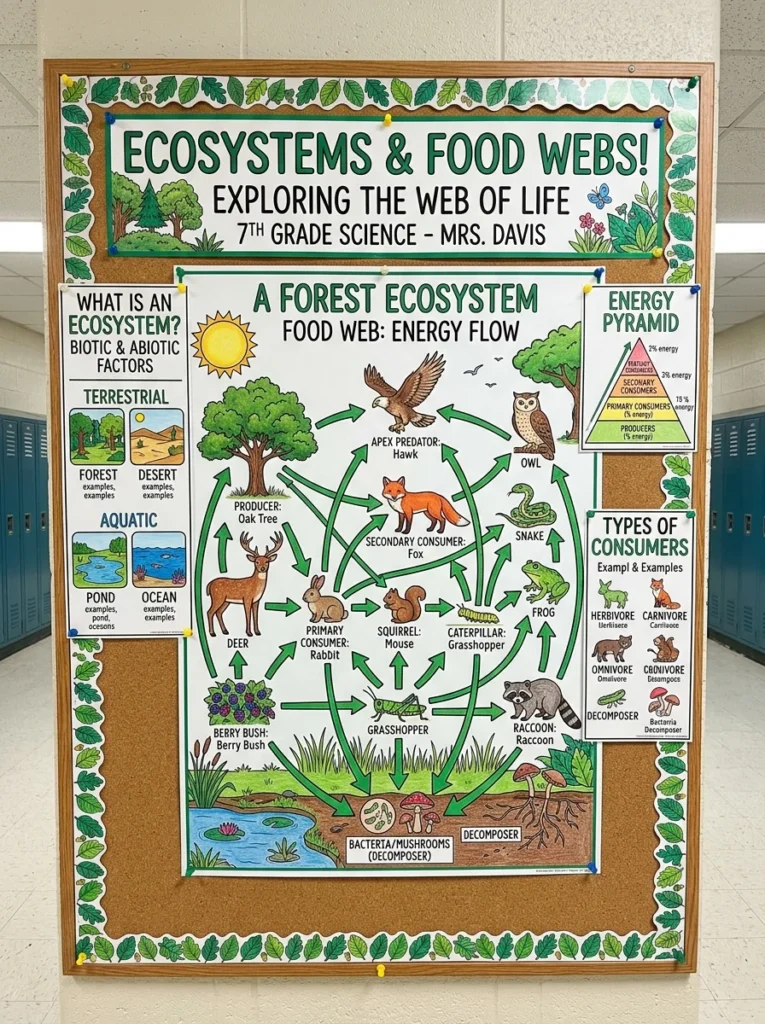
Create a display featuring ecosystems, food webs, and biodiversity. This board supports life science curriculum.
Use a color palette of green, blue, and brown. Decorate with plants, animals, and habitat illustrations. Feature a large food web with arrows showing energy flow. Add a “did you know?” section with fun facts. Include a banner that reads “Ecosystems in Action.”
QUICK TIPS
- Use different ecosystems—forest, ocean, desert.
- Add a “species spotlight” section.
- Let students draw their own food webs.
7. Physics in Action
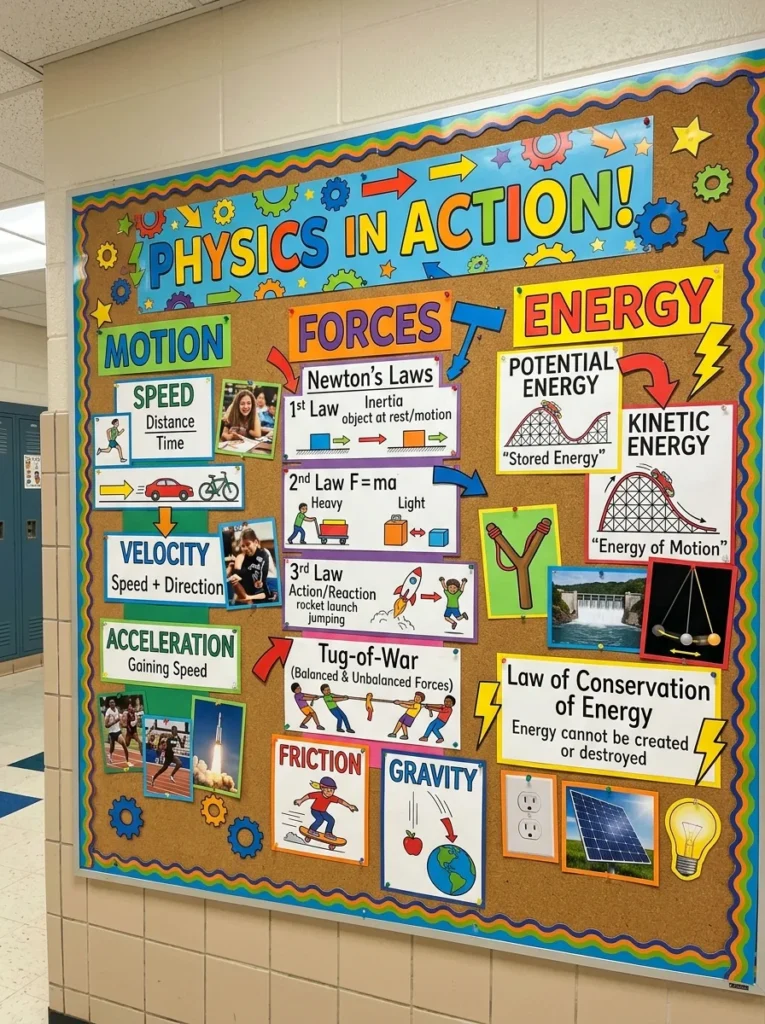
Create a display featuring physics concepts like motion, forces, and energy. This board makes abstract concepts visual and accessible.
Use a color palette of bright colors—red, yellow, blue. Feature examples like Newton’s laws, simple machines, and energy transformations. Include diagrams, photos, and brief explanations. Add a banner that reads “Physics in Action.”
QUICK TIPS
- Include a “physics challenge” section.
- Let students share examples.
- Add a “try this at home” activity.
8. Environmental Science: Protect Our Planet
Create a display featuring environmental science topics like climate change, conservation, and sustainability. This board encourages students to care for the planet.
Use a color palette of green, blue, and earth tones. Decorate with images of nature, recycling symbols, and infographics. Feature topics like renewable energy, pollution, and biodiversity. Add a banner that reads “Protect Our Planet.”
QUICK TIPS
- Include a “take action” section with tips.
- Let students share their environmental projects.
- Add a “nature fact” section.

9. Space Exploration
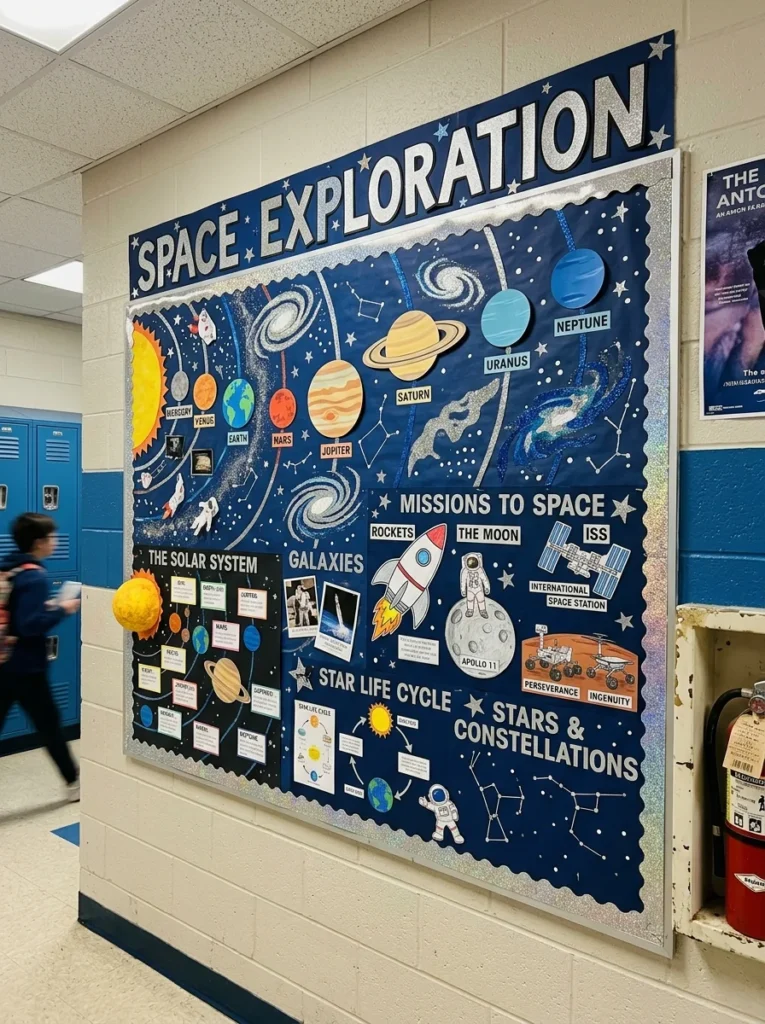
Create a display featuring space exploration, the solar system, and astronomy. This board inspires curiosity about the universe.
Use a color palette of dark blue, black, and silver. Decorate with planets, stars, and galaxies. Feature topics like the solar system, the moon landing, and current space missions. Add a banner that reads “Space Exploration.”
QUICK TIPS
- Include a “space fact of the week” section.
- Let students contribute their own space facts.
- Add a “what would you explore?” interactive section.
10. Technology and Innovation
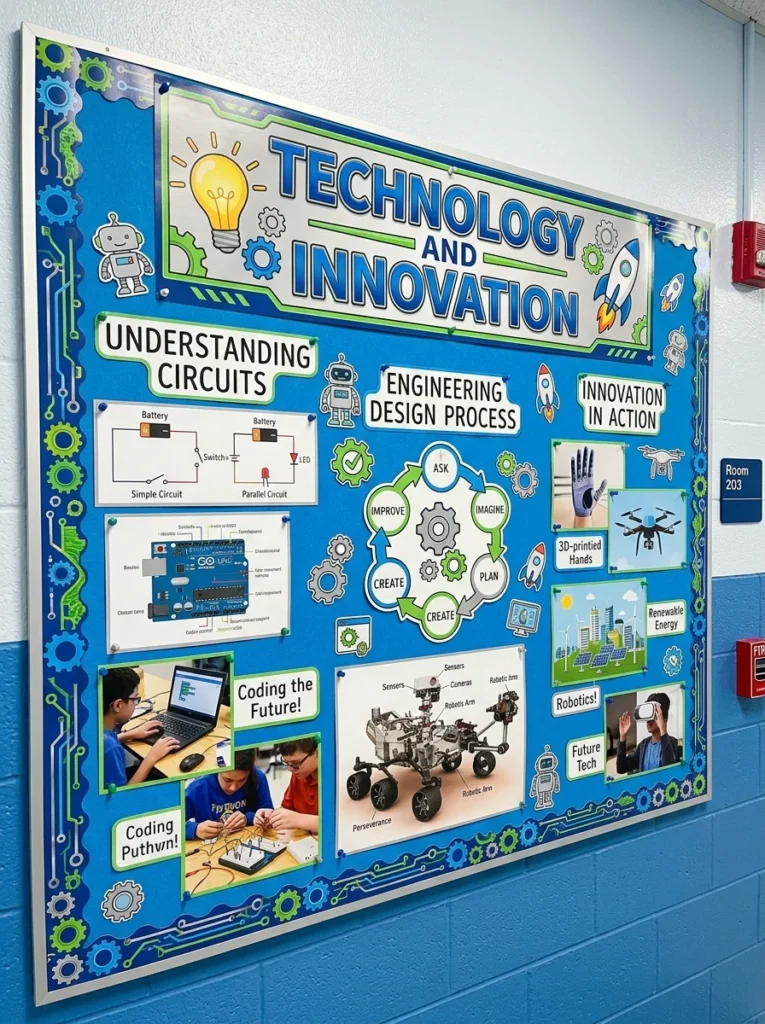
Create a display featuring technology, innovation, and the engineering design process. This board encourages creativity and problem-solving.
Use a color palette of blue, silver, and green. Decorate with images of technology, circuits, and innovation. Feature the engineering design process and examples of innovation. Add a banner that reads “Technology and Innovation.”
QUICK TIPS
- Include a “design challenge” section.
- Let students share their own inventions.
- Add a “future tech” section.
11. Scientists of Color
Celebrate scientists of color and their contributions to STEM. This board promotes diversity and inclusion in science.
Use a color palette of warm, diverse colors. Feature scientists like George Washington Carver, Neil deGrasse Tyson, and Marie Daly. Include photos, bios, and key achievements. Add a banner that reads “Scientists of Color.”
QUICK TIPS
- Include a mix of historical and contemporary scientists.
- Add a “science hero” section for students to nominate.
- Feature books by or about scientists of color.

12. Weird Science
Create a display featuring weird, fun, and surprising science facts. This board captures students’ attention and makes science exciting.
Use bright, playful colors. Feature facts like “Your brain generates enough electricity to power a light bulb” or “Octopuses have three hearts.” Add a banner that reads “Weird Science” or “Did You Know?” Include a “weird science challenge” section.
QUICK TIPS
- Use eye-catching visuals and fonts.
- Let students contribute their own weird facts.
- Add a “weird science of the week” section.

13. Science Careers
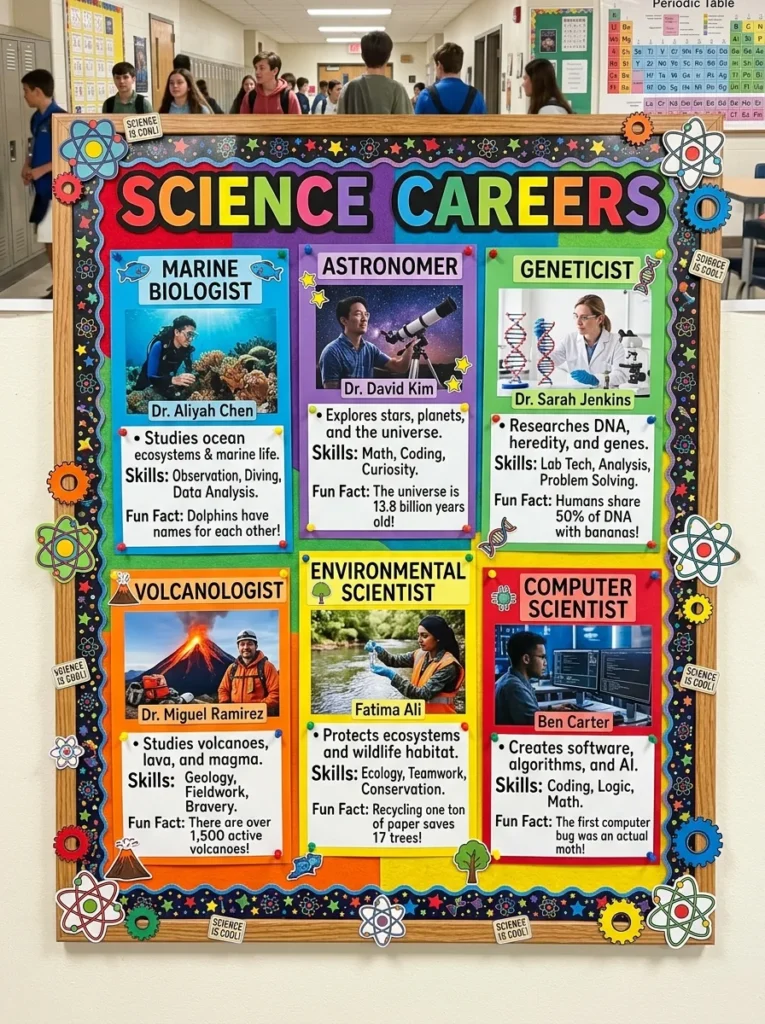
Create a display featuring diverse science careers. This board helps students see the possibilities in STEM.
Use a color palette of bright, engaging colors. Feature careers like marine biologist, engineer, data scientist, and doctor. Include job descriptions, required skills, and fun facts. Add a banner that reads “Science Careers.”
QUICK TIPS
- Include a mix of traditional and emerging careers.
- Add a “career spotlight” section.
- Let students explore careers that interest them.
14. Science Fair Projects
Create a display featuring past science fair projects and tips for success. This board supports students through the science fair process.
Use a color palette of bright, encouraging colors. Feature photos of past projects, tips for choosing a topic, and steps for completing a project. Add a banner that reads “Science Fair Success” or “Science Fair Projects.”
QUICK TIPS
- Include project ideas by category.
- Add a “student tips” section.
- Include a timeline for project completion.

Final Thoughts
Middle school science bulletin boards can spark curiosity, encourage inquiry, and make complex concepts accessible. Whether you choose a scientific method display, a celebration of women in science, or a weird science fact board, these displays encourage students to explore the world around them. Plan your board ahead, laminate cutouts for longevity, and keep the display fresh by swapping out elements monthly. Your science bulletin board can become a hub of discovery and excitement for the entire year.