18 Science Bulletin Board Ideas for High School
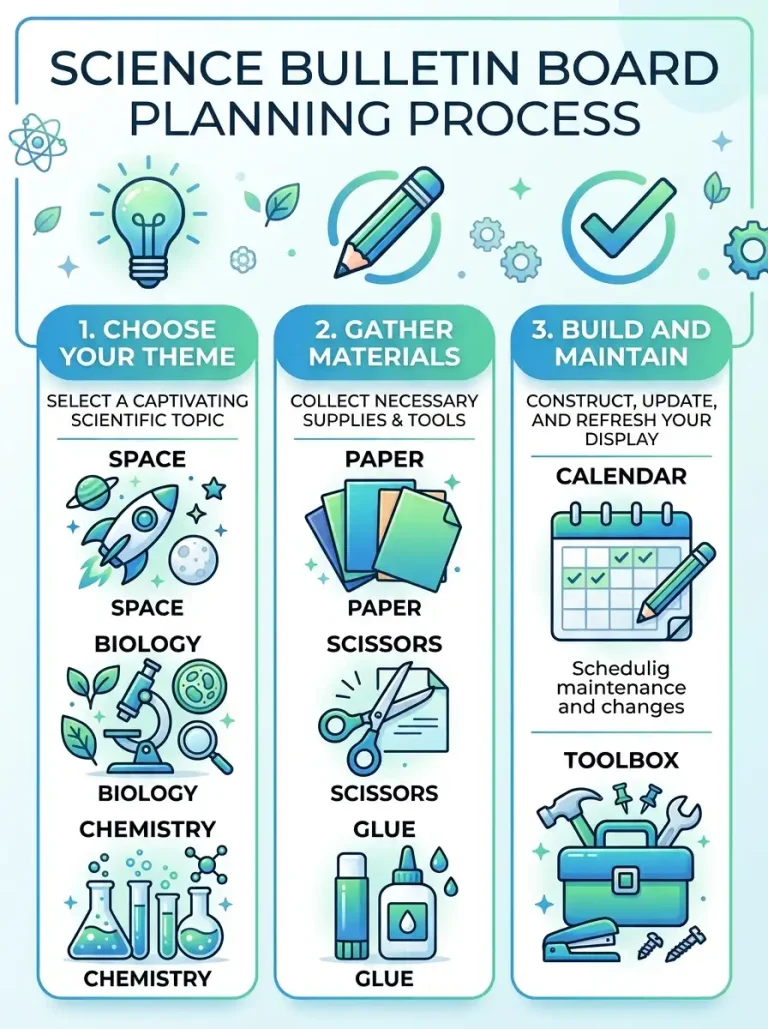
High school science bulletin boards should be thought-provoking, visually sophisticated, and connected to real-world applications. They should challenge students to think critically, explore careers, and engage with current scientific issues. Below are 18 science bulletin board ideas designed specifically for high school classrooms and libraries.
1. The Scientific Method in Action
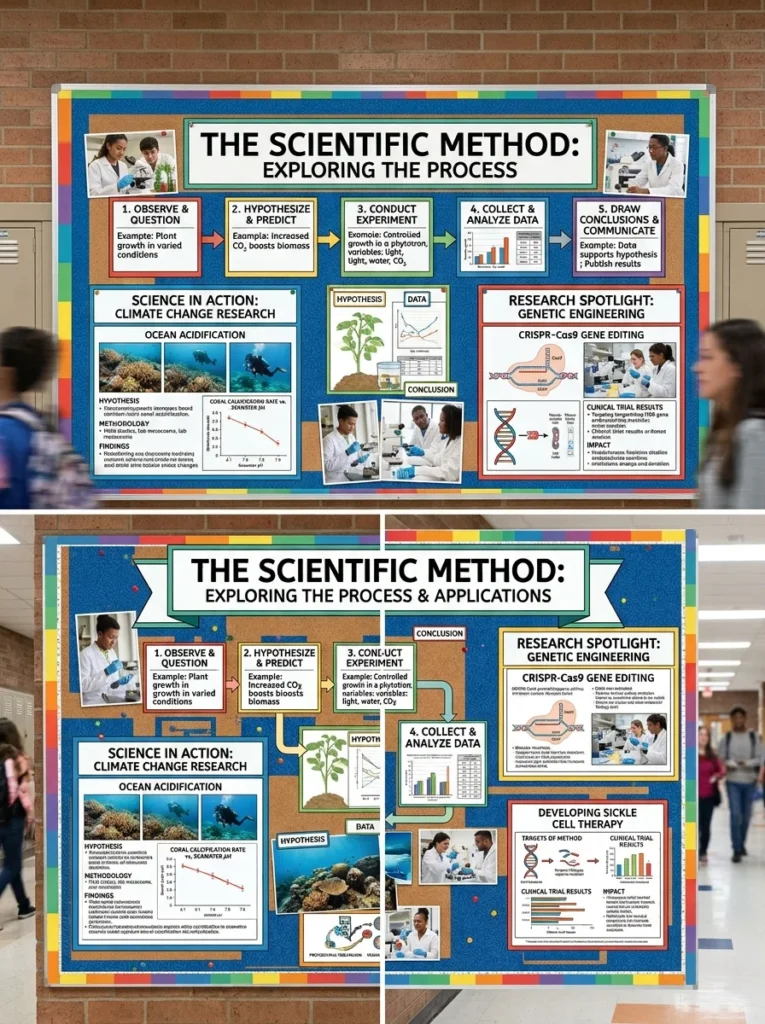
Create a display that walks students through the scientific method using advanced examples and real-world research. This board serves as a reference throughout the year.
Use a clean, professional layout with clear headings for each step: Ask a Question, Do Background Research, Construct a Hypothesis, Test Your Hypothesis, Analyze Data, Draw a Conclusion, and Communicate Results. Add examples from current scientific research and a “science in action” section showcasing a recent discovery.
QUICK TIPS
- Use arrows to show the flow of the scientific method.
- Add a “research spotlight” section for student projects.
- Include a “scientific method in the news” feature.
2. Women in STEM
Celebrate women scientists and their contributions to STEM fields. This board inspires students and promotes diversity in science.
Use a color palette of purple, blue, and gold. Feature scientists like Marie Curie, Jane Goodall, Katherine Johnson, Mae Jemison, and contemporary leaders. Include photos, brief bios, and their key achievements. Add a banner that reads “Women in STEM” or “Trailblazers.” Include a “STEM hero” nomination section.
QUICK TIPS
- Include a mix of historical and contemporary scientists.
- Add a “career pathways” section for each scientist.
- Feature books by or about women scientists.

3. Science in the News
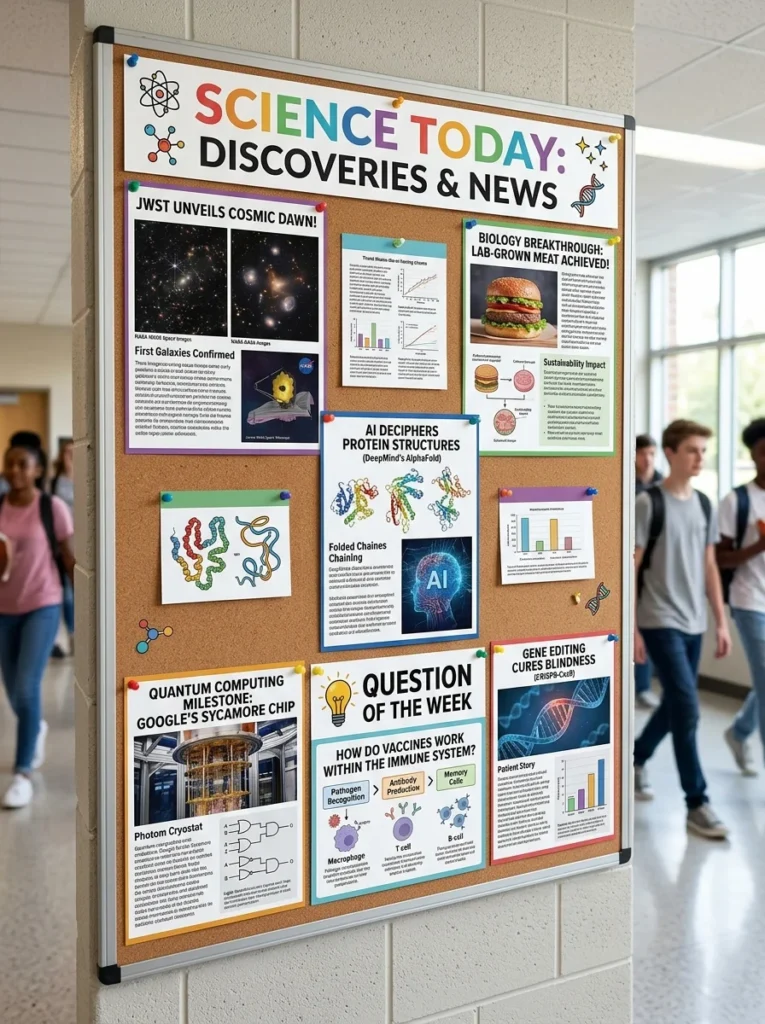
Create a display featuring current science news and discoveries. This board connects classroom learning to the real world and encourages scientific literacy.
Use a clean, modern layout. Include articles, images, and summaries of recent science news. Add a “question of the week” section for student discussion. Include a QR code or link to a longer article. Update the board weekly with new content.
QUICK TIPS
- Include a mix of topics—space, environment, technology, health.
- Let students contribute articles for extra credit.
- Add a “science debate” section with opposing viewpoints.
4. The Periodic Table of Elements
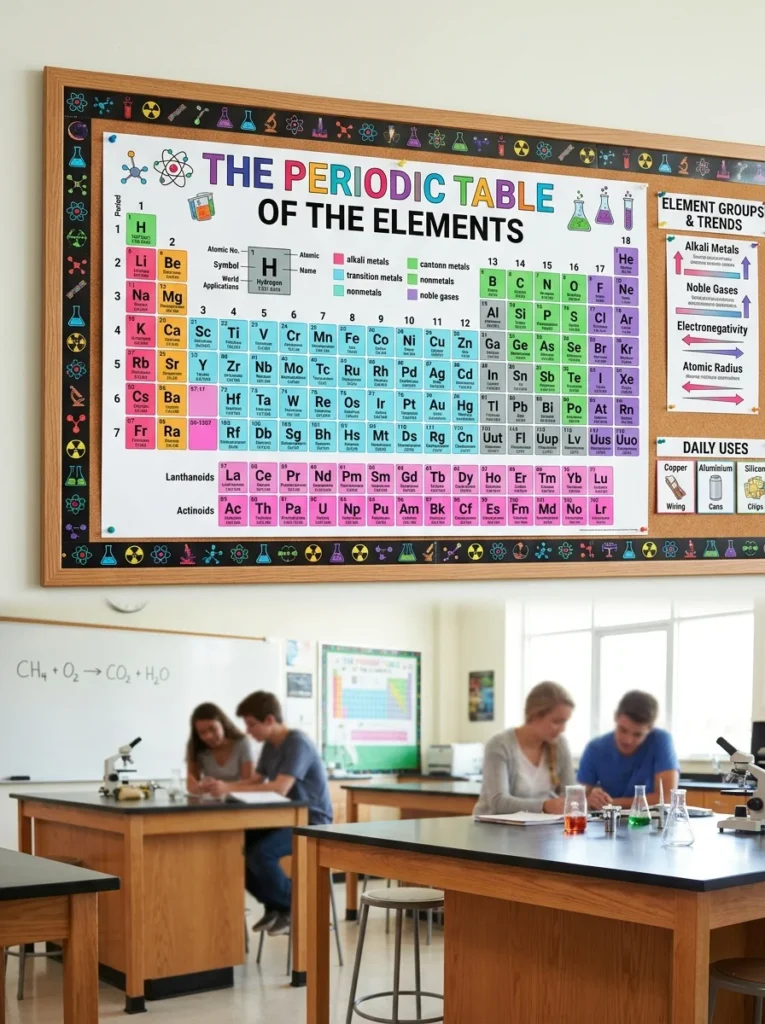
Create a large, colorful periodic table display with advanced information. This board is both educational and visually stunning.
Use a color palette that matches the periodic table groups—alkali metals, noble gases, etc. Include element names, symbols, atomic numbers, atomic masses, and electron configurations. Add a “element of the week” section with real-world applications. Use a clear, readable layout.
QUICK TIPS
- Use different colors for different element groups.
- Add a “search and find” interactive section.
- Let students contribute element facts and applications.
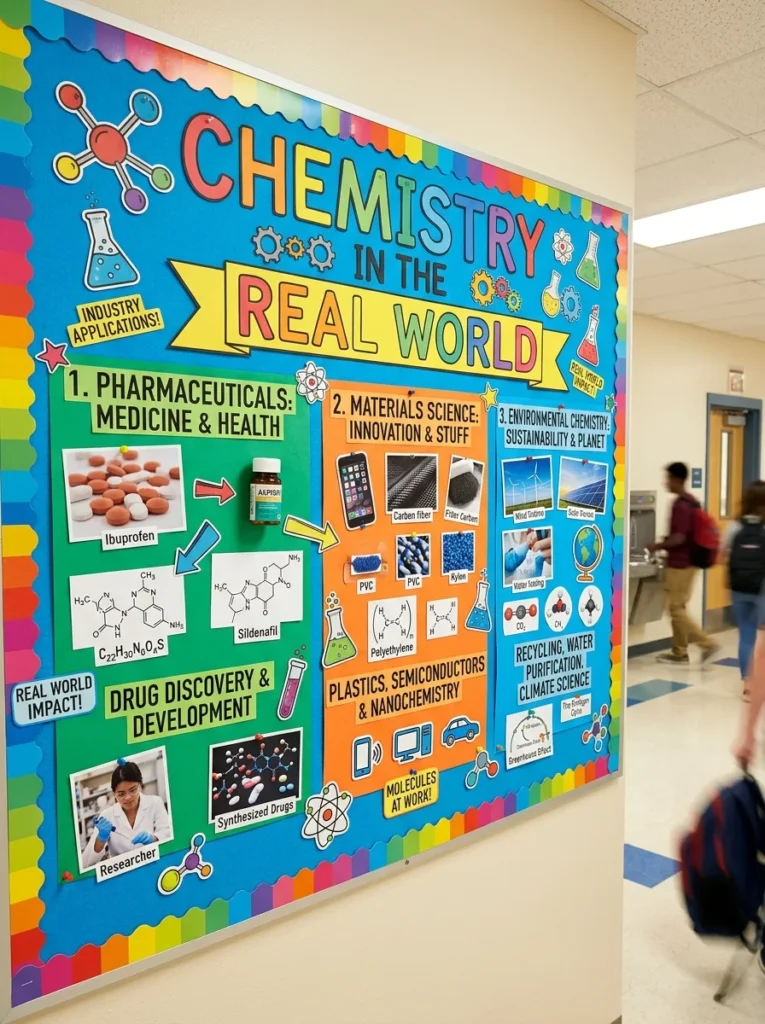
5. Chemistry in the Real World
Create a display connecting chemistry concepts to everyday life and industry. This board shows students the relevance of chemistry.
Use a color palette of bright blues, greens, and purples. Feature examples like pharmaceuticals, materials science, environmental chemistry, and food chemistry. Include photos, diagrams, and brief explanations. Add a banner that reads “Chemistry in the Real World.”
QUICK TIPS
- Include a “chemistry career” section.
- Let students share examples from their lives.
- Add a “chemistry in the news” section.
6. Life Sciences: Genetics and Evolution
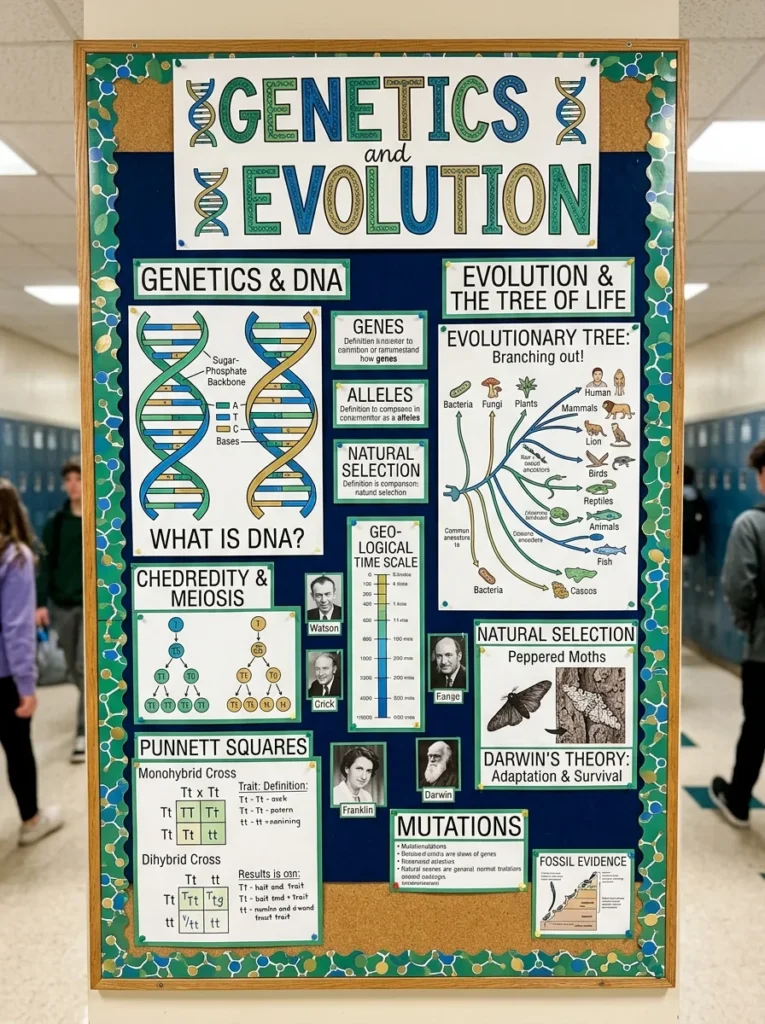
Create a display featuring genetics, DNA, and evolution. This board supports advanced life science curriculum.
Use a color palette of green, blue, and gold. Decorate with DNA helix images, Punnett squares, and evolutionary trees. Feature topics like CRISPR, genetic disorders, and natural selection. Add a “research breakthrough” section. Include a banner that reads “Genetics and Evolution.”
QUICK TIPS
- Include a “controversy” section for ethical debates.
- Let students explore genetic disorders and innovations.
- Add a “future of genetics” section.
7. Physics in Action
Create a display featuring advanced physics concepts like quantum mechanics, relativity, and thermodynamics. This board makes complex topics accessible.
Use a color palette of bright colors—red, yellow, blue. Feature examples like particle physics, gravitational waves, and energy transformations. Include diagrams, photos, and brief explanations. Add a banner that reads “Physics in Action.”
QUICK TIPS
- Include a “physics challenge” section.
- Let students share examples of physics in daily life.
- Add a “physics in the news” section.

8. Environmental Science: Climate Change
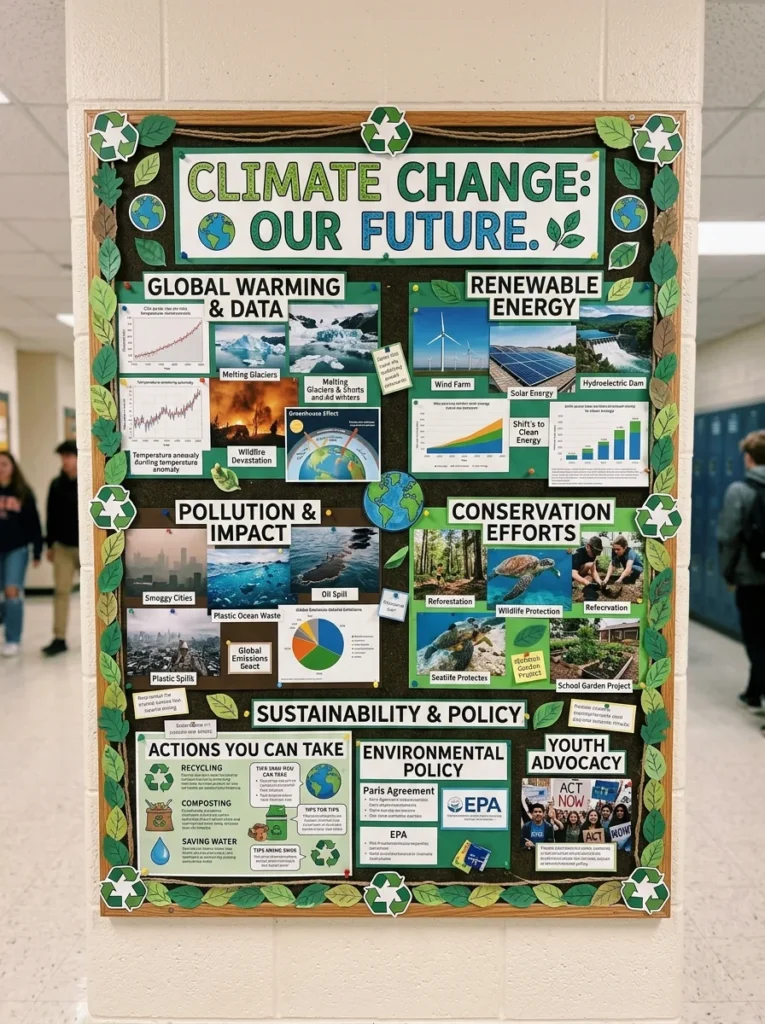
Create a display featuring climate change, sustainability, and environmental policy. This board encourages students to engage with global issues.
Use a color palette of green, blue, and earth tones. Decorate with images of renewable energy, pollution data, and conservation efforts. Feature topics like the greenhouse effect, carbon footprint, and renewable energy. Add a banner that reads “Climate Change: Our Future.”
QUICK TIPS
- Include a “take action” section with solutions.
- Let students share their environmental projects.
- Add a “science policy” section.
9. Space Exploration and Astrophysics
Create a display featuring space exploration, astrophysics, and the universe. This board inspires curiosity about the cosmos.
Use a color palette of dark blue, black, and silver. Decorate with planets, stars, galaxies, and images from space telescopes. Feature topics like black holes, exoplanets, and the Big Bang. Add a banner that reads “Exploring the Universe.”
QUICK TIPS
- Include a “space fact of the week” section.
- Let students contribute their own space facts.
- Add a “what would you explore?” interactive section.

10. Technology and Innovation
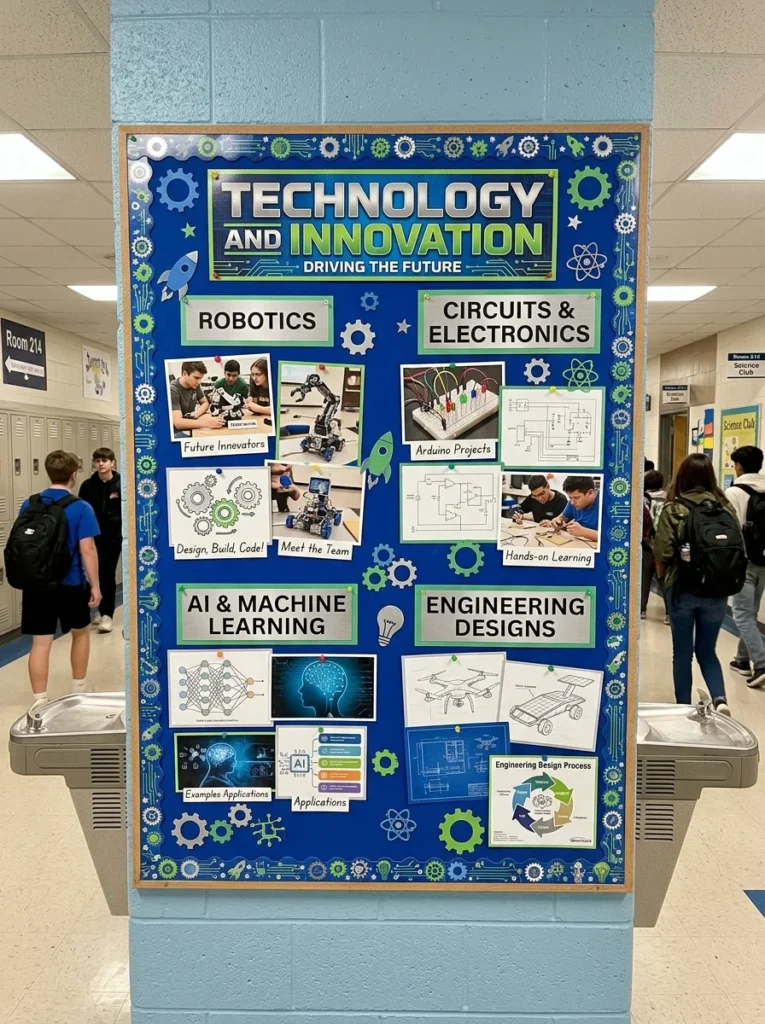
Create a display featuring technology, innovation, and the engineering design process. This board encourages creativity and problem-solving.
Use a color palette of blue, silver, and green. Decorate with images of technology, circuits, AI, and robotics. Feature the engineering design process and examples of innovation. Add a banner that reads “Technology and Innovation.”
QUICK TIPS
- Include a “design challenge” section.
- Let students share their own inventions.
- Add a “future tech” section.
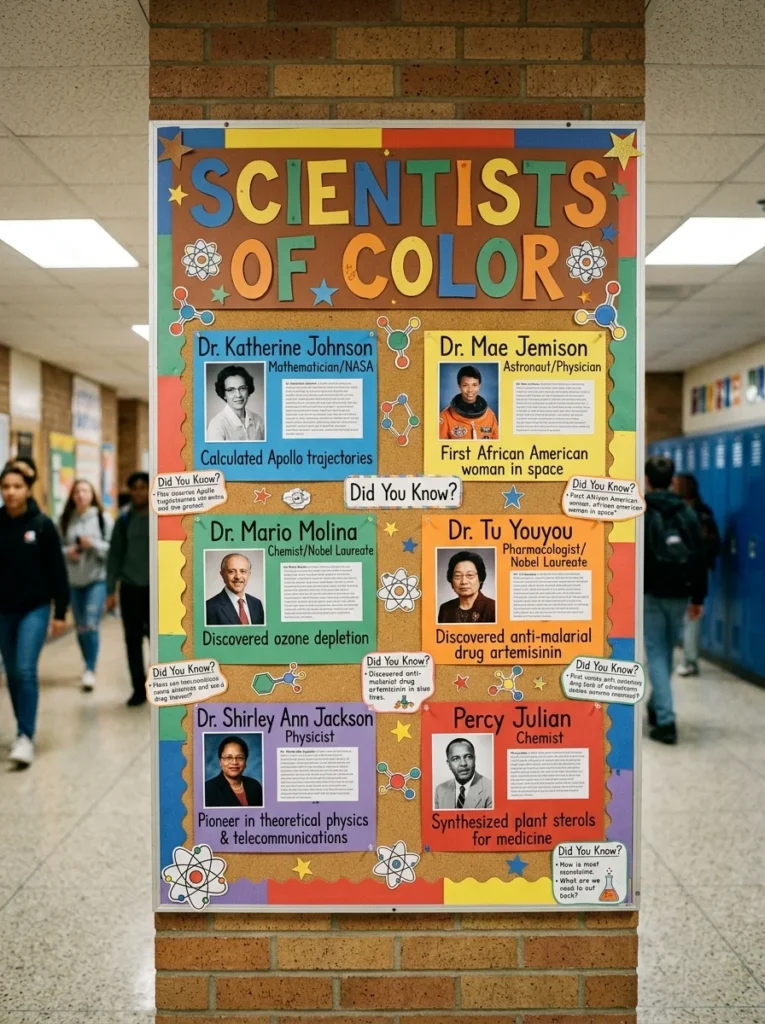
11. Scientists of Color
Celebrate scientists of color and their contributions to STEM. This board promotes diversity and inclusion in science.
Use a color palette of warm, diverse colors. Feature scientists like George Washington Carver, Neil deGrasse Tyson, Marie Daly, and Percy Julian. Include photos, bios, and key achievements. Add a banner that reads “Scientists of Color.”
QUICK TIPS
- Include a mix of historical and contemporary scientists.
- Add a “STEM hero” section for students to nominate.
- Feature books by or about scientists of color.
12. Weird Science
Create a display featuring weird, fun, and surprising science facts. This board captures students’ attention and makes science exciting.
Use bright, playful colors. Feature facts like “Your brain generates enough electricity to power a light bulb” or “Octopuses have three hearts.” Add a banner that reads “Weird Science” or “Did You Know?” Include a “weird science challenge” section.
QUICK TIPS
- Use eye-catching visuals and fonts.
- Let students contribute their own weird facts.
- Add a “weird science of the week” section.

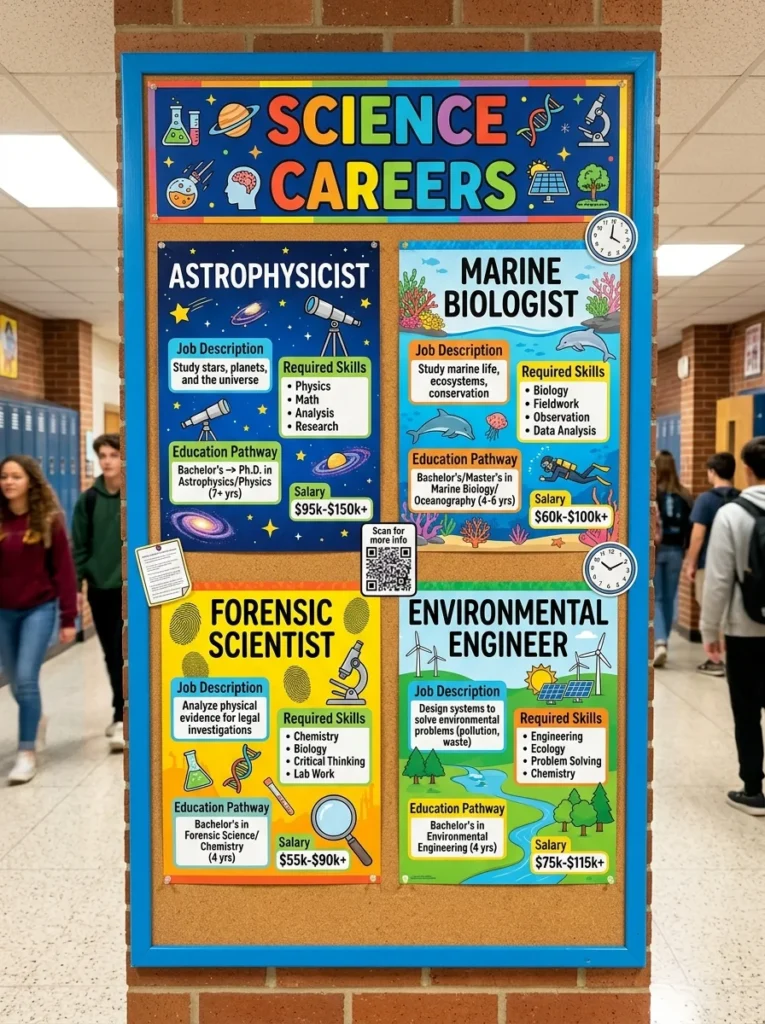
13. Science Careers
Create a display featuring diverse science careers. This board helps students see the possibilities in STEM.
Use a color palette of bright, engaging colors. Feature careers like marine biologist, engineer, data scientist, doctor, and environmental scientist. Include job descriptions, required skills, education pathways, and salary information. Add a banner that reads “Science Careers.”
QUICK TIPS
- Include a mix of traditional and emerging careers.
- Add a “career spotlight” section.
- Let students explore careers that interest them.
14. Bioethics
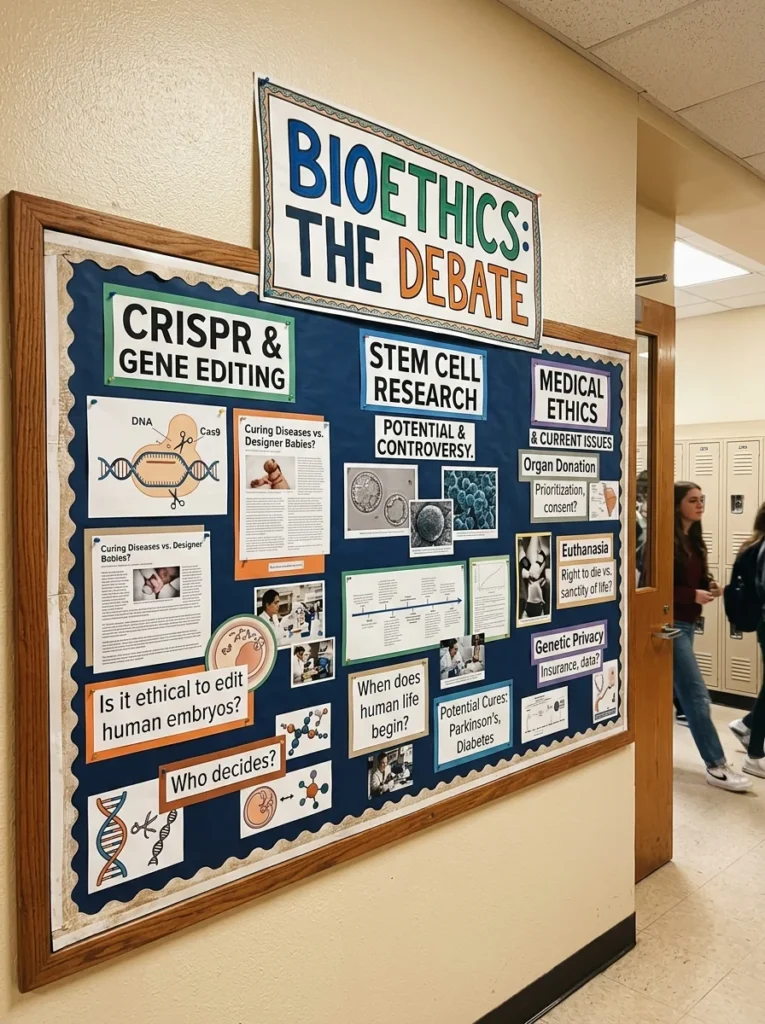
Create a display featuring bioethical issues like genetic engineering, cloning, and organ donation. This board encourages critical thinking and debate.
Use a color palette of neutral and thought-provoking colors. Feature topics like CRISPR, stem cell research, and medical ethics. Include discussion questions and a “student opinion” section. Add a banner that reads “Bioethics: The Debate.”
QUICK TIPS
- Include a “what would you do?” section.
- Let students research and present their views.
- Add a “current bioethics in the news” section.
15. Environmental Justice
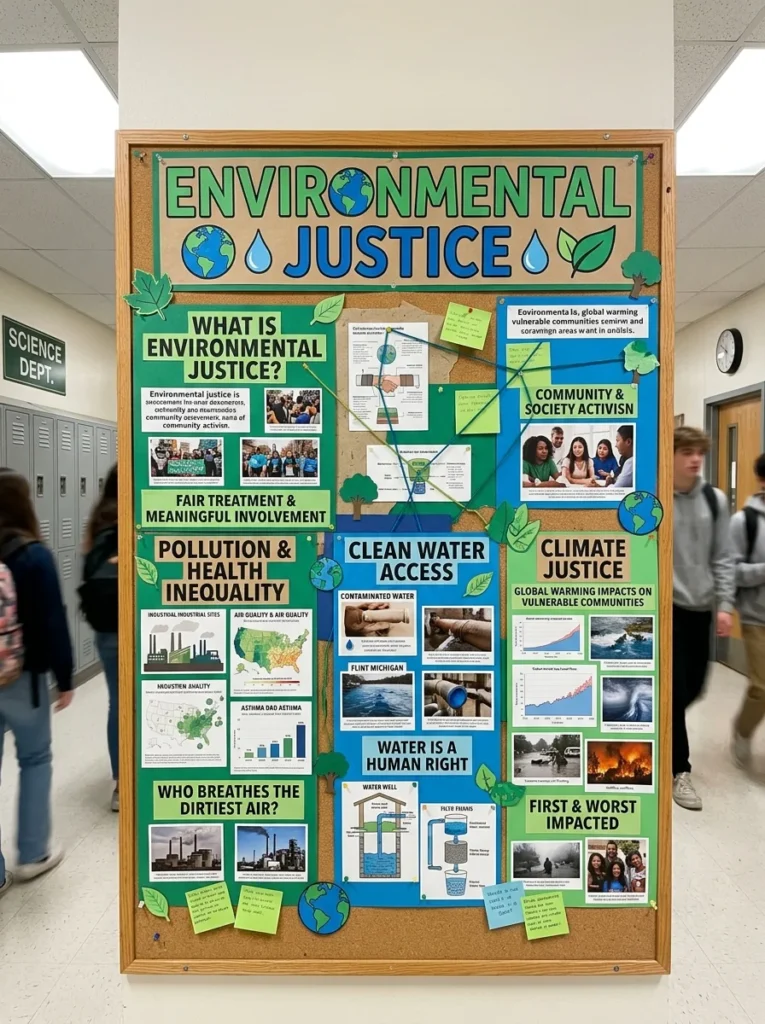
Create a display featuring environmental justice and the intersection of race, class, and environment. This board encourages students to think about equity and science.
Use a color palette of green, blue, and earth tones. Feature topics like pollution, access to clean water, and climate justice. Include case studies and discussion questions. Add a banner that reads “Environmental Justice.”
QUICK TIPS
- Include a “take action” section.
- Let students research local environmental issues.
- Add a “guest speaker” or “event” section.
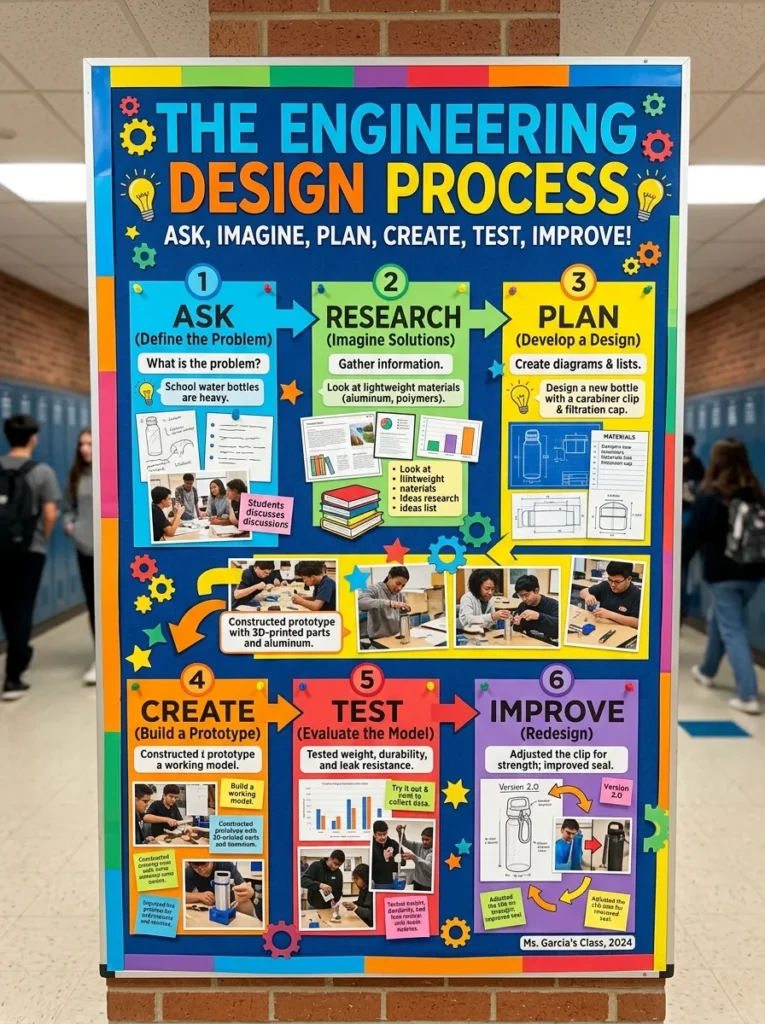
16. The Engineering Design Process
Create a display featuring the engineering design process. This board supports STEM and engineering curriculum.
Use a clean, organized layout with clear steps: Ask, Imagine, Plan, Create, and Improve. Add examples from engineering projects and a “design challenge” section. Use bright, engaging colors.
QUICK TIPS
- Use arrows to show the flow of the process.
- Let students share their own design challenges.
- Add a “success story” section.
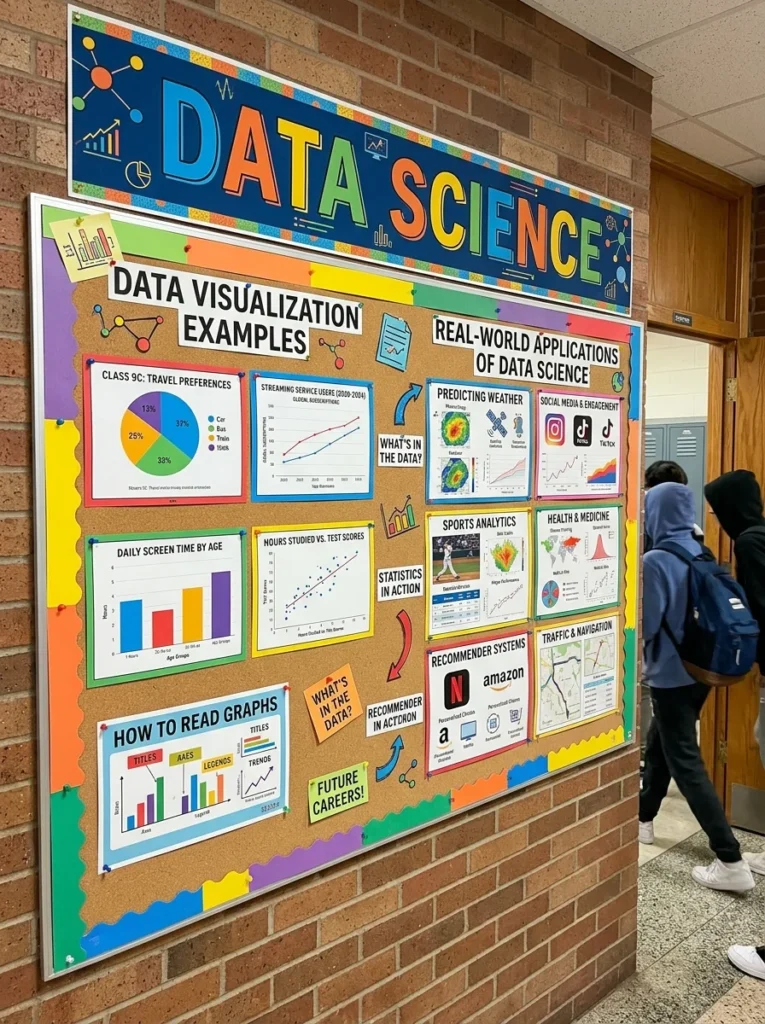
17. Data Science and Statistics
Create a display featuring data science, statistics, and how data is used in science. This board supports math and science integration.
Use a color palette of bright colors—blue, green, yellow. Feature examples like data visualization, statistical analysis, and real-world applications. Include a “data fact of the week” section. Add a banner that reads “Data Science.”
QUICK TIPS
- Use real-world data examples.
- Let students analyze and present data.
- Add a “statistics challenge” section.
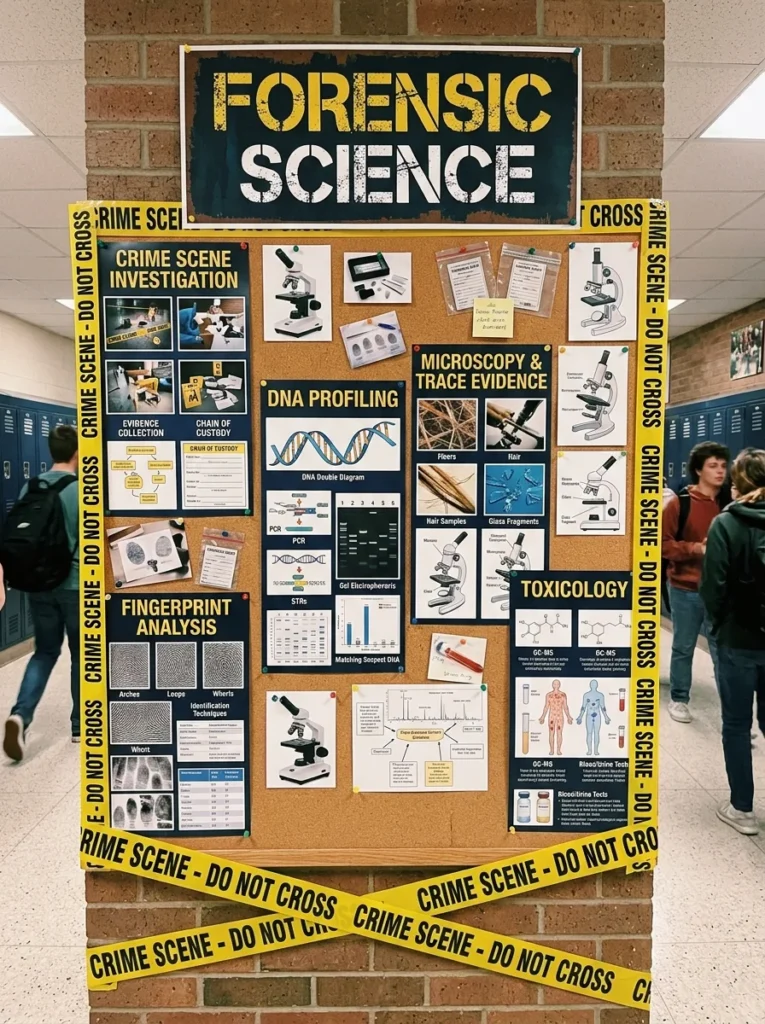
18. Forensic Science
Create a display featuring forensic science and criminal investigation. This board appeals to students interested in true crime and CSI.
Use a color palette of neutral and dramatic colors—black, gray, red. Decorate with crime scene tape, fingerprints, and microscopes. Feature topics like DNA analysis, toxicology, and ballistics. Add a banner that reads “Forensic Science.”
QUICK TIPS
- Include a “solve the crime” interactive section.
- Let students explore forensic careers.
- Add a “forensic fact of the week” section.
Final Thoughts
High school science bulletin boards can be thought-provoking, visually sophisticated, and connected to real-world applications. Whether you choose a scientific method display, a celebration of diversity in STEM, or a bioethics debate board, these displays encourage students to think critically, explore careers, and engage with current scientific issues. Plan your board ahead, laminate cutouts for longevity, and keep the display fresh by swapping out elements monthly. Your science bulletin board can become a hub of engagement and intellectual discovery for the entire year.