12 Science Bulletin Board Ideas for Elementary
Science bulletin boards for elementary students should be bright, engaging, and hands-on. They should spark curiosity, encourage questions, and make science concepts accessible to young learners. Below are 12 science bulletin board ideas designed specifically for elementary classrooms and libraries.
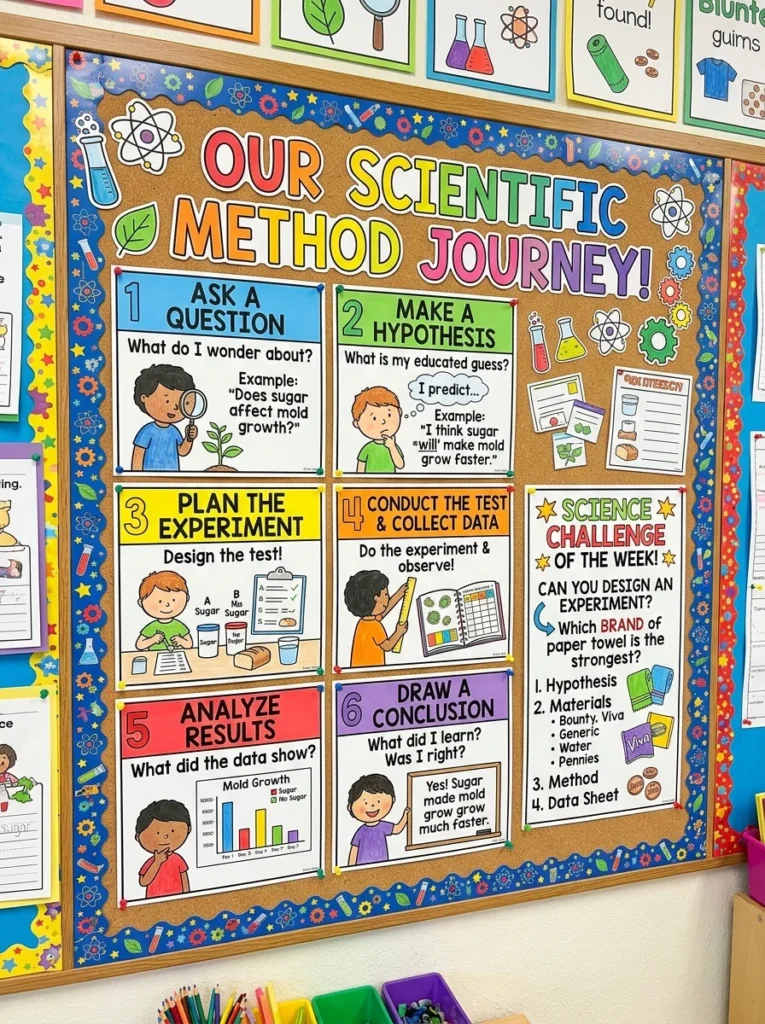
1. The Scientific Method for Kids
Create a display that walks students through the scientific method using simple language and visuals. This board serves as a reference throughout the year.
Use a clean, colorful layout with clear headings for each step: Ask a Question, Make a Guess (Hypothesis), Plan a Test (Experiment), Watch What Happens (Observe), Write It Down (Record), and Tell Others (Share). Add simple examples like “What happens when you mix baking soda and vinegar?” Use bright, kid-friendly colors.
QUICK TIPS
- Use arrows to show the flow of the scientific method.
- Add a “science challenge” section for students to apply the method.
- Include student work demonstrating the process.
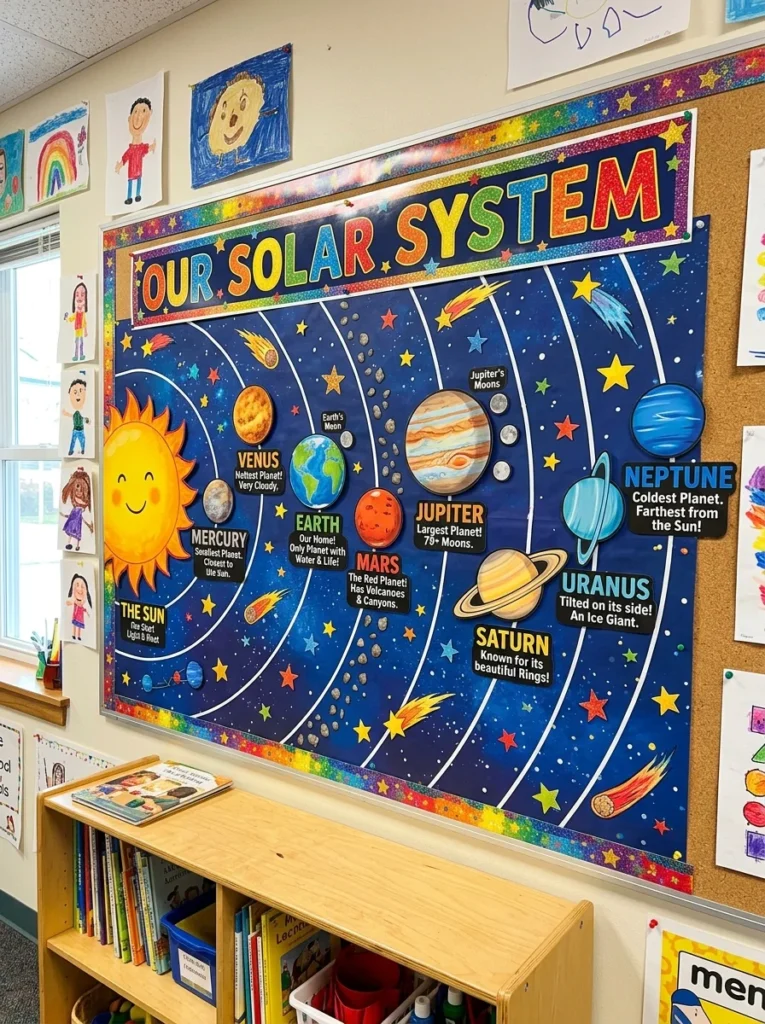
2. The Solar System
Create a display featuring the planets in our solar system. This board is visually stunning and educational.
Use a dark blue or black background. Create large, colorful planets with labels. Include fun facts about each planet—size, distance from the sun, and interesting features. Add a banner that reads “Our Solar System.” Include a “planet of the week” section.
QUICK TIPS
- Use different sizes to show planet scale.
- Include a “how far?” section with distance comparisons.
- Let students add their own planet facts.
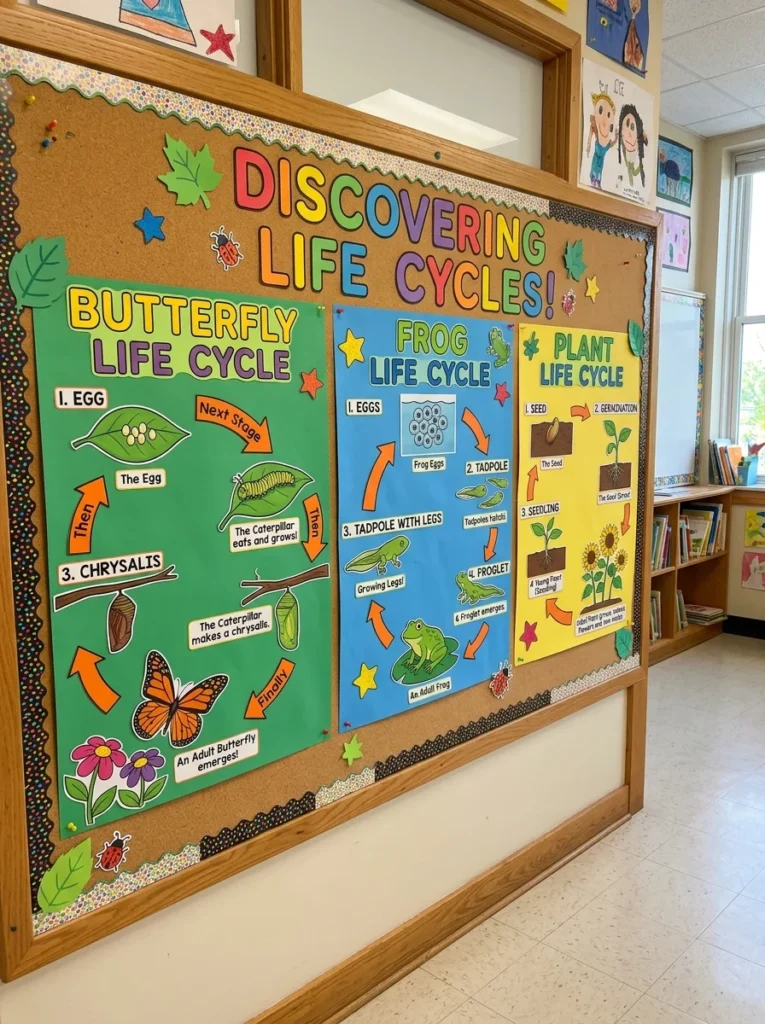
3. Life Cycles
Create a display featuring the life cycles of plants, butterflies, frogs, and other animals. This board supports life science curriculum.
Use bright, engaging colors. Create a visual life cycle for each organism with arrows showing the stages. Include simple explanations for each stage. Add a “life cycle of the month” section. Feature student drawings of life cycles.
QUICK TIPS
- Use different organisms for variety.
- Add a “draw your own” section.
- Let students share their observations.
4. Weather and Seasons
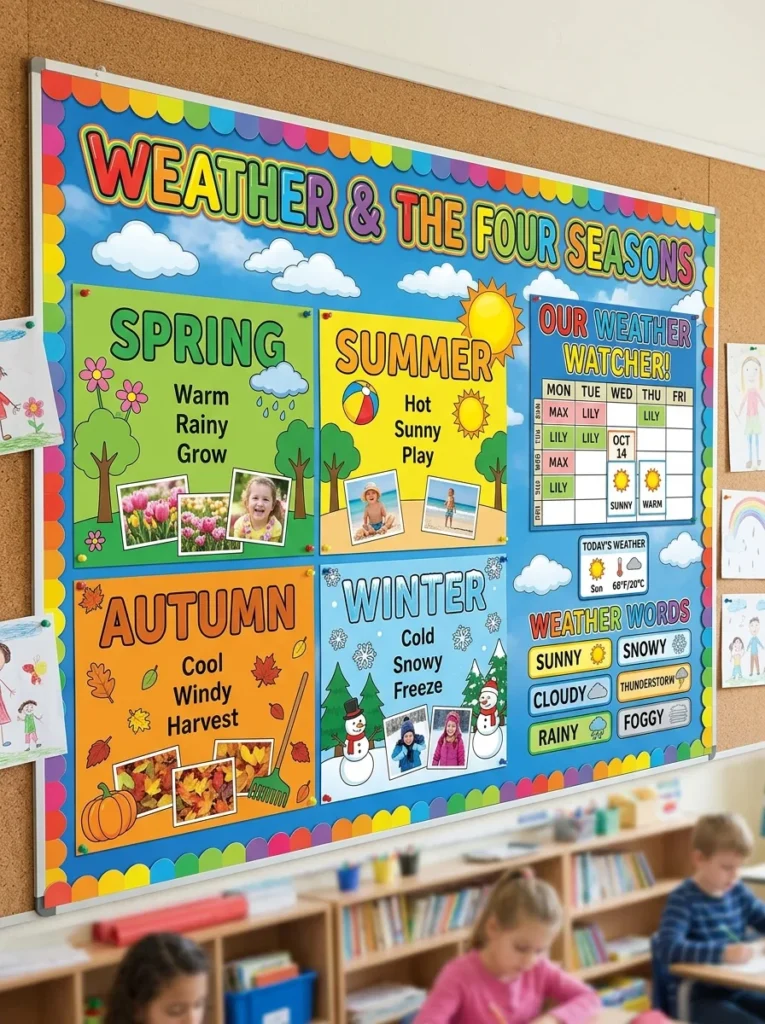
Create a display featuring weather patterns and the four seasons. This board connects science to students’ everyday experiences.
Use a color palette that reflects the seasons—bright yellow for summer, orange and brown for fall, blue and white for winter, and green and pink for spring. Include weather words like sunny, rainy, cloudy, and snowy. Add a “weather watcher” section for daily updates.
QUICK TIPS
- Include a “season of the month” section.
- Let students be “weather reporters.”
- Add a “how to dress for the weather” section.
5. Five Senses
Create a display featuring the five senses—sight, hearing, smell, taste, and touch. This board is perfect for younger elementary students.
Use bright, engaging colors. Create a section for each sense with examples and simple explanations. Add a “sense detective” section for students to share observations. Include a banner that reads “Our Five Senses.”
QUICK TIPS
- Use pictures and symbols for each sense.
- Let students add their own observations.
- Add a “senses challenge” section.

6. States of Matter
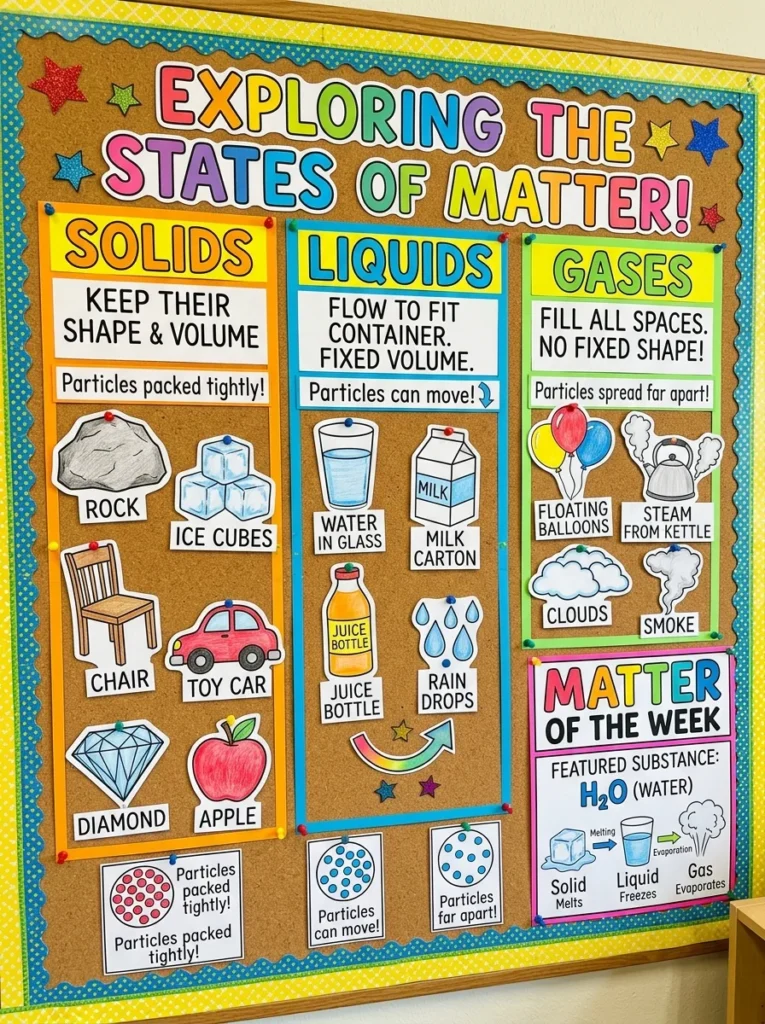
Create a display featuring solids, liquids, and gases. This board makes abstract concepts accessible and visual.
Use bright colors for each state—blue for solids, yellow for liquids, and green for gases. Include examples of each state, like ice, water, and steam. Add a “matter of the week” section. Include simple experiments students can try at home.
QUICK TIPS
- Use pictures and symbols for each state.
- Add a “matter around us” section.
- Let students share their own examples.
7. Plants and Gardening
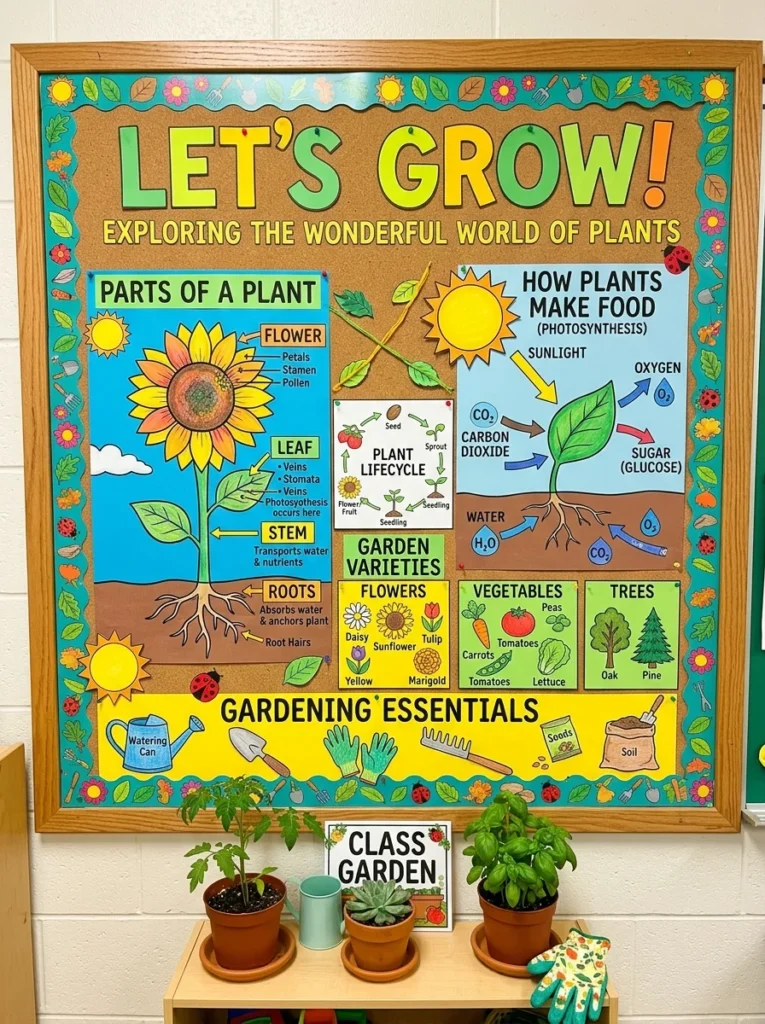
Create a display featuring plant growth, photosynthesis, and gardening. This board encourages environmental awareness.
Use green, brown, and bright colors. Decorate with flowers, trees, and vegetables. Feature the parts of a plant, what plants need to grow, and the process of photosynthesis. Add a banner that reads “Plants and Gardening.” Include a “garden journal” section.
QUICK TIPS
- Include a “grow your own” section.
- Let students share their garden experiences.
- Add a “plant of the week” section.
8. Animal Habitats
Create a display featuring different animal habitats and the animals that live there. This board supports life science and geography.
Use a color palette that reflects different habitats—blue and green for oceans, brown and green for forests, yellow and orange for deserts, and white and blue for polar regions. Feature animals and their adaptations. Include a “habitat of the month” section.
QUICK TIPS
- Use different habitats for variety.
- Let students draw their favorite habitat.
- Add a “where do I live?” interactive section.

9. Simple Machines
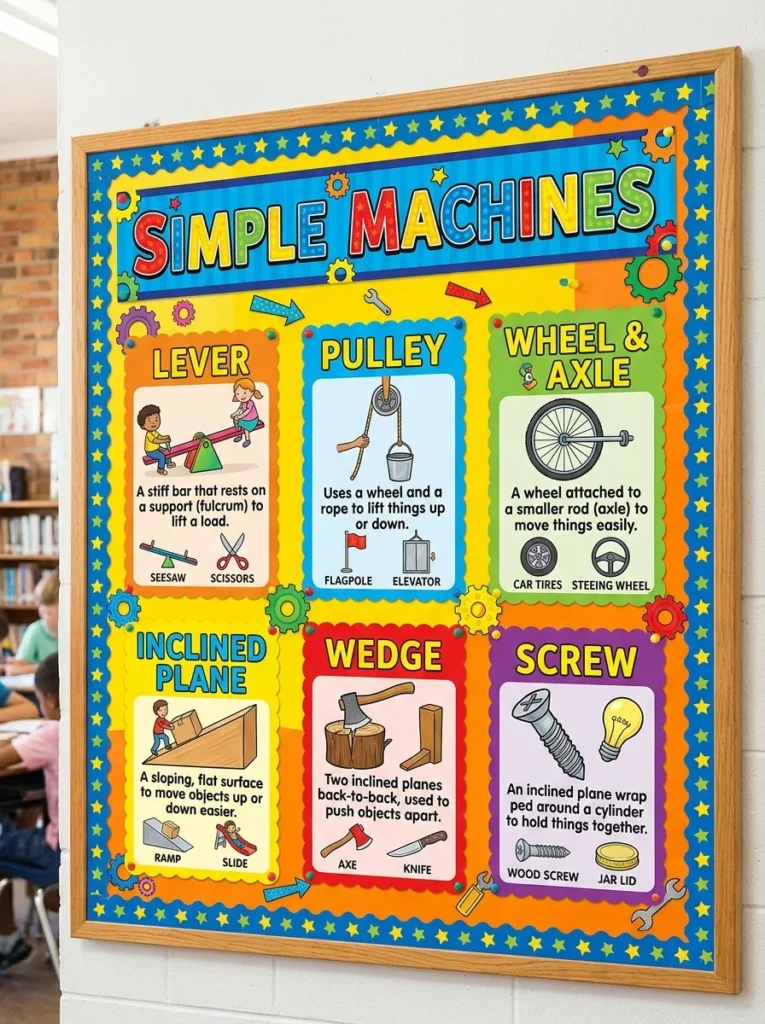
Create a display featuring simple machines—levers, pulleys, wheels and axles, inclined planes, wedges, and screws. This board makes physics accessible.
Use bright, engaging colors. Create a section for each machine with examples and simple explanations. Add a “simple machine of the month” section. Include a “find a machine” challenge where students identify simple machines at school.
QUICK TIPS
- Use pictures and diagrams for each machine.
- Let students share examples they find.
- Add a “build your own” section.
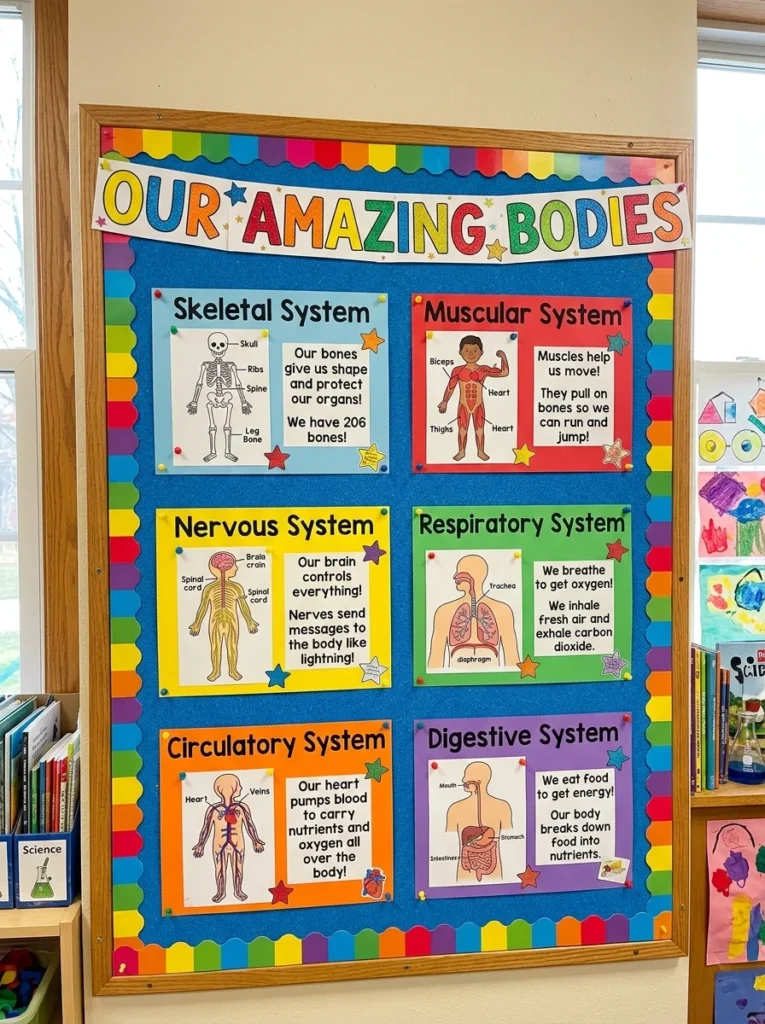
10. Our Amazing Bodies
Create a display featuring the human body systems—skeletal, muscular, digestive, circulatory, and respiratory. This board supports health and life science.
Use bright, engaging colors. Create a section for each system with diagrams and simple explanations. Add a “body fact of the week” section. Include a “how to stay healthy” section.
QUICK TIPS
- Use kid-friendly diagrams.
- Let students share their own body facts.
- Add a “healthy choices” section.
11. Dinosaurs and Fossils
Create a display featuring dinosaurs, fossils, and paleontology. This board captures students’ imagination and encourages curiosity about Earth’s history.
Use earthy colors—brown, green, and orange. Decorate with dinosaur silhouettes, fossils, and paleontology tools. Feature different dinosaur species and fun facts. Add a banner that reads “Dinosaurs and Fossils.” Include a “dinosaur of the week” section.
QUICK TIPS
- Use different dinosaurs for variety.
- Let students draw their favorite dinosaur.
- Add a “fossil find” interactive section.

12. Science Is Everywhere!
Create a display that shows students how science is all around them. This board encourages observation and curiosity.
Use bright, engaging colors. Feature examples of science in everyday life—cooking, weather, sports, technology, and nature. Add a “science in action” section with photos. Include a banner that reads “Science Is Everywhere!” Let students contribute their own examples.
QUICK TIPS
- Use real-life photos when possible.
- Let students share their own observations.
- Add a “science scavenger hunt” section.

Final Thoughts
Elementary science bulletin boards can spark curiosity, encourage inquiry, and make science concepts accessible to young learners. Whether you choose a solar system display, a life cycle board, or a simple machines theme, these displays encourage students to explore the world around them. Plan your board ahead, laminate cutouts for longevity, and keep the display fresh by swapping out elements monthly. Your science bulletin board can become a hub of discovery and excitement for the entire year.