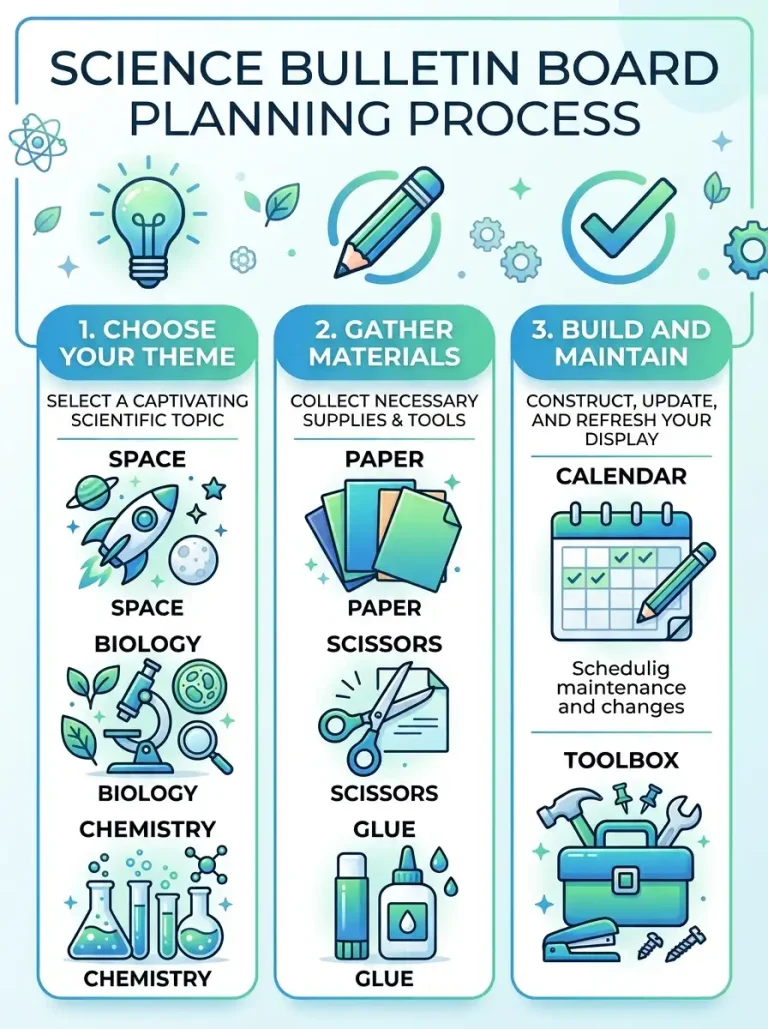
15 Science Bulletin Board Ideas for 5th Grade
Fifth grade is a pivotal year for science education. Students are ready for more complex concepts, hands-on experiments, and connections between different branches of science. These bulletin board ideas are designed to engage, challenge, and inspire 5th graders while supporting your curriculum.
1. The Scientific Method in Action
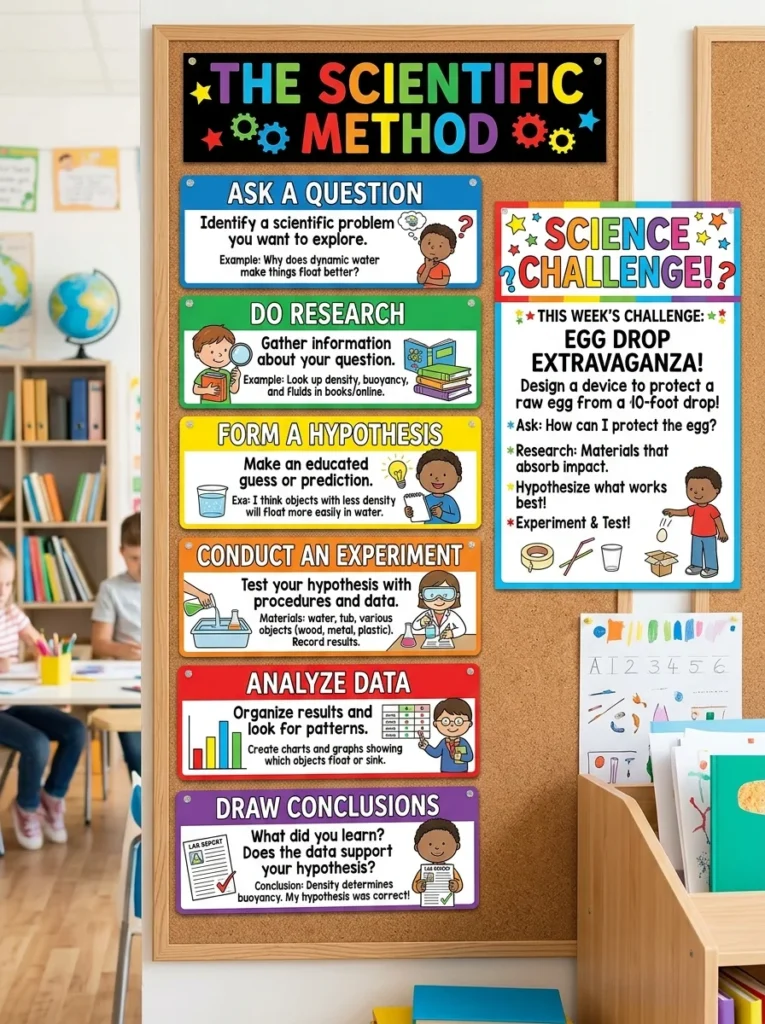
Create a display that walks students through the scientific method using 5th-grade-friendly language and real-world examples. This board serves as a reference throughout the year.
Use a clean, organized layout with clear headings for each step: Ask a Question, Do Research, Make a Hypothesis, Test with an Experiment, Observe and Record Data, Draw a Conclusion, and Share Results. Add examples from 5th-grade science fair projects and a “science in action” section showcasing a current class experiment.
QUICK TIPS
- Use arrows to show the flow of the scientific method.
- Add a “science challenge” section for students to apply the method.
- Include student work demonstrating the process.
2. The Solar System and Beyond
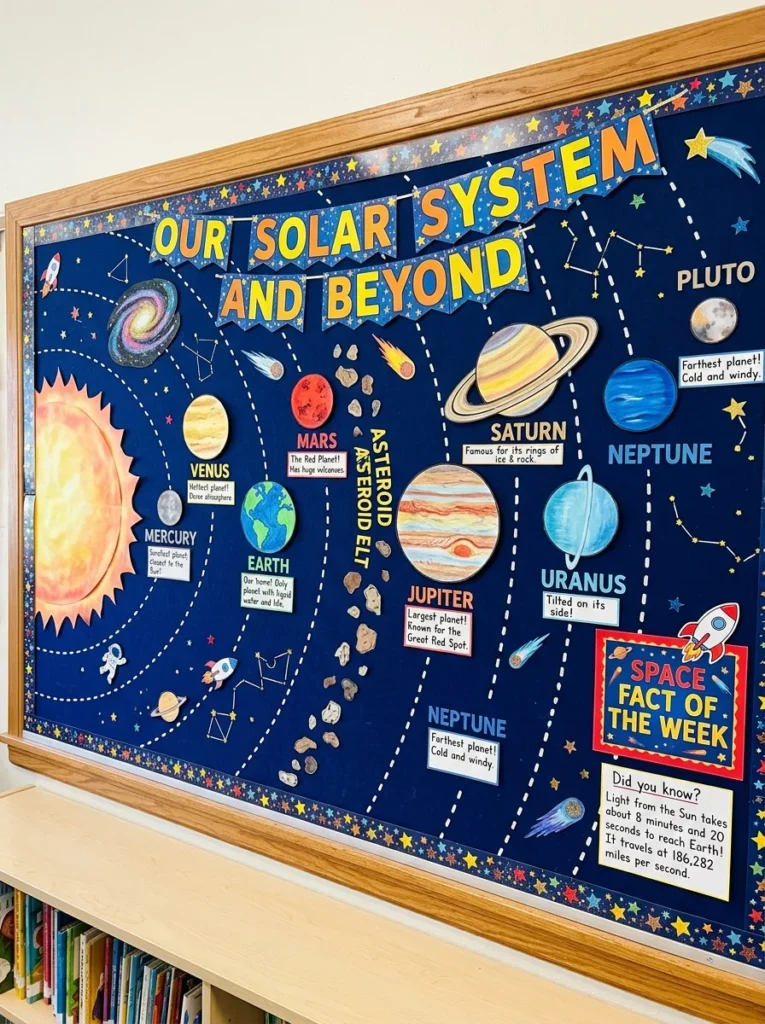
Create a display featuring the planets, stars, and galaxies. This board supports 5th-grade astronomy curriculum and inspires curiosity about space.
Use a dark blue or black background. Create large, colorful planets with labels and fun facts. Include information about the sun, moon, asteroids, and comets. Add a “space fact of the week” section. Feature a “current space missions” section with updates from NASA or other space agencies.
QUICK TIPS
- Use different sizes to show planet scale.
- Include a “how far?” section with distance comparisons.
- Let students add their own space facts.
3. Ecosystems and Food Webs
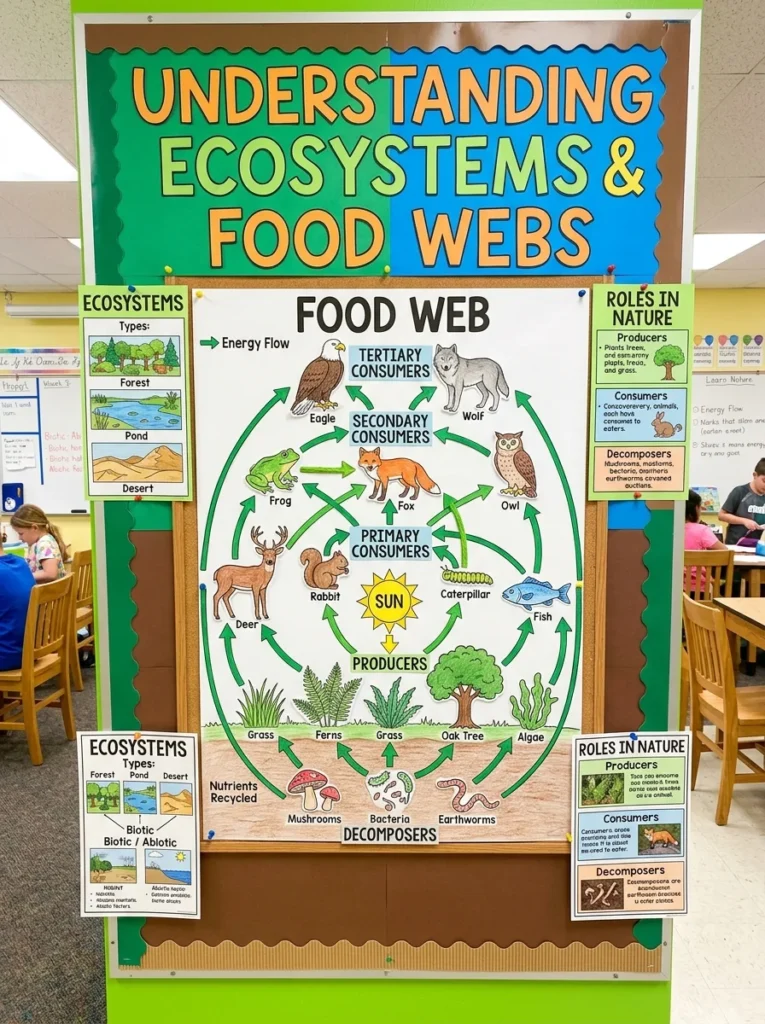
Create a display featuring ecosystems, food webs, and biodiversity. This board supports 5th-grade life science curriculum.
Use a color palette of green, blue, and brown. Decorate with plants, animals, and habitat illustrations. Feature a large food web with arrows showing energy flow. Add a “did you know?” section with fun facts about ecosystems. Include a “species spotlight” section for different animals each week.
QUICK TIPS
- Use different ecosystems—forest, ocean, desert, grassland.
- Let students draw their own food webs.
- Add a “ecosystem in danger” section to discuss conservation.
4. States of Matter and Changes
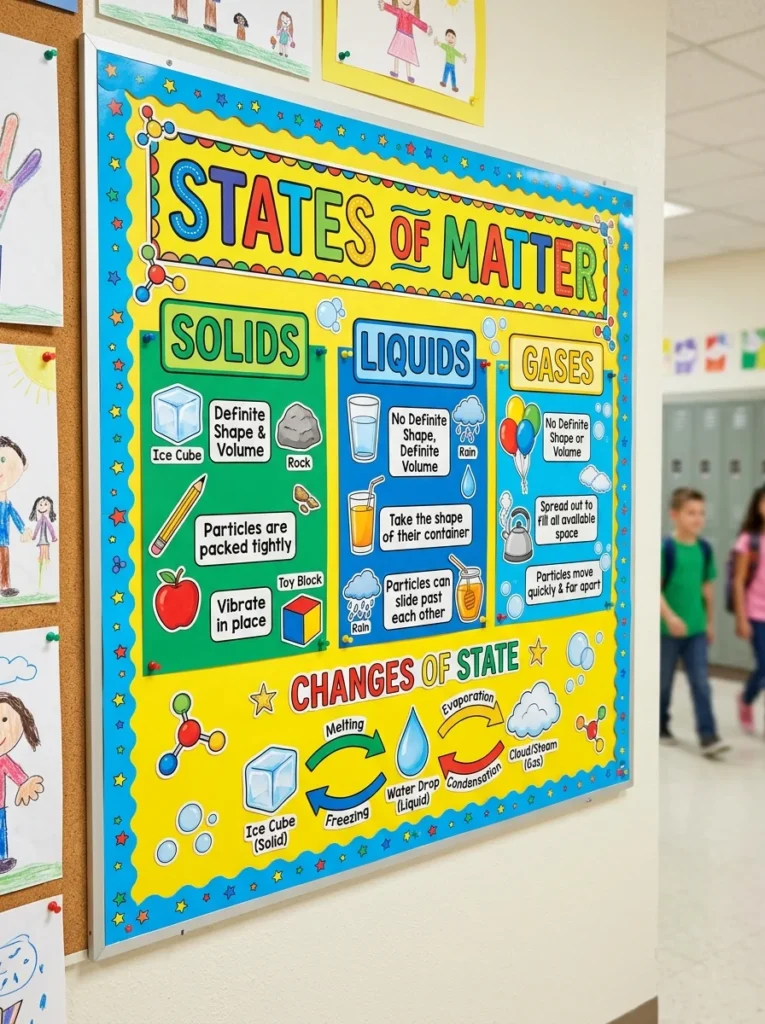
Create a display featuring solids, liquids, and gases, including changes of state. This board supports 5th-grade physical science curriculum.
Use bright colors for each state—blue for solids, yellow for liquids, and green for gases. Include examples of each state and their properties. Feature changes of state like melting, freezing, evaporation, and condensation. Add a “matter in action” section with real-world examples.
QUICK TIPS
- Use pictures and diagrams for each state and change.
- Add a “matter around us” section.
- Let students share their own examples of changes of state.
5. Force and Motion
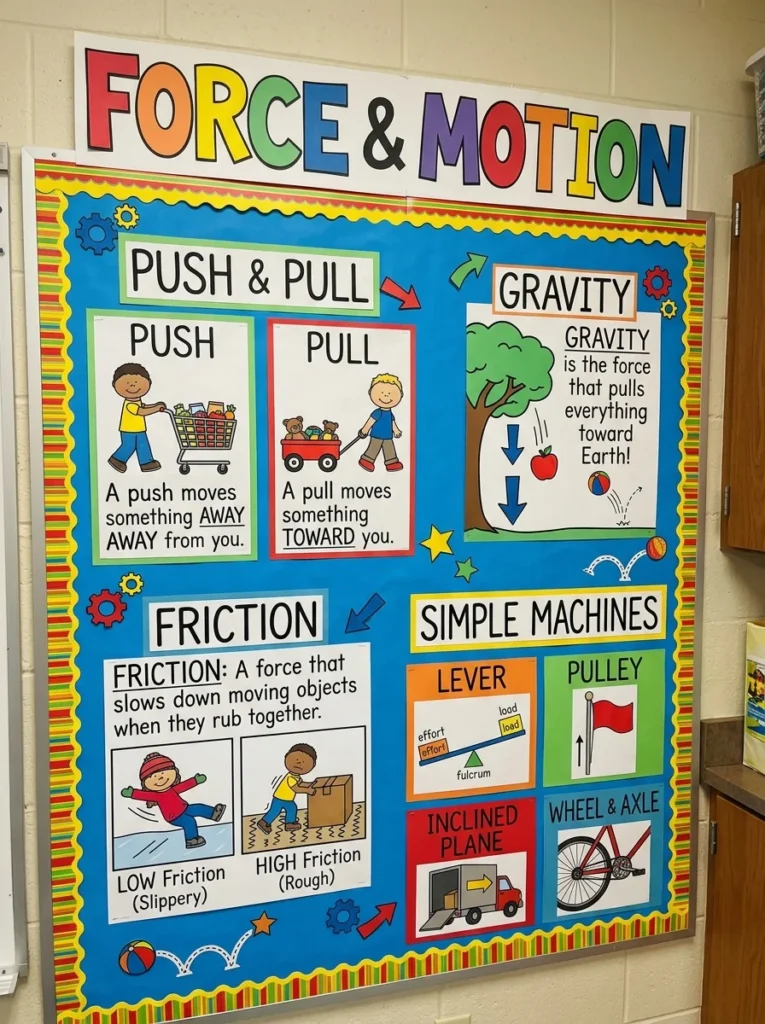
Create a display featuring forces, motion, and simple machines. This board supports 5th-grade physics curriculum.
Use bright colors—red, yellow, blue. Feature examples of push and pull, gravity, friction, and magnetism. Include simple machines like levers, pulleys, inclined planes, and wheels and axles. Add a “physics in action” section with real-world examples.
QUICK TIPS
- Include a “force challenge” section.
- Let students share examples of forces in their daily lives.
- Add a “simple machine hunt” section for the classroom.
6. Human Body Systems
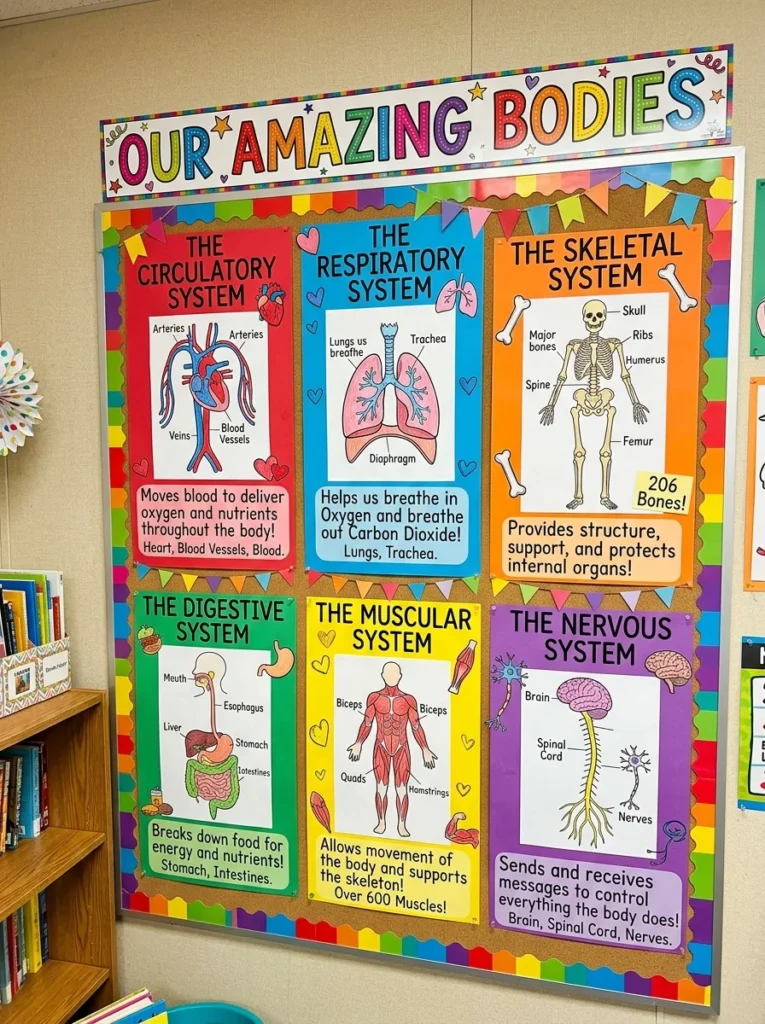
Create a display featuring the human body systems—skeletal, muscular, digestive, circulatory, and respiratory. This board supports 5th-grade health and life science.
Use bright, engaging colors. Create a section for each system with diagrams and simple explanations. Add a “body fact of the week” section. Include a “how to stay healthy” section with tips for nutrition and exercise.
QUICK TIPS
- Use kid-friendly diagrams.
- Let students share their own body facts.
- Add a “healthy choices” section.
7. Earth’s Changes
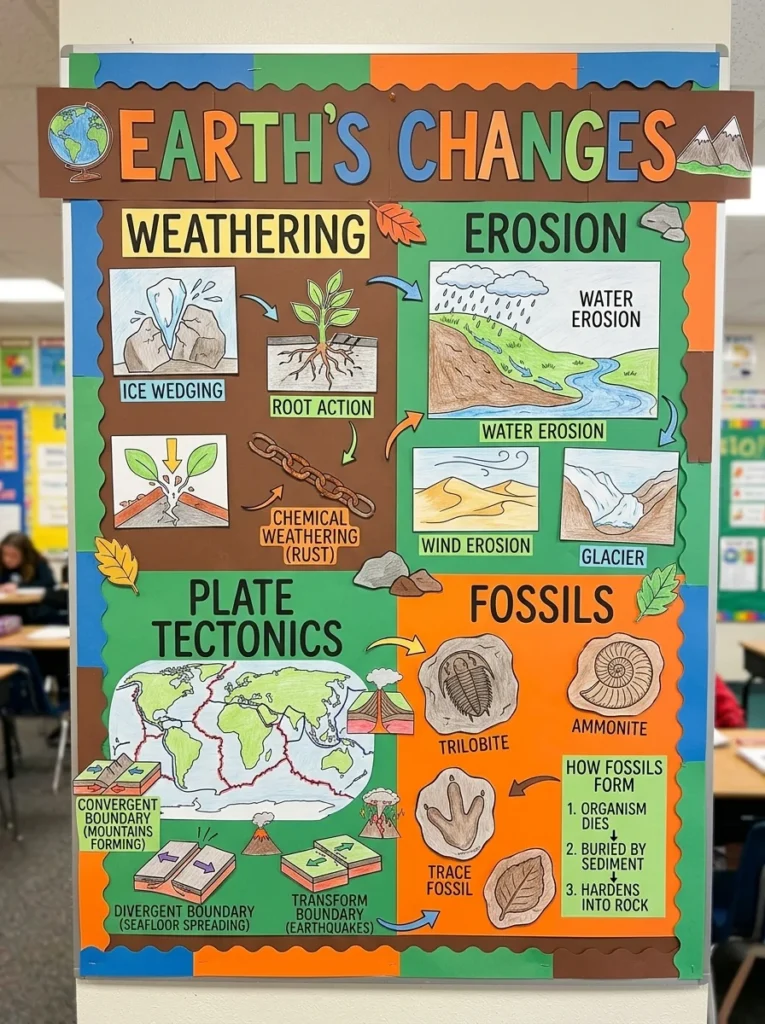
Create a display featuring Earth’s changes—weathering, erosion, plate tectonics, and fossils. This board supports 5th-grade earth science curriculum.
Use a color palette of brown, green, blue, and orange. Feature examples of weathering and erosion, earthquakes and volcanoes, and fossil formation. Add a “did you know?” section with fun facts about Earth’s changes. Include a “fossil of the month” section.
QUICK TIPS
- Use diagrams and photos to show Earth’s changes.
- Let students draw their own Earth processes.
- Add a “how long does it take?” section for geological processes.
8. Plant and Animal Cells
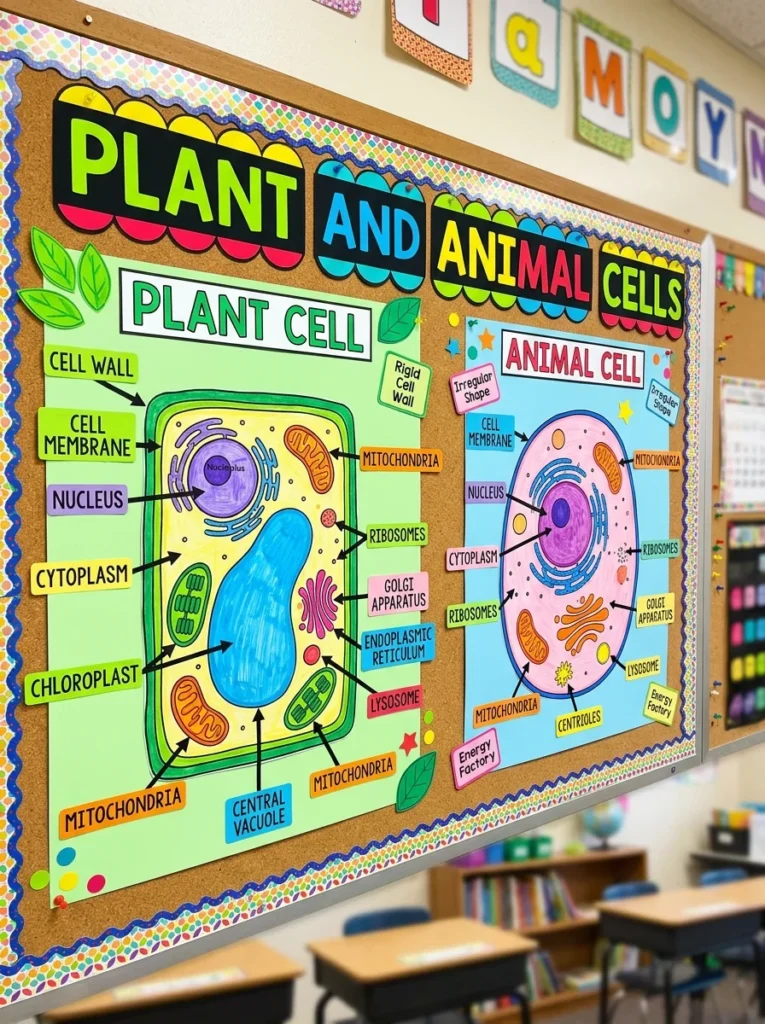
Create a display featuring the parts of plant and animal cells. This board supports 5th-grade life science curriculum.
Use bright colors for each cell part. Create diagrams of plant and animal cells with labels for parts like the nucleus, cell membrane, cytoplasm, mitochondria, chloroplasts, and cell wall. Add a “cell fact of the week” section. Include a “compare and contrast” section for plant vs. animal cells.
QUICK TIPS
- Use clear, labeled diagrams.
- Let students build their own cell models.
- Add a “what does it do?” section for each organelle.
9. Water Cycle
Create a display featuring the water cycle—evaporation, condensation, precipitation, and collection. This board supports 5th-grade earth science curriculum.
Use a color palette of blue, white, and green. Include a large water cycle diagram with arrows showing the flow. Add explanations for each stage. Include a “water cycle in action” section with real-world examples. Add a “water conservation” section.
QUICK TIPS
- Use clear, colorful diagrams.
- Let students create their own water cycle models.
- Add a “where does our water come from?” section.

10. Weather and Climate
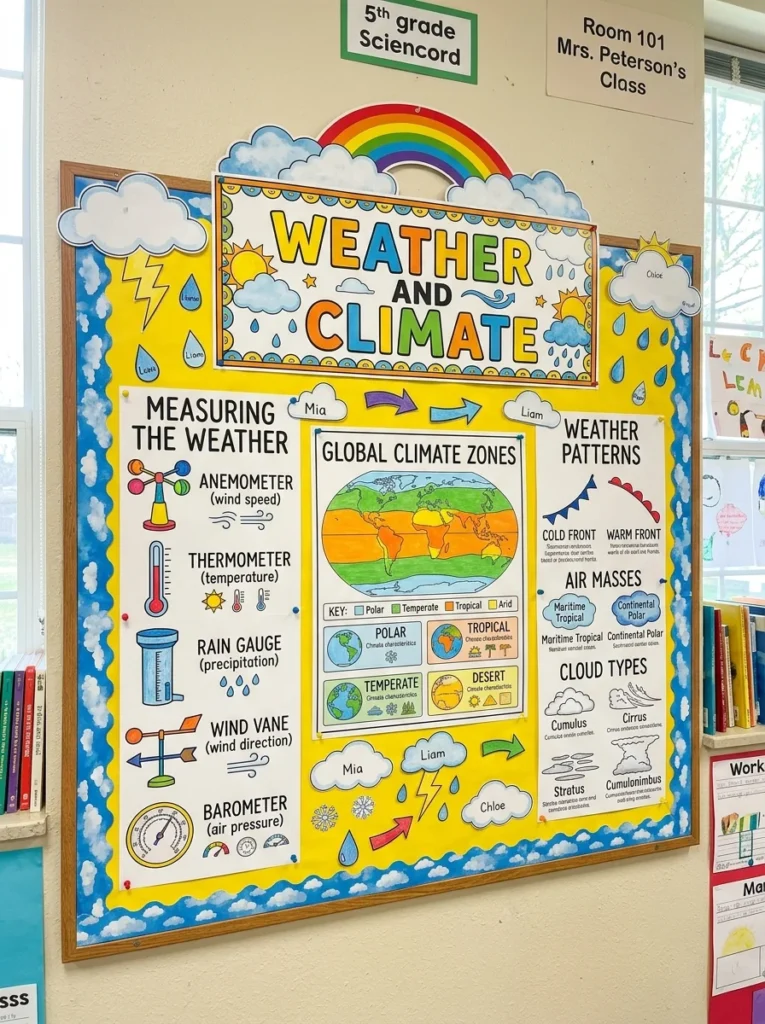
Create a display featuring weather and climate, including weather patterns, instruments, and climate zones. This board supports 5th-grade earth science curriculum.
Use bright colors—yellow, blue, white. Feature weather instruments like thermometers, barometers, and anemometers. Include examples of climate zones—tropical, temperate, polar. Add a “weather fact of the week” section. Include a “climate change” section.
QUICK TIPS
- Include a “weather reporter” section.
- Let students track weather patterns.
- Add a “how do we measure weather?” section.
11. Scientists and Inventors
Create a display featuring famous scientists and inventors. This board inspires students and shows the human side of science.
Use a color palette of bright, engaging colors. Feature scientists like Marie Curie, Albert Einstein, Thomas Edison, Jane Goodall, and Neil deGrasse Tyson. Include photos, brief bios, and their key achievements. Add a “scientist of the month” section. Include a “what would you invent?” interactive section.
QUICK TIPS
- Include a mix of historical and contemporary scientists.
- Let students research and present on scientists.
- Add a “careers in science” section.

12. Renewable Energy
Create a display featuring renewable energy sources—solar, wind, hydro, and geothermal. This board supports environmental science curriculum.
Use a color palette of green, blue, and yellow. Feature examples of renewable energy with diagrams and simple explanations. Add a “energy fact of the week” section. Include a “how can you help?” section with environmental tips.
QUICK TIPS
- Include a “compare energy sources” section.
- Let students research local renewable energy.
- Add a “future of energy” section.

13. Properties of Matter
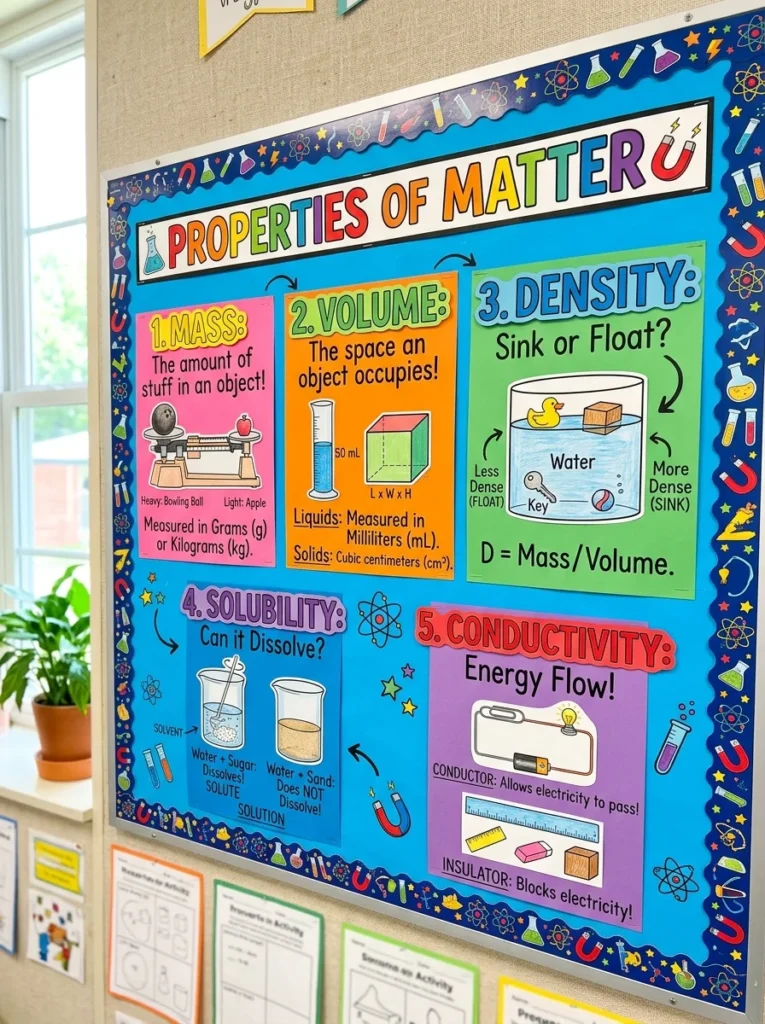
Create a display featuring the properties of matter—mass, volume, density, solubility, and conductivity. This board supports 5th-grade physical science curriculum.
Use bright colors. Create sections for each property with examples and simple explanations. Add a “matter detective” section for hands-on exploration. Include a “property of the week” section.
QUICK TIPS
- Use pictures and diagrams for each property.
- Let students explore properties through hands-on stations.
- Add a “mystery property” challenge.
14. Genetics and Heredity
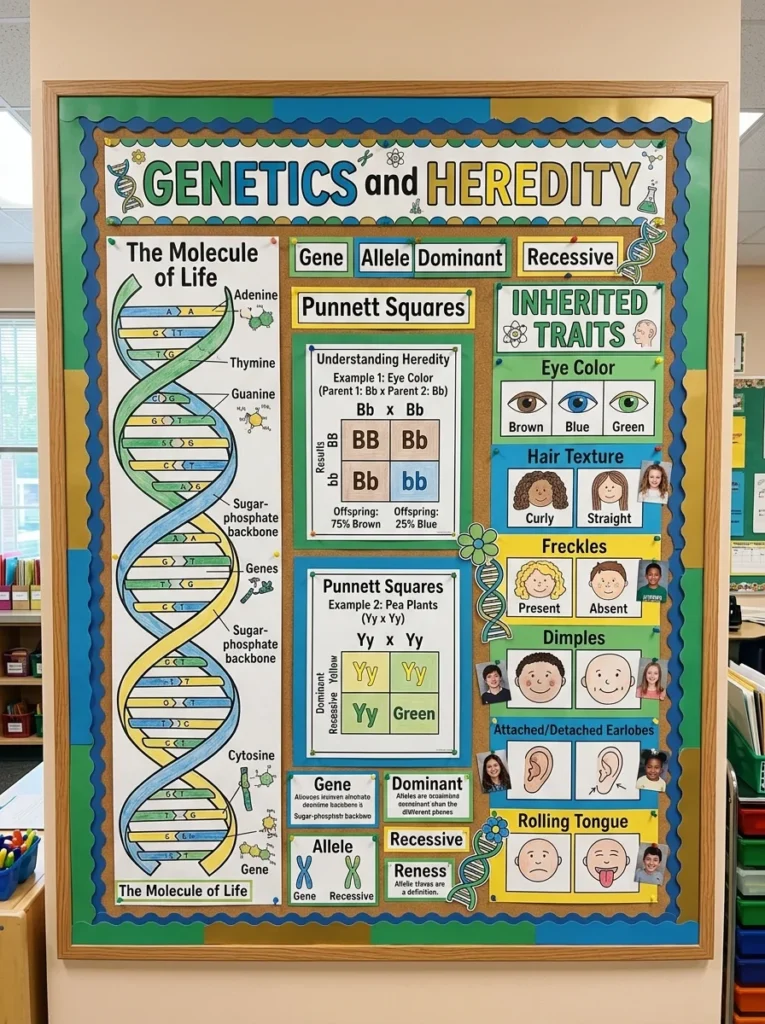
Create a display featuring genetics, inherited traits, and DNA. This board supports 5th-grade life science curriculum.
Use a color palette of green, blue, and gold. Decorate with DNA helix images and Punnett squares. Feature examples of inherited traits like eye color, hair color, and height. Add a “trait of the month” section. Include a “genetics in the news” section.
QUICK TIPS
- Use clear, simple diagrams.
- Let students explore traits in their families.
- Add a “what traits do you have?” interactive section.
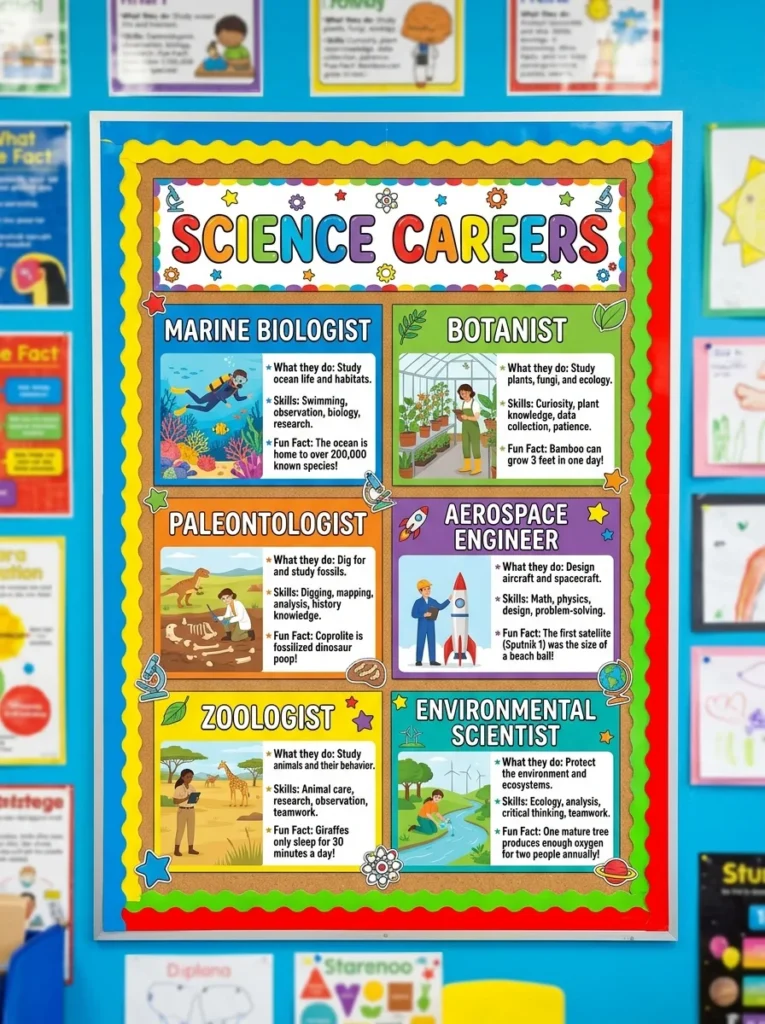
15. Science Careers
Create a display featuring diverse science careers. This board helps students see the possibilities in STEM.
Use a color palette of bright, engaging colors. Feature careers like marine biologist, engineer, data scientist, doctor, environmental scientist, and forensic scientist. Include job descriptions, required skills, and fun facts. Add a “career spotlight” section. Include a “what career interests you?” interactive section.
QUICK TIPS
- Include a mix of traditional and emerging careers.
- Let students explore careers that interest them.
- Add a “skills for science careers” section.
Final Thoughts
Fifth grade is a pivotal year for science education. These bulletin boards can spark curiosity, reinforce key concepts, and inspire students to pursue their interests in science. Whether you choose a scientific method display, a solar system board, or a renewable energy theme, these boards encourage students to think critically and explore the world around them. Plan your board ahead, laminate cutouts for longevity, and keep the display fresh by swapping out elements monthly. Your science bulletin board can become a hub of discovery and excitement for the entire year.