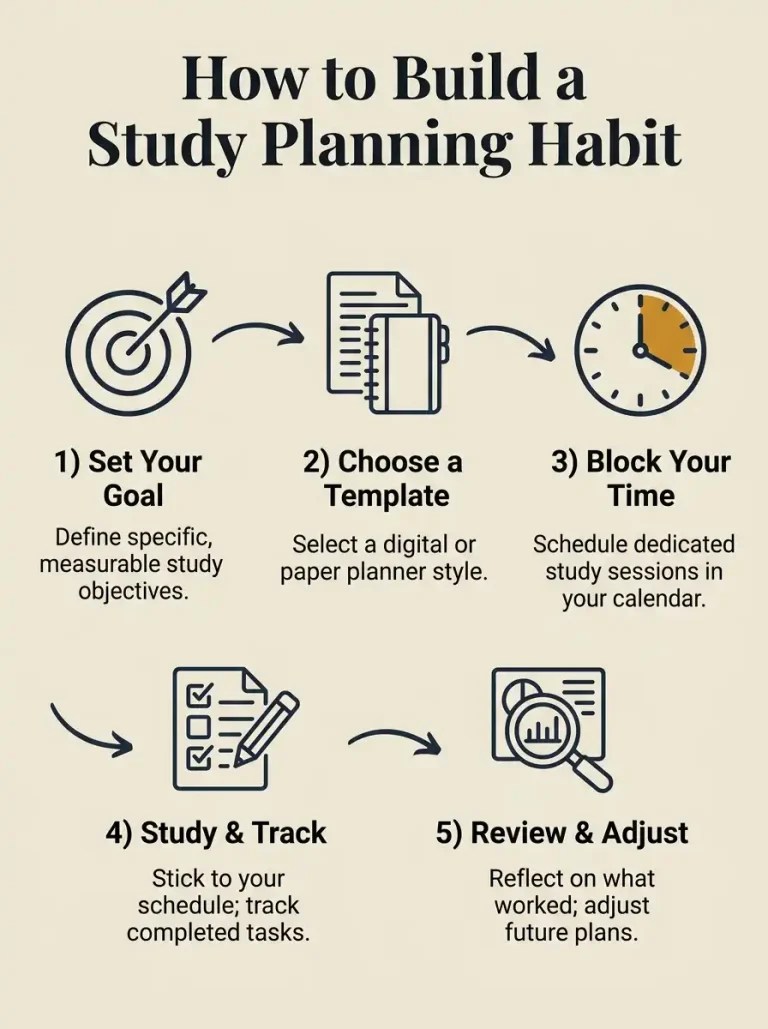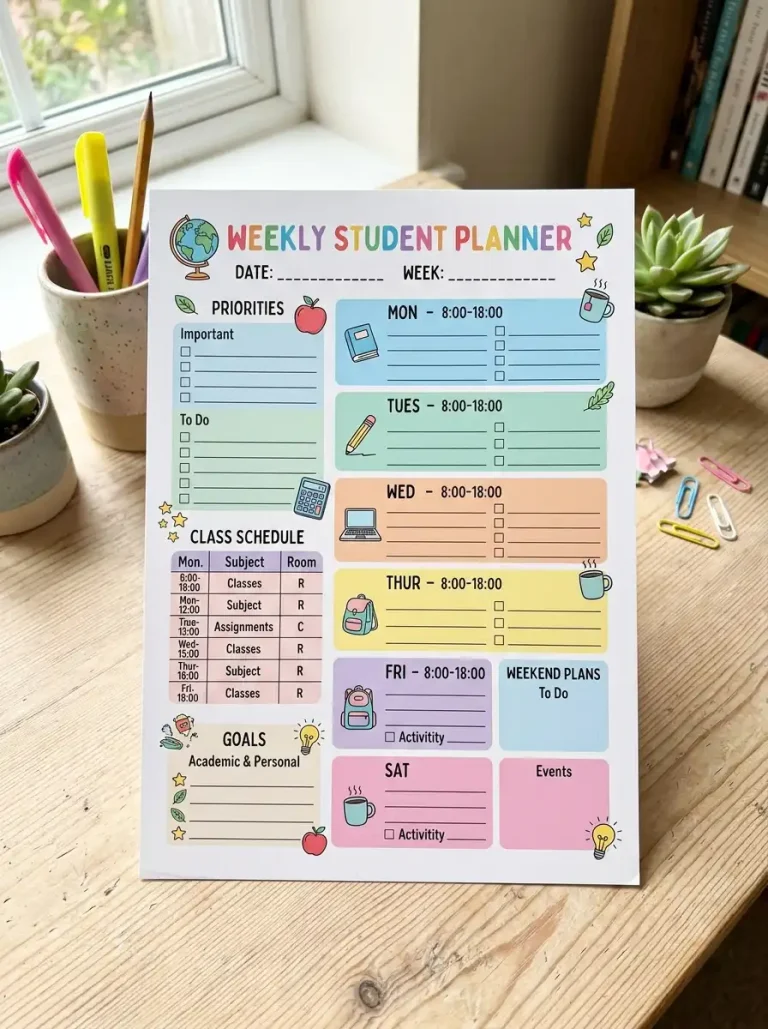
9 Monthly Study Planner Free Printable Templates PDF
If you have ever opened five different notebooks looking for the one where you wrote down an assignment deadline, you already know why planning matters. Studying without a system feels like walking through fog. You know something important is out there, but you cannot quite see it.
That is exactly why a monthly study planner works so well. Instead of scattering deadlines, goals, and revision notes across sticky notes and phone reminders, you bring everything into one page. You can see the whole month before it happens, not just the day in front of you.
In this guide, you will find 9 monthly study planner free printable templates PDF, each built for a different kind of student and a different kind of goal. Some are minimal. Some are built for exam season. Some are color-coded for students juggling several subjects at once. Every single one is free, printable, and ready to use today.
We will also walk through what a monthly study planner actually is, why it beats sticky-note chaos, and exactly how to use one so it becomes a habit rather than another abandoned document. By the end, you will have a printable study planner PDF that fits your actual life, not someone else’s idea of a perfect student.
Pro Tip: Print two or three copies of your favorite template at the start of the month. Life happens, and a backup copy means one coffee spill will not derail your whole system.
What Is a Monthly Study Planner?
A monthly study planner is a single-page or multi-page tool that lays out an entire month of academic responsibilities in one view. It typically includes space for goals, important dates, subject priorities, assignments, and a simple calendar grid.
Unlike a to-do list, a monthly study planner gives you distance. You step back from today’s stress and look at the bigger picture instead.
Definition and Purpose
At its core, a monthly study planner printable answers one question: what needs my attention this month, and when? It combines a calendar with goal-setting so you are not just tracking dates, you are also tracking intentions.
The purpose is simple. It reduces the mental load of remembering everything yourself. Once it is on paper, your brain can relax a little.
Who Should Use One
Monthly planners work well for:
- High school students juggling multiple subjects and extracurriculars
- College students managing several courses with different deadlines
- Adult learners studying part-time around a job or family
- Anyone preparing for a certification exam or standardized test
- Parents helping a child build early planning habits
Basically, if your study life spans more than a single week, a monthly view helps enormously.
Monthly vs Weekly Planners: What Is the Difference?
A weekly planner zooms in. It shows you Monday through Sunday in detail, often broken down by hour. A monthly study schedule zooms out. It shows the shape of an entire month, so you can spot busy weeks before they arrive.
Think of it this way: the weekly planner tells you what to do today. The monthly planner tells you why today matters within the bigger picture. Most successful students actually use both together, but if you had to pick one to start with, the monthly view gives you the most clarity for the least effort.
Why Monthly Planning Reduces Stress
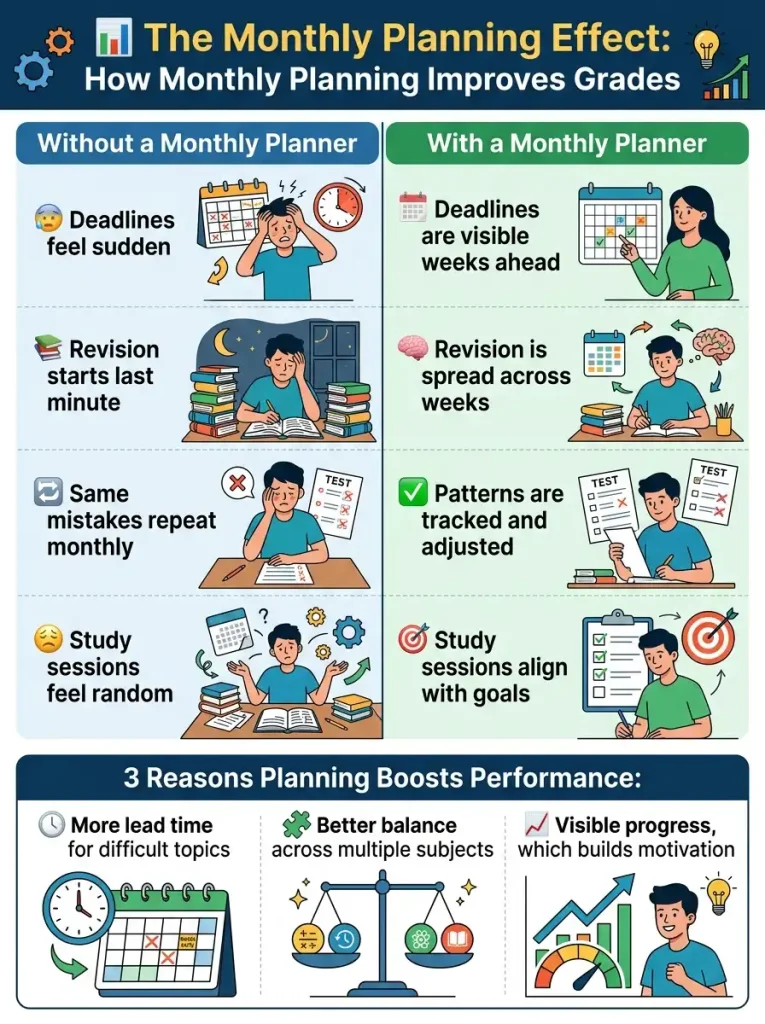
When you only see one week at a time, deadlines feel like they appear out of nowhere. A test that was always on the calendar suddenly feels like a surprise attack.
Monthly planning removes that ambush feeling. You see the exam three weeks away, so you start revising two weeks early instead of two days early. That single shift, seeing further ahead, is often the biggest difference between a stressed student and a calm one.
Infographic: How Monthly Planning Improves Grades
Benefits of Using Monthly Study Planner Printable
A printable study planner PDF is not just a pretty page. It changes how you actually behave over time. Here is what shifts once you commit to using one.
Better Time Management
When every deadline lives on one page, you naturally start distributing your time instead of cramming it into the final days. For example, seeing three assignments due in the same week pushes you to start the easiest one early.
Improved Consistency
A monthly revision planner creates a rhythm. You are not deciding whether to study today; you already decided that weeks ago when you filled in the planner. That removes a surprising amount of daily willpower struggle.
Stronger Exam Preparation
An exam study planner breaks a scary, distant test into small, doable pieces. Instead of “study for chemistry,” your planner might say “review chapters 4 to 6 on Tuesday.” That specificity makes starting far easier.
Goal Tracking That Actually Works
Writing a goal down is one thing. Seeing it every day on your desk is another. A monthly study calendar template keeps your goals visible, so they influence daily decisions instead of getting buried in a notes app.
Habit Formation
Habit trackers built into printable planners turn good intentions into visible streaks. Once you see five checked boxes in a row, you often do not want to break the chain on day six.
Reduced Procrastination
Big tasks feel overwhelming, and overwhelm often turns into avoidance. Breaking a project into weekly chunks on your monthly academic planner makes each piece small enough to actually start.
Workload Balancing
A student planner printable shows you at a glance if week three is overloaded while week one is empty. You can then shift tasks earlier before the crunch hits.
Assignment Planning
Instead of relying on memory, every assignment gets a home on the page, complete with a due date and status. That alone prevents most last-minute panics.
Revision Scheduling
Spacing out revision, rather than saving it all for the final days, is proven to improve retention. A monthly revision planner makes spaced repetition simple to plan without needing a complicated app.
Improved Academic Performance
Put all these benefits together, and the result is straightforward. Students who plan consistently tend to submit on time, walk into exams more prepared, and feel less burned out along the way.
Quick Tip: Pick one benefit above that matters most to you right now, whether that is exam prep or reducing procrastination, and let that guide which template you choose first.
How to Use a Monthly Study Planner Effectively
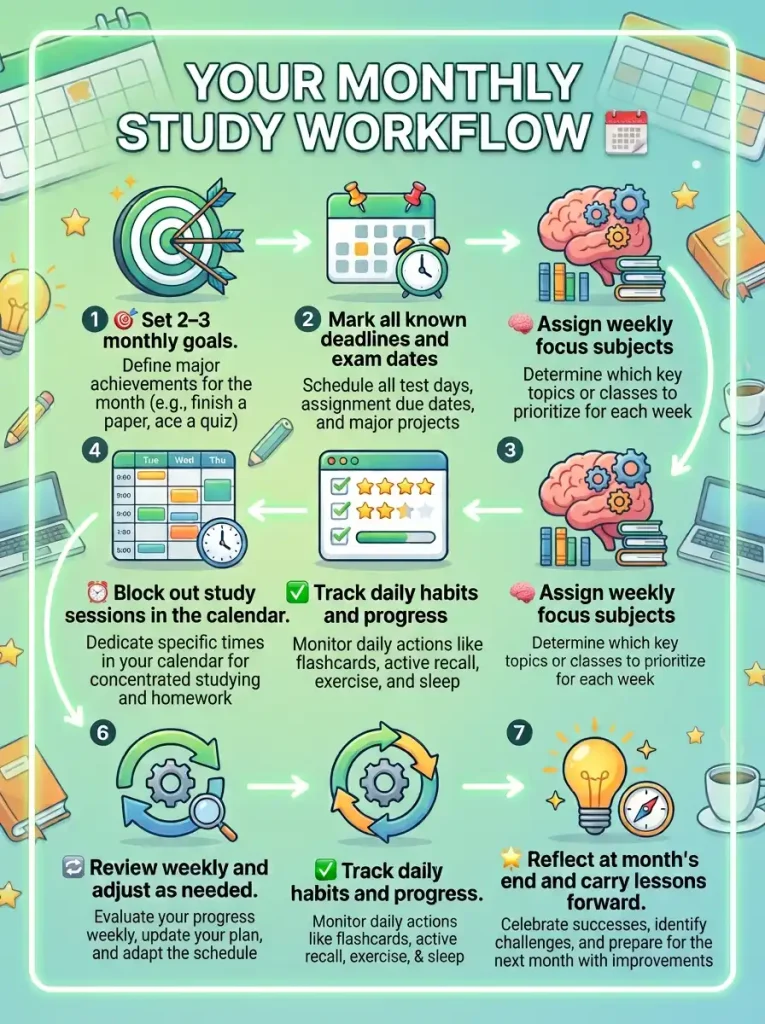
Owning a great printable planner for students means nothing if it sits blank in a drawer. Here is a simple process to actually make it part of your routine.
Step 1: Identify Your Priorities First
Before filling in a single date, ask yourself what matters most this month. Is it one big exam? A group project? Catching up on a subject you have fallen behind in? Write that priority at the top before anything else.
Step 2: Set Realistic Monthly Goals
Keep your monthly goals specific and few. Three clear goals beat ten vague ones every time. For instance, “finish two practice exams” is more useful than “study more.”
Step 3: Schedule Study Blocks Around Your Real Life
Look at your actual commitments, classes, work shifts, family time, and slot study blocks into the gaps that genuinely exist. A planner that ignores your real schedule will get abandoned within a week.
Step 4: Plan Revision Before You Need It
Do not wait until exam week to think about revision. Mark revision sessions on your monthly study schedule as soon as you know the exam date, ideally two to three weeks out.
Step 5: Track Your Progress Weekly
Every Sunday, or whichever day works for you, glance back at the week. Did you hit your study blocks? Which subject needs more attention next week? This five-minute check keeps the whole month on track.
Step 6: Adjust Without Guilt
Plans change. If week two gets disrupted by illness or an unexpected event, shift the tasks rather than abandoning the planner altogether. A monthly view makes this easy because you can see where the extra time can go later in the month.
Step 7: Avoid Burnout by Building in Rest
A packed planner with zero breaks usually fails within two weeks. Schedule rest the same way you schedule study, as a fixed, non-negotiable block.
Common Mistake: Filling every single hour with study blocks and leaving no buffer time. When one thing runs long, as it always does, the whole plan falls apart. Always leave breathing room.
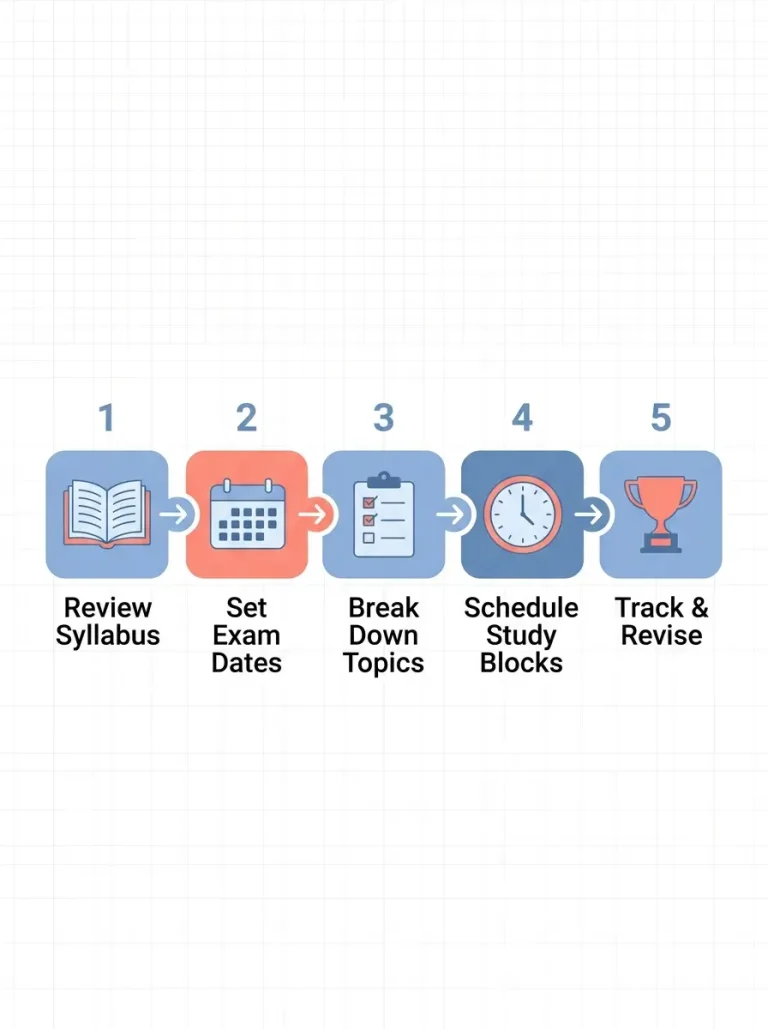
Infographic: Monthly Study Workflow
9 Monthly Study Planner Free Printable Templates PDF
Below are 9 monthly study planner free printable templates PDF, each designed with a different student in mind. Pick the one that matches your current challenge, or mix elements from a few. Every printable is included in the downloadable PDF study planner packet at the end of this article.
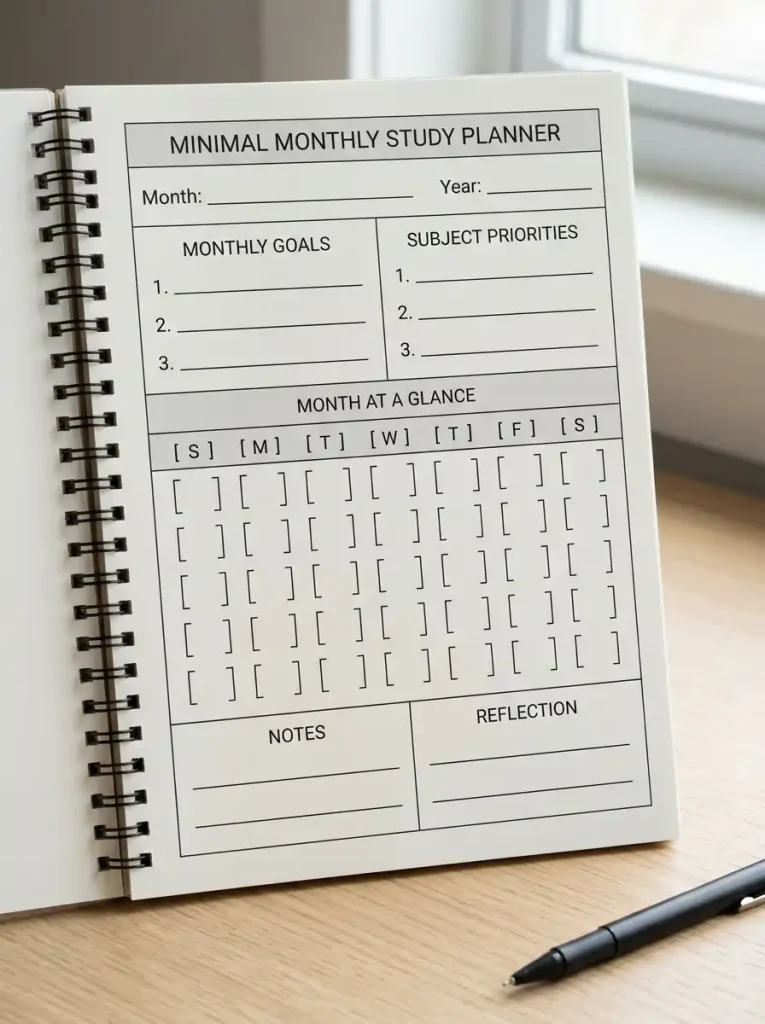
1. Minimal Monthly Study Planner
Best For: Students who feel overwhelmed by busy planners and want a clean, distraction-free page.
Key Features: A simple month-at-a-glance calendar, a monthly goals box, a subject priorities section, notes area, and a short reflection space.
How to Use It: Fill in your top three goals first, then use the calendar grid to mark only the dates that truly matter, exams, deadlines, and big events. Leave the rest open for flexibility.
Why It Works: Fewer sections mean less friction. Students who abandon complicated planners often stick with this one simply because it takes thirty seconds to fill in.
2. Exam Preparation Planner
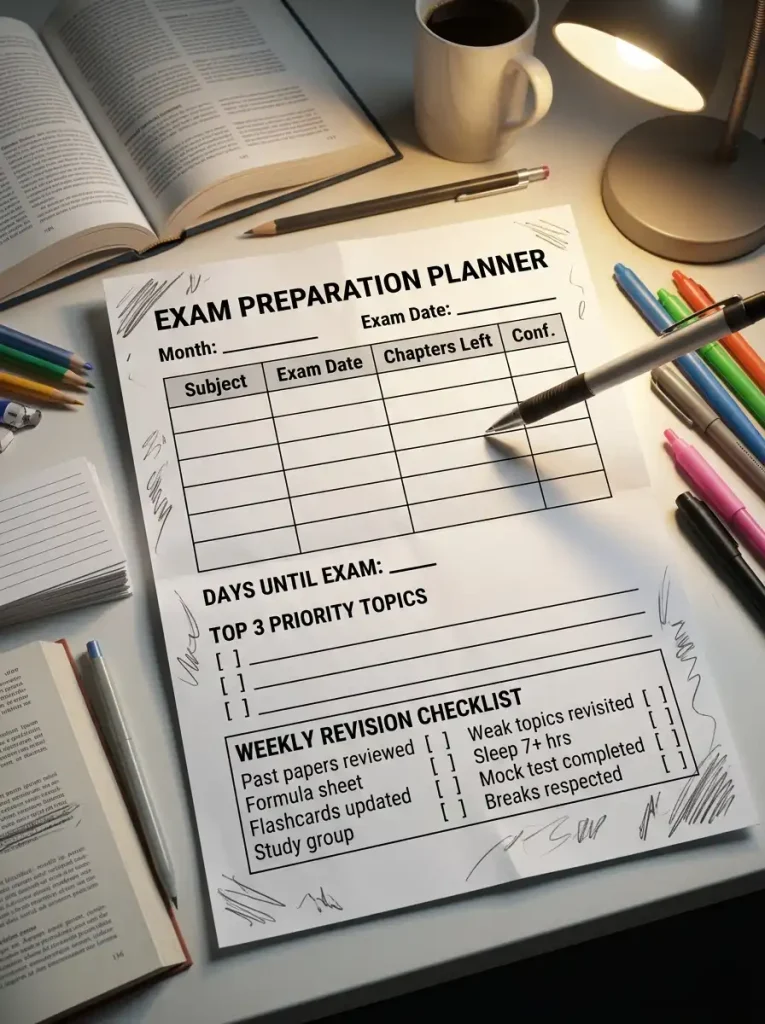
Best For: Students with a specific exam date approaching who need structured, focused revision.
Key Features: An exam subject tracker with confidence ratings, a countdown box, top-three priority topics, and a weekly revision checklist.
How to Use It: List each exam subject along with remaining chapters and a self-rated confidence score from one to five. Focus your weekly study blocks on the lowest-confidence subjects first.
Why It Works: Confidence ratings turn a vague sense of worry into an actual number you can improve. Watching that number rise week by week is genuinely motivating.
3. Color-Coded Subject Planner
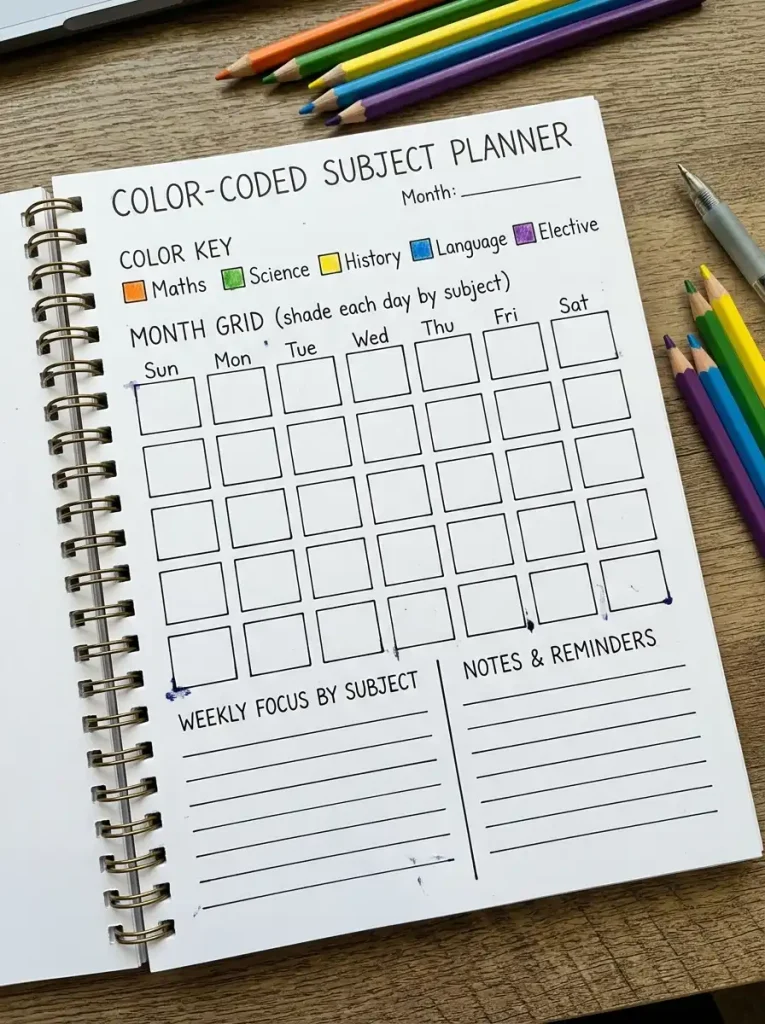
Best For: Students managing four or more subjects who keep mixing up which day belongs to which class.
Key Features: A color key linking each subject to a color, a month grid meant to be colored in by hand, and a weekly focus section.
How to Use It: Assign one color per subject in the key at the top. Then color or shade each calendar day according to which subject gets the most attention that day.
Why It Works: Visual color patterns are easier to scan than written text. A quick glance shows you instantly whether one subject is being neglected.
4. Daily + Monthly Hybrid Planner
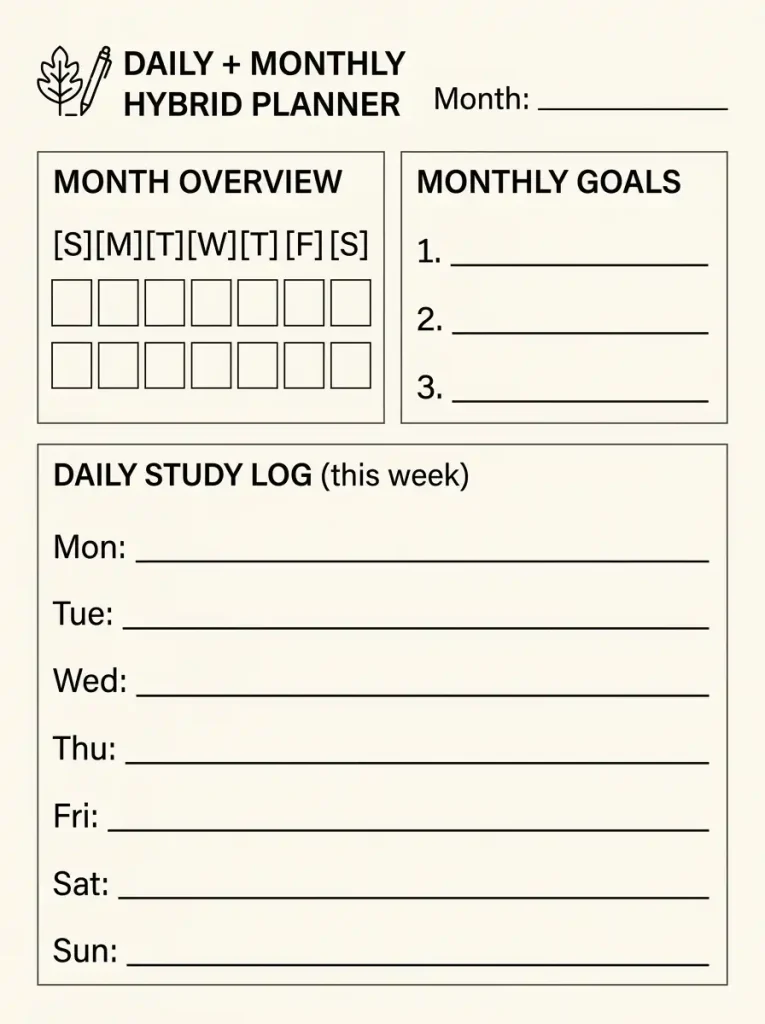
Best For: Students who want the big-picture month view but also need a place to plan each day of the current week.
Key Features: A compact monthly calendar, a monthly goals box, and a full daily study log for the current week.
How to Use It: Fill in the monthly section once at the start of the month. Then update the daily log every Sunday for the week ahead, keeping both views connected.
Why It Works: Some students find a pure monthly planner too zoomed-out to be actionable day to day. This hybrid keeps the long view while still guiding today’s actual to-do list.
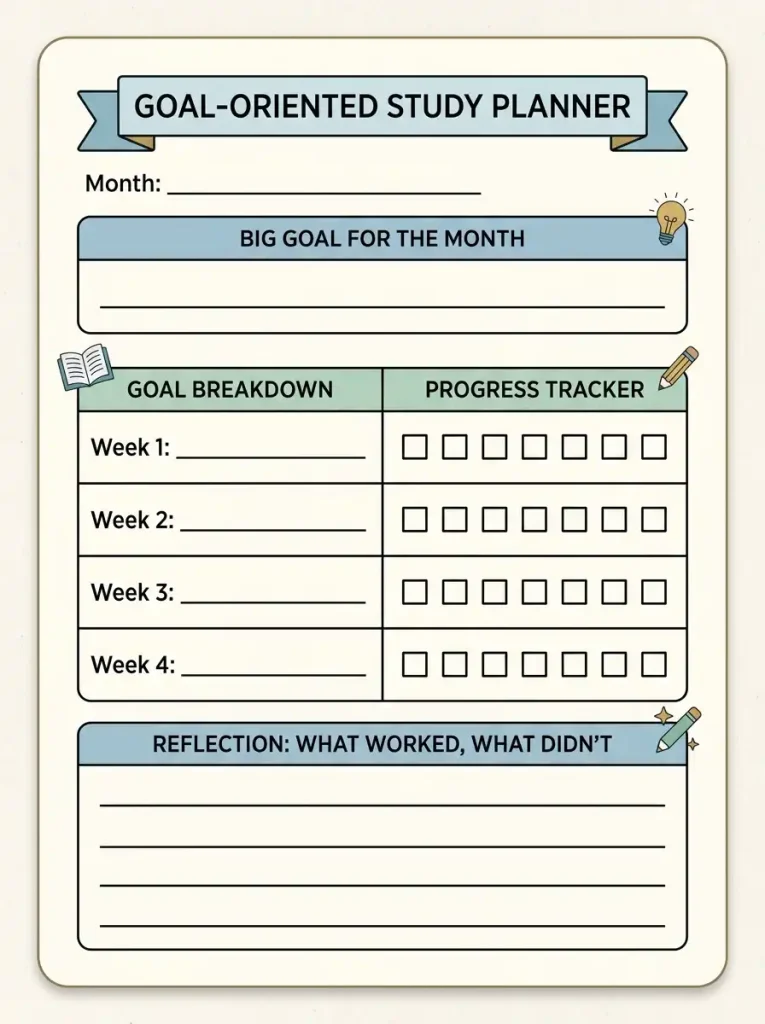
5. Goal-Oriented Study Planner
Best For: Students working toward one specific target, such as a grade improvement or a scholarship requirement.
Key Features: A big monthly goal box, a week-by-week goal breakdown, a shaded progress tracker, and a reflection section.
How to Use It: Write the big goal at the top in one sentence. Break it into four weekly milestones, then shade one box in the progress tracker for every focused study session you complete.
Why It Works: Big goals feel abstract until they are broken into weekly milestones. The visual progress tracker also gives you a small dopamine boost every time you shade another box.
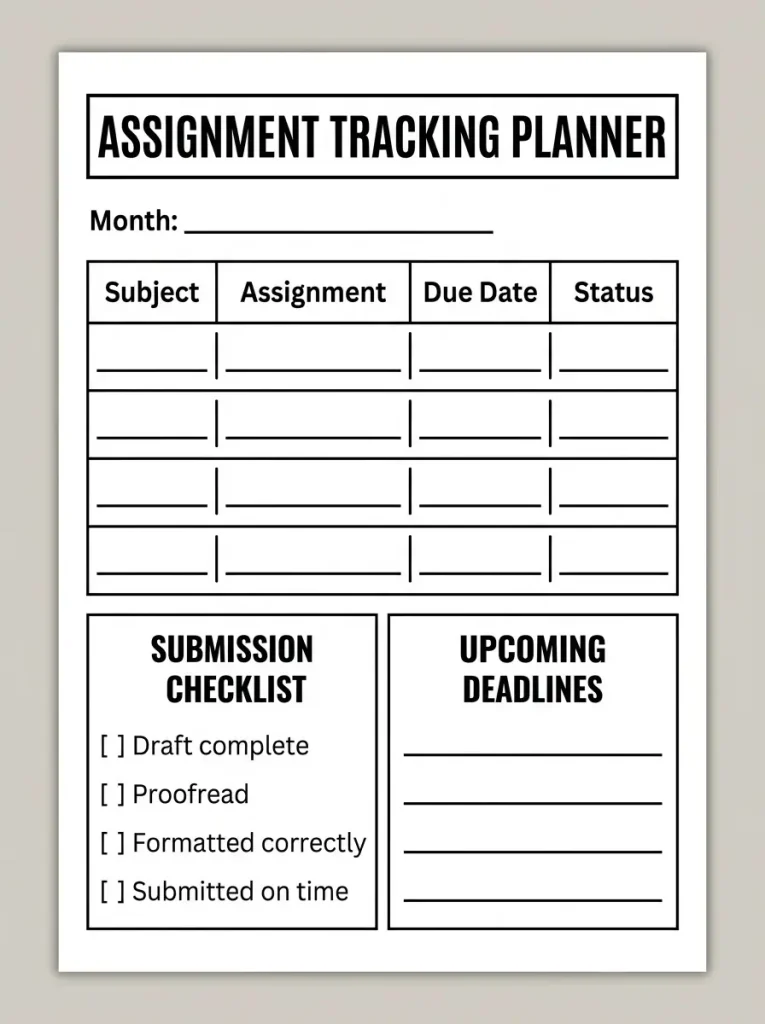
6. Assignment Tracking Planner
Best For: Students in courses with frequent essays, projects, and coursework rather than a single big exam.
Key Features: A large assignment table with subject, title, due date, and status columns, plus a submission checklist.
How to Use It: Log every assignment the moment it is announced, not the week it is due. Update the status column as you move from “not started” to “in progress” to “submitted.”
Why It Works: Most missed deadlines happen because an assignment was never written down in the first place. This planner solves that at the source.
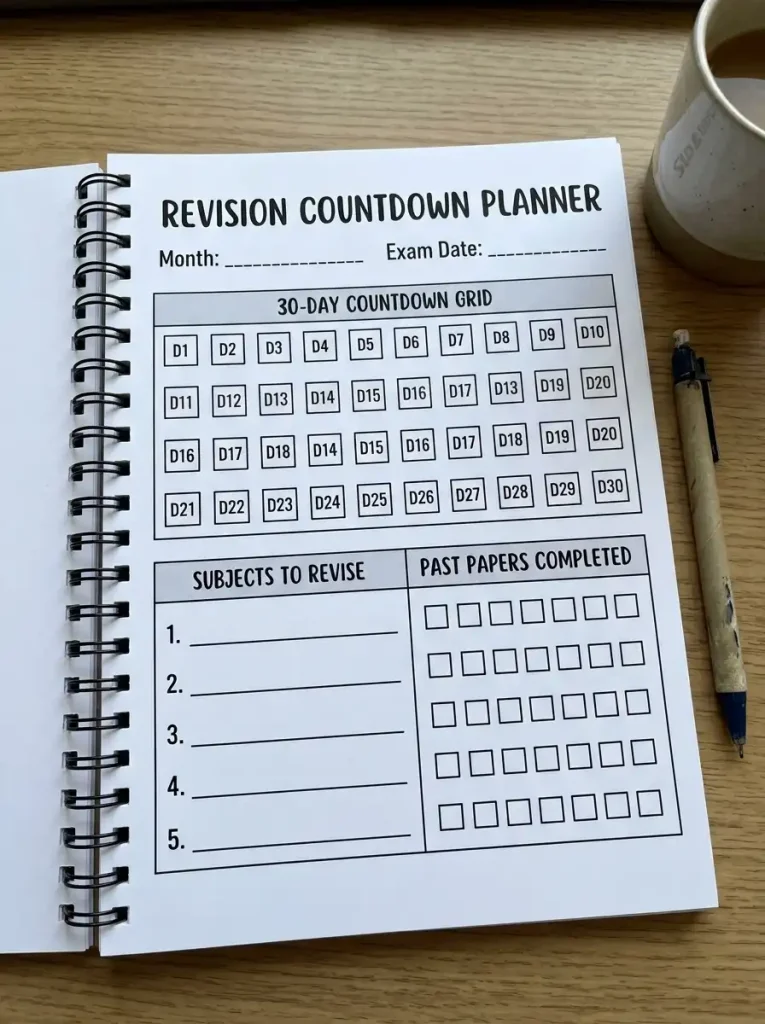
7. Revision Countdown Planner
Best For: Students in the final thirty days before a major exam who need a focused, day-by-day countdown.
Key Features: A thirty-day countdown grid, a subjects-to-revise list, and a past-papers-completed tracker.
How to Use It: Fill in one grid box per day counting down to the exam. Each day, note which subject you covered, then mark a box in the past papers tracker every time you finish a full practice paper.
Why It Works: A visible countdown creates healthy urgency without panic. It turns “the exam is coming” into “I have 14 boxes left to fill,” which feels far more manageable.
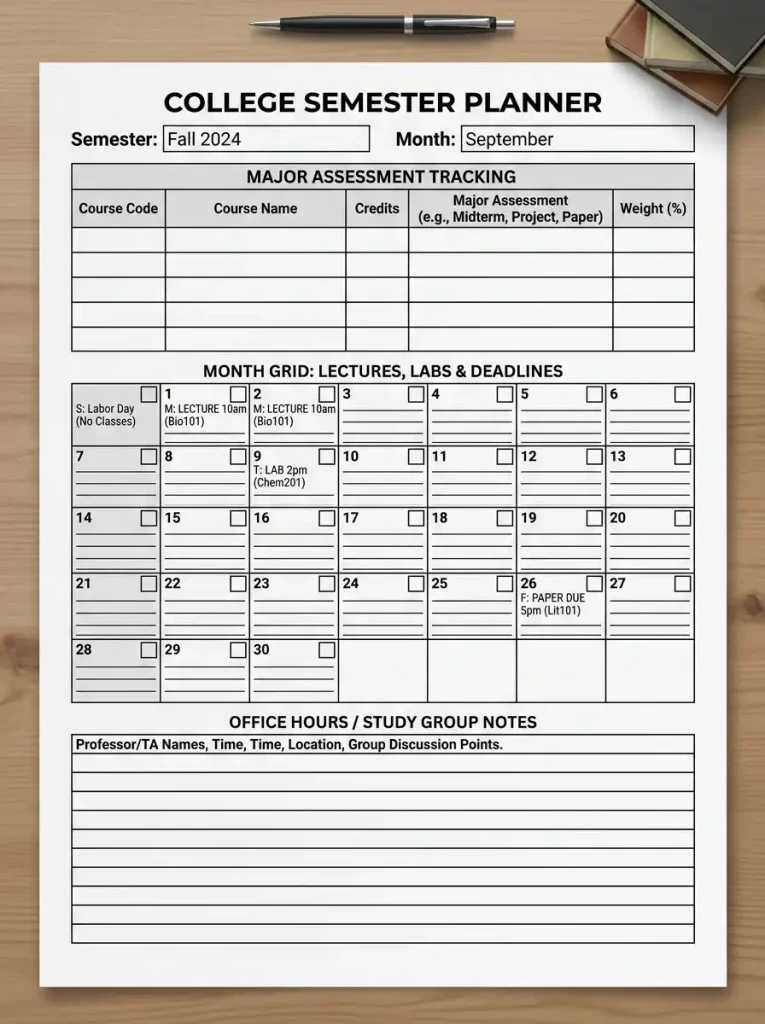
8. College Semester Planner
Best For: University students managing multiple courses, credit loads, and semester-long deadlines.
Key Features: A course load overview table, a month grid for lectures and labs, and space for office hours or study group notes.
How to Use It: List every course at the top of the semester along with credit weight and major assessments. Then update the month grid each week with lecture times, lab sessions, and approaching deadlines.
Why It Works: College schedules involve more moving parts than school schedules. Seeing credits and assessment weight side by side helps you decide where extra effort will actually move your grade.
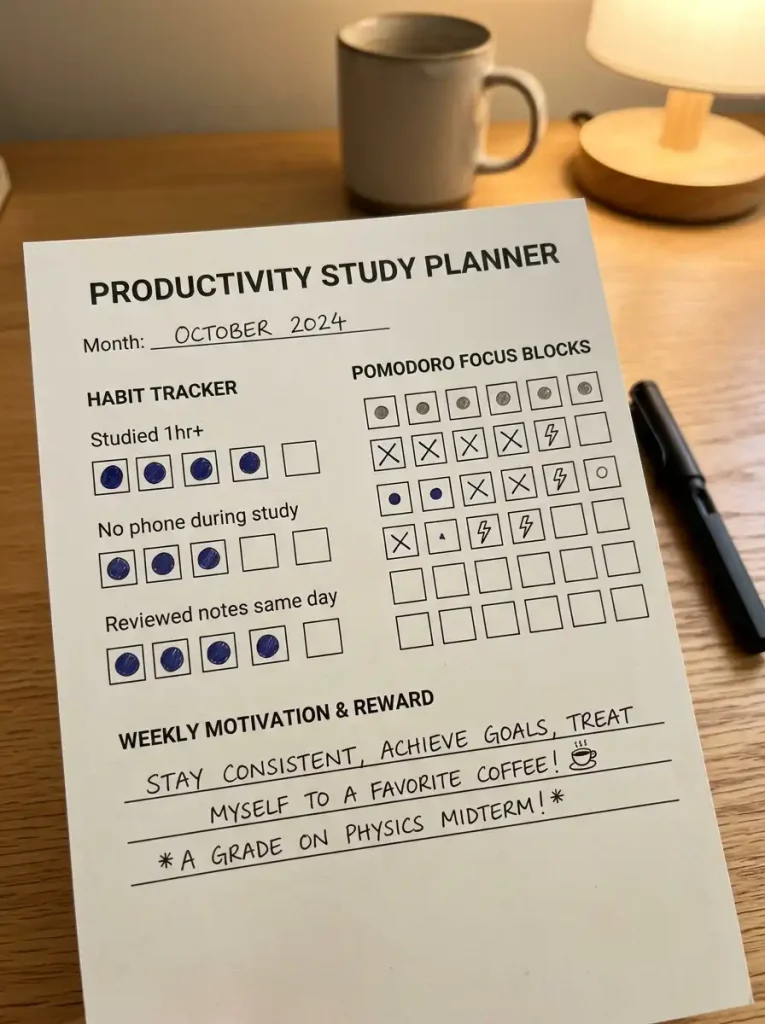
9. Productivity Study Planner
Best For: Students who want to build strong study habits and track focus sessions, not just deadlines.
Key Features: A habit tracker for daily study behaviors, a Pomodoro-style focus block tally, and a weekly motivation and reward section.
How to Use It: Check off each habit daily, such as studying without your phone nearby. Tally one box in the focus block section every time you complete a twenty-five-minute study sprint.
Why It Works: Grades are the outcome, but habits are the input. This planner keeps your attention on the daily behaviors that actually produce better results over time.
Download All Monthly Study Planner Printable Templates PDF
Every layout above is included in a single, print-ready PDF study planner packet so you do not need to recreate any of them by hand. The download includes:
- A cover page
- A table listing all nine templates
- All 9 printable planners in full A4 layout
- A clean black-and-white printing design that saves ink
- Page numbers and a footer on every page
Simply print the pages you need on standard A4 paper, or print the whole packet and keep it in a binder for the rest of the school year.
Pro Tip: If you like combining templates, print the Assignment Tracking Planner and the Habit Tracker section from the Productivity Planner together. Deadlines and habits cover most of what a busy month actually needs.
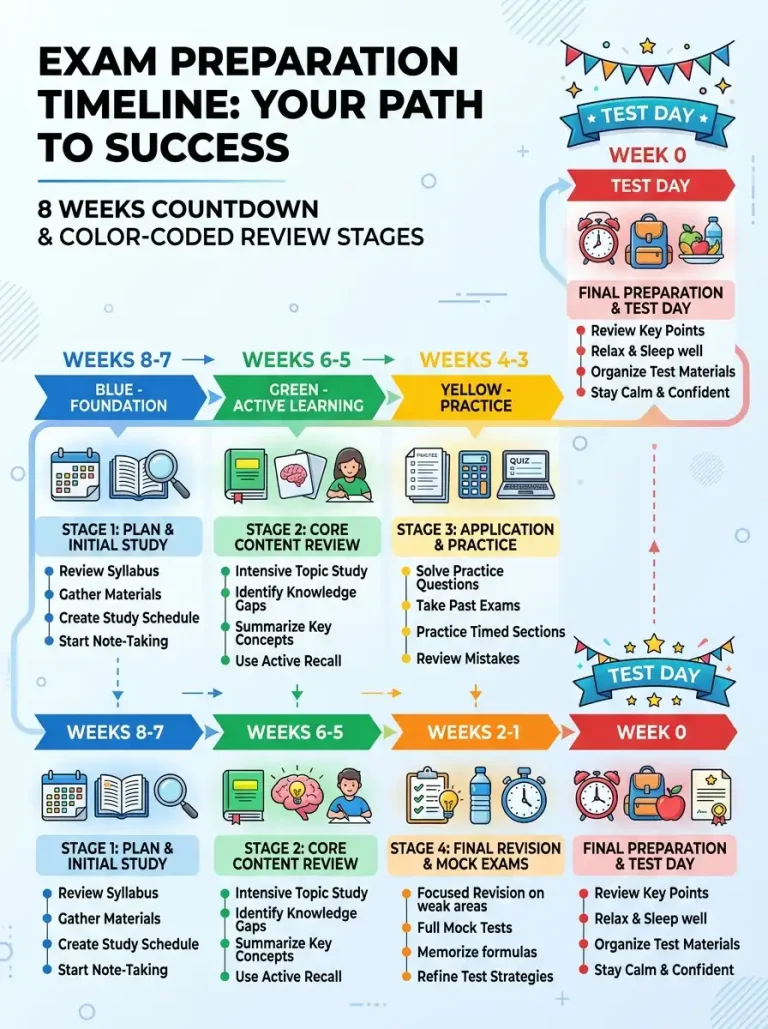
Infographic: Exam Revision Timeline
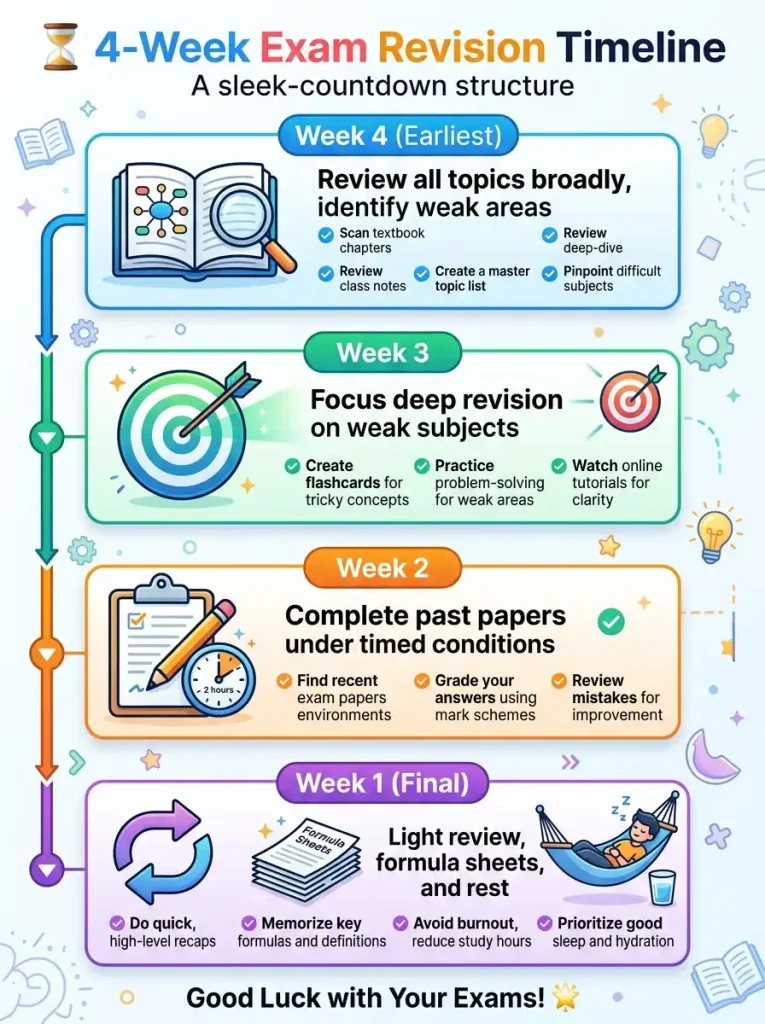
Spacing revision across four weeks consistently outperforms cramming, according to most learning science research on spaced repetition.
Choosing the Right Template for Your Situation
With nine options, picking one can feel like its own decision fatigue. Here is a quick way to narrow it down.
If you are preparing for one major exam, start with the Exam Preparation Planner or the Revision Countdown Planner, depending on how close the date is. If you are further than a month away, the exam planner works better. Inside the final thirty days, switch to the countdown version.
If your challenge is juggling many subjects rather than one exam, the Color-Coded Subject Planner will likely help the most. It turns an overwhelming subject list into a visual pattern you can scan in seconds.
If deadlines, not exams, are your biggest stressor, the Assignment Tracking Planner is built specifically for that. College students with frequent papers and projects tend to prefer this one.
If you already manage deadlines fine but struggle with actually sitting down to study, the Productivity Study Planner targets the habit side of the equation instead.
Quick Tip: You are allowed to switch templates mid-semester. Many students use the Goal-Oriented Planner in a slower month and switch to the Revision Countdown Planner as exams approach.
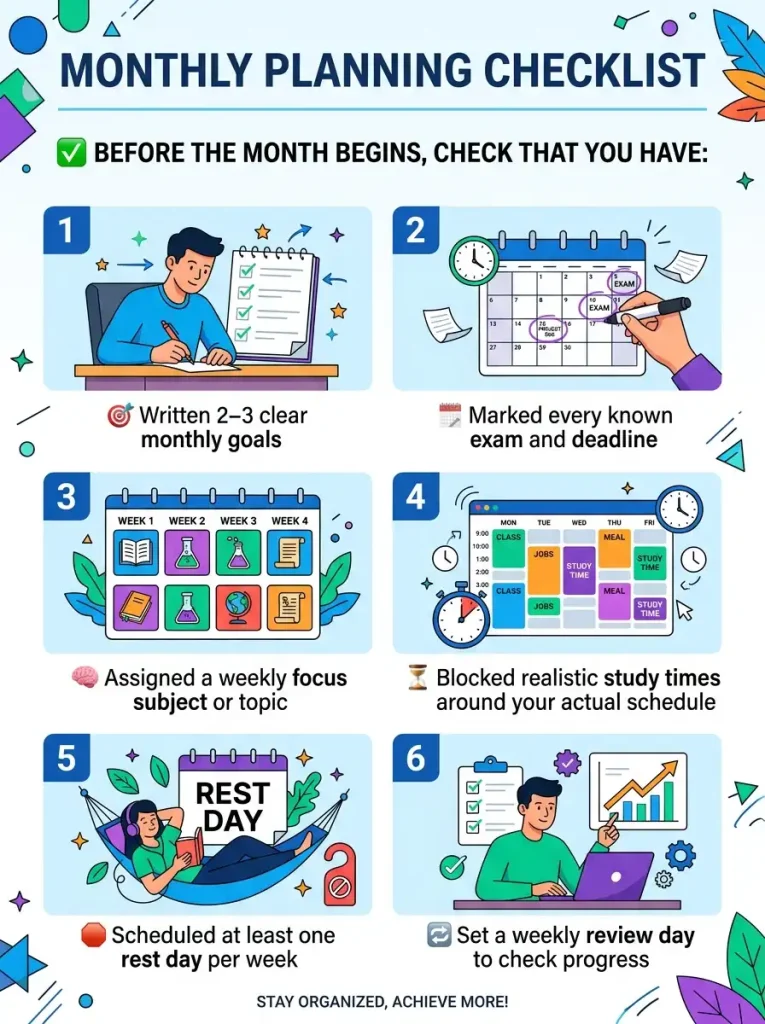
Infographic: Monthly Planning Checklist
Printing and Customization Tips
A printable study planner PDF only works if it is easy to actually use, so a little setup goes a long way.
Choosing the Right Paper
Standard A4 or letter paper works fine for daily use. If you plan to reuse the same page monthly, consider printing on slightly heavier cardstock so it survives being carried in a bag.
Laminating for Reuse
Some students laminate their favorite template and fill it in with a dry-erase marker. This works particularly well for the habit tracker and progress boxes, since you can wipe and restart each month.
Binder or Wall Display
Punch holes and keep completed months in a binder to track progress across a semester. Alternatively, pin the current month to a wall or corkboard where you will actually see it every day.
Digital and Print Hybrid
If you prefer typing, many students still print the PDF study planner and photograph the completed page weekly, keeping a digital backup without needing separate planning software.
Frequently Asked Questions
1. What is the best monthly study planner for beginners?
The Minimal Monthly Study Planner works best for beginners because it has the fewest sections to fill in. Start simple, then add more detailed templates like the Exam Preparation Planner once planning feels natural.
2. Are these printable study planner PDF templates really free?
Yes, all nine templates in this monthly study planner free printable templates PDF collection are completely free to download and print for personal or classroom use.
3. Can I edit these templates after printing?
The templates are designed as printable PDFs meant to be filled in by hand. If you need an editable digital version, you can recreate the layout in any word processor using the structure shown above.
4. How often should I fill out my monthly study planner?
Fill in the monthly overview once at the start of each month, then update daily or weekly sections like habit trackers and assignment logs as new information comes in.
5. What is the difference between a study planner and a study timetable?
A study timetable template usually focuses on fixed time slots for each subject, almost like a school schedule. A study planner is broader, including goals, deadlines, and reflection, not just time blocks.
6. Which template is best for exam season?
The Exam Preparation Planner suits the weeks leading up to an exam, while the Revision Countdown Planner is built specifically for the final thirty days before the test date.
7. Can college students use a monthly study planner too?
Absolutely. The College Semester Planner was designed specifically for university students managing multiple courses, credit loads, and varying assessment weights across a semester.
8. How do I stop myself from abandoning my planner after a few weeks?
Choose a simple template, keep it visible, and pair filling it in with an existing habit, such as your morning coffee or your Sunday evening routine, so it becomes automatic rather than optional.
9. Should I use a monthly planner alongside a daily planner?
Many students do. The Daily + Monthly Hybrid Planner in this collection was created for exactly that reason, combining a monthly overview with a detailed weekly daily log.
10. What should I do if I miss a planned study session?
Simply move the task to another open day within the same month rather than abandoning the plan entirely. A monthly view makes this rescheduling much easier than a rigid daily planner would.
11. Can these templates help with revision for standardized tests?
Yes, the Exam Preparation Planner and Revision Countdown Planner both work well for standardized test preparation, since they focus on confidence tracking and countdown-based revision.
12. Do I need to print in color for the color-coded planner?
Color helps but is not required. You can use different pen colors or patterns like stripes and dots instead of color printing if you prefer to save ink.
Conclusion: Turn Planning Into a Habit, Not a Chore
A monthly study planner will not do the studying for you, but it removes the guesswork that quietly drains your energy every week. Once your goals, deadlines, and revision schedule live on one clear page, showing up to study each day gets a little easier.
You now have 9 monthly study planner free printable templates PDF to choose from, covering everything from minimal layouts to full exam countdowns. Pick the one that matches your current challenge, print it today, and fill in just the first section before you close this tab.
Small, consistent planning beats occasional, perfect planning every time. Start this month, and adjust as you go.