7 Study Planner Templates, Free & Printable in PDF
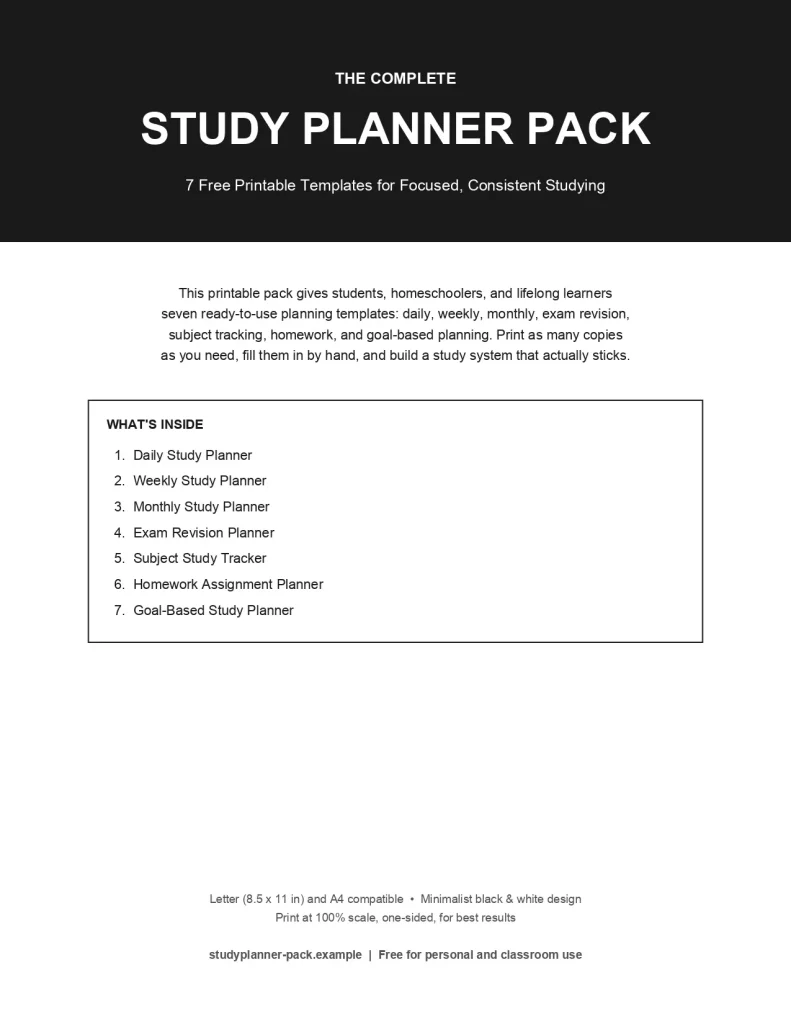
Seven ready-to-print planning Template layouts — daily, weekly, monthly, exam revision, subject tracking, homework, and goal-based — bundled into one clean, minimalist PDF you can print tonight.
8 pages · A4 · B&W print-ready
It’s 9 p.m., your notes are scattered across three tabs and a half-empty notebook, and you still can’t answer the question every student asks at some point: where do I even start? If that sounds familiar, you’re not alone, and you’re not lacking discipline. You’re missing a system. A 7 study planner template free printable PDF pack can fix that in one sitting, giving you a structure you can print tonight and use tomorrow morning.
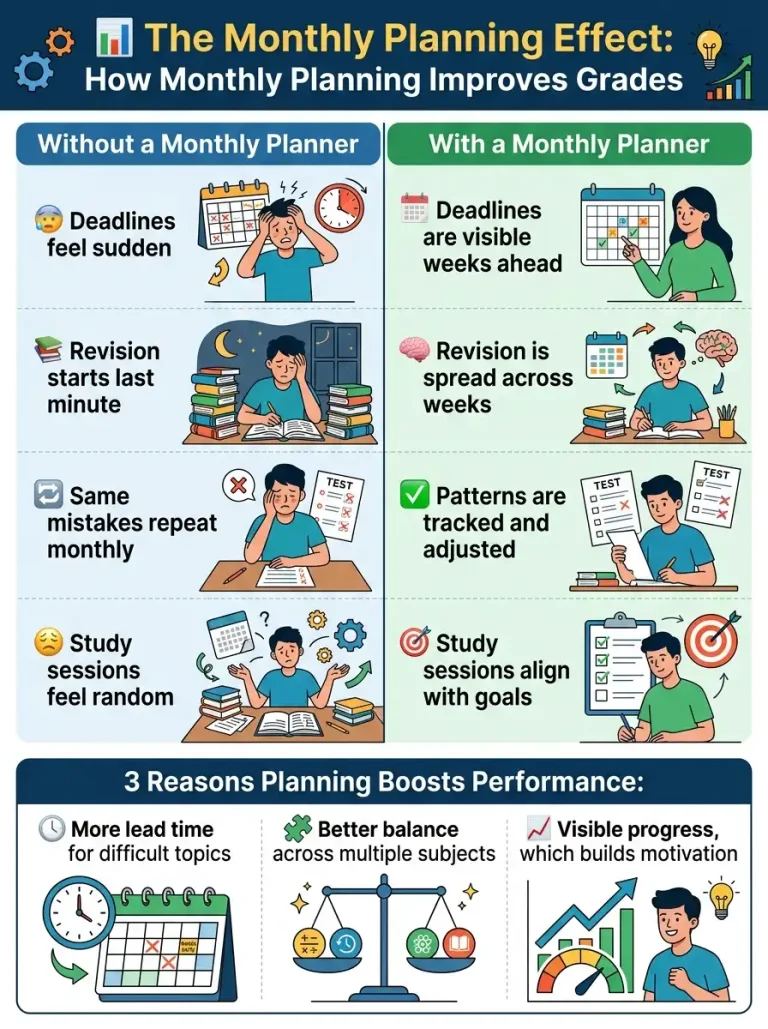
Planning isn’t busywork. Students who write down what they’ll study, and when, consistently outperform those who “wing it,” because a plan turns a vague goal like “study for the exam” into a series of small, doable actions. That’s the whole idea behind a printable study planner: it takes the mental load off your brain and puts it on paper, where you can see it, check it off, and actually trust it.
In this guide, you’ll get seven complete, ready-to-print planner templates, plus the full downloadable PDF pack above, tips on choosing the right planner for your situation, and answers to the questions students, parents, and teachers ask most about study planning. Whether you need a daily study planner, a weekly study planner, or a full exam study planner, there’s a template here built for it.
Why Study Planners Improve Learning
A planner does more than organize your week. It changes how your brain approaches the workload in front of it.
When a task is vague, your brain treats it as effortful and postpones it. When you break “study biology” into “review chapters 4–6, then do 15 practice questions,” the task suddenly feels doable, so you’re more likely to start. That’s the core psychological benefit of any study schedule template: it lowers the barrier to beginning.
A printable academic planner also builds in spaced repetition naturally. Instead of cramming everything the night before a test, you spread topics across days and weeks, which research on learning consistently shows leads to better long-term retention than massed practice.
There’s also an accountability effect. Checking a box after finishing a task gives your brain a small reward, and that reward reinforces the habit of studying at a set time each day. Over a semester, those small wins add up to real momentum.
Finally, a planner reduces decision fatigue. Instead of deciding what to study every single day, you decide once, in advance, and then simply follow the plan. That single change saves mental energy for the actual studying.
See also: 15 Random Story Ideas for Instagram
How to Choose the Right Study Planner
Not every student needs the same layout. Before you print anything, think about your workload, your goals, and how you naturally think.
Match the planner to your timeframe. If you’re managing daily habits like reading or flashcards, a daily study planner works best. If you’re juggling multiple subjects across a week, a weekly study planner gives you the bigger picture. Long-term projects and semester goals call for a monthly study planner.
Match the planner to your situation. An exam study planner suits the four to six weeks before a big test. A homework planner suits students with nightly assignments across several classes. A goal-based planner suits anyone chasing a specific outcome, like raising a grade or finishing a certification.
Consider how much detail you want. Some students want an hour-by-hour breakdown; others want simple checklists. If detailed time blocks stress you out, choose a simpler layout with priorities and checkboxes instead of a rigid schedule.
Think about how you’ll use it. A printable planner works well if you like writing by hand, want zero distractions, or want something visible on your desk or wall. If you constantly reschedule tasks, a digital planner might suit you better, or a hybrid approach using both.
Good news: this pack includes seven templates, so you can mix and match rather than force your routine into a single format.
Meet the 7 Free Printable Study Planner Templates
Below are seven complete templates, each designed for a specific planning need — the same seven pages included in the PDF pack you downloaded above.
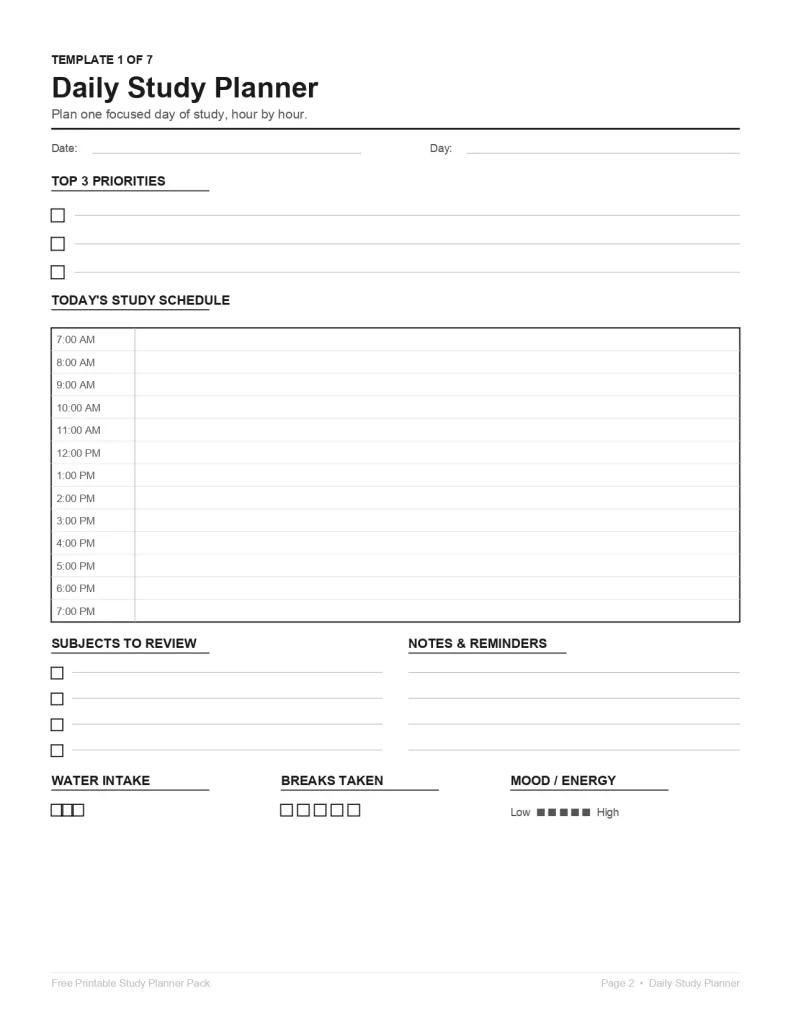
Template 01 – Page 2 of the PDF
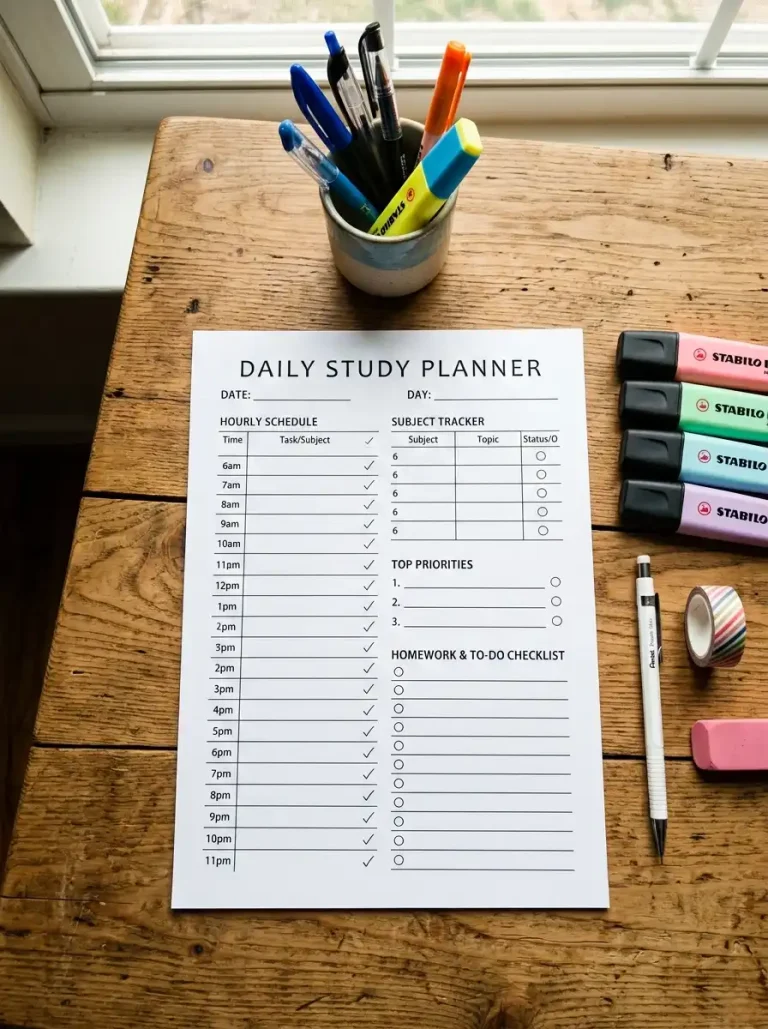
Daily Study Planner
A single-page layout for planning one day of study from morning to evening, including a top-three-priorities list and an hour-by-hour schedule grid.Who it’s forStudents who study best with structure, anyone preparing for a specific exam, and learners who lose track of time once they sit down.BenefitsForces you to name top priorities before the day gets busy and prevents multitasking by assigning one task per time block.Customize itAdjust the time blocks to match your real schedule, and add subject abbreviations in the margin for quick color-coding.Printing tipPrint 10–15 copies at once so a fresh page is always ready; a binder clip keeps completed pages for weekly review.
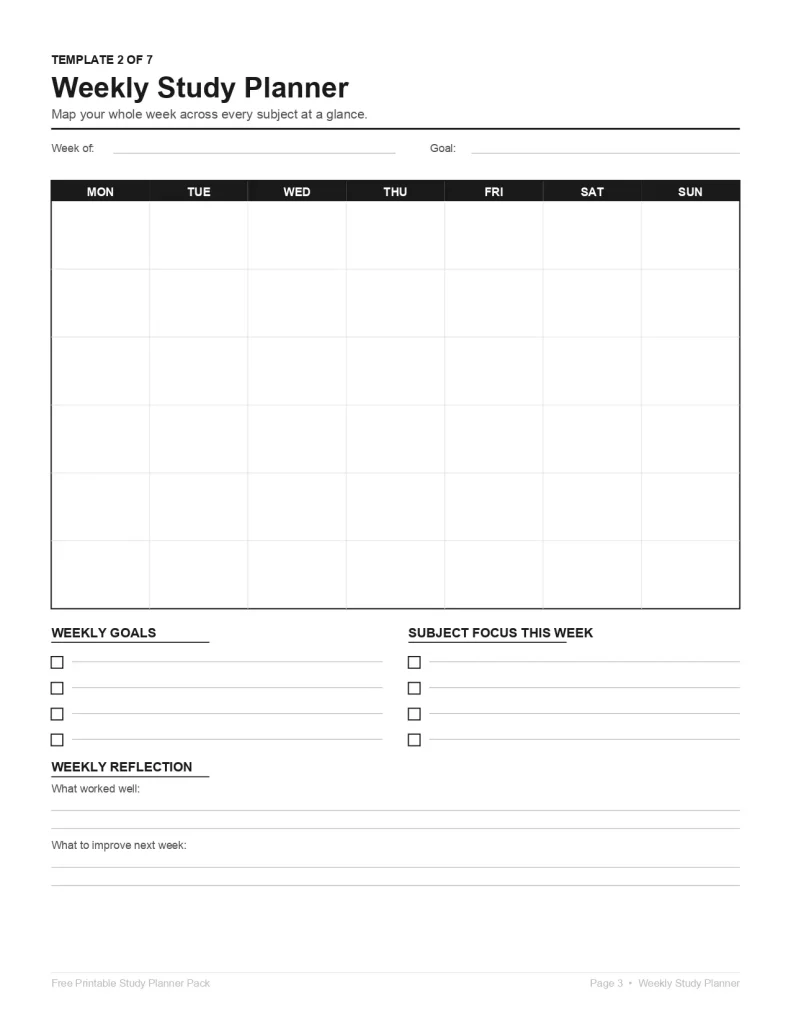
Template 02 – Page 3 of the PDF
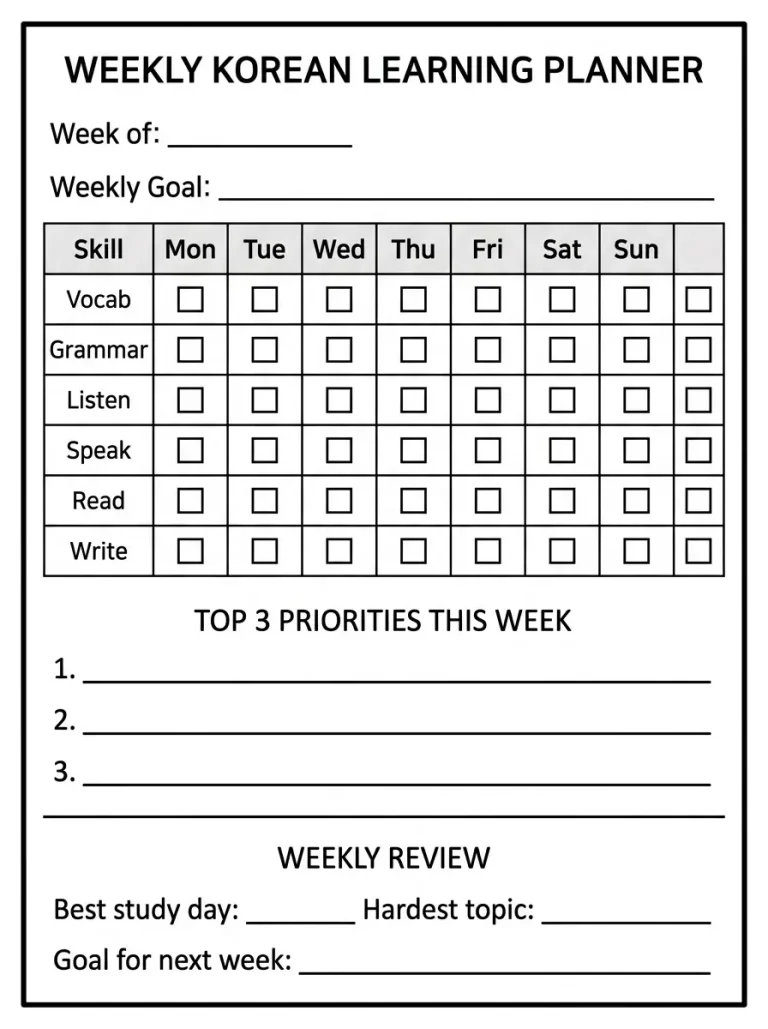
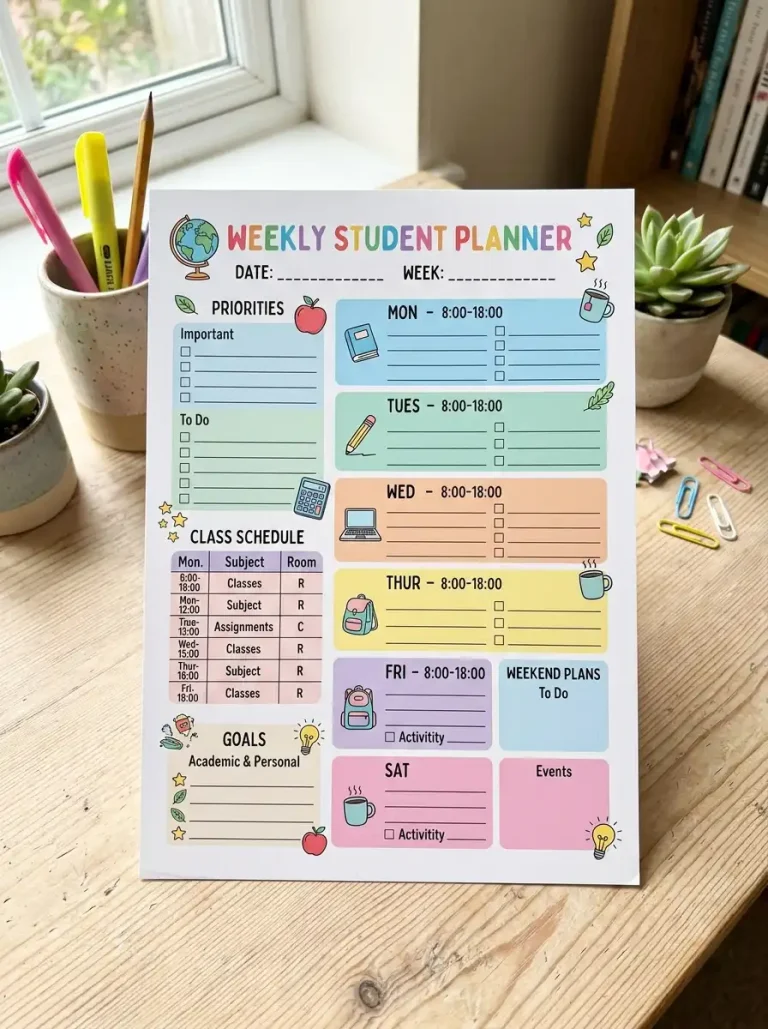
Weekly Study Planner
A seven-day grid that lays your entire week out side by side, so you can see every subject, task, and deadline in one view.Who it’s forStudents taking multiple classes and anyone who plans better by seeing the whole week instead of one day at a time.BenefitsPrevents subjects from being neglected, since gaps in the grid are easy to spot, and helps balance heavier days against lighter ones.Customize itAssign a color to each subject and shade the matching grid cells; add a weekly-goal line so daily tasks connect to a bigger target.Printing tipPin it to a wall instead of a binder — seeing it constantly reinforces the plan far better than a page tucked in a folder.
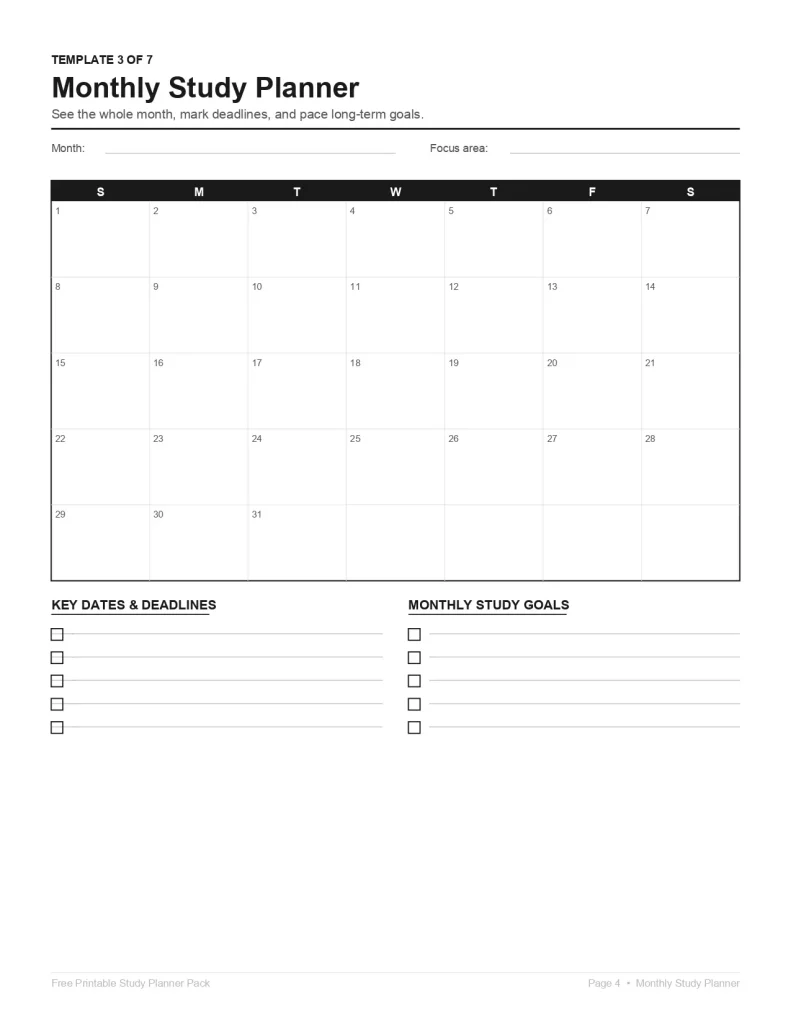
Template 03 – Page 4 of the PDF
Monthly Study Planner
A full-month calendar view designed for tracking deadlines, tests, and long-term study goals across four to five weeks at once.Who it’s forStudents managing a full semester and anyone who needs to see how weekly plans connect to bigger deadlines.BenefitsKeeps big-picture deadlines visible, so a project due date never sneaks up with only two days left.Customize itMark test and project dates first, then work backward to schedule study sessions in the open days around them.Printing tipLaminate it and reuse monthly with a dry-erase marker, or file each completed month for a semester-long record.
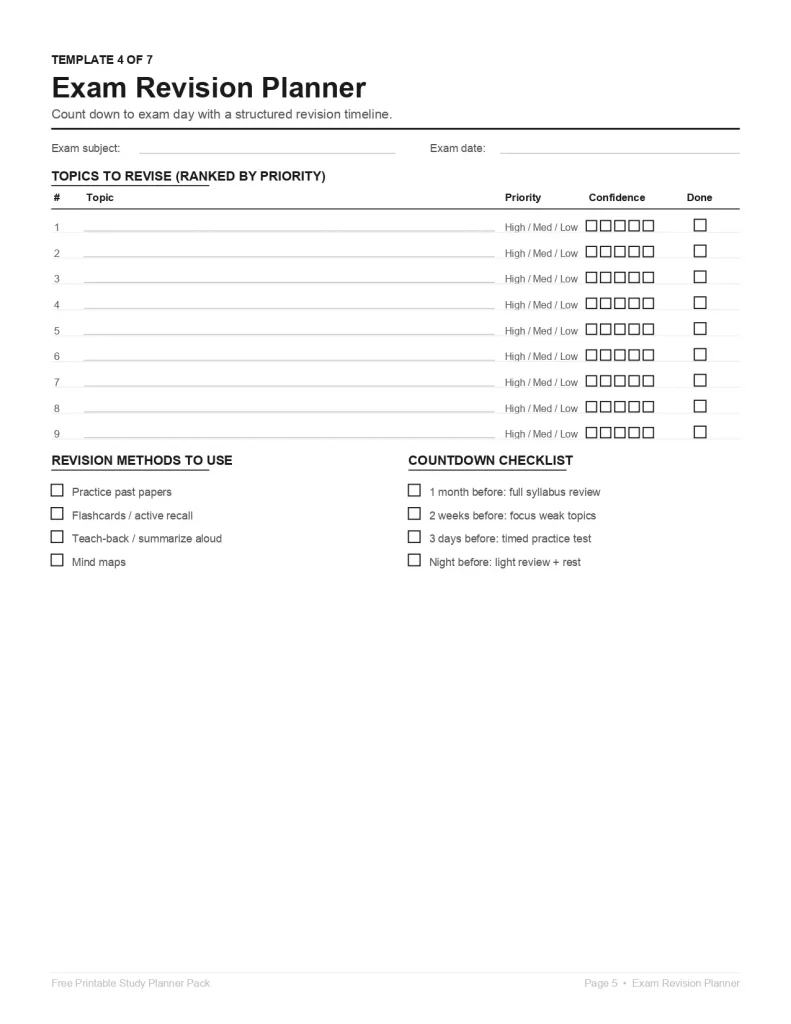
Template 04 – Page 5 of the PDF
Exam Revision Planner
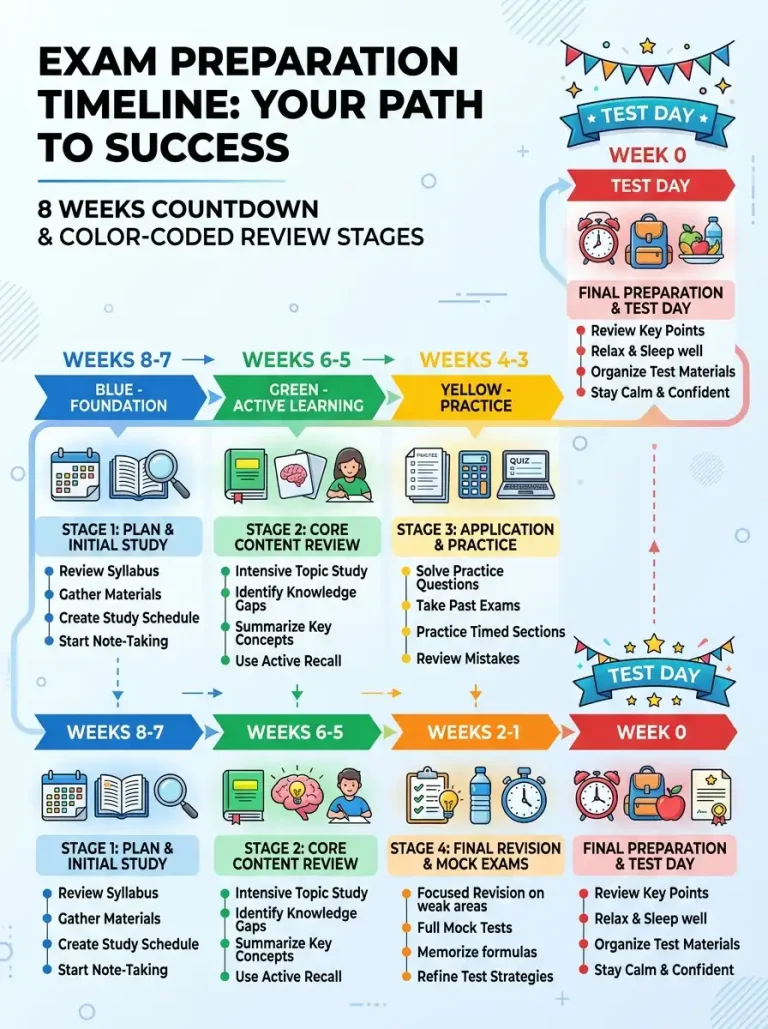
A countdown-style planner that ranks topics by priority and tracks confidence levels as exam day approaches.Who it’s forAny student with an upcoming test, especially those who feel overwhelmed by how much material there is to cover.BenefitsForces an honest ranking of topics, so weak areas get more attention instead of being avoided, and eases exam anxiety.Customize itList every syllabus topic, rank each High, Medium, or Low priority, and revisit the confidence column weekly.Printing tipPrint this one early — four to six weeks out gives the ranking system enough time to actually change how you study.
Template 05 – Page 6 of the PDF
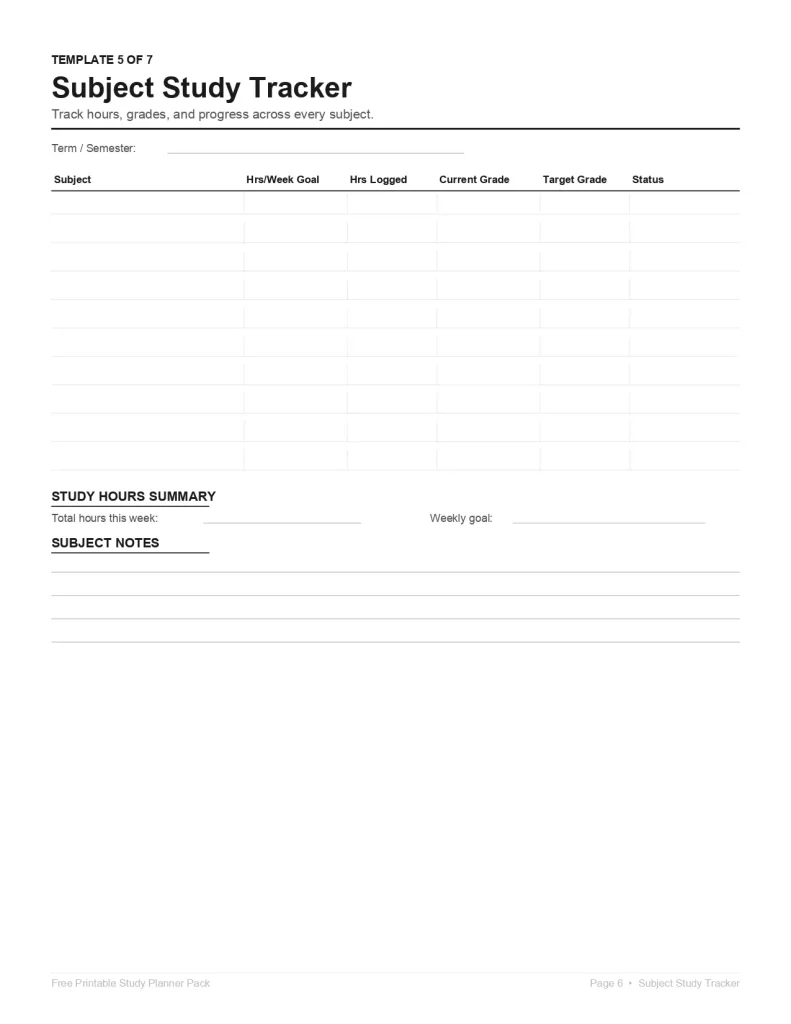
Subject Study Tracker
A table for logging study hours, current grades, and progress across every subject you’re taking, side by side.Who it’s forStudents juggling four or more subjects and parents helping monitor a child’s balance of study time.BenefitsExposes imbalance quickly — if four subjects show ten logged hours and one shows zero, that’s a clear signal.Customize itSet a realistic weekly hour goal per subject based on difficulty, not just how much you enjoy it.Printing tipKeep it visible at the front of a study binder so you glance at it every time you sit down to work.
Template 06 – Page 7 of the PDF
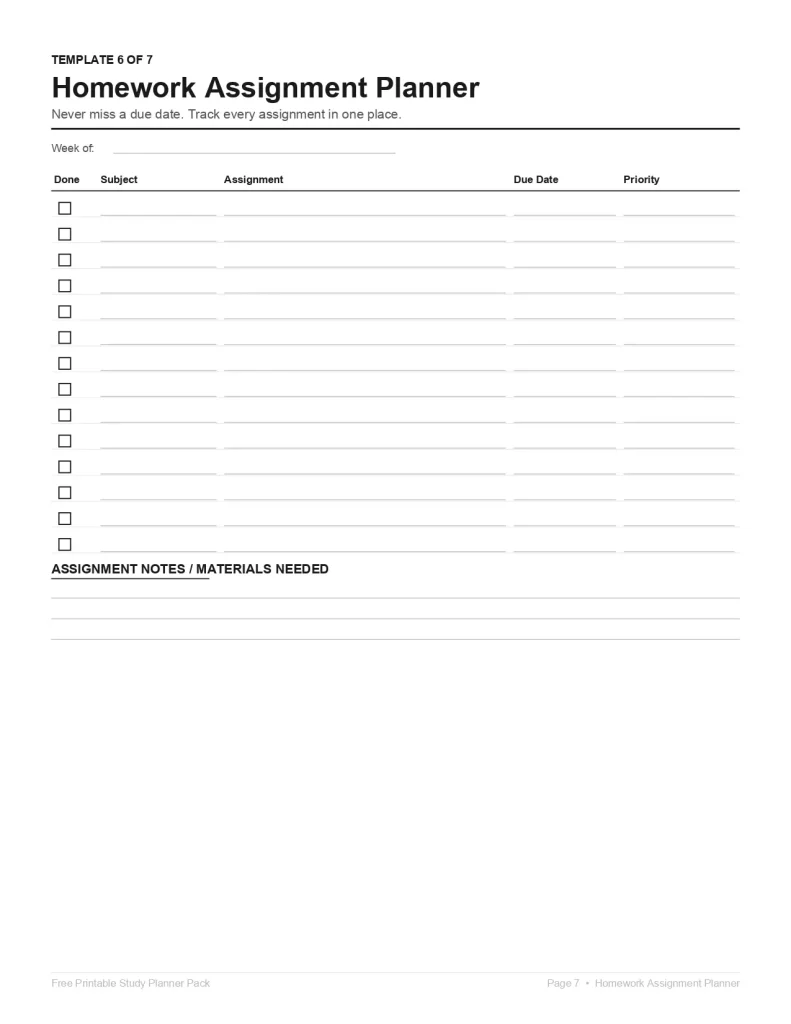
Homework Assignment Planner
A running list format for tracking every homework assignment, its subject, due date, and priority level, so nothing slips through the cracks.Who it’s forMiddle school through college students with nightly assignments, and parents who want a shared, visible record.BenefitsSeparates short daily tasks from bigger study goals, so a quick worksheet doesn’t get lost among exam prep.Customize itAdd a priority column ranked by due date and difficulty, and mark recurring weekly assignments.Printing tipPrint a fresh copy weekly and post it on the fridge or a family bulletin board for younger students.
Template 07 – Page 8 of the PDF
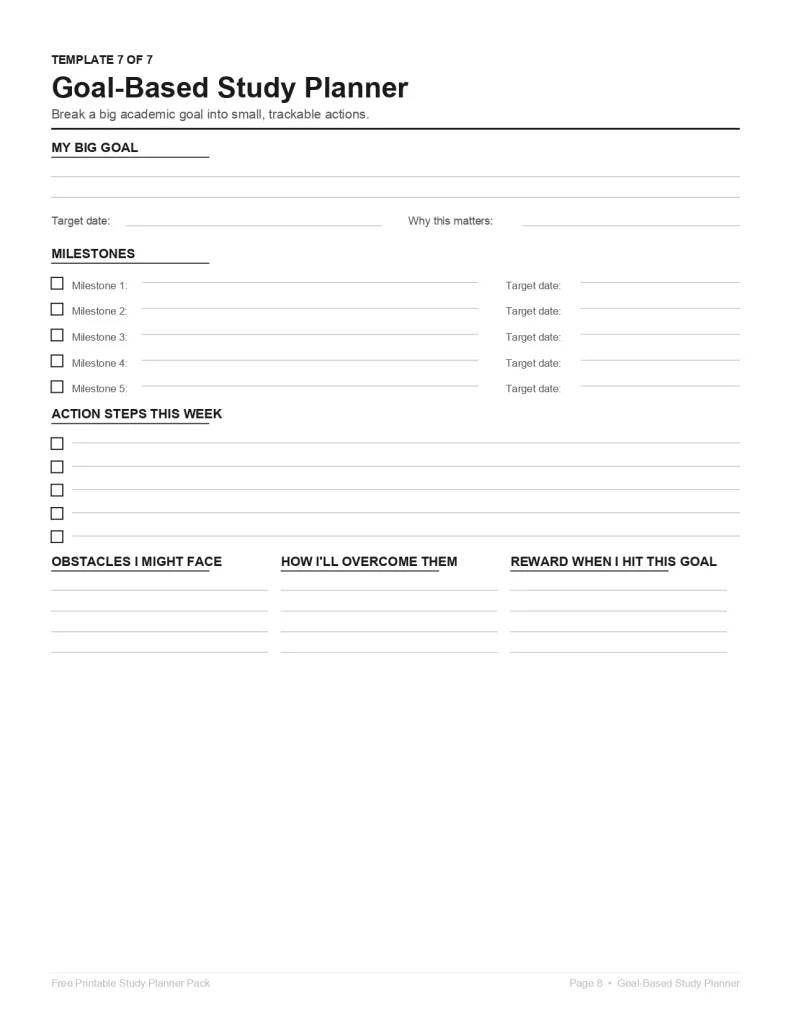
Goal-Based Study Planner
A planner built around one specific academic goal, broken into milestones, weekly action steps, and a plan for overcoming obstacles.Who it’s forStudents working toward a specific outcome, like raising a grade, passing a certification, or mastering a new skill.BenefitsConnects daily actions to a meaningful “why,” which increases follow-through compared to vague intentions.Customize itWrite your goal as specifically as possible, then break it into three to five milestones with their own target dates.Printing tipKeep it separate from daily/weekly planners so the big goal stays visible even on busy, shifting weeks.
Get All 7 Templates in One PDF
Cover page + all seven planners, formatted for Letter and A4, minimalist black & white, ready to print tonight. Download the free PDF pack
Daily vs. Weekly Planners: Which Should You Use?
This is one of the most common questions students ask, and the honest answer is: it depends on your workload and how far ahead you like to plan.
A daily study planner works best when your schedule changes often or when you’re deep in exam prep and need hour-by-hour structure. It keeps you focused on right now, which is useful when a big workload feels overwhelming.
A weekly study planner works best when you want to see balance across subjects. It’s harder to notice that you’ve ignored math all week if you’re only looking at today’s page.
Many students use both together: a weekly planner for the big picture, filled in on Sunday evening, and a daily planner to break each day’s slice of that plan into specific time blocks. That combination covers both the forest and the trees.
Digital vs. Printable Planners
Both formats work, but they suit different habits.
Printable planners remove the temptation of notifications, tabs, and apps. Writing by hand has also been linked to better memory retention than typing, since the slower process forces your brain to process information rather than transcribe it. For students who get distracted easily, a printable planner PDF is often the better default.
Digital planners shine when you need reminders, recurring tasks, or the ability to reschedule instantly without crossing anything out. They’re also easier to carry everywhere on a phone.
A practical middle ground: print your weekly and monthly planners for visibility, and use a simple phone reminder for time-sensitive alerts, like “leave for study group at 4 p.m.” You get the focus benefits of paper with the convenience of digital nudges.
How to Stay Consistent With a Study Planner
The planner itself won’t build the habit. How you use it will.
Plan at the same time each week. Sunday evening or Monday morning works well for most students, since it sets intentions before the week’s chaos starts.
Keep it visible. A planner buried in a bag gets forgotten. Keep it on your desk, or pin the weekly grid somewhere you’ll see it daily.
Start small. If you’ve never used a planner before, don’t try to schedule every hour of every day in week one. Start with just the top three priorities each day and build from there.
Review, don’t just plan. Spend five minutes at the end of each day checking what you completed. This closes the loop and makes tomorrow’s plan more accurate.
Forgive missed days. One skipped day doesn’t break the system. Treat it as data, not failure, and get back to the plan the next day.
The Study Planning Process
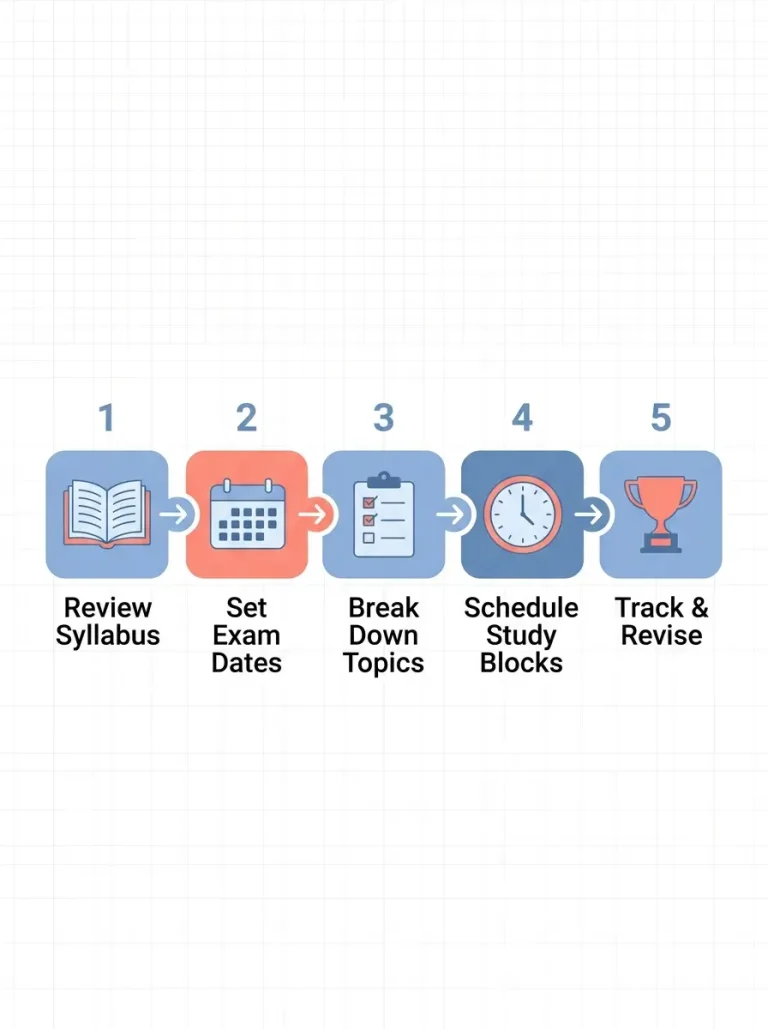
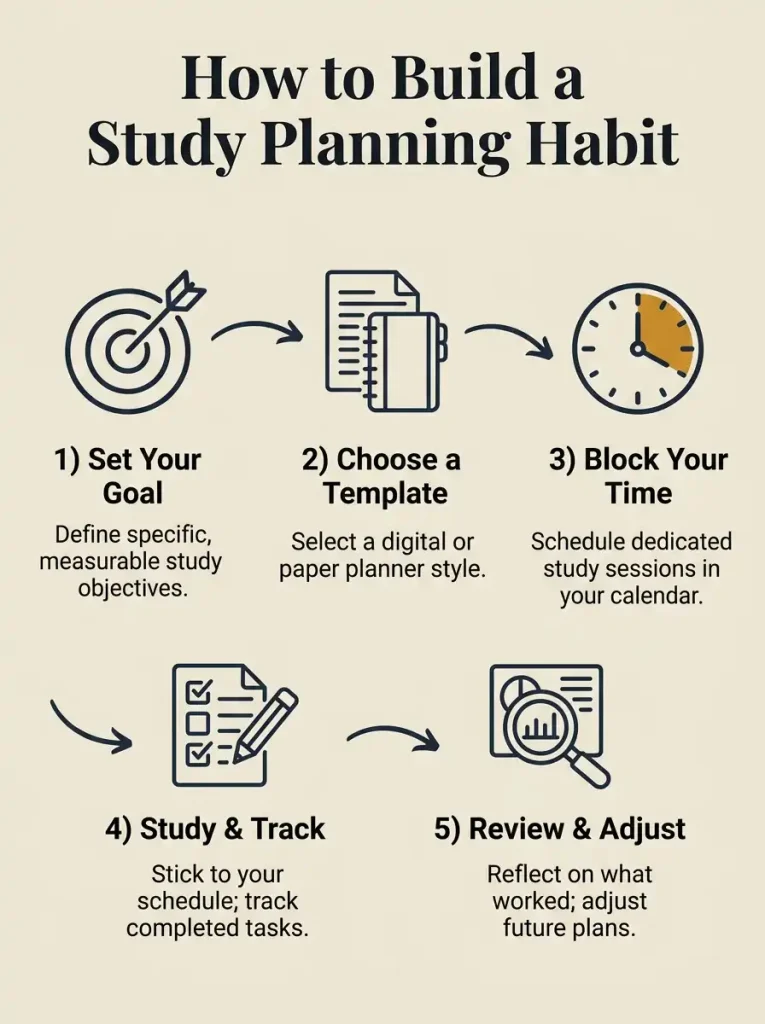
Set Your GoalName the outcomeChoose a TemplateDaily, weekly, monthly…Block Your TimeAssign subjects to hoursStudy & TrackCheck boxes as you goReview & AdjustReflect each week
Five steps from setting a goal to reviewing your week.
Common Study Planning Mistakes to Avoid
Even a great template won’t help if it’s used the wrong way. Watch for these common pitfalls.
Overplanning the day. Cramming twelve tasks into a single afternoon sets you up to feel behind by lunchtime. Leave buffer time between blocks for the unexpected.
Ignoring energy levels. Scheduling your hardest subject for 9 p.m., when your focus is already gone, wastes the plan’s potential. Match difficult material to your highest-energy hours.
Skipping breaks entirely. Studying without breaks leads to diminishing returns; short breaks between sessions actually improve focus and retention over long stretches.
Only planning, never reviewing. A planner that’s filled in but never checked at the end of the day loses half its value. The reflection step is where the real learning about your own habits happens.
Copying someone else’s exact schedule. A planner that works for a classmate might not fit your energy patterns, commute, or workload. Customize the templates in this pack rather than copying them exactly.
Tips for Exam Preparation
Exam prep deserves its own strategy layered on top of your regular study planner.
Start revision earlier than feels necessary. Four to six weeks before a major exam gives spaced repetition enough runway to actually work, rather than compressing everything into a stressful final week.
Use active recall instead of just rereading notes. Testing yourself with flashcards or practice questions builds stronger memory than passively reviewing highlighted text.
Simulate real exam conditions at least once. Time yourself on a past paper in a quiet room without notes, so exam day itself doesn’t feel unfamiliar.
Track confidence honestly in your exam revision planner. It’s tempting to mark a topic as “done” after one read-through, but the confidence scale is meant to catch topics that need a second or third pass.
Protect sleep in the final days. Cramming through the night before an exam tends to hurt performance more than it helps, since memory consolidation happens during sleep.
Color-Coding Study Plans
Color-coding turns a planner from a to-do list into a visual map of your week.
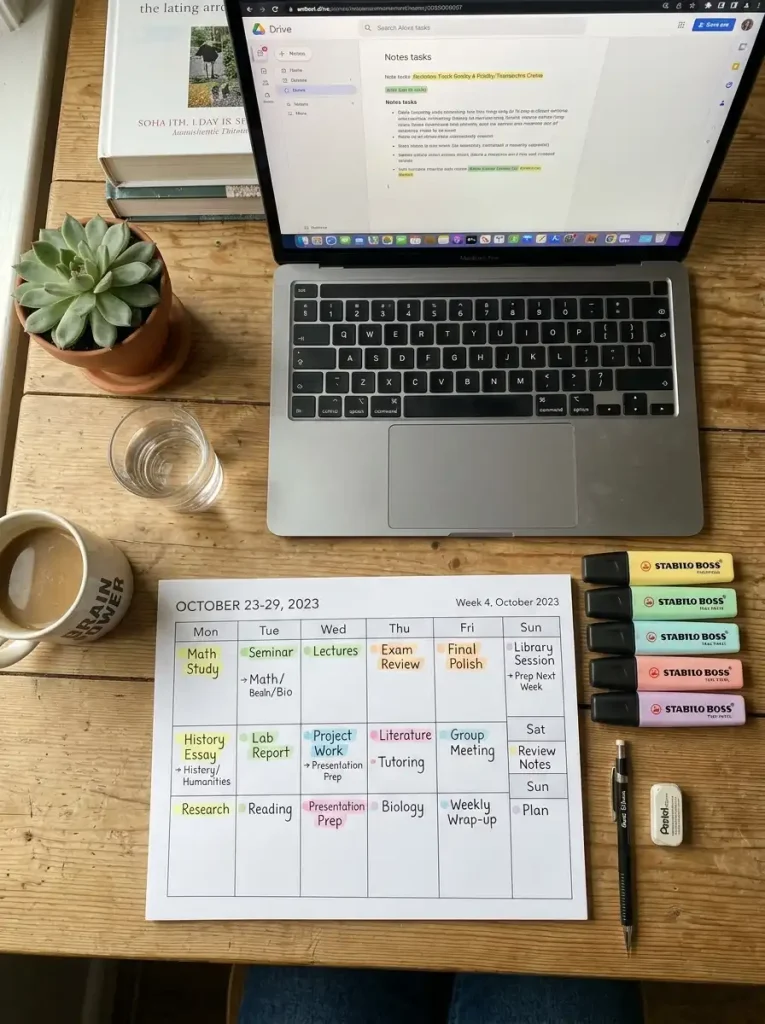
Assign one color per subject, and use it consistently across your daily, weekly, and monthly planners. At a glance, you’ll immediately notice if one color dominates the week while another barely appears.
Keep the system simple: four or five colors is plenty. Too many categories, and the color-coding stops saving time and starts adding decisions.
Highlighters work well for shading blocks on a weekly grid, while colored pens are better for writing text notes without bleeding through the page.
A Balanced Daily Study Routine
7:00Wake &breakfast8:00Morningstudy block9:00School /class block3:00Afternoonbreak4:00Homeworkblock7:00Eveningreview9:00Wind down
A sample timeline from wake-up to wind-down.
Time Blocking for Students
Time blocking means assigning a specific task to a specific chunk of time, rather than keeping an open-ended to-do list.
Instead of writing “study chemistry” for the whole evening, a time-blocked schedule might read “6:00–6:45 p.m.: chemistry practice problems, chapter 7.” That specificity removes the guesswork of deciding what to do next once you sit down.
Group similar tasks together when possible. Reading-heavy subjects in one block and problem-solving subjects in another reduces the mental switching cost of jumping between very different types of thinking.
Build in short buffer blocks between sessions, especially before subjects you find difficult. A five-minute reset helps you start the next block focused instead of still thinking about the last one.
Printable Planner Printing Tips
A few small print settings make a big difference in how usable your planner turns out.
Print at 100% scale, not “fit to page.” Scaling down can shrink checkboxes and writing lines to the point where they’re hard to use by hand.
Use single-sided printing for planners you’ll write on with a pen, so ink doesn’t show through to the next page.
Choose matte paper over glossy if you’re writing with pencil or certain pens, since glossy finishes can cause smudging.
Print in batches. Printing a month’s worth of daily planner pages at once saves trips to the printer and keeps you from skipping a day just because you’re out of copies.
Recommended Paper Sizes
This pack is formatted for both Letter (8.5 x 11 inches), standard across the United States and Canada, and A4 (210 x 297mm), standard in most other countries. Both versions preserve the same layout, so checkboxes, grids, and writing lines line up correctly regardless of which size your printer uses.
If you plan to hole-punch pages for a binder, print with slightly wider left margins, or check your printer’s binding margin setting before printing the full pack.
For wall-mounted weekly or monthly planners, consider printing on heavier cardstock (24lb or higher) so the page holds up to repeated erasing if you’re using it with a dry-erase marker over a laminated sheet.
Best Pens and Highlighters for Study Planners
The right writing tools make a printable planner more pleasant to use daily.
Fine-tip pens (0.5mm or thinner) work best for small text boxes and daily schedule grids, since thicker pens can make cramped fields hard to read.
Pastel or muted highlighters shade color-coded blocks without making the page look overwhelming once several subjects are marked.
Erasable pens are worth considering for the weekly grid specifically, since weekly plans often shift as the days go by.
Dry-erase markers with a laminated planner offer a reusable option if you don’t want to print a new weekly page every single week.
How Teachers Can Use These Planners
Teachers can hand out the weekly study planner or homework planner as a classroom tool, especially for students who struggle to track multiple assignments across subjects.
The monthly study planner works well as a shared classroom calendar, marking test dates, project deadlines, and school events so students build the habit of checking ahead rather than being surprised.
For test prep, the exam revision planner gives teachers a simple way to model how to break a syllabus into ranked, manageable topics, which is a transferable study skill well beyond any single class.
How Parents Can Help Students Use a Planner
Parents don’t need to fill out a child’s planner for them, but a little structure goes a long way, especially with younger students.
Set a five-minute planning routine together, ideally at the same time each evening, so filling out the homework planner or daily planner becomes a habit rather than a chore.
Post the weekly or monthly planner somewhere visible in a shared space, like the kitchen, so checking in on progress doesn’t feel like surveillance.
Celebrate consistency over perfection. A student who plans four days out of seven and mostly follows through is building a stronger long-term habit than one who tries for a perfect week and gives up after one missed day.
Weekly Study Planner Workflow
Sunday PlanningDaily ExecutionEvening Check-insSunday Review
A repeating four-stage loop that keeps weekly planning on track.
Frequently Asked Questions
What is the best free printable study planner?
The best one depends on your needs. Students who want hour-by-hour structure tend to prefer the daily study planner, while those balancing multiple subjects usually prefer the weekly study planner. This pack includes seven templates so you can test a few and see which fits your habits best.
How do I download a printable study planner PDF?
Use the “Download the free PDF pack” button above. The file opens as a standard PDF you can print directly or save to your device for later use.
Can I edit these study planner templates?
Yes, in two ways. You can fill them out by hand after printing, which is how most students use them, or open the PDF in an editable PDF tool to type directly into the fields before printing a personalized copy.
What paper size should I use to print a study planner?
Use standard Letter paper (8.5 x 11 inches) in the United States and Canada, or A4 paper in most other countries. This pack is formatted to fit both sizes correctly.
How often should I use a study planner?
Daily, ideally. Even five minutes each morning or evening to check and update your plan keeps the system accurate and useful, rather than becoming a page you fill out once and forget.
Is a printable planner better than a study app?
Neither is universally better; it depends on your habits. Printable planners reduce screen distractions and can improve memory through handwriting, while apps offer reminders and easy rescheduling. Many students use both together.
How do I make a study planner for exams?
Start four to six weeks before the exam using the exam revision planner in this pack. List every topic from your syllabus, rank each by priority and confidence, and revisit the confidence ratings weekly as you revise.
What should a weekly study planner include?
At minimum, a weekly study planner should include a day-by-day grid, space for weekly goals, and a short reflection section to review what worked and what needs adjusting for the following week.
Can teachers use these study planner templates in class?
Yes. The weekly planner, homework planner, and monthly calendar all work well as classroom handouts, and teachers can adapt the goal-based planner for group projects or semester-long assignments.
How do I stay consistent with a study schedule?
Plan at the same time each week, keep your planner visible rather than tucked away, start with a simple version before adding detail, and review your progress daily instead of only planning and never checking back in.
Are these study planner templates free to use?
Yes, the full seven-template PDF pack is free to download and print for personal, homeschool, or classroom use.
Final Thoughts: Start Planning Today
A blank page and good intentions rarely turn into consistent studying on their own. What actually works is a simple, repeatable system: a template that tells you what to do, when to do it, and how to check your progress along the way.
This 7 study planner template free printable PDF pack gives you exactly that, from quick daily planning to full exam revision tracking to long-term, goal-based planning. Print the templates that match your current workload, whether that’s a single busy week or an entire semester.
You don’t need a perfect system to start. You need a printed page and five minutes to fill it in. Download the full PDF pack above, print your first template today, and take the first small step toward studying with a plan instead of just hoping you’ll get to everything eventually.