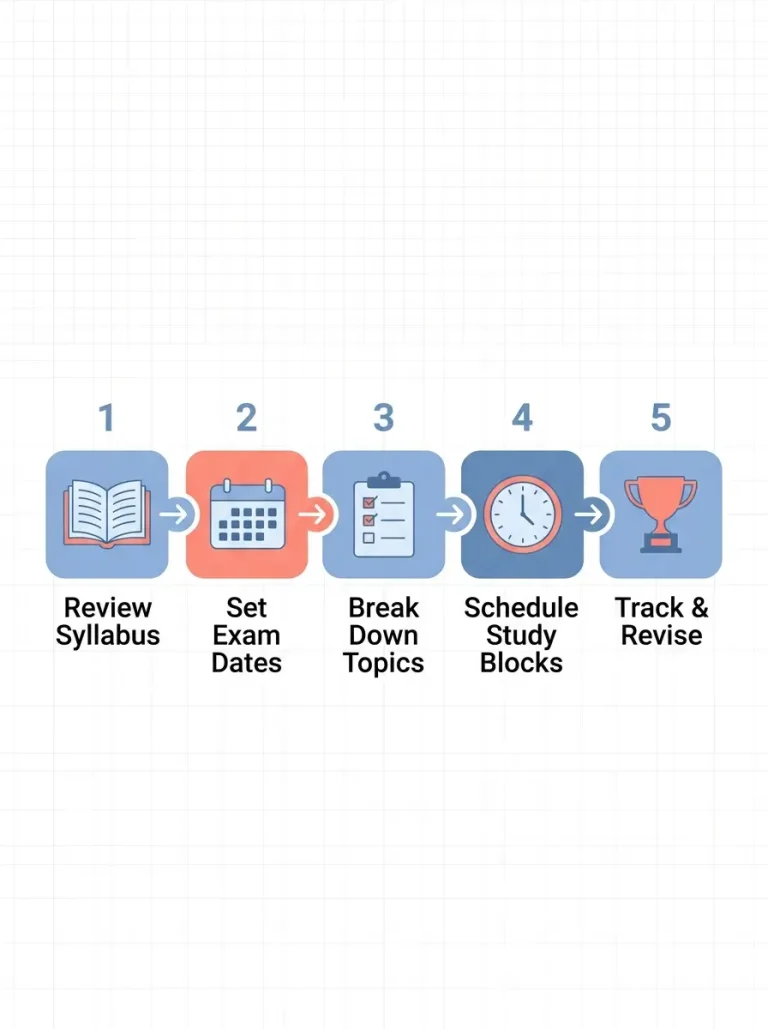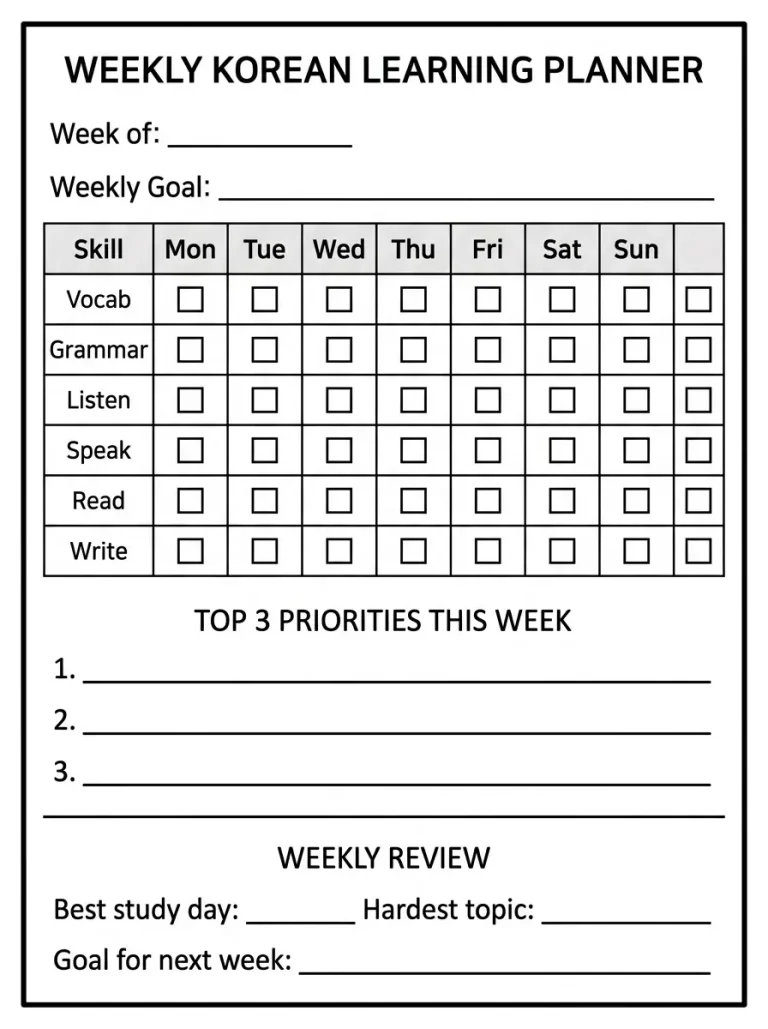
7 Weekly Study Planner Printable Free PDF Templates
It’s Sunday night. Your backpack is half-packed, your notes are scattered across three different notebooks, and you can’t quite remember when that history essay is due. Sound familiar? Almost every student — from middle schoolers to grad students — has lived through this exact moment.
The good news is that this chaos is fixable, and it doesn’t require a fancy app or a expensive planner from the bookstore. A simple weekly study planner printable can turn a foggy, reactive week into one where you actually know what’s coming next.
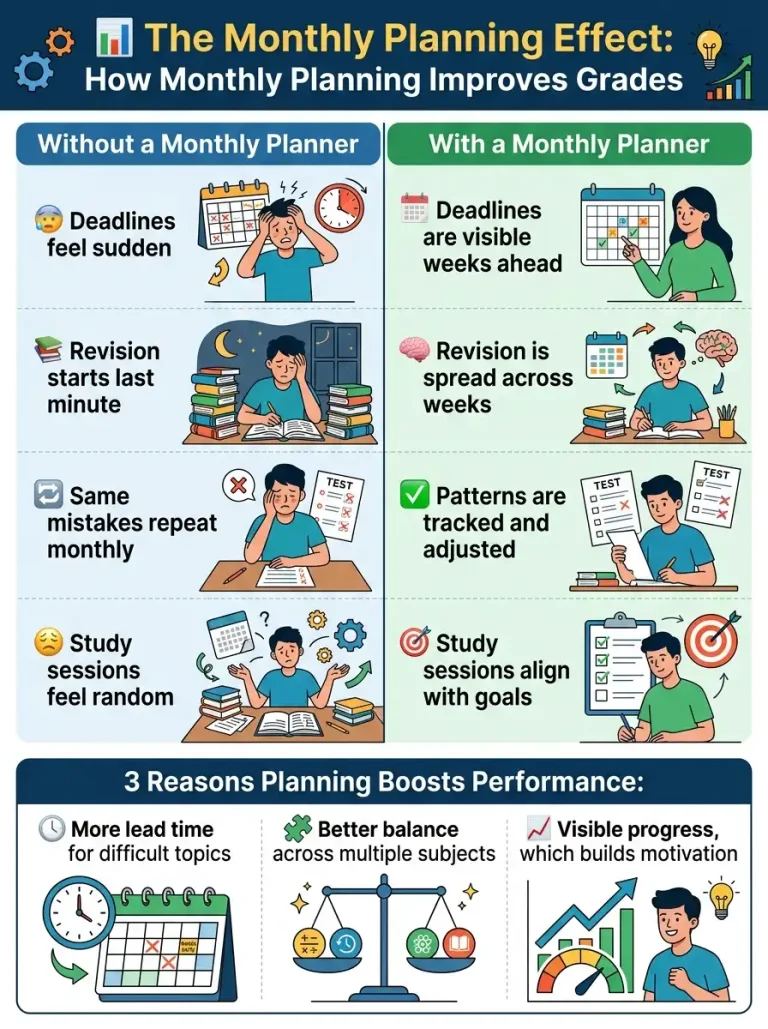
Weekly planning works because it forces you to see your whole week at once. Instead of jumping from task to task in a panic, you map out your study blocks, assignments, and breaks ahead of time. Research on time management consistently links planning behavior to lower stress and higher academic performance, and most students notice the difference within the first week of using one.
In this guide, you’ll find seven completely free printable weekly study planner PDF designs, each built for a different kind of learner. There’s a minimalist layout for students who want clean simplicity, a colorful version for younger learners, a Pomodoro-based planner for deep focus sessions, and dedicated planners for college students, homeschoolers, and exam takers. Every single template is included in the downloadable PDF at the bottom of this page, along with a habit tracker, goals page, and assignment tracker.
Why Weekly Study Planners Work
A weekly study planner isn’t just a pretty piece of paper. It’s a structured way to manage your time, your attention, and your energy across seven days instead of just one.
Time Management Becomes Visual
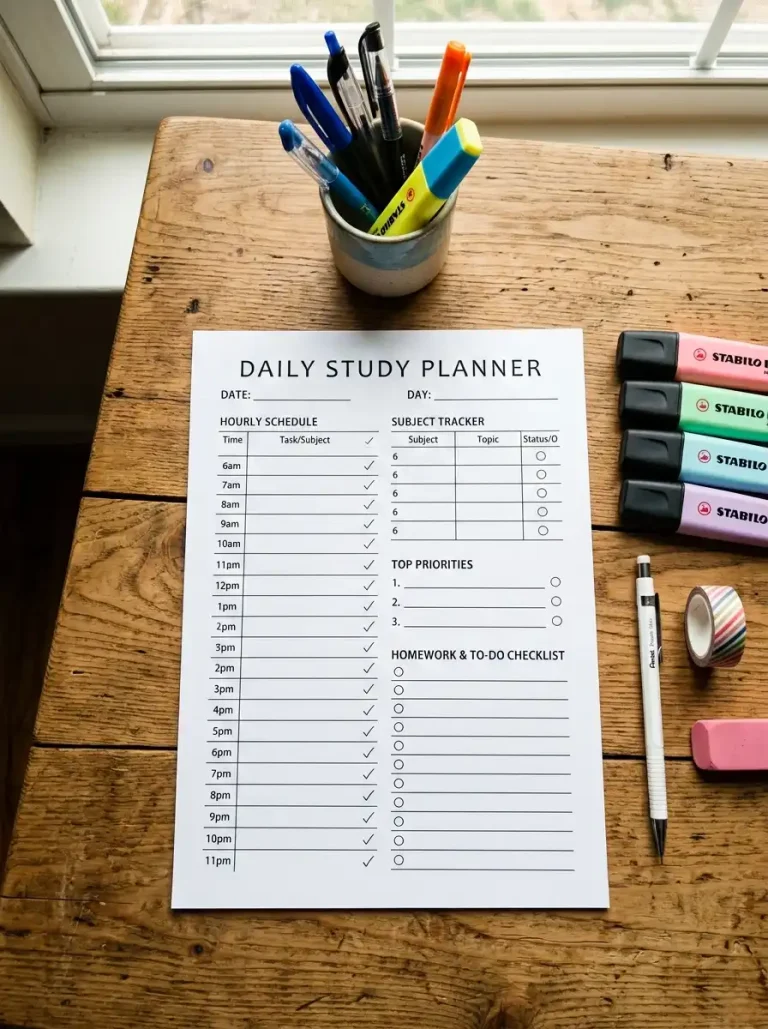
When your entire week is laid out on one page, you can instantly see where the gaps are. Maybe Tuesday looks packed while Thursday is wide open. A printable weekly planner makes that obvious at a glance, so you can move study sessions to where they actually fit.
Students who write down their schedule tend to follow it more closely than those who try to hold it all in their heads. Writing something down creates a small commitment, and that commitment adds up over a semester.
Procrastination Drops When Tasks Are Specific
Vague goals like “study for the test” are easy to avoid. A weekly planner pushes you to break that down into smaller, specific blocks: “Review chapter 4 notes, Tuesday 4-5 PM.” Specific tasks feel more doable, so you’re less likely to put them off.
For example, a student prepping for a biology exam might write “Flashcards on cell structure” instead of “Study biology.” The smaller task feels achievable in a single sitting, which makes it far easier to start.
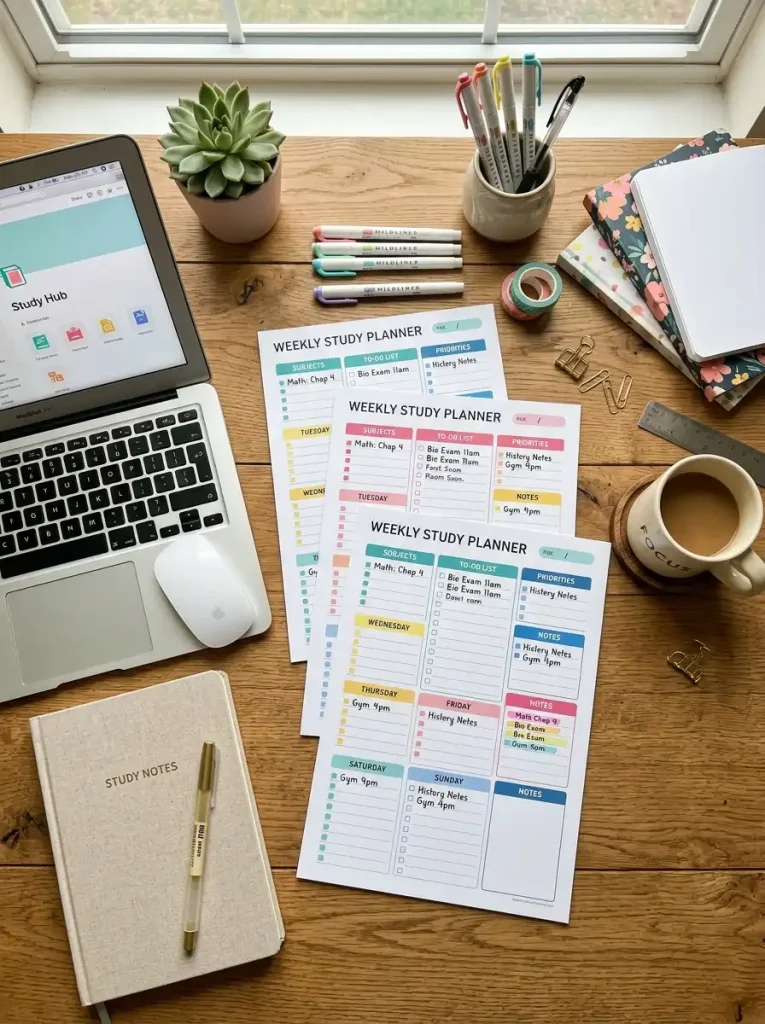
Better Grades Through Consistency
Cramming might get you through one test, but it rarely builds lasting knowledge. A weekly study schedule template spreads review sessions out across several days, which lines up with how memory actually works. Reviewing material multiple times over a week strengthens recall far more than one long study marathon.
Improved Consistency Week After Week
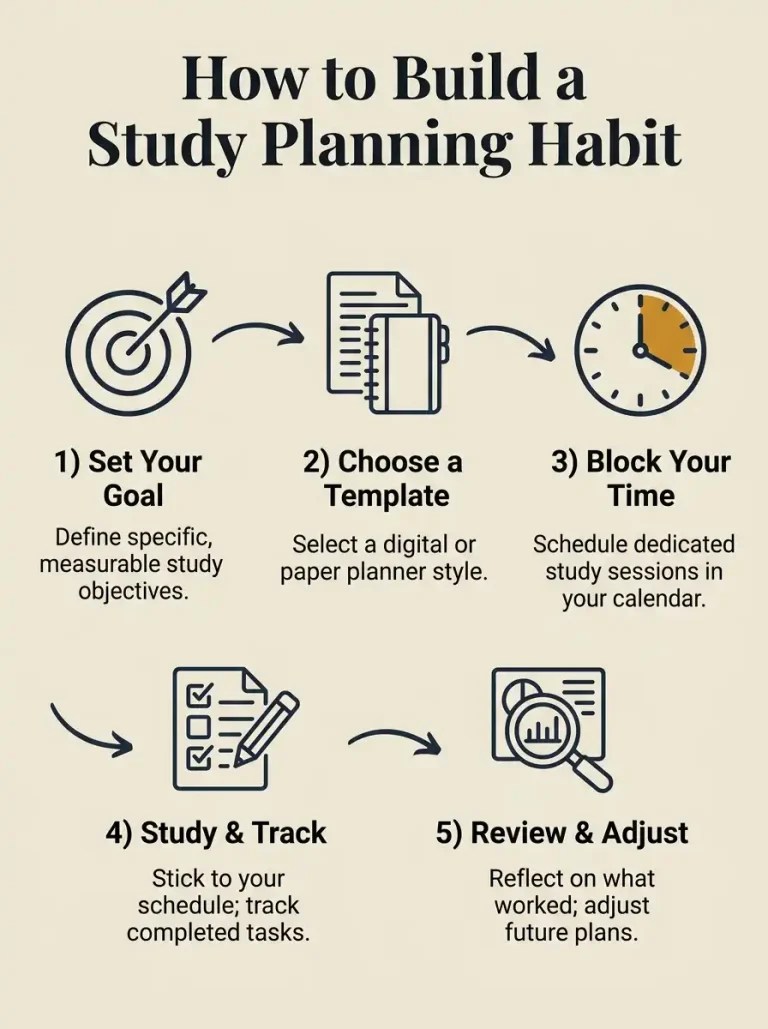
Once you build the habit of filling out a printable academic planner every Sunday, planning becomes automatic. You stop reinventing your schedule from scratch and instead adjust a routine that already works.
Stress Reduction You Can Feel
Uncertainty is stressful. Not knowing what’s due, when, or how much time you have left creates background anxiety that’s hard to shake. A clear weekly homework planner removes a lot of that uncertainty, because everything is already mapped out in front of you.
How to Choose the Right Weekly Study Planner
Not every planner fits every learner. Here’s how to match a printable weekly planner to your actual situation.
For Younger Students
Younger learners tend to respond well to color, icons, and simple layouts. A colorful student planner with clear day-by-day sections works better than a dense, text-heavy design. Keep the format light and visual.
For College Learners
College schedules shift constantly between lectures, labs, part-time jobs, and social commitments. A college study planner needs room for multiple classes, assignment deadlines, and flexible time blocks that can move around week to week.
For Homeschool Families
Homeschool planning covers more than academics. A homeschool weekly planner should include space for multiple subjects, multiple children if needed, and activities beyond textbook work, like field trips or projects.
For Working Professionals Studying Part-Time
Adults studying alongside a job need a planner that respects limited free time. A time-blocking layout works especially well here, since it highlights exactly which small windows of the week are available for study.
For Exam Preparation
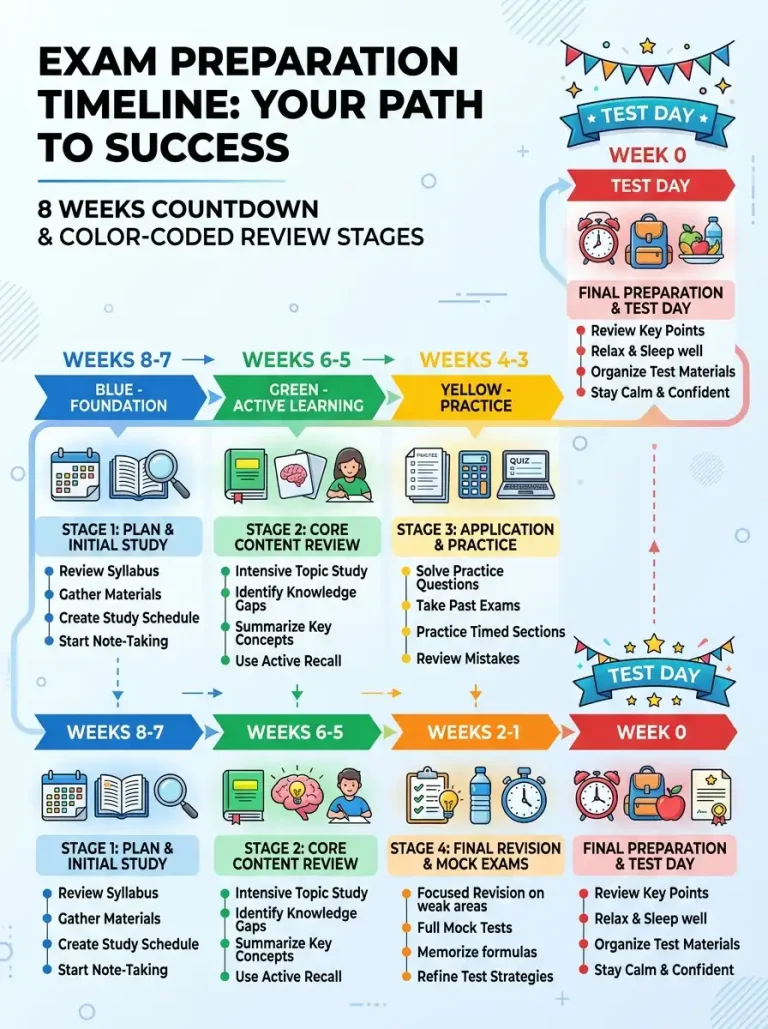
When a big exam is approaching, a general planner isn’t enough. An exam study planner built around subjects, topics, and confidence levels helps you see exactly what still needs review before test day.
7 Weekly Study Planner Printable Free PDF Templates
Below are seven unique, ready-to-print designs. Each one is included in the free downloadable PDF at the end of this article.
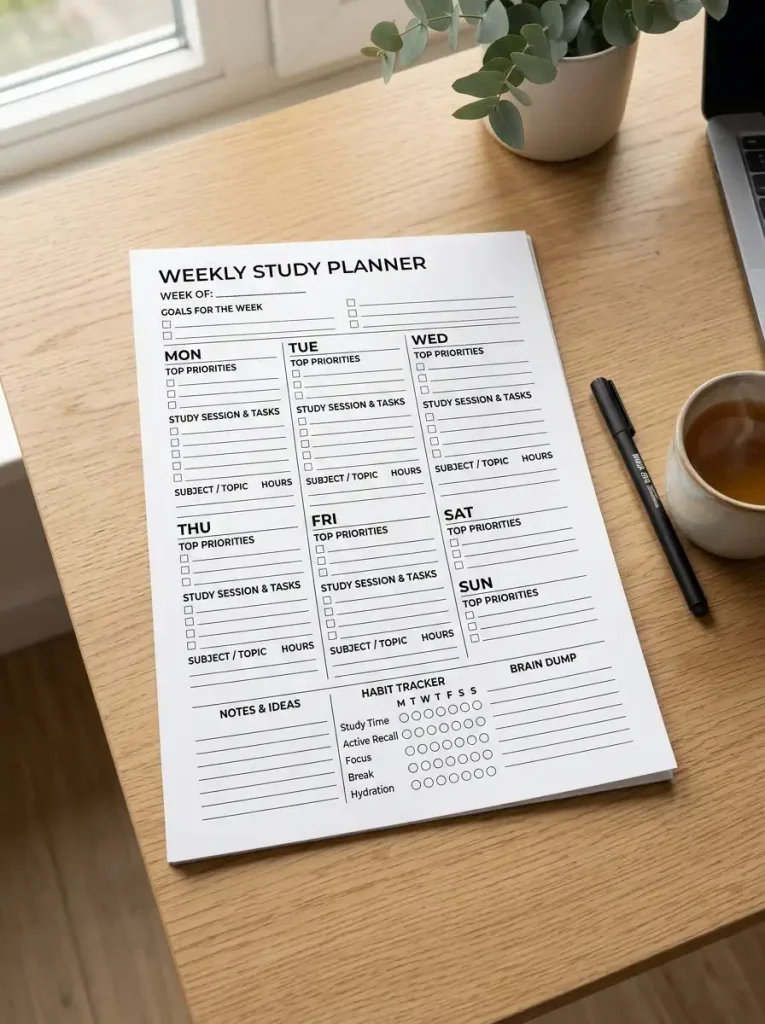
1. Minimalist Weekly Planner
Best For: Students who want a clean, distraction-free layout with no extra clutter.
Features:
- Simple black-and-white grid
- Hourly time slots from morning to evening
- Space for weekly priorities and a weekly goal
Benefits: A minimalist design keeps your eyes on the tasks, not the decoration. It’s also cheap to print since it uses no color ink.
Tips for Using It: Fill in only your fixed commitments first, like classes or work shifts. Then slot study blocks into the open spaces around them.
What’s Included: One full weekly grid page plus a priorities and goals strip at the bottom.
⬇ Download Free PDF Download
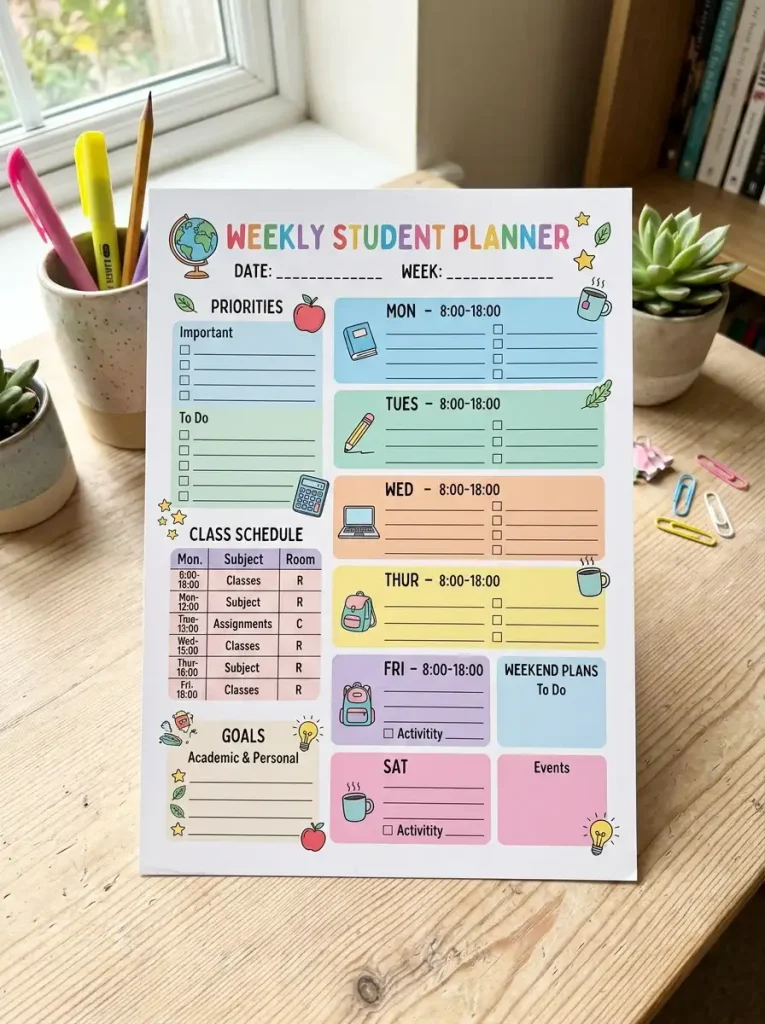
2. Colorful Student Planner
Best For: Middle and high school students who benefit from visual cues and color-coded subjects.
Features:
- Bright color-blocked days
- Room to assign a different color per subject
- Friendly, approachable design
Benefits: Color coding makes it easier to scan the week and instantly recognize which subject belongs where, without reading every word.
Tips for Using It: Pick one color per subject and stick with it all semester. Consistency makes the color system actually useful instead of random.
What’s Included: A full weekly grid with color-block headers and space for daily notes.
⬇ Download Free PDF Download
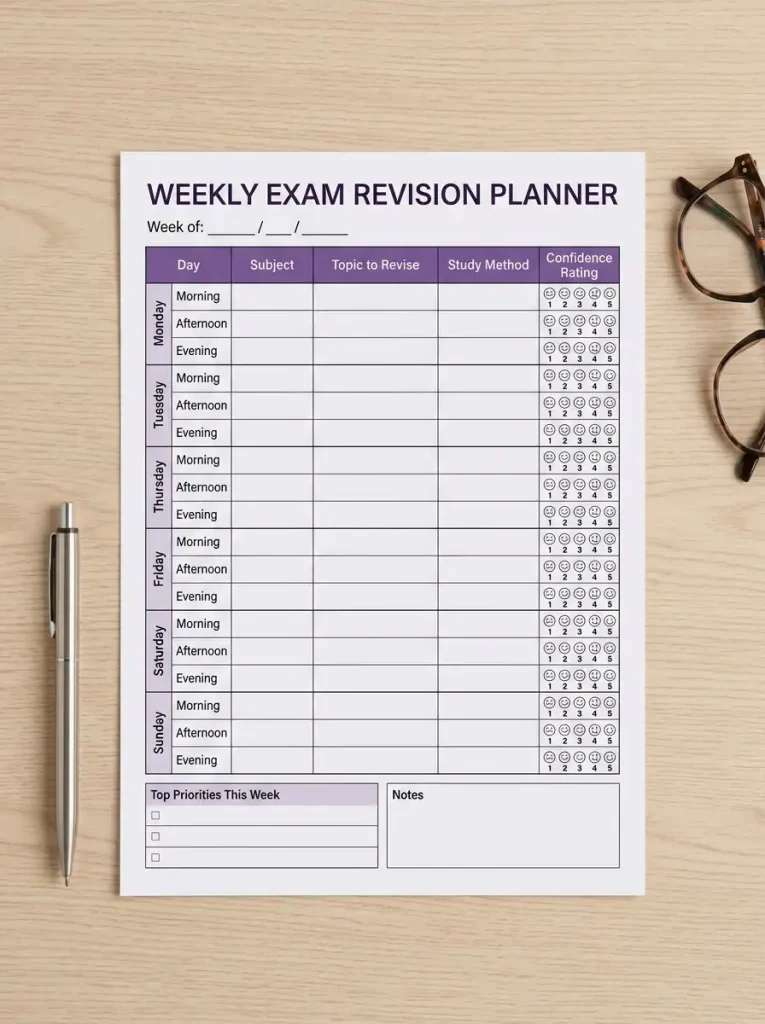
3. Exam Revision Planner
Best For: Students in the weeks leading up to major exams or finals.
Features:
- Subject and topic columns instead of a strict hourly grid
- Confidence rating scale from 1 to 5
- Space to note revision method (flashcards, past papers, summaries)
Benefits: This layout shifts the focus from “when” to “what,” which matters most in the final stretch before an exam. You can quickly see which topics still feel shaky.
Tips for Using It: Rate your confidence honestly after each session. Topics rated low should reappear on your schedule sooner than topics rated high.
What’s Included: A weekly revision table with columns for subject, topic, method, confidence, and completion.
⬇ Download Free PDF Download
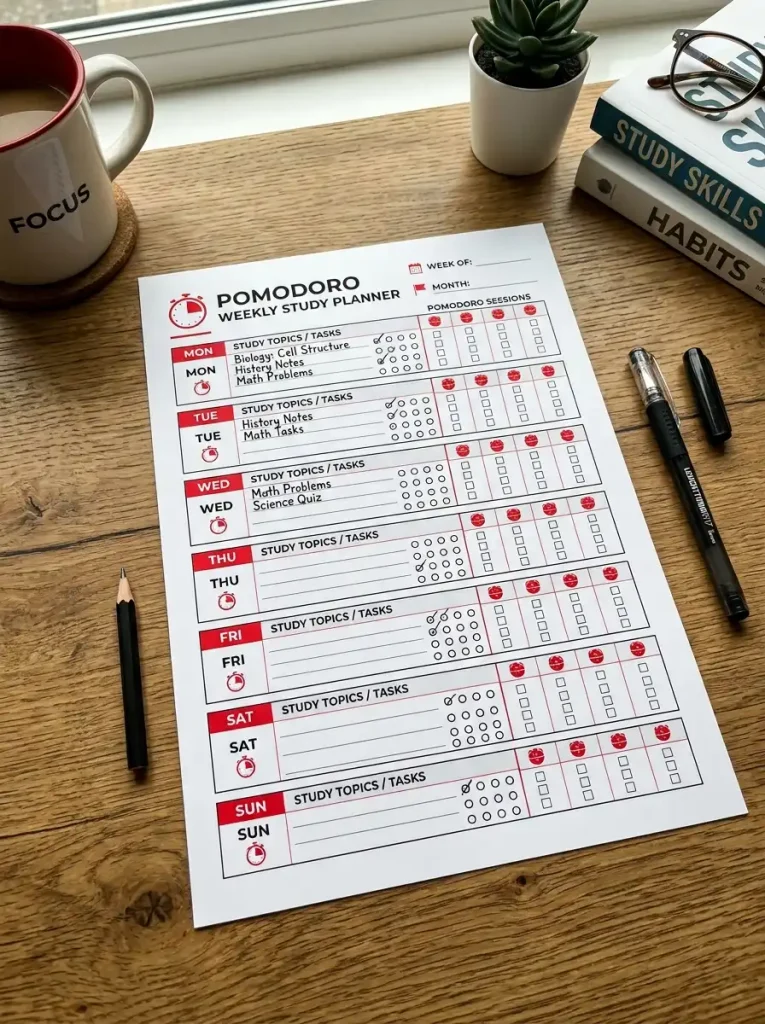
4. Pomodoro Weekly Planner
Best For: Students who struggle with focus and want a structured work-break rhythm.
Features:
- Six session boxes per day, matching 25-minute focus blocks
- Simple checkbox system
- Built-in reminder to take breaks after every four sessions
Benefits: The Pomodoro method breaks studying into short, manageable sprints, which helps reduce the mental resistance to starting a big task.
Tips for Using It: Set a physical timer for each 25-minute block. When it rings, stop immediately and take your break, even if you feel like continuing.
What’s Included: A weekly grid of Pomodoro session boxes plus a short explanation of the technique.
⬇ Download Free PDF Download
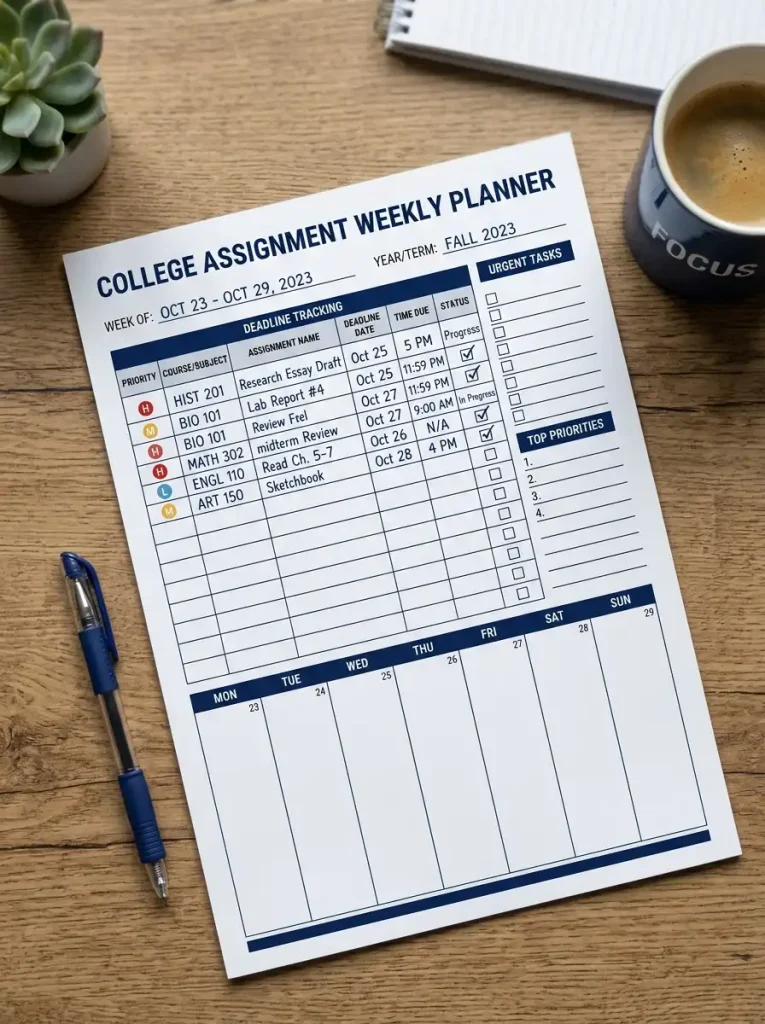
5. College Assignment Planner
Best For: College and university students juggling multiple courses at once.
Features:
- Columns for course, assignment, due date, priority, and status
- Space for ten or more assignments at a glance
- Priority ranking system
Benefits: Instead of hunting through multiple syllabi, everything due across all your classes lives on one page.
Tips for Using It: Update this page every Sunday and cross off completed items in a different colored pen so progress is visible immediately.
What’s Included: A master assignment tracking table designed for a full course load.
⬇ Download Free PDF Download
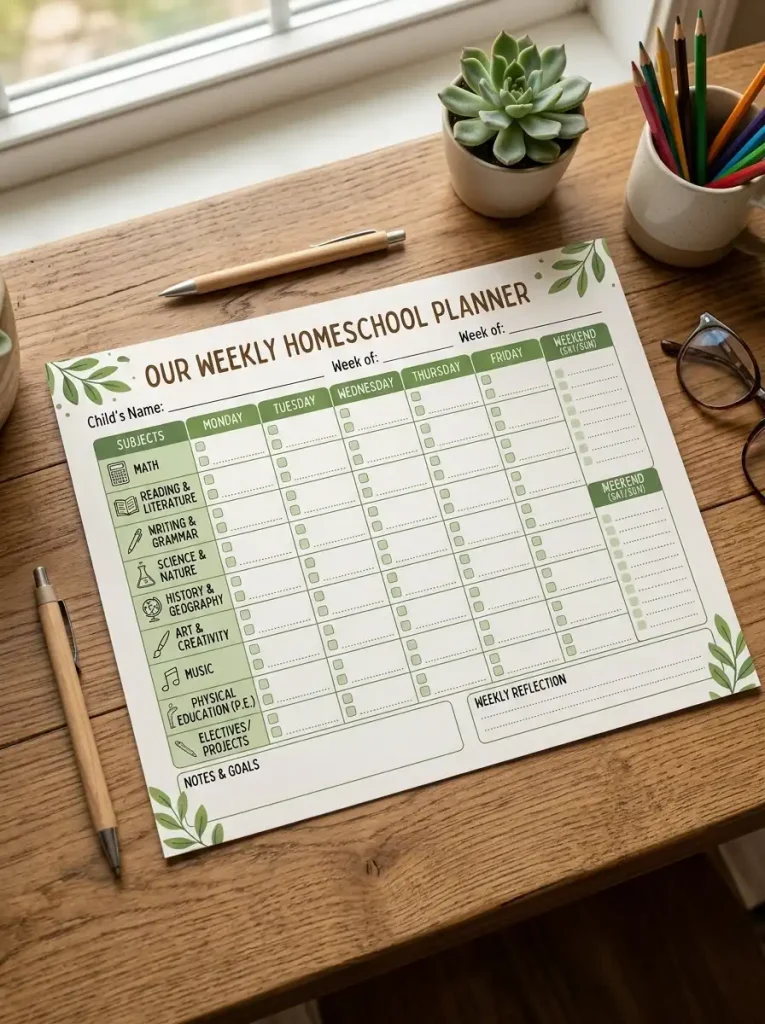
6. Homeschool Weekly Planner
Best For: Homeschool parents and students managing multiple subjects across the week.
Features:
- Subject rows instead of time slots
- Space for math, reading, science, history, art or PE, and free study
- Flexible enough for one child or several
Benefits: This layout matches how homeschool days are usually structured, around subjects rather than rigid class periods.
Tips for Using It: Block out lighter subjects on busier days and save deeper subjects like math for mornings when focus tends to be higher.
What’s Included: A subject-based weekly grid plus space for notes on each learner’s progress.
⬇ Download Free PDF Download
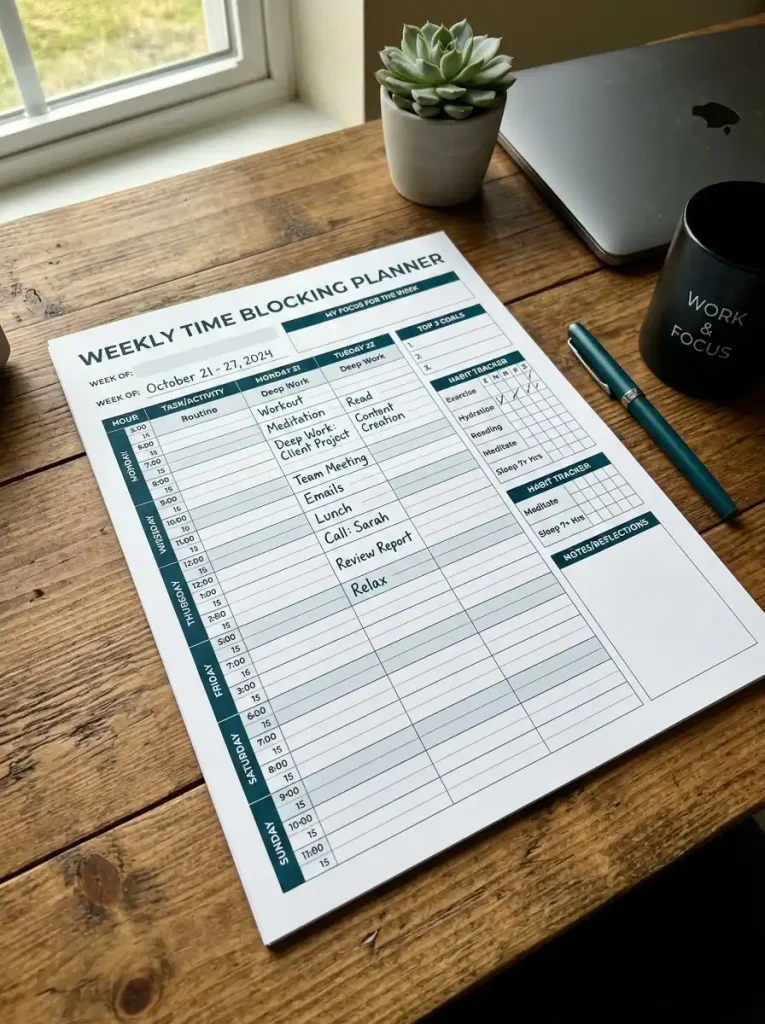
7. Time Blocking Weekly Planner
Best For: Working students, professionals, or anyone with a packed, irregular schedule.
Features:
- Full hourly grid from early morning to late evening
- Room to block out work, classes, study, and personal time
- Weekly goal and priorities section
Benefits: Time blocking forces every hour to have a purpose, which prevents study time from quietly disappearing into other commitments.
Tips for Using It: Block your non-negotiables first, like work and sleep. Then fit study sessions into the realistic gaps that remain.
What’s Included: A full-week hourly grid formatted for detailed time blocking.
⬇ Download Free PDF Download
How to Print and Use Your Planner
Getting a printable weekly planner to look right on paper takes a few small adjustments. Here’s what to know before you hit print.
Choosing A4 or US Letter
The free PDF includes both A4 and US Letter versions, so pick whichever matches your printer and region. A4 is standard across most of the world, while US Letter is standard in the United States and Canada.
Grayscale vs. Color Printing
If you’re trying to save ink, print the black and white version instead of the color one. The layout and structure stay exactly the same either way, so nothing functional is lost.
Double-Sided Printing
Printing double-sided saves paper and makes a multi-week planner feel more like a bound notebook. Just make sure your printer settings flip on the correct edge so pages line up properly.
Laminating for Reusable Planners
For a reusable weekly homework planner, laminate a single page and use a dry-erase marker. This works especially well for the time blocking and Pomodoro layouts, since you’ll likely reuse the same structure every week.
Building a Planner Binder
Punch holes in your printed pages and store them in a binder alongside your notes page and assignment tracker. This keeps every planning tool from this PDF in one place instead of scattered across loose sheets.
12 Productivity Tips for Weekly Study Planning
- Plan on the same day every week. Sunday evening or Monday morning both work well, as long as it’s consistent.
- Write tasks, not vague intentions. “Review chapter 3 flashcards” beats “study” every time.
- Block time for breaks, not just work. Breaks prevent burnout and actually improve focus during study blocks.
- Color-code by subject or priority. This makes your printable school planner easier to scan at a glance.
- Leave buffer time between sessions. Back-to-back blocks with zero gaps rarely survive contact with real life.
- Review your planner each morning. A thirty-second glance keeps the day’s priorities fresh in your mind.
- Batch similar tasks together. Grouping reading assignments or problem sets saves mental energy from constant switching.
- Schedule your hardest subject when you’re most alert. Most people focus best in the morning or early afternoon.
- Keep your planner visible. A printed page on your desk gets checked far more often than a hidden app.
- Track completed tasks, not just planned ones. Checking off a box provides a small but real sense of progress.
- Adjust mid-week if needed. A planner is a guide, not a contract; move things around when life happens.
- Do a five-minute weekly review. Look back at what worked and what didn’t before planning the next week.
10 Common Study Planning Mistakes (and How to Fix Them)
- Overpacking the schedule. Solution: Leave at least 20% of your week unscheduled for overflow and rest.
- Setting vague goals. Solution: Turn every goal into a specific, measurable task with a clear stopping point.
- Ignoring energy levels. Solution: Match harder subjects to your natural peak focus hours instead of forcing them into leftover time.
- Skipping breaks entirely. Solution: Build short breaks directly into the planner so they aren’t skipped under pressure.
- Never reviewing the plan mid-week. Solution: Set a recurring Wednesday check-in to see if the plan still matches reality.
- Using the planner only for exams. Solution: Use a weekly revision planner every week, not just before big tests.
- Underestimating task length. Solution: Track how long tasks actually take for a week, then adjust future estimates accordingly.
- Forgetting long-term deadlines. Solution: Keep an assignment tracker separate from the daily grid so nothing slips through unnoticed.
- Studying in one long block. Solution: Break long sessions into Pomodoro-style sprints with short breaks between them.
- Abandoning the planner after one bad week. Solution: Treat a missed week as normal, not a failure, and simply restart the following Sunday.
A Quick Look at How This Plays Out in Real Life
It helps to see these ideas in action. Here are a few short, realistic scenarios that show how a weekly study planner printable changes the way students actually experience their week.
The Overwhelmed High Schooler: Maya juggles five classes, soccer practice, and a part-time babysitting job. Before using a planner, she often forgot homework until the night before it was due. After switching to the Colorful Student Planner, she started color-coding each subject and blocking out just thirty minutes a day for review. Within two weeks, her missing-assignment count dropped to zero.
The Overloaded College Student: Diego takes eighteen credit hours across four courses, each with its own syllabus and deadline structure. He used to track everything in his head, which meant deadlines occasionally slipped through the cracks. The College Assignment Planner gave him one page to check every Sunday, and the simple act of writing due dates in one place cut his late submissions almost entirely.
The Homeschool Parent: Priya teaches two kids at home with very different learning paces. The Homeschool Weekly Planner let her map subjects instead of rigid hours, so she could adjust the pace for each child without redesigning her whole week. Math happens first thing in the morning when both kids have the most energy, and lighter subjects fill the afternoon.
The Working Adult Learner: James studies for a certification exam after a full workday. His free time is scattered in small pockets rather than long stretches. The Time Blocking Weekly Planner helped him spot a few consistent windows, like his lunch break and the hour after dinner, and turn them into protected study time instead of letting them disappear into scrolling or chores.
Each of these examples uses a different template from this collection, which is exactly the point. The right printable weekly planner depends less on which one is “best” and more on which one matches your actual schedule and learning style.
Digital vs. Printed Planners: Why Paper Still Wins for Many Students
It’s worth addressing a common question directly: with so many planning apps available, why print a paper planner at all?
Physical planners have a few advantages that digital tools often can’t replicate. Writing by hand engages memory differently than typing, which means the simple act of filling in your printable weekly homework planner can help the plan stick in your mind before you’ve even started studying. A printed page also sits in plain view on a desk, which means it gets glanced at throughout the day without needing to unlock a phone or open an app, something that often leads to distraction rather than focus.
That said, paper and digital tools aren’t mutually exclusive. Many students print a weekly study timetable PDF for the big-picture view of their week, then use a phone reminder for time-sensitive alerts. The printable stays as the source of truth, while the phone handles quick nudges.
Matching a Planner to Your Learning Style
Beyond your role as a student, homeschooler, or working professional, it helps to think about how you personally process information. Visual learners tend to gravitate toward the Colorful Student Planner or the Exam Revision Planner, since both rely on color and structured columns rather than dense text. Learners who prefer routine and repetition often do best with the Time Blocking Weekly Planner, since the same hourly structure repeats every week and becomes second nature after a few uses.
If you tend to lose focus easily, the Pomodoro Weekly Planner offers built-in structure that breaks work into short, manageable chunks rather than asking you to sustain attention for hours at a stretch. And if your week genuinely changes every few days, like it often does for college students balancing labs, part-time work, and social commitments, the flexibility of the Minimalist Weekly Planner leaves room to adapt without fighting a rigid template.
There’s no wrong choice here. Try one template for a week, notice what felt natural and what felt like a chore, and adjust from there. Many students eventually land on a mix, using one template during regular weeks and switching to the Exam Revision Planner only when a test is approaching.
Frequently Asked Questions
1. What is a weekly study planner printable? It’s a physical, printable page that lays out your study tasks, classes, and priorities across a full seven-day week, usually in a grid or table format.
2. Is this study planner PDF really free? Yes. All seven printable weekly planner designs, along with the extra tracking pages, are free to download and print for personal, classroom, or homeschool use.
3. Can I print this on A4 paper instead of US Letter? Yes, the PDF includes both A4 and US Letter versions so it prints correctly no matter where you’re located.
4. Do I need color ink to print this planner? No. Every design also comes in a black and white version, so grayscale printing works fine.
5. Which planner is best for college students? The College Assignment Planner and the Time Blocking Weekly Planner tend to work best for college schedules, since they handle multiple classes and shifting commitments well.
6. Which planner works best for exam preparation? The Exam Revision Planner is built specifically for this, with columns for subject, topic, revision method, and confidence level.
7. How do I make my printable planner reusable? Laminate a single printed page and use a dry-erase or wet-erase marker so you can wipe it clean and reuse it every week.
8. Can homeschool families use more than one planner from this set? Absolutely. Many homeschool families combine the Homeschool Weekly Planner with the Habit Tracker and Goals page for a more complete system.
9. What’s the difference between time blocking and a regular planner? Time blocking assigns a specific task to every hour of the day, while a regular weekly planner often just lists tasks without locking them to an exact time slot.
10. How often should I fill out a new weekly planner page? Once a week is standard, ideally on the same day so the habit sticks. Some students prefer filling it out the night before each new week begins.
11. Can I edit these printables digitally before printing? The included PDF is designed for printing and handwriting, though you’re welcome to annotate it using any PDF editor if you prefer typing over writing by hand.
12. What other pages are included besides the planners? The full PDF includes a notes page, goals page, habit tracker, weekly priorities page, assignment tracker, study timetable, and revision tracker.
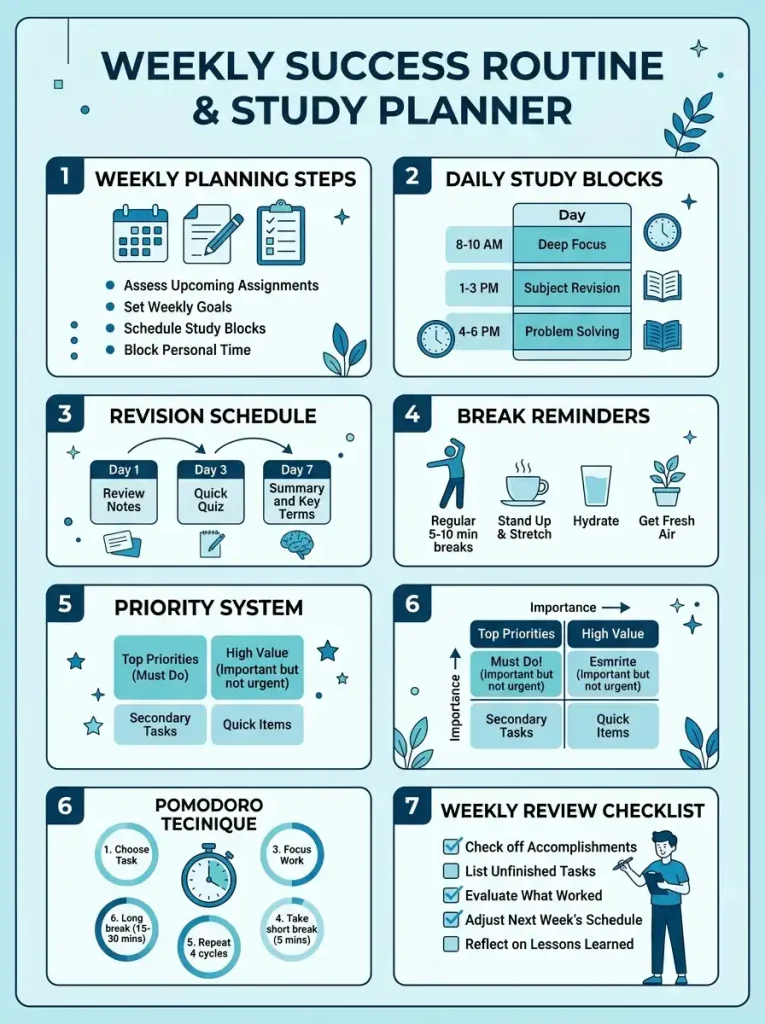
Infographic Prompt
External Resources
- Khan Academy — free courses and study support across nearly every subject.
- MIT OpenCourseWare — free access to real MIT course materials for advanced learners.
- Purdue OWL — a trusted resource for writing, citation, and research help.
- Coursera — university-backed online courses across many disciplines.
- National Institute of Mental Health — reliable information on managing academic stress and mental health.
Conclusion
A weekly study planner won’t do the studying for you, but it removes the guesswork that so often gets in the way. When your week is mapped out clearly, procrastination has less room to creep in, deadlines stop sneaking up on you, and consistent review time replaces last-minute cramming.
Whether you’re drawn to the clean simplicity of the minimalist layout, the structure of time blocking, or the focus-friendly Pomodoro grid, there’s a printable weekly study planner in this set built for how you actually work.
Download the free PDF, print the version that fits your printer, and fill in your first week today. Small, consistent planning habits like this one tend to add up to real academic progress over time.