15 September Bulletin Board Ideas to Refresh Your Classroom This Fall
September carries a special kind of energy. Students walk through the door with fresh backpacks, new pencils, and a little nervous excitement about the year ahead. A thoughtfully designed September bulletin board channels that energy into something welcoming, motivating, and genuinely educational.
This collection of September classroom bulletin board ideas gives you fifteen ready-to-use concepts, each built for real classrooms with real time limits. You’ll find a back to school bulletin board perfect for the first week, plus apple bulletin board ideas, harvest-themed displays, and interactive boards students will actually want to touch.
Whether you teach preschool, kindergarten, or upper elementary, these ideas scale to fit your space and your students. Every concept below includes color palettes, materials, setup difficulty, and practical teacher tips so you can start decorating today, not next week.
15 September Bulletin Board Ideas
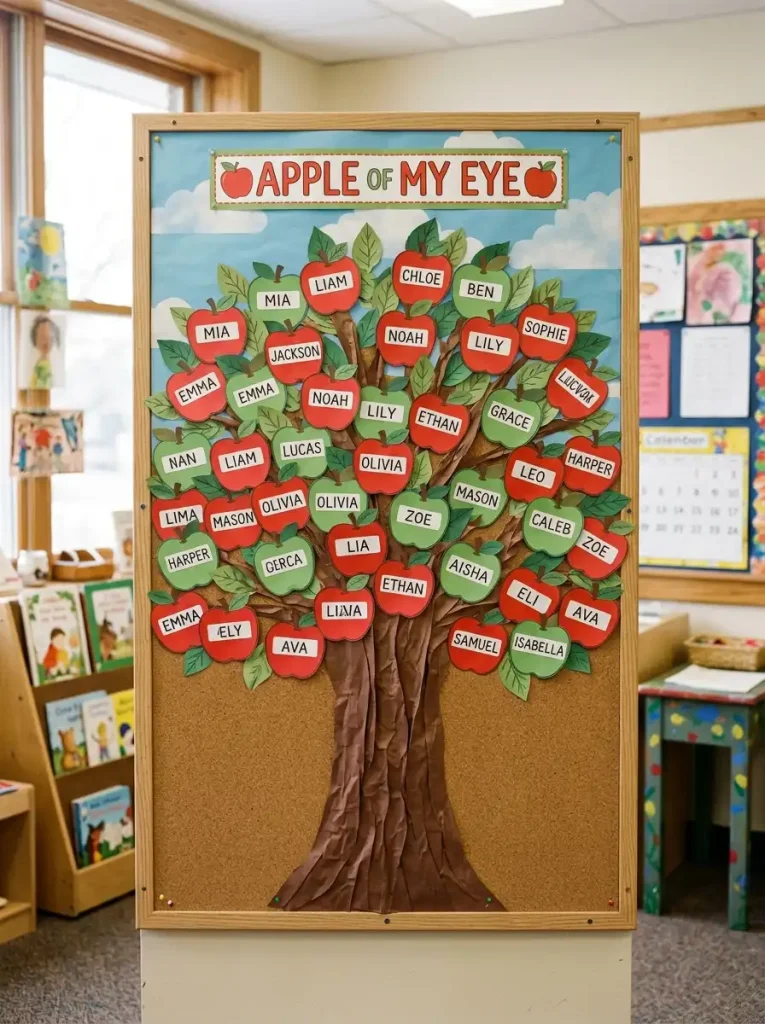
1. Apple of My Eye
This board celebrates each student as someone special through a giant apple orchard display. Every student receives a personalized apple cutout with their name and a favorite fact about themselves.
Students enjoy seeing their name in bright, colorful print right away. Feeling recognized early in the year builds confidence and comfort in a new classroom.
This idea works best for preschool through early elementary grades. Suggested colors include deep red, forest green, and warm brown for tree trunks and branches.
Materials needed include red and green construction paper, brown paper for trunks, markers, and glue. Learning opportunities include practicing name recognition and public speaking through short “about me” shares.
The interactive element invites students to add a new apple whenever a new student joins the class later in the year. Decoration tips include layering apples slightly for a fuller, three-dimensional tree.
Variations include swapping apples for pumpkins in October while keeping the same tree structure. Teacher tips suggest precutting apple shapes in bulk before the first day of school.
Setup difficulty rates as easy, with an estimated preparation time of two hours.
2. Falling for a Great Year
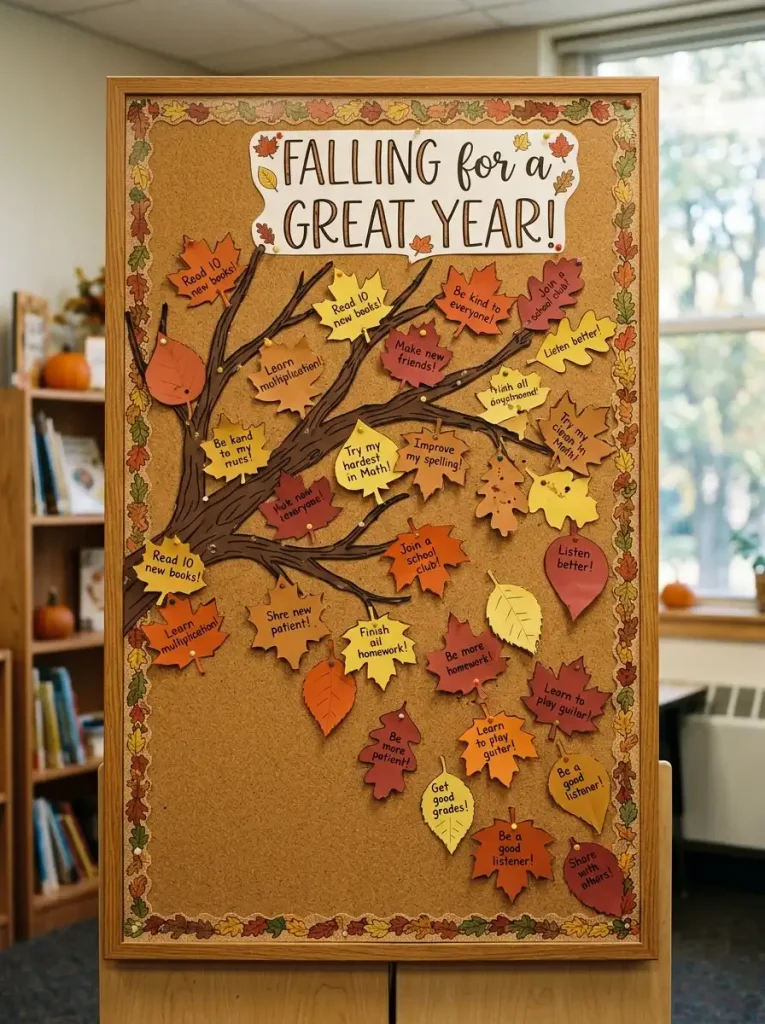
A falling leaves theme sets the tone for a positive, growth-focused year ahead. Each leaf carries a personal goal written by a student during the first week.
Students enjoy watching their own goal displayed proudly for classmates to see. This visibility creates gentle accountability and excitement about the months ahead.
Best suited for elementary and middle school grades. Suggested colors include burnt orange, golden yellow, and deep red for a classic autumn palette.
Materials needed include colored paper, markers, and a simple tree branch cutout. Learning opportunities include goal-setting practice and reflective writing skills.
The interactive element allows students to revisit and update their leaf goal at the end of each semester. Decoration tips suggest scattering a few leaves near the base of the tree for a wind-blown effect.
Variations include adding a winter version using snowflakes instead of leaves. Teacher tips recommend modeling the activity with your own goal leaf first.
Setup difficulty rates as easy, with an estimated preparation time of ninety minutes.
3. Harvest of Helping Hands
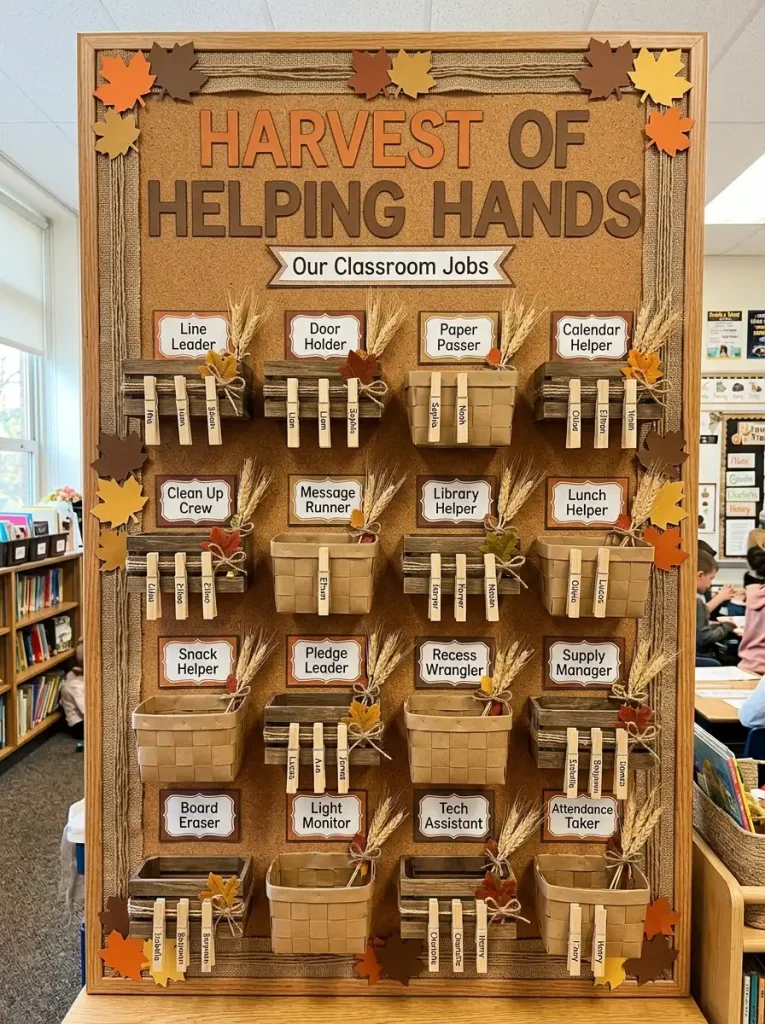
This board highlights classroom jobs and responsibilities through a warm harvest theme. Each job gets its own labeled basket or crate cutout with a rotating student name attached.
Students enjoy the sense of ownership that comes with a visible, respected classroom role. Seeing their name attached to a real responsibility builds pride and accountability.
This idea suits elementary classrooms particularly well. Suggested colors include warm brown, deep orange, and golden wheat tones.
Materials needed include brown paper for baskets, colored paper for produce cutouts, and clothespins for name tags. Learning opportunities include responsibility, teamwork, and classroom citizenship.
The interactive element involves rotating job assignments weekly, with students moving their name tag themselves. Decoration tips include adding small wheat bundles or raffia accents between baskets.
Variations include adjusting job titles seasonally to match classroom needs throughout the year. Teacher tips suggest laminating name tags for durability across many rotations.
Setup difficulty rates as moderate, with an estimated preparation time of two and a half hours.
4. Growing Together Garden
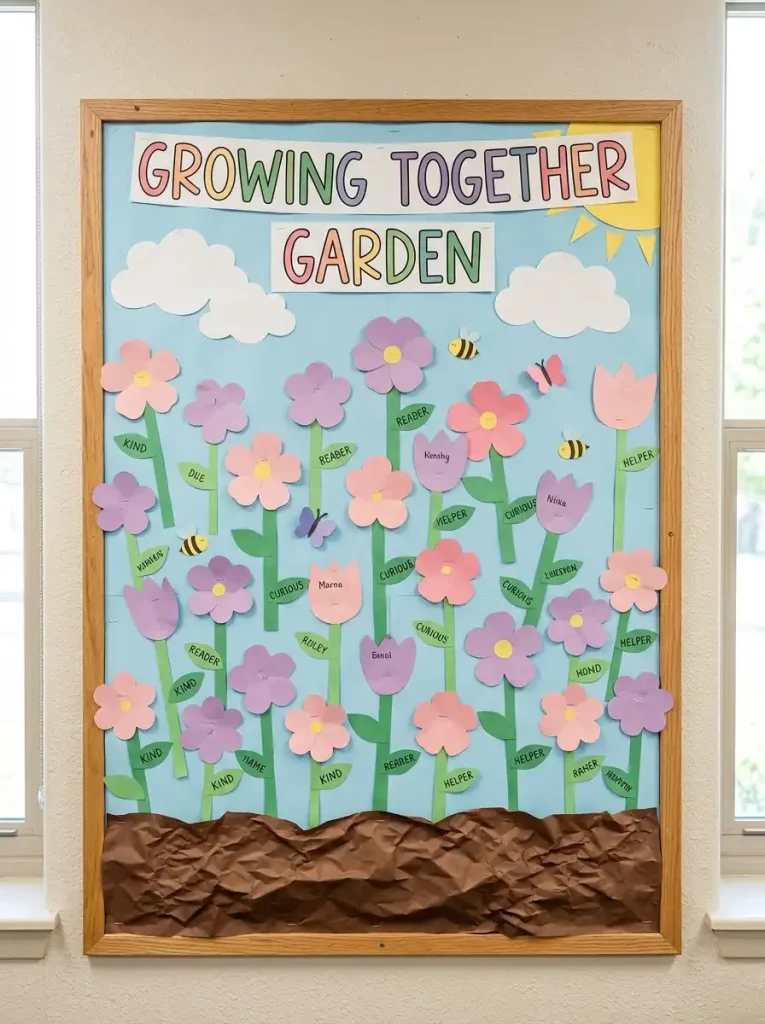
A growth mindset theme takes shape through a garden where each student’s flower grows taller as they demonstrate perseverance. This board reinforces the idea that effort, not perfection, drives real progress.
Students respond well to watching their flower’s height increase visibly over time. The gradual growth mirrors their own developing skills and confidence.
Best suited for elementary classrooms. Suggested colors include soft pink, lavender, and sage green against a sky-blue background.
Materials needed include colored paper for flowers and stems, markers, and a sun cutout for the top of the board. Learning opportunities include resilience, self-reflection, and positive self-talk.
The interactive element lets students add a new petal whenever they push through a challenge. Decoration tips suggest varying flower heights slightly for a natural, garden-like feel.
Variations include a winter version using snow-capped mountains representing progress instead of flowers. Teacher tips recommend discussing specific examples of perseverance during a morning meeting first.
Setup difficulty rates as moderate, with an estimated preparation time of three hours.
5. Reading Roots
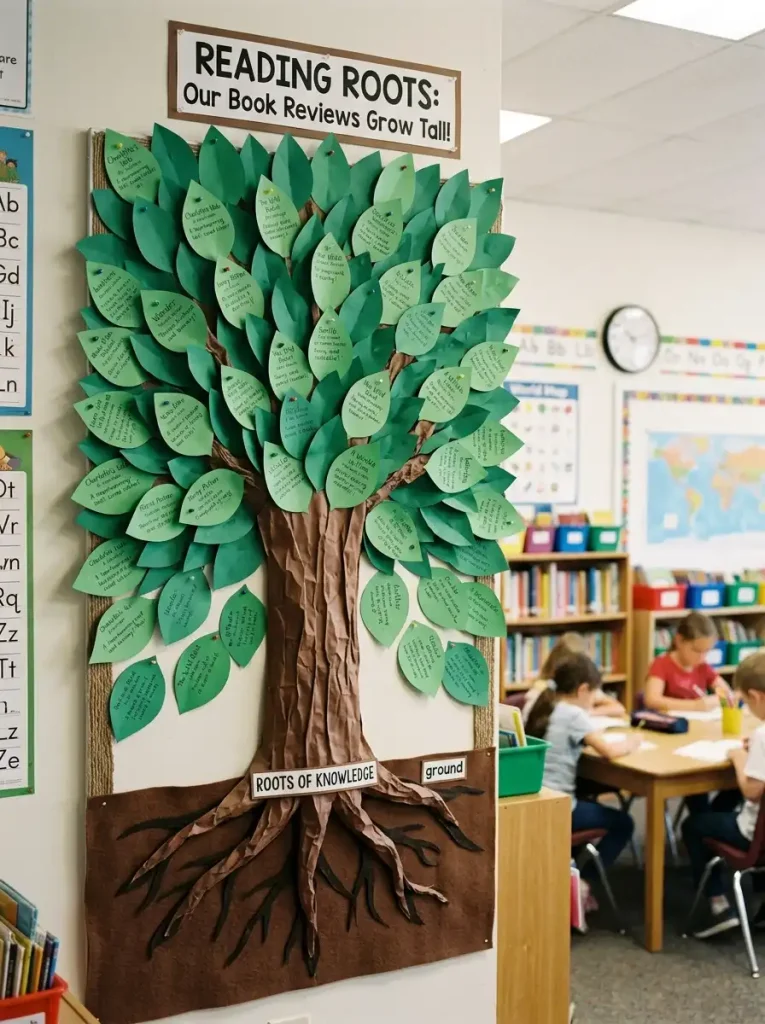
This literacy-focused board connects reading progress to a growing tree with roots representing foundational skills. Each completed book adds a new leaf to the canopy above.
Students enjoy watching their personal reading tree fill in throughout the semester. The visual metaphor of roots and growth makes reading feel tangible and rewarding.
Suitable for all elementary grade levels. Suggested colors include forest green, warm brown, and soft yellow accents.
Materials needed include brown paper for the trunk and roots, green paper for leaves, and book title labels. Learning opportunities include reading motivation and vocabulary reinforcement.
The interactive element invites students to write a one-sentence review on each leaf before adding it. Decoration tips suggest extending visible roots along the board’s bottom edge for a complete tree image.
Variations include a summer reading version continuing through June. Teacher tips recommend keeping a stack of blank leaves at your classroom library station.
Setup difficulty rates as moderate, with an estimated preparation time of three hours.
6. Sunny Side of September
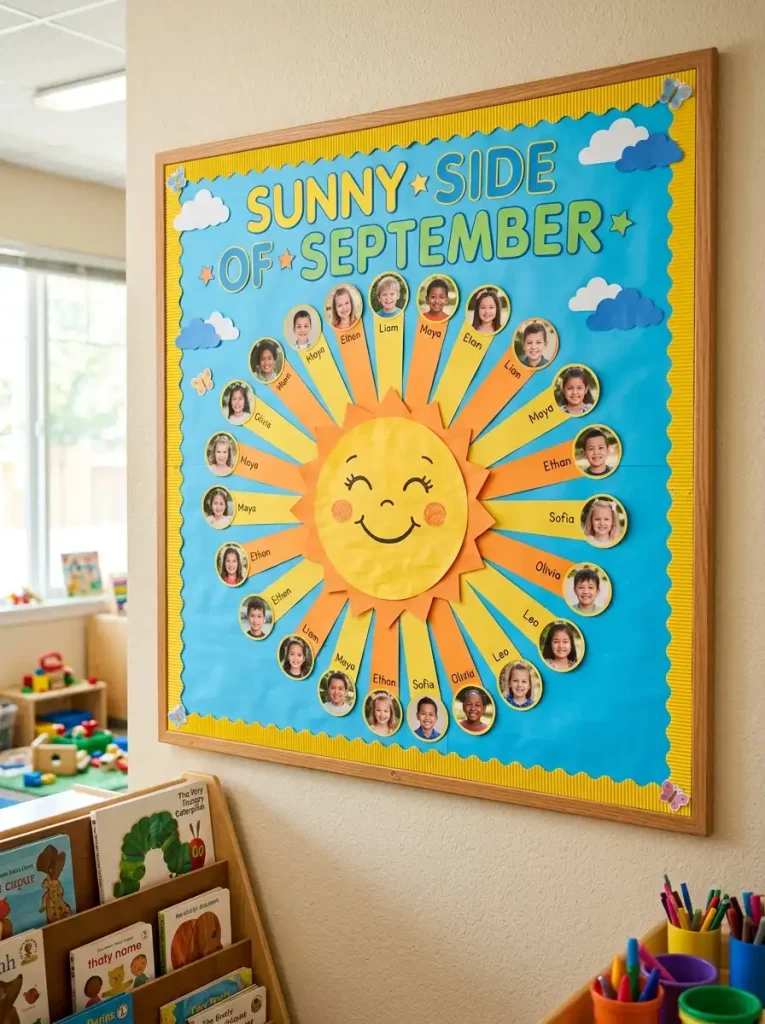
A cheerful sunshine theme welcomes students back with warmth and positivity. A large paper sun anchors the board, with rays featuring individual student photos and smiles.
Students enjoy seeing their own photo featured prominently on a bright, welcoming display. This recognition helps nervous newcomers feel instantly at home.
Best suited for preschool and kindergarten classrooms. Suggested colors include bright yellow, orange, and sky blue.
Materials needed include yellow paper for the sun, photo frames or printed student photos, and blue background paper. Learning opportunities include classroom community building and name recognition.
The interactive element allows students to add a new ray featuring a classmate they’d like to know better. Decoration tips suggest arranging rays symmetrically around the sun for visual balance.
Variations include swapping the sun for a snowman in winter while keeping the same photo-ray concept. Teacher tips recommend taking photos on the very first day for maximum freshness.
Setup difficulty rates as easy, with an estimated preparation time of two hours.
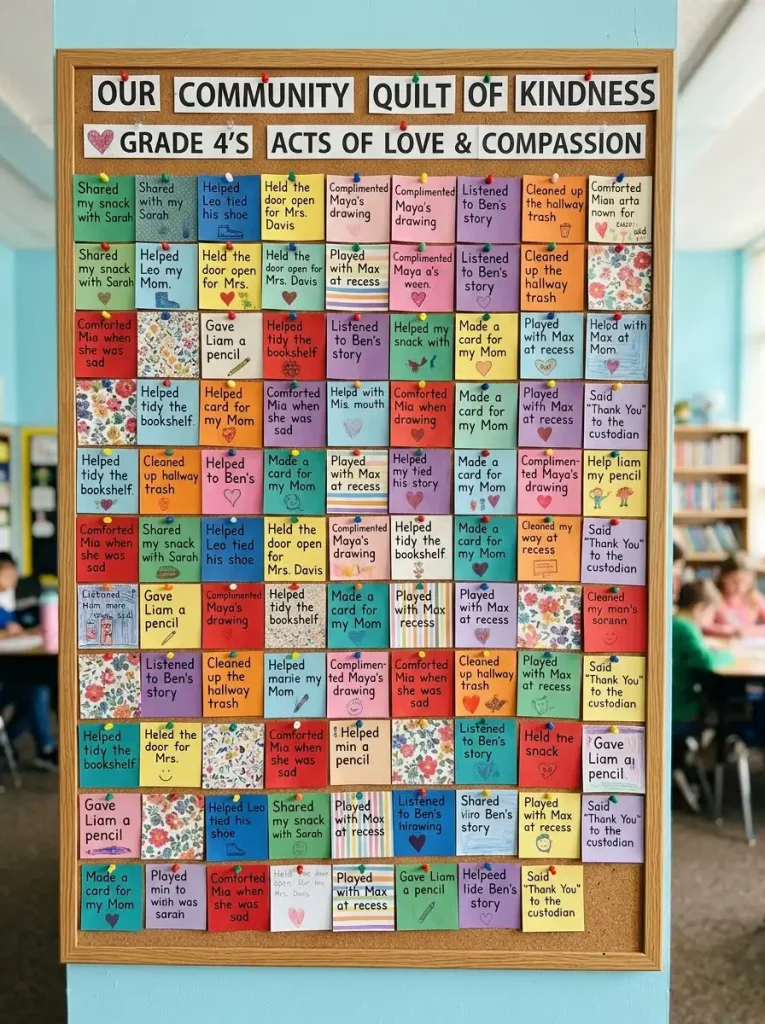
7. Community Quilt of Kindness
This board builds classroom unity through a patchwork quilt design, with each square representing an act of kindness. Students contribute a new square whenever they notice kindness happening around them.
Students enjoy the ongoing, collaborative nature of building something together as a class. Watching the quilt grow week by week reinforces a strong sense of community.
Suitable for elementary and middle school grades. Suggested colors include a mixed palette representing variety and inclusivity.
Materials needed include colorful paper squares, markers, and a large background grid. Learning opportunities include empathy, social-emotional learning, and collaborative citizenship.
The interactive element invites any student to add a square at any time, keeping participation open and ongoing. Decoration tips suggest arranging squares in a random, organic pattern rather than a strict grid.
Variations include a friendship version focused specifically on new student welcomes. Teacher tips recommend keeping blank squares easily accessible near the board at all times.
Setup difficulty rates as easy, with an estimated preparation time of ninety minutes.
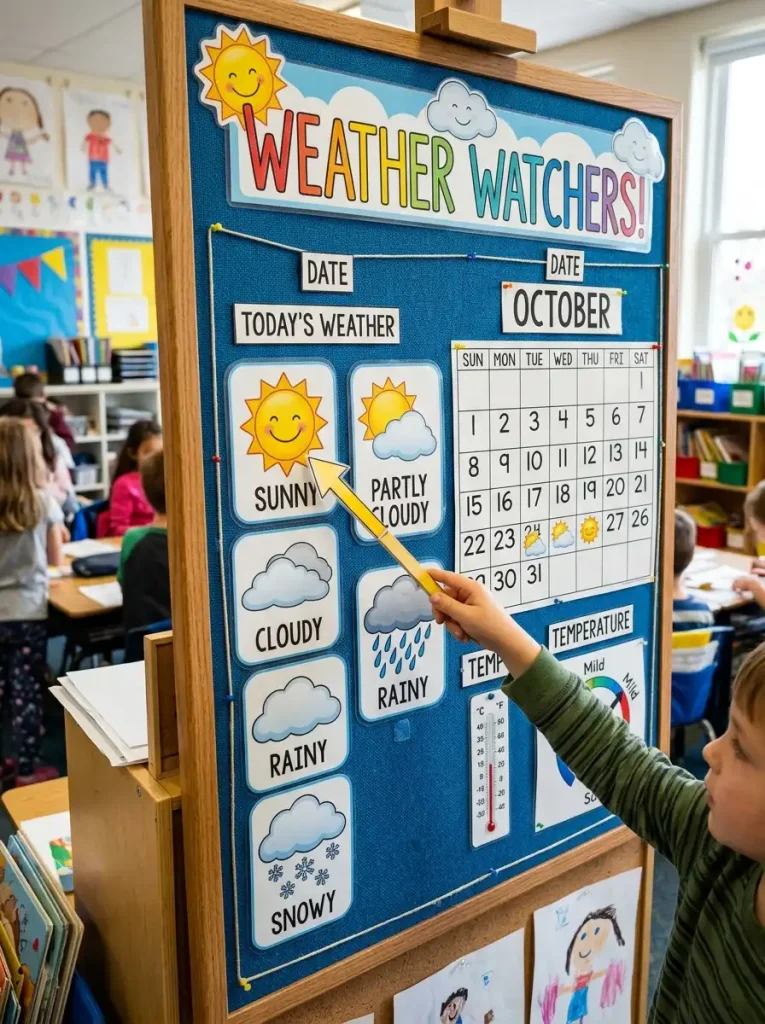
8. Weather Watchers
A hands-on weather station combines science learning with an ever-changing, interactive display. Students update the board daily with current weather conditions and simple predictions.
Students enjoy the responsibility of updating real, changing information every single day. This daily ritual builds observation skills and scientific thinking naturally.
Best suited for kindergarten through elementary grades. Suggested colors include sky blue, white, and soft gray for clouds and sun icons.
Materials needed include laminated weather icons, a simple calendar grid, and a small pointer or clip. Learning opportunities include science vocabulary, pattern recognition, and daily routine building.
The interactive element rotates a “weather reporter” job among students each week. Decoration tips suggest adding a small thermometer graphic showing general temperature ranges.
Variations include adding seasonal weather predictions tied to upcoming holidays or breaks. Teacher tips recommend laminating all pieces since this board sees daily handling.
Setup difficulty rates as moderate, with an estimated preparation time of two and a half hours.
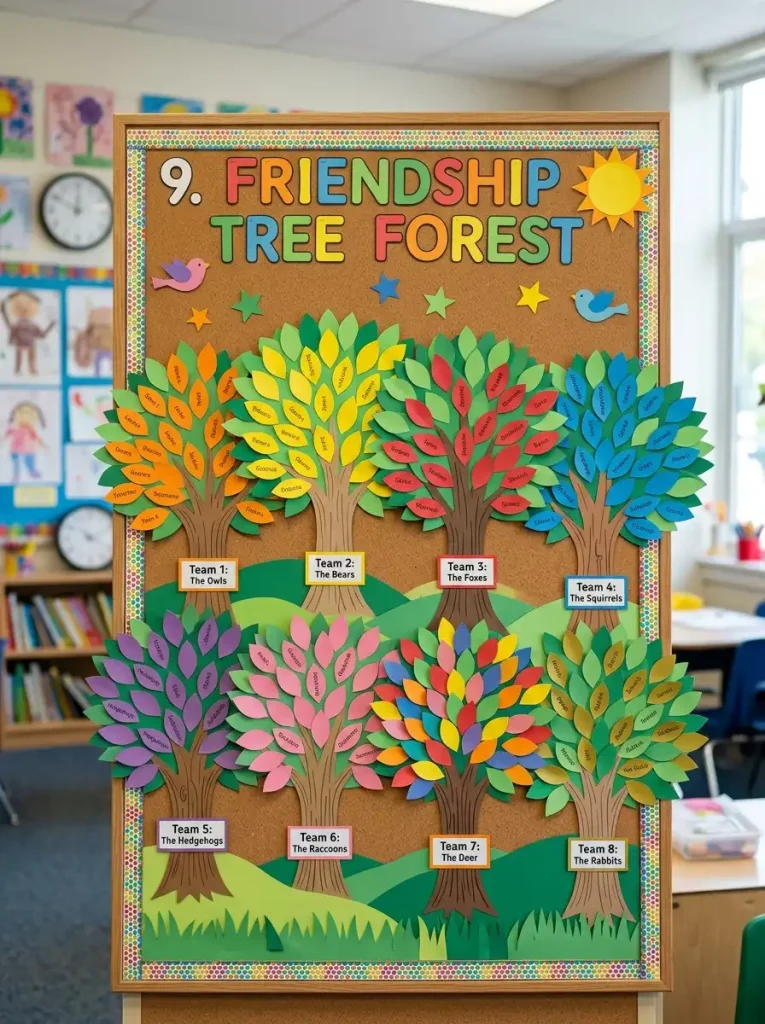
9. Friendship Tree Forest
This board celebrates new classroom friendships through a small forest of trees, each representing a different friend group or table team. Students add leaves featuring shared interests or inside jokes.
Students enjoy seeing their table team represented as its own unique tree within the larger forest. This structure builds small-group identity alongside whole-class community.
Suitable for elementary classrooms. Suggested colors include varied greens with colorful leaf accents for each tree.
Materials needed include brown paper for multiple trunks, colored paper for leaves, and table team labels. Learning opportunities include collaboration and interpersonal communication skills.
The interactive element invites table teams to decide together what goes on their tree’s leaves. Decoration tips suggest spacing trees slightly apart to represent each team’s distinct identity.
Variations include merging trees into one larger forest as the year progresses and teams evolve. Teacher tips recommend rotating table teams periodically to keep the display fresh and inclusive.
Setup difficulty rates as moderate, with an estimated preparation time of three hours.
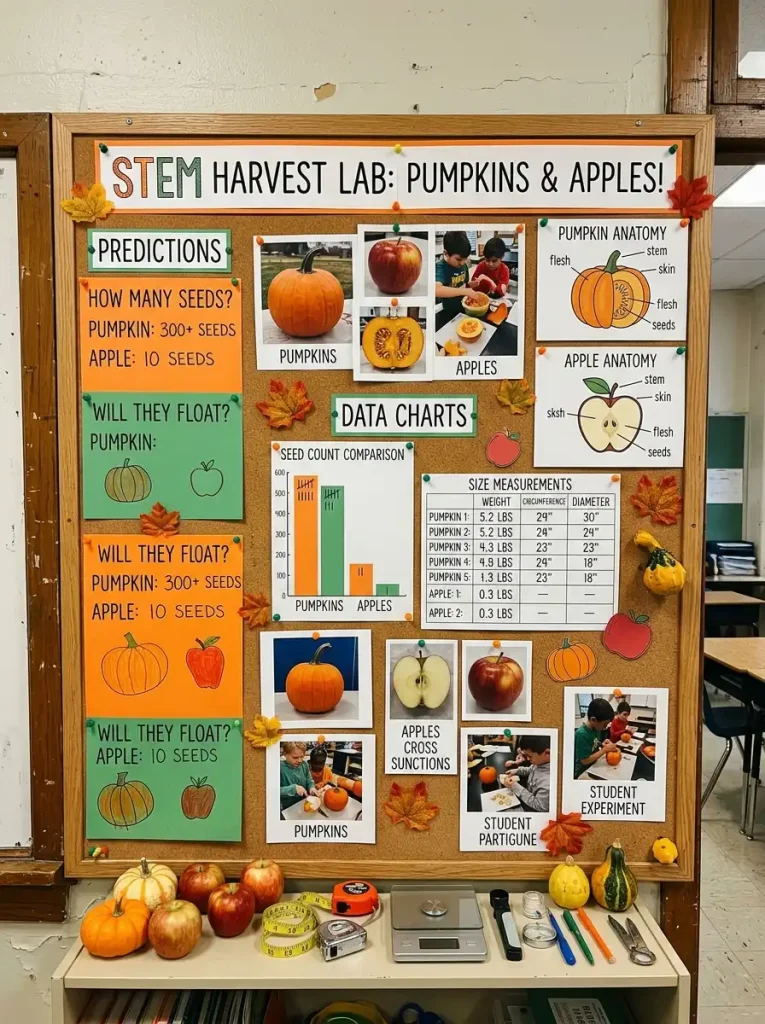
10. STEM Harvest Lab
A hands-on STEM board documents a real classroom experiment involving pumpkins, apples, or seeds. Charts and photos walk viewers through predictions, data, and results.
Students enjoy seeing their own predictions and data displayed like real scientists. This authentic connection to genuine classroom work makes the board feel meaningful rather than decorative.
Best suited for elementary and middle school grades. Suggested colors include orange, green, and white with clean chart-style accents.
Materials needed include chart paper, photos from the experiment, and labeled data points. Learning opportunities include the scientific method, data literacy, and hypothesis testing.
The interactive element invites students to add their own prediction before results are revealed. Decoration tips suggest using arrows or numbers to guide viewers through the experiment’s sequence.
Variations include repeating the format with a different seasonal experiment each quarter. Teacher tips recommend photographing every step so the board tells a complete story.
Setup difficulty rates as moderate, with an estimated preparation time of three hours.
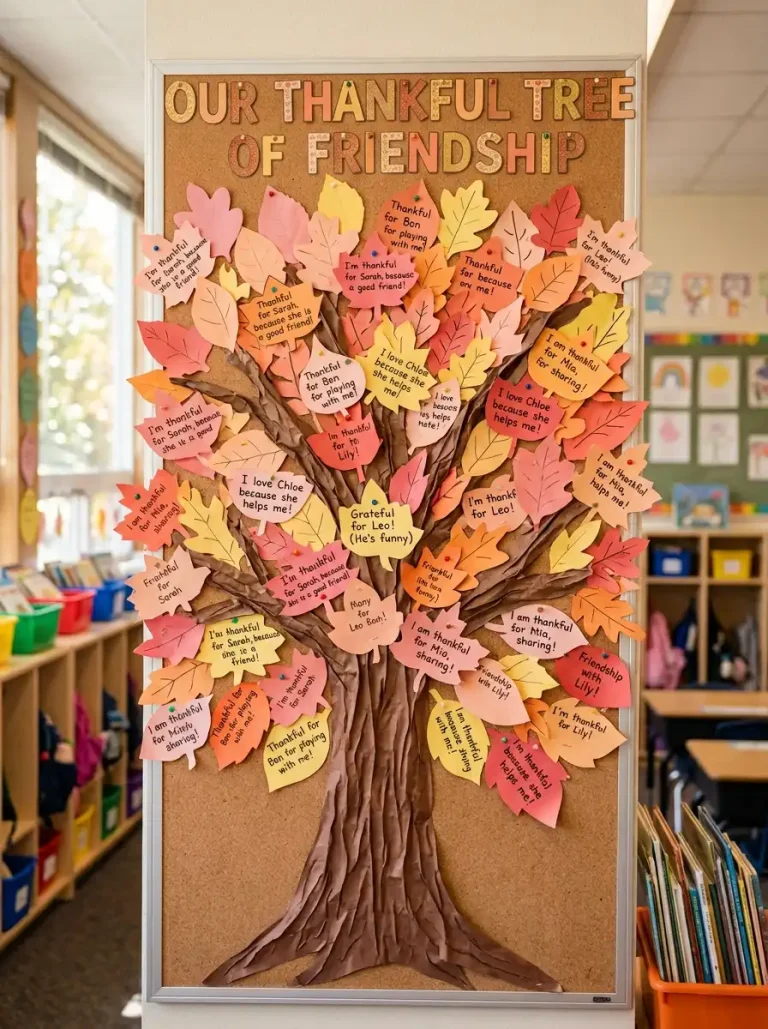
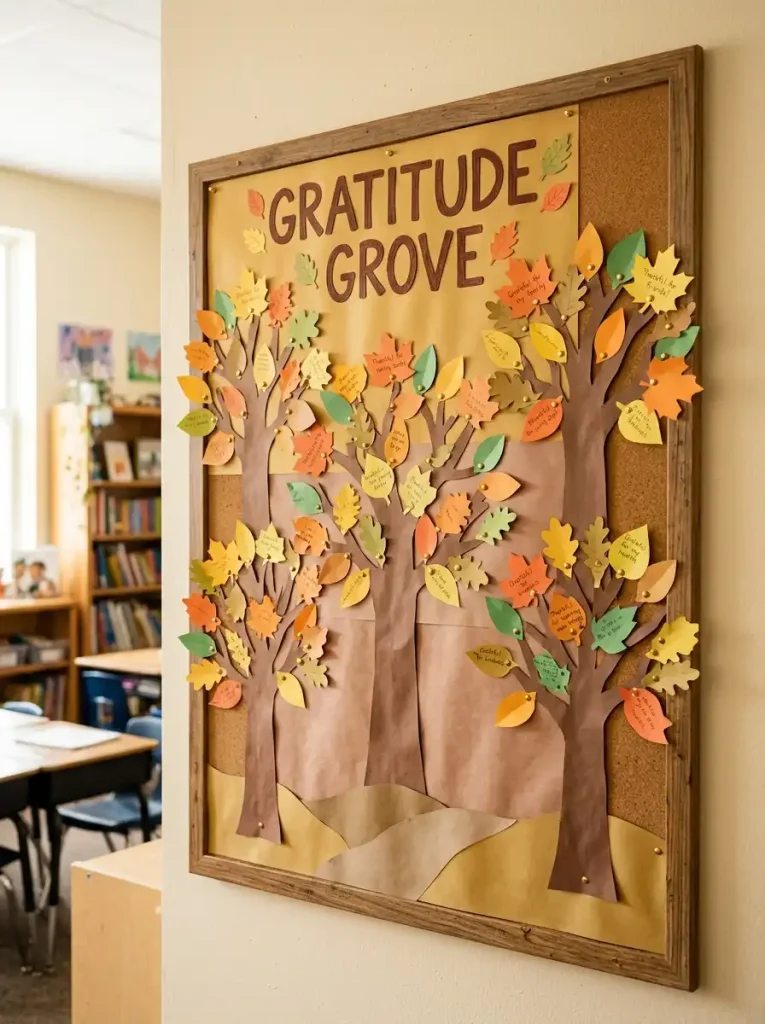
11. Gratitude Grove
This board channels early-fall reflection into a grove of small trees, each bearing a gratitude note from a student. The grove grows fuller as September progresses into October.
Students enjoy the calm, reflective nature of this activity compared to more energetic classroom themes. Writing about gratitude helps build emotional awareness early in the year.
Suitable for all elementary grade levels. Suggested colors include warm gold, soft orange, and gentle brown tones.
Materials needed include brown paper for trunks, colored paper for leaves, and markers. Learning opportunities include social-emotional learning and reflective writing practice.
The interactive element invites students to add a new gratitude leaf every Friday as a weekly ritual. Decoration tips suggest grouping several small trees together to form a cohesive grove.
Variations include extending the theme into a dedicated Thanksgiving gratitude board come November. Teacher tips recommend modeling the practice yourself with a visible teacher leaf.
Setup difficulty rates as easy, with an estimated preparation time of two hours.
12. Classroom Constellation of Goals
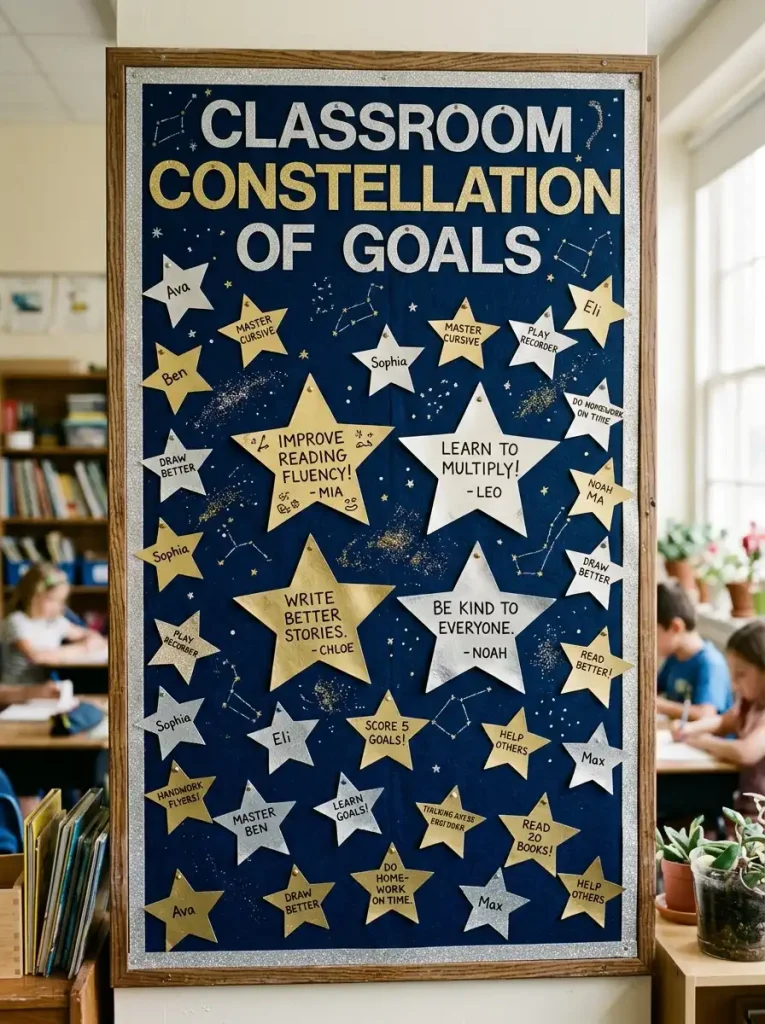
This creative board uses a starry night theme to display individual student goals for the year ahead. Each star represents one personal or academic ambition.
Students enjoy the aspirational, big-picture feeling that comes with a constellation metaphor. Seeing their goal as a “star” makes ambition feel exciting rather than intimidating.
Best suited for upper elementary and middle school grades. Suggested colors include deep navy, silver, and gold for a night-sky effect.
Materials needed include dark blue background paper, star cutouts, and metallic or white markers. Learning opportunities include goal-setting and long-term planning skills.
The interactive element invites students to revisit their star and reflect on progress at the semester’s midpoint. Decoration tips suggest scattering smaller decorative stars throughout the background for depth.
Variations include grouping stars into constellations representing table teams or reading groups. Teacher tips recommend keeping the goal-writing prompt simple and specific to avoid vague responses.
Setup difficulty rates as moderate, with an estimated preparation time of two and a half hours.
13. Book Nook Welcome Mat
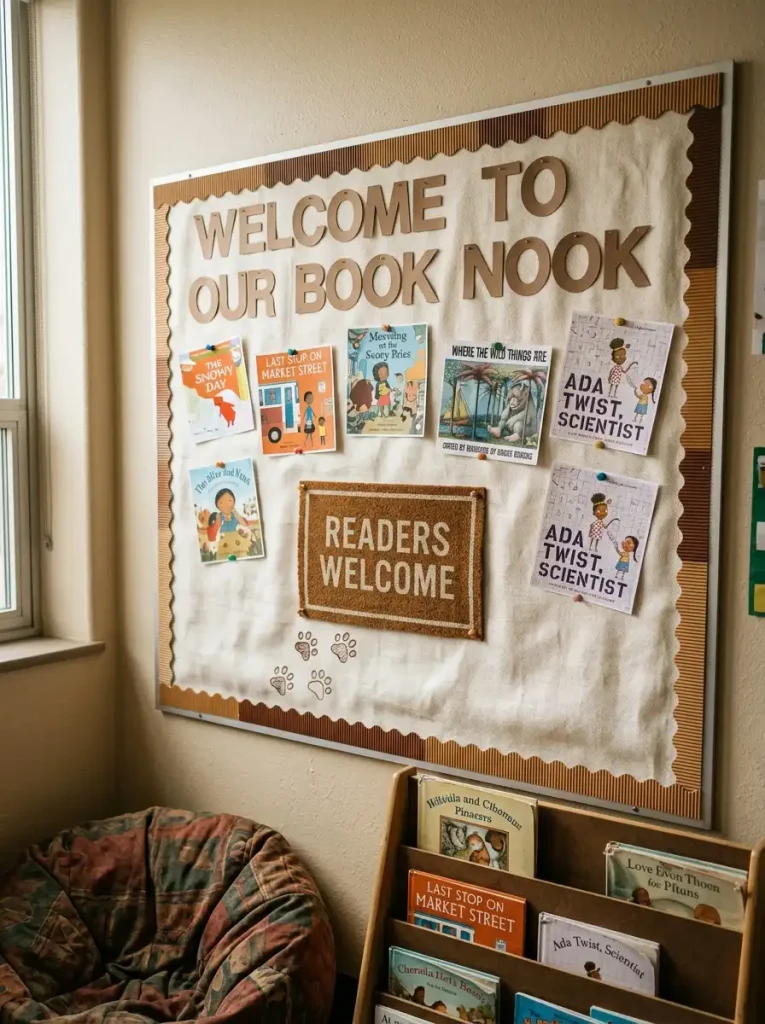
This inviting reading corner display doubles as a warm entryway into your classroom library. Cozy imagery and book recommendations set a relaxed, literary tone.
Students enjoy the calm, welcoming feeling this board brings to an otherwise busy classroom. A dedicated reading space signals that books matter here.
Suitable for all elementary grade levels. Suggested colors include soft cream, warm brown, and muted green.
Materials needed include fabric or paper backdrop, book cover cutouts, and a small “currently reading” section. Learning opportunities include reading motivation and peer book recommendations.
The interactive element invites students to pin a note recommending their current favorite book. Decoration tips suggest adding a small welcome mat graphic at the display’s base for extra charm.
Variations include rotating featured genres monthly to introduce new reading options. Teacher tips recommend refreshing book covers regularly to keep the selection current.
Setup difficulty rates as easy, with an estimated preparation time of two hours.
14. Nature Explorers Wall
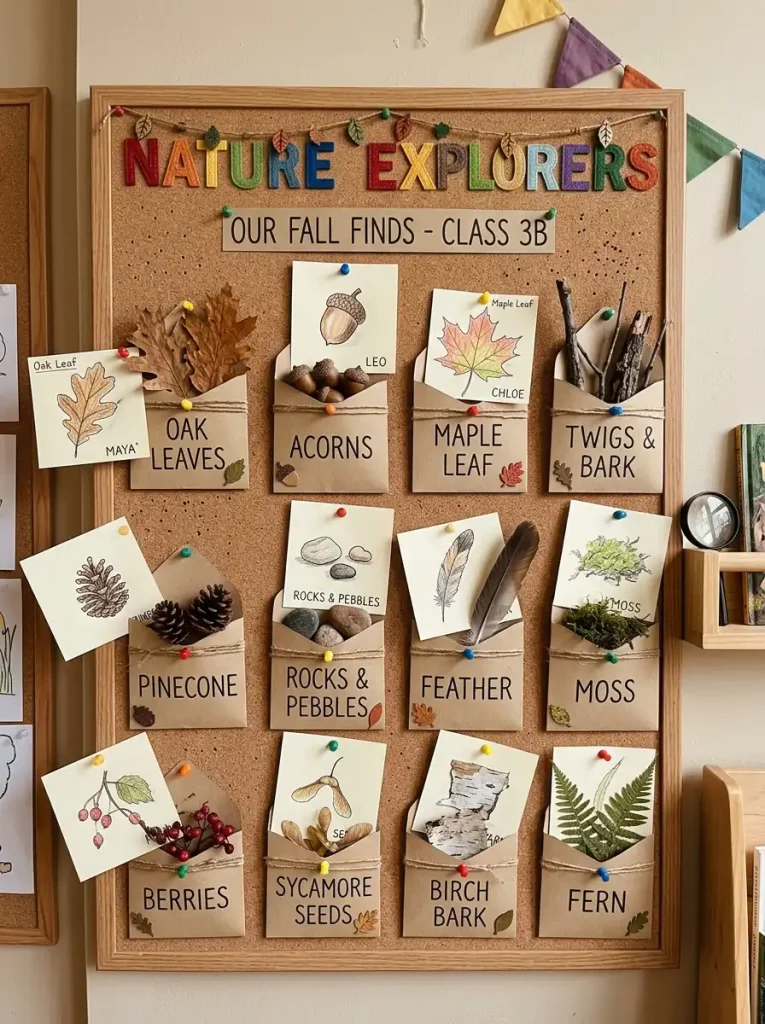
This board turns outdoor observation into a classroom display, featuring items and drawings students collect during nature walks. Leaves, acorns, and sketches fill the space throughout September.
Students enjoy contributing real objects and personal discoveries from their own outdoor exploration. This hands-on connection to nature makes science feel immediate and exciting.
Best suited for elementary classrooms. Suggested colors include earthy green, brown, and soft yellow.
Materials needed include a large background paper, small envelopes or pockets for collected items, and labels. Learning opportunities include observation skills and basic ecological awareness.
The interactive element invites students to add a new nature find after each outdoor walk or recess period. Decoration tips suggest labeling each item with its name and the date it was found.
Variations include focusing on different natural elements each month, from leaves in fall to buds in spring. Teacher tips recommend laminating pockets so real, slightly damp items don’t damage the board.
Setup difficulty rates as moderate, with an estimated preparation time of two and a half hours.
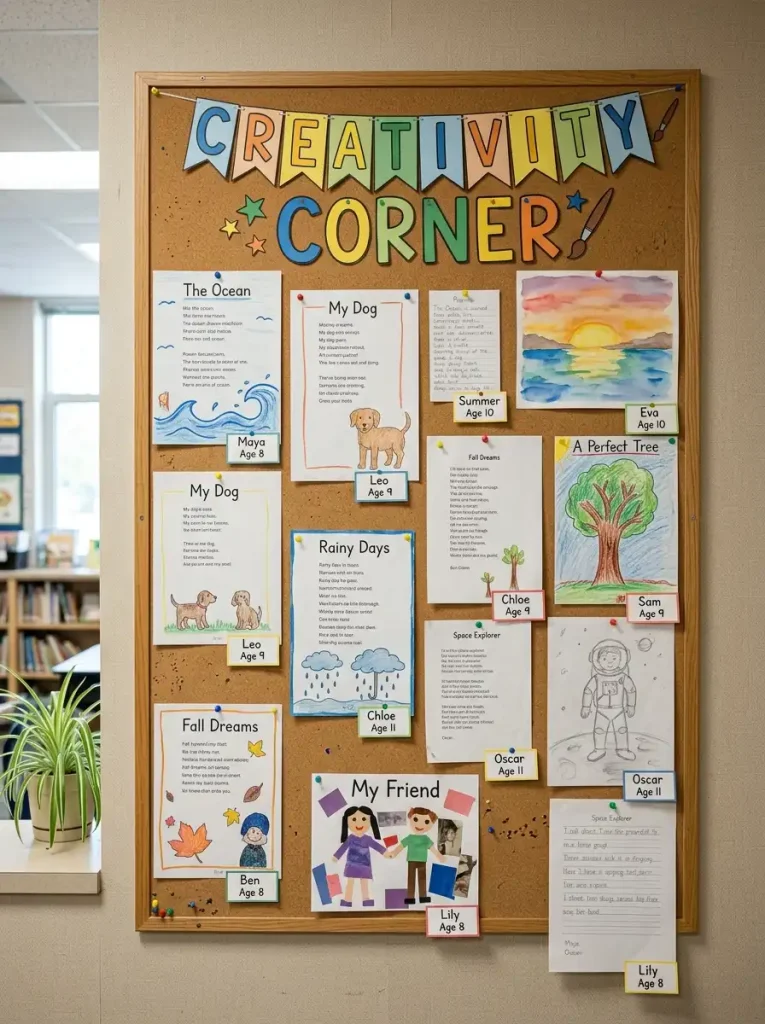
15. Creativity Corner Canvas
This open-ended board rotates weekly, giving students a blank canvas to fill with original artwork, poems, or creative projects. Unlike the other ideas, this display changes completely and often.
Students enjoy the freedom and ownership this format provides compared to more structured displays. Watching their own creative work featured prominently builds genuine pride and confidence.
Suitable for all grade levels from kindergarten through middle school. Suggested colors vary depending on the featured student work each week.
Materials needed include a neutral background paper, a bold rotating title banner, and simple mounting materials like tape or pins. Learning opportunities include creative expression and public presentation skills.
The interactive element involves a full class rotation, ensuring every student gets a featured turn throughout the semester. Decoration tips suggest keeping the background simple so featured artwork remains the clear focal point.
Variations include theming each rotation around a specific subject, like poetry one week and illustration the next. Teacher tips recommend creating a visible rotation schedule so students know when their turn is coming.
Setup difficulty rates as easy, with an estimated preparation time of one hour per rotation.
Why September Bulletin Boards Matter
A classroom’s walls speak before a teacher says a single word. Within the first few days of September, students form quiet impressions about what kind of year lies ahead.
Student motivation rises when a display celebrates effort and welcomes new ideas from day one. A well-designed board tells students their contributions matter immediately, not eventually.
Classroom atmosphere shifts dramatically with color and creativity. A warm, inviting bulletin board softens the nervousness that often accompanies a new school year.
Seasonal excitement naturally builds as September brings the first hints of fall. Apples, changing leaves, and cooler mornings give teachers plenty of fresh material to work with.
Interactive learning happens when a board invites participation instead of simply decorating a wall. Students remember displays they helped build far longer than ones they only observed.
Teacher creativity gets a chance to shine every September. A fresh classroom decoration ideas season offers the perfect excuse to try something new after a summer of planning.
How to Create an Eye-Catching September Bulletin Board
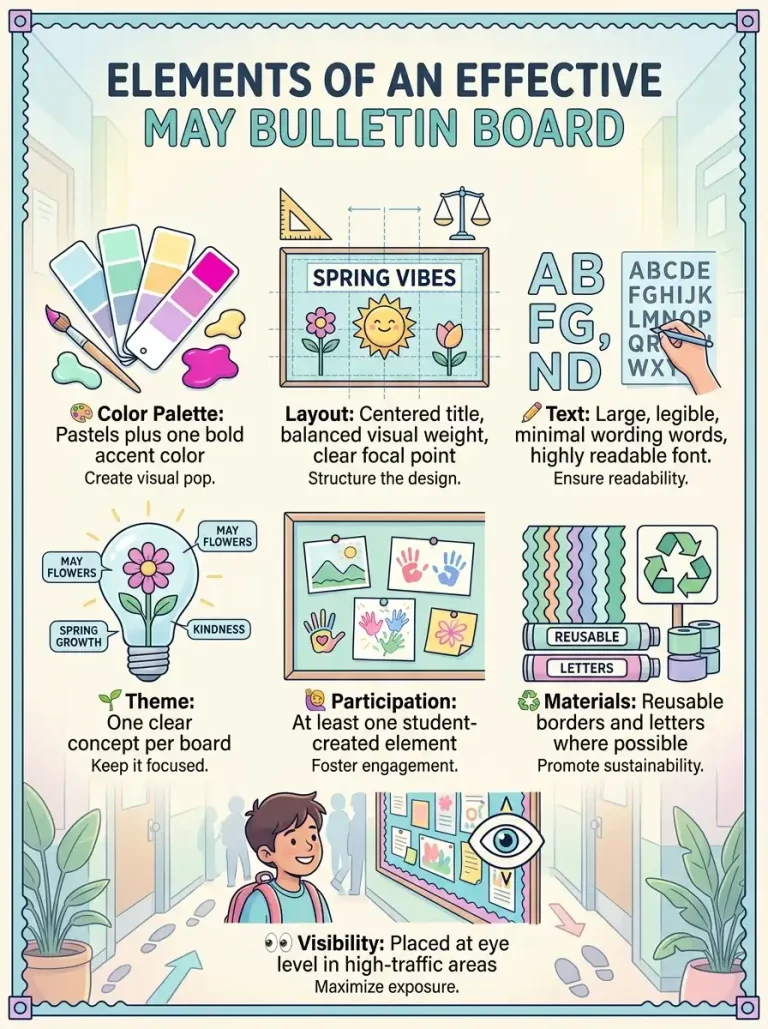
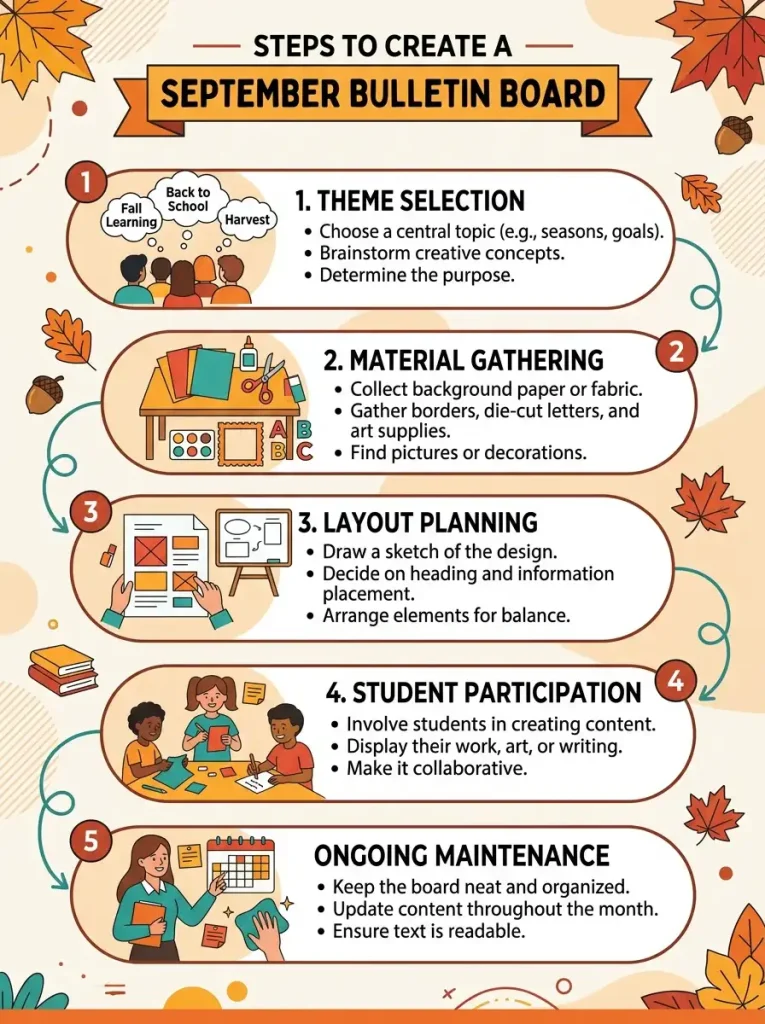
Before jumping into specific ideas, it helps to understand a few core design principles. These fundamentals apply across every board on this list.
Color Palettes
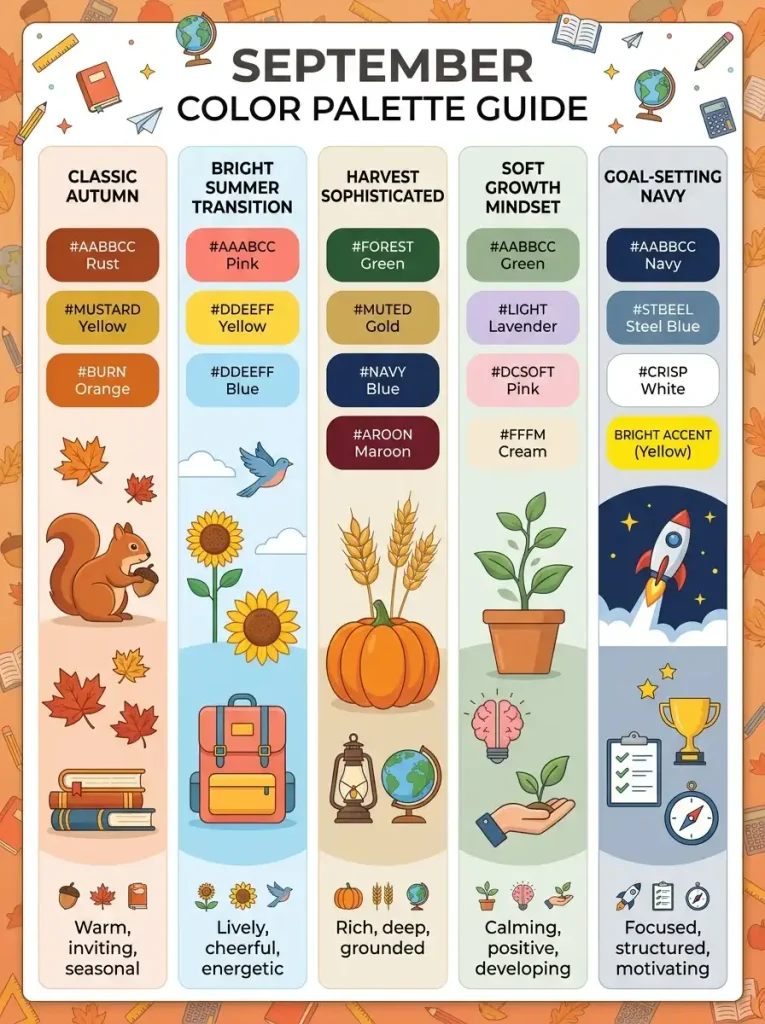
Warm oranges, soft yellows, and deep greens capture September’s transitional feel between summer and fall. Consider pairing one bold color with two softer, complementary shades.
Layering
Adding depth through layered paper shapes, like leaves stacked slightly overlapping, creates visual interest without extra cost. Layering also helps hide staples or pins for a cleaner finish.
Borders
A well-chosen border frames your entire board and ties loose elements together. Scalloped, zigzag, or leaf-shaped borders all suit a September theme nicely.
Lettering
Bold, simple lettering reads clearly from across a room or school hallway display. Save decorative fonts for short titles only, never for supporting text.
Balance
Distribute visual weight evenly so no single corner feels overloaded. Balance keeps a busy board from feeling chaotic.
Student Participation
Boards that include names, artwork, or written contributions from students feel far more personal. Involving students also lightens your own setup workload.
Durability
Choose sturdy cardstock for anything students will touch repeatedly, since flimsy paper tears quickly under regular use. Lamination extends the life of key pieces significantly.
Reusable Materials
Store borders, letters, and background paper in labeled bins after each season ends. Reusable materials save both money and preparation time year after year.
Image Prompt: “A teacher designing a September classroom bulletin board with colorful paper apples, leaves, and borders spread across a table, bright classroom setting, realistic photography, highly detailed.”
Bulletin Board Border Ideas
The right border pulls an entire display together, framing your theme cleanly and professionally.
Scalloped borders work beautifully for garden, flower, or reading-themed boards. Zigzag borders add energy to STEM, goal-setting, or achievement displays.
Leaf-shaped borders reinforce autumn themes naturally, especially for harvest or falling-leaves boards. Rope or twine borders suit nature, camping, or outdoor exploration themes perfectly.
Polka-dot borders brighten up preschool and kindergarten spaces with a playful, cheerful feel. Chalkboard-style borders give a classic, timeless look to any classroom door ideas display.
Striped borders in alternating colors add clean structure to busier, content-heavy boards. Handmade paper-chain borders, created by students themselves, double as both decoration and a participation activity.
Best Color Combinations for September
Color choice shapes classroom mood more than most teachers realize. September sits at a transitional point, making color selection especially important.
Warm orange and deep green creates a classic early-autumn feeling that eases the transition from summer. Soft yellow and sky blue keeps a bright, energetic tone still connected to lingering summer warmth.
Burgundy and gold brings a slightly more sophisticated, harvest-inspired palette suited to upper elementary classrooms. Pastel pink and sage green softens a growth mindset or friendship-themed board nicely.
Navy and silver works particularly well for goal-setting or achievement displays needing a more serious, aspirational tone. Balancing warm and cool tones within the same board keeps a display from feeling either too intense or too flat.
Interactive Bulletin Board Ideas
Interactive bulletin board ideas turn passive wall space into genuine learning tools. Several strategies work across nearly any theme on this list.
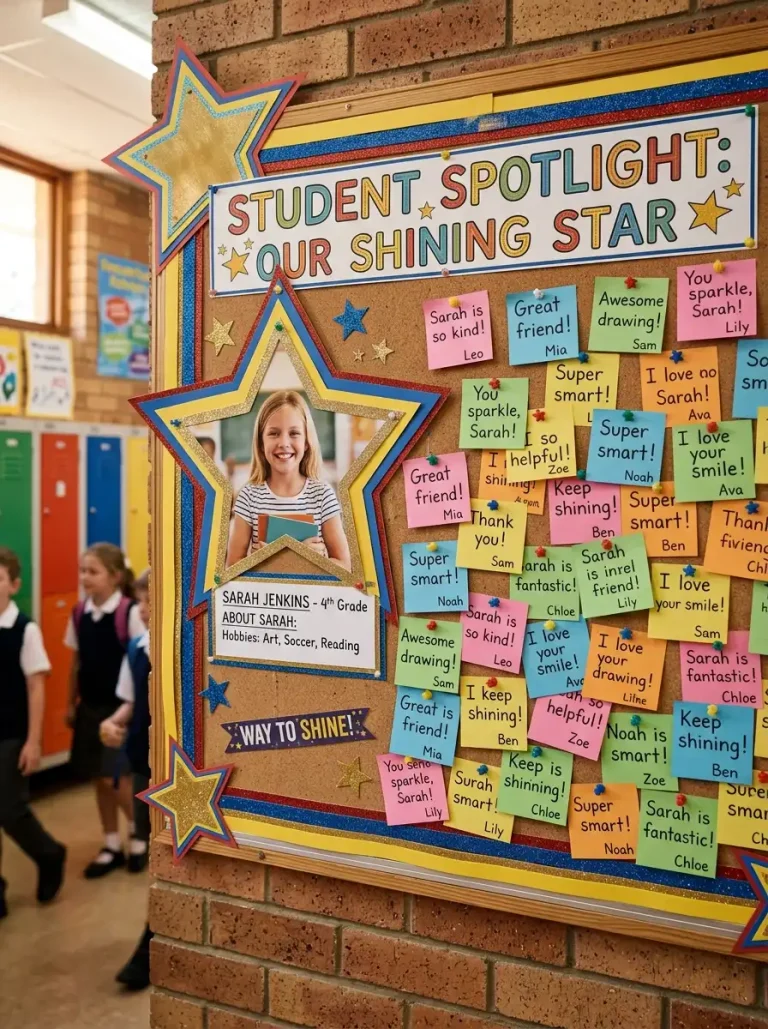
Sticky note stations let students respond to a prompt at any time without teacher involvement. Movable markers, like a caterpillar tracking reading progress, invite regular physical interaction.
Weekly rotation systems ensure every student gets a turn contributing or being featured. Prediction cards placed before revealing results build anticipation and critical thinking simultaneously.
QR codes linking to digital content, like a class playlist or recorded read-aloud, blend physical and digital engagement. Peer nomination systems, such as kindness recognition, empower students to shape the display’s content themselves.
Image Prompt: “Students actively adding sticky notes and paper leaves to an interactive September classroom bulletin board, cheerful engaged expressions, bright classroom setting, realistic detailed photography.”
Budget-Friendly DIY September Bulletin Boards
Creative classroom decorations rarely require a large budget. Many memorable displays use materials already available in a typical supply closet.
Recycled paper from old worksheets or newspaper works well for background texture or leaf shapes. Brown paper grocery bags make excellent tree trunks, baskets, or rustic borders at no additional cost.
Fabric scraps add cozy texture to reading corner displays without new purchases. Bottle caps and cardboard tubes transform easily into small three-dimensional accents like acorns or stems.
Student artwork remains one of the most powerful, completely free decoration sources available to any teacher. Free printable templates found through educational resource platforms also save significant preparation time without added expense.
Image Prompt: “An affordable DIY September classroom bulletin board made from recycled paper, handmade apples and leaves, colorful hand-cut lettering, budget-friendly classroom materials, warm lighting, realistic detailed photography.”
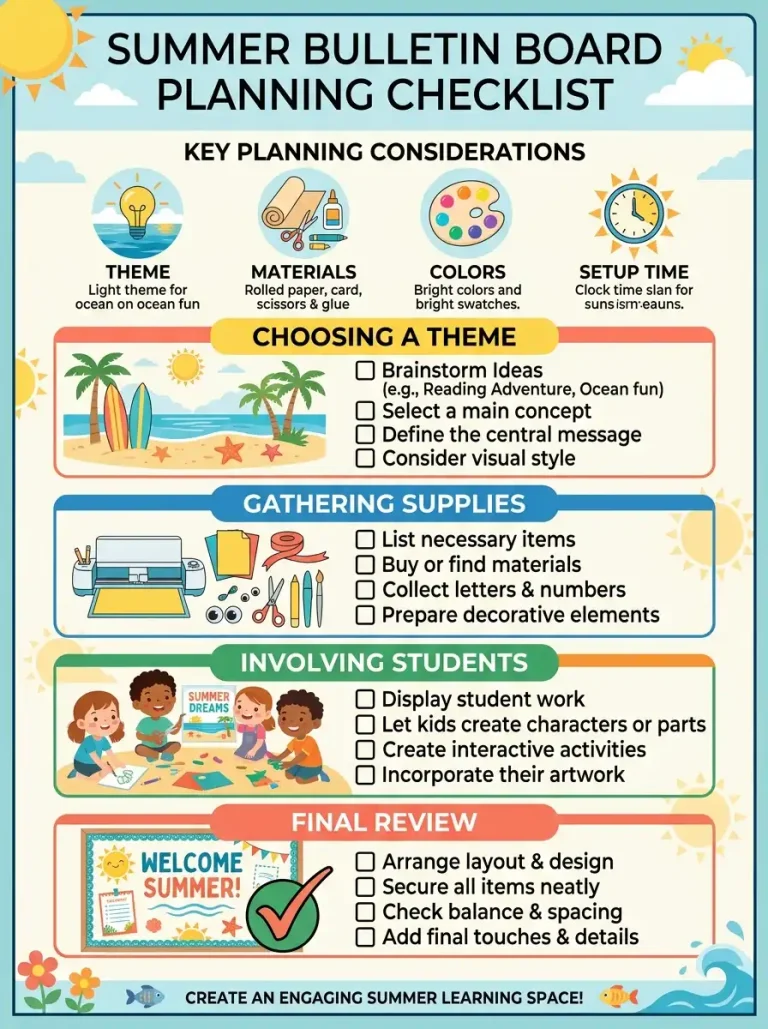
Bulletin Board Supplies Checklist
Gathering supplies ahead of time saves valuable setup minutes once the school year begins.
- Colored construction paper in warm autumn tones
- Cardstock for durable, reusable pieces
- Scissors and paper cutters
- Glue sticks and tape
- Push pins or staples
- Bold letter sets or stencils
- Border trim rolls or handmade paper strips
- Markers in a variety of colors
- Laminating sheets or a laminator
- A stock of blank templates for ongoing interactive elements
- Storage bins labeled by season or theme
Common Bulletin Board Mistakes to Avoid
Even experienced teachers fall into a few predictable traps when designing classroom displays.
Overcrowding the board confuses viewers and dilutes the main message. Solution: choose one clear theme and leave breathing room around key elements.
Using too much text turns an eye-catching display into a chore to read. Solution: keep wording short, bold, and easy to scan quickly.
Choosing clashing colors makes a board feel chaotic rather than cheerful. Solution: limit your palette to three or four complementary colors.
Leaving outdated content up too long signals neglect to students and visitors alike. Solution: set a recurring calendar reminder to refresh displays regularly.
Skipping student involvement wastes a major engagement opportunity. Solution: build at least one contribution point into every display.
Placing boards in low-visibility spots wastes your creative effort entirely. Solution: prioritize eye-level placement in high-traffic classroom or hallway areas.
Frequently Asked Questions
What is the easiest September bulletin board idea for a new teacher? Apple of My Eye works especially well for beginners since it requires only basic cutting skills and minimal setup time. The concept explains itself quickly to students, and materials stay simple and affordable. Most teachers can complete this display within two hours, making it an approachable starting point for a first classroom.
How often should I change my September classroom bulletin board? Most displays benefit from a refresh every two to three weeks, keeping content feeling current and relevant. However, boards built around ongoing interaction, like a gratitude grove or kindness quilt, can stay up the entire month since students continuously add new content. Watch for signs of neglect, like sagging paper, and address them quickly.
What colors work best for a back to school bulletin board? Warm oranges paired with soft yellows and gentle greens capture September’s transitional feel between summer and fall nicely. These combinations feel energetic without becoming overwhelming, striking a comfortable balance for a new school year. Adding one neutral tone, like cream or white, helps prevent the palette from feeling too busy.
How can I make a bulletin board more interactive without extra teacher effort? Build in a self-service contribution point, such as a sticky note station or a stack of pre-cut leaf templates nearby. Students can then add content independently throughout the week without requiring direct teacher involvement each time. This approach keeps a board evolving naturally with minimal extra workload on your part.
What is the best bulletin board idea for a preschool classroom? Sunny Side of September works wonderfully for preschool since it uses large, simple shapes and bright, cheerful colors. Young students respond strongly to seeing their own photo featured prominently on a welcoming display. The format also requires minimal text, making it accessible even for students who aren’t reading independently yet.
How do I keep a bulletin board budget-friendly? Prioritize recycled materials like brown paper bags, newspaper, and leftover construction paper scraps saved from previous projects. Reusable borders, letters, and background paper also stretch a classroom budget significantly across multiple school years. Many effective displays on this list cost only a few dollars in total materials.
Can these September bulletin board ideas work in a school hallway instead of a classroom? Absolutely. Ideas like Community Quilt of Kindness and Harvest of Helping Hands translate beautifully to a shared school hallway display where multiple classes contribute together. Hallway displays often benefit from slightly bolder colors and larger lettering, since passersby view them more quickly than students would inside a classroom.
What materials last the longest for reusable bulletin board decorations? Laminated cardstock and sturdy felt-based borders tend to survive multiple school years with proper storage between uses. Storing pieces flat in labeled bins by season prevents creasing and keeps materials organized and ready for quick setup. This small investment in organization saves significant preparation time each September.
How do I involve middle school students in a September bulletin board? Middle schoolers respond well to ownership and choice, so consider letting them vote on themes or contribute original written reflections. Ideas like Classroom Constellation of Goals work particularly well, since goal-setting feels relevant and meaningful at this age. Avoid overly childish imagery, leaning instead toward sophisticated color palettes and thoughtful content.
What should I avoid when designing a classroom door idea for September? Avoid cramming too much information onto a small door space, since cluttered designs become hard to read at a glance. Keep text minimal, choose one clear theme, and prioritize a bold, simple title that’s visible from down the hallway. A clean, focused design almost always outperforms a busy, overcrowded one.
Conclusion
September gives every teacher a fresh canvas and a real opportunity to set the tone for the entire school year ahead. These fifteen ideas, from a cheerful apple orchard to a reflective gratitude grove, offer flexible options for every grade level and budget.
Choose the concepts that fit your classroom personality best, invite your students into the process, and watch your walls come alive with warmth and purpose. A little creativity this September can carry your classroom’s energy all the way through June.