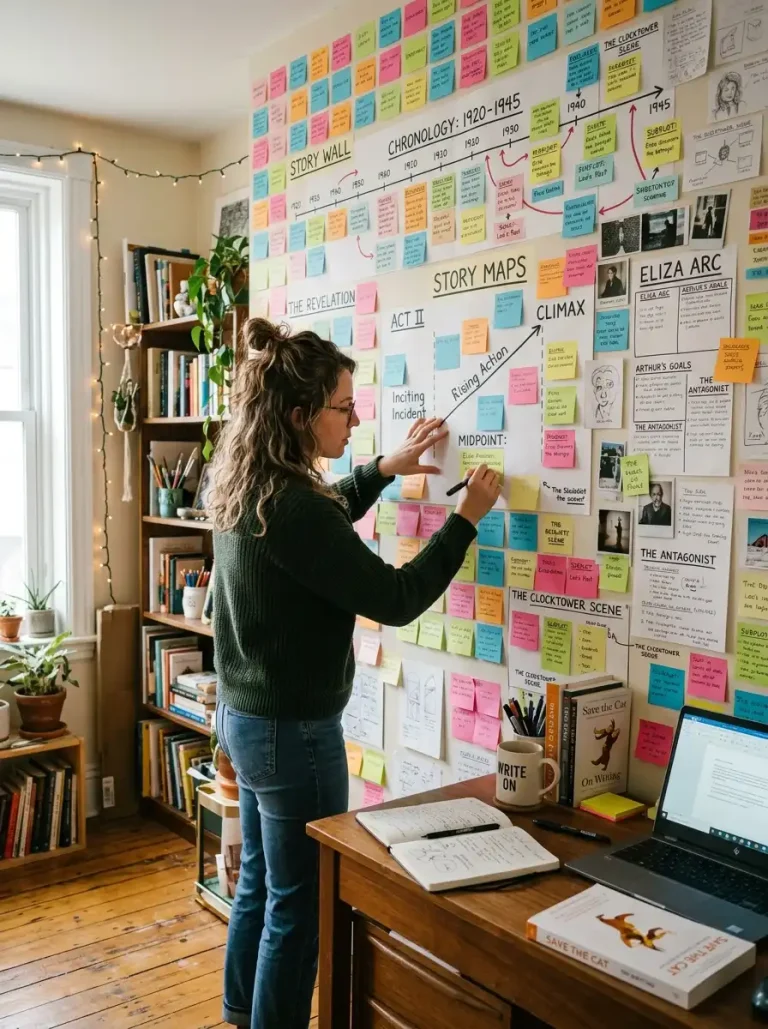
12 Story Prompts Ideas Creative Writing Needs Right Now
Every writer knows that particular kind of dread. You sit down, ready to write, and your mind offers up exactly nothing. The cursor blinks. The page stays empty. You start doubting whether you had any good ideas in the first place.
Here’s the truth: you probably did. They’re just buried under pressure, distraction, or plain exhaustion. That’s precisely where a solid list of story prompts ideas creative writing sessions actually need comes in handy. A good prompt doesn’t hand you a finished story. Instead, it hands you a doorway, a small nudge that gets your imagination moving again.
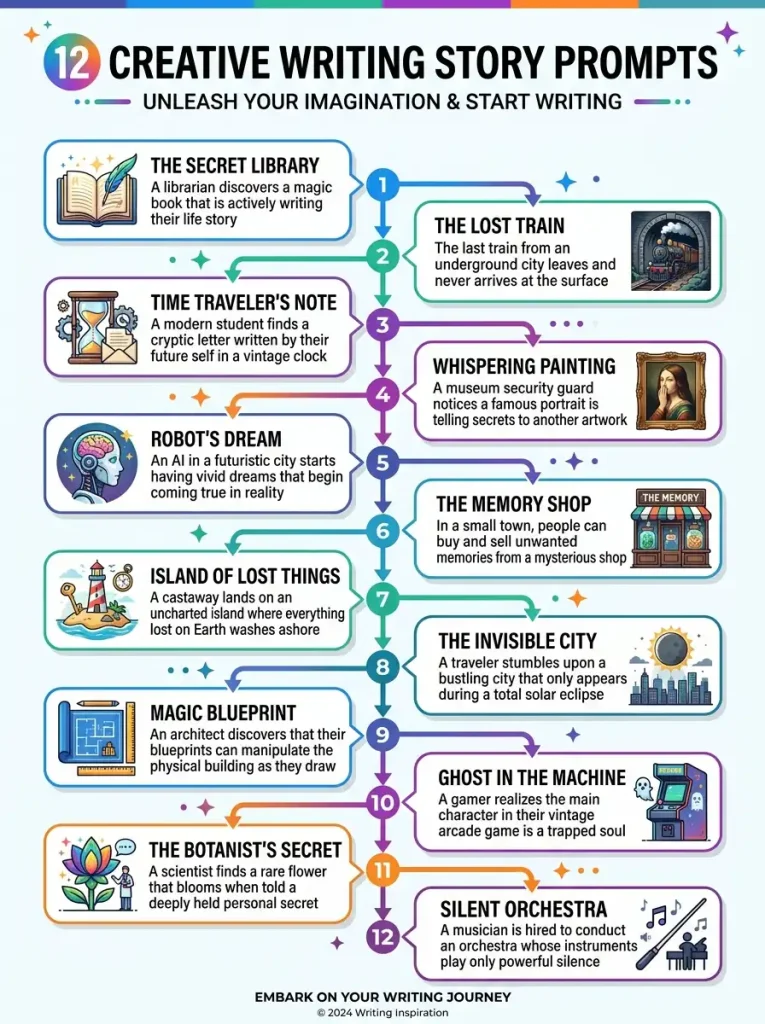
This guide walks you through twelve original prompts built for real use, whether you’re a student working on an assignment, a novelist between projects, or a hobbyist writer chasing that satisfying feeling of finishing a scene. Each prompt comes with an explanation of why it works, genre variations you can borrow, and a challenge extension for when you’re ready to push further.
By the end, you’ll also find practical strategies for getting more out of any prompt, plus the common mistakes that quietly sabotage otherwise promising stories. Let’s get your pen moving again.
What Makes a Prompt Actually Useful
Not every prompt sparks real writing. The strongest ones share a few qualities: a hint of conflict, a character with something to lose, and just enough ambiguity to invite your own imagination in. Keep those elements in mind as you read through the twelve prompts below.
12 Story Prompt Ideas to Get You Writing
1. The Inherited Debt
Story Prompt: Your protagonist inherits a small, run-down shop from a relative they barely knew. Along with the deed comes a locked ledger, filled with strange entries that aren’t about money at all. Each page lists a name, a date, and a favor owed, some decades old, some suspiciously recent. When a stranger walks in demanding their favor be repaid, your protagonist realizes the shop’s real inheritance isn’t the building. It’s the obligation attached to it, one they never agreed to and can’t easily refuse.
Why It Works: This prompt combines mystery with forced responsibility, giving your character an external goal and an internal question about identity and legacy.
Genre Variations:
- Fantasy: The favors involve magical debts owed to otherworldly creatures.
- Mystery: The ledger holds coded clues to an unsolved disappearance.
- Romance: One entry involves an old promise between former lovers.
- Science Fiction: The ledger tracks favors owed across generations of colonists.
- Historical Fiction: Set the shop in a wartime era, where favors involve smuggled goods.
- Horror: The debts aren’t owed to people at all.
Challenge Extension: Write the story so the final ledger entry belongs to your protagonist themselves.
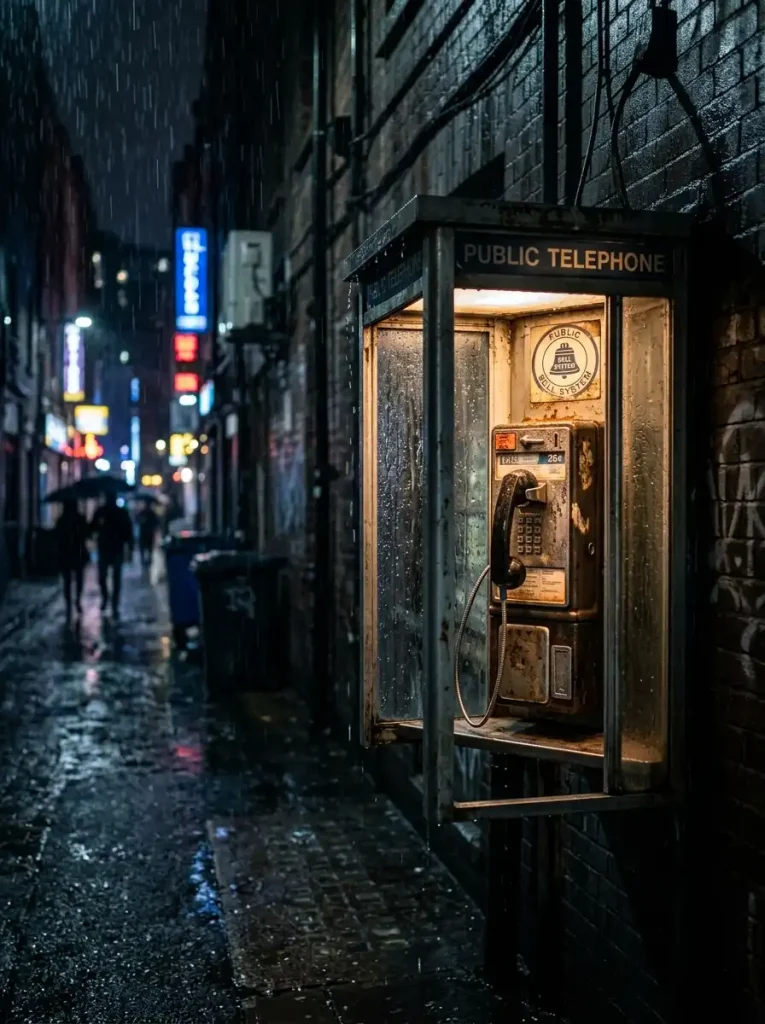
2. The Last Working Payphone
Story Prompt: In a city that’s phased out payphones entirely, one still works, tucked into a forgotten alley. Your protagonist discovers that calls made from this particular phone connect to people from their past, but only the version of them from exactly one year ago. Every conversation changes something small in the present. As the changes accumulate, your protagonist has to decide how far they’re willing to alter their own history before the consequences become impossible to undo.
Why It Works: Time-bending premises naturally raise stakes, since every decision carries visible, immediate consequences.
Genre Variations:
- Fantasy: The payphone is protected by an ancient guardian spirit.
- Mystery: Each call reveals a clue toward solving a crime from a year prior.
- Romance: The calls reconnect the protagonist with someone they broke up with.
- Science Fiction: The payphone is actually a malfunctioning experimental device.
- Historical Fiction: Set the discovery in the early days of telephone technology.
- Horror: The voice on the other end isn’t who they claim to be.
Challenge Extension: Limit your protagonist to exactly three calls, forcing difficult choices about which moments matter most.
3. The Understudy’s Secret
Story Prompt: A young understudy finally gets their chance to perform after the lead actor mysteriously falls ill right before opening night. The performance goes better than anyone expected, almost unnervingly well. Afterward, strange details start emerging, memories that aren’t quite theirs, mannerisms borrowed from someone they’ve never met. Your protagonist starts to suspect the role itself carries something beyond talent, something that’s been passed down through every actor who’s ever played it.
Why It Works: This prompt blends ambition with identity loss, a compelling combination that naturally builds tension scene by scene.
Genre Variations:
- Fantasy: The role is literally cursed, tied to an ancient theatrical bargain.
- Mystery: The lead actor’s illness turns out to be deliberate sabotage.
- Romance: A fellow cast member recognizes the borrowed mannerisms from someone they once loved.
- Science Fiction: The theater uses experimental neural technology to enhance performances.
- Historical Fiction: Set the story in a traveling theater troupe from the 1920s.
- Horror: Every actor who’s played the role has disappeared shortly after.
Challenge Extension: Reveal the twist through fragmented flashbacks rather than direct exposition.
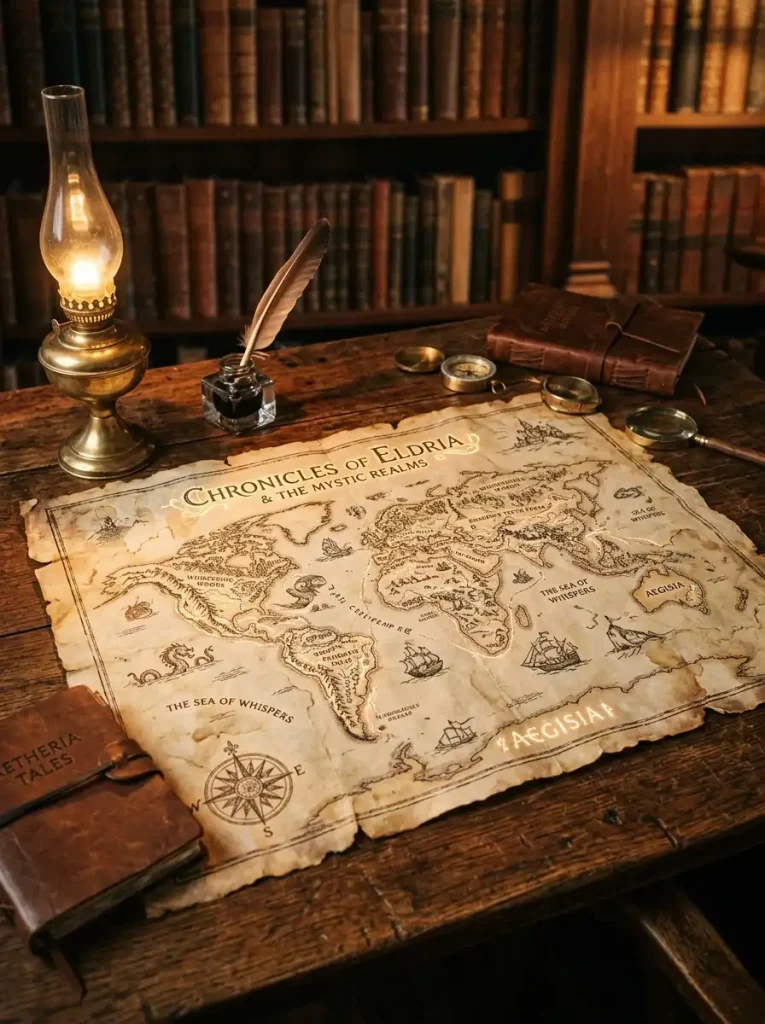
4. The Map That Redraws Itself
Story Prompt: A cartographer notices that one particular map in her collection updates itself overnight, showing roads, buildings, and landmarks that don’t yet exist. At first, she assumes it’s a printing error. However, when a new road appears exactly where construction begins the following week, she realizes the map isn’t showing the present. It’s showing the future, and lately, it’s been showing something troubling near her own neighborhood.
Why It Works: Predictive elements create natural suspense, since readers immediately want to know what the map will reveal next.
Genre Variations:
- Fantasy: The map is enchanted by a long-forgotten cartographer’s spell.
- Mystery: The map predicts a crime scene days before it happens.
- Romance: The map shows a path leading directly to a future love interest.
- Science Fiction: The map is powered by quantum prediction technology.
- Historical Fiction: Set the story during an era of active territorial expansion.
- Horror: The map shows locations that vanish entirely once visited.
Challenge Extension: Give your protagonist only 48 hours to prevent what the map predicts.
5. The Neighbor’s Garden
Story Prompt: Every plant in the elderly widow’s garden next door blooms out of season, vivid and impossible, regardless of weather or climate. Your protagonist, a curious teenager, starts spending afternoons there, drawn in by unexplainable beauty. Slowly, the widow reveals that each flower represents a memory, planted the day someone she loved passed away. As the garden grows fuller, your protagonist begins to wonder what happens when there’s no more room left to plant.
Why It Works: This prompt grounds an unusual premise in genuine emotional stakes, blending grief with quiet magic.
Genre Variations:
- Fantasy: Each flower literally contains a fragment of the departed’s memory.
- Mystery: One flower represents someone whose death was never fully explained.
- Romance: The teenager falls for the widow’s visiting grandson.
- Science Fiction: The garden is the result of experimental genetic engineering.
- Historical Fiction: Set the story following a devastating historical event, like a war or plague.
- Horror: The garden demands something in return for each new bloom.
Challenge Extension: Write the story entirely from the widow’s perspective instead.
6. The Voicemail Time Capsule
Story Prompt: A group of childhood friends recorded a voicemail together at eighteen, meant to be heard exactly ten years later. Now, gathered again after years apart, they finally listen. However, one friend, now estranged from the group, insisted on adding a private message only the recipient could hear. As the group listens together, tension builds around who that message was meant for, and what it might reveal about why they drifted apart.
Why It Works: Nostalgia paired with unresolved conflict creates immediate emotional investment and natural dramatic tension.
Genre Variations:
- Fantasy: The voicemail somehow predicts events that haven’t happened yet.
- Mystery: The private message hints at the real reason the group fell apart.
- Romance: The message reveals a confession never spoken aloud.
- Science Fiction: The recording device malfunctions, revealing an alternate timeline.
- Historical Fiction: Replace the voicemail with a sealed letter from decades earlier.
- Horror: The voice on the recording doesn’t match how anyone remembers them.
Challenge Extension: Reveal each friend’s individual memory of the falling out, showing how differently they each remember the same events.

7. The Lighthouse Log
Story Prompt: A new lighthouse keeper discovers a logbook left behind by her predecessor, filled with increasingly strange entries about lights appearing offshore that don’t match any known vessel. The final entry, dated the night before the previous keeper vanished, simply reads, “It’s closer tonight.” On her first week alone, she starts seeing the same lights described in the log, and they seem to be getting closer to her too.
Why It Works: Isolated settings amplify tension naturally, while the missing predecessor adds unresolved mystery from the very first page.
Genre Variations:
- Fantasy: The lights are the spirits of sailors lost at sea, seeking passage home.
- Mystery: The predecessor’s disappearance connects to a smuggling operation.
- Romance: A local fisherman becomes her only source of comfort and connection.
- Science Fiction: The lights are signals from an unidentified vessel testing new technology.
- Historical Fiction: Set the story during a period of heavy maritime trade and piracy.
- Horror: The lights belong to something that isn’t remotely human.
Challenge Extension: Write the story as a series of logbook entries rather than traditional narration.
How Story Prompts Improve Creative Writing
Story prompts do more than fill a blank page. They actively strengthen specific writing muscles, ones that often get neglected when you’re only working on your main project.
Creativity grows through constraint, oddly enough. A specific prompt forces your brain to solve a problem instead of wandering aimlessly, which often produces more original ideas than a completely open blank page.
Prompts also help with overcoming writer’s block. Sometimes the hardest part isn’t lacking ideas; it’s simply starting. A prompt removes that initial hurdle by giving you a concrete entry point.
Character development improves through repetition. Every new prompt forces you to build someone fresh, sharpening your instincts for voice, motivation, and personality far faster than working on a single character for months at a time.
Similarly, dialogue and plotting both benefit from frequent practice. Short, prompt-based stories let you experiment with structure and conversation without the pressure of a full manuscript hanging over every choice.
Finally, prompts build consistency and confidence. Writing regularly, even in short bursts, trains you to trust your instincts and finish what you start, both essential habits for any serious writing practice.
How to Get the Most from Story Prompts
A good prompt only takes you halfway. These strategies help you turn any idea into a genuinely finished piece.
Start by freewriting for ten minutes immediately after reading a prompt. Don’t edit, don’t overthink, just let whatever comes out, come out. You can shape it later.
Next, try changing the point of view. If a prompt feels flat, retell it from a secondary character’s perspective instead. This small shift often reveals angles you hadn’t considered.
Set a timer for short writing sprints, fifteen or twenty minutes works well. Time pressure quiets your inner critic and keeps momentum moving forward.
Don’t be afraid to combine two prompts into a single story. Blending ideas often produces something far more original than following either prompt exactly as written.
Finally, revisit unfinished attempts. A prompt that didn’t work last month might click perfectly today, once you’ve grown as a writer or simply see it from a different angle.
Recommended YouTube Video: Search YouTube for: Best Creative Writing Prompts for Beginners
Common Mistakes Writers Make
Even strong prompts can lead to weak stories if a few habits slip in unnoticed. Here’s what to watch for, along with practical fixes.
- Copying prompts exactly. Sticking too rigidly to a prompt’s wording can limit your imagination. Instead, treat it as a springboard, not a rulebook.
- Weak conflict. If nothing’s truly at stake, readers lose interest fast. Ask yourself what your character stands to lose, then raise it.
- Flat characters. Give every major character a contradiction, something they want that conflicts with something they fear. That tension makes them feel real.
- Predictable endings. Before settling on your ending, brainstorm two alternatives. Often, the least obvious option turns out to be the strongest.
- Abandoning drafts too early. Momentum matters. Push through a rough middle section instead of starting over, since most stories improve significantly during revision, not during the first draft.
Frequently Asked Questions
What makes a good creative writing prompt? A strong prompt includes a clear character, a specific situation, and enough ambiguity to invite your own imagination. The best prompts suggest conflict without spelling out every detail.
How long should a story based on these prompts be? Most work well as short stories between 1,000 and 5,000 words, though you can easily expand any of them into a novella or full novel with additional subplots.
Can beginners use these story prompts effectively? Absolutely. Each prompt includes enough structure to guide new writers, while still leaving plenty of room for personal creativity and genre experimentation.
How do I choose which prompt to start with? Pick whichever idea sparked the strongest immediate reaction while reading. That gut response usually signals genuine interest, which makes the writing process smoother.
What if I get stuck partway through a prompt-based story? Try changing the point of view, adding a new complication, or freewriting for ten minutes about what’s not working. Often, the issue is weak stakes rather than the prompt itself.
Should I follow the genre variations exactly as written? Not necessarily. They’re meant as starting points. Feel free to blend genres or ignore the suggestions entirely if your own instincts pull you elsewhere.
How often should I practice with writing prompts? Even once or twice a week builds noticeable improvement over time. Consistency matters more than volume when it comes to strengthening your creative writing skills.
Can these prompts work for classroom or group writing exercises? Yes, these prompts adapt well for writing groups or classroom settings, since each one offers multiple genre directions that different students or participants can explore individually.
Is it okay to significantly change a prompt from its original idea? Definitely. Prompts exist to spark imagination, not restrict it. Reshape, combine, or completely reinvent any prompt until it feels authentically yours.
What’s the best way to overcome a blank page, even with a prompt in hand? Set a timer for ten minutes and write without stopping, even if the first few sentences feel messy. Momentum matters far more than a perfect opening line.
Start Writing Today
Twelve prompts, and honestly, dozens more stories hiding inside each one once you start pulling at the threads. That’s the real value of a good prompt: it never gives you just one path. It opens a door, and where you go from there depends entirely on you.
Don’t wait for the perfect idea to strike out of nowhere. Pick whichever prompt pulled at you the most while reading, set a timer, and start writing right now. Momentum beats perfect planning nearly every single time.
Your next story is already sitting in the prompt you keep rereading. Stop rereading it, and start writing it instead.