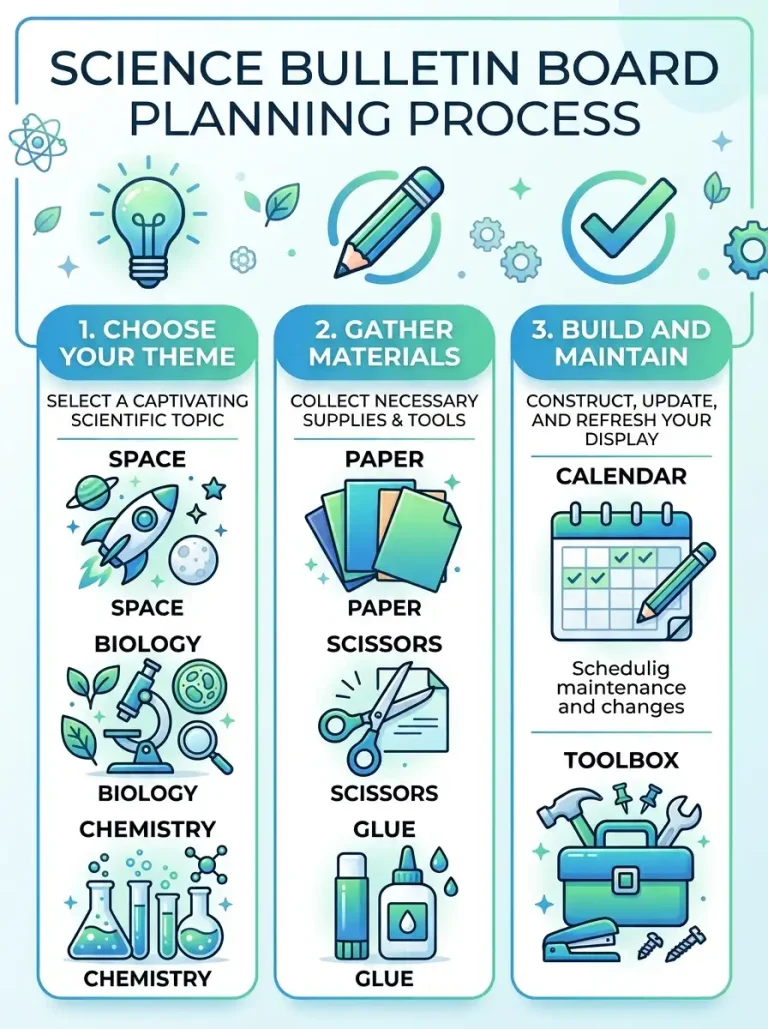
18 Science Bulletin Board Ideas for Preschool
Science bulletin boards for preschool should be bright, hands-on, and full of wonder. They should spark curiosity, encourage observation, and make science concepts accessible to young learners through simple language and colorful visuals. Below are 18 science bulletin board ideas designed specifically for preschool classrooms and libraries.
1. Our Five Senses
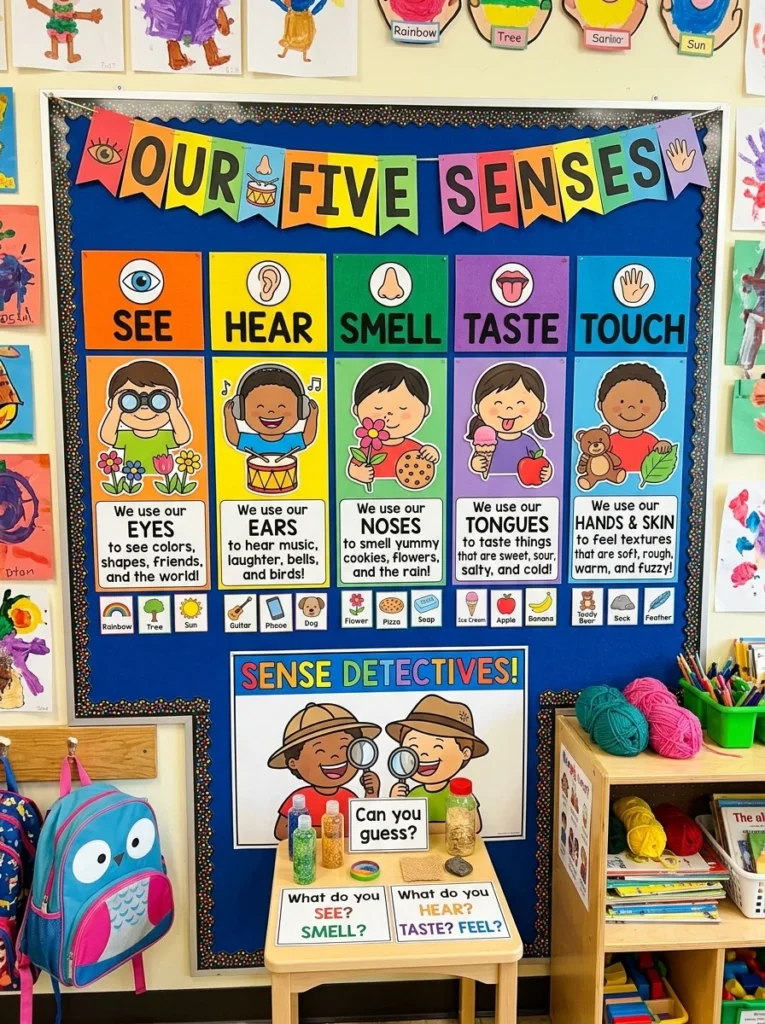
Create a display featuring the five senses—sight, hearing, smell, taste, and touch. This board is perfect for introducing young children to how they explore the world.
Use bright, engaging colors. Create a section for each sense with pictures and simple explanations. Add a “sense detective” section where children can share their observations. Include a banner that reads “Our Five Senses” or “Exploring Our World.”
QUICK TIPS
- Use pictures and symbols for each sense.
- Let children add their own observations with drawings.
- Add a “sense challenge” section for hands-on activities.
2. Weather Watchers
Create a display featuring weather patterns and the four seasons. This board helps children understand daily and seasonal changes.
Use a color palette that reflects the seasons—bright yellow for summer, orange and brown for fall, blue and white for winter, and green and pink for spring. Include weather words like sunny, rainy, cloudy, and snowy. Add a “weather watcher” section for daily updates with simple icons.
QUICK TIPS
- Include a “season of the month” section.
- Let children be “weather reporters” with picture cards.
- Add a “how to dress for the weather” section with clothing pictures.

3. Planting and Growing
Create a display featuring plant growth, seeds, and what plants need to grow. This board encourages environmental awareness and curiosity about nature.
Use green, brown, and bright colors. Decorate with flowers, trees, and vegetables. Feature the parts of a plant, what plants need to grow (water, sun, soil), and the process of a seed becoming a plant. Add a banner that reads “Planting and Growing.” Include a “garden journal” section with child drawings.
QUICK TIPS
- Include a “grow your own” section with simple instructions.
- Let children share their garden experiences with drawings.
- Add a “plant of the week” section with pictures.

4. Animal Habitats
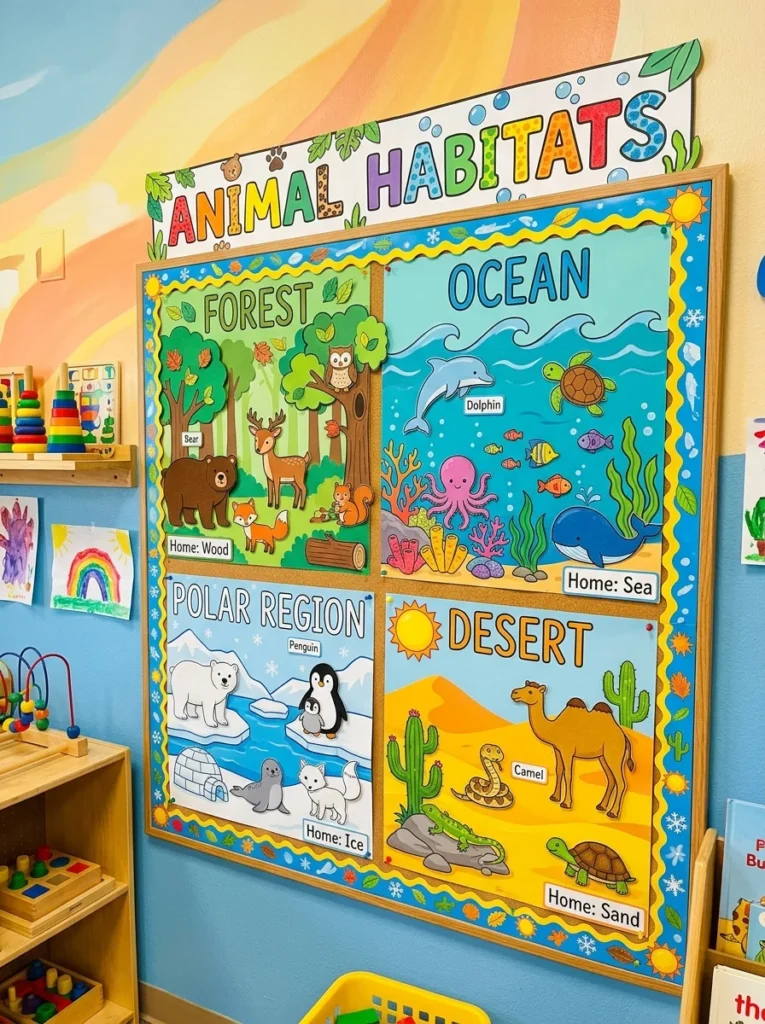
Create a display featuring different animal habitats and the animals that live there. This board supports life science and geography for young learners.
Use a color palette that reflects different habitats—blue and green for oceans, brown and green for forests, yellow and orange for deserts, and white and blue for polar regions. Feature animals and their homes. Include a “habitat of the month” section with simple facts.
QUICK TIPS
- Use large, clear animal pictures.
- Let children draw their favorite habitat.
- Add a “where do I live?” matching game section.
5. Exploring Color
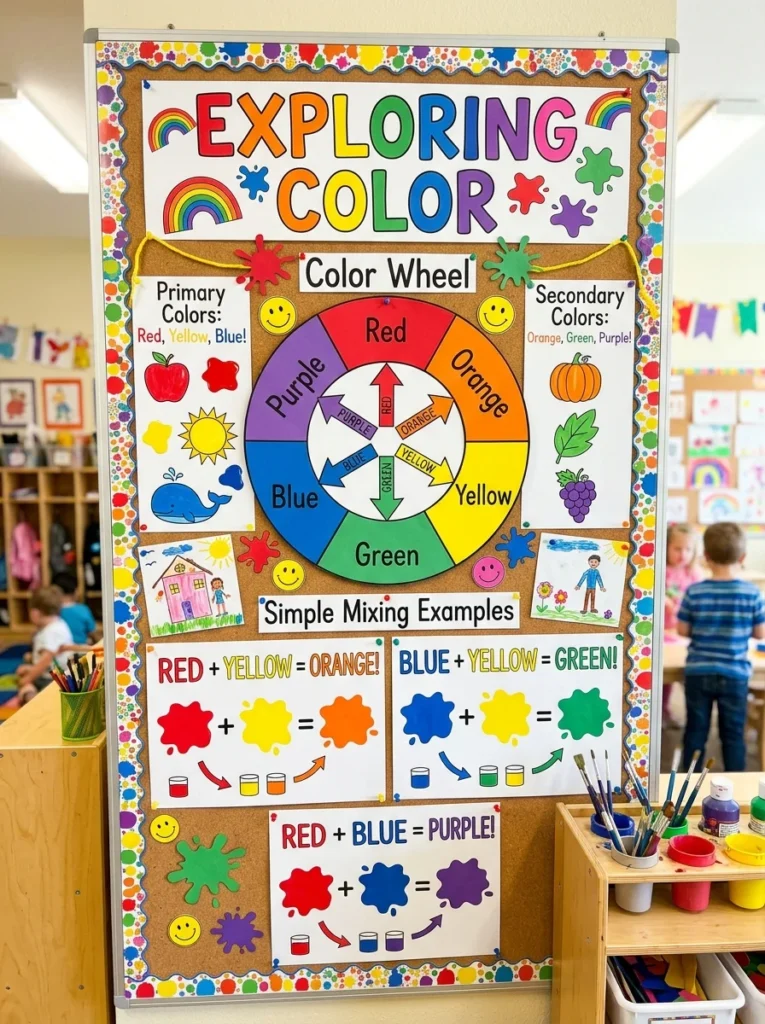
Create a display featuring primary and secondary colors and how they mix. This board combines art and science for young learners.
Use bright, bold colors. Create a color wheel with red, blue, yellow, green, orange, and purple. Include simple explanations like “blue + yellow = green.” Add a “color mixing” section with examples. Include a banner that reads “Exploring Color.”
QUICK TIPS
- Use large, clear color swatches.
- Let children mix colors with paint or playdough.
- Add a “color of the week” section.
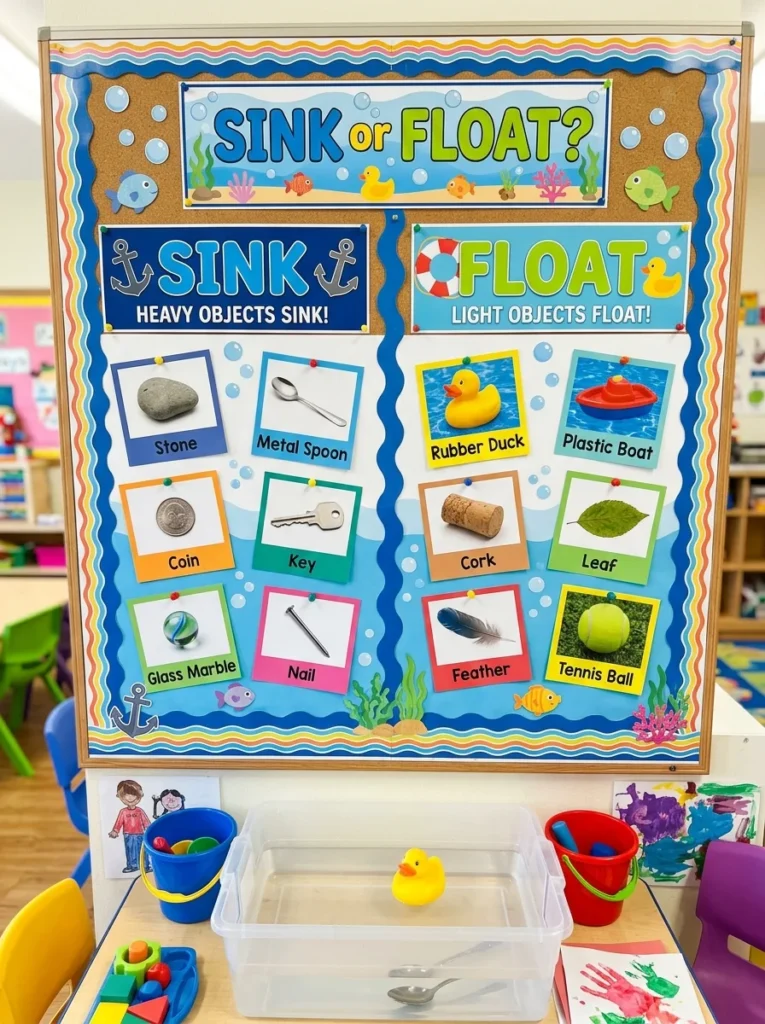
6. Sink or Float?
Create a display featuring objects that sink or float. This board introduces basic physics concepts through a fun, hands-on theme.
Use a water-themed background with blue and white colors. Create sections for “Sink” and “Float” with pictures of objects like rocks, leaves, coins, and corks. Add a “try it at home” section with simple instructions. Include a banner that reads “Sink or Float?”
QUICK TIPS
- Use large, clear object pictures.
- Let children test objects at a water table.
- Add a “prediction” section for the activity.
7. Our Solar System
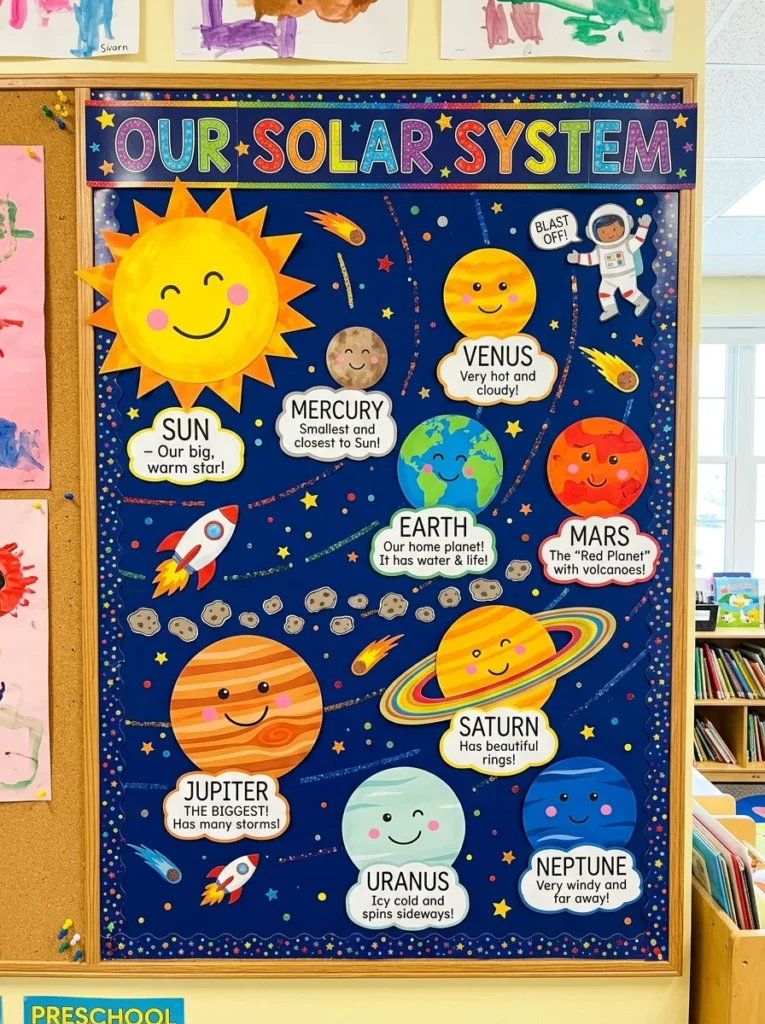
Create a display featuring the planets in our solar system. This board introduces young children to space and astronomy in a simple, visual way.
Use a dark blue or black background. Create large, colorful planets with simple labels. Include one or two fun facts about each planet. Add a banner that reads “Our Solar System.” Include a “planet of the week” section.
QUICK TIPS
- Use different sizes to show planet scale.
- Include simple facts like “Jupiter is the biggest.”
- Let children draw their favorite planet.
8. Life Cycles
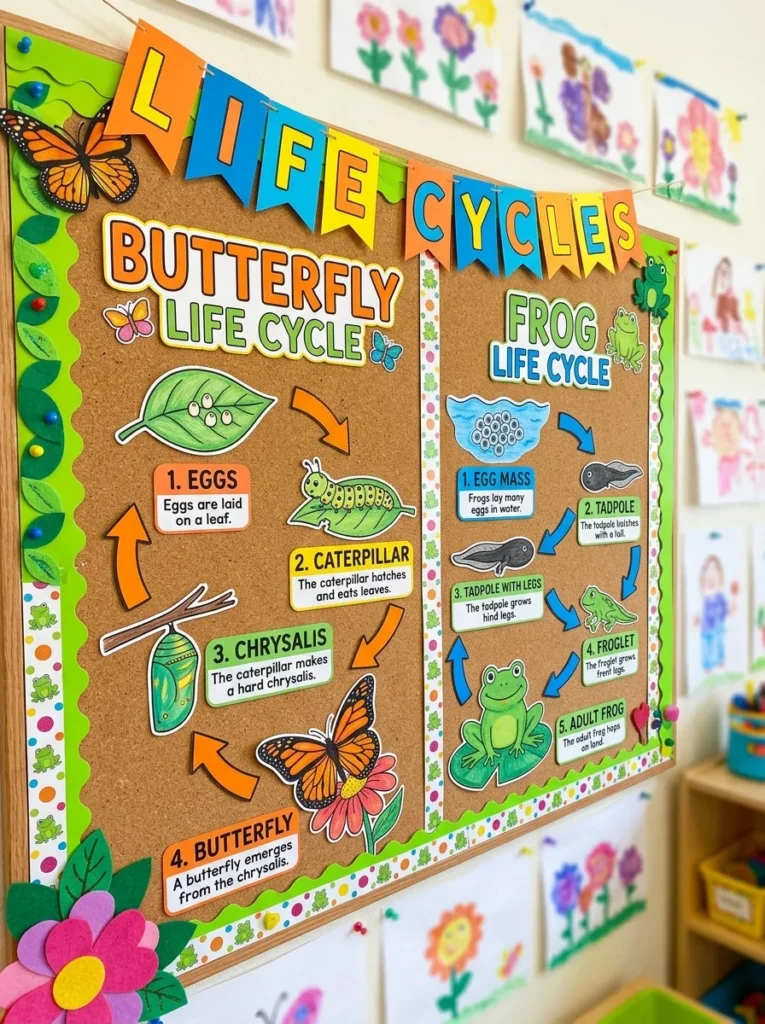
Create a display featuring the life cycles of butterflies, frogs, and other animals. This board supports life science curriculum for young learners.
Use bright, engaging colors. Create a visual life cycle for each organism with arrows showing the stages. Include simple explanations for each stage. Add a “life cycle of the month” section. Feature child drawings of life cycles.
QUICK TIPS
- Use different organisms for variety.
- Add a “draw your own” section.
- Let children share their observations of real life cycles.
9. Water and Ice
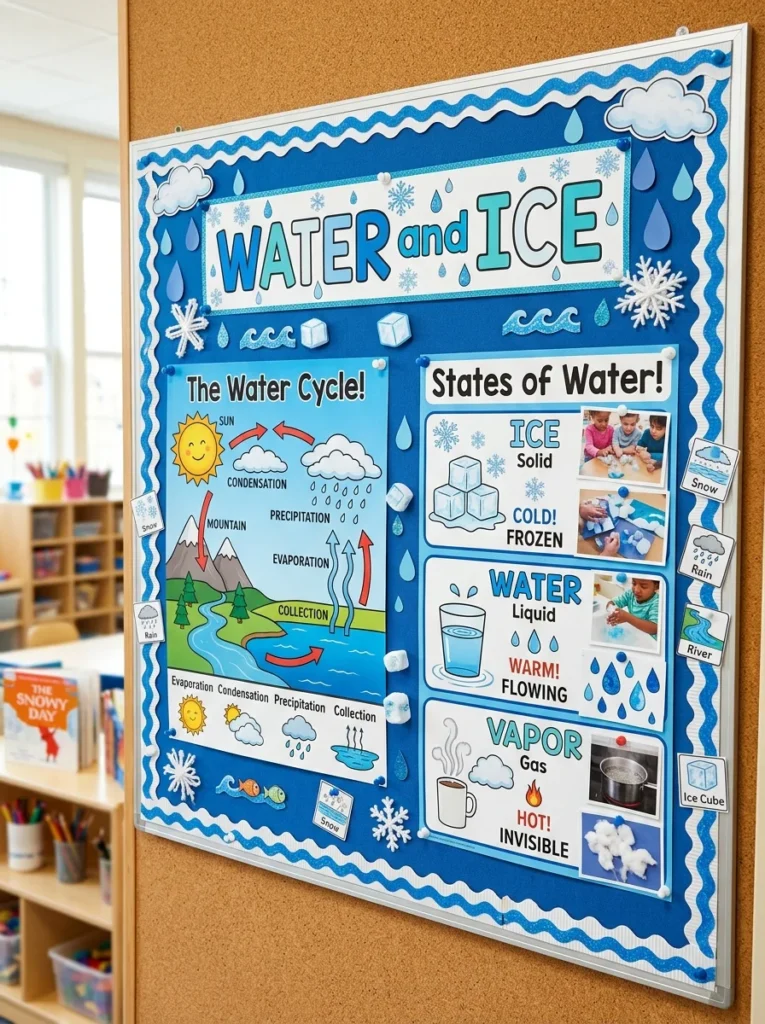
Create a display featuring the water cycle and states of water. This board introduces children to basic earth science concepts.
Use blue and white colors. Include a simple water cycle diagram with sun, clouds, rain, and puddles. Feature examples of water as a liquid, ice as a solid, and steam as a gas. Add a “water play” section with simple activities. Include a banner that reads “Water and Ice.”
QUICK TIPS
- Use large, simple pictures.
- Let children explore ice and water in the classroom.
- Add a “what happens to ice?” observation section.
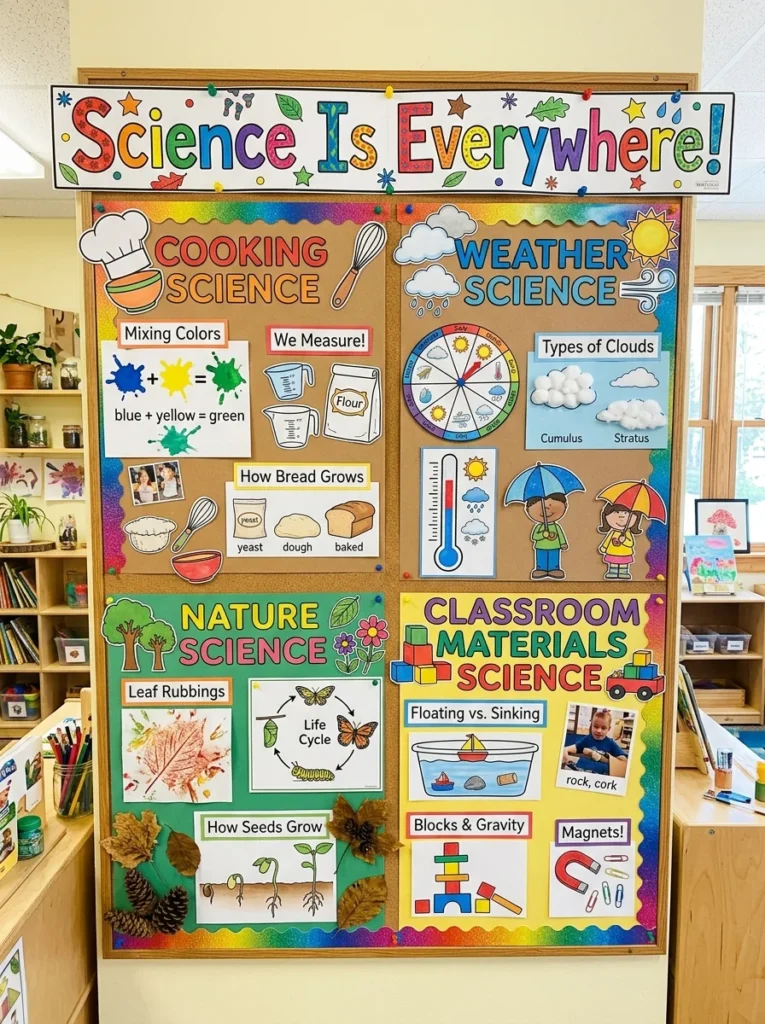
10. Science Is Everywhere!
Create a display that shows children how science is all around them. This board encourages observation and curiosity about the world.
Use bright, engaging colors. Feature examples of science in everyday life—cooking, weather, nature, playground equipment, and classroom materials. Add a “science in action” section with photos of children exploring. Include a banner that reads “Science Is Everywhere!”
QUICK TIPS
- Use real-life photos when possible.
- Let children share their own observations with drawings.
- Add a “science scavenger hunt” section with pictures.
11. Exploring Magnets
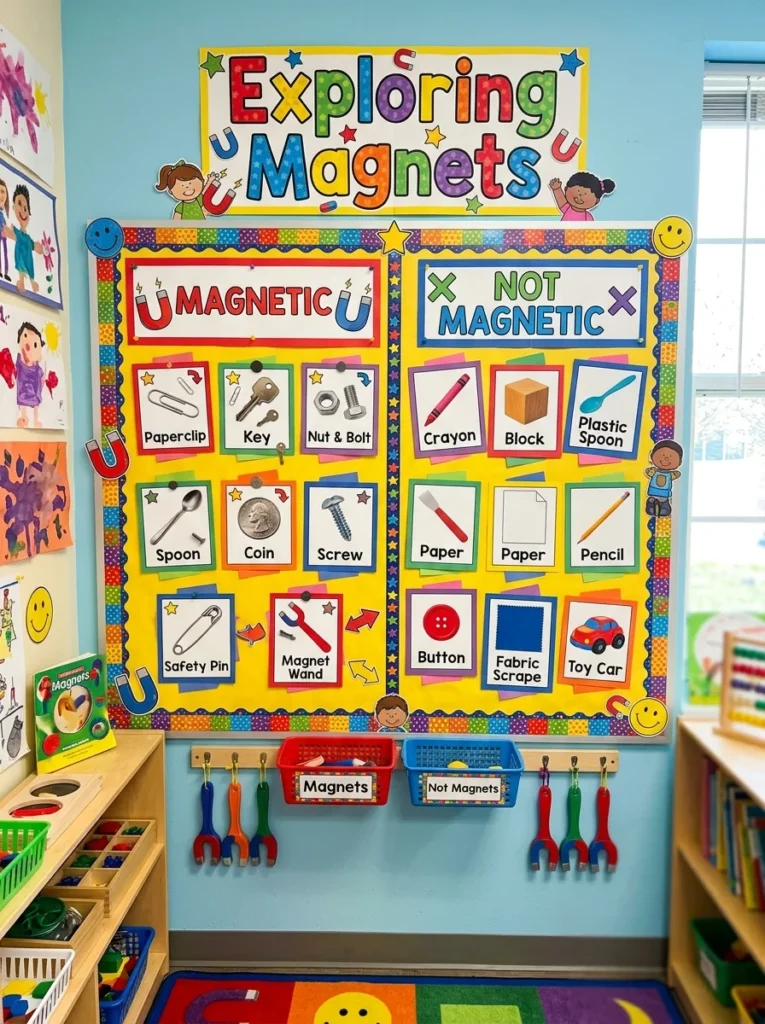
Create a display featuring magnets and magnetic vs. non-magnetic objects. This board introduces basic physics concepts through a hands-on theme.
Use bright colors. Create sections for “Magnetic” and “Not Magnetic” with pictures of objects like paperclips, coins, wood, and plastic. Add a “try it at home” section with simple instructions. Include a banner that reads “Exploring Magnets.”
QUICK TIPS
- Use large, clear object pictures.
- Let children test objects with magnets in the classroom.
- Add a “prediction” section for the activity.
12. Shadows and Light
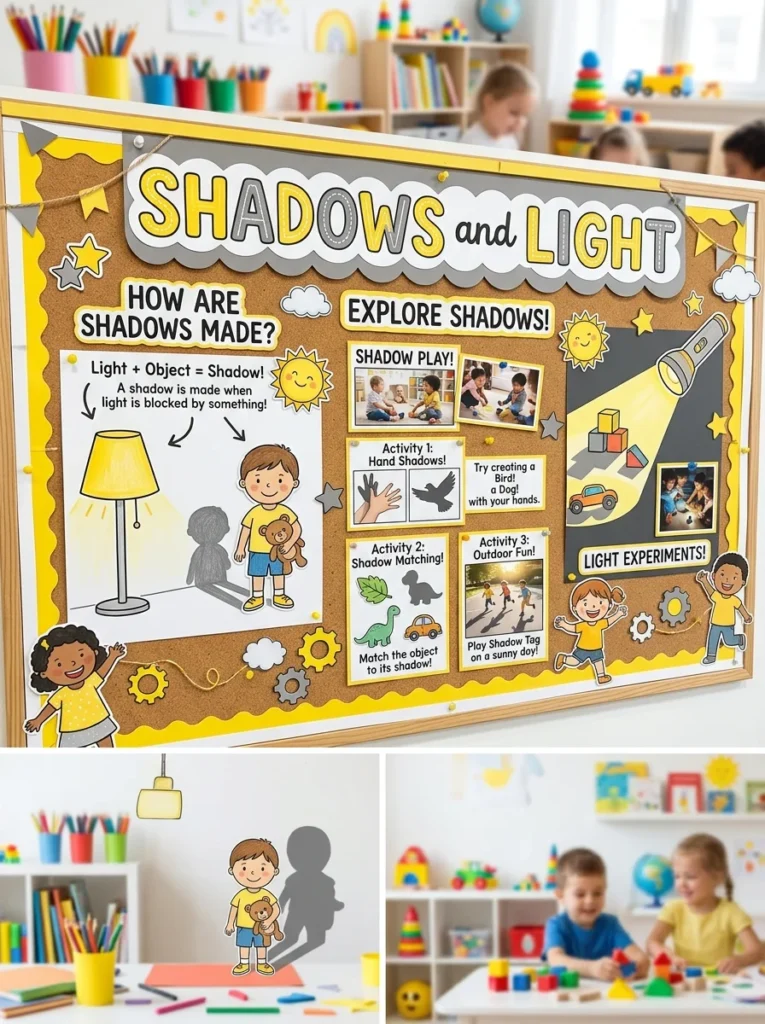
Create a display featuring shadows and light. This board introduces children to concepts of light, dark, and how shadows are formed.
Use a color palette of yellow, gray, and white. Include simple explanations of how shadows are made. Add a “shadow play” section with activities. Include a banner that reads “Shadows and Light.”
QUICK TIPS
- Use pictures of shadows in different positions.
- Let children explore shadows with flashlights.
- Add a “what makes a shadow?” section.
13. Our Bodies
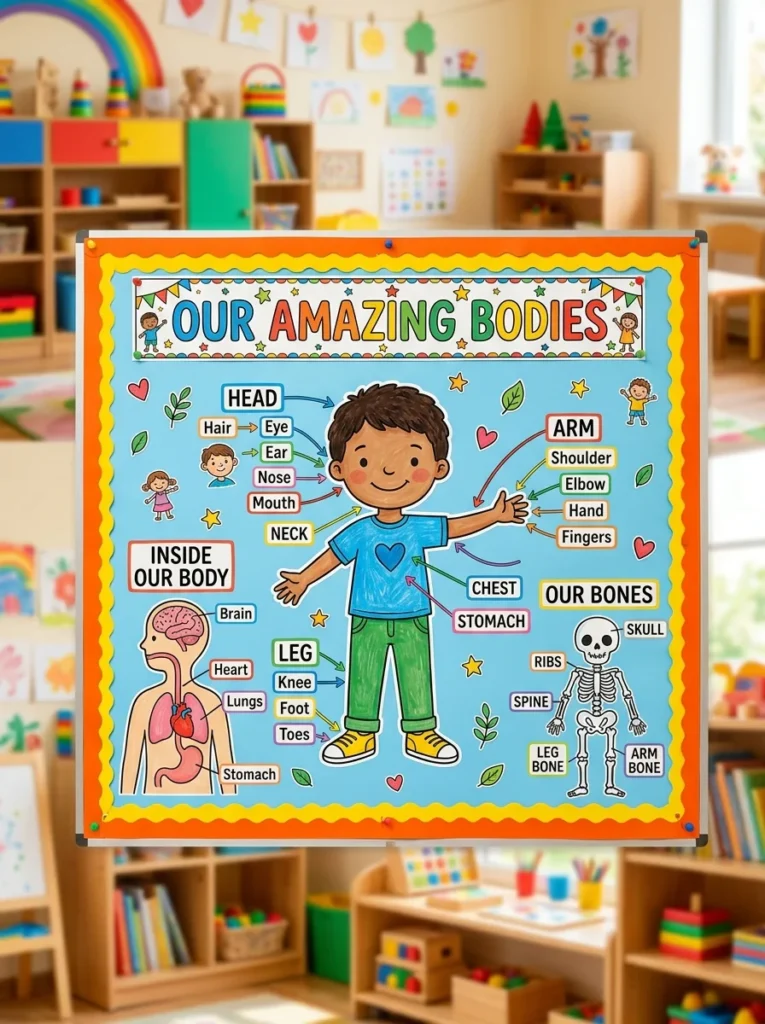
Create a display featuring the human body and its parts. This board supports health and life science for young children.
Use bright, engaging colors. Include simple diagrams of the body with labels for head, arms, legs, eyes, ears, nose, and mouth. Add a “how to stay healthy” section with pictures. Include a banner that reads “Our Amazing Bodies.”
QUICK TIPS
- Use kid-friendly diagrams.
- Let children share their own body facts.
- Add a “healthy choices” section.
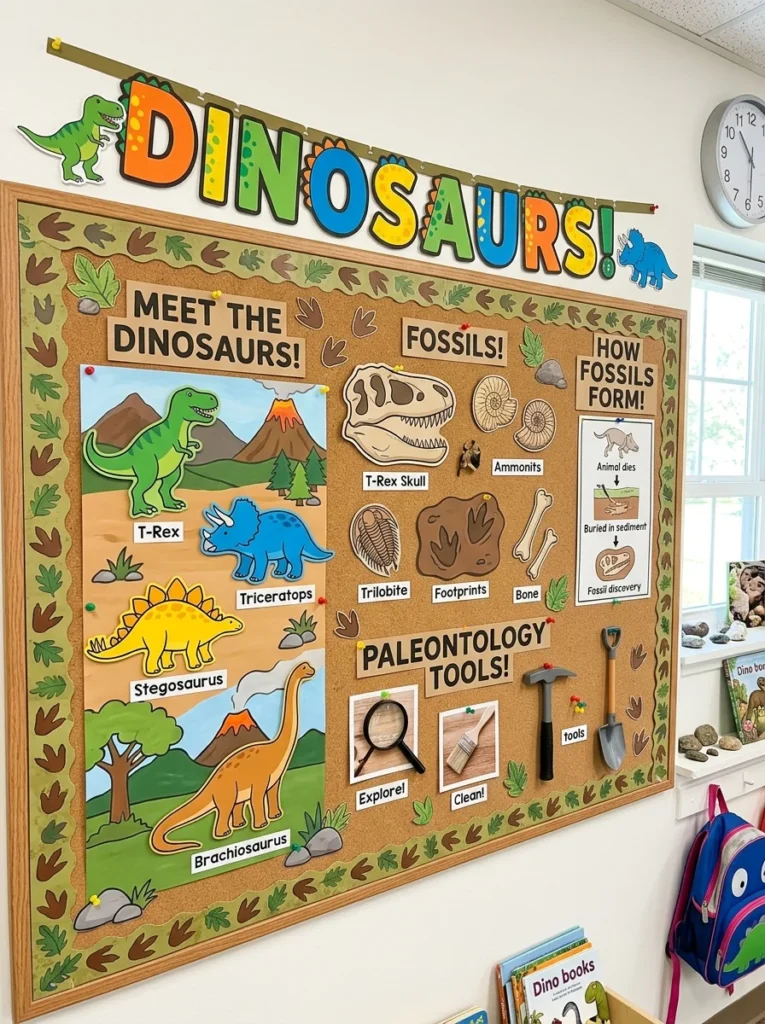
14. Dinosaurs
Create a display featuring dinosaurs and fossils. This board captures children’s imagination and encourages curiosity about Earth’s history.
Use earthy colors—brown, green, and orange. Decorate with dinosaur silhouettes, fossils, and paleontology tools. Feature different dinosaur species with simple names and fun facts. Add a banner that reads “Dinosaurs!” Include a “dinosaur of the week” section.
QUICK TIPS
- Use different dinosaurs for variety.
- Let children draw their favorite dinosaur.
- Add a “fossil find” interactive section with pretend fossils.
15. Birds and Nests
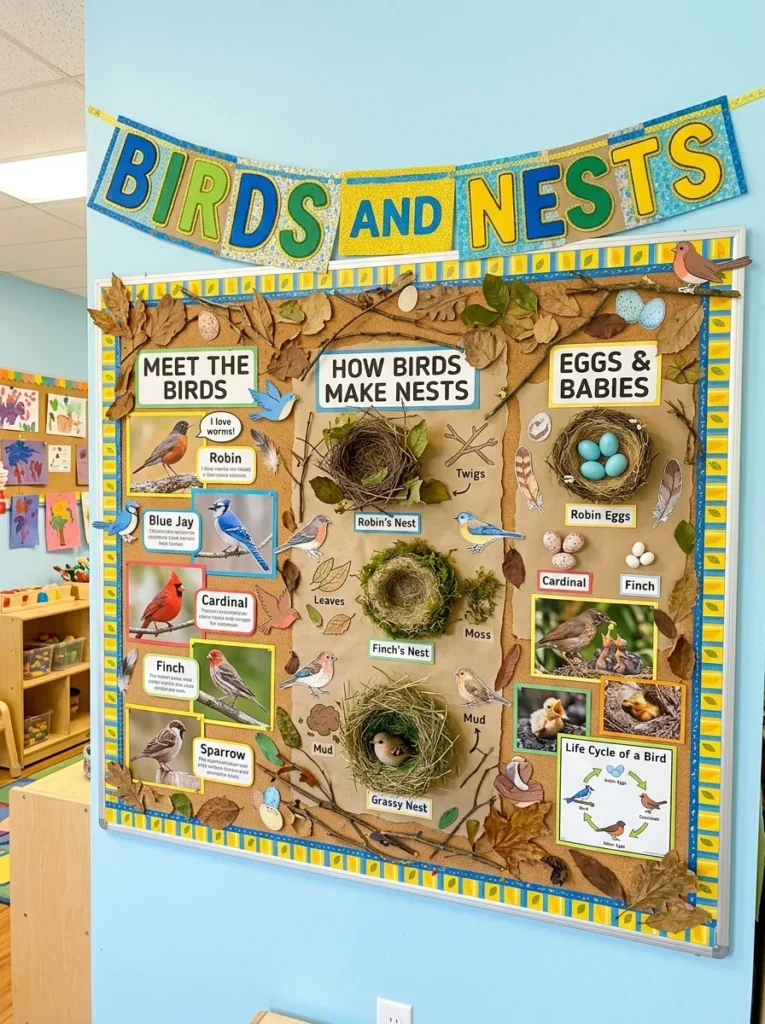
Create a display featuring birds, nests, and eggs. This board introduces children to ornithology and animal behavior.
Use a color palette of brown, blue, green, and yellow. Decorate with bird pictures, nests, and eggs. Include simple facts about birds and their habitats. Add a “bird of the month” section. Include a “build a nest” activity section.
QUICK TIPS
- Use large, clear bird pictures.
- Let children draw their own bird.
- Add a “what birds eat” section.
16. Rocks and Soil
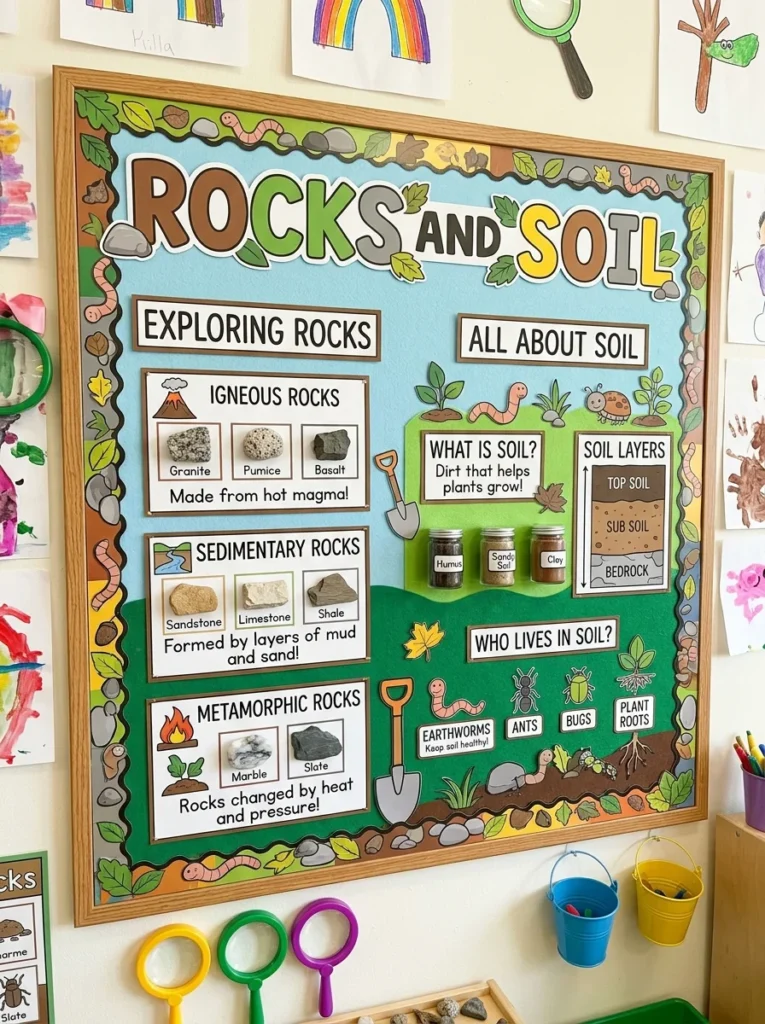
Create a display featuring rocks, soil, and what they are made of. This board introduces children to geology and earth science.
Use a color palette of brown, gray, and green. Feature different types of rocks—smooth, rough, shiny, and dull. Include simple explanations of where rocks come from. Add a “rock collection” section with pictures. Include a banner that reads “Rocks and Soil.”
QUICK TIPS
- Use real rocks in the display if possible.
- Let children sort rocks by size, color, and texture.
- Add a “soil exploration” section.
17. Bees and Butterflies
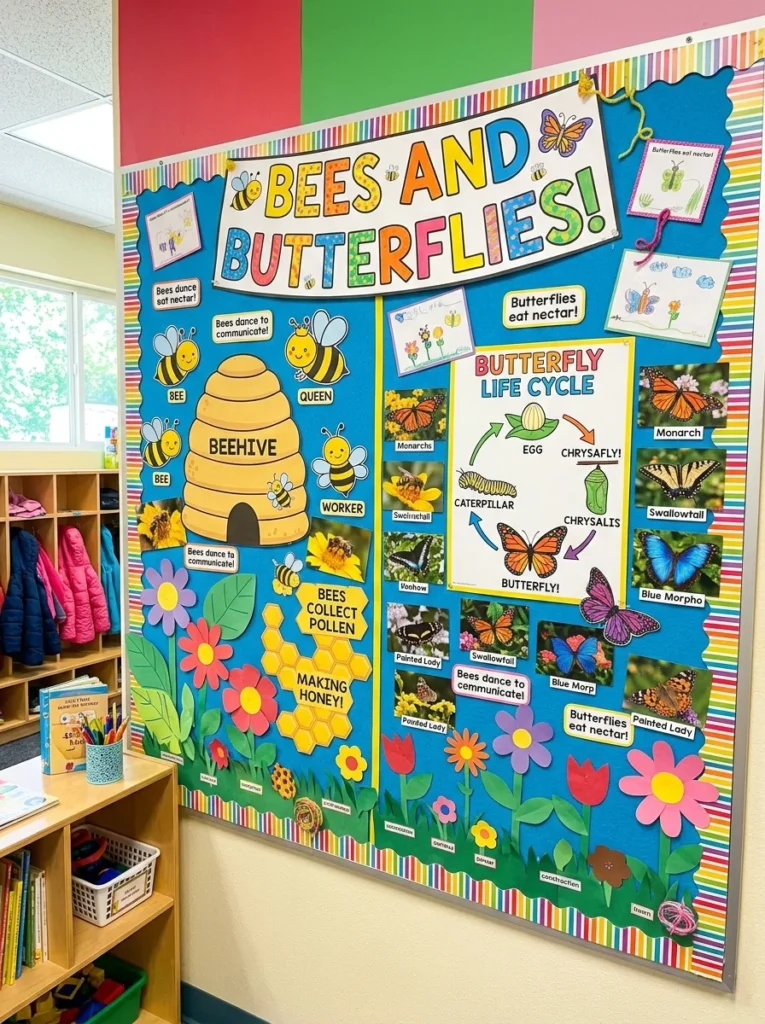
Create a display featuring bees, butterflies, and pollination. This board introduces children to insects and their importance.
Use bright, engaging colors—yellow, black, orange, and blue. Decorate with bee and butterfly pictures, flowers, and hives. Include simple facts about pollination and life cycles. Add a “garden helper” section. Include a banner that reads “Bees and Butterflies.”
QUICK TIPS
- Use large, clear insect pictures.
- Let children draw their own bee or butterfly.
- Add a “why bees are important” section.
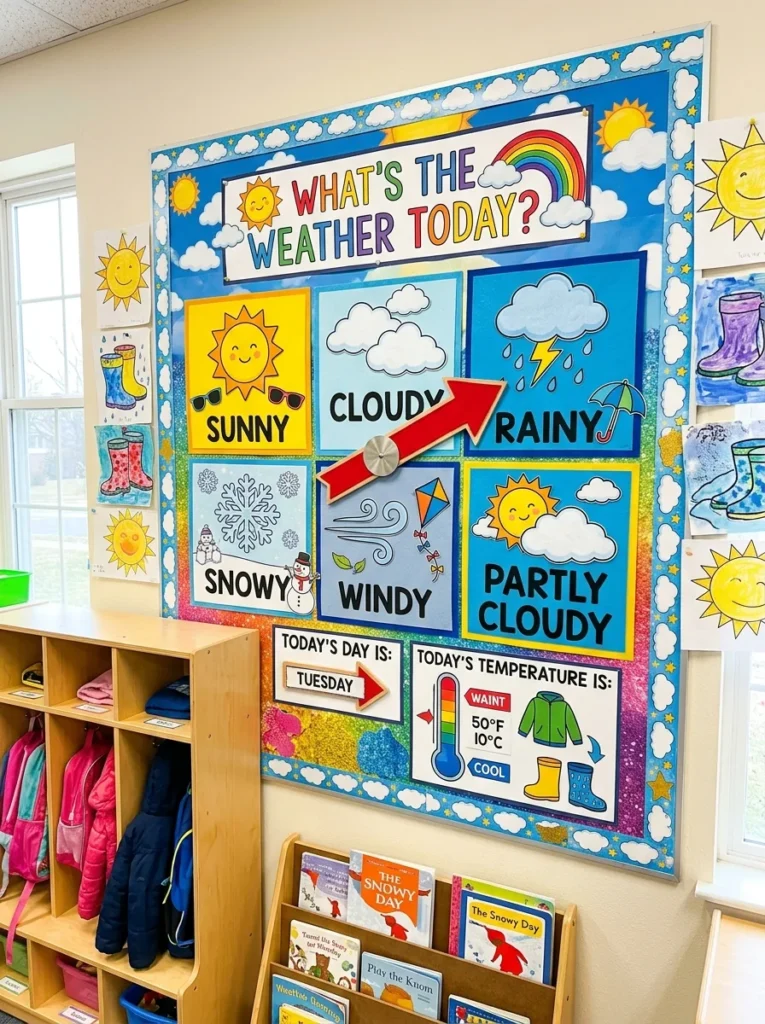
18. What’s the Weather Today?
Create an interactive weather board where children can update the daily weather. This board builds observation skills and vocabulary.
Use a color palette of bright, engaging colors. Create sections for weather types—sunny, rainy, cloudy, snowy, windy, and partly cloudy. Use picture symbols for each weather type. Include a “today’s weather” section with a movable arrow or Velcro symbols. Add a temperature section with simple icons.
QUICK TIPS
- Use weather cards for daily updates.
- Let children take turns being the “weather helper.”
- Add a “weather graph” to track patterns.
Final Thoughts
Preschool science bulletin boards should spark curiosity, encourage observation, and make science concepts accessible to young learners. Whether you choose a five senses display, a weather watcher board, or a planting theme, these boards encourage children to explore the world around them. Plan your board ahead, use large, simple shapes, and keep the display fresh by swapping out elements regularly. Your preschool science bulletin board can become a hub of discovery and wonder for the entire year.