18 Science Fair Bulletin Board Ideas
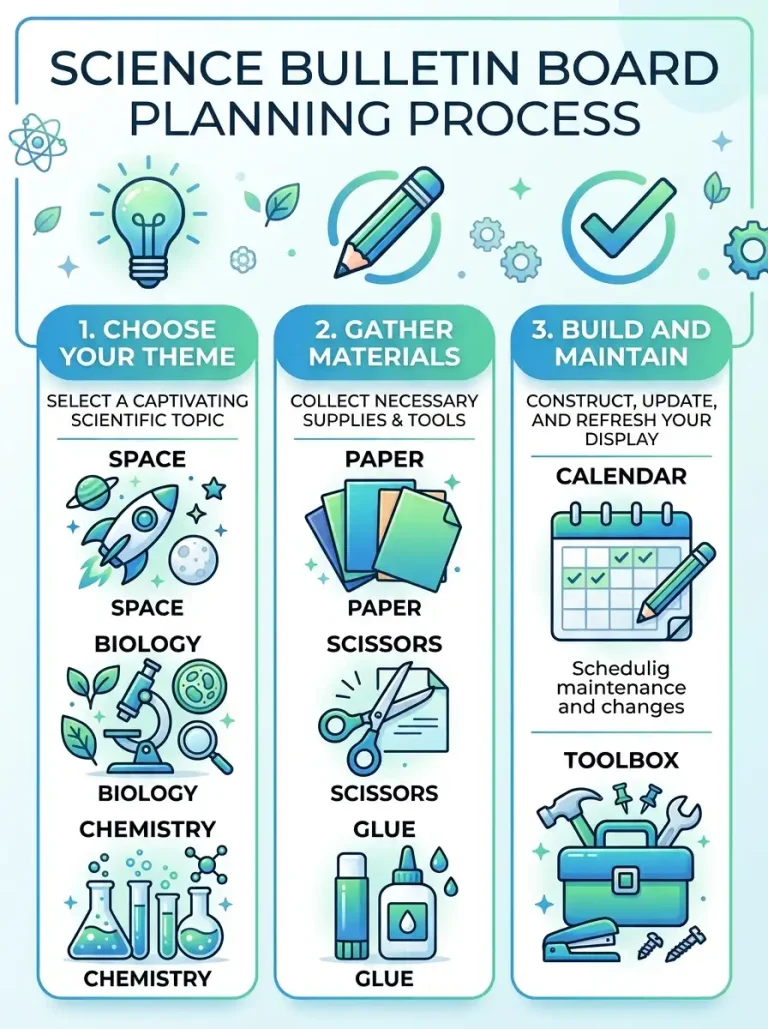
A science fair is an exciting time for students, teachers, and families. Your bulletin board can build anticipation, guide students through the process, and showcase their hard work. Below are 18 science fair bulletin board ideas that will inspire, inform, and celebrate your school’s science fair.
1. Countdown to the Science Fair
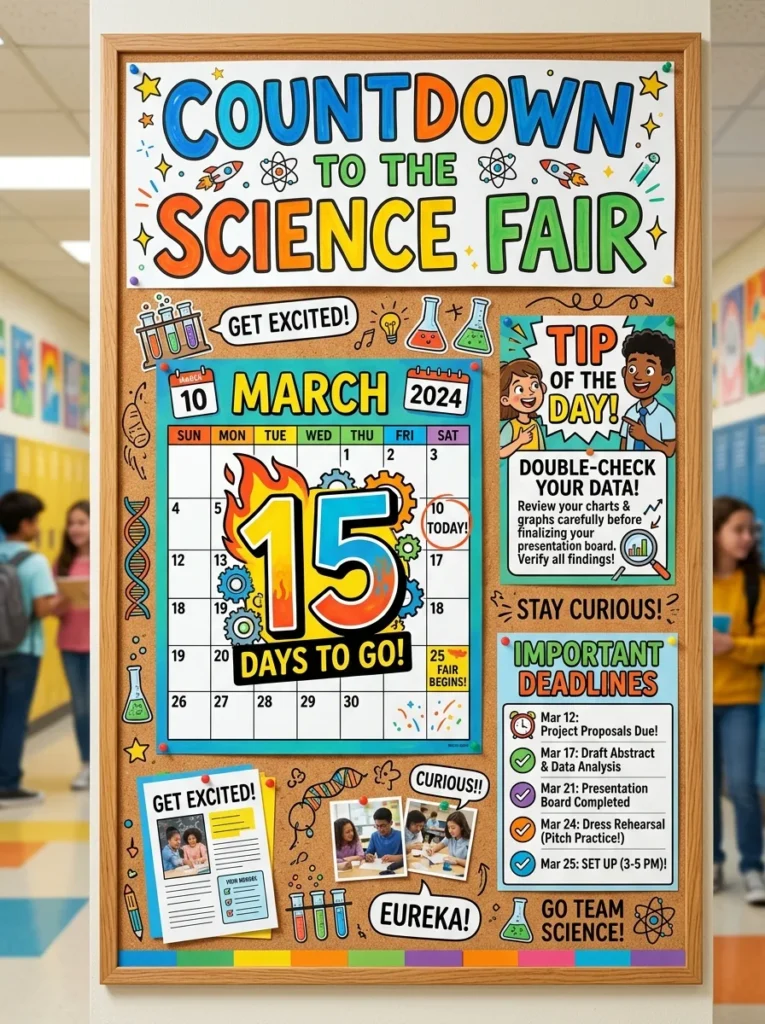
Create an interactive countdown display that builds excitement and keeps students on track. This board helps students manage their time and stay organized.
Use a color palette of bright, energetic colors—red, yellow, blue. Create a large countdown calendar with the number of days remaining. Add sections for important deadlines—project proposals, research due dates, experiment completion, and display board setup. Include a “tip of the day” section with helpful advice.
QUICK TIPS
- Update the countdown daily.
- Include a “what to do this week” section.
- Let students check off completed milestones.
2. The Scientific Method Steps
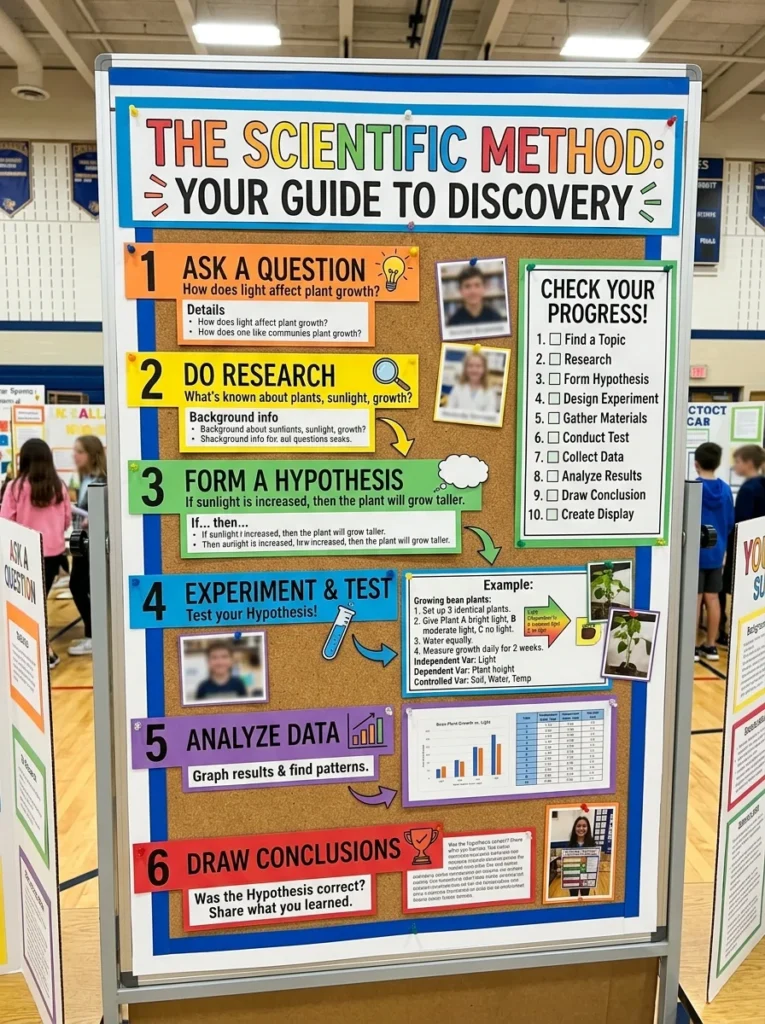
Create a display that walks students through the scientific method step by step. This board serves as a guide throughout the project process.
Use a clean, organized layout with clear headings for each step: Ask a Question, Do Background Research, Construct a Hypothesis, Test with an Experiment, Analyze Data, Draw a Conclusion, and Communicate Results. Add examples from past science fair projects. Include a “check your progress” section where students can mark their current step.
QUICK TIPS
- Use arrows to show the flow of the scientific method.
- Add a “science fair success” section with tips.
- Include student work demonstrating the process.
3. Choosing a Topic
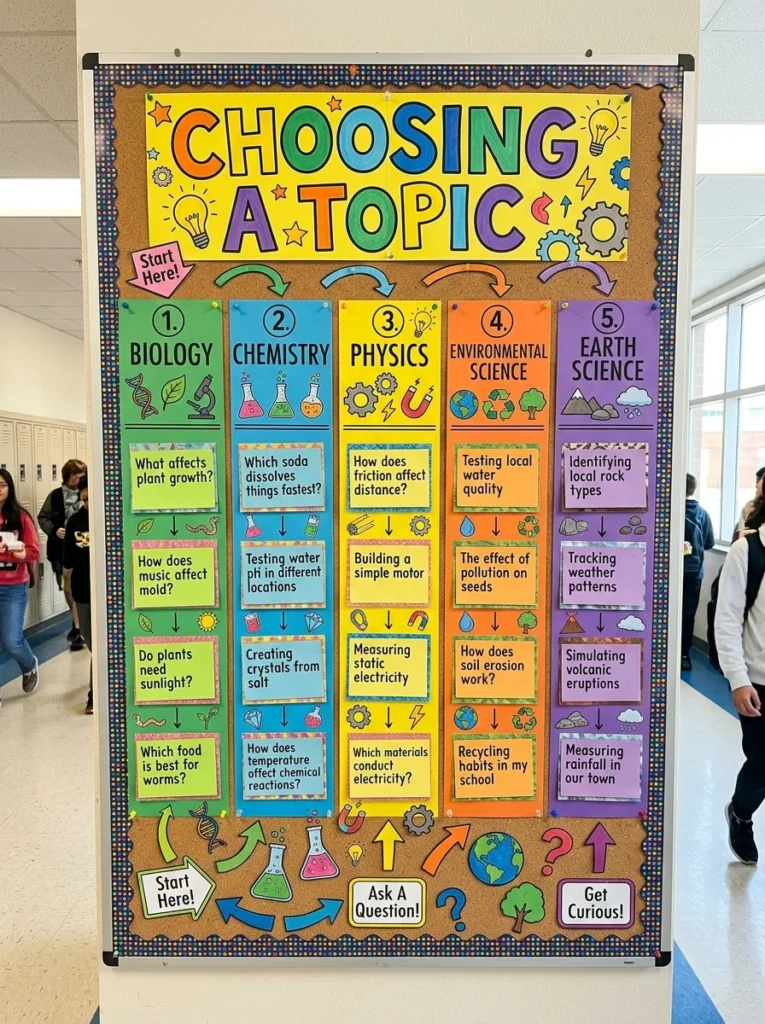
Create a display that helps students choose a science fair topic. This board sparks curiosity and guides students toward projects they’ll enjoy.
Use bright, engaging colors. Create sections for different categories—biology, chemistry, physics, environmental science, and earth science. Provide examples of topic ideas for each category. Add a “what are you curious about?” interactive section where students can share their interests.
QUICK TIPS
- Include a mix of simple and challenging project ideas.
- Let students vote on their favorite topics.
- Add a “topic of the week” section.
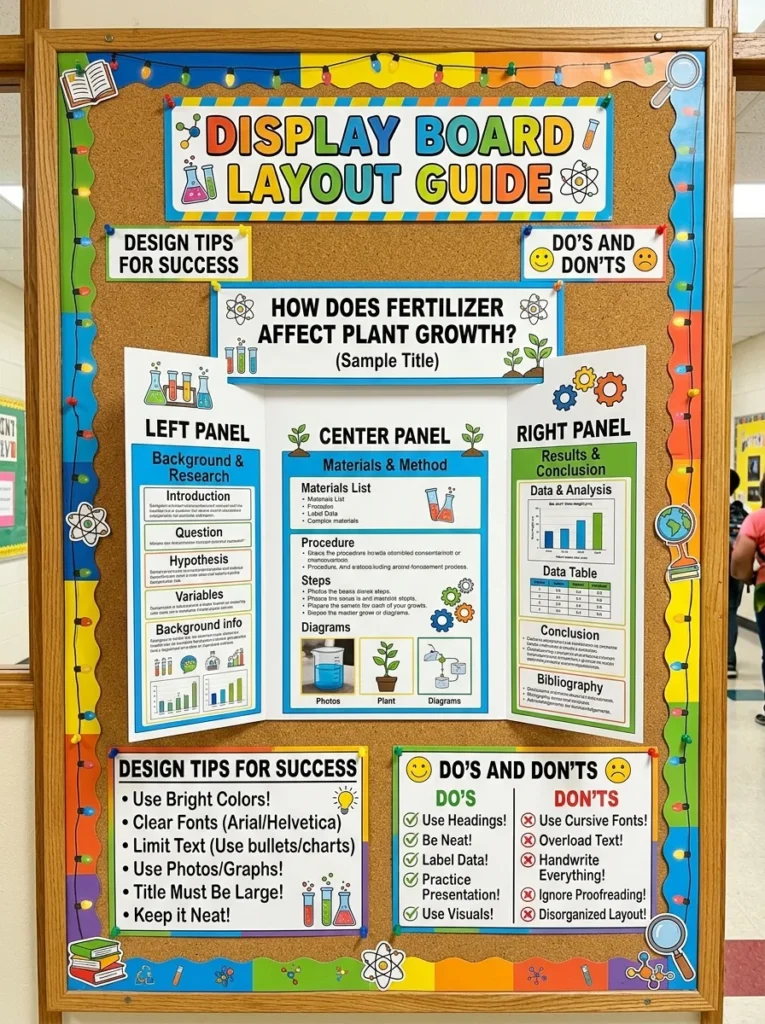
4. Display Board Layout Guide
Create a display featuring a sample science fair display board layout. This board serves as a visual guide for students assembling their boards.
Use a color palette of bright, clean colors. Create a sample board layout with sections labeled: Title, Question, Hypothesis, Materials, Procedure, Results, Conclusion, and References. Add “do’s and don’ts” for display board design. Include a “before and after” section showing good vs. messy boards.
QUICK TIPS
- Use a real sample board if possible.
- Include a “checklist” for students.
- Add a “design tips” section.
5. Past Science Fair Winners
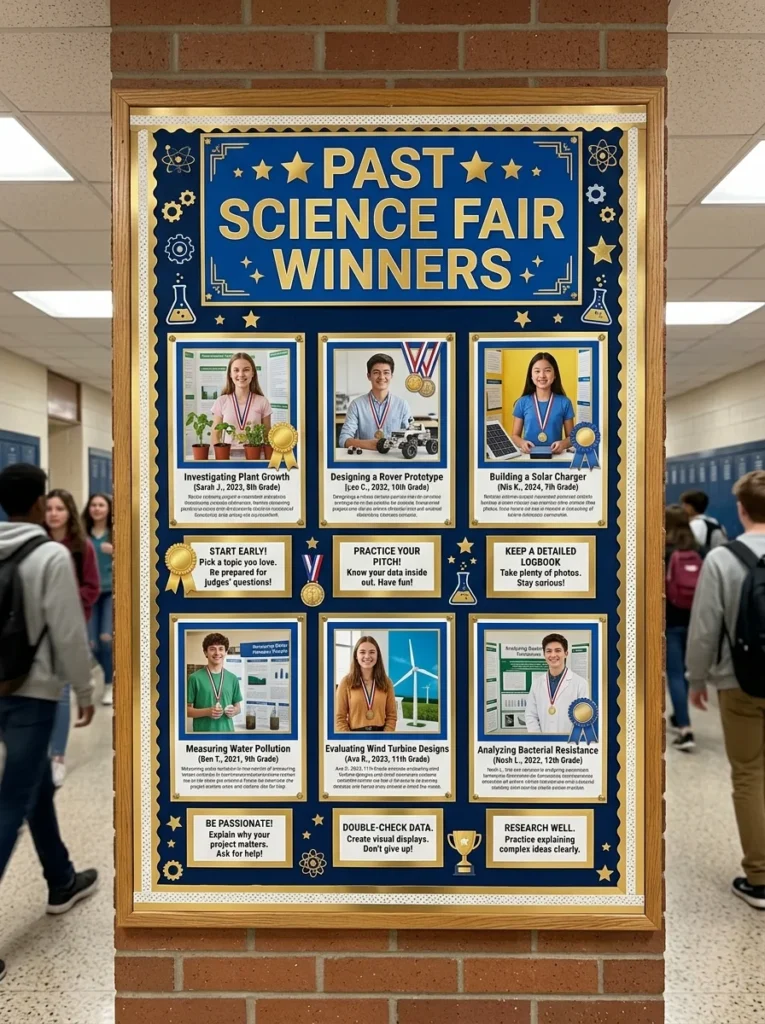
Create a display featuring past science fair winners and their projects. This board inspires students and shows them what success looks like.
Use a color palette of gold, blue, and white. Feature photos of past winners, their project titles, and brief descriptions. Include quotes from winners about their experience. Add a “what I learned” section with advice for current participants. Create a “hall of fame” section for outstanding projects.
QUICK TIPS
- Include a mix of project categories.
- Let winners share their tips.
- Add a “winners’ advice” section.
6. Science Fair Project Timeline
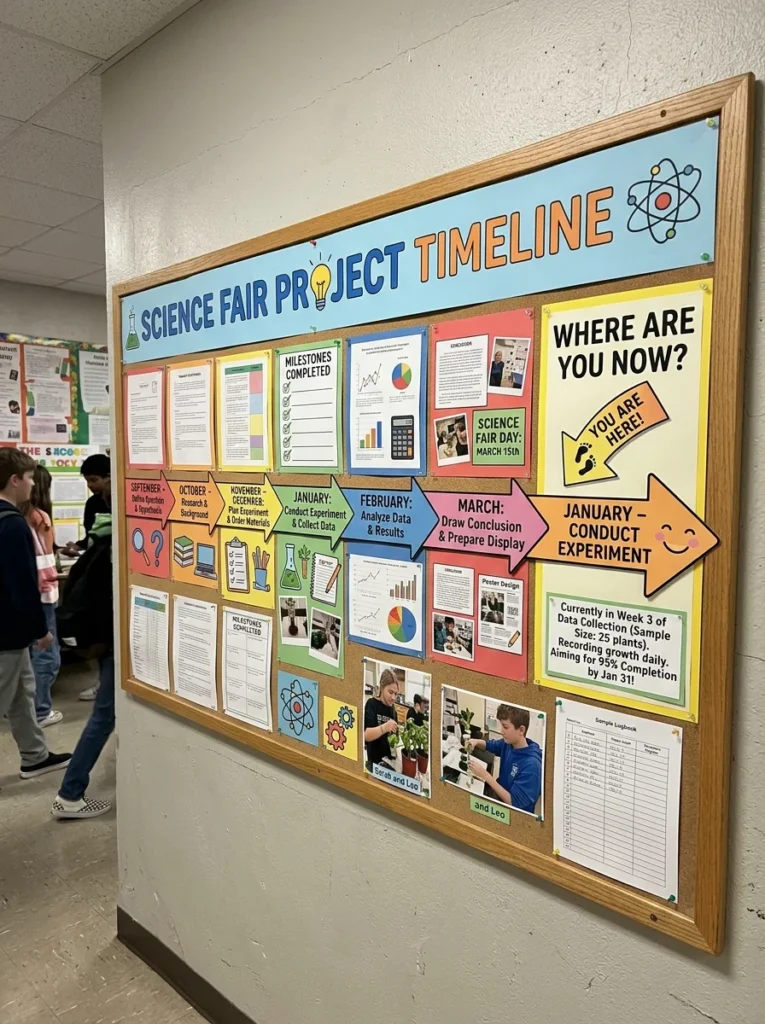
Create a display featuring a timeline for science fair project completion. This board helps students manage their time and avoid last-minute stress.
Use a clean, organized layout. Create a timeline with key milestones: Choose Topic, Research, Write Hypothesis, Plan Experiment, Gather Materials, Conduct Experiment, Record Data, Analyze Data, Prepare Display Board, Practice Presentation, and Submit Project. Add a “where are you now?” section.
QUICK TIPS
- Use arrows to show the flow of the timeline.
- Include a “checklist” for each milestone.
- Add a “helpful resources” section.
7. Great Science Fair Questions
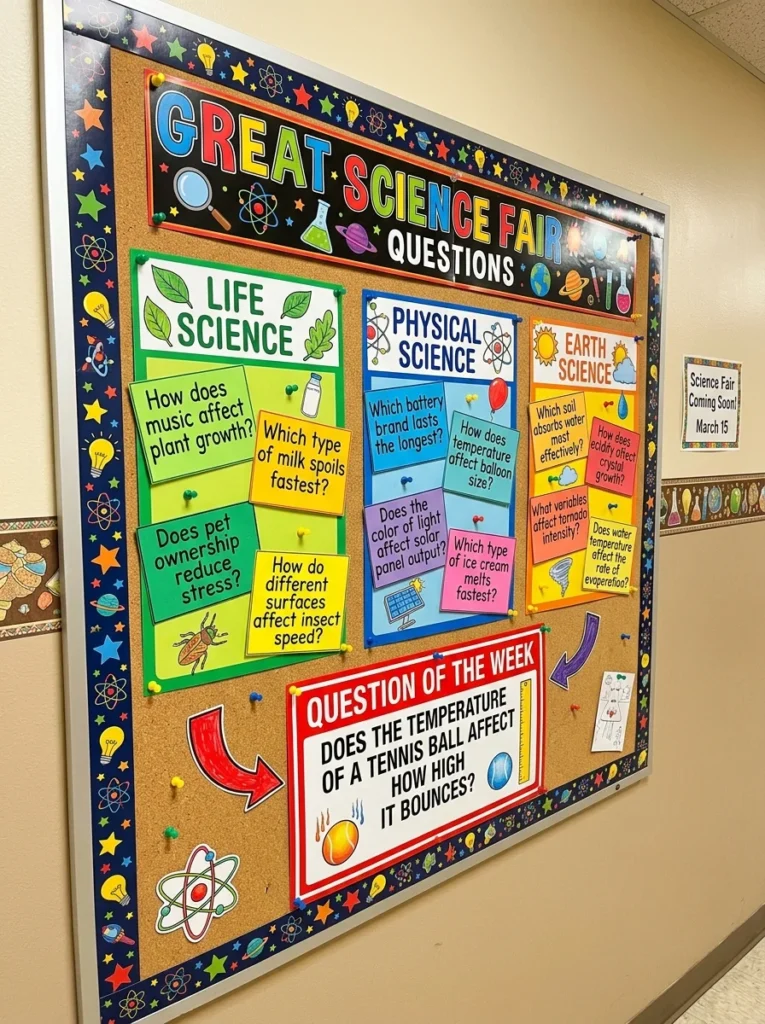
Create a display featuring great science fair questions to inspire students. This board helps students develop testable questions.
Use bright, engaging colors. Feature examples of good science fair questions—”What type of soil grows plants fastest?” or “How does temperature affect the rate of a chemical reaction?” Include a “question of the week” section. Add a “turn an idea into a question” interactive section.
QUICK TIPS
- Include a mix of questions from different categories.
- Let students share their own questions.
- Add a “is it testable?” checklist.
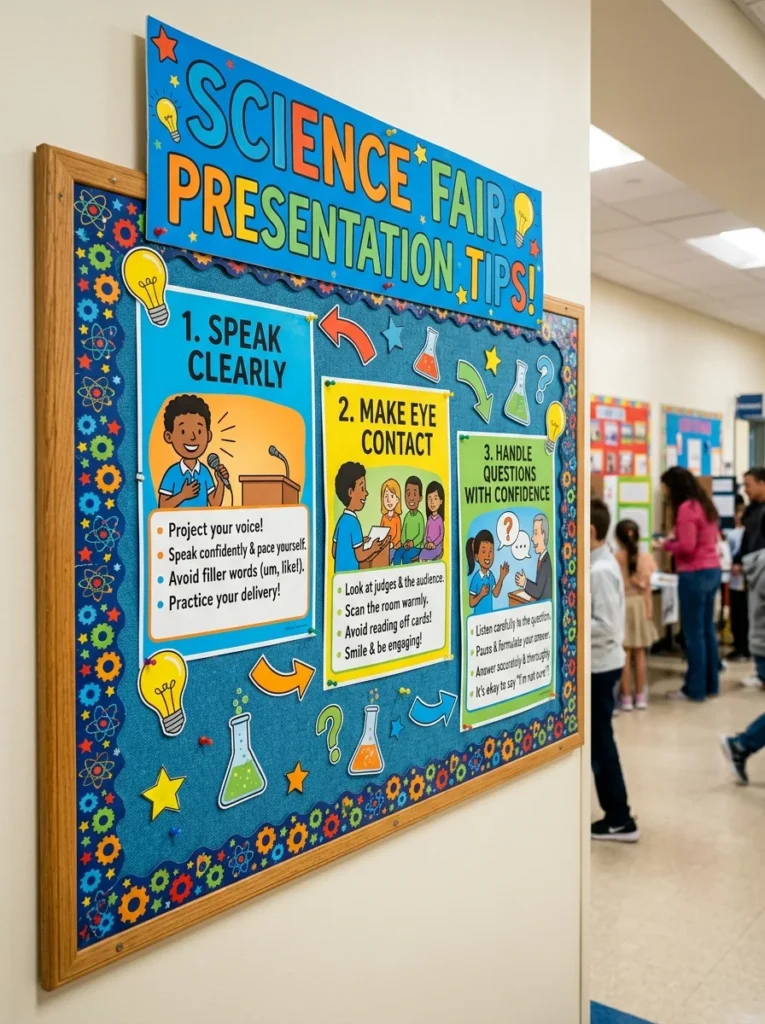
8. Science Fair Presentation Tips
Create a display featuring tips for presenting science fair projects. This board helps students prepare for oral presentations and judging.
Use a color palette of bright, professional colors. Feature tips for: speaking clearly, making eye contact, explaining your project simply, handling questions, and using your display board effectively. Add a “practice makes perfect” section. Include a “judges’ advice” section with common questions.
QUICK TIPS
- Include a “what to wear” section.
- Let students practice with peers.
- Add a “confidence builder” section.
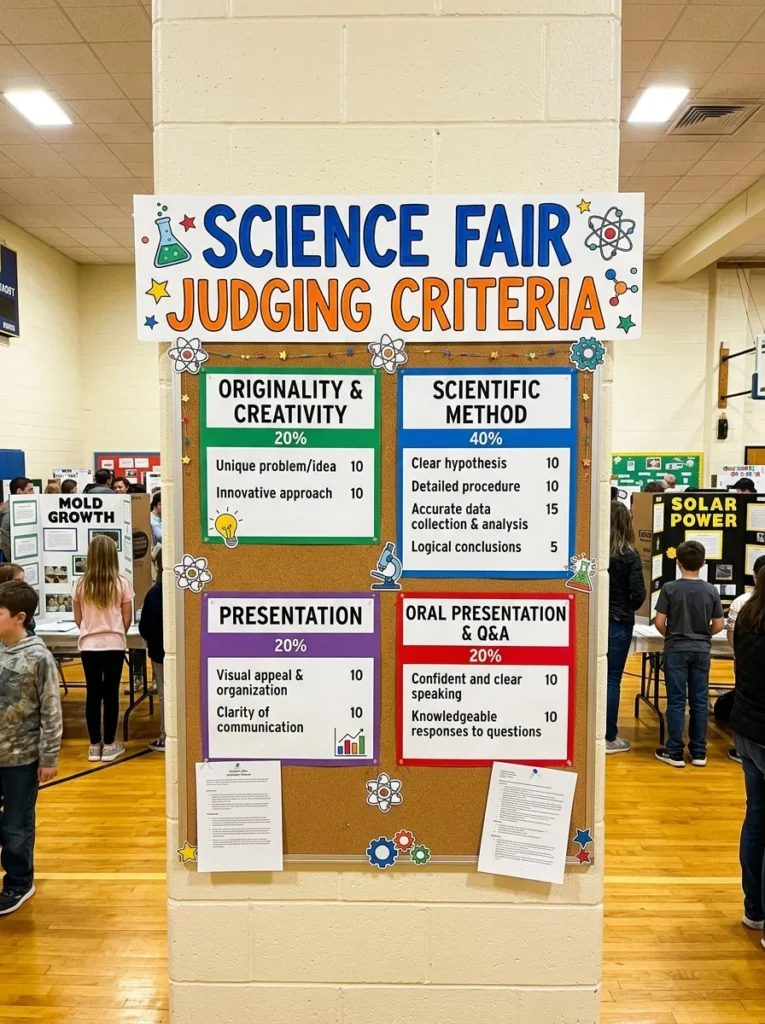
9. Science Fair Judging Criteria
Create a display featuring science fair judging criteria. This board helps students understand what judges are looking for.
Use a clean, organized layout. Feature criteria like: Originality, Scientific Method, Data Analysis, Display Board Quality, Oral Presentation, and Overall Impression. Include a “what each criterion means” section. Add a “how to earn top marks” section with specific tips.
QUICK TIPS
- Use a scoring rubric format.
- Let students self-assess their projects.
- Add a “judges’ favorite projects” section with examples.
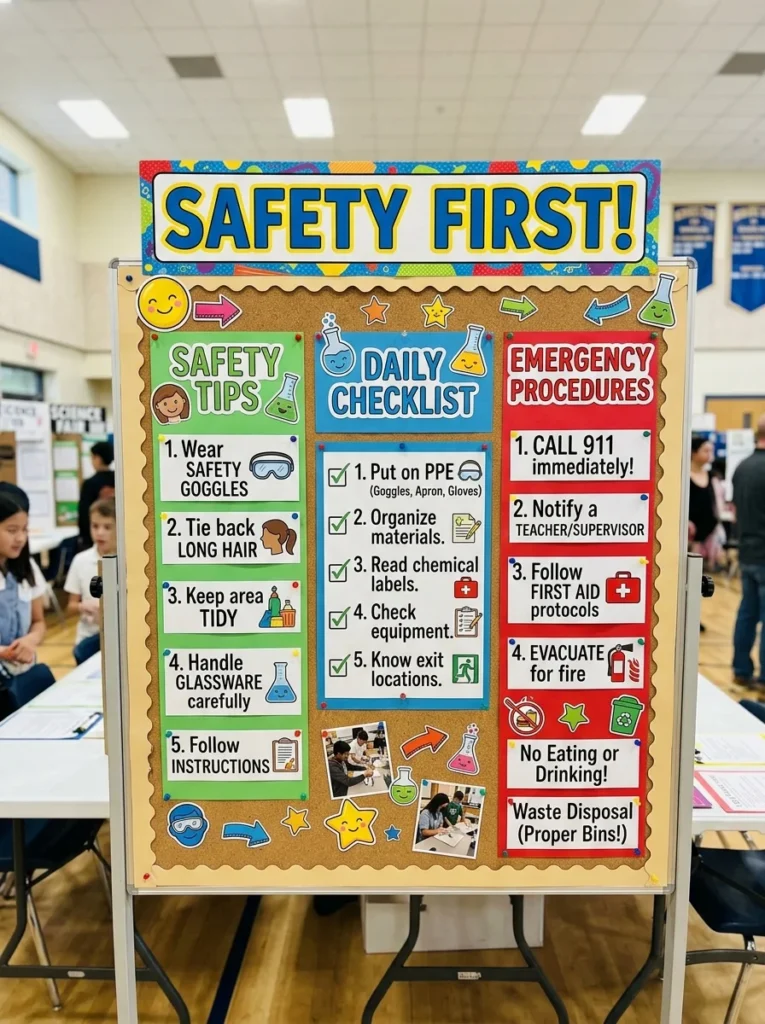
10. Safety First
Create a display featuring science fair safety guidelines. This board ensures student safety during experiments and presentations.
Use a color palette of bright, clear colors. Feature safety tips like: wear goggles, use gloves, handle chemicals carefully, supervise experiments, and follow instructions. Include a “safety checklist” section. Add a “what to do in an emergency” section.
QUICK TIPS
- Include a “safety equipment” section.
- Let students sign a safety pledge.
- Add a “safe experiment” example.
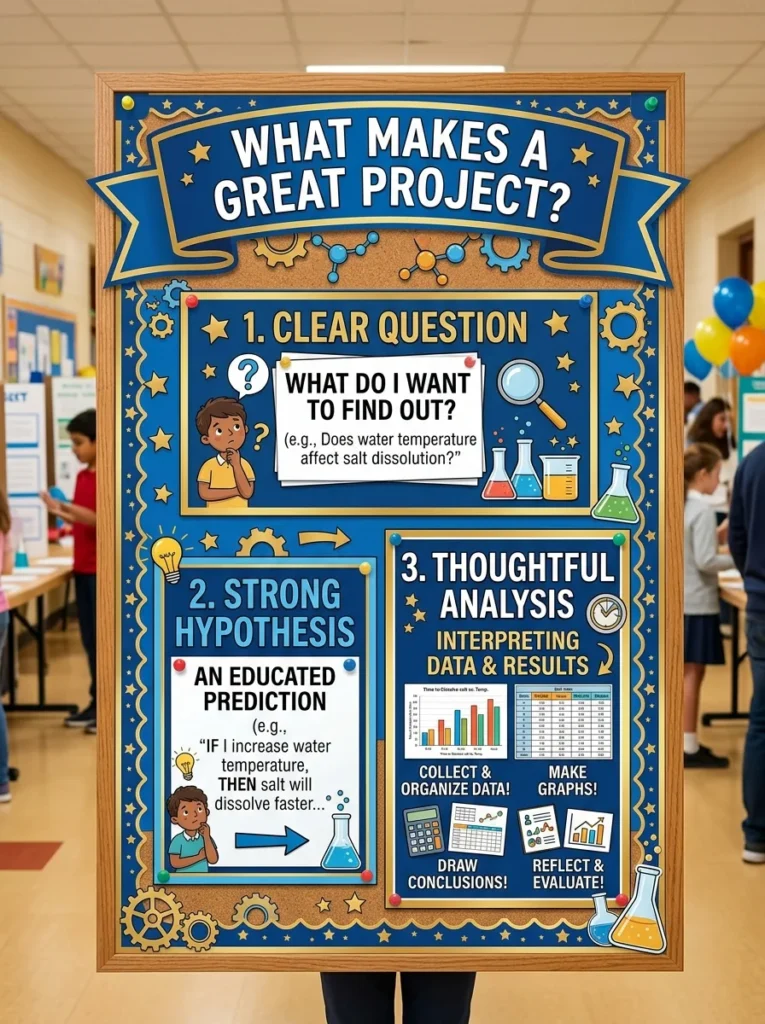
11. What Makes a Great Project?
Create a display featuring the elements of a great science fair project. This board helps students understand what sets outstanding projects apart.
Use a color palette of gold, blue, and white. Feature elements like: clear question, strong hypothesis, well-designed experiment, thorough data collection, thoughtful analysis, creative display, and confident presentation. Add a “project spotlight” section with examples.
QUICK TIPS
- Include a “before and after” example.
- Let students compare projects.
- Add a “why it works” section.
12. Science Fair Word Wall
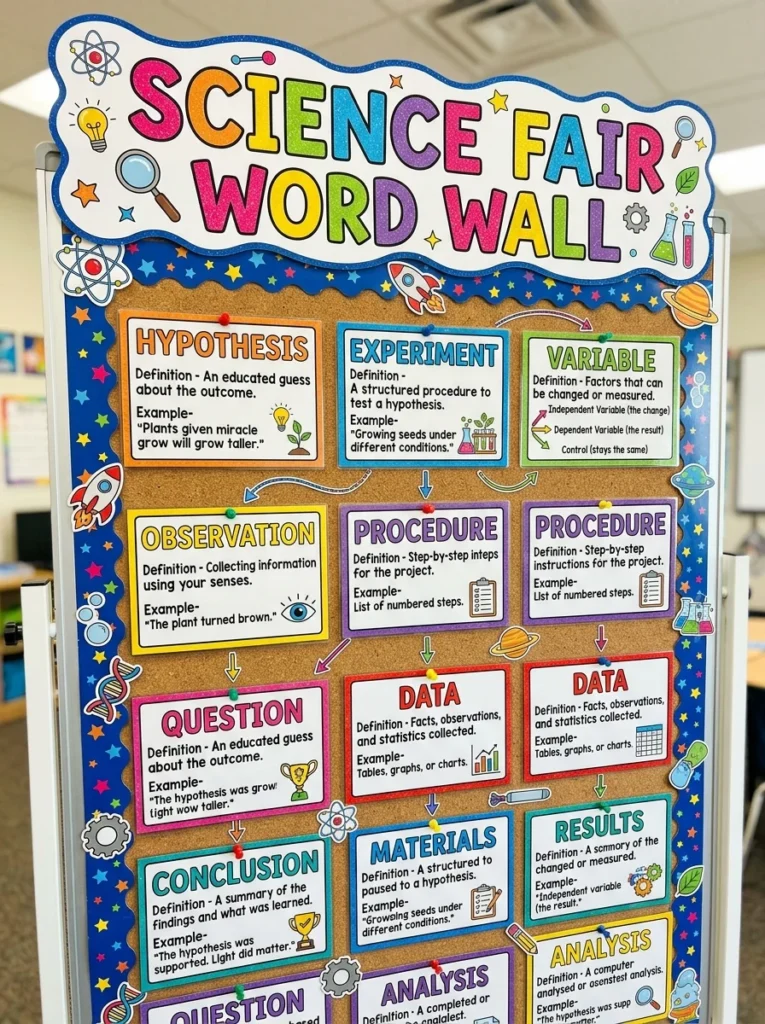
Create a display featuring key science fair vocabulary. This board supports students as they learn and use scientific language.
Use bright, engaging colors. Feature words like: hypothesis, variable, control, data, analyze, conclusion, independent variable, dependent variable, and constants. Include definitions and examples. Add a “word of the week” section. Let students add new words they learn.
QUICK TIPS
- Use pictures or diagrams with definitions.
- Let students use words in sentences.
- Add a “vocabulary challenge” section.
13. Famous Science Fair Projects
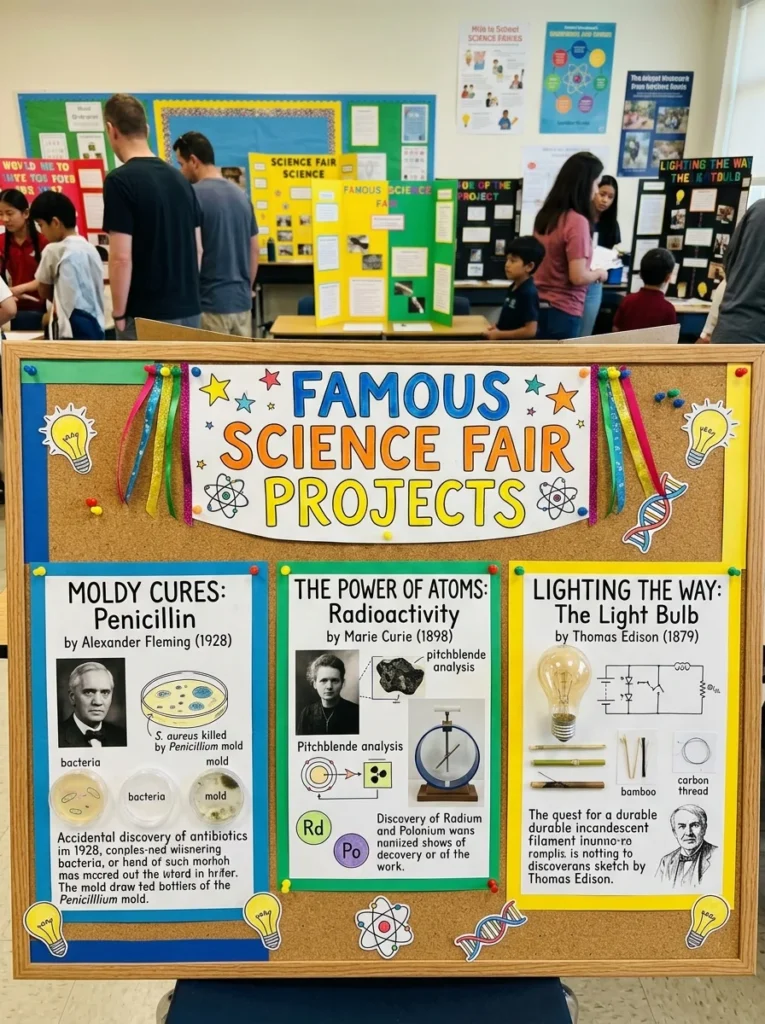
Create a display featuring famous science fair projects that became significant discoveries. This board inspires students and shows the power of curiosity.
Use a color palette of bright, engaging colors. Feature projects like: the invention of the microwave, the discovery of penicillin, or modern innovations. Include brief descriptions and the impact of each project. Add a “what will you discover?” interactive section.
QUICK TIPS
- Include a mix of historical and contemporary discoveries.
- Let students research famous scientists.
- Add a “future of science” section.
14. Science Fair Project Ideas by Grade
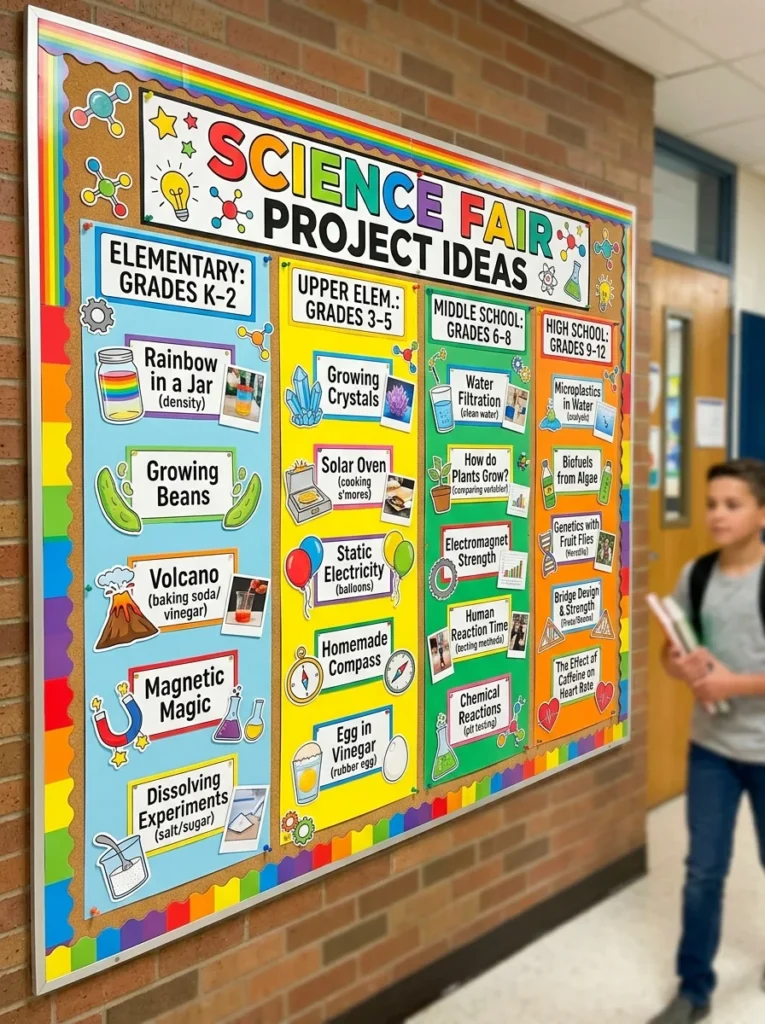
Create a display featuring science fair project ideas organized by grade level. This board helps students find age-appropriate project ideas.
Use a color palette of bright, engaging colors. Create sections for each grade level with project ideas. Include a “challenge yourself” section for students who want to go further. Add a “teacher approved” section for recommended projects.
QUICK TIPS
- Include a mix of easy and challenging projects.
- Let students share their own project ideas.
- Add a “get inspired” section with photos.
15. Data and Graphs
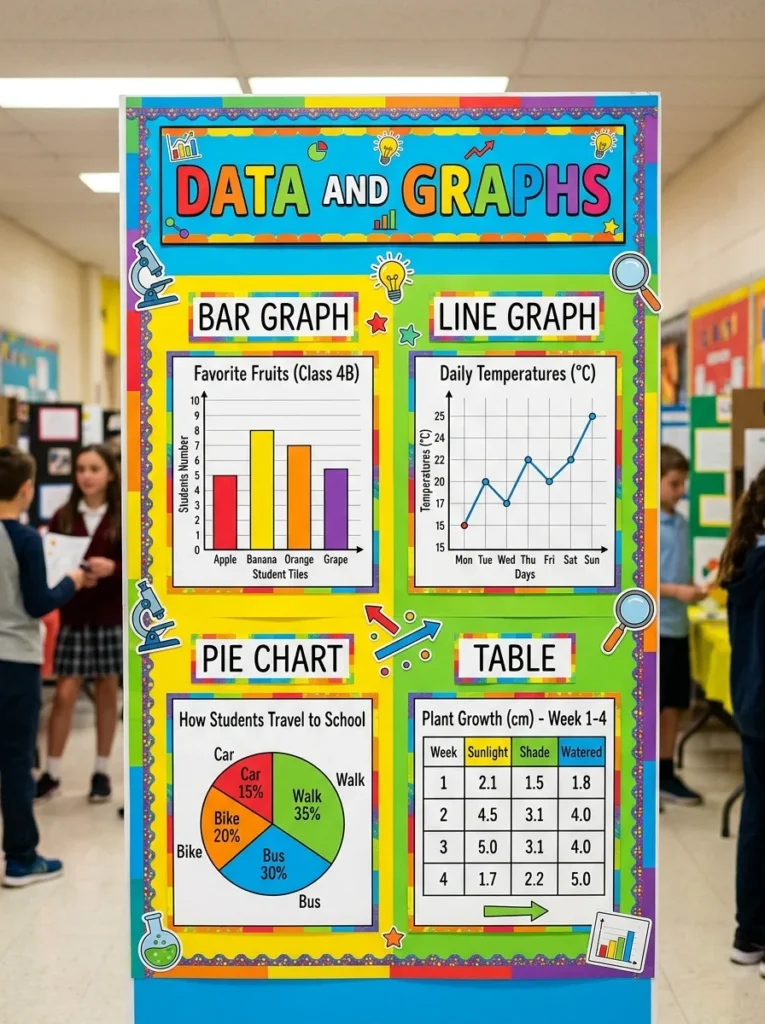
Create a display featuring how to present data and create graphs. This board helps students visualize and communicate their results.
Use a color palette of bright, clean colors. Feature examples of bar graphs, line graphs, pie charts, and tables. Include a “choose the right graph” section. Add a “common mistakes” section. Include a “data tips” section with advice for accurate recording.
QUICK TIPS
- Use real data examples.
- Let students practice creating graphs.
- Add a “graph of the week” section.
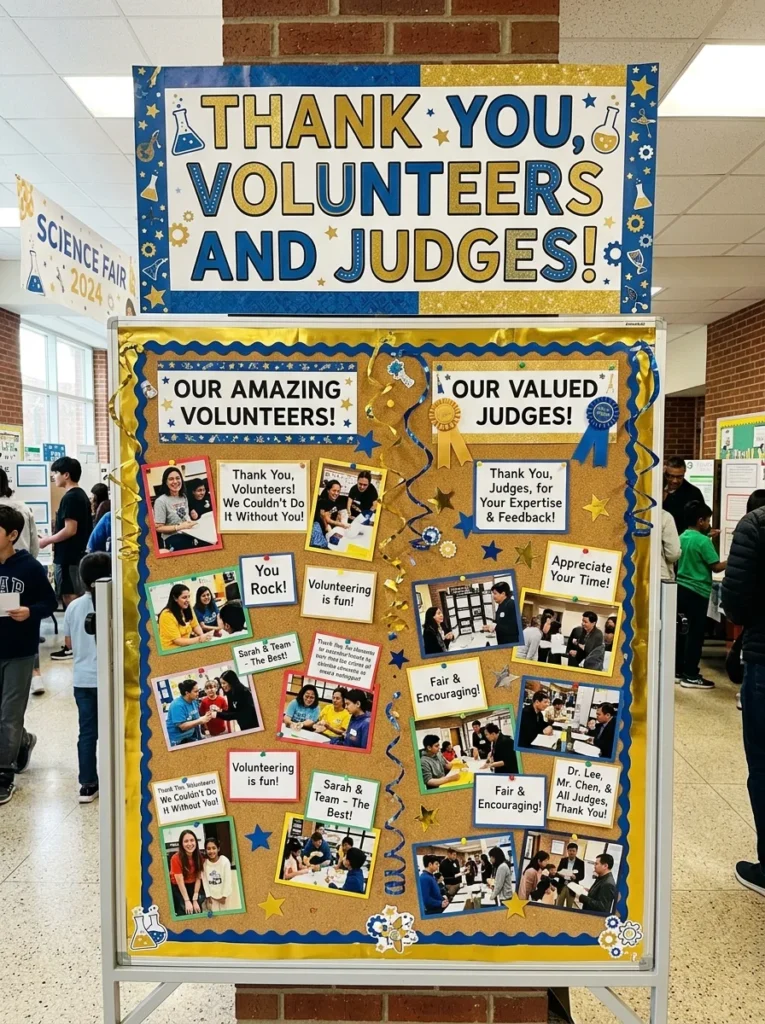
16. Science Fair Volunteers and Judges
Create a display thanking volunteers and judges. This board builds community and shows appreciation for those who support the science fair.
Use a color palette of gold, blue, and white. Feature photos of volunteers and judges. Include a “thank you” section. Add a “why we appreciate you” section. Include a “sponsors” section.
QUICK TIPS
- Let students write thank-you notes.
- Add a “volunteer of the year” section.
- Include a “how to help” section for future events.
17. Science Fair Awards
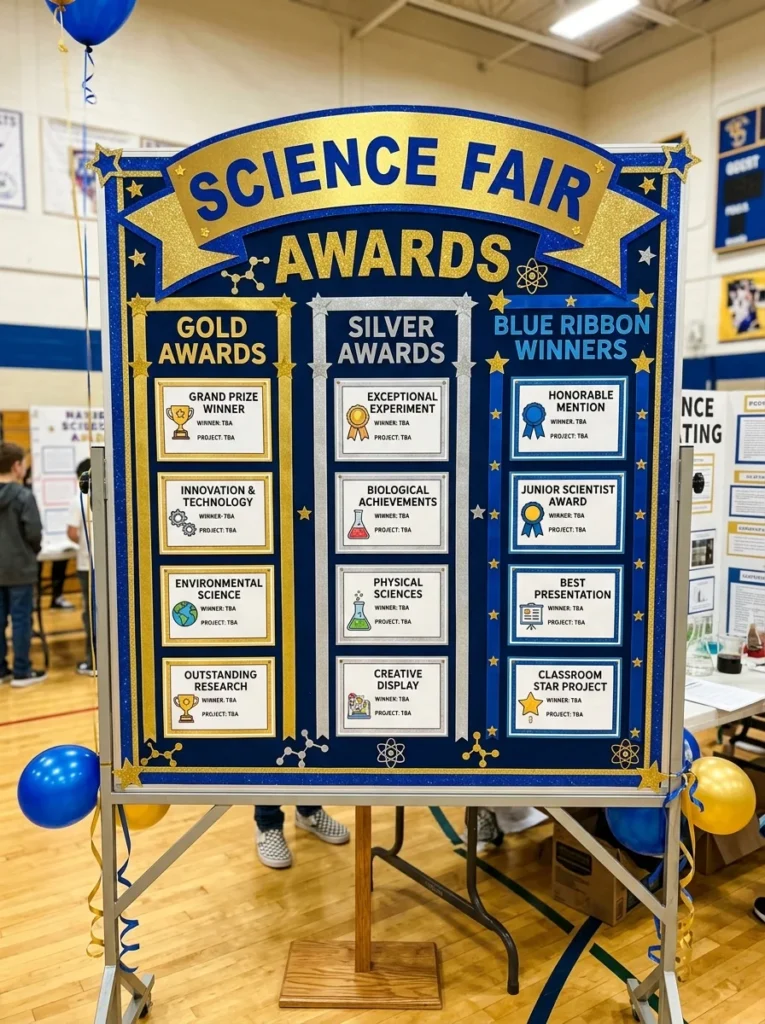
Create a display featuring science fair awards and recognition categories. This board builds excitement and motivates students to do their best.
Use a color palette of gold, silver, and blue. Feature award categories like: Best Overall Project, Most Creative, Best Presentation, Best Use of Scientific Method, and Most Original Idea. Include a “what it takes to win” section. Add a “past winners” section.
QUICK TIPS
- Include a mix of achievement and effort awards.
- Let students nominate projects.
- Add a “participation” section for all students.
18. Science Fair Celebration
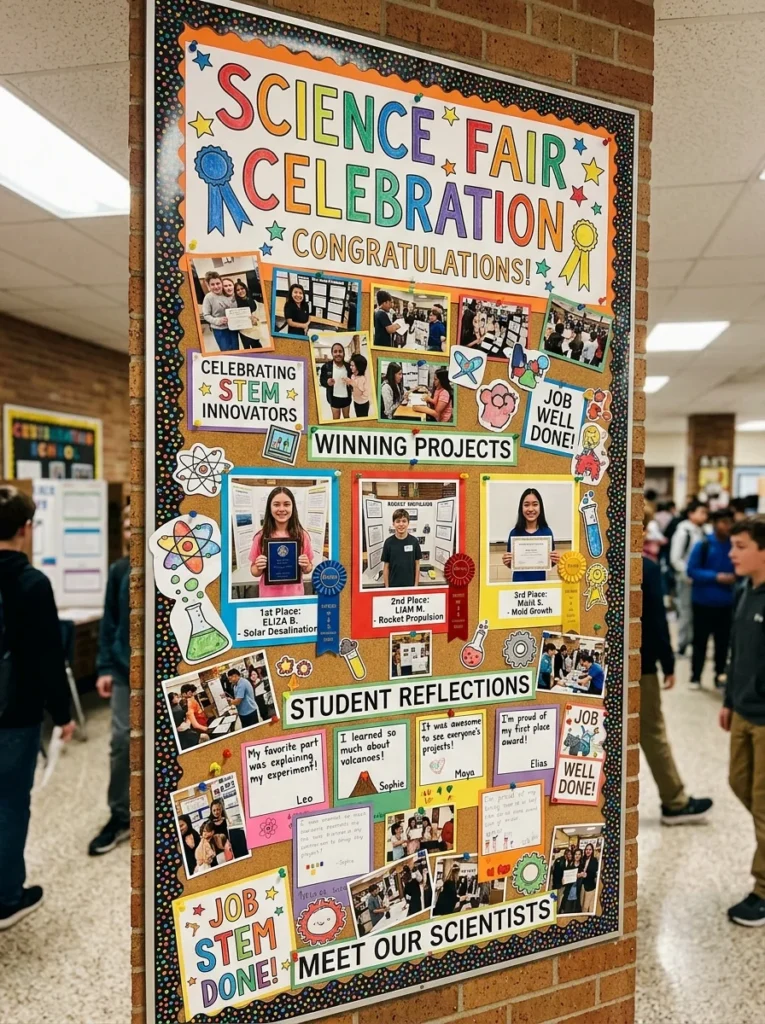
Create a display celebrating the science fair after the event. This board showcases student work and builds school pride.
Use a color palette of bright, celebratory colors. Feature photos from the science fair, winning projects, and student reflections. Include a “what we learned” section. Add a “thank you” section for participants and volunteers. Include a “looking ahead” section for next year.
QUICK TIPS
- Let students share their experiences.
- Add a “memorable moments” section.
- Include a “future scientists” section.
Final Thoughts
A science fair is an exciting time for students, teachers, and families. Your bulletin board can build anticipation, guide students through the process, and showcase their hard work. Whether you choose a countdown display, a scientific method guide, or a celebration board, these boards encourage students to explore, discover, and share their curiosity. Plan your board ahead, laminate cutouts for longevity, and keep the display fresh by updating it as the science fair progresses. Your science fair bulletin board can become a hub of excitement and learning for the entire event.