5 Study Planner Printable Free PDF Templates
Most students don’t struggle because they lack effort. They struggle because their time slips away unnoticed, buried under scattered notes, forgotten deadlines, and study sessions that never quite start on time. Sound familiar?
That disorganization isn’t a character flaw. It’s simply what happens without a system. A printable study planner gives you exactly that system, a physical, visual anchor that keeps assignments, exams, and daily study goals from disappearing into the chaos of a busy semester.
This guide walks through five original study planner printable free PDF concepts, each built for a different kind of student and study style. You’ll also learn how to use these planners effectively, avoid common planning mistakes, and customize your setup so it actually feels like yours.
Let’s get your study routine back under control.
📥 Download All 5 Planners:
- Weekly Time-Block Planner
- Daily Study Sprint Sheet
- Exam Countdown Planner
- Subject Balance Planner
- Homeschool Family Planner
Every template is a free, print-ready PDF, no email signup required.
Why Every Student Needs a Study Planner
Think about the last time you forgot an assignment until the night before it was due. That scramble, the racing heartbeat, the rushed and sloppy work, none of it happened because you didn’t care. It happened because nothing reminded you early enough.
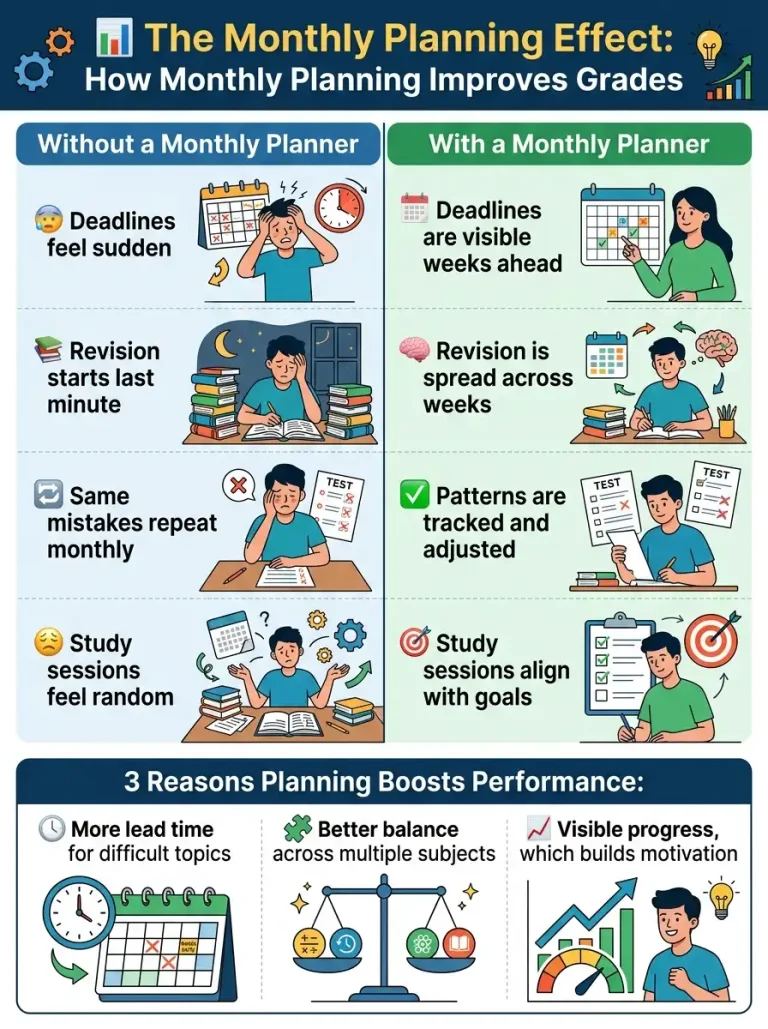
A study planner solves that problem directly. It turns vague intentions, like “study more this week,” into specific, trackable actions with real deadlines attached. Consequently, tasks stop hiding in your memory and start living somewhere visible instead.
Planners also build accountability. Once a study session is written down, it feels more real, more like a commitment rather than a vague someday plan. Additionally, seeing your workload laid out visually often reduces the anxious, overwhelmed feeling that comes from carrying everything in your head at once.
For homeschool students and parents, a shared planner creates structure without constant verbal reminders. Similarly, teachers often find that students who use planners consistently submit assignments more reliably, simply because deadlines stop sneaking up unexpectedly.
How Printable Study Planners Improve Productivity
Printable planners work because they combine several productivity principles into one simple page.
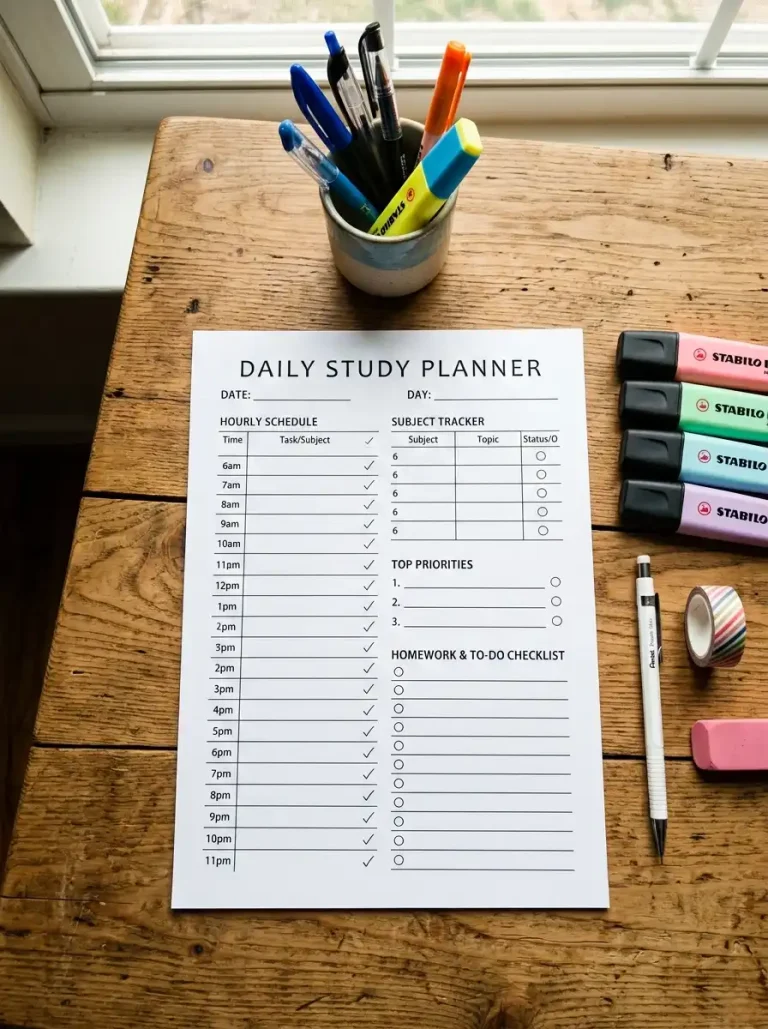
Time blocking sits at the core of most effective planners. Instead of a vague to-do list, you assign specific study sessions to specific hours, which naturally reduces decision fatigue throughout the day.
This structure also fights procrastination directly. When a task has an assigned time slot, it’s harder to keep pushing it aside indefinitely. Meanwhile, tracking assignments on paper keeps deadlines visible instead of buried in an app notification you might dismiss without reading.
Balancing subjects matters too. Without a plan, students often gravitate toward favorite subjects while neglecting harder ones. A printable planner forces a more even distribution, ensuring difficult material gets consistent attention rather than last-minute cramming.
Finally, printable planners build consistency. Physically writing your schedule each week reinforces the habit itself, strengthening your overall learning routine far more than sporadic digital reminders ever could.

5 Study Planner Printable Free PDF Templates
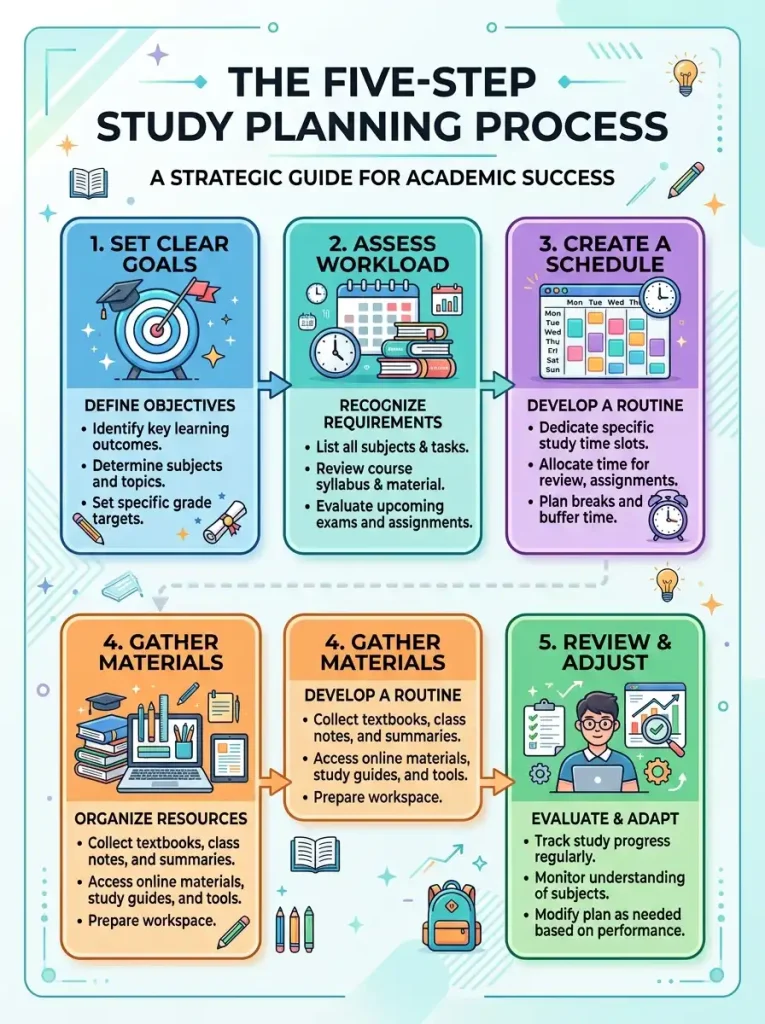
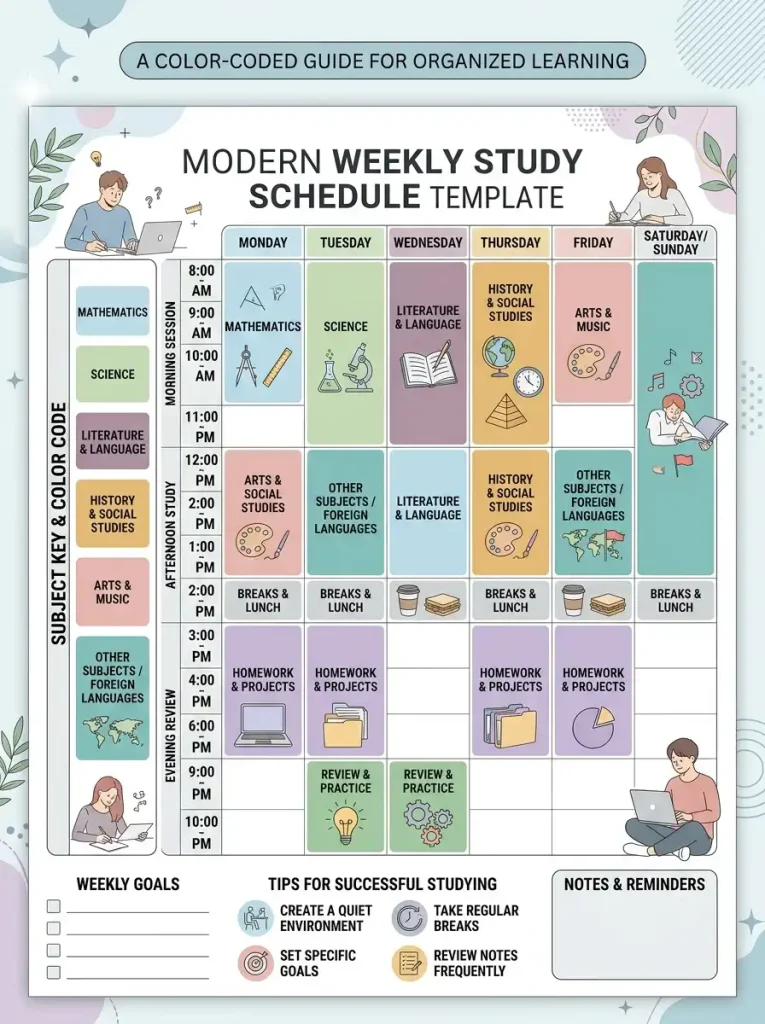
Below are five distinct planner concepts, each designed around a different study need. Choose the one that matches your current routine, or mix elements from a few.
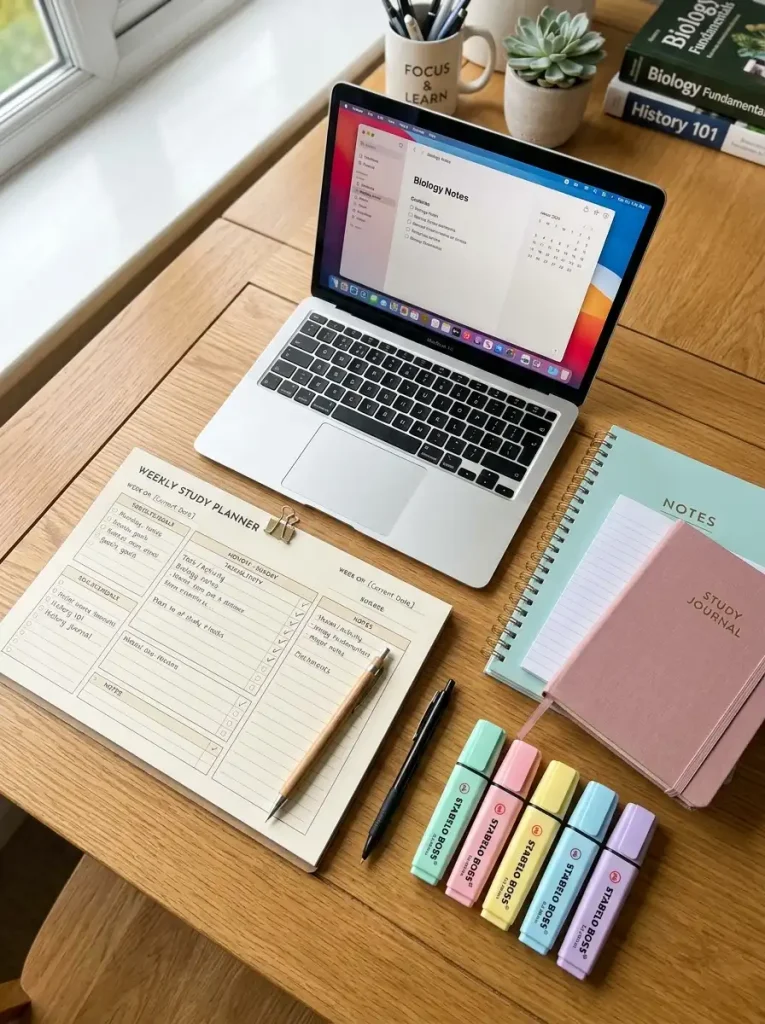
1. The Weekly Time-Block Planner
Best For: Students who thrive with visual structure and want to see their entire week at a glance.
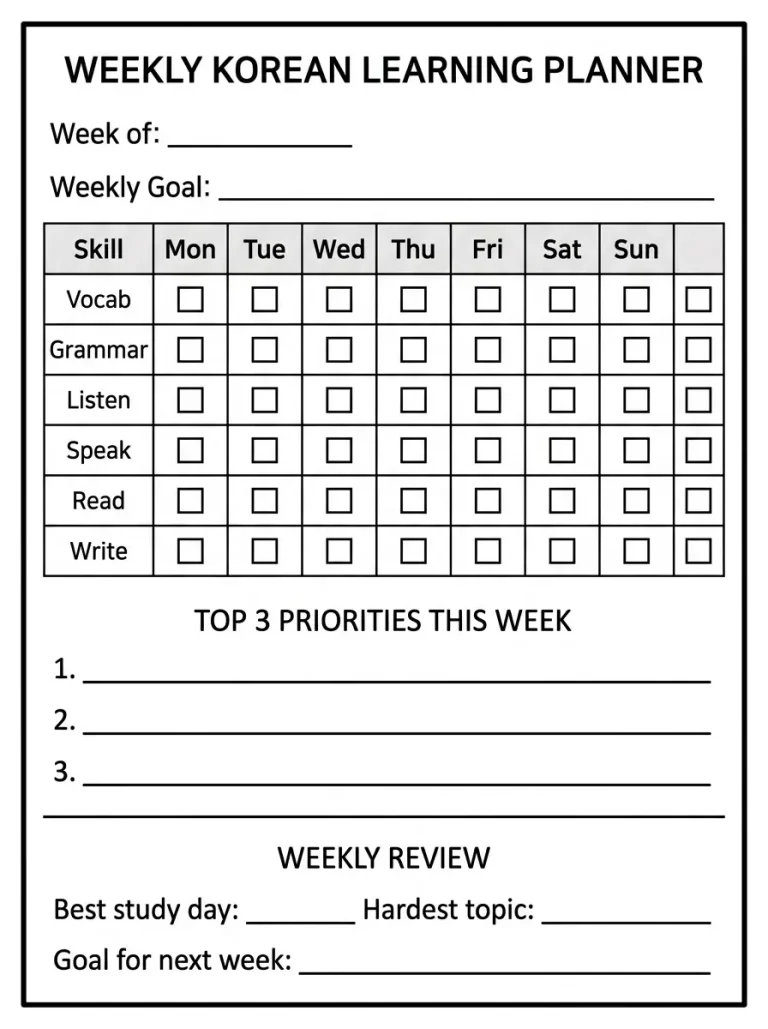
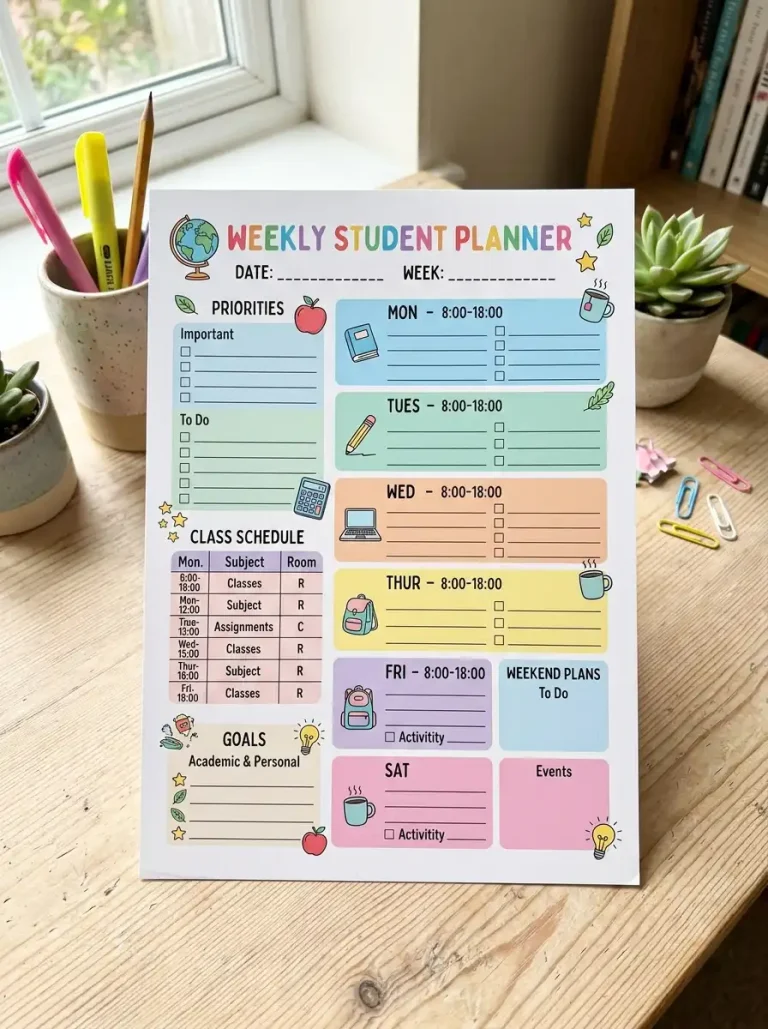
Key Features: A seven-day grid divided into hourly blocks, with dedicated space for subject labels, priority markers, and a small weekly goals section at the top.
Why It Works: Time blocking removes the guesswork from your day. Instead of wondering what to study next, you simply follow the schedule you’ve already committed to on paper.
Printing Tips: Print in landscape orientation for maximum grid space, and consider printing on cardstock if you plan to reuse the template weekly with dry-erase markers.
Suggested Color Version: A soft blue and cream palette works well here, since cooler tones tend to feel calming during long planning sessions.
📥 Download: Weekly Time-Block Planner (PDF)
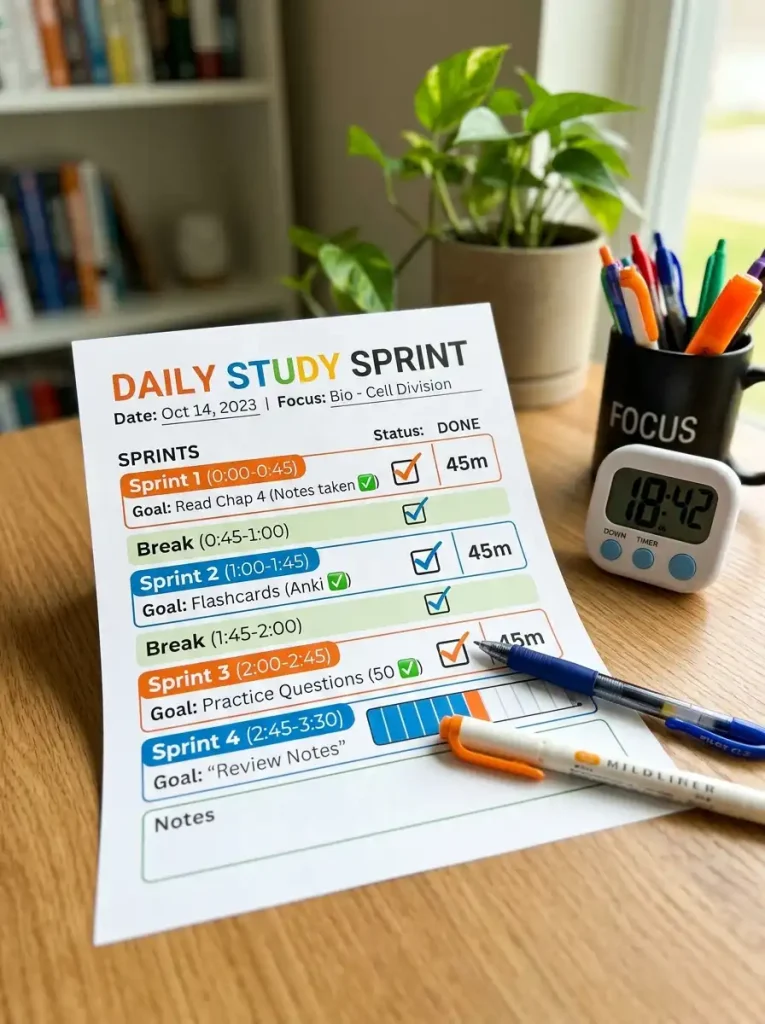
2. The Daily Study Sprint Sheet
Best For: Students who study in short, focused bursts rather than long, unbroken sessions.
Key Features: A single-day layout broken into 25-minute study sprints, paired with short break reminders and a small reflection box at the bottom for tracking focus levels.
Why It Works: Shorter, structured sprints reduce burnout while still maintaining steady academic progress. This format works particularly well for students who struggle with sustained attention.
Printing Tips: Print several copies at once, ideally a week’s worth, so you’re never scrambling for a fresh sheet mid-study session.
Suggested Color Version: Bright coral or yellow accents work well here, adding energy to a format built around quick, focused effort.
📥 Download: Daily Study Sprint Sheet (PDF)
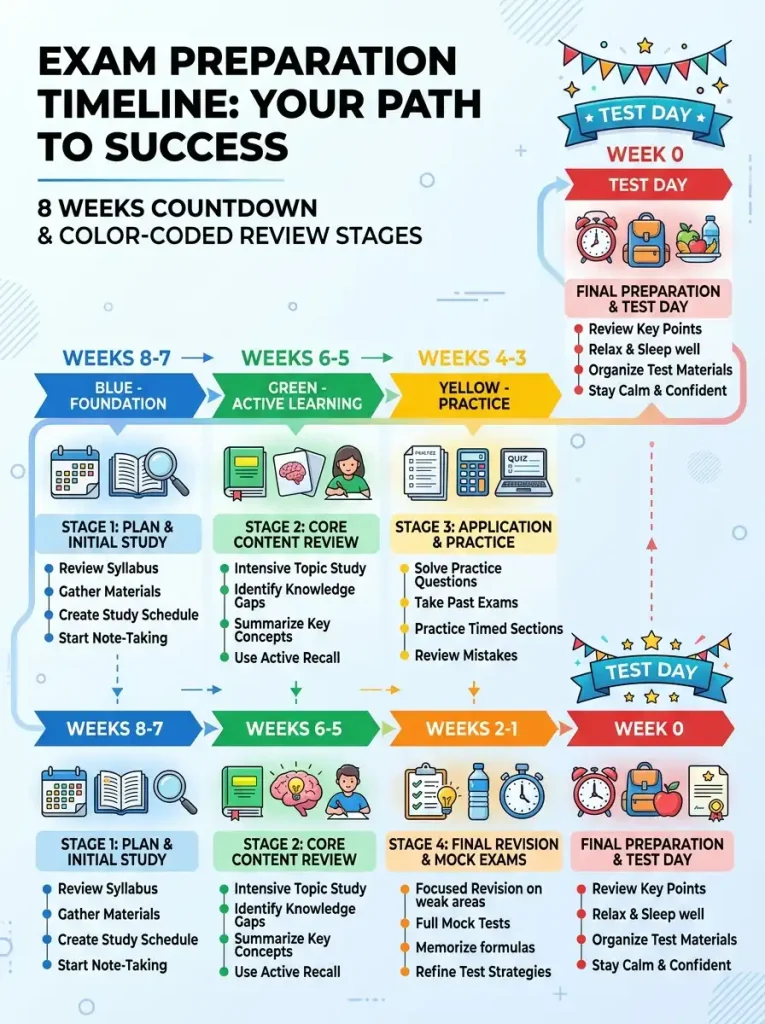
3. The Exam Countdown Planner
Best For: Students preparing for a specific exam or major test date.
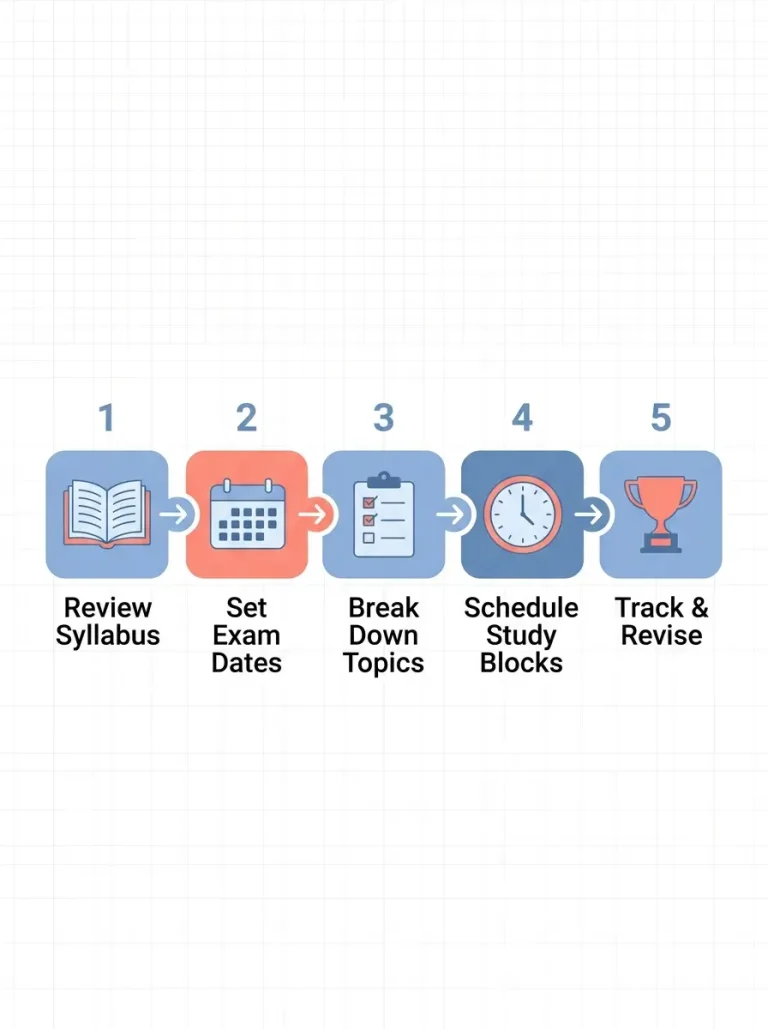
Key Features: A reverse countdown grid, starting from the exam date and working backward, with space to break each subject into smaller, manageable review topics.
Why It Works: Working backward from a fixed deadline naturally prevents last-minute cramming, since it visually distributes review workload evenly across the available days.
Printing Tips: Laminate this one if possible, since exam preparation often involves frequent adjustments as your revision schedule evolves.
Suggested Color Version: A red and white high-contrast design works well, reinforcing the urgency and focus this planner is built around.
📥 Download: Exam Countdown Planner (PDF)
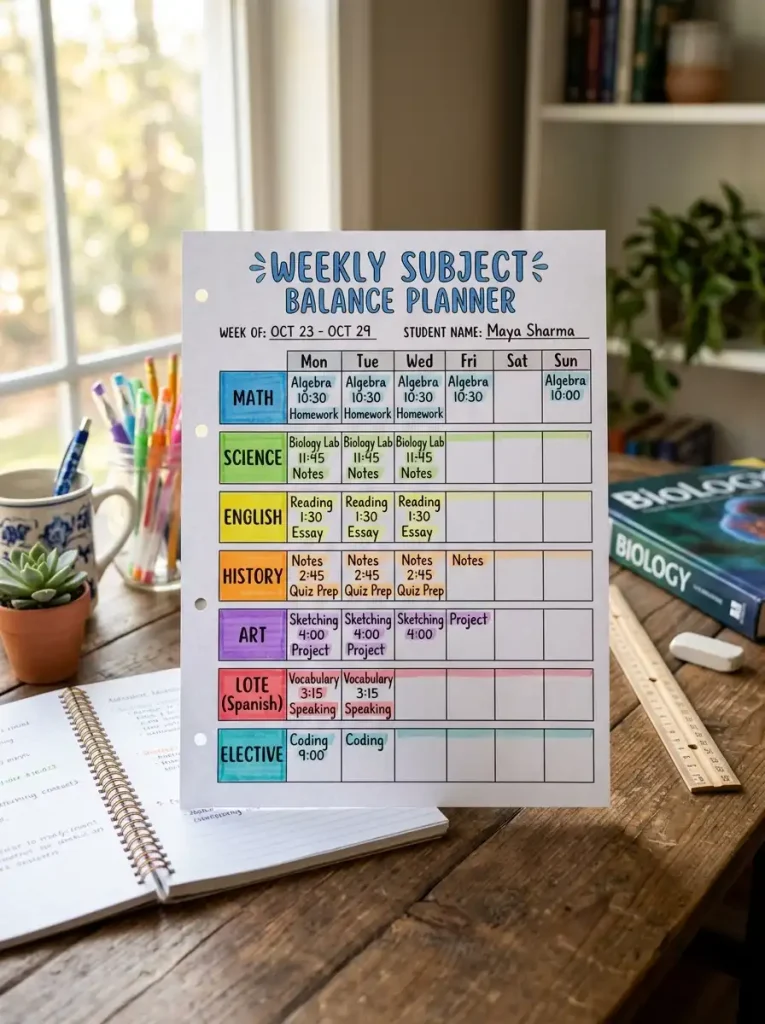
4. The Subject Balance Planner
Best For: Students juggling multiple classes who tend to favor certain subjects over others.
Key Features: A weekly layout with equal, clearly divided sections for each subject, plus a small tracker showing how many hours were spent on each one.
Why It Works: Visualizing time distribution across subjects highlights imbalances immediately, making it easier to correct before a neglected subject becomes a real problem.
Printing Tips: Print in color if possible, assigning each subject its own consistent color for quick visual scanning throughout the week.
Suggested Color Version: A rainbow-coded palette, one distinct color per subject, works particularly well for this format.
📥 Download: Subject Balance Planner (PDF)
5. The Homeschool Family Planner
Best For: Parents managing study schedules for multiple children, or homeschool families needing shared visibility.
Key Features: A weekly grid with separate rows for each child, plus a shared family goals section and space for tracking completed assignments across subjects.
Why It Works: Centralizing multiple children’s schedules onto a single page reduces confusion and keeps everyone accountable without constant verbal check-ins throughout the day.
Printing Tips: Print on larger paper if possible, like tabloid size, to leave enough room for each child’s individual tasks without overcrowding the page.
Suggested Color Version: Soft pastel tones work best here, keeping the shared planner visually calm despite tracking multiple schedules at once.
📥 Download: Homeschool Family Planner (PDF)
How to Use a Printable Study Planner Effectively
Owning a planner and actually using it well are two different things. A few simple habits make all the difference.
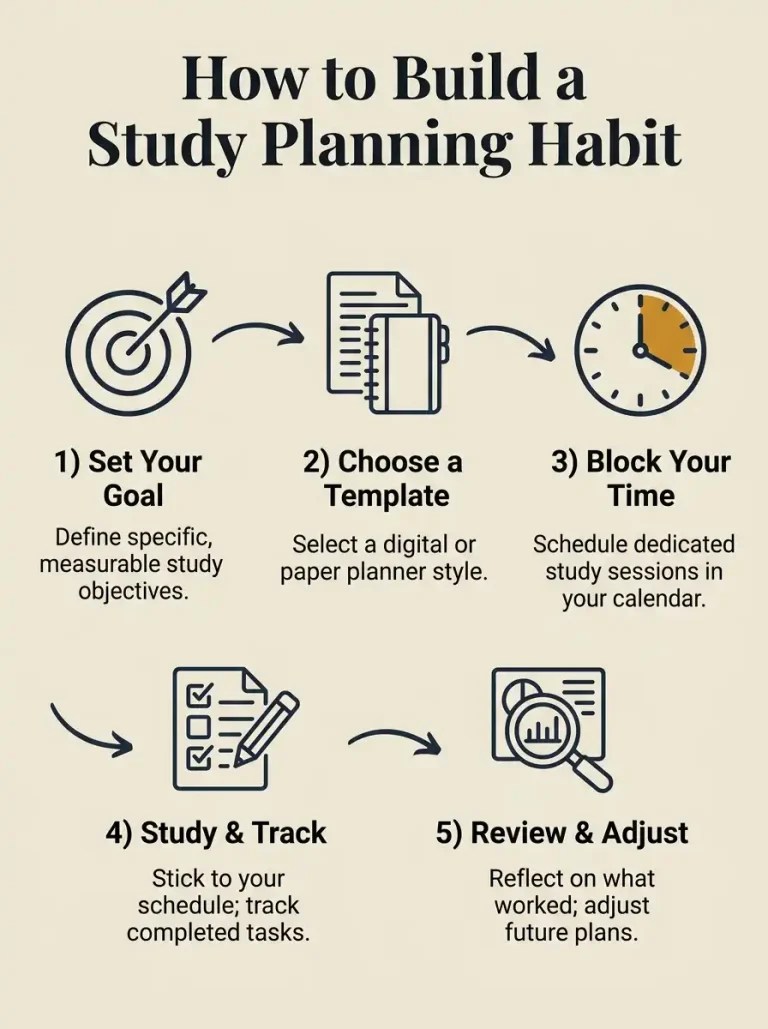
First, fill out your planner at the same time each week, ideally Sunday evening or early Monday morning. This consistency turns planning into a routine rather than an occasional afterthought.
Next, be realistic about your available time. Overpacking a schedule almost guarantees you’ll fall behind, which often leads to abandoning the planner altogether out of frustration.
Quick Tip: Always leave at least one buffer block each day for unexpected tasks or overflow from previous sessions.
Additionally, prioritize your hardest subjects during your highest-energy hours. For example, if mornings feel sharpest for you, schedule challenging material then rather than saving it for tired evening hours.
Finally, review your planner at the end of each week. Notice what worked, what didn’t, and adjust accordingly. This reflection step turns your planner into a genuinely evolving tool instead of a static template you fill out mechanically.
Common Mistakes Students Make
Even with a great planner, a few habits can quietly undermine your progress.
- Overscheduling every minute. Leave breathing room; an overpacked schedule often causes more stress than the disorganization it’s meant to fix.
- Ignoring realistic time estimates. Tasks almost always take longer than expected, so pad your estimates generously.
- Skipping the reflection step. Without reviewing what worked, your planner never actually improves over time.
- Abandoning the planner after one bad week. Every system has rough weeks. Consistency matters more than perfection.
- Using vague task descriptions. Writing “study biology” is less effective than “review chapters 4 and 5 flashcards.”
- Forgetting to schedule breaks. Continuous studying without rest reduces focus and retention significantly.
See also: 12 Graduation Story Instagram Ideas
Printable Planner Customization Ideas
A planner works best when it actually feels like yours. A few small touches make a noticeable difference.
- Colored pens: Use different colors for different subjects or priority levels, making your schedule easier to scan quickly.
- Stickers: Reward completed tasks with small stickers, a surprisingly effective motivator, even for older students.
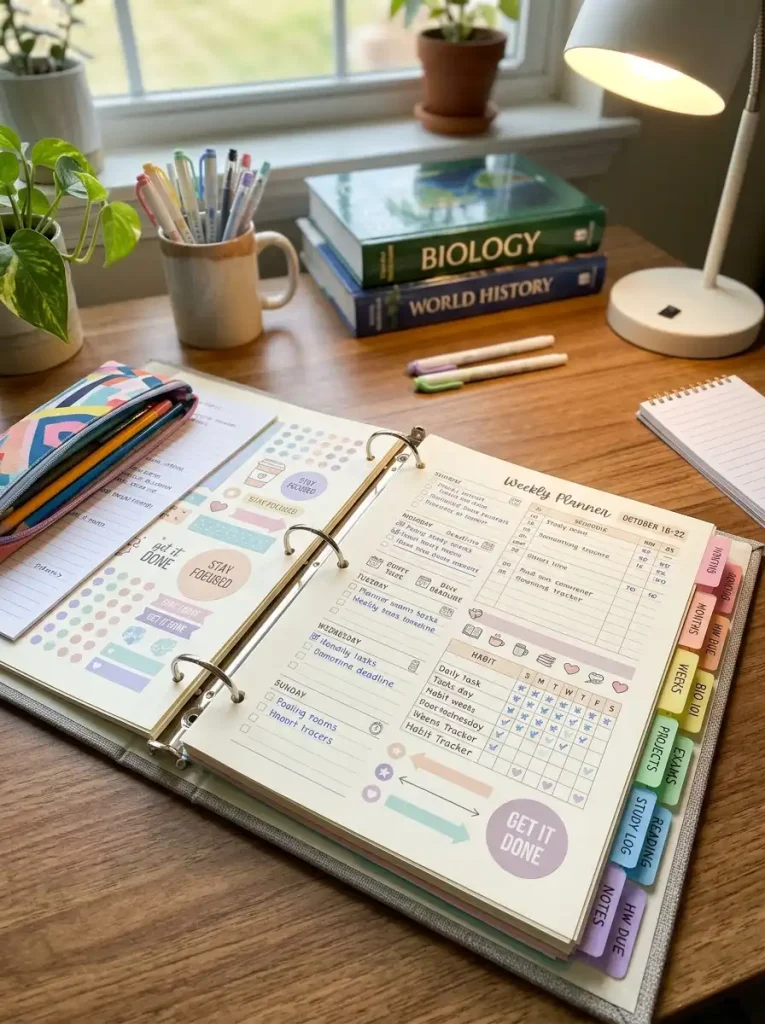
- Binders: Store weekly sheets in a binder to build an ongoing record of your study habits over the semester.
- Laminating: Laminate frequently reused templates, then write directly on them with dry-erase markers.
- Digital annotation: Import your printable PDF into a tablet app for a hybrid paper-digital planning experience.
- Hole punching: Punch holes for easy binder storage, keeping your planners organized chronologically.
- Reusable planners: Combine laminating with dry-erase markers to create a planner you can wipe clean and reuse indefinitely.
Frequently Asked Questions
What’s the best study planner printable free PDF for beginners? The Weekly Time-Block Planner works well for beginners, since its simple grid format requires minimal setup while still providing clear daily structure.
How often should I update my study planner? Most students benefit from a weekly update, ideally done at the same time each week to build consistency into the habit itself.
Can printable planners work for online or remote learners? Yes, printable planners work especially well for remote learners, since they provide physical structure that digital-only schedules sometimes lack.
Should I use a daily or weekly planner format? It depends on your study style. Daily formats suit students who need detailed, hour-by-hour structure, while weekly formats work better for those wanting a broader overview.
How do I stop procrastinating even with a planner? Break large tasks into smaller, specific steps, and schedule your hardest subjects during your highest-energy hours. Vague, oversized tasks are far easier to avoid than small, clear ones.
Are printable planners better than digital planning apps? Neither option is universally better; it depends on personal preference. Many students actually combine both, printing physical templates while cross-referencing digital calendar reminders.
How do I make my study planner sustainable long-term? Keep your schedule realistic, review it weekly, and adjust based on what actually works. Planners that stay flexible tend to last far longer than rigid, unchanging templates.
Can parents use these planners to help younger students? Absolutely. The Homeschool Family Planner works particularly well for parents managing multiple children’s schedules within a single shared document.
What’s the best way to organize multiple printable planner sheets? A simple binder with hole-punched pages works well, allowing you to build an ongoing, chronological record of your study habits throughout the semester.
Do I need to print in color for these planners to work? Not necessarily. While color coding helps with quick visual scanning, black and white versions work just as effectively, especially when paired with colored pens after printing.
See also: 15 Random Story Ideas for Instagram
Final Thoughts
A printable study planner won’t magically finish your assignments for you, but it will make sure nothing important slips through the cracks again. That alone changes everything about how manageable your workload feels.
Choose the planner style that fits your current routine, print it out, and give yourself one full week to test it honestly. Adjust as you go, since the best system is always the one you’ll actually keep using.
Your next study session starts with a single filled-in page. Print one today, and take back control of your schedule.