10 Exam Study Planner Printable PDF Templates
Exam season has a way of sneaking up on you. One week you’re casually reviewing notes, and the next you’re staring at a syllabus wondering how you’ll ever cover it all. If that sounds familiar, you’re not alone — and the fix is usually simpler than it feels.
A good study planner turns a overwhelming pile of topics into a series of small, manageable steps. It doesn’t just organize your time. It reduces anxiety, because you can actually see the plan instead of carrying it around in your head. Once your schedule lives on paper, your brain gets to stop rehearsing it every five minutes.
That’s where printable study planners come in. Unlike apps that ping you with notifications or get lost in a sea of open tabs, a printed planner sits on your desk where you can see it. You check boxes. You cross off days. You physically watch your progress build, which is oddly motivating in a way that a digital checklist rarely matches.
PDF templates make this even easier. You don’t need design skills or a subscription to a planning app. You download the file, print it at home or at a copy shop, and you’re ready to plan your next study session in minutes. No sign-ups, no software to learn, no distractions.
In this guide, we’re sharing ten exam study planner printable templates, each designed for a different study style and situation. Whether you’re revising for finals, preparing for a licensing exam, or helping your child stay organized for their next test, there’s a template here that fits. We’ll also walk through how to use these planners effectively, common mistakes to avoid, and a full downloadable PDF pack so you can start printing right away.
Why Students Need Study Planners
Most students don’t fail exams because they don’t study. They fail because they study the wrong things at the wrong time, or they run out of time altogether. A planner solves both problems at once.
When you write down what you’ll study and when, you’re forced to look at the whole syllabus honestly. You see which topics need more attention. You notice gaps before they become emergencies. That kind of visibility is hard to get when everything lives in your memory.
There’s also a psychological benefit. Decision fatigue is real, and it hits hardest during exam season. If you have to decide what to study every single time you sit down, you waste mental energy before you’ve even opened a book. A planner removes that decision. You already know what’s next.
Consistency matters more than intensity when it comes to exam prep. Short, regular study sessions beat last-minute cramming almost every time. A planner helps you build that rhythm because it makes your progress visible day by day, not just the night before the test.
Benefits of Printable PDF Study Planners
Printable planners have a few advantages that digital tools simply can’t replicate. First, there’s no screen involved, which matters a lot if you’re already spending hours staring at lecture slides or textbooks online. Paper gives your eyes and your brain a break.
Second, printable planners are fully customizable. You can highlight, doodle, color-code subjects, and write notes in the margins without worrying about app limitations. Some students find that the physical act of writing helps them remember material better than typing does.
Third, PDF templates are incredibly flexible. You print exactly what you need, when you need it. Running out of weekly planner pages three weeks before finals? Print more. Need an extra countdown tracker for a specific class? Print that too. There’s no monthly fee and no account required.
Finally, printable planners are shareable. Parents, tutors, and study groups can all use the same template, which makes it easier to stay accountable together. A shared visual system tends to keep everyone on the same page, literally.
How to Use an Exam Study Planner Effectively
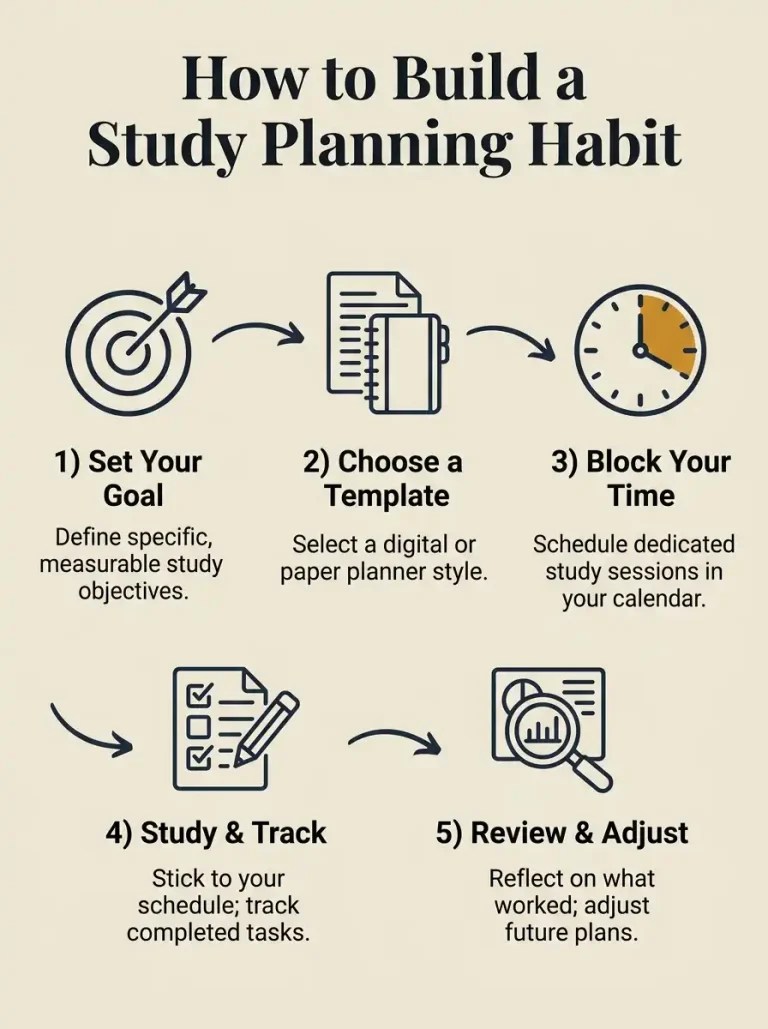
Owning a planner and using it well are two different things. The biggest mistake students make is filling it out once and never adjusting it. Your plan should evolve as your exam date gets closer and as you learn which subjects need more time.
Start by writing down every exam date and its weight or importance. Then break each subject into smaller topics rather than vague blocks like “study math.” Specific tasks such as “review quadratic equations” are far easier to actually complete.
Next, assign realistic time blocks. Most people overestimate how much they can cover in an hour, especially for dense subjects. Give yourself buffer time between sessions so a slow start doesn’t wreck your whole day.
Review your planner every morning and evening. A quick morning glance sets your intentions. An evening review lets you check off what got done and adjust tomorrow’s plan if something didn’t go as expected. This two-minute habit keeps your planner alive instead of letting it collect dust on your desk.
Common Study Planning Mistakes
Even motivated students fall into a few predictable traps. Recognizing these early can save you a lot of frustration during exam season.
Overplanning. Cramming twelve hours of study into a single day looks impressive on paper, but it’s rarely sustainable. Realistic planning beats ambitious planning almost every time.
Ignoring rest days. Your brain needs recovery time to actually store what you’ve learned. Planners that leave no room for breaks tend to get abandoned within a week.
Studying topics in the wrong order. Reviewing your strongest subject first feels good, but it wastes precious early energy on material you already know. Tackle harder topics when your focus is sharpest.
Not tracking actual progress. Writing a plan is only half the job. If you never go back and mark what you completed, you lose the feedback loop that makes planning useful in the first place.
Using one planner for everything. A single generic template rarely fits every subject or every stage of preparation. Mixing weekly, daily, and countdown formats tends to work better than forcing one page to do it all.
Tips for Staying Consistent
Consistency is the real secret behind effective exam prep, and it’s also the hardest part to maintain. A few small habits can make a big difference.
Keep your planner somewhere visible, not buried in a folder. Desks, walls, or the front of a binder all work well. Out of sight really does mean out of mind here.
Pair your planning session with an existing habit, like reviewing tomorrow’s tasks right after dinner. Attaching a new habit to an old one makes it far more likely to stick.
Celebrate small wins. Checking off a completed study block might seem trivial, but that tiny hit of satisfaction reinforces the habit loop. Over a few weeks, it adds up to genuine momentum.
Finally, forgive missed days quickly. One skipped session doesn’t ruin your plan. What matters is getting back to it the next day instead of abandoning the whole system out of guilt.
Choosing the Right Planner
Not every student needs the same kind of planner. Someone preparing for a single big exam in six weeks has different needs than someone juggling five subjects across an entire semester.
If your exam is close, a countdown-style planner with daily breakdowns will serve you better than a broad monthly overview. If you’re planning months in advance, a monthly planner paired with a subject tracker gives you the bigger picture you need.
Consider your learning style too. Visual learners often benefit from color-coded weekly planners, while list-driven learners might prefer a simple daily checklist format. There’s no universal best planner, only the one that matches how you actually think and work.
It also helps to think about how much detail motivates you versus overwhelms you. Some students thrive with hour-by-hour time blocking. Others do better with loose daily goals and more flexibility. Test a couple of formats early in your prep and keep the one that feels sustainable.
Printable vs Digital Study Planners
Both formats have their place, and plenty of students use a mix of the two. Digital planners sync across devices and send reminders, which suits people who are already glued to their phones anyway.
Printable planners, on the other hand, remove the temptation to check messages or scroll social media the moment you open your planning tool. That single difference is often enough to tip the balance in favor of paper during focused study sessions.
Printable planners are also easier to personalize. Sketching arrows, underlining priorities, or adding sticky notes is far more natural on paper than in most apps. For students who study better away from screens, a printable exam planner PDF is usually the more sustainable option.
The real answer for many people is a hybrid approach: use a digital calendar for exam dates and reminders, and a printable planner PDF for the actual daily study breakdown. That combination captures the best of both worlds without asking you to give up either one.
10 Exam Study Planner Printable Templates
Here are ten printable planner templates designed to cover different exam prep needs, from big-picture semester planning to last-minute countdown tracking. Each one is included in the downloadable PDF pack at the end of this article.
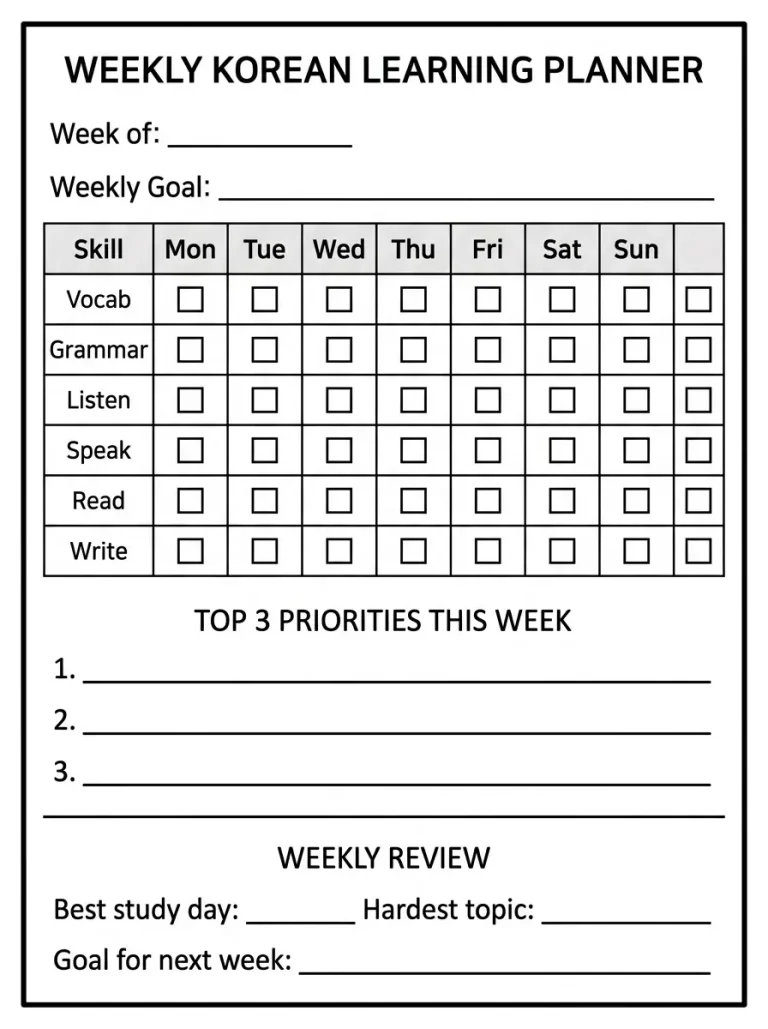
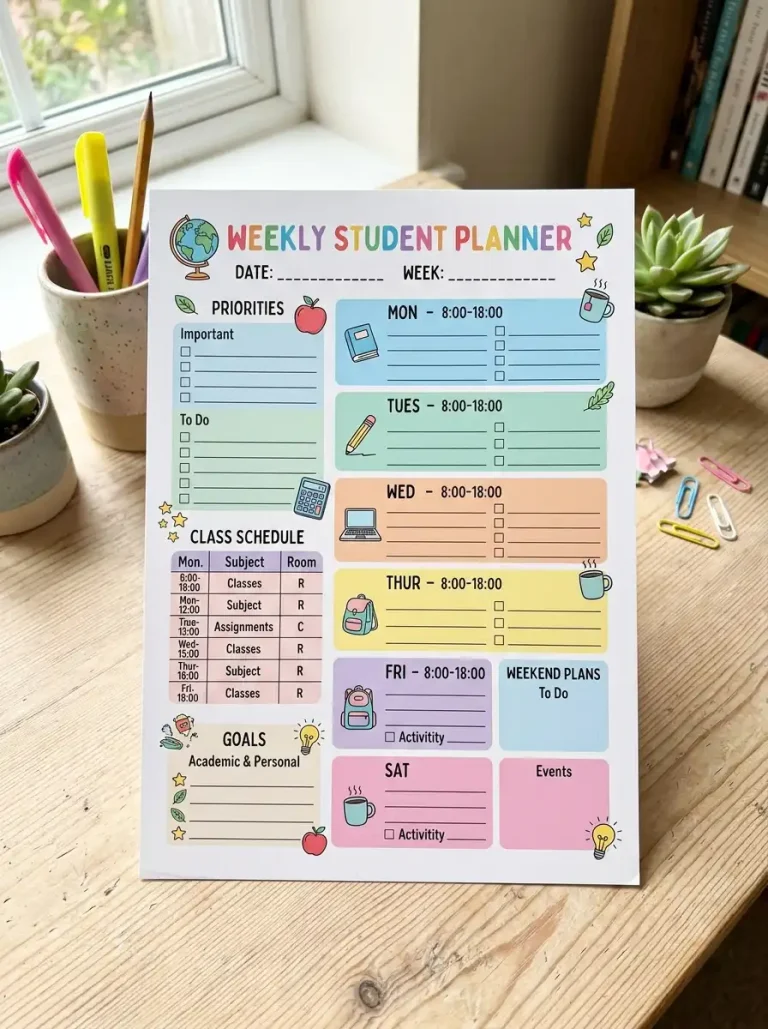
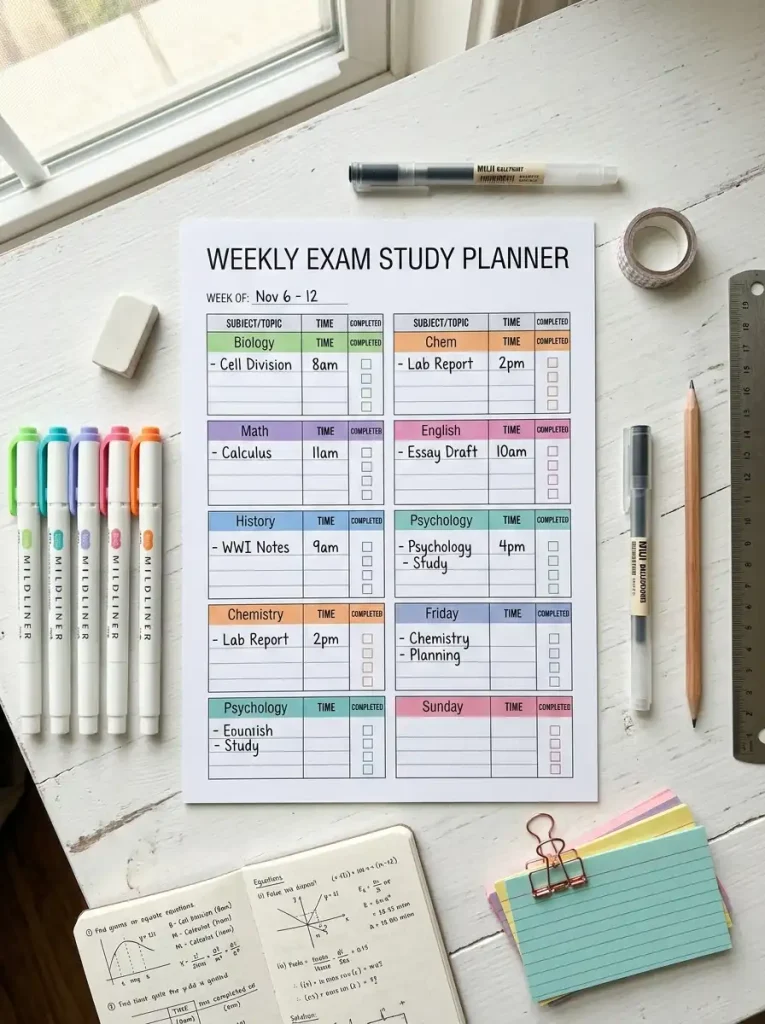
1. Weekly Study Planner
This is the workhorse of exam preparation. It breaks your week into daily blocks so you can see exactly what you’re studying each day without feeling boxed into rigid hourly slots.
Best for: Students juggling multiple subjects across a normal school or college week.
Key features: Seven-day layout, subject labels, checkboxes for completed sessions, and a small notes section for reminders.
Advantages: It’s flexible enough to handle changing schedules while still giving you a clear weekly overview.
Suggested print layout: A4 portrait, one page per week, with each day given equal space.
Customization ideas: Color-code subjects using highlighters so you can spot patterns at a glance, like which subject keeps getting pushed to Sunday.
Productivity tips: Fill it out on Sunday evening for the week ahead rather than planning day by day, which tends to lead to skipped sessions.
Why it works: It balances structure with flexibility, which is exactly what most weekly routines need.
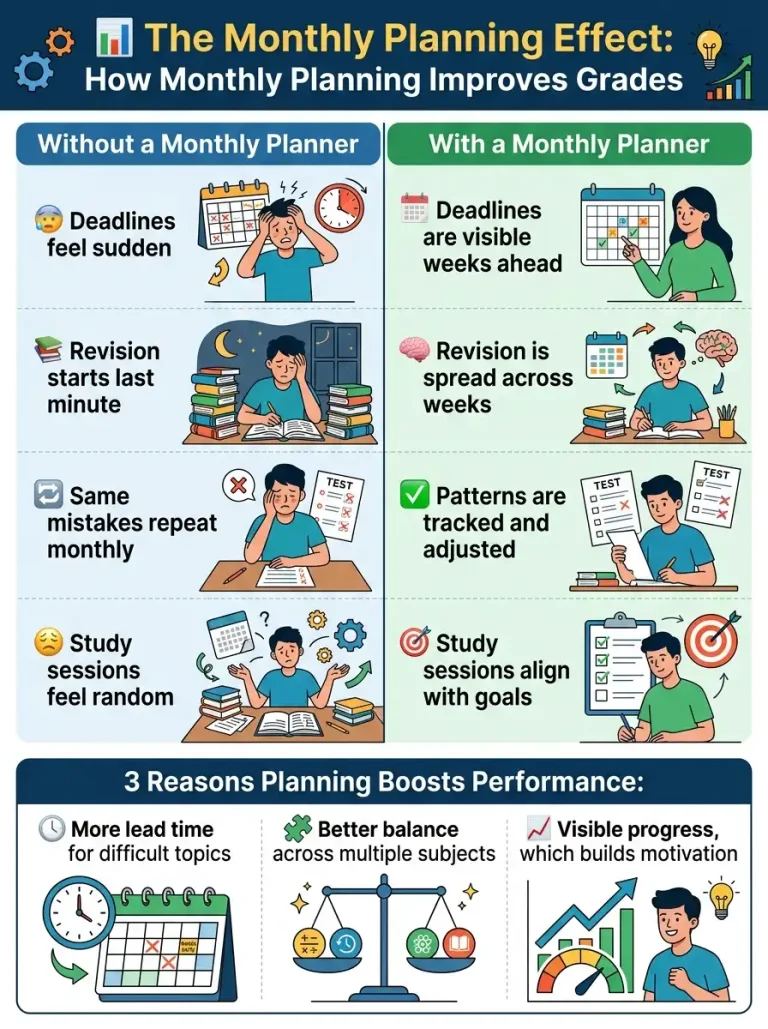
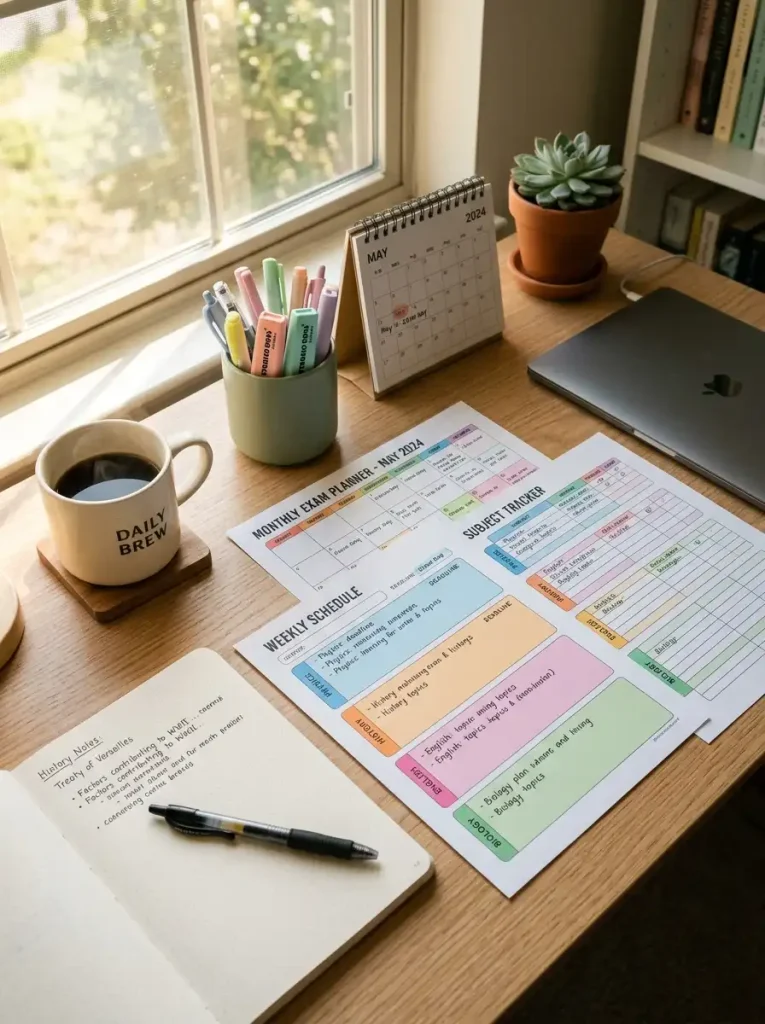
2. Monthly Study Overview
Zoom out with a monthly planner that shows your entire study month at a glance. This template is less about daily tasks and more about spotting busy weeks before they sneak up on you.
Best for: Students preparing for exams that are still several weeks or months away.
Key features: A full calendar grid, space to mark exam dates, and a small key for color-coding subjects or priority levels.
Advantages: Helps you distribute study time evenly instead of clustering everything into the final week.
Suggested print layout: A4 landscape works best here to give each day enough writing room.
Customization ideas: Mark deadlines, assignments, and exam dates in one color and dedicated study blocks in another.
Productivity tips: Review this page at the start of every month and again halfway through to catch any drift from your original plan.
Why it works: A monthly view prevents the common trap of only realizing an exam is close once it’s already too late to prepare properly.
3. Subject Tracker Sheet
Some subjects need more attention than others, and this template helps you see that clearly instead of guessing. It’s essentially a scoreboard for your preparation across every class.
Best for: Students with four or more subjects who need to compare progress side by side.
Key features: A grid listing every subject with columns for topics covered, confidence level, and remaining work.
Advantages: Makes weak spots obvious before they turn into last-minute panic.
Suggested print layout: A4 portrait, one row per subject for easy comparison.
Customization ideas: Add a simple star rating or traffic-light color system for confidence levels.
Productivity tips: Update it weekly rather than daily so you can track real trends instead of daily noise.
Why it works: Comparing subjects side by side naturally directs your attention toward whatever needs it most.
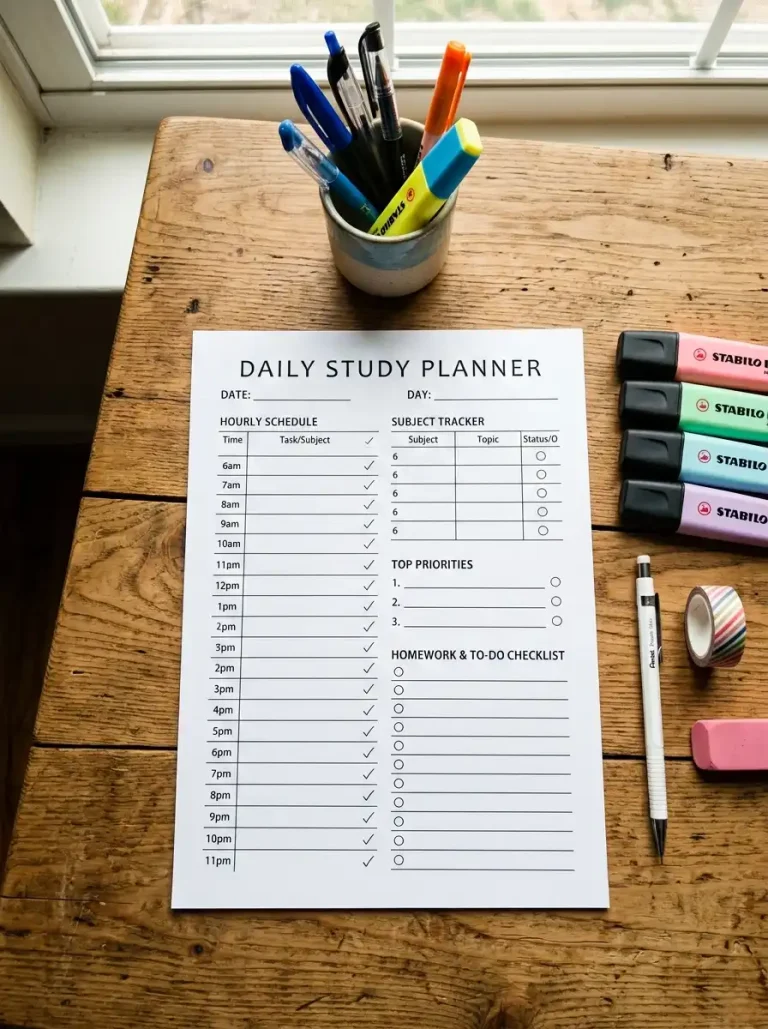
4. Daily Study Planner
When exam week finally arrives, broad weekly views stop being useful. This daily planner narrows the focus down to a single day, hour by hour.
Best for: The final one to two weeks before an exam, when precision matters most.
Key features: Hourly time blocks, a top-priority task box, and a short reflection section at the bottom.
Advantages: Removes ambiguity about what to do next, which is especially helpful when stress is high.
Suggested print layout: A4 portrait, one page per day.
Customization ideas: Add a mood or energy tracker to notice patterns in when you focus best.
Productivity tips: Write tomorrow’s plan the night before so you can start studying immediately instead of wasting the first twenty minutes deciding what to do.
Why it works: Detailed daily structure reduces decision fatigue exactly when you have the least mental energy to spare.
5. Revision Tracker
Revision is different from first-time learning, and it deserves its own tracking system. This template helps you see how many times you’ve actually reviewed each topic.
Best for: Students in the final revision phase who need to confirm retention, not just exposure.
Key features: A topic list with multiple review columns, so you can mark first, second, and third passes.
Advantages: Prevents the common mistake of reading a topic once and assuming it’s mastered.
Suggested print layout: A4 portrait, organized by subject with generous row spacing.
Customization ideas: Add a small self-testing column where you note your quiz score after each review pass.
Productivity tips: Aim for at least three review passes per topic before exam day, spaced a few days apart.
Why it works: Spaced repetition is one of the most well-supported learning strategies, and this tracker makes it easy to actually follow through on it.
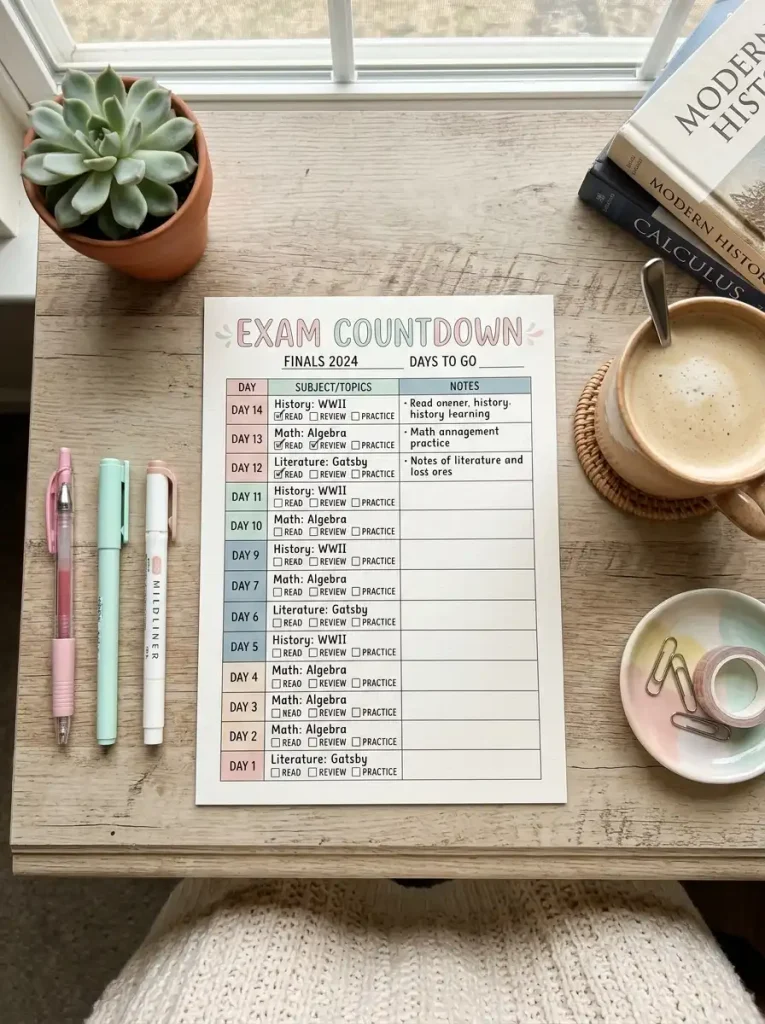
6. Exam Countdown Planner
Nothing focuses the mind quite like watching the days tick down. This template turns that pressure into a structured, motivating tool instead of a source of anxiety.
Best for: The final stretch, typically the last 7 to 30 days before a major exam.
Key features: A numbered countdown grid, daily focus areas, and a small motivational quote or goal box.
Advantages: Creates urgency without chaos, since each day already has an assigned focus.
Suggested print layout: A4 portrait, one countdown block per day, stacked vertically.
Customization ideas: Add a small progress bar you fill in manually as the exam approaches.
Productivity tips: Use the final two or three countdown days for light review only, not new material, to avoid last-minute overwhelm.
Why it works: Visualizing the countdown turns an abstract deadline into something concrete and manageable.
7. Time Blocking Sheet
Time blocking assigns a specific task to every chunk of your day, leaving little room for procrastination. This template is stricter than a typical daily planner and works well for students who thrive on structure.
Best for: Students who tend to lose time to distractions or indecision.
Key features: Half-hour or hourly blocks from morning to night, with color-coded categories for study, breaks, and other commitments.
Advantages: Makes procrastination visually obvious, since empty blocks stand out immediately.
Suggested print layout: A4 portrait, full-day timeline down the left margin.
Customization ideas: Use different colors for deep-focus study versus lighter review sessions.
Productivity tips: Block in breaks and meals first, then fill study sessions around them rather than the other way around.
Why it works: Seeing your entire day mapped out removes the guesswork that often leads to wasted hours.
8. Goal Setting Page
Before diving into daily tasks, it helps to zoom out and define what success actually looks like. This template captures both big-picture goals and the smaller steps that lead there.
Best for: The very start of exam prep, before the detailed planning begins.
Key features: Sections for long-term goals, short-term milestones, and potential obstacles with planned solutions.
Advantages: Keeps your daily study sessions connected to a bigger purpose, which helps on low-motivation days.
Suggested print layout: A4 portrait, single page with clearly divided sections.
Customization ideas: Add a “why this matters” box to remind yourself of your personal motivation.
Productivity tips: Revisit this page once a week to check whether your daily habits are actually aligned with your stated goals.
Why it works: Goals give your planner direction. Without them, even the most detailed schedule can feel aimless.
9. Habit Tracker
Good exam prep depends on more than study hours. Sleep, hydration, and consistency all play a role, and this template tracks the supporting habits that make studying actually effective.
Best for: Students who want to build sustainable routines, not just cram harder.
Key features: A grid of daily habits like sleep, exercise, water intake, and study streaks, with simple checkboxes.
Advantages: Highlights how lifestyle factors affect focus and retention, which is easy to overlook during busy exam weeks.
Suggested print layout: A4 portrait, monthly grid with habits listed down the side.
Customization ideas: Limit yourself to five habits or fewer so the tracker stays realistic instead of overwhelming.
Productivity tips: Track consistency, not perfection. Missing one day shouldn’t feel like failure.
Why it works: A well-rested, hydrated brain simply retains information better, and this tracker keeps that reality visible.
10. Progress Tracker
The final template pulls everything together into one visual summary of how far you’ve come. It’s less about planning ahead and more about recognizing your progress so far.
Best for: Students who need motivation during a long study period, especially when progress feels slow.
Key features: A visual bar or checklist showing percentage of syllabus completed, alongside space for weekly reflections.
Advantages: Provides a confidence boost by showing tangible proof of effort, which pure to-do lists rarely offer.
Suggested print layout: A4 portrait, with a large visual progress bar at the top and reflection notes below.
Customization ideas: Add small milestone rewards for hitting 25%, 50%, 75%, and 100% completion.
Productivity tips: Update it every Sunday alongside your weekly planning session so both tools stay in sync.
Why it works: Seeing measurable progress, even in small increments, is one of the most reliable ways to stay motivated through a long exam season.
Comparison of the 10 Study Planner Templates
| Planner | Best For | Time Frame | Difficulty | Printable |
|---|---|---|---|---|
| Weekly Study Planner | Regular weekly study routines | 1 week | Easy | Yes |
| Monthly Study Overview | Long-range exam preparation | 1 month | Easy | Yes |
| Subject Tracker Sheet | Comparing progress across subjects | Ongoing | Medium | Yes |
| Daily Study Planner | Final exam-week focus | 1 day | Easy | Yes |
| Revision Tracker | Spaced repetition review | Ongoing | Medium | Yes |
| Exam Countdown Planner | Final 7–30 days before exams | 1–30 days | Easy | Yes |
| Time Blocking Sheet | Reducing procrastination | 1 day | Medium | Yes |
| Goal Setting Page | Start of exam prep | 1 session | Easy | Yes |
| Habit Tracker | Building supporting routines | 1 month | Easy | Yes |
| Progress Tracker | Tracking motivation over time | Ongoing | Easy | Yes |
Your Free Downloadable Study Planner PDF Pack
To make this as simple as possible, we’ve put together a complete printable PDF pack containing all ten templates above, plus extra pages to round out your exam prep toolkit. The full pack includes a cover page, step-by-step instructions for using the planners, all ten templates, blank notes pages, and additional goal-setting space.
Every page is designed in clean, print-friendly black and white, so you won’t burn through color ink running off copies for a whole study group. Each layout uses A4 sizing with generous writing space, because cramped planners tend to get abandoned fast.
You’ll find the download link for the complete study planner PDF at the end of this article, ready to print at home, at school, or at your local print shop.
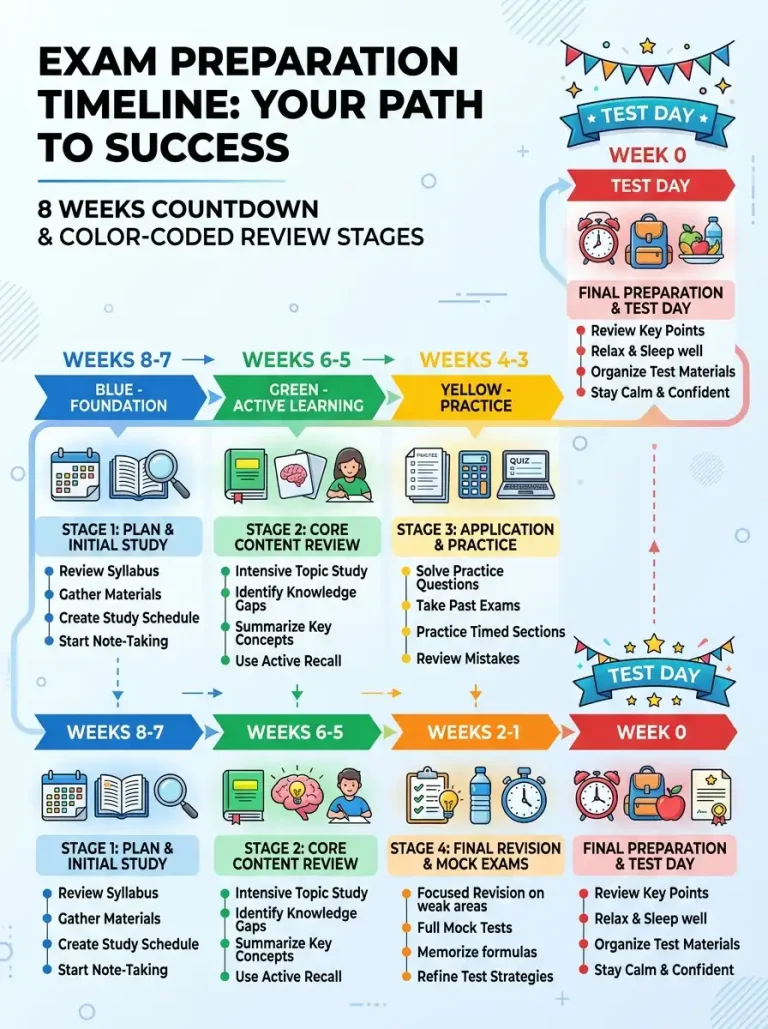
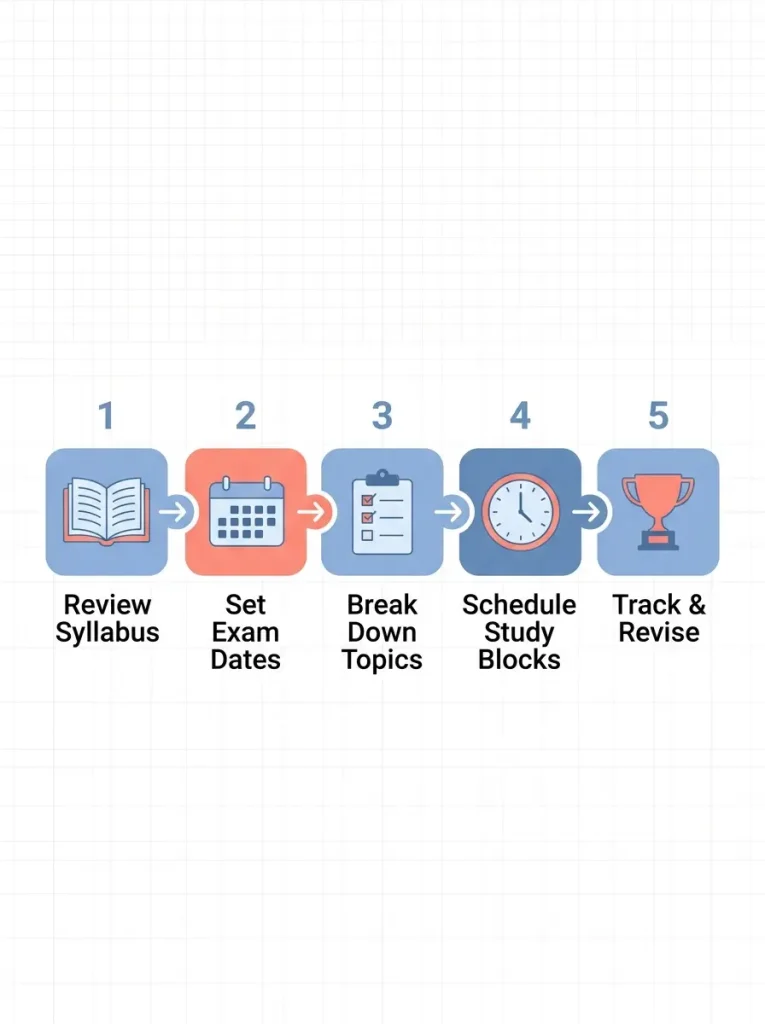
Infographic: Exam Study Planning Workflow
Infographic Title: From Syllabus to Success: The Exam Study Planning Workflow
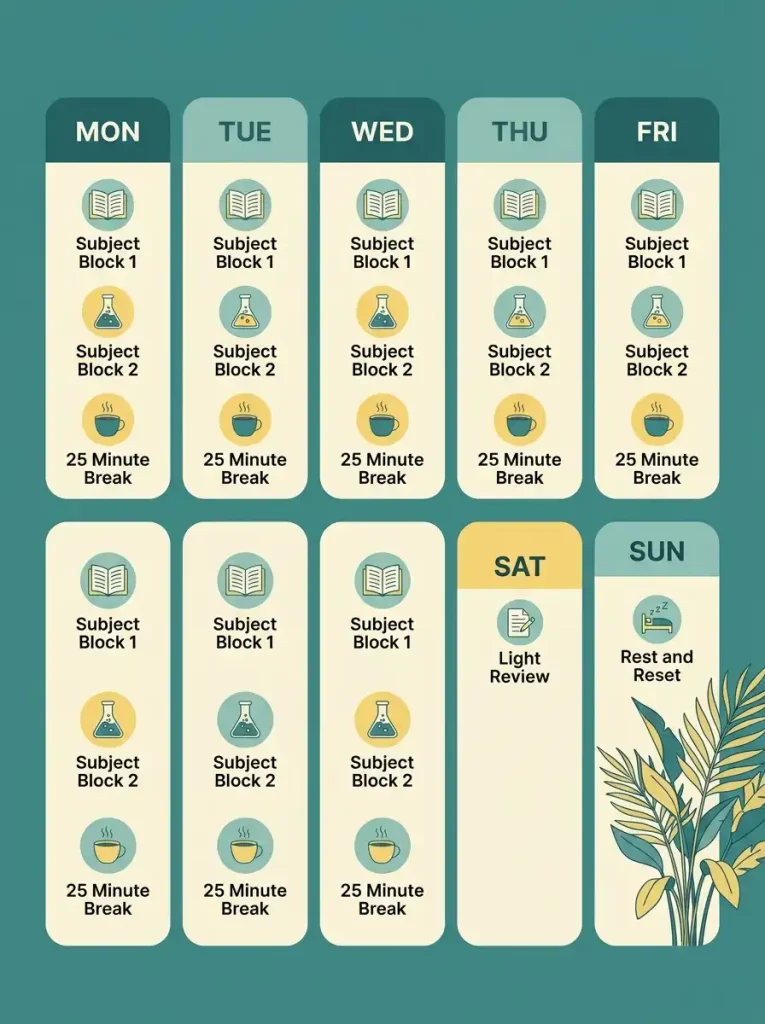
Infographic: Weekly Revision Schedule
Infographic Title: A Balanced Weekly Revision Schedule at a Glance
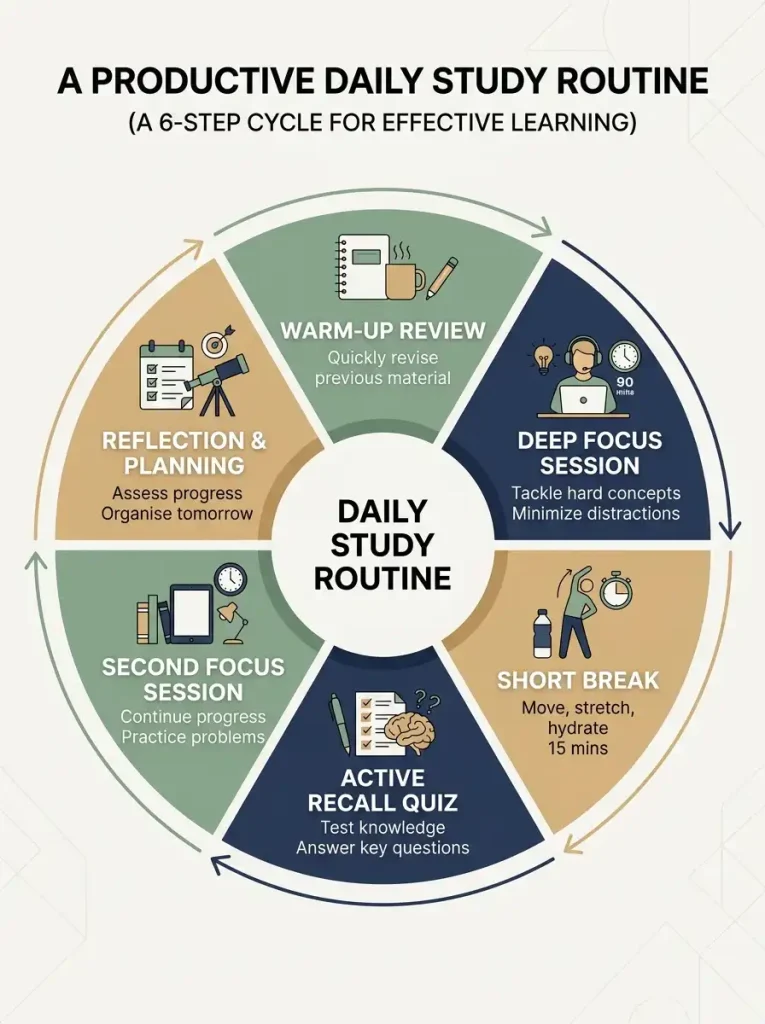
Infographic: Effective Study Routine
Infographic Title: The Anatomy of an Effective Daily Study Routine
Frequently Asked Questions
1. What is an exam study planner PDF, and how is it different from a regular planner?
An exam study planner PDF is a printable document specifically designed around exam preparation, with features like countdowns, revision trackers, and subject breakdowns. A regular planner usually focuses on general daily tasks rather than exam-specific structure.
2. Are printable study planners actually more effective than apps?
It depends on the student. Many people find printed planners easier to stick with because there’s no phone nearby tempting them with notifications. Others prefer the reminders and syncing that digital tools offer, so it really comes down to personal habits.
3. How far in advance should I start using a study planner?
Ideally, start four to six weeks before a major exam. That gives you enough time to spot weak subjects early and adjust your plan before it’s too late to catch up.
4. Can I use these templates for subjects other than school exams?
Absolutely. These templates work well for professional certifications, licensing exams, language learning, and even long-term skill building outside of formal education.
5. How many hours per day should I schedule for studying?
There’s no universal number, but two to four focused hours per day is realistic for most students without leading to burnout. Quality of focus matters more than raw hours logged.
6. What’s the best way to print these planner templates?
Standard A4 paper works well for all ten templates. If you want your planners to last through daily use, consider printing on slightly heavier cardstock or laminating the pages you’ll reuse each week.
7. Should I fill out my entire study planner at once, or week by week?
Week by week tends to work best. Filling out an entire month in one sitting often leads to unrealistic planning, since you can’t predict every schedule change in advance.
8. What if I fall behind on my planner?
Don’t scrap the whole plan. Simply adjust the remaining days, prioritize your weakest topics, and keep moving forward. Falling behind occasionally is normal and doesn’t undo your progress.
9. Can parents use these planners to help their kids study?
Yes, and many parents find the weekly and habit tracker templates especially useful for keeping younger students accountable without hovering over every study session.
10. Do I need special software to use a printable study planner PDF?
No. Any standard PDF reader lets you view and print these templates. You don’t need a subscription, an account, or any design software to use them.
11. How do I stay motivated when exam prep feels overwhelming?
Break tasks into smaller pieces, track small wins with a progress tracker, and remind yourself of your original goals regularly. Visible progress tends to rebuild motivation faster than willpower alone.
Final Thoughts
Exam preparation doesn’t have to feel chaotic. With the right printable study planner, you can turn a stressful syllabus into a clear, step-by-step path toward exam day. The key isn’t finding a perfect template. It’s finding one you’ll actually use, consistently, week after week.
Start small. Pick one or two templates from this list that match where you are right now, whether that’s early planning or the final countdown. Print them out, fill them in, and give yourself permission to adjust as you go.
Consistent, well-planned study sessions beat frantic last-minute cramming every single time. Grab the printable PDF pack, set your first study block for today, and take that first small step toward feeling genuinely ready for your exam.